
From Medical School to Medicine: Female Doctors on Their Path to Success
Introduction: Redefining Success for Women in Medicine
Women in Medicine have reshaped the landscape of healthcare over the past few decades. Yet for many Female Doctors, the journey from the first day of medical school to an established career remains more complex than it appears on paper. It involves not just mastering science and clinical skills, but navigating implicit bias, expectations around family and caregiving, and persistent gaps in leadership and pay.
This article follows that journey step by step—from the Medical School Experience to residency, early practice, and leadership—highlighting common challenges and strategies used by successful women physicians. By exploring real-world stories, practical advice, and the critical role of Mentorship and Work-Life Balance, it offers a roadmap for current and future female physicians seeking sustainable, meaningful careers.
Whether you are a pre-med student, medical student, resident, or early-career doctor, this guide is designed to help you envision your path, anticipate obstacles, and build the support systems you need to thrive.
The Current Landscape of Women in Medicine
Progress and Persistent Gaps
Over the past 50 years, women have made remarkable strides in medical education and practice:
- Women now make up about half of all U.S. medical students, compared with roughly 5% in the 1970s.
- Women constitute approximately 38% of practicing physicians—evidence that there is still a significant drop-off between training and long-term practice.
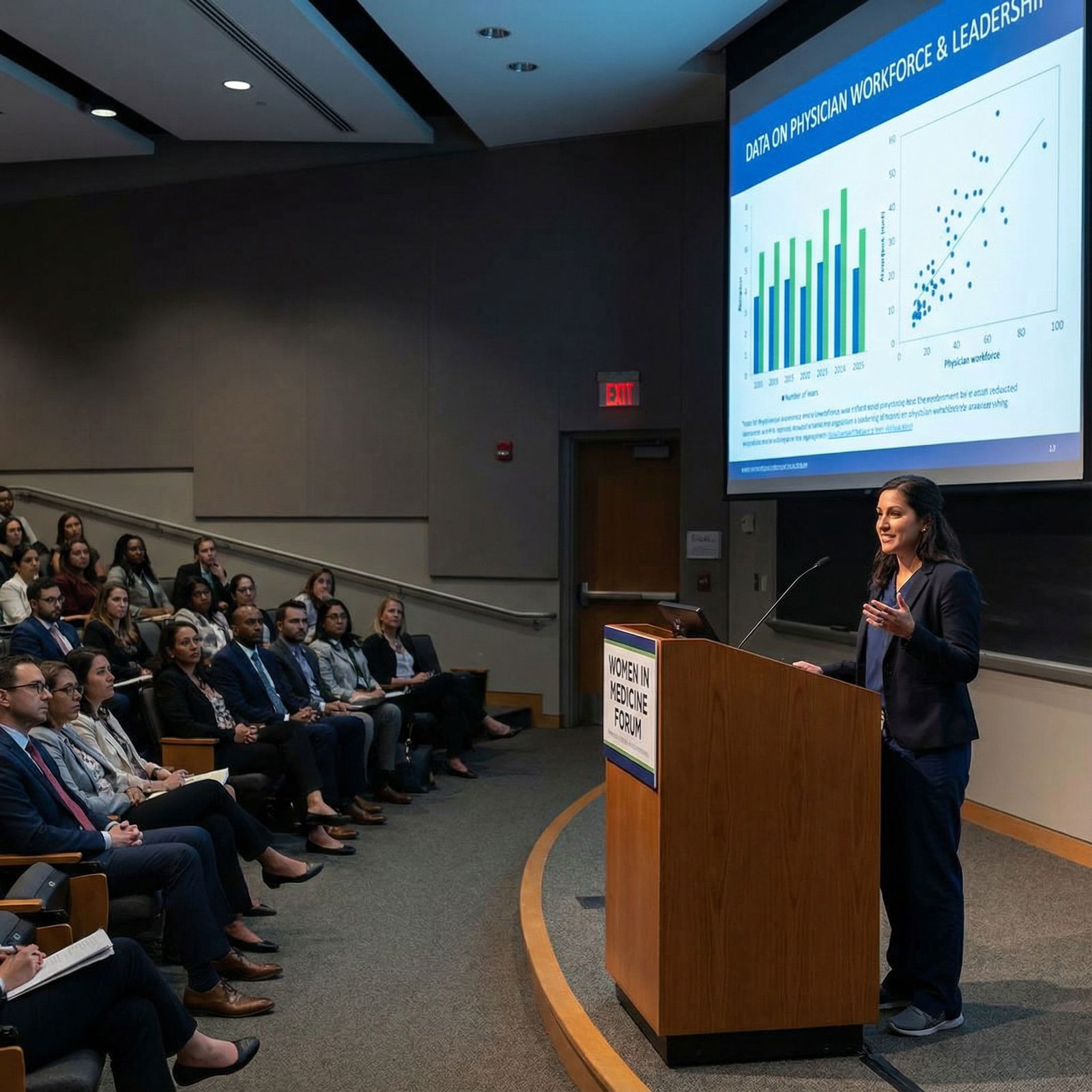
- At the leadership level, the numbers are even smaller: around 16% of department chairs and 20–21% of medical school deans are women.
These statistics paint a clear picture: while entry into medical school is approaching parity, advancement and retention for women in medicine lag behind. The “leaky pipeline” remains a central issue, with women less likely to move into senior roles despite comparable or superior training and productivity.
Systemic Barriers and Everyday Bias
The barriers women face in medicine are often subtle but cumulative:
- Assumptions about competence: Female Doctors may be mistaken for nurses, students, or support staff, even when clearly identified as physicians.
- Unequal opportunities: Women are sometimes passed over for complex procedures, leadership roles, or high-profile research projects.
- Pay disparities: Studies consistently show a gender pay gap even after adjusting for specialty and experience.
- “Second shift” expectations: Many women still shoulder disproportionate responsibilities at home—childcare, eldercare, or household management—on top of demanding clinical schedules.
Consider the experience of Dr. Sarah, an internist and health advocate. As a resident, she often encountered skepticism from attendings: “I felt like I had to over-prepare for every case just to be taken seriously. It was as if they had forgotten what it was like to be a trainee—and especially a woman trainee.” Over time, her consistent excellence shifted perceptions, but the burden of constantly needing to “prove” herself was draining.
These experiences are not isolated. They are part of broader structural and cultural issues that Women in Medicine must navigate from training into practice.
Navigating the Medical School Experience as a Future Female Doctor
Academic Pressure, Identity, and Belonging
Medical school is intense for everyone, but the pressures can manifest differently for women:
- Imposter syndrome: Many female medical students report doubting their abilities despite strong performance.
- Lack of representation: In some specialties, they rarely see Female Doctors in senior or leadership roles, making it harder to envision themselves in those positions.
- Microaggressions and bias: Comments about appearance, questioning of commitment if they mention family plans, or assumptions about choosing “less demanding” specialties can add up over time.
Yet, many women find ways to transform medical school into a period of growth, community-building, and professional identity formation.
Dr. Emily, now a surgical resident, describes her medical school support system as a turning point: “I joined a small group of women who studied together, debriefed after rough rotations, and celebrated each other’s wins. When I doubted whether surgery was ‘for me,’ they reminded me exactly why I wanted to be there.”
Building Supportive Peer Networks
Peer support can be as critical as any formal resource. Female medical students often benefit from:
- Study groups that foster collaboration over competition.
- Identity-based organizations—Women in Medicine groups, specialty interest groups for women in surgery, cardiology, etc.
- Wellness circles or reflection groups where students can discuss burnout, ethics dilemmas, and emotional challenges.
Actionable strategies:
- In your first year, attend events hosted by women’s medical organizations or affinity groups and intentionally introduce yourself to students in years above you.
- Form or join small “accountability groups” that meet weekly to review goals, discuss challenges, and share resources.
- Advocate for wellness programming that acknowledges specific challenges faced by women, such as pregnancy during training, fertility, or harassment.
Mentorship and Sponsorship: The Power of Guided Experience
Mentorship is repeatedly cited as one of the most influential factors in career satisfaction and advancement for Women in Medicine.
Dr. Linda, a practicing cardiologist, credits her trajectory to early mentors: “My female cardiology mentor showed me that I could be ambitious, clinically excellent, and still have a life outside the hospital. Seeing her manage it in real time made it feel possible.”
It’s worth distinguishing between:
- Mentors: Provide guidance, feedback, and emotional support.
- Sponsors: Actively advocate for you—recommending you for positions, fellowships, committee roles, and leadership opportunities.
Actionable steps to build mentorship and sponsorship:
- Seek multiple mentors: a research mentor, a clinical mentor, and ideally at least one mentor who shares your gender or background.
- Be intentional in your asks: schedule brief meetings with potential mentors, come prepared with questions, and follow up with updates.
- Explore organizations like the American Medical Women’s Association (AMWA), specialty-specific women’s sections (e.g., Women in Cardiology, Association of Women Surgeons), and institutional mentorship programs.
Strong mentorship early in the Medical School Experience can shape specialty choice, scholarship, and confidence—laying the foundation for a sustainable career.

From Classroom to Clinic: Building a Resilient Professional Foundation
Clinical Rotations: Turning Observation into Confidence
Clinical rotations are the bridge between classroom learning and real-world medicine. For many Female Doctors-in-training, this is when biases become more visible:
- Male students may be more frequently offered procedural opportunities.
- Female students might be steered toward “softer” specialties or praised for communication skills while their technical skills receive less encouragement.
- Assertiveness can be misinterpreted as “aggressive” or “difficult,” while similar behavior is accepted or rewarded in male peers.
To navigate this, women can adopt strategies that are both assertive and professional:
- Ask explicitly to perform procedures: “I’ve read the guidelines and observed this twice—may I perform the next one under supervision?”
- Track your experiences: log procedures, patients seen, and feedback to document growth and demonstrate competence.
- Request formative feedback regularly rather than waiting for end-of-rotation evaluations.
Residency: Skill-Building Under Pressure
Residency is often the most demanding phase: long hours, steep learning curves, and limited control over schedules. For Women in Medicine, the pressure can be magnified by:
- Planning pregnancy or fertility preservation during training.
- Managing dual-career households (e.g., married to another physician).
- Facing skepticism in male-dominated specialties like surgery, orthopedics, cardiology, and interventional specialties.
Dr. Alicia, a general surgery resident, recalls: “I knew I’d be walking into a specialty where people questioned whether women could ‘handle it.’ I responded by volunteering for every case I could and scheduling extra time in the simulation lab. I also made sure to connect with senior female surgeons who had already broken through those expectations.”
Actionable advice for residency success:
- Identify at least one senior resident and one attending as go-to mentors.
- Learn to say “no” strategically—to protect your time from non-essential tasks that don’t align with your goals.
- Use institutional resources (GME offices, ombudspersons, bias reporting systems) if you experience harassment or discrimination.
Work-Life Balance and Career Design for Female Physicians
Redefining Work-Life Balance in Modern Medicine
Traditional narratives of Work-Life Balance often suggest a perfect equilibrium. For many Female Doctors, a more realistic goal is dynamic balance—the ability to adjust priorities across different phases of life:
- Training years: Heavier emphasis on work and learning.
- Early parenthood or caregiving years: More emphasis on flexibility and boundary-setting.
- Mid-career and leadership years: Balance between clinical work, leadership, mentorship, and family or personal pursuits.
Dr. Judith, a pediatrician and mother of two, emphasizes boundaries: “Early in my career, I said yes to everything—extra shifts, committees, weekend calls. I realized I was burning out. Now I protect my off days, communicate clearly with my team, and ensure I’m fully present both at work and at home.”
Practical strategies:
- Consider flexible schedules (four-day weeks, job sharing, telehealth sessions) where possible.
- Block protected time for charting to avoid excessive after-hours work.
- Set explicit guidelines for what constitutes an emergency for being contacted when off duty.
- Discuss domestic responsibilities at home openly—aim for equitable, not “helping,” division of labor.
Choosing a Sustainable Career Path
Not all specialties or practice settings are equally flexible. When planning a career, Female Doctors can weigh:
- Specialty culture: Some fields have more established support for women and families (e.g., pediatrics, family medicine), while others are evolving (surgery, cardiology, emergency medicine).
- Practice setting: Academic vs. community practice, hospital-based vs. outpatient, full-time vs. part-time.
- Geographic location: Availability of childcare, proximity to family support, local call burdens.
Dr. Priya, a family medicine physician, consciously chose a community-based practice with a strong team culture: “I wanted to provide holistic care and also have bandwidth for my life outside the clinic. I negotiated my schedule and made sure that the practice’s values aligned with mine before signing.”
Women in Medicine can and do succeed across every specialty. The key is intentional career design, honest reflection on values, and the courage to renegotiate roles as life circumstances evolve.
Trailblazers, Advocacy, and the Future of Women in Medicine
Breaking Barriers Across Specialties
Real-world examples illustrate the diversity of contributions by Female Doctors today:
Dr. Ashima, Neurosurgeon
Working in one of the most male-dominated specialties, she co-founded a mentorship program linking female medical students and residents with practicing women neurosurgeons. Her work has helped normalize the presence of women in high-acuity surgical fields and created a tangible support system.Dr. Natalie, Anesthesiologist and Researcher
Recognized for groundbreaking research in pain management, she has highlighted how women’s pain is often under-treated. By publishing extensively and speaking at national conferences, she advocates for gender-sensitive approaches to pain care and serves as a visible role model for women in academic anesthesia.Dr. Maria, Public Health Physician
Focused on maternal and child health, she led initiatives to improve prenatal care in underserved communities. Her advocacy has contributed to policy changes at regional and national levels, emphasizing that physicians’ impact can extend far beyond the bedside.
These stories underscore an important message: there is no single “correct” path to success. Women in Medicine are reshaping clinical care, medical education, research, and health policy in ways that benefit patients and the profession as a whole.
Leadership, Policy, and Institutional Change
Individual resilience is essential but not sufficient. Long-term progress requires systemic and cultural changes within medicine:
- Leadership development: Programs specifically designed to prepare women for leadership roles—chief resident, medical director, department chair, dean—are critical.
- Transparent promotion and pay structures: Clear criteria reduce the potential for hidden bias in advancement.
- Family-friendly policies: Paid parental leave, lactation facilities, flexible scheduling, and on-site or subsidized childcare can dramatically improve retention.
- Zero-tolerance for harassment: Robust reporting mechanisms and institutional accountability help create safer environments for trainees and staff.
For residents and early-career physicians, practical advocacy can include:
- Serving on wellness or diversity, equity, and inclusion (DEI) committees.
- Participating in hospital policy discussions related to schedules, leave, or evaluation processes.
- Joining national organizations that elevate Women in Medicine and influence policy at scale.
The cumulative effect of many female physicians speaking up, mentoring others, and stepping into leadership is a profession that is more equitable, humane, and effective for everyone.
Conclusion: Designing Your Own Path in Medicine
The journey from medical school to a fulfilling medical career as a female physician is rarely linear. It is shaped by academic rigor, mentorship, moments of bias and breakthrough, competing responsibilities, and the continuous work of self-advocacy and boundary-setting.
Yet, each cohort of Women in Medicine is expanding what is possible—entering every specialty, driving research, leading institutions, and centering patient voices. Their stories demonstrate that success is not defined solely by prestige or title, but by alignment with one’s values, the ability to sustain a meaningful life outside work, and the impact on patients and communities.
For current and future Female Doctors, the path forward includes:
- Leveraging strong mentorship and peer support.
- Honoring your ambitions while also protecting your well-being.
- Advocating for policies and cultures that allow all physicians—regardless of gender—to thrive.
By doing so, you are not only building your own career; you are quietly reshaping the field for those who will follow.
Frequently Asked Questions: Women in Medicine, Mentorship, and Work-Life Balance
1. What percentage of medical students and physicians are women today?
In many countries, including the United States, women now make up roughly 50% of medical students, a remarkable increase from about 5% in the 1970s. However, only about 38% of practicing physicians are women, and an even smaller percentage hold top leadership roles such as department chair or dean. This difference highlights ongoing challenges in retention, promotion, and Work-Life Balance for Female Doctors.
2. How can mentorship and sponsorship specifically benefit female medical students and residents?
Mentorship provides:
- Career guidance and honest feedback
- Emotional support during high-stress training years
- Insights into specialty selection and research opportunities
Sponsorship goes a step further by:
- Recommending you for fellowships, committees, and leadership roles
- Providing visibility by including you in talks, panels, or publications
- Actively advocating for your advancement behind closed doors
For Women in Medicine, both mentorship and sponsorship help counteract systemic bias and open doors that might otherwise remain closed.
3. What are the most common challenges female doctors face in the workforce?
Common challenges include:
- Gender bias and discrimination in evaluations, referrals, and leadership selection
- Pay gaps despite equal or greater productivity
- Work-Life Balance strains, especially around pregnancy, parental leave, and caregiving
- Microaggressions and stereotypes, such as being mistaken for non-physician staff or being steered away from certain specialties
Addressing these challenges involves both individual strategies (assertive communication, mentorship, boundary-setting) and institutional reforms (transparent pay structures, family-friendly policies, robust reporting systems).
4. What are practical ways for female physicians to maintain Work-Life Balance?
Strategies include:
- Negotiating schedules that align with personal responsibilities (e.g., four-day weeks, flexible or remote clinics where possible).
- Setting clear communication boundaries about after-hours contact.
- Outsourcing or sharing domestic tasks when feasible—childcare, cleaning, meal prep—to prevent burnout.
- Protecting time for exercise, relationships, and non-medical interests, treating them as non-negotiable appointments.
Work-Life Balance will look different at various career stages; periodic reassessment and renegotiation are essential.
5. How can I, as a student or resident, support Women in Medicine and promote equity?
Regardless of your gender, you can:
- Call out and gently challenge biased comments or behaviors when you see them.
- Share opportunities (projects, talks, research) with women peers and colleagues rather than defaulting to familiar networks.
- Support institutional efforts for greater transparency in promotion and pay.
- Join student or resident groups that advocate for diversity, equity, and inclusion—and ensure that women’s voices are central in those spaces.
Collective action, even through small everyday choices, contributes to a medical culture where Female Doctors can succeed without sacrificing their identities, families, or well-being.
By amplifying the voices and experiences of Women in Medicine, and by applying these practical strategies, the profession moves closer to a future where every physician’s potential is recognized and supported.