
Most women physicians are not nearly direct enough in their first contract negotiation—and it quietly costs them six figures over a career.
Let me be blunt: you should be more direct than feels comfortable, but more structured than most people around you. If you’re waiting for “fairness,” “goodwill,” or “they’ll take care of me because I work hard”—you’re setting yourself up to be underpaid, overworked, and boxed in.
Here’s what actually works.
The Short Answer: How Direct Is “Too Direct”?
You should be:
- Very direct about data (market rates, wRVUs, salary benchmarks)
- Clear and specific about non-negotiables (schedule, call, location, maternity leave)
- Firm but non-dramatic about boundaries (“This clause doesn’t work for me as written”)
- Curious and open when you hit resistance (“Help me understand why this is set at X”)
What you should avoid is:
- Apologizing for asking
- Overexplaining your personal life as justification
- Getting emotional in the room (frustrated, flustered, or defensive)
- Accepting vague promises instead of written changes
Your tone should be: professional, data-driven, and matter-of-fact. Not grateful. Not pleading. Not aggressive. Just… businesslike.
Why Women Need to Be More Direct, Not Less
You’re not imagining it—women in medicine are treated differently in negotiations.
Here’s what I’ve seen repeatedly:
- Male residents walking into a community hospital offer and saying, “This is low compared to MGMA 60th percentile; here’s what I’d need.” And getting it.
- Female residents saying, “I’m just so grateful for the opportunity” and never even asking what’s possible.
- Groups assuming women will take more call, more “teamwork,” more patient satisfaction projects… for the same pay.
The trap is this: women often fear that being direct will make them “difficult,” “ungrateful,” or “not a team player.” So they pull back. They soften everything. And the hospital or group quietly thinks, “Great—cheap, compliant labor.”
You’re not just negotiating money. You’re negotiating:
- Your time with your family
- Your burnout risk
- Your future leverage (because raises are usually a percentage of your starting pay)
If you go in soft and vague, you pay for it for years.
A Simple Framework: How Direct to Be at Each Step

| Step | Description |
|---|---|
| Step 1 | Receive Offer |
| Step 2 | Review Contract |
| Step 3 | Research Market Data |
| Step 4 | Identify Priorities |
| Step 5 | Prepare Ask List |
| Step 6 | Negotiation Meeting |
| Step 7 | Request Final Contract in Writing |
| Step 8 | Counter or Walk Away |
| Step 9 | Acceptable Terms |
Step 1: When You Get the Initial Offer
Wrong response:
“Thank you so much, this looks great, I’m so excited!”
Right response:
“Thank you for the offer. I’ll review the contract in detail and get back to you with questions in the next week.”
Directness level: Calm and neutral.
You’re signaling: “I treat this like a serious business decision.”
Step 2: Before You Negotiate – Do Your Homework
You can’t be direct if you don’t know what you’re aiming for.
You need:
- MGMA or similar data for your specialty and region (ask mentors, program leadership, or alumni; many have access)
- Salary ranges and structures: base + bonus, wRVU rates, partnership track if private practice
- Local norms: call burden, weekend coverage, clinic hours
Then translate that into numbers and specifics:
- “Starting base in this region is typically 50–75th percentile of MGMA for new grads.”
- “wRVU rates around here are usually $45–55; this contract is at $38.”
Directness starts with math, not feelings.
Step 3: Decide Your Priorities (So You Don’t Negotiate Everything)
You can’t (and shouldn’t) fight every line. That is how you become “difficult.”
Pick 3–5 high-impact priorities:
- Compensation (base salary, bonus structure, wRVU rate, sign-on)
- Schedule (clinic hours, admin time, call frequency, weekend expectations)
- Autonomy (outside moonlighting, telemedicine, side gigs, teaching time)
- Protection (malpractice tail coverage, restrictive covenant radius/length, termination clause)
- Support (MA/scribe support, protected time, OR block time, panel size limits)
Then rank them: Must-have, Strongly prefer, Nice-to-have.
You’ll be most direct about your must-haves. More flexible (but still clear) about the rest.
Exactly What to Say: Phrases That Work
Let’s skip the fluff and go straight to scripts.
Opening the Negotiation
You (on the phone or Zoom):
“Thanks for sending the contract. I’ve reviewed it and had a chance to look at market data and talk with some mentors. I’d like to go through a few specific areas I’d like to discuss.”
That sentence does three critical things:
- Signals you did your research
- Tells them you have mentors (translation: you’re not isolated and naive)
- Sets the agenda: this is a discussion, not a yes/no question
Talking About Money Without Sounding “Greedy”
Use data and distance the ask from your personality.
Instead of:
“I was hoping for more money because I have loans and childcare is expensive.”
Say:
“Looking at MGMA data for this region, starting salary for my specialty is typically in the X–Y range for new grads. This offer is about Z% below that. I’d like to see the base salary at $___ to be more in line with market for this role.”
You’re not “begging for a favor.” You’re asking them to align with the market.
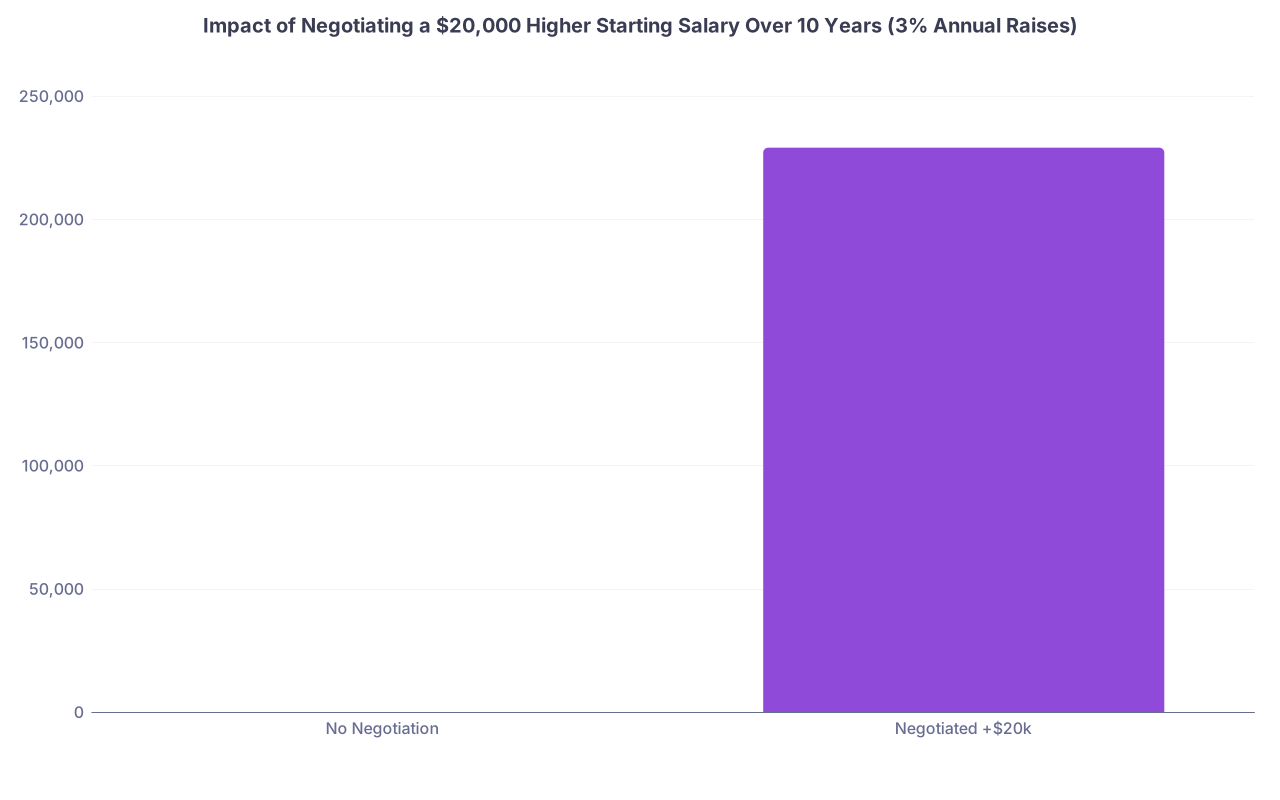
| Category | Value |
|---|---|
| No Negotiation | 0 |
| Negotiated +$20k | 229000 |
That bar? That’s roughly what a $20k difference at start turns into over 10 years with 3% annual raises. You’re not quibbling over scraps.
Being Direct About Call and Schedule
Instead of:
“I was just kind of wondering if maybe the call schedule is flexible at all?”
Say:
“I see call is listed as 1 in 4 weekdays and 1 in 4 weekends. That’s heavier than what I’ve seen at similar positions. What call schedule can you offer that’s closer to 1 in 6 or involves protected post-call clinic time?”
Notice the structure:
- State what the contract says
- Compare it to something concrete
- Propose a specific alternative
You’re allowed to suggest numbers. They might say no. That’s fine. But you’re making them respond to something real.
Handling Maternity Leave and Flexibility Without Oversharing
You do not have to disclose your family planning. But you should be direct about policies.
Say:
“I’d like to understand the parental leave structure—paid and unpaid, eligibility timeframe, and how it affects partnership track or bonus calculations. Can you send me your written policy?”
If they start talking about “we’re very family-friendly” but don’t have clear policies in writing, that’s a giant red flag. Treat vague reassurance as a no until it’s in writing.
Direct vs. Aggressive: Where’s the Line?
Being a woman doesn’t mean you have to sugarcoat. It also doesn’t mean you need to cosplay as a hard-ass litigator.
The difference:
Direct: “This non-compete radius feels excessive. Ten miles for two years is more typical here. I’d like to modify it to that range.”
Aggressive: “This non-compete is outrageous. You’re trying to trap me.”
Direct: “I’m not comfortable signing without tail coverage included. Is the group able to cover occurrence or provide tail if I’m terminated without cause?”
Aggressive: “I refuse to sign any contract that doesn’t pay for everything.”
Direct = clear, specific, and tied to a reason (market norms, risk, fairness across physicians).
Aggressive = emotional language, accusations, ultimatums too early.
If you tend to soften everything, aim for language like:
- “I’m not comfortable with…”
- “I’d like to see…”
- “This doesn’t align with what I’m seeing in similar roles.”
- “What flexibility is there on this term?”
All of those are firm without being hostile.
Things Women Do in Negotiations That Quietly Undercut Them
If you recognize yourself here, fix it before you walk into your first contract meeting.
Over-apologizing
“Sorry, I just have a couple more questions…”
Kill that. Say: “I have a few more questions about the bonus structure.”Over-explaining personal reasons
You don’t need a monologue about your partner’s job, your kids, your aging parents.
Translate it into professional language: “My long-term plan is to stay in this region, so I need a schedule that’s sustainable long term. That means X for me.”Accepting “this is standard” without a follow-up
When they say “this is our standard contract,” you say:
“Understood. Where in this contract do you typically have flexibility for new physicians?”Not shutting up after you state your ask
State the number or change you want, then stop talking. Let them be the ones uncomfortable with silence.
When to Bring in a Lawyer (And How Direct to Be About It)
You should absolutely have a physician- or employment-focused lawyer review your first contract. Not Uncle Bob who did your home closing.
You do not need to make this dramatic.
Say to the recruiter or administrator:
“I appreciate you sending the draft. I have a lawyer who specializes in physician contracts; I’ll have them review and then get back to you with consolidated questions.”
That’s it. No apologies. No “I hope that’s okay.” It is okay.
If they get weird or defensive about you using a lawyer, that’s a sign to increase your caution, not your gratitude.
| Situation | Lawyer Needed? |
|---|---|
| Complex non-compete / multi-location group | Essential |
| Partnership track with buy-in | Essential |
| Academic hospital standard contract | Often Optional |
| RVU-heavy compensation with unclear metrics | Essential |
| Small private group with no HR department | Essential |
Red Flags: When Direct Should Turn Into “No, Thanks”
Some offers are bad enough that the best negotiation strategy is walking away.
Pay attention if you see:
- No malpractice tail coverage and no willingness to discuss it
- Non-compete that effectively blocks you from working anywhere reasonable in your specialty
- “You don’t need it in writing, we’ll take care of you”
- Refusal to explain compensation formula in clear terms
- Huge mismatch between what they told you verbally and what’s in the contract
If you point out a concern directly and they respond with:
- “You’re being too picky for a first job”
- “No one else has had a problem with this”
- “If you’re going to be this difficult now, maybe this isn’t a fit”
They’re right. It isn’t a fit. You just saved yourself years of resentment.
How This Plays Out Over a Career
This is not about “winning” your first contract. It’s about setting a pattern.
Women who learn to be direct early:
- Ask for raises based on numbers, not “I’ve worked here a long time”
- Negotiate leadership roles with protected time, not “extra duties” piled on
- Say “no” to endless committee work that doesn’t advance their career
- Change jobs when the deal stops being fair, instead of staying out of guilt
You practice directness now so you’re not trying to build that muscle at 45 with three kids, a burned-out spouse, and a giant mortgage.

Practical Prep: One-Page Negotiation Sheet
Before your negotiation meeting, write a one-page sheet (yes, literally on paper or a doc):
- Top 3 must-haves (with target numbers)
- 2–3 nice-to-haves
- Absolute dealbreakers (tail, non-compete, etc.)
- Market data points: MGMA ranges, local examples
- Phrases you’ll use when you get flustered
Examples of “fallback phrases”:
- “Let me think out loud for a second.”
- “I hear what you’re saying. From my perspective, what would make this work is…”
- “I’m going to note that and circle back with my lawyer/mentor.”
You don’t wing negotiations. You script the key points and hold yourself to them.
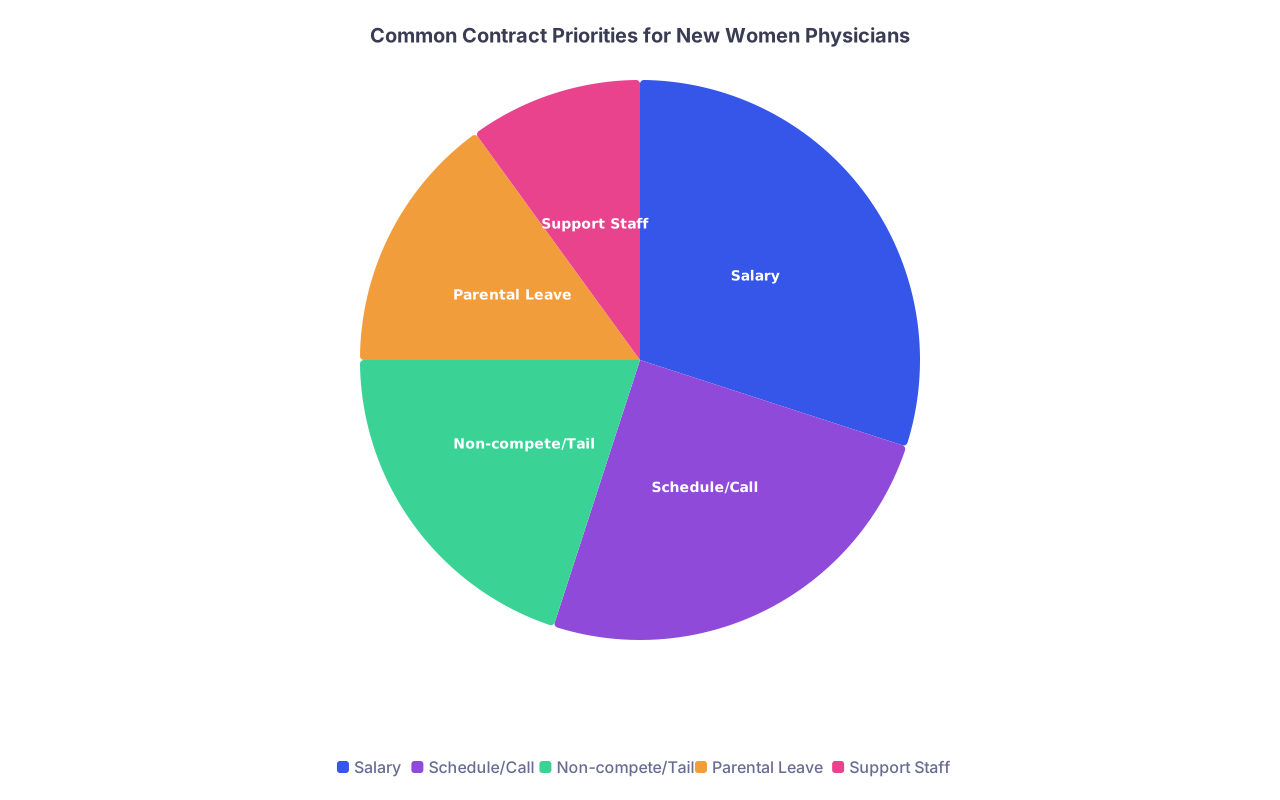
| Category | Value |
|---|---|
| Salary | 30 |
| Schedule/Call | 25 |
| Non-compete/Tail | 20 |
| Parental Leave | 15 |
| Support Staff | 10 |
FAQ: Women, Directness, and First Physician Contracts
1. Won’t being direct make them not want to hire me?
If a reasonable level of directness scares them off, that’s not a job you wanted. Good groups expect negotiation. You’re not saying, “Take it or leave it”; you’re saying, “Here’s what I’d need to make this work.” That’s normal. If they rescind an offer because you asked informed questions, you dodged a bullet.
2. How much can I realistically move the salary as a new grad?
Depends on specialty and region, but I’ve seen primary care docs move offers by $10–30k, and proceduralists by much more. Often the biggest wins aren’t just base salary: higher wRVU rate, better bonus thresholds, sign-on, relocation, or loan repayment. If they’re totally rigid on money, push harder on schedule, call, and support.
3. Should I mention other offers to gain leverage?
Yes—carefully and without drama. “I’m considering another offer in the area that’s at $___ base with 1 in 6 call. I’d prefer to be here if we can come closer to that range.” Do not bluff specific numbers unless they’re real. You don’t need to name the other institution; just be concrete about the comparison.
4. Is email or phone better for negotiation?
Start the substance on a call or Zoom so you can read tone and build rapport. Then always follow up in email summarizing what you understood: “To confirm, we discussed increasing the base to $___ and adjusting call to 1 in 5…” That way, if something “gets lost,” you have it documented. For anything complex or contentious, keep it in writing.
5. How do I push back on a bad non-compete as a new grad?
Tackle it head-on. “This non-compete would prevent me from practicing anywhere within a reasonable distance of my family. Typical clauses I’ve seen are 10–15 miles for 1–2 years. I’d like to adjust to something in that range and limit it to locations where I actually practice.” If they refuse all movement, that’s a serious negative.
6. What if I genuinely don’t know what I want yet?
Then your first task isn’t reading the fine print; it’s deciding your non-negotiables. Talk to women 5–10 years ahead of you. Ask what they regret not negotiating: schedule, location constraints, maternity leave, tail coverage are common answers. Even if you’re unsure long term, you can still say: “I want this to be sustainable for at least the next 3–5 years. For that, I’d need…” and define it.
Remember:
- You should be more direct than feels polite—but channel it through data, specifics, and calm repetition.
- You’re not asking for favors; you’re structuring a business relationship that affects your time, autonomy, and future leverage.
- If your direct, reasonable questions are treated as a problem, believe them—and walk.