
The way most people talk about asking about maternity leave on interview day is outdated—and a little dishonest.
You’re not “unprofessional” for wanting to know if a program will support you as a future parent. You’re smart. The trick isn’t whether you can ask. It’s how, when, and to whom you ask so you protect your opportunities and still get the truth.
Let me cut straight to it.
The Short Answer: Yes, But Don’t Ask the Wrong Person the Wrong Way
You can ask about maternity leave policies on interview day. I actually think you should if:
- You’re likely to have a child during training, or
- You already know you’ll never be happy in a place that punishes pregnancy (even covertly)
What you should not do:
- You shouldn’t ask a faculty interviewer, “So, I’m planning to get pregnant in PGY-2—what’s the maternity leave here?”
- You shouldn’t volunteer detailed reproductive plans in formal interviews. That gives biased people ammunition.
- You shouldn’t rely only on glossy HR PDFs. They always look good. Culture is what matters.
So: Yes, it’s okay to ask. No, it’s not okay to be naive about who’s in front of you and what they control.
Let’s break this down into what you really need:
- The rules of the game (legal, ethical, and hidden).
- Who to ask, what to ask, and how to word it.
- Red flags and green flags in answers.
- How this fits into your own ethics and long-term career.
What’s Actually at Stake When You Ask
You’re not just asking, “What’s your maternity leave policy?”
You’re asking:
- Will I be punished—formally or informally—for becoming pregnant here?
- Will I have to choose between breastfeeding and my career?
- Will my co-residents resent me if I’m out for 6–12 weeks?
- Will I graduate on time?
- Will my PD secretly think I’m “less committed”?
That’s why all the “never ask about time off during interviews” advice you’ve heard is too simplistic. That rule was written for people asking about vacation, not people trying to understand if they’ll be treated as a human being.
Ethically, programs should be proactive: clear parental leave policies, transparent coverage plans, and visible examples of trainees who have had kids and thrived. But many don’t. So you’re left to do the work.
And yes, bias is real. I’ve watched interviewers say things like, “She seems great, but she’s engaged and interested in OB—she’ll be out on leave half of residency.” No one wrote that in the file. But it changed her rank.
So you play the game strategically.
The Legal and Ethical Landscape (Quick and Dirty)
You don’t need a law degree, just a basic sense of the rules.
Programs cannot legally:
- Ask if you’re pregnant, trying to conceive, planning kids, undergoing fertility treatment, etc.
- Rank you lower for being pregnant or for taking leave that’s allowed by law or institutional policy (though proving this is hard).
You can:
- Ask about policies that apply to all residents or employees (parental leave, medical leave, lactation policies, schedule flexibility).
- Ask about how the program supports residents during major life events (illness, family leave, etc.).
Ethically, you’re well within your rights. In fact, I’d argue you have a moral obligation to yourself and any future kids to understand what kind of system you’re joining.
The practical problem isn’t legality; it’s subtle bias from individual humans who control a thing you want: a rank.
So the core strategy:
Separate “policy questions” (safe, neutral, broad) from “personal reproductive plans” (keep private during the match process).
Who To Ask and When: The Only Framework You Really Need
Think of interview day as three zones:
- Formal evaluations (interviewers, PD, chair, sometimes chief residents)
- Semi-formal spaces (lunch with residents, tours, structured Q&A)
- Off-the-record spaces (pre-interview dinner, one-on-one chats with residents, follow-up emails after you’re ranked or matched)
You adjust how direct you are based on the zone.
Zone 1: During Your Formal Interview
Here’s where you do not lead with “maternity leave.”
You can safely ask in a broad, neutral way about support for residents with families, as long as you’re not tying it to pregnancy right now.
Examples that work:
- “How does the program support residents who have major life events during training, like health issues or family needs?”
- “Can you tell me about the parental or caregiver leave structure for residents?”
- “What’s the culture like around residents who have kids? Are there systems in place to help them succeed?”
These questions signal maturity, not “I plan to check out for a year.” You’re asking about the environment, not announcing your timeline.
What I wouldn’t do in a formal interview:
- “I’m hoping to get pregnant next year—will I be able to take 12 weeks off?”
- “How often do residents get pregnant here?”
- “Will my co-residents be upset with me if I take maternity leave?”
Those might be totally valid concerns, but put them in the resident-to-resident column, not the people-who-decide-your-rank column.
Zone 2: Group Sessions and Resident Q&A
This is usually the sweet spot for asking about policy explicitly.
You can be more direct here because:
- Residents already know the reality.
- Faculty are less likely to be evaluating every word you say.
- Others in the room probably want the same information and are too scared to ask.
Here are ways to phrase it that keep you protected:
- “Can someone walk us through the parental leave policy for residents here, including how coverage is handled and whether graduation is delayed?”
- “How many residents have had children during training in the last few years, and how did the program handle scheduling and support?”
- “What’s the experience been like for residents returning from leave—are there adjustments to schedules, call, or night float?”
That last one usually triggers honest stories quickly.
You still don’t need to say, “I’m trying to get pregnant.” Just let the question sit.
Zone 3: Off-the-Record Conversations and Post-Interview
This is where you get the real story.
Pre-interview dinner, resident socials, the few minutes walking between rooms—this is when you ask what you actually care about:
- “Has anyone had a baby during residency here? How did it go?”
- “Do people feel supported when they take parental leave, or is there a lot of resentment?”
- “Does anyone use the lactation room? What’s it like practically with your schedule?”
- “Did anyone have to extend training because of leave? Was that made painful or was it reasonable?”
You’ll hear the truth in how they answer, not just what they say.
Quick tip: reach out to current or recent residents by email after your interview if you need more detail, especially once programs have already submitted rank lists. At that point, there’s zero risk to you.
What Exactly Should You Ask? Concrete Scripts
Let’s get really practical. Here’s a menu you can steal from.
Neutral policy questions (good for PD, faculty, formal settings)
- “What is the current parental leave structure for residents? Is it different from general FMLA policy?”
- “How does taking parental leave typically affect graduation timing and board eligibility here?”
- “How do you approach scheduling when a resident is out on extended leave?”
Culture questions (good for residents, chiefs, informal times)
- “Do you feel the program leadership is genuinely supportive of residents having children?”
- “How do co-residents generally respond when someone takes leave—supportive, neutral, resentful?”
- “Can you share an example of how the program handled a recent parental leave, start to finish?”
Lifestyle + logistics (post-match or private messages if you want extra detail)
- “Were you able to attend prenatal visits without pushback?”
- “How easy was it to pump at work, practically—time, space, storage?”
- “Did you feel pressure to come back earlier than you wanted?”
The key pattern:
Ask about patterns and examples, not hypotheticals about your body.
How to Read the Answers: Red Flags vs Green Flags
A policy on paper is useless if the culture is rotten. You need both.
| Scenario Type | What You Hear | How To Interpret It |
|---|---|---|
| Strong green flag | “We’ve had several residents take 6–12 weeks leave; we pre-plan coverage and no one is penalized or delayed unless they choose.” | Policy and culture aligned, true support. |
| Cautious green | “We technically have X weeks paid plus you can use vacation; it depends on rotation, but we work with people.” | Might be fine, probe residents for real stories. |
| Yellow flag | “We follow hospital policy; you’d need to talk to HR.” | They haven’t thought deeply about residents as parents. Risky. |
| Red flag | “We don’t encourage residents to take extended leave; it’s hard on the schedule.” | Expect resentment, pressure not to use benefits. |
| Giant red flag | “Honestly, no one’s really done that here. People usually wait until after residency.” | You’ll be the experiment—and probably the cautionary tale. |
Listen for tone. Long pauses. Nervous laughter. “Off the record…” comments. That’s your real data.
What If They Ask You About Kids or Pregnancy?
Sometimes an interviewer crosses the line. It still happens.
If someone asks:
- “Are you planning to have kids during residency?”
- “You’re married—do you and your husband want children soon?”
- “You’re not going to go on maternity leave in the middle of residency, right?”
You’re in illegal-question territory. But you don’t need to give a TED Talk on Title VII in the middle of your interview. Your goal is to protect yourself and keep moving.
Here are scripts that shut it down without escalating:
- “I’m really focused on my training right now. I’m confident I’ll be able to meet the program’s expectations.”
- “Family planning is personal, but I can assure you I’m committed to completing residency here successfully.”
- “I’m fully prepared to meet all the clinical and educational requirements, regardless of what happens in my personal life.”
Then change the subject:
“Could you tell me more about how residents are evaluated in the ICU rotation?”
If the question is outrageous, document it after the interview. Tell your dean’s office or advisor. But in the moment, don’t torpedo your own chances out of principle unless you’re prepared to walk away from that program entirely.
Reconciling This With Your Own Ethics
You might be thinking, “Why should I have to play coy about something so basic as having a child?”
Because you live in the reality of medicine, not the fantasy version in the brochure.
Here’s the ethical stance I’d encourage:
- You owe yourself honesty about what you want in the next 3–7 years.
- You don’t owe strangers with ranking power your detailed reproductive plan.
- You do owe your future patients and co-residents the responsibility to train somewhere that won’t break you.
There’s nothing unethical about gathering information strategically. You’re not deceiving anyone. You’re just not oversharing with people who haven’t earned that level of access.
If a program is so fragile that your generic question about parental leave tanks your chances, that’s not a place you want to entrust your 20s or 30s to anyway.
When to Ask If You’re Already Pregnant or Actively Trying
Different scenario: you’re already pregnant or will deliver early in PGY-1. Or you’re mid-fertility treatment and can’t delay.
In that case, you need more concrete, timing-specific answers—but still, you can adjust when you disclose.
Strategy that usually works:
- Ask about policies and culture in generic terms during interviews (as above).
- After you’ve matched—or after the program has submitted their rank list, depending on your risk tolerance—disclose specifics to the PD and GME so you can plan schedules, rotations, and leave.
If your due date absolutely collides with orientation or the first few months, you may choose to disclose earlier so you both can decide if this is feasible. But do that as a conscious choice, not just because you felt guilty.
One Extra Tactic: Backchannel Intel
Don’t rely only on who the program hand-picks to talk to you. Find:
- Residents who left the program
- Women who had kids there and now are attendings
- Nurses who’ve watched residents go through pregnancies
Quick LinkedIn or alumni-network messages work:
“Hi Dr. X, I’m interviewing at Y program and saw you trained there. I’m trying to understand how supportive they are of residents who have kids during training. Would you be willing to share your perspective in a quick call or email?”
You’ll get the unvarnished version fast.
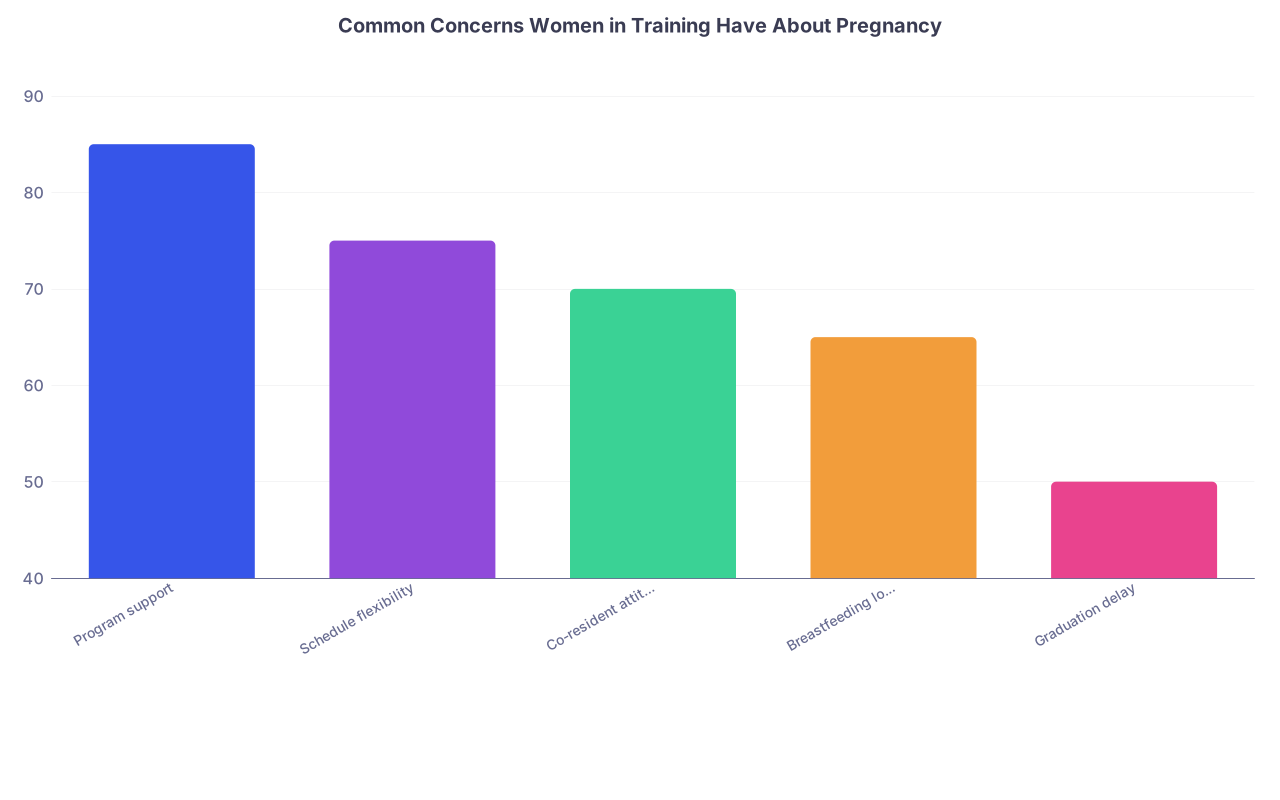
| Category | Value |
|---|---|
| Program support | 85 |
| Schedule flexibility | 75 |
| Co-resident attitudes | 70 |
| Breastfeeding logistics | 65 |
| Graduation delay | 50 |

| Step | Description |
|---|---|
| Step 1 | Interview Day |
| Step 2 | Ask neutral policy questions |
| Step 3 | Ask direct parental leave questions |
| Step 4 | Informal chat with residents |
| Step 5 | Ask about culture and real experiences |
| Step 6 | Formal interview? |
| Step 7 | Resident Q and A? |
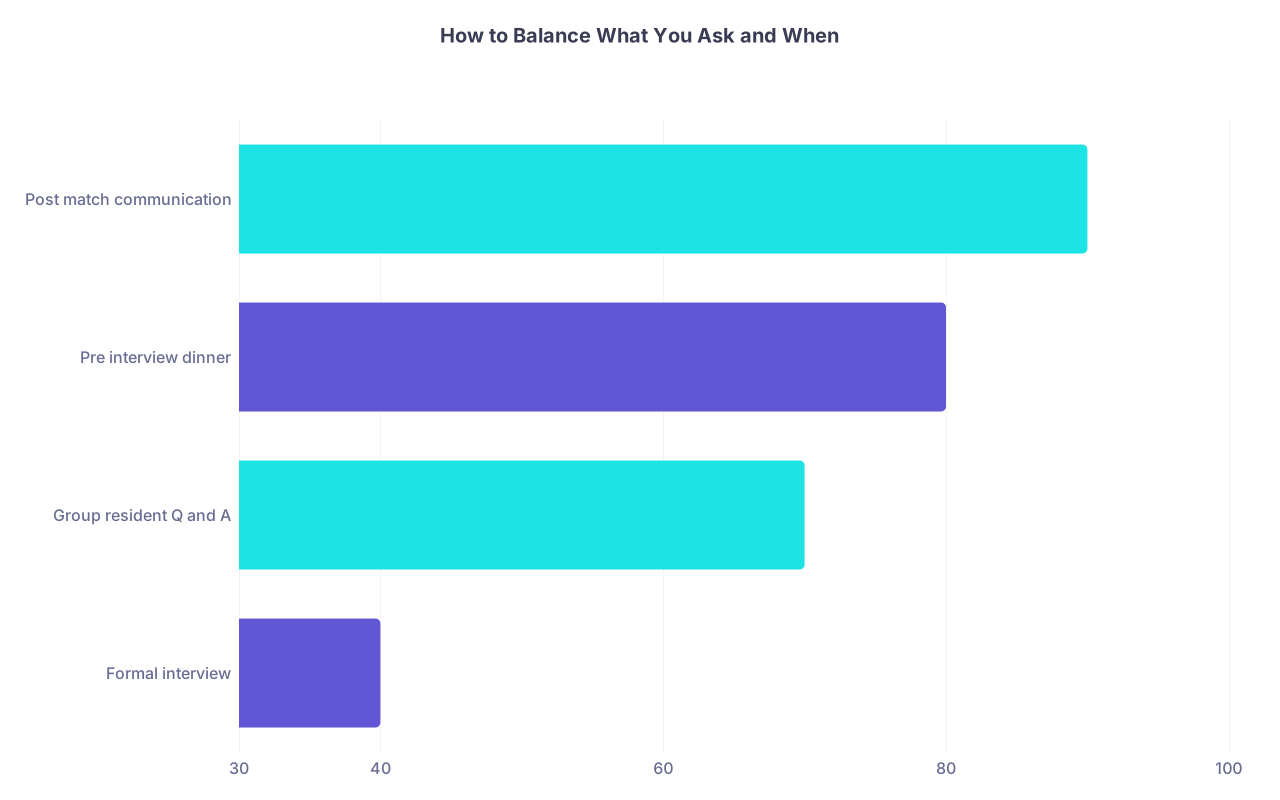
| Category | Value |
|---|---|
| Formal interview | 40 |
| Group resident Q and A | 70 |
| Pre interview dinner | 80 |
| Post match communication | 90 |

Bottom Line: Yes, Ask—But Be Strategic
Let’s tighten this up.
You’re absolutely allowed to ask about maternity leave and parental support on interview day.
Just frame it around policies and culture, not your personal timeline, especially with people who hold ranking power.Aim your most direct questions at residents and off-the-record conversations.
Use formal interviews for higher-level questions about support and structure; use residents for, “What actually happens when someone gets pregnant here?”Judge programs by alignment between their policy and their behavior.
Clear written parental leave + real examples of supported residents + non-defensive answers = good sign. Vague policies + “no one has done that” + visible discomfort = walk away if you can.
You’re not “difficult” for wanting this information. You’re doing what good physicians do: gathering the data you need to make a sound decision—for your career and your life.