
It’s a week before your rank list is due.
Your spreadsheet has 15 programs, color‑coded, annotated, rearranged to death.
On one side of your laptop: your OB note with your due date. Or maybe the fertility consult summary. Or maybe just a quiet, gnawing question: “Will I want kids during residency?”
On the other side: program websites bragging about “family-friendly culture” and “work–life balance.” You know it’s mostly marketing. You also know this choice is going to hit your real life, not just your CV.
Let me tell you what actually happens in those rooms when program directors, APDs, and chief residents talk about people like you. The woman who is pregnant, trying to conceive, already has kids, or even just might have kids “soon.”
Because motherhood absolutely affects your rank list.
Not just how you build it.
How you’re ranked on theirs.
And no, they don’t say that part out loud on interview day.
What Programs Really Think About Women Who Want Kids
Here’s the part nobody will say to your face:
A lot of programs talk about your potential motherhood as a logistical risk, not a neutral life choice.
Not in official policy. Not in emails. In the side conversations after you log off Zoom. In the “we’re being candid here” chats between PD and chiefs. I’ve been in those rooms. The language is almost always coded.
It sounds like:
- “She seems fantastic, but she’s due in October—our schedule is already tight that block.”
- “She has two toddlers and her partner is also a resident—can she handle our call schedule?”
- “She said she wants to start a family soon. We’ve had three maternity leaves in the last two years; the others are burning out.”
Is that illegal pregnancy discrimination in spirit? Yes.
Do most people framing it think they’re discriminating? No. They tell themselves they’re “protecting the team,” “being realistic,” or “avoiding burnout for the rest of the class.”
The mental calculus goes like this:
- How often will this person be out on leave during critical rotations?
- Do we have enough depth to absorb that leave without violating ACGME rules or killing the other residents?
- Has the program been burned before by poor planning, resentment from co-residents, or coverage disasters?
They are not supposed to rank you differently because of this. But they absolutely feel differently. And those feelings leak into the rank list discussion.
Here’s the even uglier part: male applicants with kids rarely trigger this same concern. I’ve watched committees coo about a man “showing maturity” for having a family, while fretting whether a woman with the same setup will “struggle with the workload.”
This bias is not subtle. It’s baked into culture.
How Your Motherhood Status Changes The Conversation About You
Let’s walk through how you show up in a rank meeting depending on your situation.
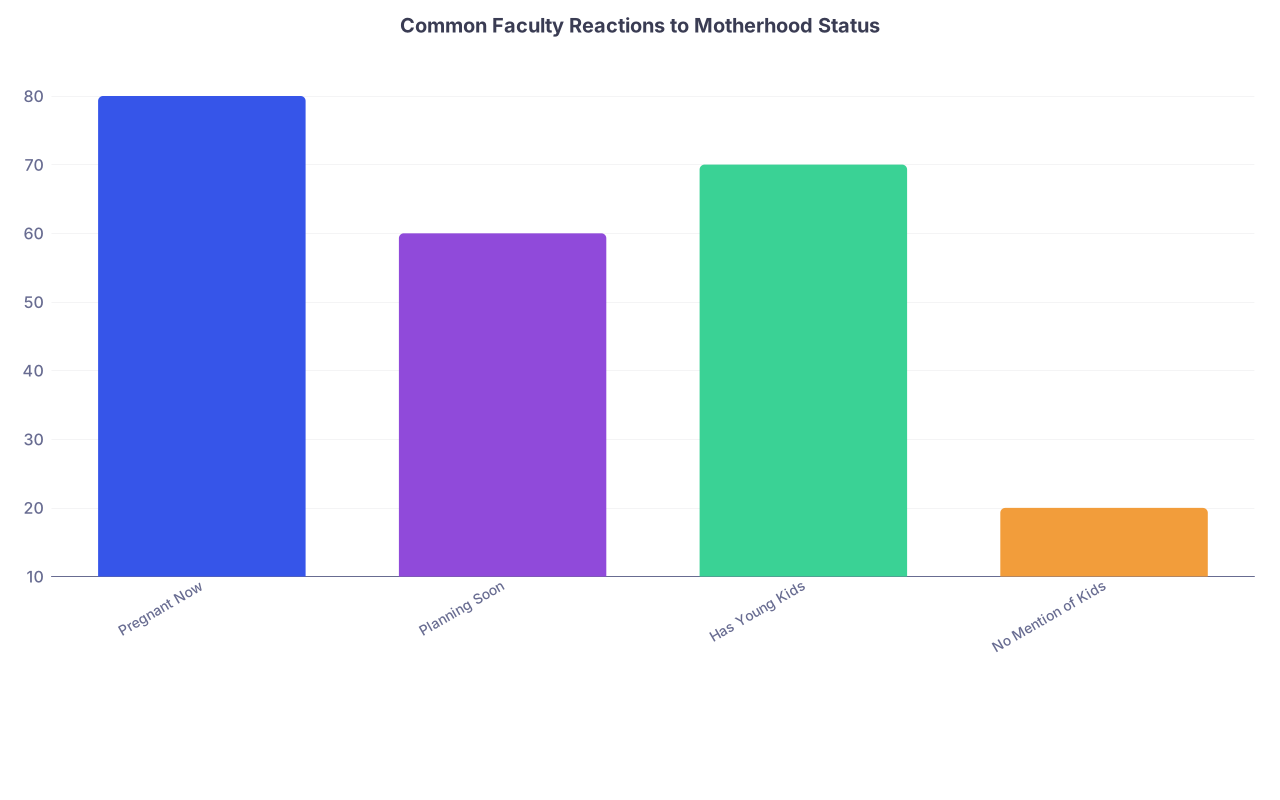
| Category | Value |
|---|---|
| Pregnant Now | 80 |
| Planning Soon | 60 |
| Has Young Kids | 70 |
| No Mention of Kids | 20 |
Those numbers are my rough estimate—how often I’ve heard motherhood raised as a “consideration” in discussions across multiple programs.
If you’re pregnant during interview season
You walk in (or log in) visibly pregnant, or you disclose because the due date is squarely in intern year.
In the post‑interview meeting, the reactions split into three camps:
The genuinely supportive PD
They say things like:- “We have good parental leave; this is not a problem.”
- “We can plan the schedule around a leave; we’ve done it before.” These programs exist. Usually at large academic centers with decent backup coverage and a culture that’s already had multiple maternity leaves without imploding.
The “supportive but anxious” crowd
Out loud, they say:- “We love her; we’ll make it work.”
Off the record, they say: - “We just need to be realistic—who’s going to cover nights that month?”
- “Can we shuffle her heavier rotations to later?”
They like you, but they’re already mentally spending your social capital with your future classmates to cover your absence.
- “We love her; we’ll make it work.”
The quietly punitive programs
They don’t say much in the big meeting. Then in the smaller huddle later:- “Let’s just move her down a bit; we’ve had so much leave already.”
- “We need a reliable class this year.”
“Reliable” is code. You know what for.
I’ve seen pregnant applicants go from top 5 to middle third on the list with no objective reason except, “We’re just not sure how this will play out.”
If you say “I want kids during residency” but are not pregnant yet
Here’s where your wording matters more than you think.
If you volunteer, “I definitely want to have my first kid in residency,” some PDs immediately start mapping your hypothetical leave in their head. Especially in small programs (think 4-6 residents per year).
If instead you say, “Family is important to me, and I’ll probably start a family sometime in the next several years, but I’m committed to showing up fully as a resident,” they relax. Same content. Different framing.
And yes, some will absolutely rank you differently for saying the first version.
If you already have kids
Ironically, you can sometimes get more respect here than with the “planning to” crowd.
You’re a known quantity:
- You’ve done med school with kids.
- You can point to concrete evidence: “I’ve never missed a clerkship day for childcare issues; we have robust backup.”
- Programs can see how you’ve actually managed, not worry about hypotheticals.
But the bias doesn’t vanish. They worry about:
- Call plus daycare logistics.
- Whether your partner’s job is flexible.
- Whether you’ll “opt out” of extra opportunities.
You can feel this in the questions:
- “Who helps you with childcare?”
- “What’s your support system like here?”
Those are not idle small talk. That’s them trying to predict whether you’ll break.
The Hidden Cultural Signals You Need To Read
Forget the website fluff. You need to read how a program lives motherhood, not how it talks about it.

| Step | Description |
|---|---|
| Step 1 | Shortlist Programs |
| Step 2 | Ask Residents Off Record |
| Step 3 | Review Policies |
| Step 4 | Probe on Interview Day |
| Step 5 | Watch for Red Flags |
| Step 6 | Adjust Rank List |
Here are the signals that tell you how your motherhood will actually land once you’re on the inside.
1. How they talk about past maternity leaves
You ask, “Have residents taken maternity leave recently?”
Listen for tone, not just content.
Supportive program responses sound like:
- “Yes, several over the last few years. We adjust schedules, use jeopardy, and they’ve all graduated on time.”
- “It takes planning, but we see it as part of our job to support that.”
Red flag responses:
- Long pause, then: “Uh, yes, we had someone… it was… complicated.”
- “We try to discourage leaves during certain key rotations.” (Translation: we will resent you if your biology doesn’t line up with our block schedule.)
- “We haven’t really had that situation, so we’re not sure.” For 2026? That tells you something about culture.
You want specifics. If they can’t give you a concrete example of a resident being pregnant, taking leave, and successfully returning, that’s data.
2. How residents talk when faculty aren’t around
This is where the real story comes out.
You ask a senior resident on the side: “How did the program handle Dr. X’s maternity leave?”
Their face will tell you before their words do.
Common honest answers I’ve heard:
- “Administration was supportive, but the coverage was brutal. We were all fried.”
- “They said they supported it, but the chiefs made comments about ‘loyalty’ when people needed to leave early for childcare.”
- “Honestly, it was fine. We were busy, but it felt fair. The PD had our backs.”
You’re not just asking, “Is leave possible?” You’re asking, “What was the emotional cost to the class?” Because that’s what determines how your future co-residents react when you’re the one out.
How To Build Your Rank List If You’re Pregnant Or Planning
Let’s get tactical. Here’s what I tell residents and students behind closed doors.
First: get brutally honest about your timeline
Not performatively honest. Internally honest.
- Are you already pregnant or actively trying?
- Will you be devastated if you have to “delay” by a year or two?
- Are you 28 with normal fertility workup or 35 with known DOR?
Your risk tolerance changes with those realities. The ethics piece? You do not owe a program your entire reproductive plan. But you owe yourself a clear look at what you actually want.

Then: stratify programs by how they actually handle parenthood
You’re essentially ranking on motherhood risk/benefit, not just prestige or fellowship match.
Here’s a rough classification I’ve seen across specialties:
| Program Type | Motherhood Reality |
|---|---|
| Large academic, 12+ residents/year | Best logistics, better coverage, more redundancy |
| Mid-sized academic, 6–10/year | Variable, depends heavily on PD and culture |
| Small community, 3–5/year | Most fragile to any leave, often more resentment |
| Malignant/high-volume prestige | Talk a good game, often quietly punishing |
| Primary-care oriented, mission-driven | Often genuinely supportive, but check coverage details |
Is this universal? No. But the pattern holds more often than not.
If you’re seriously planning pregnancy in residency—or already pregnant—you should strongly consider:
- Larger programs with proven leave stories.
- Places where multiple people have had kids and are still speaking positively about it.
I’ve watched people force themselves into a small, “dream” program that then panicked when they got pregnant. Coverage nightmares, peer resentment, PD guilt-tripping. It’s not worth the badge on your white coat.
The Ethics No One Teaches You: What To Disclose, What To Protect
Here’s the part that makes people uncomfortable. You’re sitting at this intersection of ethics, law, and survival.
Legally, programs cannot ask you about:
- Pregnancy status.
- Plans to have children.
- Fertility treatments.
They also are not supposed to use it in evaluation.
You and I both know it seeps in anyway.
So what do you do with that?
Should you disclose pregnancy during recruitment?
If you’ll be obviously pregnant by the time you start, or due very close to orientation, hiding it is practically impossible and logistically messy.
What I’ve seen work best:
- After you have an offer or very strong signals, and ideally late in the season, you disclose to the PD in a brief, calm way:
- “I’m expecting, due in late August. I’m excited about your program and want to work with you to plan a leave that’s fair to the team and consistent with policy.”
You’re not asking permission to be pregnant. You’re signaling: “I’m responsible and thinking about logistics.”
Would I announce a very early pregnancy broadly during interviews with miscarriage risk high? Probably not. You’re allowed to guard your own heart.
Should you talk about “wanting kids” on interview day?
Here’s the ugly insider answer:
For most specialties and most programs, you gain nothing by explicitly saying, “I plan to have kids in residency.”
You can talk about:
- Valuing family.
- Support systems.
- Work–life integration.
Without giving them an excuse to start mapping your ovaries onto their call schedule.
If a female faculty member directly asks (it happens, even though it shouldn’t), you can deflect with something like:
- “Family is important to me, and I know I’ll have one. Right now I’m focused on training, and I’ll work within whatever policies the program has when that time comes.”
You’ve answered without handing them ammunition.
Is that fair? No.
Is that currently how you protect yourself in a biased system? Yes.
How Motherhood Should Change Your Priorities (Even If It Hurts Your Ego)
This is where a lot of high-achieving women get trapped. You’ve worked your whole life for “top,” “competitive,” “prestigious.” Then you get to rank season and realize those programs:
- Brag about their board pass rate.
- Shrug about parental leave.
- Smirk about “we work hard and play hard” (translation: you’re disposable).
You have to decide whose judgment you care about more:
- The PD at Big-Name Med who will forget you the year after you graduate.
- Or your future toddler, who will not care if your badge said “Harvard” or “Regional Medical Center,” but will absolutely care whether you’re present and not shattered.
I’ve watched residents choose big-brand prestige over their stated desire for family and then spend three years trying not to fall apart. I’ve also watched women drop one rung in prestige to gain a program that genuinely flexed around their pregnancy—and they still matched into competitive fellowships afterward.
One chief resident told me bluntly:
“I thought I wanted the big name. Then I had my daughter PGY-2 and realized what I actually needed was a PD who would say, ‘We’ve got you. Go be with your kid.’ I would’ve burned out at [top-name program].”
Your rank list is not a trophy shelf. It’s a blueprint for your life for the next 3–7 years.
What Actually Happens When Residents Get Pregnant
Let’s pull the curtain back a bit more. Here’s the pattern at many programs when a resident announces a pregnancy.
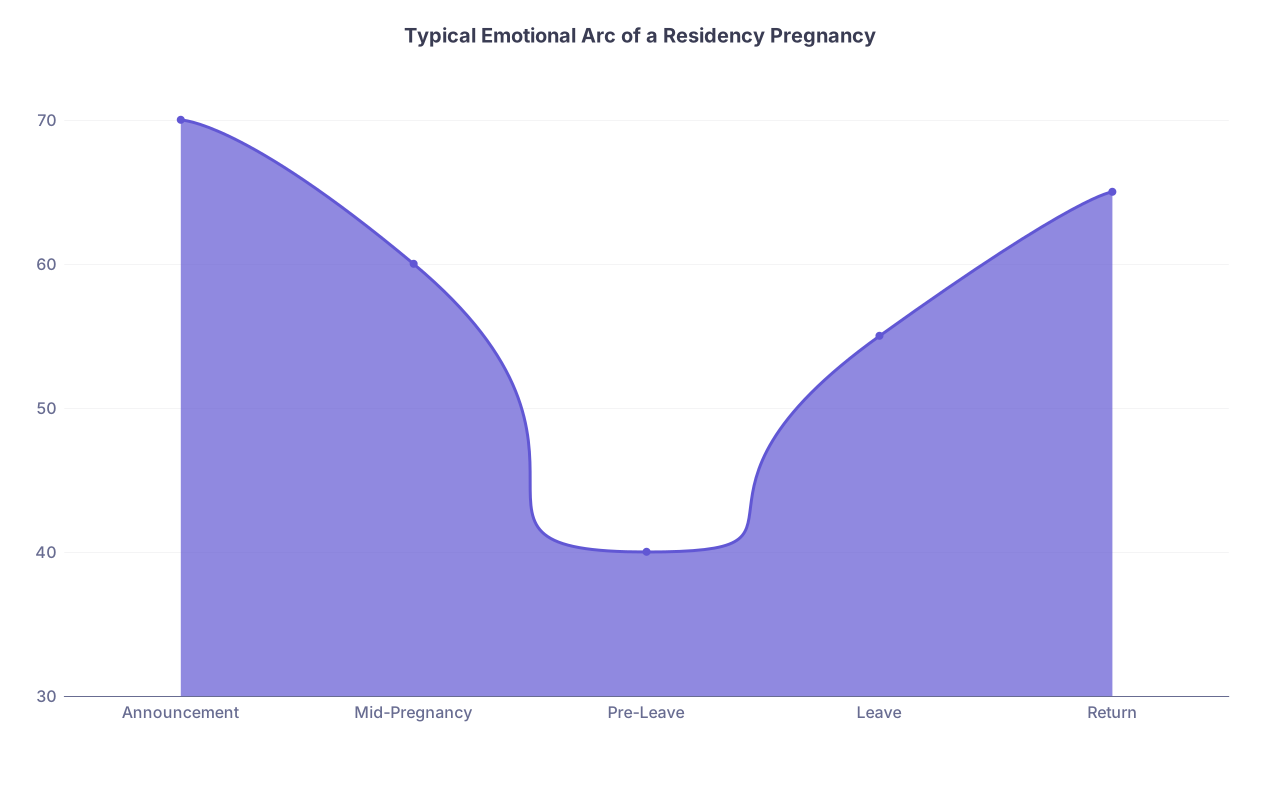
| Category | Value |
|---|---|
| Announcement | 70 |
| Mid-Pregnancy | 60 |
| Pre-Leave | 40 |
| Leave | 55 |
| Return | 65 |
Call those numbers the “general vibe” score I’ve seen: enthusiasm early, tension before leave, then gradual normalization.
Step 1: Leadership response
Best case:
- PD congratulates you.
- They loop in GME, HR, and chief residents early.
- They lay out policy and options, including extended training vs. compact leave.
Worst case:
- PD looks visibly stressed.
- They say, “We’ll have to see what’s possible.”
- They leave it entirely to chiefs to “figure it out,” then step away.
Programs that do this well treat pregnancy as normal, not catastrophic.
Step 2: Schedule surgery and coverage drama
Even in “good” programs, this part is painful. Why? Because American GME is built on the backs of too few humans doing too much work.
You’ll see:
- Chiefs trying to move your ICU or night float away from your due date.
- Residents negotiating swaps, some graciously, some resentfully.
- Admin arguing about whether jeopardy or moonlighters can soak up the extra.
The key question for your rank list is:
Does this program have systems for this, or is it always improvised and traumatic?
If every pregnancy is a five-alarm fire, that’s a program problem, not a “you problem.”
Step 3: The social undercurrent
This is what you can’t get from the website. How do co-residents talk when they think you’re not listening?
I’ve heard both:
- “We’re tired, but it’s temporary. We’ll all need support at some point—it’s fine.”
- “Honestly, I’m so sick of covering people’s lives. I didn’t sign up for this.”
You want to be in the first environment. That depends heavily on culture set by PD and chiefs.
How To Quiet The Background Noise And Make Your List
By the time you’re finalizing your rank list, your brain is a mess of:
- US News rankings.
- Your mentor’s opinion.
- Your partner’s job.
- Your fertility clock.
- Your ego.
Strip it down. In the context of motherhood, you’re asking three main questions:
Can this program handle my leave without blowing up my class?
Size, jeopardy systems, past history.Do I trust leadership to have my back when logistics get hard?
Not just platitudes—evidence.Will I be punished socially or professionally for being a mother here?
How they talk about past residents. How women with kids are doing now.

If you answer those honestly, your rank list usually starts to rearrange itself. Sometimes that means your “dream” program drops a few spots. Sometimes it stays at the top because they actually walk the walk.
The courageous move is ranking for the life you want, not the applause you’ve been trained to chase.
FAQs
1. Is it unethical to NOT disclose pregnancy or plans for kids during interviews?
No. You are not ethically obligated to preload their biases. The system is already stacked against mothers. Protecting your private medical and reproductive information is not deception; it’s self-defense. Once you’ve matched, you’ll work within policies and communicate responsibly, but you don’t have to give programs advance permission to discriminate.
2. Will choosing a more “family-friendly” program hurt my fellowship or academic chances?
Not if the program is competent and you do your job well. I’ve watched women match cardiology, GI, derm, and competitive surgical fellowships from mid-tier but humane programs. The killer of careers isn’t lack of prestige; it’s burnout, depression, and being so unsupported that you disengage. A program that keeps you intact will do more for your career than a brand name that grinds you down.
3. How high should I prioritize motherhood issues versus program reputation and training quality?
If you’re serious about having kids during residency—or already pregnant—motherhood considerations should be top-tier factors, right alongside case volume and fellowship outcomes. You can’t “out-grind” a hostile culture with willpower. Training quality matters, but if the environment punishes you for being a mother, you’ll pay for that every single day. Rank where you can be both a physician and a human being.
Remember:
You’re not just ranking programs. You’re ranking futures.
Pick the one where the woman you’ll be in three years—sleep-deprived, holding a pager in one hand and a baby in the other—will look back and say, “Thank God I chose this place.”