
The idea that you “need prior industry experience” to break into pharma is outdated—and frankly, an excuse people use to stay stuck.
You can get your first pharma role in 6 months without industry experience, if you treat it like a structured project instead of a vague wish. I am going to give you that structure.
This is a tactical, month‑by‑month plan for clinicians, researchers, and medical professionals who want out of traditional practice and into pharma, biotech, or medtech roles that actually use your medical brain.
Step 0: Know What Roles You Are Aiming At (Week 1)
If your goal is just “get into pharma,” you are already behind. Vague goals lead to scattershot applications and silent rejections.
You need to narrow to 1–2 entry-compatible role types that match your background and timeline.
Core entry lanes for medically trained people
Here are realistic first roles for people with clinical / academic backgrounds and no prior industry experience:
| Role Type | Typical Title Examples | Best Background Match |
|---|---|---|
| Medical Affairs (Field) | MSL, Medical Advisor | MD, DO, PharmD, PhD |
| Medical Affairs (Office) | Associate Medical Director | MD, PhD, strong publications |
| Clinical Development | Clinical Research Physician | MD with trial exposure |
| Pharmacovigilance | Drug Safety Physician, PV Scientist | MD, PharmD |
| Clinical Operations | Clinical Trial Manager, CRA | RN, CRC, research staff |
| HEOR / RWE | Health outcomes scientist | MPH, PhD, stats/epi |
Forget the fantasy roles for a first move:
- VP Medical Affairs
- Global Franchise Lead
- Chief Medical Officer for a major biotech
Those come later. Your first job is the wedge that gets you through the door.
Quick self-triage
Use this quick filter:
You are an MD / DO with some research or trial exposure
→ Target: Medical Science Liaison (MSL) or Drug Safety / PharmacovigilanceYou are a PharmD, PhD, or biomedical scientist
→ Target: MSL, Medical Information, or Medical Writer (agency side or in-house)You are a nurse, PA, CRC, or allied health with trial exposure
→ Target: Clinical Research Associate (CRA), Clinical Trial Coordinator, Clinical Operations Associate
Pick one primary and one backup lane. Write them down. Everything in the next 6 months points at those lanes.
The 6-Month Roadmap (Overview)
Here is the high-level view before we get detailed:

| Step | Description |
|---|---|
| Step 1 | Week 1 - Target Roles |
| Step 2 | Month 1 - Market Research and CV Conversion |
| Step 3 | Month 2 - Skills Gap and Portfolio Projects |
| Step 4 | Month 3 - Networking System and LinkedIn Engine |
| Step 5 | Month 4 - Strategic Applications and Recruiter Pipeline |
| Step 6 | Month 5 - Interview Mastery and Story Polishing |
| Step 7 | Month 6 - Offer Negotiation and Backup Paths |
Now we go month by month. No fluff. Concrete actions.
Month 1: Decode the Market and Rewrite Your Story
Your first problem is not lack of experience. It is translation. You are speaking “hospital” or “academic” while recruiters read “industry.”
1. Build your role library (Week 1–2)
You are going to read 40–50 job descriptions for your chosen target roles.
Actions:
- On LinkedIn, Indeed, and company career pages, search:
- “Medical Science Liaison”
- “Drug Safety Physician”
- “Clinical Research Associate”
- “Clinical Trial Manager”
- Save or copy 40–50 job ads into a document or spreadsheet.
- Highlight recurring phrases and requirements.
You will start seeing the same phrases:
- “KOL engagement”
- “Phase II–IV clinical trials”
- “Cross-functional collaboration”
- “Benefit-risk assessment”
- “Scientific exchange”
- “Adherence to GCP”
These phrases are your new vocabulary.
2. Translate your clinical experience into industry language (Week 2)
Take your current CV. It probably screams:
- “Managed 20-bed inpatient service”
- “Performed 300+ colonoscopies”
- “Precepted residents and students”
Industry hiring managers do not care how many beds you rounded on. They care if you can:
- Analyze data
- Communicate with stakeholders
- Work within a regulated environment
- Understand evidence and guidelines
- Educate peers without violating compliance rules
Rewrite 6–10 bullet points to match that.
Examples:
Old: “Rounded on 20–30 inpatients daily including complex multi-morbid cases.”
New: “Led multidisciplinary management and data-driven treatment decisions for 20–30 complex patients daily, aligning care with evolving evidence and safety guidelines.”Old: “Precepted IM residents and students on the wards.”
New: “Delivered structured, evidence-based education to resident physicians and students, translating new clinical trial data into practical treatment decisions.”Old: “Participated in multiple clinical trials as sub-investigator.”
New: “Served as sub-investigator on industry-sponsored Phase III trials, ensuring protocol adherence, AE documentation, and GCP-compliant data collection.”
Your goal: 2-page industry CV, not a 7-page academic CV. No publications list longer than 10 items in the main body; the rest in “Selected Publications.”
3. Optimize your LinkedIn profile (Week 3–4)
Recruiters live on LinkedIn. If your profile looks like a random hospital employee, you lose.
Key changes:
Headline – must signal target role and value.
Bad: “Internal Medicine Physician at XYZ Hospital”
Better: “Internal Medicine Physician | Clinical Trials & Evidence-Based Medicine | Aspiring Medical Science Liaison”About section – 5–7 lines, specific.
Example:
Board-certified internist with 8+ years of experience in guideline-driven care, clinical research participation, and peer education. Served as sub-investigator on Phase III cardiovascular trials, frequently presenting new data at grand rounds and regional CME events. Strong interest in Medical Affairs with focus on translating complex evidence into clear, compliant discussions with practicing clinicians. Actively completing MSL-specific training and building therapeutic-area expertise in cardiometabolic disease.
Experience bullets – use the translated bullet style from your new CV.
Skills – add specific ones drawn from job ads:
- “Clinical Research”
- “Key Opinion Leader Engagement”
- “GCP”
- “Medical Education”
- “Pharmacovigilance” (if relevant)
- “Clinical Trial Management”
Get 3–5 recommendations (consultants, attendings, PIs) focused on:
- Your communication
- Your reliability
- Your ability to explain complex topics
At the end of Month 1 you should have:
- A clear primary and secondary target role
- 40–50 analyzed job descriptions
- A rewritten, industry-ready CV
- A LinkedIn profile that looks like you are already halfway in pharma
Month 2: Close Skill Gaps and Build a “Pseudo-Portfolio”
You do not need a full master’s degree. But you do need to show you understand how pharma works.
1. Fill core knowledge gaps
Pick 1–2 short, specific courses that signal seriousness. No one cares that you watched 40 hours of random YouTube.
For example:
- For MSL / Medical Affairs:
- A recognized MSL training certification (MSL Society, or a reputable online program)
- Short course on “Drug Development & Regulatory Affairs”
- For Pharmacovigilance:
- Online PV fundamentals (e.g., EU PV, ICSRs, signal detection)
- Intro to GVP or MedDRA coding basics
- For Clinical Operations / CRA:
- GCP (Good Clinical Practice) certification (must-have)
- “Intro to Clinical Trial Operations” type course
Allocate 5–7 hours/week to structured learning.
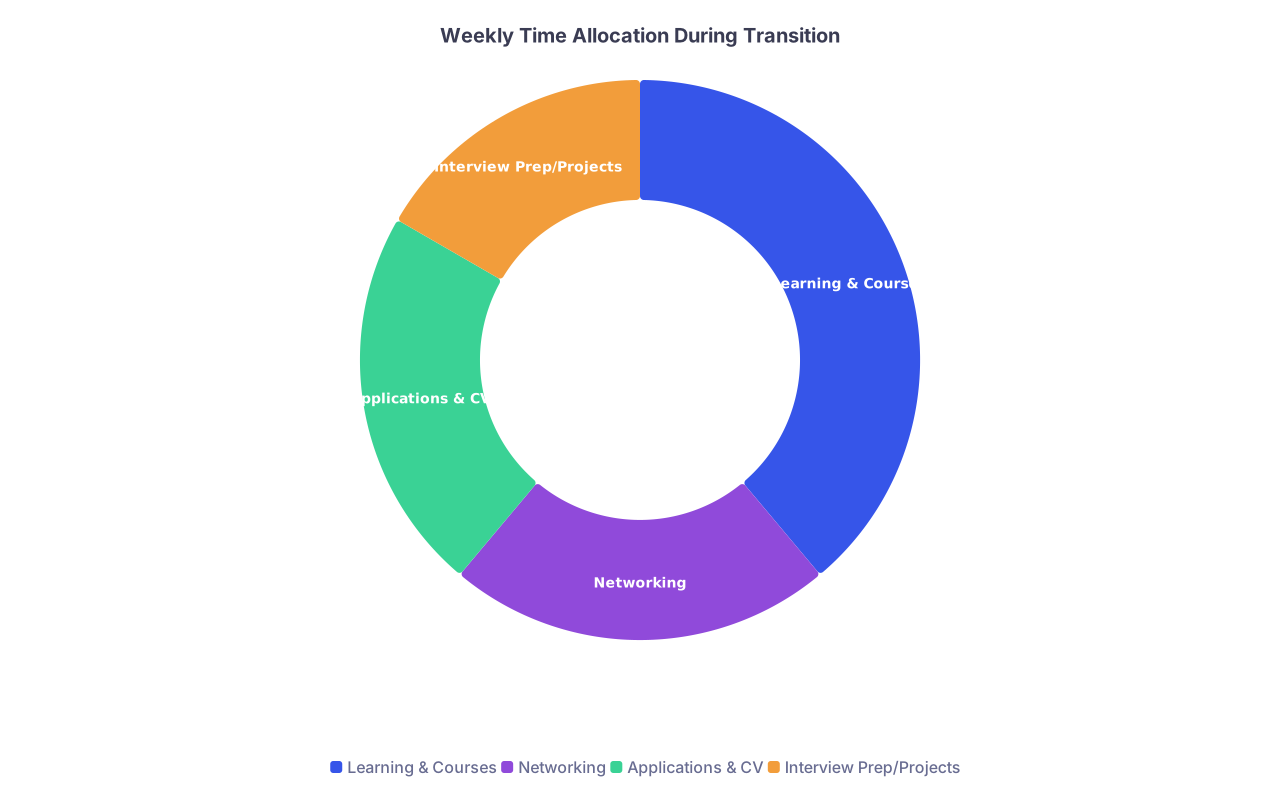
| Category | Value |
|---|---|
| Learning & Courses | 7 |
| Networking | 4 |
| Applications & CV | 4 |
| Interview Prep/Projects | 3 |
2. Create 1–2 “signal projects”
HR likes “experience.” When you do not have it, you create "evidence of ability."
Depending on your target lane:
For MSL / Medical Affairs:
- Build a 15–20 slide scientific deck in your therapeutic interest area:
- Overview of disease burden
- Current treatment landscape
- Key Phase III/IV trials and outcomes
- Unmet needs and emerging data
- Prepare a 10-minute verbal walkthrough as if presenting to clinicians.
For Pharmacovigilance:
- Take a published drug safety paper (e.g., post-marketing safety of a new anticoagulant).
- Write a 2-page structured summary:
- Signal identified
- Case data
- Risk factors
- Proposed risk minimization strategies
- Map the process: initial AE → ICSR → database → assessment → signal.
For Clinical Operations / CRA:
- Draft a simple site start-up checklist for a hypothetical trial:
- Regulatory docs
- Training
- Investigator Site File
- Initiation visit prep
- Create a 1-page summary of a published trial, focusing on:
- Endpoints
- Visit schedule
- Inclusion/exclusion criteria
- Data collection plan
You never attach the full deck to applications, but you reference these in interviews and conversations. Shows initiative. Shows you actually understand the work.
3. Document your learning publicly (optional but powerful)
If you can tolerate some online presence:
- Post 1–2 short LinkedIn updates per week:
- “3 key takeaways from reviewing the XYZ Phase III trial”
- “What I learned about GCP and why it matters for patient safety”
- Keep them crisp and professional. You are building a small but visible trail of seriousness.
By the end of Month 2:
- You have at least one certificate or completed course
- You have 1–2 concrete “projects” you can talk through
- You can speak basic pharma language without sounding like a tourist
Month 3: Build a Networking System That Actually Works
This is where most people flail. They “network” by connecting with 300 strangers and asking for jobs. That does nothing.
You need a repeatable weekly system.
1. Clean up your targets: people and companies
Make a 2-tab spreadsheet:
Tab 1 – Target Companies (20–30)
- Mix: Big pharma (Pfizer, Novartis, J&J, Roche), mid-size biotechs, CROs (IQVIA, Syneos, ICON), and smaller specialty companies.
- Columns: Company, therapeutic focus, target role type, career page URL, notes.
Tab 2 – Target People (50+)
People in your target roles:- Current MSLs in your therapeutic area
- Drug safety physicians
- Clinical operations managers
- Recruiters that focus on pharma/biotech
2. Build a weekly outreach rhythm
Aim for 10–15 tailored connection requests per week. Not 200 spam messages.
Sample initial note (short and specific):
Hi Dr Smith, I am an internist with 7+ years in cardiometabolic care and trial participation, pivoting toward an MSL role in this space. I noticed your path from academic medicine into Medical Affairs at XYZ. If you are open to a brief 15-minute chat sometime this month, I would value asking 2–3 specific questions about that transition. Either way, thanks for considering.
If they connect but do not reply:
Thank you for connecting. I have been studying the MSL role and working on a cardiometabolic data deck. I am particularly curious about how you framed your clinical experience when you applied. If you ever have 10–15 minutes for a quick call, I would be grateful. No worries at all if timing is bad.
You are not asking for a job. You are asking for information and perspective. That lowers defenses.
Target: 3–5 actual conversations per month. That is enough.
3. Use conversations correctly
On the call:
- Introduce yourself in 45–60 seconds. Not your life story.
- Ask 3–4 focused questions, for example:
- “Looking at my background, what roles do you think are most realistic as a first step?”
- “What mistakes do you see clinicians make when they apply?”
- “How does your team actually measure success in your role?”
- “If you were in my shoes with a 6-month horizon, what would you do first?”
- End with a light ask:
- “Is there anyone else you think I should talk to?”
- “Would you mind if I reached out in a couple of months with an update?”
If they offer to pass your CV along, good. If not, do not push. You are playing a long game.
By the end of Month 3:
- You should have spoken to 5–10 people actually working in your target roles
- Your understanding of real-day work is much sharper
- 2–3 of these people now know who you are and may flag roles or refer you later
Month 4: Start Focused Applications and Recruiter Pipeline
Now you are allowed to apply. But not by spraying resumes blindly.
1. Decide your weekly application “budget”
Most good candidates drown themselves: 50 low-quality applications, no follow-up, no learning.
You want 5–10 high-quality applications per week, max.
Each application should be:
- Matched to your skills and courses
- Slightly tailored in CV keywords and bullet emphasis
- Supported, when possible, by a warm touchpoint (someone you spoke to, a recruiter, or a hiring manager on LinkedIn)
2. Build a recruiter list
There are recruiters whose entire income depends on filling pharma roles. Use them.
On LinkedIn:
- Search “MSL recruiter,” “Medical Affairs recruiter,” “pharmacovigilance recruiter,” “clinical research recruiter.”
- Filter by location but do not be too narrow; many roles are hybrid or remote.
Send a short note:
Hi [Name], I am a board-certified internist with 8+ years of clinical practice, sub-investigator experience in Phase III cardiometabolic trials, and recent MSL-focused training. I am targeting entry-level Medical Affairs / MSL roles and would appreciate being on your radar for cardiometabolic, renal, or endocrine portfolios. May I send a 1-page summary profile for your files?
Then actually send a tight 1-page summary (not your full CV) with:
- Headline: “Internist transitioning to MSL – Cardiometabolic focus”
- Brief profile
- Key experience bullets
- Therapeutic areas
- Location / relocation / travel flexibility
3. Use a tracking system
You are running a mini-sales pipeline. Treat it that way.
Track for each application:
- Company and role
- Date applied
- How you applied (portal, referral, recruiter)
- Status: Submitted → Under review → Screen → Interview → Rejected → Offer
- Notes: who you know there, what you learned
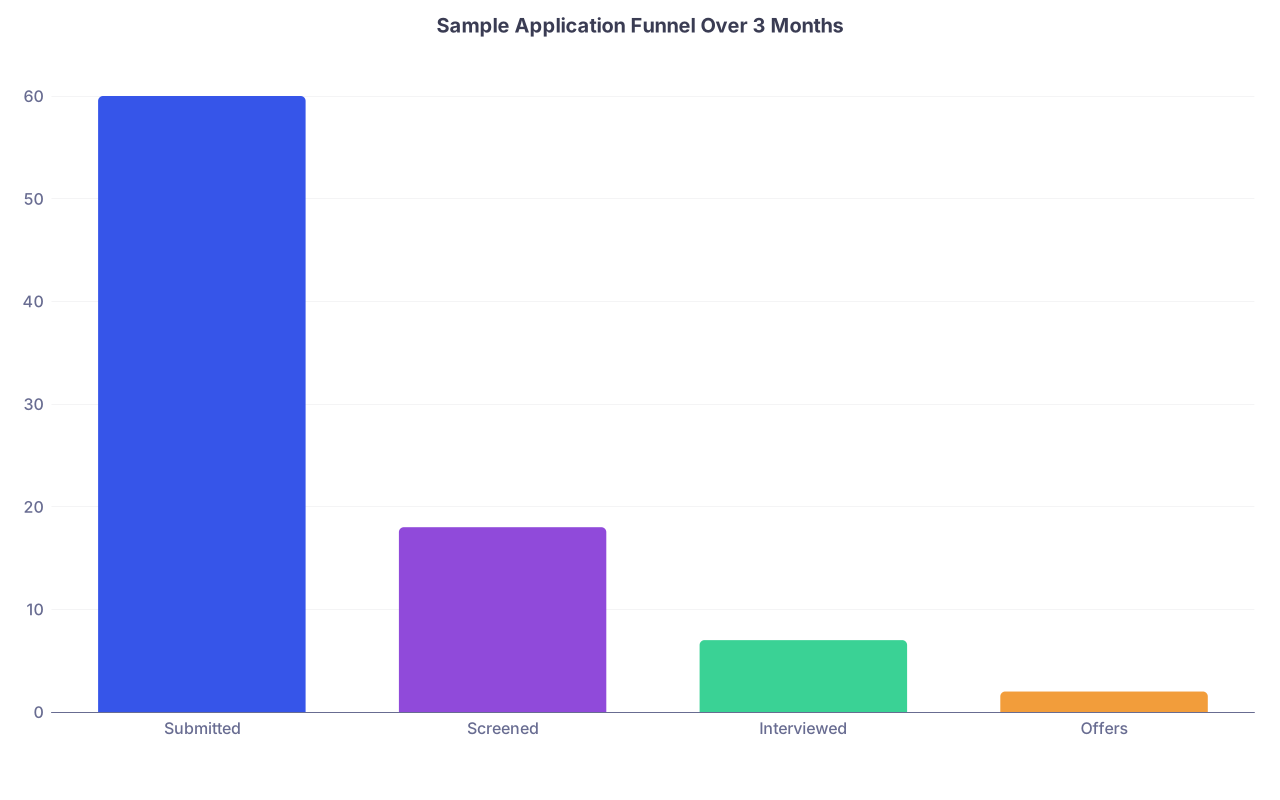
| Category | Value |
|---|---|
| Submitted | 60 |
| Screened | 18 |
| Interviewed | 7 |
| Offers | 2 |
You want to be learning:
- Which companies respond at all
- Which versions of your CV or cover note get callbacks
- Where you stall (screen? interviews?)
By the end of Month 4:
- You should have 20–40 targeted applications in the system
- You should have several recruiter relationships aware you exist
- You should have seen at least a few initial screening calls
If you are seeing zero movement by the end of Month 4, something is badly off: CV, LinkedIn, or role targeting. That is when you ask one of your industry contacts for a blunt review.
Month 5: Turn Screenings Into Offers
At this point, lack of “industry experience” is no longer your main enemy. Unpolished narrative is.
You must be able to answer one question crisply:
“Why does it make sense for us to hire you for this role right now?”
1. Build your core story
You need a 90-second version and a 5-minute version.
Structure:
- Where you have been – your clinical / academic foundation
- What changed – specific moments that pushed you toward pharma
- What you have done about it – courses, projects, conversations, aligned skills
- Why this role / company – not generic; mention their products, pipeline, or therapeutic area
Example (MSL pivot):
I am a board-certified internist and hospitalist with 8 years of experience, with a particular focus on cardiometabolic disease. Over the last few years I have served as sub-investigator on several Phase III cardiovascular outcome trials and found that the most satisfying part of my week was not the individual patient encounters but the moments where I could discuss new data with colleagues and adjust our practice together.
As I dug deeper, I realized that Medical Affairs—and specifically the MSL role—sits exactly at that intersection of evidence generation and peer-to-peer education. Over the last six months I have completed GCP training, an MSL-focused course, built a cardiometabolic data deck, and had informational conversations with several MSLs at [companies]. I am now looking for an entry MSL role where I can bring my experience treating the very patients on your [drug/class] and my comfort in discussing complex data with clinicians, to support your medical strategy in [disease area].
You practice this out loud. Multiple times. Until it is natural.
2. Prepare role-specific question banks
You should not “wing it” for pharma interviews. They are structured.
Common categories for MSL / Medical Affairs:
- Behavioral:
- “Tell me about a time you influenced a colleague without authority.”
- “Describe a situation where a physician disagreed strongly with you.”
- Scientific:
- “Walk me through a recent pivotal trial in your area and how it impacted practice.”
- “How would you handle a question that goes beyond the approved label?”
- Role understanding:
- “How do you see the difference between sales and MSLs?”
- “How would you prioritize your KOL visits in a large territory?”
Common categories for Pharmacovigilance:
- “How would you define a serious adverse event?”
- “What are key components of an ICSR?”
- “Tell me about a time you managed an urgent clinical safety issue.”
Common categories for Clinical Operations / CRA:
- “What would you do if a site was consistently missing data deadlines?”
- “Explain how you would prepare for a monitoring visit.”
You do not memorize scripts. You prepare structured talking points: situation, your actions, the result, what you learned.
3. Handle the “no industry experience” objection directly
You will get some version of this:
“We usually look for someone with at least 1–2 years of industry experience.”
Your answer cannot be defensive or needy.
Try something like:
I understand that and I have seen that pattern. The reason I believe I can add value despite not having formal industry experience yet is that the core elements of this role—communicating complex data, understanding real-world clinical decision making, and operating within regulated frameworks—are exactly what I have been doing for the past 8 years.
I have managed complex cardiometabolic patients, participated in Phase III trials as a sub-investigator, completed GCP and MSL-specific training, and built scientific materials that I have used with peers. I will need onboarding to your internal systems and processes, of course, but I am confident that my clinical depth and focused preparation will let me get up to speed quickly.
You are reframing experience: from “pharma years” to “relevant capabilities.”
By the end of Month 5:
- You should have done multiple screens and probably some full interviews
- Your story should feel tight and repeatable
- You should see where interviews are breaking down and adjust
Month 6: Land the Offer—and Protect Your Downside
This is where persistence and strategy matter more than raw genius.
1. Widen the aperture without losing focus
If offers are not materializing yet, slightly widen your role net:
- For MSL targets, also look at:
- Medical Information roles
- Medical Writer roles
- Associate Medical Advisor
- For PV targets:
- Medical Information
- Safety Physician at CROs
- For Clinical Ops targets:
- Trial Assistant
- Clinical Project Coordinator roles
These can be stepping stones. You are not marrying your first role.
2. Negotiate like a rational adult
When an offer comes:
- Benchmark typical ranges for your geography and role (Glassdoor, Levels, talking to recruiters).
- Do not anchor based on your hospital salary if it was dramatically lower. Pharma pays differently.
You can say:
Based on my research and discussions with others in similar roles, I was expecting a base range closer to [X–Y]. Given my clinical background in exactly the patients you are targeting and the preparation I have invested this past year, is there flexibility to move closer to that range?
Be prepared that for a first role, the answer may be “We are capped.” Then judge the tradeoff:
- Is this a solid company with real products or promising pipeline?
- Is the role clearly aligned with your target career lane?
- Are you gaining the “1–2 years of experience” that will explode your options next?
Sometimes the correct play is: take the offer, learn everything, re-evaluate after 18 months.
3. Maintain a parallel safety strategy
Not everyone lands the role exactly at Month 6. If you are at Month 6 with no serious pipeline, you do two things simultaneously:
- Extend the timeline consciously – Plan for a 9–12 month pivot, not “sometime.”
- Use a bridge role – Consider:
- Academic research positions more embedded in industry trials
- Roles at CROs that are easier to enter than big pharma
- Part-time consulting or medical writing that builds portfolio and connections
What you do not do is quit on Month 6 and crawl back to “Oh well, pharma only wants insiders.” That is simply untrue; I have watched too many clinicians and scientists make this jump to accept that excuse.
FAQs
1. Do I absolutely need an MD, PharmD, or PhD to get into pharma?
No. Those degrees open certain doors faster, especially for MSL or Drug Safety Physician roles, but there are plenty of entry options for RNs, PAs, CRAs, and master’s-level scientists—particularly in clinical operations, study coordination, medical writing, and data management. You must simply target roles where your credential set is standard, not exceptional.
2. Is an MSL certification or formal course mandatory?
Not mandatory, but useful. Hiring managers are not dazzled by brand names here; they care that you have done the homework and understand basic expectations. A focused MSL or drug development course can help you talk intelligently during interviews and shows commitment. But it is a supporting piece, not a golden ticket.
3. Can I realistically do this transition while working full-time clinically?
Yes, but only if you treat your time as non-negotiable. That means 8–10 focused hours per week for 6 months: evenings and one weekend block. You will be tired. You will also be moving toward a career that is more sustainable long term. People make this switch every year while on call schedules; it is uncomfortable but very doable.
4. What if I live in a region with very few pharma offices?
Remote and field-based roles have expanded, especially post-2020. MSLs, clinical operations staff, and even some PV roles can be remote or regionally based. Focus on: (1) companies with remote policies, (2) CROs that hire regionally, and (3) being flexible about travel. You may not need to move immediately, but willingness to relocate will increase your options.