

It is late spring of your third year. You just finished core rotations, VSAS is open, your inbox has six emails from your dean’s office about away electives, and your classmates are all saying some version of: “I think I want to do academic medicine… but I also want a life… and I have no idea what electives to pick.”
You are staring at a list of clerkships and sub‑internships at two very different places:
– Massive university hospital with NIH grants splashed across the website.
– Busy community hospital where people actually seem to go home at a reasonable hour.
And you know this: your choices over the next 6–9 months are going to signal something to program directors. Academic track. Community track. Or that you have not thought about it at all.
Let me break this down very specifically.
1. Academic vs Community Careers: What You Are Really Choosing
Strip the branding away. This is the actual distinction:
Academic medicine (real version, not brochure version):
- Teaching learners is built into your job.
- Research and/or QI scholarship is expected, not optional.
- You sit in meetings about curriculum, promotions, IRB, and grants.
- Your promotions committee knows your h‑index.
Community practice (again, real version):
- You are paid to see patients efficiently. Productivity actually matters.
- Teaching may happen, but it is usually secondary and less structured.
- Research infrastructure is thin to nonexistent.
- Administrators care more about your wRVUs than your PubMed entries.
Most residents eventually land somewhere on a spectrum:
| Track Type | Teaching Focus | Research Expectation | Productivity Pressure |
|---|---|---|---|
| Pure Academic | High | High | Moderate |
| Academic-leaning | Moderate-High | Moderate | Moderate |
| Hybrid Hospital | Moderate | Low-Moderate | Moderate-High |
| Community-leaning | Low-Moderate | Low | High |
| Pure Community | Low | None | Very High |
Your clerkship and elective choices tell residency programs where you think you sit on this spectrum. They also shape your skills and letters in ways that either fit academic programs or community programs better.
So before picking rotations, you need two decisions:
- Which specialty (or two) you are realistically pursuing.
- Whether you are leaning academic, community, or truly undecided.
If you lie to yourself on either of those, your rotation plan will be incoherent.
2. What Program Directors Actually Infer From Your Clerkships
Program directors will not read your entire transcript like a novel. They scan for patterns. The clerkship piece they care most about:
- Where you did your sub‑internships (home vs away, academic vs community).
- The type of services: high‑acuity tertiary vs bread‑and‑butter community.
- Letters: who wrote them (big names, educational leaders, community workhorses) and what they actually say.
- Whether your schedule looks intentional or random.
Let me be blunt: the electives you choose are a signaling device.
If you load up on:
- Research elective
- Academic teaching elective
- Tertiary care sub‑I with highly specialized services
…then apply only to community-heavy programs with no research track, you look confused. Or worse, like you struck out on the academic side and “settled.”
Flip side: if you do all your senior time in small community hospitals, then apply broadly to top‑tier academic residencies with strong research cultures, they will question the fit unless your research or board scores are spectacular.
Programs want:
- People who will thrive in their environment.
- People whose prior choices show they understand that environment.
Your goal: build a clerkship portfolio that says, loudly and clearly, “I know what you are, and I have already practiced being that.”
3. Core Clerkships: How to Tilt Them Academic vs Community
You do not always control where you do core third‑year rotations, but you usually have some levers: site selection, elective time, who you work with, and what you do on each clerkship.
If You Are Academic‑Leaning
On your cores, lean hard into:
High‑acuity, tertiary sites whenever there is a choice.
- Teaching hospitals with residency programs in your chosen specialty.
- Units where fellows and subspecialists roam: transplant, HF, NICU, complex oncology.
Visibility with academic faculty.
- Ask your clerkship director which attendings are “known” in education or research.
- Get placed with them or at least request time on their teams.
Built‑in education structures.
- Inpatient teaching rounds, formal didactics, morning reports, noon conferences.
- You want to be seen thriving in those settings: asking good questions, presenting cleanly, teaching junior students.
Tactically, on each core:
- Volunteer for presentations (short talks on disease topics, journal clubs).
- Ask about joining ongoing projects: QI, retrospective chart reviews, education research.
- Get your name in front of people who can later write letters that mention words like “academic potential,” “future educator,” “interested in scholarship.”
If You Are Community‑Leaning
Your angle is different. You are selling:
- Efficiency
- Bread‑and‑butter competence
- Patient communication
- Team integration
On cores, when you have options:
- Choose community sites with high clinical volume over niche tertiary services.
- Prioritize settings where attendings practice similarly to what you will see in community jobs: fewer fellows, more direct attending‑to‑student interactions, real‑world constraints.
On service:
- Take more responsibility for routine tasks without whining.
- Show that you can handle a reasonable load, follow through, and not drop details.
- Be the student nurses and PAs like working with. That actually shows up in letters.
Academic programs like that too. But community‑oriented residencies especially care whether you can be safely productive on day one of internship.
4. Sub‑Internships: The Main Signal of Career Orientation
Sub‑Is are the loudest thing on your schedule. Where you do them and what kind they are will be interpreted.
Most students have bandwidth for 1–3 real sub‑Is in their chosen specialty (or close neighbors). Here is how to align them.
Academic‑Track Strategy
Non‑negotiables if you are seriously academic‑inclined:
At least one sub‑I at a strong academic home program in your chosen specialty.
- You need a department‑level letter saying you can function in a high‑expectation environment.
- That letter should come from a clerkship director, sub‑I director, PD, or big‑name faculty closely related to the residency.
Consider one away at a target academic program.
- Not just prestige for prestige’s sake.
- Aim for places with:
- Physician‑scientist tracks
- Clinician‑educator pathways
- Strong fellowship pipelines
- On that away, you are auditioning for a place that will feed you into a long‑term academic trajectory.
Target services that show you can handle complex patients.
- ICU, complex general medicine, high‑acuity surgery, oncology, transplant.
- Programs look for “can this person function with high complexity and thin margins?”
And yes, many of you should add a research elective timed so that:
- You can show ongoing involvement in a project during interview season.
- Your research mentor can write a substantive letter that aligns with your clerkship letters.
Community‑Track Strategy
You still need at least one sub‑I in your home institution’s main teaching service, because:
- Most residencies, even community ones, like seeing you tested in a more academic setting.
- It generates a standardized letter (especially in IM, EM, Surgery).
But then you have real flexibility:
Do a sub‑I at a community hospital (preferably with a residency).
- This can be home‑institution affiliated or an away.
- Show you understand throughput, ED‑to‑floor churn, limited resources, and real discharge pressures.
Choose services that mirror what a typical community attending does.
- General medicine wards, general surgery, OB, emergency, hospitalist‑style rotations.
- Less focus on the ultra‑subspecialized elective where the PD thinks, “That will never happen at our place.”
Get letters from:
- Program directors of community residencies.
- Core teaching attendings who are known workhorses, even if they are not famous names.
- People who will say clearly: “This student is reliable, efficient, and will be safe as an intern in a busy community program.”
A very common mistake: students who want a community‑heavy match but spend their entire fourth year chasing “big name” academic away rotations they were never competitive for. They end up with lukewarm letters and no relationship with the exact type of programs that would have loved them.
5. Electives: Tuning the Rest of Your Schedule
Electives are where your file either gets focused or gets noisy.
Academic‑Oriented Electives
You are building a story: “I am someone who will contribute to your academic mission.”
High‑value electives:
Research elective (6–12 weeks across the year).
- Not “fake research time” where you sit at home.
- Actual ongoing project, ideally in your specialty. Abstracts, posters, maybe a manuscript.
- Time it so something concrete exists by application or interview season.
Teaching or clinician‑educator electives.
- Acting as a TA in pre‑clinical courses.
- Medical education electives where you design sessions, assessments, or curricula.
- Shadowing clerkship directors and getting direct feedback on your teaching.
Subspecialty consult electives at your academic center.
- Cards, heme/onc, GI, ID, NICU, PICU, trauma ICU.
- Show you can reason through complex differentials and function on consultation services.
QI / patient safety electives.
- Academic hospitals are filled with these.
- They translate well into “scholarship” and interview talking points.
This is where you differentiate yourself from the “strong student” to the “future academic faculty” type.
Community‑Oriented Electives
Your electives should say: “I will be an effective, high‑value clinician, fast.”
Good options:
High‑volume ambulatory rotations.
- Community family med, urgent care, outpatient internal medicine, OB clinic.
- Show you can handle same‑day add‑ons, multi‑problem visits, chronic disease follow‑up.
Community emergency medicine.
- Particularly powerful if you are going into EM, IM, FM, surgery, or OB.
- Teaches triage, rapid decision‑making, discharge safety, and resource awareness.
Hospitalist‑style ward electives.
- General medicine wards in a community setting with short LOS and real discharge pressure.
- You will actually learn how to move patients.
Procedural electives relevant to your specialty.
- For IM or FM: ultrasound, procedure clinics.
- For surgery: endoscopy, minor procedures, trauma call.
- Programs like knowing you can do something with your hands.
Academic programs will still respect these because they show work ethic and clinical strength. But community-leaning residencies will see direct alignment with what they do every day.
6. Away Rotations: When To Go Academic, When To Go Community
Away rotations are painful: travel, housing, sometimes tuition. So they need to be targeted.
When You Are Academic‑Leaning
Reasonable goals:
- Get a strong letter from a well‑known academic at a nationally recognized center.
- Impress a specific program that is a top choice for academic career development.
- Demonstrate you can function in a (sometimes) more intense culture: more notes, more presentations, higher expectations.
Pick aways that:
- Have a clear record of residents going into fellowships or faculty roles.
- Publish frequently and have visible research programs.
- Have actual interest in applicants from your school (do not chase pure prestige with zero track record of matching students like you).
When You Are Community‑Leaning
Aways can still be powerful, but different goals:
- Audition at a community‑based residency that is a realistic and desirable destination.
- Show that you will be comfortable with volume and community workflows.
- Build regional ties if you are trying to match in a new geographic area.
Choose:
- A well-established community residency with a reputation for strong clinical training.
- A program where students frequently match after doing aways.
- A place whose graduates work in the type of job you picture yourself doing at 35.
Do not burn your limited away rotation slots chasing big‑name academic programs if your board scores and research profile are nowhere near their usual intake. That is ego, not strategy.
7. How Your Clerkship Profile Plays Into Match Outcomes
Let me show the alignment cleaner.
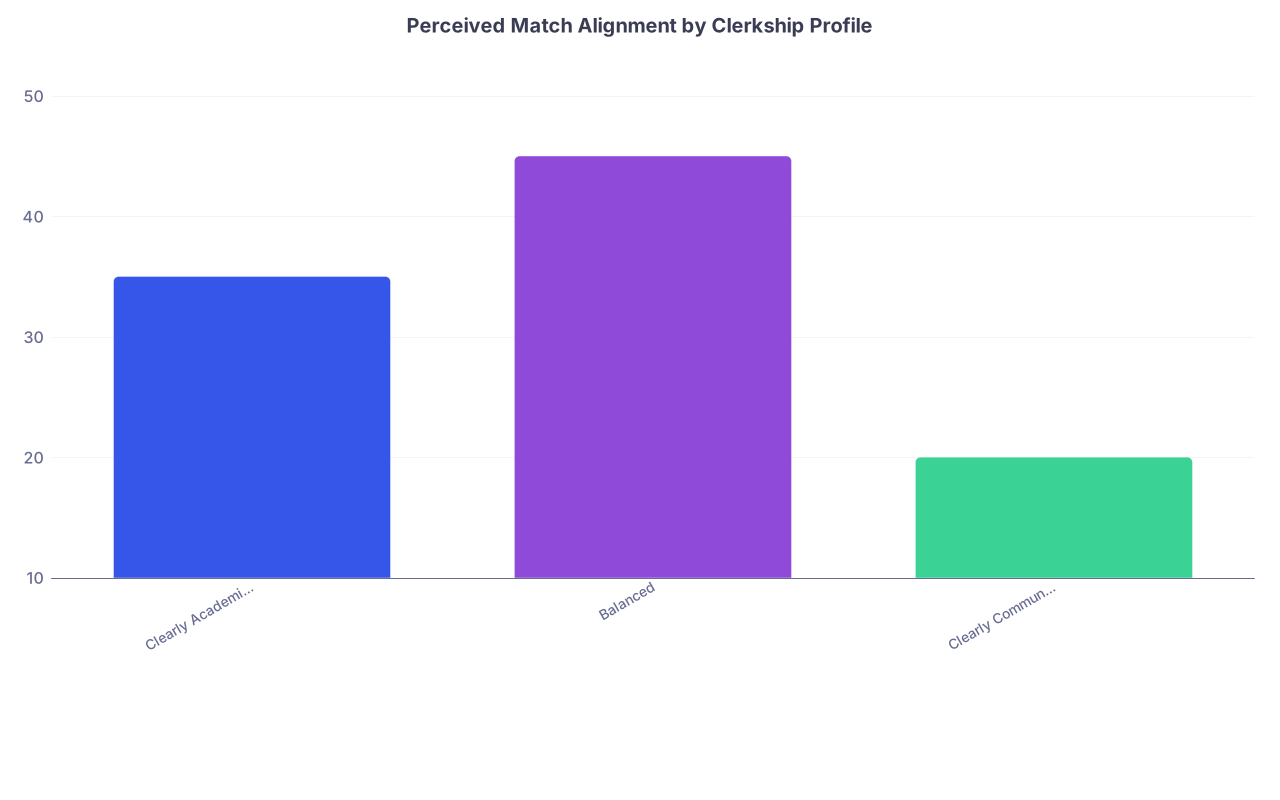
| Category | Value |
|---|---|
| Clearly Academic-Leaning | 35 |
| Balanced | 45 |
| Clearly Community-Leaning | 20 |
Programs rarely articulate this explicitly, but what they “feel”:
Clearly academic-leaning schedule → best fit for:
- University residencies
- Research tracks
- Programs that advertise “leaders in the field”
Balanced schedule → flexible:
- University-affiliated community programs
- Hybrid academic-community residencies
- Large academic centers with strong community hospital rotations
Clearly community-leaning schedule → strongest fit for:
- Community-based residency programs
- Programs whose grads mostly practice in non-academic settings
None of these is inherently better. Misalignment is the problem.
If your dream is an NIH-heavy internal medicine residency, but your last 18 months are:
- Community FM elective
- Community EM
- Community sub‑I
- No research
- No teaching roles
…you are swimming upstream. You might still match somewhere solid, but probably not into the few programs where residents log more PubMed entries than procedures.
8. Practical Timelines: When To Decide and How To Sequence
Students screw up sequencing all the time—doing the right rotations at the wrong time.
Here is a functional skeleton timeline for someone leaning academic:
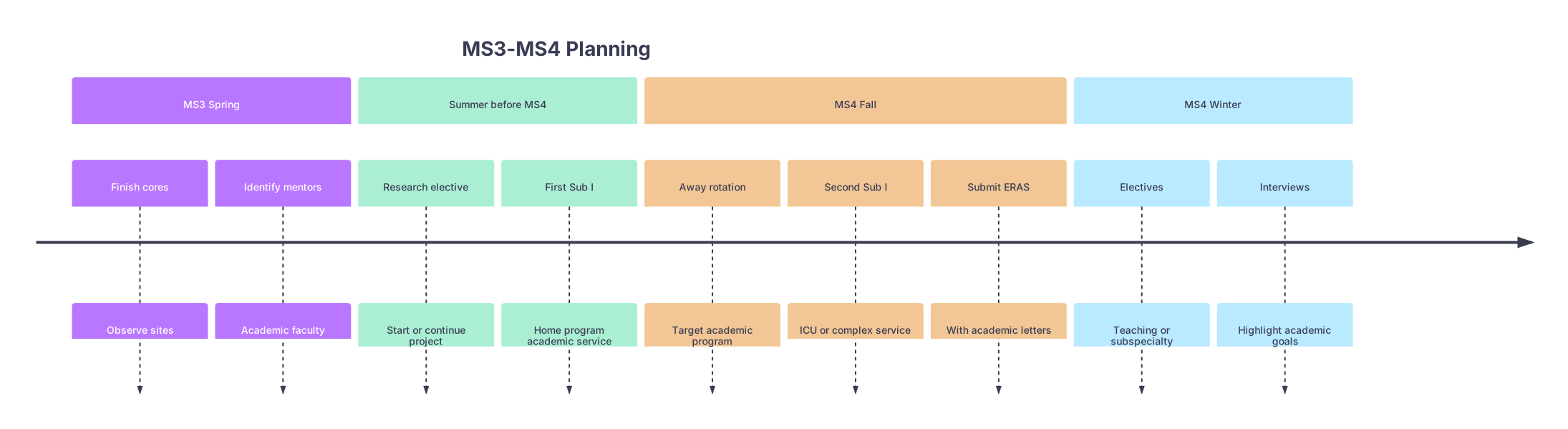
| Period | Event |
|---|---|
| MS3 Spring - Finish cores | Observe sites |
| MS3 Spring - Identify mentors | Academic faculty |
| Summer before MS4 - Research elective | Start or continue project |
| Summer before MS4 - First Sub I | Home program academic service |
| MS4 Fall - Away rotation | Target academic program |
| MS4 Fall - Second Sub I | ICU or complex service |
| MS4 Fall - Submit ERAS | With academic letters |
| MS4 Winter - Electives | Teaching or subspecialty |
| MS4 Winter - Interviews | Highlight academic goals |
For community-leaning, a slightly different pattern:
- Late MS3: Explore community sites, identify attendings in community settings who like teaching.
- Early MS4: Home sub‑I at main teaching site (for standard letter) + possibly a community sub‑I.
- Mid MS4 (before ERAS or early in season): Away at a top-choice community residency if geography matters.
- Rest of MS4: High‑value bread‑and‑butter electives, maybe one extra ED or hospitalist rotation.
Do not put every critical rotation after ERAS submission. Many programs start reviewing in September. They will see what you did up to that point and only sometimes update their impression with post‑September letters.
9. Common Bad Strategies (And How To Fix Them)
I have watched these patterns tank otherwise decent applications.
“Sampling Everything” Fourth Year
- Problem: Fifteen random electives, no clear spine. A little derm, a little ophtho, some ICU, some peds, a radiology month because it seemed chill.
- Fix: Build a narrative. You can still explore, but group electives logically: a clear core around your chosen specialty + 2–3 related areas that support either academic or community skills.
“Prestige Hunting” Without Fit
- Problem: Two away rotations at ultra‑elite academic centers with 10+ applicants per spot, no research, mid board scores. You get buried. Lukewarm letters.
- Fix: One realistic academic away where you have some angle (mentor connection, school relationship), and otherwise invest in places where you can actually stand out.
“All Community Rotations, Academic Applications”
- Problem: Everything is community‑based, yet your personal statement screams “I want to be a physician‑scientist.” Programs will not buy it.
- Fix: If you are truly academic‑leaning, you need at least one or two rotations in a recognizably academic environment, plus research or teaching.
“Underselling Community Strength”
- Problem: You want a strong community residency but think you “have to” pad your schedule with research and obscure academic electives that you hate.
- Fix: Embrace the path. You will be judged on your clinical horsepower and team function. Build rotations where you can prove those.
10. Putting It All Together: Example Schedules
Let me give you concrete sketches.
Example: Academic‑Leaning Internal Medicine Applicant
MS3:
- Core IM at university hospital, requested team with APD.
- Joined a QI project on readmissions with a hospitalist‑researcher.
- Presented twice at medicine noon conference.
MS4:
- July–Aug: Medicine Sub‑I at home academic center (general medicine).
- Sep: Research elective, finalizing abstract, early manuscript work.
- Oct: Away rotation in IM at a major academic program with a research track.
- Nov: Cardiology consult elective.
- Dec: Medical education elective (teaching MS2 pathophysiology).
- Rest: One community hospitalist elective, one ICU month.
That file screams: “This person will be fine on high‑acuity wards and will contribute academically.”
Example: Community‑Leaning Family Medicine Applicant
MS3:
- Core FM at community clinic seeing high volume.
- OB and peds cores at community hospitals with resident involvement.
- Great letter from a community internist known as an excellent clinician.
MS4:
- July: FM Sub‑I at home community‑based residency.
- Aug: Away rotation at target community FM program in desired state.
- Sep: Community EM elective.
- Oct: Outpatient IM at FQHC.
- Nov: OB elective at local community hospital.
- Dec: “Transitions of care” elective with hospitalist group.
That schedule tells PDs: “High-volume primary care, understands community settings, will be productive early.”
Both are smart. Both align clerkship choices with the eventual job they want.
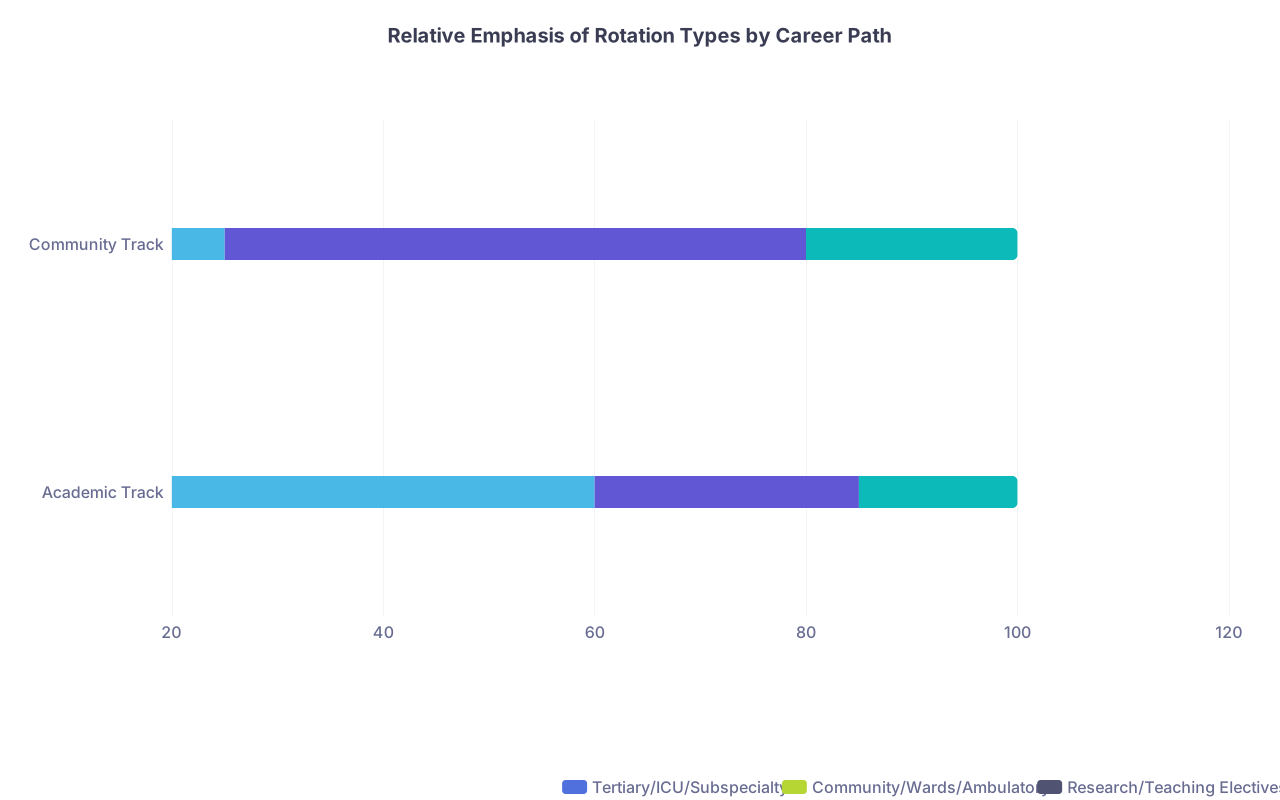
| Category | Tertiary/ICU/Subspecialty | Community/Wards/Ambulatory | Research/Teaching Electives |
|---|---|---|---|
| Academic Track | 60 | 25 | 15 |
| Community Track | 25 | 55 | 20 |

FAQ: Aligning Clerkship Choices with Academic vs Community Careers
If I am undecided between academic and community, how should I structure my fourth year?
Build a balanced schedule with one solid academic sub‑I, one community‑oriented rotation (like a hospitalist or high‑volume clinic month), and at least one elective where you can do scholarship (research or QI). Apply to a range of programs: some university, some strong community with academic ties. Then listen carefully on interview day to which environment feels like your people.Do I need a research elective to match into an academic program?
Not in every specialty, but in genuinely academic‑heavy programs it helps a lot. You can still match without a formal “research month” if you have meaningful projects from earlier years, especially with tangible outputs (poster, abstract, paper). If you have zero scholarship and your schedule is purely clinical, academic‑intense residencies will treat you as a weaker fit.Will doing community rotations hurt my chances at academic programs?
No, unless your entire schedule is community-only and you lack any signal of academic interest (no research, no teaching, no tertiary‑care exposure). Many academic PDs like applicants who spent time in community settings because they tend to be pragmatic and clinically strong. Just pair community rotations with at least a couple of clearly academic experiences.Is an away rotation at a big‑name academic center always a good idea?
No. It helps if: you are competitive for that level of program, there is a realistic chance you could match there, and you can get real facetime with decision‑makers. If you are under their usual score or research bar, you can end up overworked, under‑noticed, and stuck with a generic letter. In that case, a smaller but still academic program where you can stand out is better.For a community‑focused career, should I avoid research or teaching electives?
Absolutely not. Community residencies appreciate residents who can lead QI projects, teach learners, and interpret evidence. You just do not need your entire schedule to be research‑heavy. One research or education‑focused elective, integrated into an otherwise clinically robust, community‑relevant year, is ideal.How many sub‑internships should I do, and does the mix matter for academic vs community?
In most fields, 2–3 sub‑Is is plenty. For an academic path, at least one should be at your home academic center and one can be an away at a strong university program or high‑acuity service. For a community path, one academic‑site sub‑I plus one community‑heavy sub‑I (home or away) works well. More than three often adds fatigue but not much extra value.

Key takeaways:
- Your clerkship and elective choices function as a visible statement about whether you lean academic, community, or somewhere in between.
- Align sub‑Is, aways, and electives so they match the kind of residency environment and eventual job you actually want, not what sounds impressive.
- Program directors look for coherence: a schedule, letters, and experiences that tell one consistent, believable story about who you are becoming as a physician.


