
Does doing your sub‑I in August instead of October actually move your Match odds, or are you just rearranging the deck chairs while everyone panics in the group chat?
Let’s cut through the superstition.
Every year, third‑years obsess over “perfect timing” of medicine, surgery, and away sub‑Is before ERAS. People trade half‑truths like they’re insider stock tips:
- “You HAVE to do your home medicine sub‑I by July or you’re dead.”
- “If your away is after ERAS opens, it doesn’t count.”
- “Programs only rank people who rotated before they submit their rank list.”
Most of that is nonsense. Some of it has a grain of truth. You need to know the difference.
I’m going to walk you through what timing actually changes, what it doesn’t, and when the calendar is legitimately high‑yield versus completely overblown.
What Timing Actually Affects (And What It Doesn’t)
There are only four things the timing of a sub‑I can influence in any meaningful way:
- Can you get a strong letter in time for ERAS?
- Can the program incorporate your performance into interview decisions?
- Can you personally talk about the experience convincingly in your application and interviews?
- Can the program factor your rotation into their rank decisions?
Everything else – vibes, “signal of interest,” matching the moon phase to ERAS – is noise.
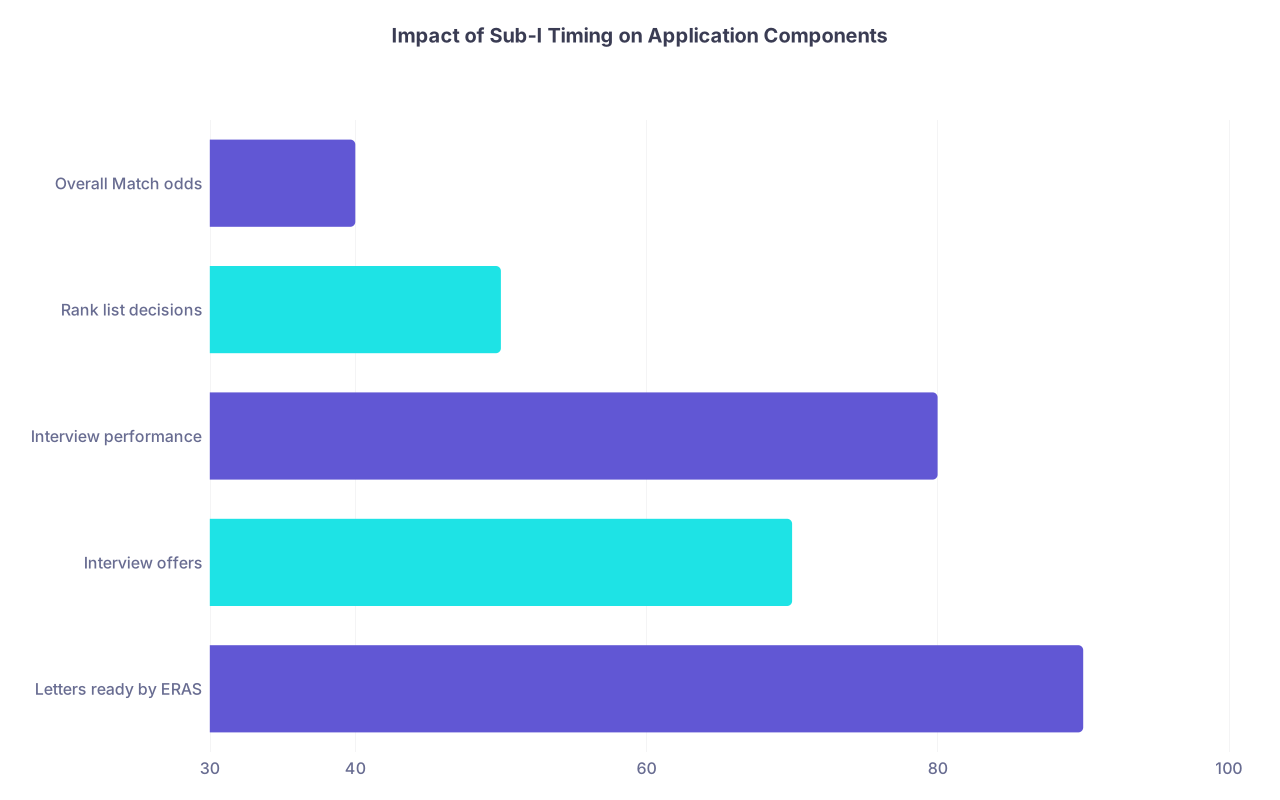
| Category | Value |
|---|---|
| Letters ready by ERAS | 90 |
| Interview offers | 70 |
| Interview performance | 80 |
| Rank list decisions | 50 |
| Overall Match odds | 40 |
Those numbers are conceptual, not from one magical dataset, but they mirror what’s repeatedly shown in surveys of program directors (NRMP PD surveys, specialty‑specific surveys) and what you actually see in real Match cycles.
Let’s break it down by phase.
Pre‑ERAS vs Post‑ERAS: The Real Tradeoffs
Here’s the unromantic truth: the biggest timing issue isn’t “July vs August.” It’s “before my ERAS submission vs after.”
Programs vary, but a common pattern:
- Many interview decisions for competitive specialties are made off a first pass through applications in October–early November.
- By that time, letters that are in ERAS can help you. Letters that are “coming later” might as well not exist.
That’s why sub‑I timing relative to ERAS and relative to first interview waves matters more than the exact month printed on your eval.
Home Sub‑I Timing: Earlier Helps, But Only Up To a Point
For your home institution sub‑I (e.g., medicine sub‑I at your own school):
Doing it June–August gives you:
- A strong, recent grade on your transcript before ERAS
- Time for your letter to be uploaded before your app is first viewed
- Concrete clinical stories to talk about in your personal statement and interviews
Doing it September–October:
- Your transcript might not fully update before ERAS submission
- Letter may arrive late in cycle (November+), helping more with late invites, less with early ones
- Still useful for you (skills, confidence, interview stories), but less powerful on paper early
Is an August sub‑I meaningfully better than a July sub‑I? Not really. Programs are not timestamp‑scanning your rotations like TSA.
The actual break point is this: will the letter be in ERAS by the time most programs start seriously screening?
For a lot of places, that means you want your key sub‑Is wrapped up by late August/early September to have letters in by early October. Earlier than June? You gain very little besides peace of mind.
| Sub-I Month | Letter in ERAS by Early Oct? | Visible on Transcript? | Impact on Early Interview Decisions |
|---|---|---|---|
| June | Almost always | Yes | Full |
| July | Very likely | Yes | Full |
| August | Usually | Usually | Moderate–Full |
| September | Sometimes | Sometimes | Partial |
| October | Rarely | Variable | Minimal for early rounds |
Again, these are patterns, not absolutes. But they’re a better guide than the folklore you hear on rounds.
Away Rotations: Where Timing Anxiety Goes Off the Rails
Away rotations are where people truly lose their minds about timing. Let me be blunt:
Rotating at a program in July vs August is not the difference between matching and not matching there.
What matters far more:
- Do they see you before or after they send bulk interview invites?
- Do they have institutional habits around “home/away preference” tied to specific months?
- Does their GME office even process late LORs meaningfully?
Some program‑level truths I’ve seen repeatedly:
- A lot of competitive programs (ortho, derm, neurosurg, ENT, some IM subspecialty‑heavy places) front‑load their interview offers after their first review of ERAS in October.
- If you rotate September–October, you’re right at the edge:
- Your on‑site impression can help push a borderline app into the interview pile.
- Your letter might not fully land before initial invites but can trigger add‑on invites if you were on the fence.
- If you rotate November–January, your away can:
- Influence rank list decisions.
- Generate strong LORs that help with other programs that interview later.
- Not help much with initial interview invitations, because those are mostly done.
The myth is: “If my away is after ERAS opens, it’s useless.”
The reality: It shifts what your away is doing for you. Early aways are mostly about getting the interview. Later aways are more about moving you up the rank list at that specific program and upgrading your letters for others.
But What Does the Data Actually Say?
Hard numbers are messy here because nobody runs a randomized trial assigning you to “July sub‑I vs October sub‑I.” But we do have some decent proxies:
NRMP Program Director Surveys (multiple specialties, multiple cycles):
- “Audition electives” / away rotations are rated as moderate to major importance for interview offers and rank decisions in competitive fields.
- Recency of clinical performance matters, but there is no universal rule that earlier months are “better.” PDs care more about strength of evals and letters than the calendar date.
Timing of application review:
- Many programs report reviewing applications in waves, with heavy emphasis soon after ERAS release and again after USMLE Step 2 scores drop, etc.
- That means if your key LOR from a sub‑I hits ERAS after that first wave, it won’t help much for those early decisions… but can still help with second‑wave invites and rank decisions.
Match outcomes and aways:
- Multiple specialty reports (ortho, ENT, neurosurg) show a high proportion of matched applicants either at their home program or where they did an away.
- But within those groups, there’s no consistent evidence that July away > September away. Most studies don’t even stratify by month, which tells you something: PDs aren’t obsessing over month the way students are.
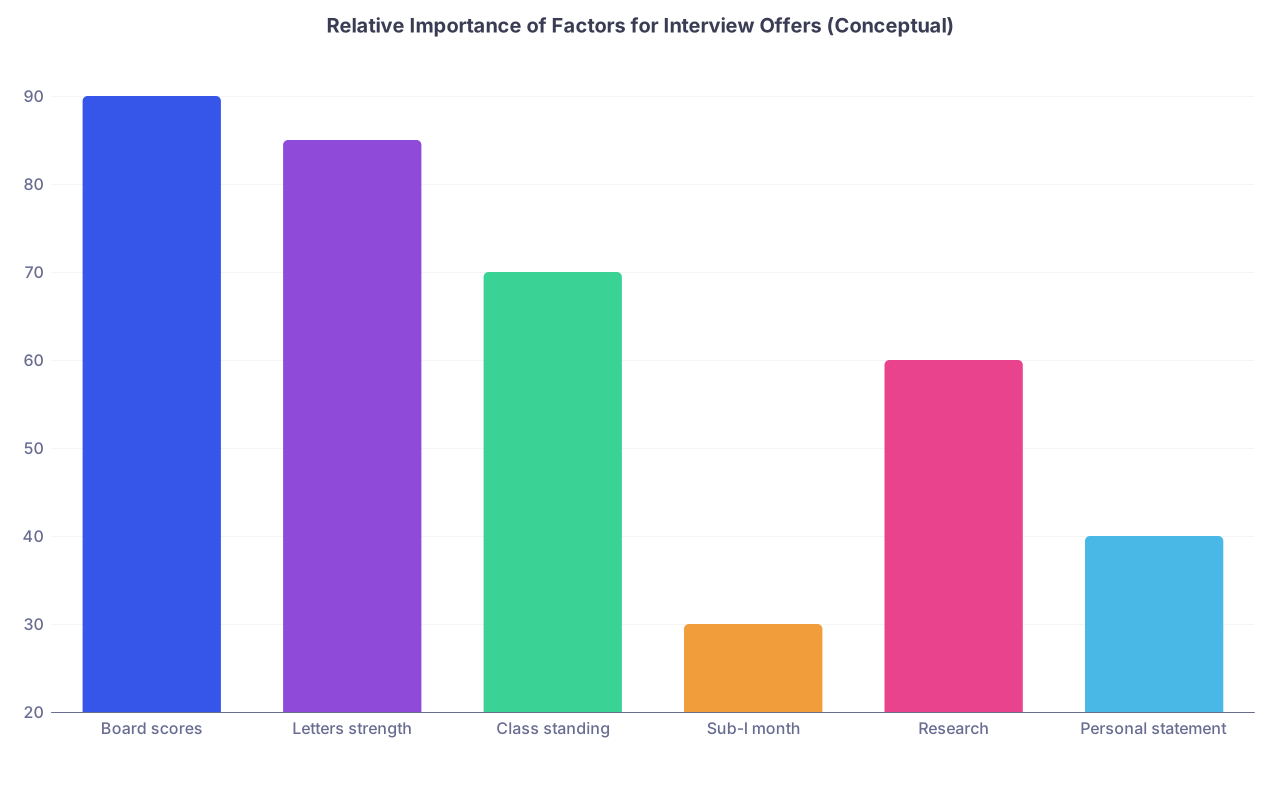
| Category | Value |
|---|---|
| Board scores | 90 |
| Letters strength | 85 |
| Class standing | 70 |
| Sub-I month | 30 |
| Research | 60 |
| Personal statement | 40 |
“Sub‑I month” matters, but it’s nowhere near the top of the stack. And no, moving from August to July doesn’t magically push you past a 20‑point Step gap.
Where Timing Truly Does Matter (And You Can Actually Control It)
Stop thinking “What month looks best?” and start thinking “What month lets my sub‑I actually show up on paper and in people’s heads when they’re deciding about me?”
There are a few high‑yield rules of thumb.
1. Anchor at Least One Core Sub‑I Before ERAS
If you’re going into IM, for example, having one medicine sub‑I (home or away) done by late August so the letter is in by early October is very helpful. Same principle for surgery, peds, etc.
It does not need to be in June. July–August is fine. The letter quality is more important than the PD seeing “you did it in July” in some mystical way.
2. Avoid Stacking All Your Key Sub‑Is After ERAS
I’ve seen this mistake:
- Student aiming for competitive IM or a surgical subspecialty
- Core clerkships late in MS3
- Sub‑Is scheduled: September (home), October (away), November (away)
- ERAS goes in with:
- No sub‑I evaluations
- No sub‑I letters
- PDs see a generic third‑year transcript and a personal statement full of fluff because the student hasn’t actually lived the role of a sub‑I yet
They eventually get great letters… that mostly affect rank positioning at places that already decided to interview them, and maybe unlock a few late invites. But they lost ground in the early wave where a lot of top programs pick their core interview cohort.
If you can rearrange one sub‑I into July/August to generate at least one specialty‑specific, real attending letter early, do it.
3. Use Later Sub‑Is Strategically, Not Desperately
A late away (November, even December) is not wasted. It just has a different job:
- Deepen specialty‑specific skills
- Generate a powerful letter that can be uploaded before rank lists are finalized
- Show “late but strong” performance that reassures PDs who were on the fence
I’ve watched applicants go from likely middle of the rank list to near the top because they crushed a November away at that very program. Timing wasn’t “optimal” for interviews; it was fantastic for final ranking.
So no, “too late to matter” is often flat wrong. It just matters in a different phase of the cycle.
Common Myths About Sub‑I Timing, One by One
Let’s dismantle a few greatest hits.
Myth 1: “If my away is after ERAS opens, it won’t help me match there.”
False. It might not help with the interview invitation if they’ve already sent most of them, but if you’re already invited or get a mid‑cycle invite, a strong late rotation absolutely influences final rank decisions. Programs routinely adjust ranks based on how students perform on late rotations.
Myth 2: “I need all my sub‑Is done before ERAS or I’m doomed.”
No. You need enough performance on paper that someone can advocate for you. That usually means:
- Strong core clerkship evals
- At least one solid specialty‑specific letter (sub‑I or heavy‑weight elective) by early October
More sub‑Is later aren’t wasted; they just shift from “get me in the door” to “move me up the list.”
Myth 3: “July is the best month at every program.”
Not universally. July can be chaotic: brand‑new interns, new chiefs, teams still figuring out workflow. Some programs actually prefer August–September for aways. I’ve heard PDs say, nearly verbatim, “July is a mess; I don’t rely too much on those evals.”
Ask residents. They’ll tell you if July is a zoo.
Myth 4: “Programs read sub‑I dates as a ‘signal’ that they’re my top choice.”
They care more about performance and letters than whether your away was in July vs September. If you want to signal interest, send an email, mention them in your personal statement (strategically), or signal (for fields that use signaling). Month‑coding your passion is a weird strategy.
So How Should You Actually Schedule?
Basic, evidence‑aligned principles:
- Get one key sub‑I in your chosen specialty before ERAS, ideally June–August, to generate a strong early letter.
- If you are doing multiple aways, try one before ERAS and one after:
- Early one to help with getting interviews.
- Later one at a truly high‑interest program to influence final ranking and LOR strength.
- Do not panic if one of your sub‑Is lands in September or October. Prioritize doing well and making sure the letter gets uploaded as soon as possible.
If you’re forced into a “late everything” situation (late core rotations, scheduling chaos):
- Lean on earlier core clerkship letters.
- Crush Step 2.
- Communicate with letter writers early and explicitly about deadlines.
- Use any earlier electives in the specialty as pseudo‑sub‑Is and get letters from them.
You can still match. I’ve seen it. Timing handicaps can be offset by strength, clarity, and smart targeting.
The Real Myth: That Timing Can Save a Mediocre Rotation
Let me be a little harsh to be honest.
A July sub‑I where you’re disorganized, unreliable, and forget your patients’ sodium is worse than a November sub‑I where you are the most prepared, thoughtful student on the team.
Timing is not a cheat code. Your behavior is.
Programs are looking for:
- Can you function at the level of a low‑maintenance intern?
- Do residents trust you?
- Do attendings feel comfortable putting their name on you in a letter?
Those things are not month‑dependent. They’re you‑dependent.
So yes, be smart about the calendar. But do not confuse “optimized timing” with “optimized performance.” Only one of those actually follows you through the rest of your career.
Years from now, you won’t remember whether your sub‑I started on July 3rd or August 14th. You’ll remember the programs where people genuinely wanted you back—and they won’t care what month they met you, only how good you were when you showed up.