
Your third-year medicine rotation is the first time residency programs start keeping tabs on you. Long before you click “submit” on ERAS.
Everyone tells you medicine clerkship is about “learning to think like a doctor.” That’s only half the story. The other half is this: internal medicine is the rotation where future letter writers, behind-the-scenes phone calls, and subtle reputation-building start to quietly structure which interviews you will and will not get.
And most students walk through it like it’s just another block.
Let me walk you through what program directors, clerkship directors, and residents actually do with the impressions you leave on that rotation—and how that ripples into your interview list a year or two later.
1. Why Medicine Is the “Anchor Rotation” for Your Application
Every specialty pretends it values many clerkships equally. In reality, medicine is the anchor. It’s the yardstick.
On rank meetings, when faculty are staring at stacks of applications, the conversation sounds like this:
- “How’d they do on medicine?”
- “What does the medicine letter say?”
- “What did the medicine clerkship director think?”
I’ve heard that exact sequence in IM, EM, anesthesia, even radiology meetings. Surgery will still obsess over surgery, but they look at medicine for one key reason: it’s the only rotation where almost everyone has to function in the core role of “junior doctor” for real.
You’re writing daily notes. You’re calling consults. You’re presenting evolving patients for weeks, not a one-off case.
So the medicine rotation quietly becomes three things:
- Your first “true” clinical performance benchmark.
- The source of your most widely trusted clerkship grade.
- The rotation most likely to generate the kind of narrative letter PDs actually read.
Let me be blunt: a strong medicine rotation can elevate a borderline application into interview territory. A mediocre or bad one can cap your interview list before you ever realize it.
2. The Evaluation Machinery You Don’t See
You see comments and a final grade. We see a multi-step, politics-laden process that turns hallway impressions into letters and numbers that PDs rely on.
Here’s what actually happens.

| Step | Description |
|---|---|
| Step 1 | Medicine Rotation Start |
| Step 2 | Resident & Attending Impressions |
| Step 3 | Written Evaluations Submitted |
| Step 4 | Clerkship Director Review |
| Step 5 | MSPE Narrative Entry |
| Step 6 | Possible Chair/Department Letter |
| Step 7 | Honors? HP? Pass? |
Residents are your primary voters
Attendings sign the form. Residents write the story.
The interns and seniors you present to every day are usually the ones filling the evaluation comments that later get mined for your MSPE and letters. If you were “fine but forgettable,” your comments will sound like this:
“Pleasant to work with. Completed tasks. Solid presentations.”
Translated to PD language: safe middle, not a star, not a problem. That’s not getting you an interview bump in a competitive specialty or at a big-name academic place.
If a senior takes a real liking to you, that’s where you start seeing the lines that move the needle:
“Performed at the level of an intern.”
“Top 10% of students I’ve worked with in the last 5 years.”
Those phrases get repeated in meetings. I’ve literally heard a PD flip a maybe to a yes with: “This one has a medicine eval saying ‘already functions like an intern.’ Invite.”
The clerkship director cross-checks you
Clerkship directors do something you never see: pattern recognition.
They look at your medicine evaluations across wards, attendings, and residents and compare you to your classmates. If they see:
- Consistent “one of the best students on the team”
- Strong comments from both residents and attendings
- No professionalism dings
You’re the student they remember when someone later asks, “Who’s good for a letter?” Or when a specialty PD emails: “Anyone we should look at from your class this year?”
That’s the part no one tells you. Your interview list is partly shaped months earlier in a 10-minute hallway conversation between your medicine clerkship director and some residency PD who trusts their judgment.
3. How Your Medicine Grade and MSPE Entry Actually Get Used
You see “Honors/High Pass/Pass” and a paragraph on your MSPE. Program directors see a signal about how hard they can push you as an intern.
Here’s how they quietly use that data.
| Component | What PDs Actually Think |
|---|---|
| Medicine Grade: Honors | Reliable top performer, likely safe to trust with autonomy |
| Medicine Grade: High Pass | Good, but did not consistently stand out |
| Medicine Grade: Pass | Either average or some concern; read narrative closely |
| MSPE Medicine Paragraph | Confirms or contradicts the grade |
| Pattern vs Other Rotations | Is medicine your outlier high or outlier low? |
If you’re applying IM, EM, anesthesia, or even FM, that medicine grade is staring PDs in the face every time they skim your application. Let me translate some common patterns.
Pattern 1: Medicine Honors + Enthusiastic Narrative
PD interpretation: high floor, safe pick, might be a star.
This is the student who reliably gets interviews at places “above where their scores suggest.” People justify the invite with:
- “But look at their medicine performance.”
- “Strong medicine letter, I trust that more than a two-digit score.”
Pattern 2: Medicine High Pass, Surgery Honors, Everything Else Honors
PD interpretation: you might be weaker in longitudinal adult care, or you just didn’t commit on that rotation. For medicine programs, that raises eyebrows. For surgery, it’s less of a problem but still noticed.
That discrepancy triggers conversations:
- “Why did they underperform on medicine?”
- “Any professionalism comments?”
Pattern 3: Medicine Pass with Vague Narrative
This one quietly kills interview chances at many academic places. Not maliciously. Just statistically.
If there are 400 applicants and you’re borderline on scores, a soft medicine performance moves you into the “probably not worth a scarce interview slot” pile.
Nobody emails you to tell you that.
4. The Medicine Letter: Your First Real Gatekeeper
You’ve probably heard generic advice about letters of recommendation. Here’s the part people won’t say aloud: the medicine letter is often your audition tape, especially if you’re not going into something ultra-procedural like ortho or neurosurgery.
And even in those fields, a sharp medicine letter calms fears about you handling actual patients.
| Category | Value |
|---|---|
| Internal Med | 90 |
| EM | 75 |
| Anesthesia | 65 |
| FM | 80 |
| Surgery | 40 |
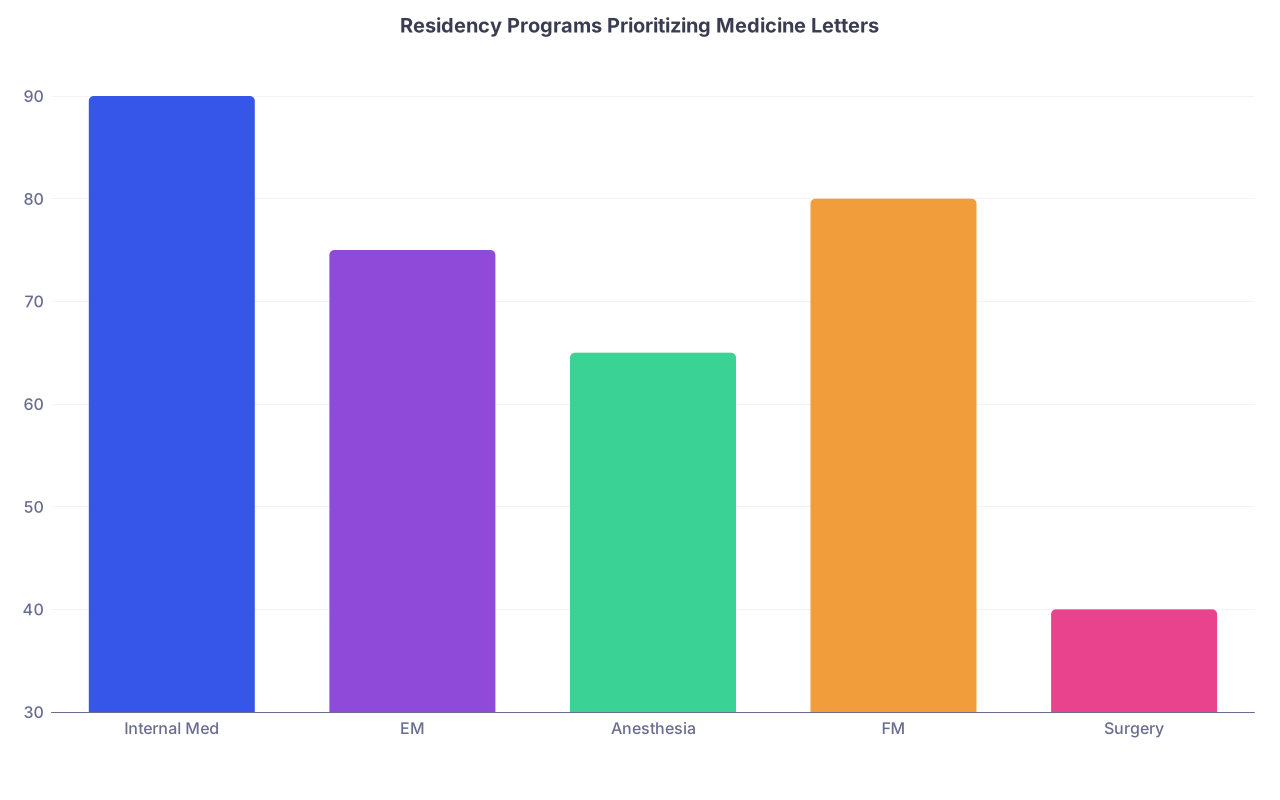
Those percentages are the rough proportion of programs in those fields where a strong medicine letter meaningfully moves you up the interview list. Not “nice to have.” Influential.
Here’s how it actually plays out.
Who gets the “real” medicine letter
Faculty do not write strong letters for every student. They just don’t have the time or the conviction.
They write them for:
- The one or two students each block who made their life easier
- The student who came in early, stayed late, and actually got better
- The student who asked early in the rotation, then backed it up with performance
Let’s be honest. There are attendings who decide in week one whose letter they’ll say yes to if asked. Everyone else gets the polite version of “no bandwidth this year.”
So your medicine rotation is the only time many of you will work closely enough with inpatient general medicine attendings to earn:
- A detailed IM letter if you’re applying medicine
- A credibility letter for “I can handle wards” if you’re applying to EM, anesthesia, FM, etc.
When ERAS opens, PDs look at your letters in this order more often than you think:
- Home specialty letter(s)
- Medicine letter
- Everything else
If your medicine letter is generic, you’ve just lost a big lever.
5. Quiet Channels: The Calls, Emails, and “Oh, I Know That Student”
The formal system—grades, letters, MSPE—only explains half of how your interview list gets built. The other half is old-fashioned backchannel.
Here’s the unspoken rule: PDs trust people, not paperwork.

How it actually happens
Example scenario I’ve seen more than once:
- You crush your medicine inpatient month at your home academic hospital.
- Your clerkship director loves you. An associate program director in IM notices.
- Fast forward a year. You apply to EM at a different institution.
- Their EM PD emails your home IM PD or clerkship director: “Anyone in your class we should look at?”
- Your name gets mentioned because you were reliable on wards.
Suddenly you’re in the “pre-favored” pile for interview offers at a program you’ve never stepped foot in.
Flip it. If you were the student who disappeared at 3 pm every day, rolled in at 7:15 for 7 am rounds, and handed in half-baked notes, that reputation doesn’t stay confined to your med school.
There are more cross-specialty conversations than you think:
- EM PD asking IM PD: “Can this applicant actually manage a sick floor patient?”
- Anesthesia PD asking IM: “How were they on wards? Reliable? Any issues?”
- FM PD at a community site texting a hospitalist they know at your home institution: “You know this student?”
Your medicine rotation is usually the only time enough people see you work day after day to have a strong opinion. That’s why it matters far beyond that single grade.
6. Away Rotations, Sub-I’s, and Why Medicine Sets Your Ceiling
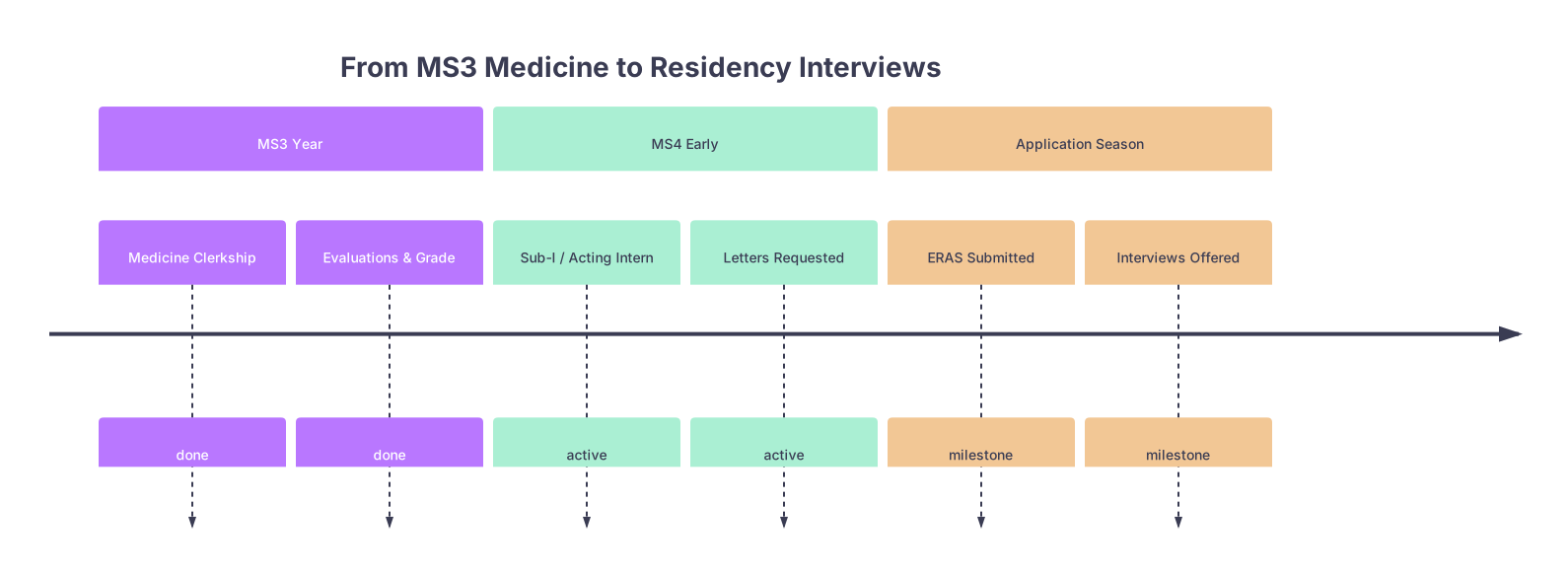
You might think, “I’ll prove myself on audition rotations later.” That’s half-true. Here’s the catch programs never tell you: your MS3 medicine rotation quietly sets the ceiling for how much those later away rotations can rescue you.
| Period | Event |
|---|---|
| MS3 Year - Medicine Clerkship | done |
| MS3 Year - Evaluations & Grade | done |
| MS4 Early - Sub-I / Acting Intern | active |
| MS4 Early - Letters Requested | active |
| Application Season - ERAS Submitted | milestone |
| Application Season - Interviews Offered | milestone |
By the time you’re doing your MS4 sub-I or away rotation in your chosen specialty:
- Your medicine grade is already in your MSPE draft
- Your medicine comments are written
- Faculty already have a mental model of who you are clinically
So yes, you can improve your story. A stellar sub-I or away can absolutely get you letters that help. But a weak or mediocre performance on medicine is still sitting there as an “anchor” in your file.
PDs are not stupid. They’ve seen this pattern:
- Glowing away rotation letter from a single month
- But average or weak medicine + average across other cores
They will ask: “Is this just a one-month performance spike because they knew they were being watched?”
On the flip side, if you have:
- Strong medicine rotation
- Strong or improving sub-I / away in your chosen specialty
You start to look like someone who isn’t just “auditioning well,” but genuinely competent.
That combination is where interview offers start to stack up.
7. The Specific Behaviors That Translate Into Interview Invitations
Now to the part you actually control. On medicine, a lot of students confuse visible hustle with high-value behavior. They think staying late, writing long notes, and volunteering for every admission automatically turns into great evaluations.
It doesn’t. Attendings and residents are watching for something different.
| Category | Value |
|---|---|
| Reliability | 30 |
| Clinical Reasoning | 25 |
| Team Awareness | 15 |
| Work Ethic | 15 |
| Likeability | 15 |
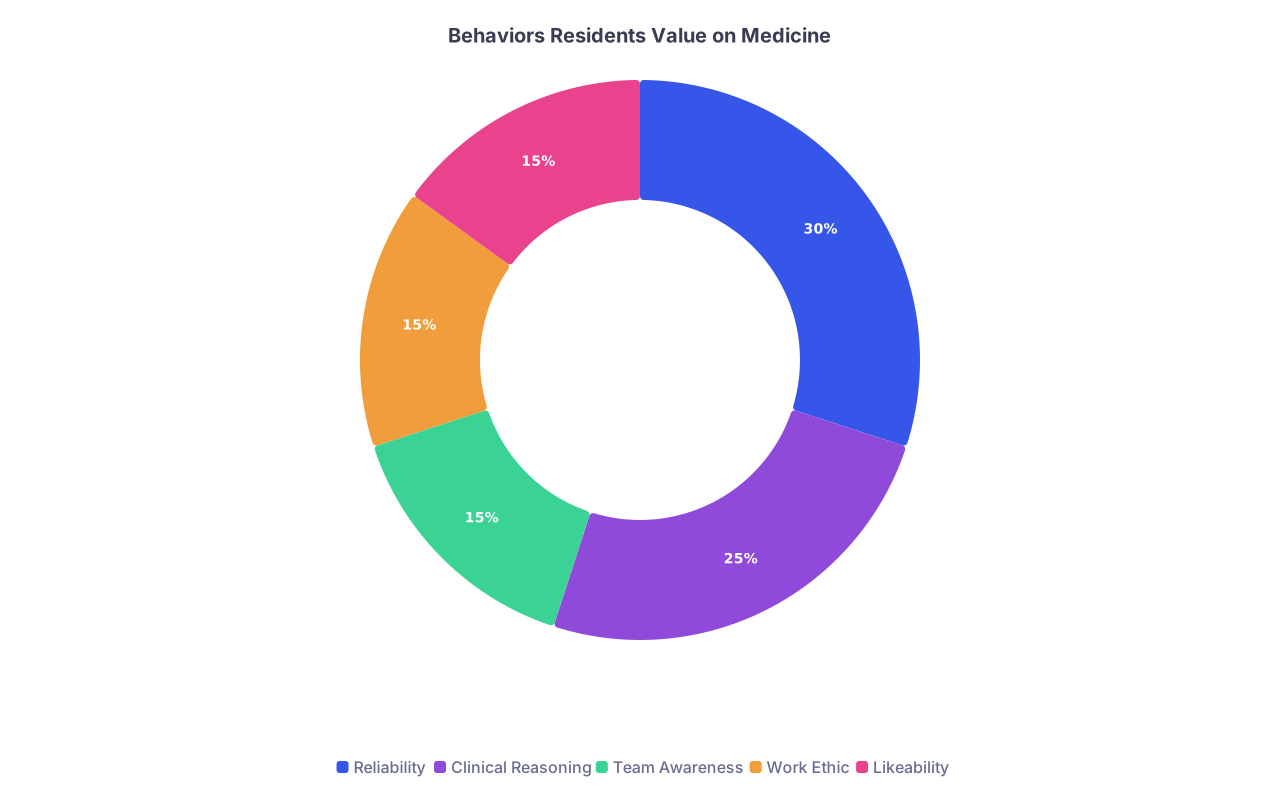
That’s roughly how residents weight your behavior when they’re writing evaluations. Let me translate how that later affects your interview list.
Reliability
This is number one, and it’s not close.
If you say you’ll follow up on labs, call a family, check orthostatics—and you always do it, without reminders—you get tagged mentally as “safe to trust.” That wording ends up in evals:
“Always followed through on tasks.”
“Could rely on them to get things done.”
Those phrases are gold. They scream “ready for internship.” PDs are constantly worried about who will be safe on night float. Your medicine rotation is where you prove you’re not a liability.
Clinical reasoning
You don’t need to be a genius. You do need to show growth.
The students who get the best medicine narratives are not the ones who had the highest pre-test scores. They’re the ones who, by week three:
- Can present a focused assessment and plan
- Can update that plan day-to-day as the patient changes
- Stop just reciting “CHF exacerbation” and start talking about why and what’s next
When an attending writes “strong clinical reasoning, improved markedly over the rotation,” that’s the line a PD reads and says, “They’ll be coachable as an intern. Good.”
Team awareness and likeability
No one writes “I enjoyed working with this student” unless they actually did. Residents are petty humans like the rest of us. If you were the student who:
- Vanished when there was work
- Only cared about getting out early
- Treated nurses like order-entry machines
Guess what happens when a PD emails that resident asking, “Would you take this person as an intern?” They hesitate. That hesitation costs you interviews you’ll never know about.
8. Concrete Moves During Medicine That Pay Off Later
Let me be very direct: here are the high-yield decisions during your medicine rotation that later change your interview list.

1. Ask for feedback early, not at the end
End-of-rotation feedback is too late. You want the resident in week one to know: “This student cares and wants to improve.”
You literally say:
“Can you tell me one thing I could do this week to be more helpful to the team and one thing to improve in my presentations?”
Then you actually act on it. Residents notice when their advice changes your behavior in real time. That’s how “average” turns into “top student on the team.”
2. Pick one attending to be your potential letter writer—and behave accordingly
Don’t scatter your efforts across five possible writers. On most rotations you’ll have 1–2 attendings who see you enough weeks to write meaningfully.
When you identify the one who:
- Sees you doing real work
- Gives you teaching
- Seems to like working with students
Dial it up on their weeks. That doesn’t mean faking. It means making sure:
- You’re early, every day
- Your notes are tight and on time
- You proactively volunteer for presentations, admissions, and follow-ups
That’s how you create a concentrated impression strong enough for a serious letter that PDs respect.
3. Do not burn bridges, even if you “hate” medicine
I’ve watched future anesthesiologists, radiologists, and surgeons tank their medicine rotation because “this isn’t my thing.” Then a year later, they’re shocked when interview numbers are weaker than classmates with similar scores.
The world is small. That medicine attending you annoyed? They might be the same person your future specialty PD emails for a character check.
Play the long game.
9. The Bottom Line: How Medicine Shows Up in Your Interview List
By the time you’re sitting there in September, refreshing your email and spreadsheet, wondering why some programs invited you and others did not, here’s what’s silently at work in the background:
- Your medicine grade and narrative, broadcasted in your MSPE
- The strength (or blandness) of your medicine letter
- The whispered reputational summary of you as a clinical worker from your medicine team
- The informal endorsements or red flags passed between faculty and PDs across specialties
| Category | Value |
|---|---|
| Step/COMLEX Scores | 35 |
| Medicine Clerkship Performance | 25 |
| Specialty Letters | 20 |
| Research | 10 |
| Extracurriculars | 10 |
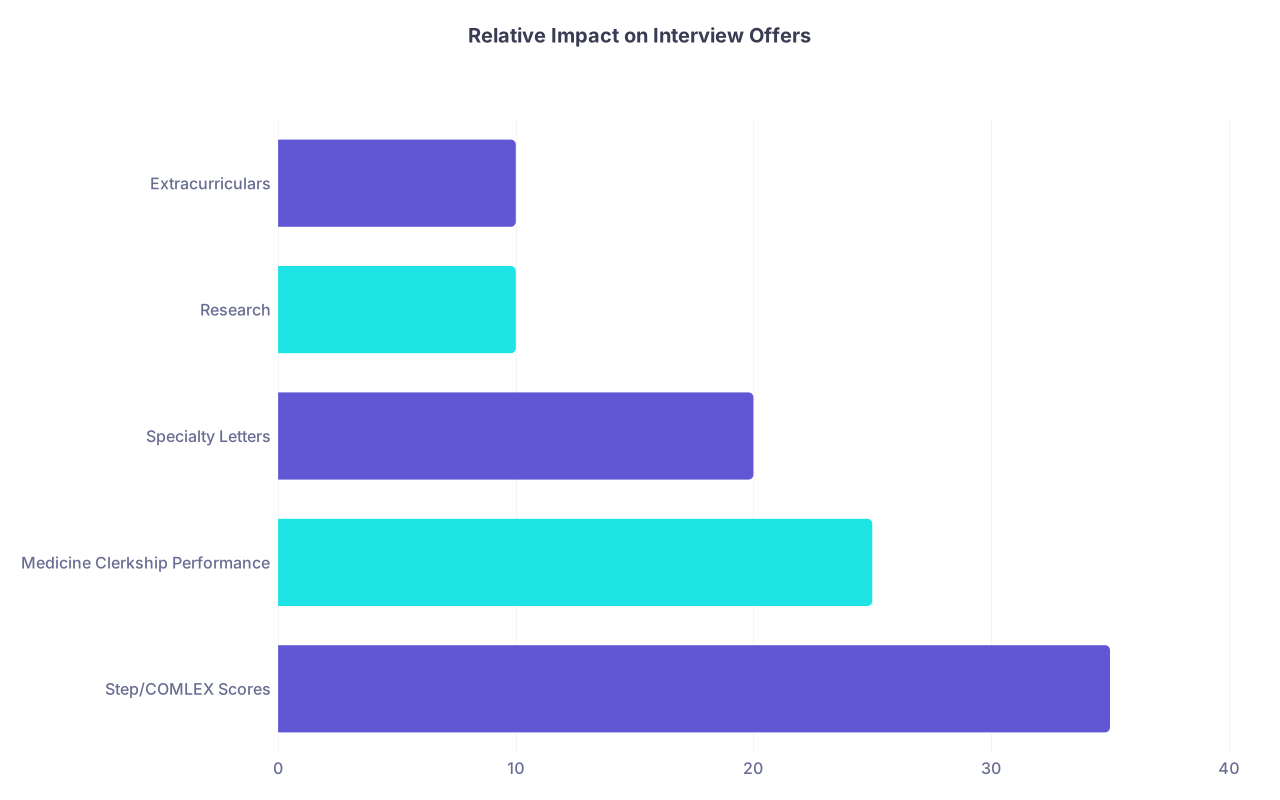
Those numbers aren’t exact, but they’re honest. Medicine clerkship performance is not a footnote. For many of you—especially those without 99th percentile scores—it’s the difference between a thin and healthy interview season.