Last month, a classmate told me she was doing three away rotations in three different states. She’d already booked flights, Airbnbs, even scoped out coffee shops near each hospital. I nodded and smiled while my stomach dropped because I knew I wasn’t doing any. Not one.
That night I lay there staring at my ceiling asking the same question you probably are: “If I don’t do an away, am I basically deciding not to match?”
The Fear No One Says Out Loud
Let me just say the quiet part out loud:
I’m scared that by staying at my home institution, I’m making a silent, irreversible mistake that will come back to haunt me on Match Day.
The thoughts spiral fast:
- “Everyone in my class is scattering across the country for aways. I’m the only one staying put. That must mean I’m already behind.”
- “What if every program on my list expects to see their name somewhere on my ERAS under ‘away rotation’?”
- “What if they think I didn’t do an away because I’m lazy, unmotivated, or not competitive enough to be invited?”
And then the nuclear version:
“What if I don’t match because I didn’t do an away rotation?”
Let me be blunt: staying home can hurt you in some situations.
But in a lot of scenarios, it won’t cost you at all—and sometimes, it can actually help you.
The trick is knowing which group you’re actually in, instead of assuming the worst by default.
Where Aways Actually Matter (And Where They Don’t)
Certain specialties treat away rotations like auditions. Others almost don’t care.
Here’s the rough reality:
| Specialty Type | Away Rotation Impact |
|---|---|
| Ortho, Neurosurgery | Very High |
| ENT, Plastics, Derm | High |
| EM, Urology, Rad Onc | Moderate |
| IM, Peds, FM, Psych | Low |
| OB/Gyn, Gen Surg | Variable by program |
Are there exceptions? Of course. Programs are not robots. But the pattern is very real.
If you’re going into:
Ortho / Neurosurgery / ENT / Plastics / Derm
Aways can be high-yield and sometimes borderline expected at competitive places. They double as month-long interviews and references checks: “Can this person function on our team?”Emergency Medicine
Aways used to be almost mandatory, especially for SLOEs. It’s gotten a bit more flexible, but EM still takes them seriously.Urology / Rad Onc / some surgical subs
Aways are helpful but not always required. They’re useful for showing regional interest and getting strong letters.Internal Medicine, Pediatrics, Psychiatry, Family Medicine
Tons of people match these without a single away. Programs in these fields rely more on:- Your home clinical performance
- Letters from people who actually know you
- Step 2, MSPE, and the overall story you present
There’s also the unspoken thing: some schools just don’t even have certain departments at a high level (no home derm, no home neurosurgery, etc.). For those students, aways are often more important. If that’s not your situation, you’re not playing by the same rules as them.
So staying home might be:
- A neutral choice
- A slightly suboptimal choice
- Or a genuinely risky choice
The problem is, in your head, it all collapses into one thought: “I’m doomed.”
You’re not. But you might need to be strategic.
Real Reasons People Skip Aways (That Programs Actually Understand)
Here’s what’s been driving me—and maybe you too:
- Money. Flights, housing, car rentals, food, plus still paying rent at home? It’s brutal.
- Family responsibilities. Kids. Sick parents. Partner whose job can’t just “go remote for a month.”
- Mental health. The idea of dropping into a new hospital system with new expectations, new EMR, and running on pure anxiety? I’m not always sure I’d survive it.
- Visa / logistics / late schedule release. Some schools screw you with timing. Spots are full. Paperwork’s a mess. Clock runs out.
You know what’s wild? Programs actually know this stuff is real. They don’t exist in some fantasy economy where everyone can drop $5–10k on “auditions.”
If you’re worried they’ll assume the worst, you can do something about that:
You can frame it.
- In your personal statement, you can make it clear you’re deeply invested in your home institution, your region, your specific interests.
- In interviews, if someone asks “Did you do any away rotations?” you can give a clean, confident answer like:
- “I really wanted to, but financially it wasn’t feasible, so I focused on maximizing my performance at my home program and building strong relationships for my letters.”
That’s an adult answer. Not an excuse. Not a character flaw.
The only time it looks bad is when there’s:
No aways.
Mediocre home evals.
No clear reason.
No narrative.
If you’re reading this, you’re already thinking harder about this than a lot of people do. That’s actually an advantage.
The Quiet Upside of Not Doing Aways
Here’s the piece I kept ignoring because anxiety only likes one story: catastrophe.
Staying home can actually strengthen your application if you use it well.
1. Depth over geography
While everyone else is gone for 2–3 months:
- You can double down on your home department
- Take on a meaningful project that you actually finish
- Become “known” to a small cluster of faculty instead of being “that visiting student from…somewhere”
Letters from people who’ve watched you closely for weeks (clinic, wards, research meetings) are often way stronger than “did fine for the month” away letters.
2. More time to fix / upgrade other parts of your file
No aways means less:
- Travel time
- Moving stress
- Adapting to new systems every few weeks
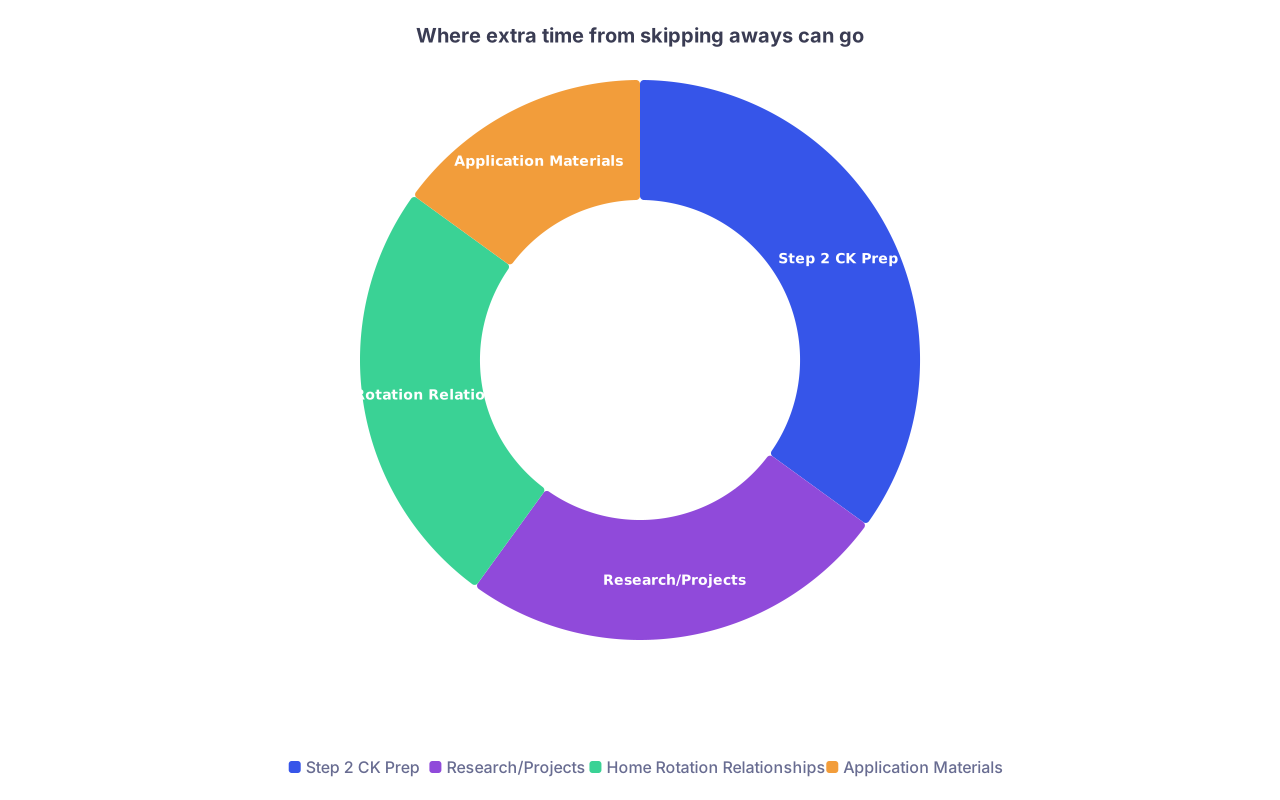
Which means more bandwidth for stuff that quietly matters a ton:
- Step 2 CK studying (for real, not “I’ll squeeze in UWorld between 14-hour days”)
- Crafting a real personal statement instead of a rushed draft
- Polishing your CV, experiences, and ERAS thoughtfully
- Getting face time with home attendings for letters
| Category | Value |
|---|---|
| Step 2 CK Prep | 35 |
| Research/Projects | 25 |
| Home Rotation Relationships | 25 |
| Application Materials | 15 |
Step 2 CK is now weighted more than ever since Step 1 went pass/fail. If skipping one away keeps your CK from tanking, that trade is often worth it.
3. You don’t risk a disastrous away
No one talks about this enough. Aways are high-variance.
Best case? You crush it, they love you, and you get a letter + interview.
Worst case? You land on a malignant service, someone decides they don’t vibe with you, and now you’ve got a lukewarm or even subtly negative eval sitting out there. For a whole month of your life.
If you’re at all worried about:
- Social anxiety
- Needing extra time to adjust to new systems
- Slower learning curve
- Being awkward at first (hi, same)
Then betting huge chunks of your application on one month at a strange institution can be… risky.
Not doing an away removes that risk from the equation entirely.
When Staying Home Can Hurt You
I’m not going to sugarcoat this: there are situations where no away is a red flag or at least a missed opportunity.
You’re more likely in that zone if:
- Your specialty is highly competitive and culture-heavy (ortho, neurosurg, ENT, derm, plastics)
- You’re trying to break into a region where you have zero geographic ties and no home program name recognition
- Your home program is weak or nonexistent in your chosen specialty
- Your Step 2 / grades are middle-of-the-pack and you need something external to show you’re better than your stats
Programs sometimes quietly think:
“If this person loved us or this city so much, why didn’t they ever rotate here or nearby?”
They won’t always say it out loud, but I’ve heard attendings mutter it in ranking meetings.
Does that mean you’re done for? No. But it means if you don’t do an away, you’ve got to compensate in other ways:
- Region-specific interest in your PS (“I grew up in the Midwest and my family’s here…”)
- A home mentor reaching out on your behalf
- Strong track record that says, “Even if I never rotated with you, I will be safe and teachable in your hospital”
How to Make “No Away” Not Look Like “No Effort”
If you’re going to stay home—by choice or by circumstance—you can still make your application scream engagement, not avoidance.
Here’s what I’m focusing on (because yes, I’m in this mess too):
1. Dominate your home sub-I
If your specialty has sub-internships, your home sub-I basically becomes your “away.”
Things that matter more than people admit:
- Show up early, consistently
- Know your patients better than anyone else on the team
- Own your notes, follow-ups, and calls
- Ask for feedback before the end: “Is there anything I could do differently this week to be more helpful?”
You want your evals to read: “Would trust this student as an intern on day one.” That line gets programs’ attention more than “did two away rotations.”
2. Get one or two killer letters
Not generic “hardworking” fluff. Actual, specific letters.
That usually means:
- Working with attendings for more than just 2–3 days
- Volunteering for teaching moments: presenting, journal clubs, short talks
- Following through on everything you say you’ll do
When they sit down to write your letter, you want them remembering a specific patient or moment where you clearly made their life easier.
3. Build a clear story in your application
Programs will look at your file and silently ask: “Does this make sense?”
No aways → not a problem if your narrative is coherent:
- Strong home rotations
- Regional or institutional loyalty
- Clear reasons for your specialty
- Evidence you’ve tested this interest through actual work, not just one month at a random hospital
You don’t have to explain “no away” in a weird apologetic essay. But your overall story should feel intentional, not accidental.
What To Do If You’re Late And Panicking About Aways
Maybe the real issue is: you wanted an away and it just didn’t happen. Now you’re staring at your classmates packing and you’re stuck filling shifts at the same hospital you’ve been in for years.
Here’s how to stop spiraling and actually salvage this:

| Step | Description |
|---|---|
| Step 1 | Choose Specialty |
| Step 2 | Check program norms |
| Step 3 | Focus on home strong |
| Step 4 | Try for 1 focused away |
| Step 5 | Strengthen other parts |
| Step 6 | If none possible explain context |
| Step 7 | Competitive field? |
| Step 8 | Aways required? |
Step 1: Reality-check your specialty
Email or talk to:
- Your specialty advisor
- A resident in that field at your home program
Ask a very blunt question:
“If I don’t do an away, how much will this realistically hurt me for [this specialty level: community vs academic, region, etc.]?”
Get data, not vibes.
Step 2: If they say aways are strongly recommended
You have options even late:
- Look for shorter visiting experiences (2 weeks, observerships, virtual electives)
- Target one carefully selected away instead of three scattered ones
- Consider programs in your own state/region where costs drop (drive instead of fly, stay with family/friends)
If all doors are shut, you still don’t lie or overexplain. You do your best at home and prepare a calm, honest answer for interviews.
Step 3: If they say aways are optional or low-yield
Then stop torturing yourself watching everyone else’s travel plans. Your job shifts to:
- Crushing your home rotations
- Planning Step 2 study with intention
- Building your network where you are instead of chasing where you aren’t
Quick Reality Check: Are You Actually Behind?
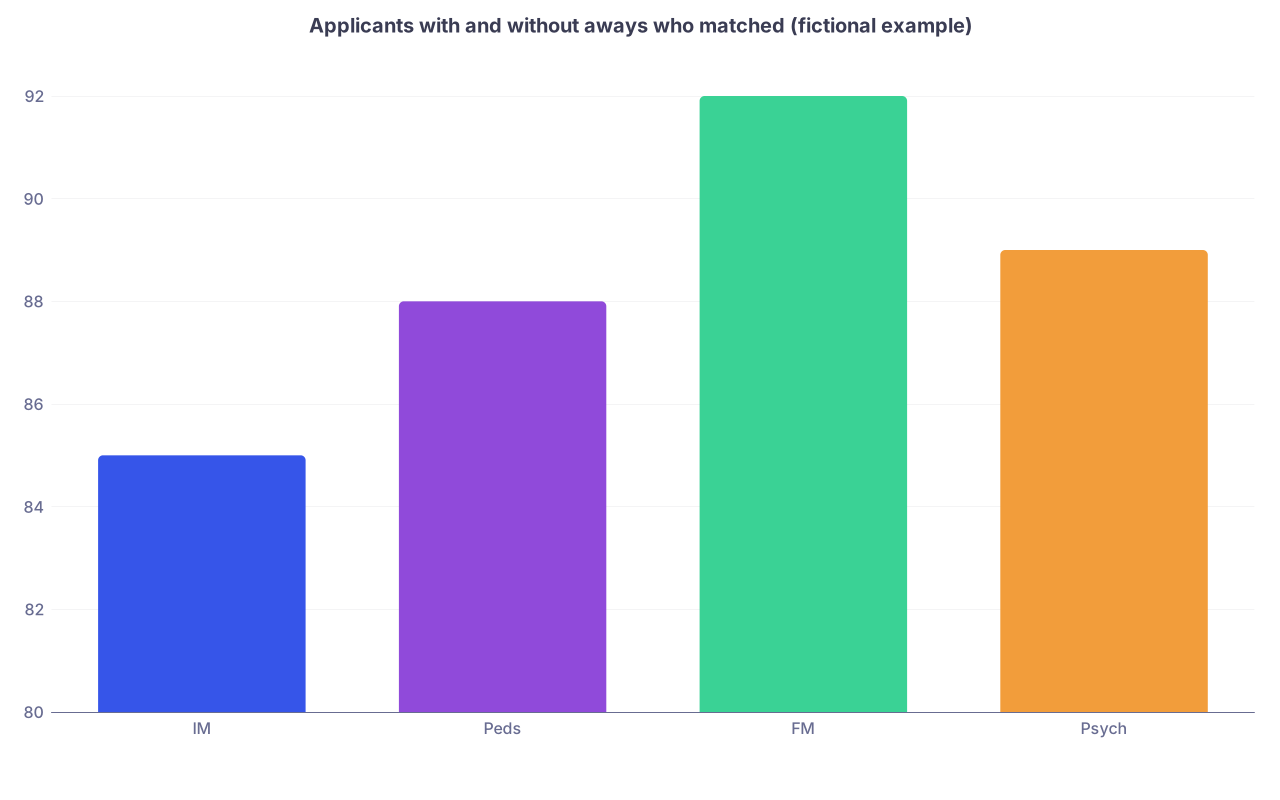
Sometimes it helps to compare your inner narrative to actual outcomes.
| Category | Value |
|---|---|
| IM | 85 |
| Peds | 88 |
| FM | 92 |
| Psych | 89 |
Even in very competitive cycles, loads of people in core fields match with:
- 0 aways
- 1 home sub-I
- Solid but not world-ending Step 2 scores
- Good letters from people they saw daily, not famous names
You can absolutely be one of them. But not if you spend the next six months in paralysis refreshing Reddit threads telling you you’re doomed.
What You Can Do Today (So You Feel Less Helpless)
Open your calendar. Pick your main “home” rotation or sub-I in your desired field.
Right now, do this:
- Identify one attending you want a letter from.
- Draft a short email you can send on day 3–5 of the rotation:
“I’m very interested in [specialty] and planning to apply this year. I’d really like to learn as much as I can on this service. If you notice anything I can do better, I’d really appreciate your feedback.”
That’s it. One concrete step.
No, it won’t magically replace an away rotation. But it will move you out of the “I’m passively waiting to fail” mindset and into “I’m actively building the best version of the path I do have.”
You might not be flying across the country for an away. But you can absolutely still show programs who you are, where you shine, and why you’ll be a good resident—right where you already are.