
What if that one awful rotation eval is the thing that makes every single residency program say, “Nope, hard pass”?
You know exactly which one I’m talking about. The rotation where everything that could go wrong…did. New team, weird expectations, maybe a personality clash with the attending, maybe personal stuff going on in the background. And now there’s this ugly grade or eval sitting in your file like a flashing red warning sign.
And the voice in your head is saying:
“They’re all going to see it. They’re all going to judge me for it. I’m done.”
Let’s pull this apart.
How Bad Is “Bad,” Really?
First thing: not all “bombed” rotations are equal. Your brain tends to label anything below your personal standard as a catastrophe. Programs don’t see it that way.
Here’s how the hierarchy usually looks from their side:
| Rotation Result | How Programs Commonly See It |
|---|---|
| Honors in most, one Pass | Normal variability, no big deal |
| Mostly High Pass, one Pass/Low Pass | Mild concern at most |
| Pattern of Low Passes/Fail | Possible red flag |
| Single actual Fail | Needs explanation, but not automatic doom |
If your “bombed” grade is:
- A Pass among mostly Honors/High Pass: annoying for you, not fatal for them.
- A Low Pass in an important core (IM/Surgery/Peds): they’ll notice it, but they’ll look for context and pattern.
- An actual Fail: this is serious, but it’s still not a guaranteed Match death sentence if you recover.
You’re catastrophizing because that’s what we do. Admissions and PDs are more pattern-focused than single-event obsessed.
They’re asking:
“Is this a one-off, or is this who this person is?”
Your job for the rest of the application cycle is to clearly show:
“That was a one-off. Here’s who I actually am.”
What Programs Actually Look At (Not Just the One Grade You Hate)
Programs do not sit in a room and stare only at your worst rotation like it’s a crime scene photo.
They’re looking at the whole stack:
- Clinical grades pattern
- Shelf scores / Step scores
- Narrative comments
- Letters of recommendation
- Personal statement
- MSPE (Dean’s letter) summary and “Notable Concerns” section
- Class rank/quartile (if your school uses it)
Here’s the hard truth: the comment sections matter more than the letter grade in a lot of programs. I’ve heard PDs literally say, “I care more what the residents and attendings wrote than whether it says High Pass vs Honors.”
You’re fixated on: “Low Pass Surgery.”
They’re trying to see: “Professional? Teachable? Safe? Hardworking? A jerk?”
If your “bad” rotation still has comments like:
- “Hardworking, improved with feedback”
- “Cares about patients, sometimes quiet, but reliable”
vs.
- “Unprofessional, late, resistant to feedback”
- “Concerns about honesty or work ethic”
The former is survivable. The latter is where things get dicey.
If you haven’t yet, go back and actually read the narrative feedback, not just the grade line. Your brain may be screaming “I FAILED AS A HUMAN,” but the comments might read like “Decent student who had a rough block but isn’t unsafe.”
That distinction matters a lot more than your anxiety is giving it credit for.
When One Rotation Can Actually Hurt You (And What To Do About It)
Let’s not sugarcoat. There are scenarios where one rotation really does sting.
Case 1: You Bombed a Core Rotation in the Specialty You’re Applying For
Example: You want Internal Medicine. Your IM clerkship grade is your worst grade on your transcript.
Annoying? Yes. Fatal? Not necessarily.
You need to:
Crush later relevant rotations or sub-Is
If IM clerkship was bad, but you have a strong IM sub-I, solid letters from IM attendings, and good Step 2, that tells a very clear story: “Once I knew what was expected, I stepped up.”Get at least one strong letter from that specialty
A glowing letter from an IM attending saying, “This is someone I’d take in our residency” overrides a lot of clerkship weirdness.Be ready with a brief, non-defensive explanation
Not a defensive TED Talk. A tight, honest, 1–2 sentence explanation if it ever comes up in an interview:“My IM clerkship was my first core, and I struggled early with efficiency and presenting. Once I realized that, I sought feedback and improved, and that’s reflected more accurately in my IM sub-I and later evaluations.”
No self-pity. No blaming. Just: here’s what happened, here’s how I grew, here’s the proof.
Case 2: You Actually Failed a Rotation
This is the one everyone has nightmares about.
Deep breath.
Programs see fails. The MSPE will mention it. You can’t hide it. Trying to pretend it’s not there just makes it weirder.
What matters now:
- Did you remediate and pass?
- Did the narrative change after remediation?
- Did you prevent a pattern?
If it was:
1 fail, remediated, everything after that is clean, and letters are good?
They’ll pause, but many will move on after they see growth.1 fail with identical concerns showing up in later rotations?
That’s when they start worrying about risk.
You should:
- Use the “adverse events”/“academic issues” section (if ERAS specialty allows) or your Dean’s letter conversation to give a clear, mature explanation.
- Own your role. Show reflection. Show change with concrete behaviors.
What doesn’t help:
“Personality clash.” “Unfair attending.” “The eval was biased.”
Even if that’s partly true, it doesn’t play well as your main narrative.
How Much Will Programs Fixate? Honestly.
Here’s the uncomfortable truth: some programs will see that one grade and toss your app in the “meh” pile. They’re flooded with applicants. They’re looking for reasons to cut the stack down.
But that would’ve happened with something else if it wasn’t this grade. Lower Step, weaker letters, not enough research. Nobody gets through this process without being cut for something by someone.
But every program? No.
Most programs are more nuanced than your anxiety gives them credit for. They know:
- Clinical grading is subjective
- Some schools are harsh graders
- Students have bad blocks
- People grow
They look for internal consistency and trends.
If you’ve got:
- One off-grade
- Strong Step 2
- Good letters
- Improved performance afterward
Then the grade becomes “annoying blip,” not “core truth.”
Ways To Actively Counteract One Bad Rotation
You can’t erase the grade, but you can out-vote it with better data.
1. Load Up on Strong Letters
Letters trump grades when they’re done right.
If your transcript says: “Low Pass Surgery” but your letter from a surgical sub-I says:
- “Shows up early, stays late”
- “Accepts feedback and improves rapidly”
- “Top third of students I’ve worked with this year”
The PD will believe the letter. They know grades can be politics or quirks. Strong, specific narrative from someone they trust is gold.
Make sure you:
- Ask for letters from attendings who actually saw you work, not just big names.
- Ask: “Would you be able to write a strong letter of recommendation for me?” and listen to the hesitation. If they hedge, don’t use them.
2. Crush Your Sub-I / Acting Internship
Sub-I performance screams louder than a bad 3rd-year block.
If you had a rough Medicine clerkship but then:
- Honors on your Medicine Sub-I
- Great comments
- PD-level letter saying “We’d be happy to have this student here”
Programs are going to weigh that more heavily than what you did when you barely knew how to pre-round.
If you haven’t hit your sub-I yet, you still have leverage. It’s your redemption arc. Treat it like that.
3. Use Step 2 CK As a Counterweight
Like it or not, a good Step 2 CK is the big “I’m clinically solid” signal now that Step 1 is pass/fail at many places.
If you’re worried your bad rotation screams “not competent,” then a strong Step 2 score says, very loudly: “Actually, I can handle the knowledge and clinical reasoning.”
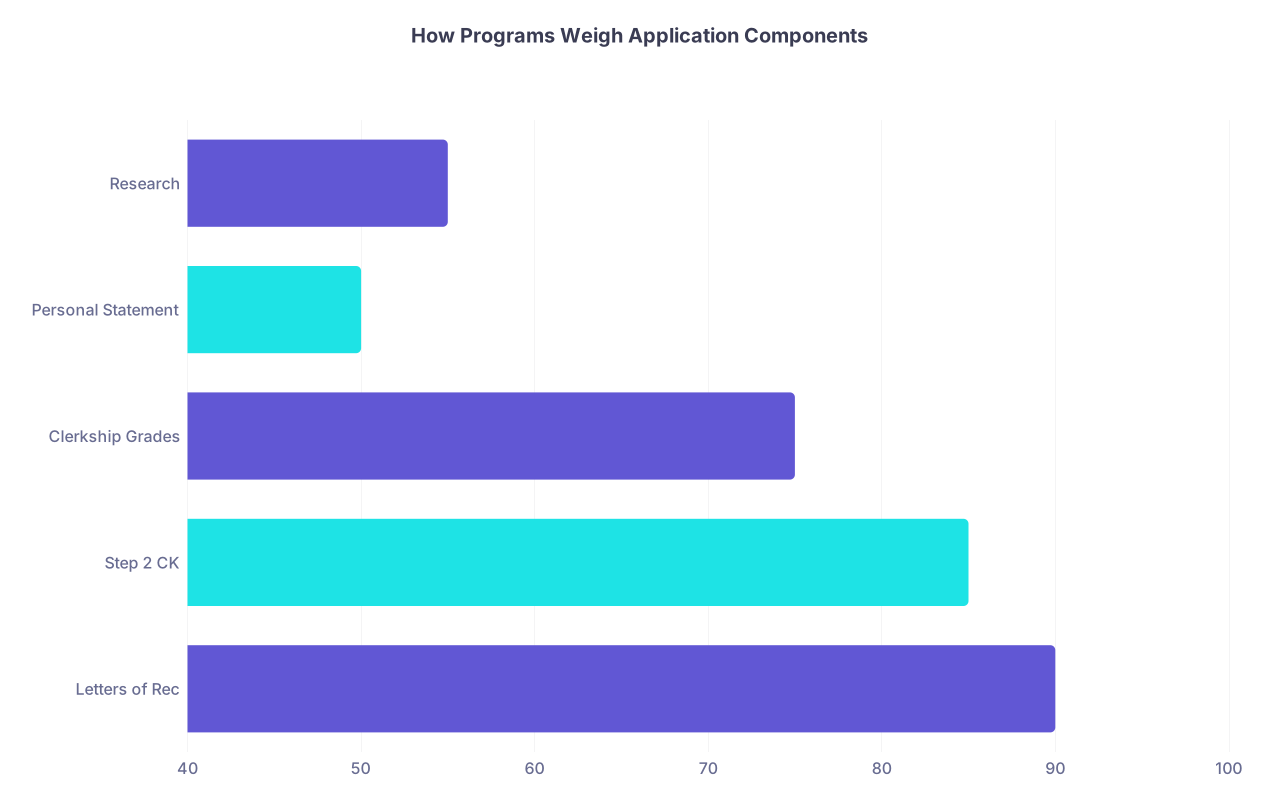
| Category | Value |
|---|---|
| Letters of Rec | 90 |
| Step 2 CK | 85 |
| Clerkship Grades | 75 |
| Personal Statement | 50 |
| Research | 55 |
No, Step 2 doesn’t erase a fail. But it does affect how nervous they feel about you owning a patient list.
4. Control the Narrative (Without Overdoing It)
You don’t need to write a 600-word confession in your personal statement about this rotation. Please don’t.
You only need to:
- Address it briefly if it’s a fail or a serious outlier, usually in:
- The “additional information” section
- Dean’s letter conversation
- At most, 1–2 lines in your personal statement if it’s truly central to your story
The structure:
- What happened (1 sentence, factual)
- What you learned/changed (1–2 sentences, specific behaviors)
- Where the improvement shows up (point to sub-I, later evals, Step 2)
Example:
“During my third year, I struggled on my first Internal Medicine rotation and received a Low Pass. I realized I needed to be more proactive in seeking feedback and organizing my patient work-ups. Since then, I’ve made a point of checking in regularly with seniors about my performance, which has led to significant improvement on my Medicine sub-I and later evaluations.”
That’s it. No sob story. No excuses. Short, adult, and backed by evidence.
How Much Will This Matter For Different Specialties?
Some specialties are more obsessed with “clean files” than others. No point pretending otherwise.
| Specialty | Sensitivity to 1 Bad Rotation | Notes |
|---|---|---|
| Derm, Ortho, Plastics | High | Any red flag hurts more |
| General Surgery | Moderate-High | Especially if it is a surgery eval |
| Internal Medicine | Moderate | Pattern matters more than one blip |
| Pediatrics, FM | Moderate-Low | Narrative & fit weigh heavily |
| Psych | Moderate-Low | Concern if professionalism issue |
If you’re gunning for super competitive fields and your bad rotation is directly in that field and it’s a fail or low pass with bad comments, yes, that’s a bigger problem.
It still doesn’t mean “don’t apply.” It means:
- Widen your list
- Include more mid-tier and safety programs
- Get very strong LORs from people in that specialty who actually like you
- If needed, consider a backup specialty you’d genuinely be okay with (not everyone wants to hear that, but it’s reality)
What You’re Probably Overestimating
You’re imagining a PD sitting alone in an office, holding your file, saying:
“Wow. Low Pass in Surgery. Trash this.”
Here’s what is actually happening more often:
- They’re skimming 800 applications in a few days.
- They sort by Step 2, school, maybe class rank.
- They read a few comment sections and letters.
- They look at the MSPE for any “Notable Concerns.”
If your “bad” grade is:
- One weird block with adequate comments
- No MSPE “concerning behavior” notes
- Strong letters and Step 2
Then your rotation is a data point, not your obituary.
You feel like you are your worst eval. They don’t have time to define you that way even if they wanted to.
Simple, Uncomfortable Things You Can Still Do Right Now
If this rotation is still living rent-free in your head, a few moves might actually help:

| Step | Description |
|---|---|
| Step 1 | Bad Rotation Grade |
| Step 2 | Meet Early With Next Attending |
| Step 3 | Focus On Letters and Step 2 |
| Step 4 | Ask For Expectations Clearly |
| Step 5 | Request Mid-Rotation Feedback |
| Step 6 | Document Improvements |
| Step 7 | Identify Strong Letter Writers |
| Step 8 | Craft Brief Explanation if Needed |
| Step 9 | Future Rotations Left? |
On your next few rotations:
- Tell your senior: “I had a rough rotation earlier in the year and I really want to improve. Can you please give me blunt feedback early and often?”
People respect that more than you think.
- Tell your senior: “I had a rough rotation earlier in the year and I really want to improve. Can you please give me blunt feedback early and often?”
For letters:
- Prioritize attendings where you know you did well and they liked working with you. Charisma and work ethic in narrative form beats a single ugly line on a transcript.
For your brain:
- Stop rereading that eval every other day. It’s not going to change. Your energy is better spent building the counterweight.
Quick Reality Check: What Actually Follows You
Here’s what residency programs concretely see and care about:
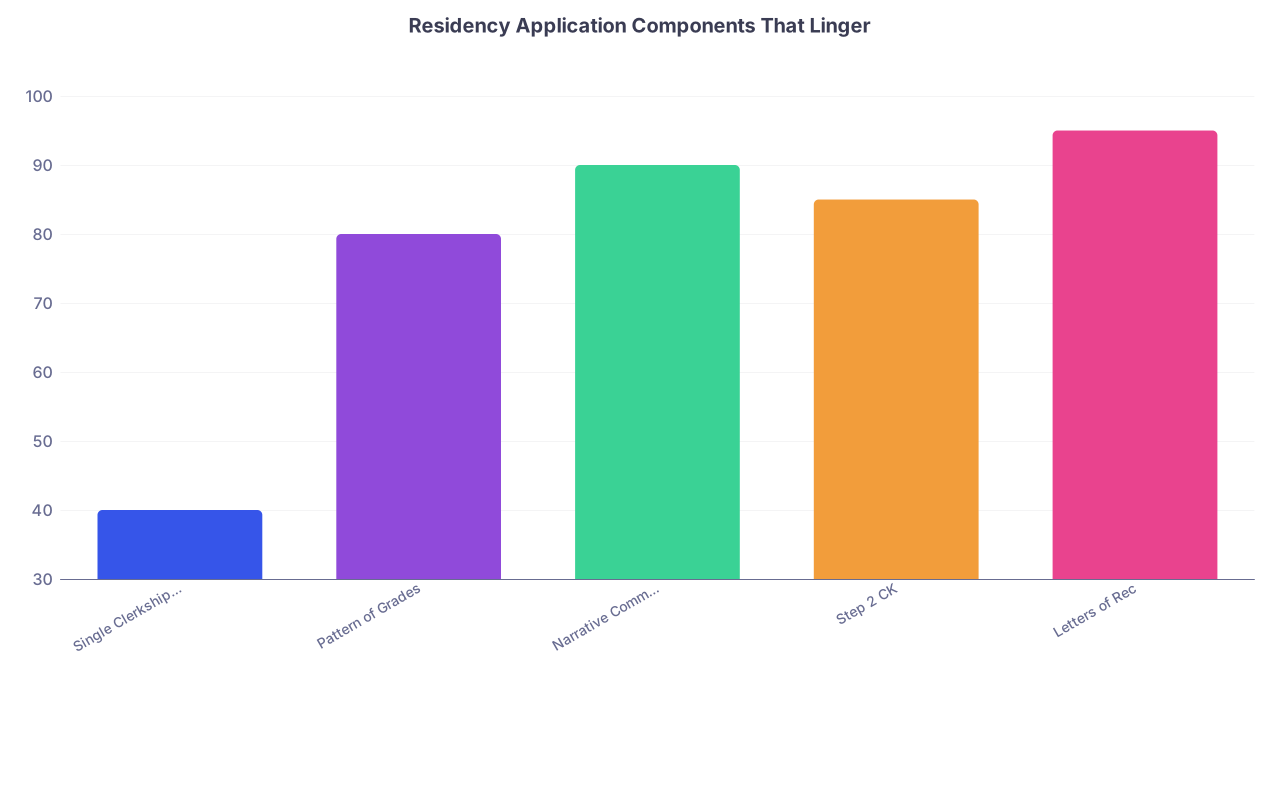
| Category | Value |
|---|---|
| Single Clerkship Grade | 40 |
| Pattern of Grades | 80 |
| Narrative Comments | 90 |
| Step 2 CK | 85 |
| Letters of Rec | 95 |
- A single bad grade: annoying, sometimes concerning, but often survivable.
- A pattern of bad grades or repeated professionalism issues: much worse.
- Growth over time with strong support from letter writers: huge redeeming factor.
One bad rotation isn’t what wrecks people. What wrecks people is:
- Not changing after bad feedback
- Making the same mistakes again
- Getting defensive or blaming everyone around them
- Letting the shame paralyze them instead of push them
If that’s not you, then you’re already ahead.

Bottom Line: Will Every Program Fixate On That Grade?
No. They won’t.
Some will notice it and move on because the rest of your file is strong.
Some will see it as a tie-breaker against you when they’re flooded with applicants.
Some honestly won’t care much if your letters and Step 2 are reassuring.
And yeah, a small subset will toss your app for it. That’s reality. But those were never going to be universally “your people” anyway. The Match isn’t about convincing every single program you’re perfect. It’s about showing enough programs the truth: that you’re competent, safe, coachable, and not defined by your worst month of med school.
You’re remembering that rotation like a trauma.
Most programs will see it like an asterisk.
Years from now, you won’t be able to quote the exact wording of that bad eval. You’ll remember who you became after reading it.