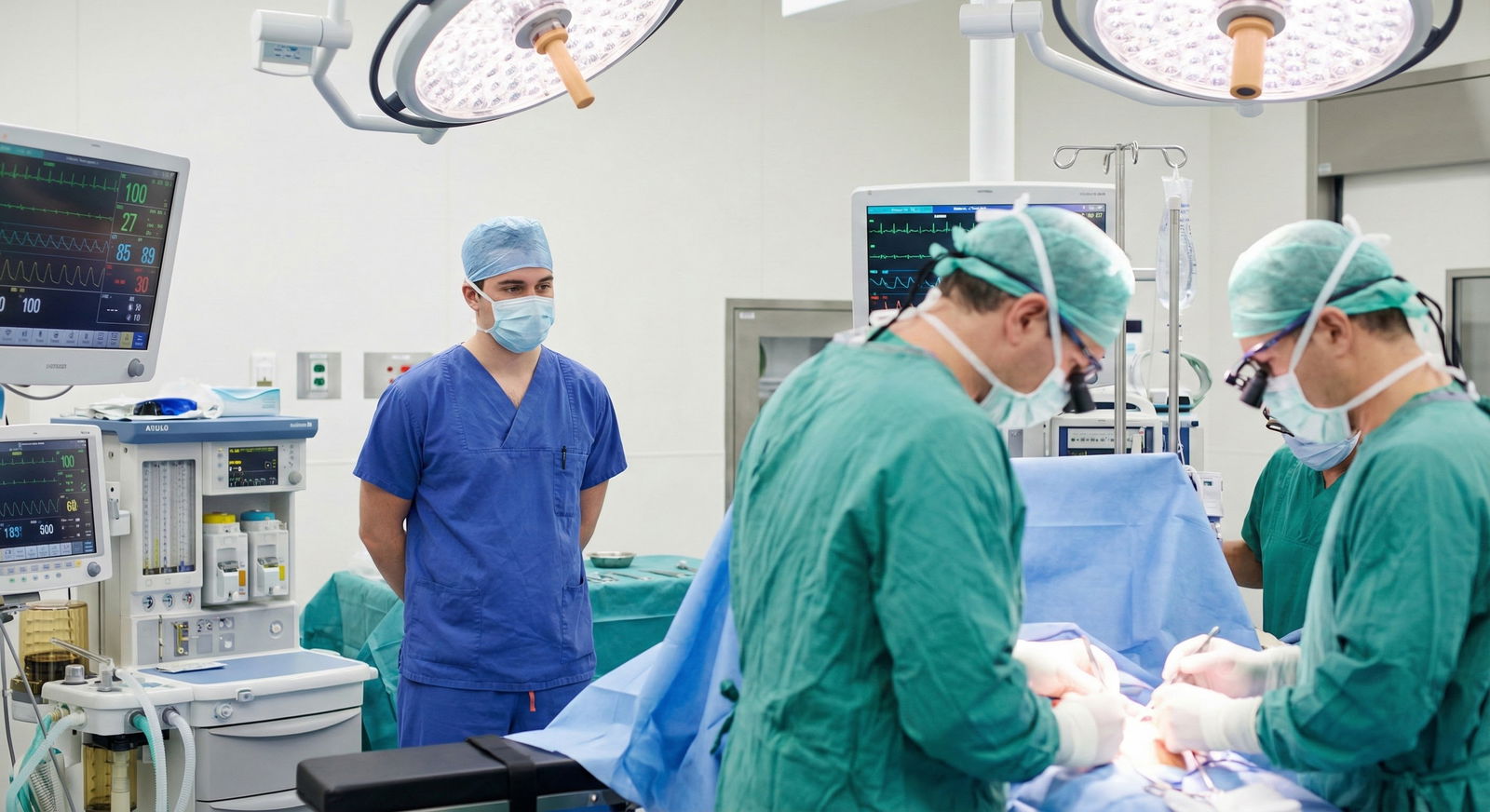
The prestige obsession around academic hospitals is blinding a lot of students to one of the most powerful match assets they already have: a well‑run, strategically used community hospital rotation.
You can turn a “no‑name” community site into the rotation that:
- Generates your strongest letters
- Gives you real responsibility you can actually talk about
- Makes your application feel like you know how to function as an intern, not just shadow one
But that only happens if you stop treating it like a consolation prize and start running it like a targeted project.
Here is the playbook.
1. Understand What Community Rotations Can Do That Academic Ones Cannot
If you do not understand the leverage, you will miss most of the opportunities.
Community hospitals usually offer:
- More autonomy and hands‑on work
- Closer access to attendings (no 7‑layer hierarchy)
- More continuity with one team
- Less competition from hordes of students and fellows
Academic centers give you prestige and exposure to zebras. Community sites give you:
- Reps
- Responsibility
- Visibility
Program directors care a lot about those three.
What PDs Actually Want From Clerkships
They are not impressed by “I rounded at [famous name]”. They care about:
- Can you function like a reliable sub‑intern?
- Do your letters say you took ownership?
- Have you dealt with bread‑and‑butter medicine at scale?
- Are you teachable and not a liability at 3 a.m.?
A good community rotation checks all those boxes if you build it right.
| Factor | Community Hospital | Academic Center |
|---|---|---|
| Hands-on responsibility | High | Often limited |
| Access to attendings | High (direct) | Filtered through layers |
| Competition for attention | Low–moderate | High |
| Prestige/name recognition | Low–moderate | High |
| Quality of narrative examples | High (more doing) | Variable |
If you go in chasing prestige, you will underperform. If you go in chasing responsibility and relationships, you will come out with match material.
2. Set Explicit Match Goals Before Day 1
Showing up and “working hard” is vague. You need concrete outputs linked to your residency application.
For each community rotation, define 3–5 explicit targets. For example:
One strong letter of recommendation
- From an attending who has seen you present, write notes, handle follow‑up, and improve over time.
Two specific, memorable clinical stories
- Cases where you took initiative, closed a loop, or followed a patient’s course over days.
A documented role you can put on your CV
- Example: “Led discharge medication counseling for 5–7 patients per week under supervision.”
One small QI or workflow project
- Example: “Developed a simple discharge checklist for CHF patients to reduce 7‑day callbacks.”
A potential contact/advocate in your target specialty
- An attending willing to send an email on your behalf or take calls from programs.
Write these down. Literally. On a note in your phone or a small card in your pocket.
Then build your daily behavior to hit them.
3. How to Start the Rotation: First 72 Hours Protocol
The way you handle the first three days sets your ceiling. Most students coast and “figure it out as they go.” That is lazy and it shows.
Here is the opening script.
Step 1: Day 1 Attending Conversation
Within the first morning, say something like this to your main attending or hospitalist:
“Dr. Smith, I am very interested in internal medicine and planning to apply next year. My goals for this month are to function as close to an intern level as is safe, improve my efficiency with notes and presentations, and really get feedback on where I stand. I would appreciate any chances to take on more responsibility and would love direct feedback, even if it is blunt.”
That does three things:
- Signals seriousness
- Gives them permission to push you
- Plants the idea of you as a sub‑I level student
Now you are not “the random med student following along.” You are a trainee with intent.
Step 2: Clarify Workflow and Expectations Early
Ask the senior resident or charge nurse:
- “What makes a student actually helpful on this team?”
- “What do students usually drop the ball on that frustrates you?”
- “How do you prefer we communicate updates? Text, in person, notes?”
Then adjust quickly. Do this on day 1, not day 10.
Step 3: Claim Patients and Responsibilities
By day 2–3, you should:
- Have a consistent panel of your own patients (3–6 on IM, more in outpatient)
- Be writing the first draft of notes
- Be doing:
- Med recs
- Calling pharmacies
- Calling family for collateral history (with supervision)
- Drafting discharge instructions
If you are still “following” but not responsible for anyone by day 4, you are under‑assertive.
4. Turn Daily Work into Match‑Worthy Evidence
Hard work only helps you if it is visible and specific. You need to turn “I rounded” into concrete accomplishments.
A. Own Your Patients Like an Intern
Checklist for each patient you “own”:
- Pre‑round: Vitals, labs, imaging, overnight events, new consult notes
- One‑line summary ready: “Mr. X is a 67‑year‑old with CHF exacerbation day 3, diuresing well, pending echo.”
- Plan bullet‑points by system, with at least 1–2 suggestions:
- “Given net negative 3L and mild AKI, I suggest decreasing Lasix to 40 IV BID and reassessing creatinine this afternoon.”
You will be wrong sometimes. That is fine. The fact that you are generating a plan at all is what matters.
B. Be the Person Who Closes Loops
Community hospitals run on logistics. You can stand out by killing the loose‑end problem.
Examples:
- Lab pending? You check it, update the team, and document.
- Family has questions? You collect them, get answers from the team, call back (with permission).
- Follow‑up appointment needed? You help schedule it and confirm in the chart.
One of my previous students matched at a strong IM program largely because her letter repeatedly mentioned: “She consistently anticipated next steps, ensured consult recommendations were implemented, and closed communication loops with patients and staff.”
That comes from boring work, done relentlessly.
C. Build Quantifiable Bullet Points for Your CV
Keep a tiny running log in your phone (HIPAA‑safe, no identifiers) of:
- How many patients you pre‑rounded on daily
- How many notes you drafted per week
- Tasks you regularly handled
By the end, you can write things like:
- “Pre‑rounded independently on 4–6 inpatients daily and presented concise assessments and plans on rounds.”
- “Drafted 3–5 progress notes per day and finalized under attending supervision.”
- “Coordinated discharge planning for 1–2 patients per day, including medication reconciliation and patient counseling.”
This reads very differently from “Completed internal medicine clerkship at X Community Hospital.”
5. Engineering a Strong Letter of Recommendation
If you are not intentional, you will finish the month with: “Good student, pleasant, shows up on time.” That letter will not move the needle.
You want: “Functions at the level of an intern. I would be happy to have them as a resident.”
A. Pick Your Letter Writer Early
By week 2, identify:
- The attending who:
- Sees you frequently
- Gives feedback
- Lets you present and manage patients
Then raise the stakes. Around mid‑rotation:
“Dr. Patel, I am planning to apply to family medicine and I am hoping this will be one of my main clinical rotations for that application. I would really appreciate honest feedback on where I stand compared to other students and what I should focus on the rest of the month.”
Two outcomes:
- You get a reality check
- You put the idea in their head that this rotation matters for your future
B. Feed Them Evidence
Do not make them remember everything at the end. In the last week:
- Email or hand them a 1–2 page “brag sheet”:
- Your CV
- Personal statement draft (if ready)
- Bullet list of:
- Specific patients you managed
- Extra tasks you took on
- Any QI/project work you did
Phrase it as:
“Here is a summary of what I worked on this month to help with your letter. Use whatever is helpful and disregard the rest.”
You are not writing your own letter; you are jogging their memory with facts.
C. Ask Clearly and Early Enough
Optimal timing: Within the last 3–5 days of the rotation.
Script:
“Dr. Patel, I have really valued working with you and the feedback you have given me. Would you feel comfortable writing me a strong letter of recommendation for internal medicine residency?”
Include the word “strong.” If they hesitate, smile and pivot. You just dodged a mediocre letter.
6. Making the Rotation Speak Directly to Residency Programs
You are not doing this rotation for its own sake. You are building material for ERAS and interviews.
Here is how to extract it.
A. Translate Experiences into Application Language
Take each major domain and build 1–2 bullets or talking points.
Clinical readiness
- “On my community hospital medicine rotation, I routinely pre‑rounded on 5 patients and presented complete plans, which helped me get more comfortable making initial management decisions before rounds.”
Teamwork and communication
- “I often served as the main contact between our team and nursing for my patients, which taught me to communicate clearly and follow through on orders and clarifications.”
Ownership
- “I took responsibility for ensuring my patients had appropriate follow‑up and understood their discharge instructions, catching several potential medication errors before discharge.”
Understanding of real‑world medicine
- “Working in a community setting with limited subspecialty availability forced me to think pragmatically about what could be managed locally and what required transfer.”
Use these in:
- ERAS experiences section
- Personal statement paragraphs about clinical growth
- Interview answers about “a time you took ownership” or “how you know you are ready for residency”
B. Prepare 2–3 Clinic‑Level Stories
You need stories that stick. Not generic “we managed sepsis,” but:
- The CHF patient who kept bouncing back and how you helped fix a discharge issue
- The non‑English‑speaking patient where you coordinated interpretation and education
- The complex multimorbid patient you followed for the entire month
Structure each in your mind as:
- Brief context
- Your specific role
- The challenge
- What you did
- What you learned
You can use the same story in different flavors for:
- Leadership questions
- Ethical questions
- “Tell me about a time you made a mistake” (yes, you need one of those)
7. Mini‑Projects That Make You Stand Out
Community hospitals are perfect grounds for small, fast, meaningful projects. These do not need IRB approval or a statistician.
Pick something that:
- Annoys the staff
- Causes delays
- Or confuses patients
Then fix 5% of it.
Examples:
- Create a one‑page, attending‑approved patient handout for:
- New diabetics
- COPD inhaler technique
- Heart failure discharge weight monitoring
- Build a simple checklist for new admits for your team:
- VTE prophylaxis
- Med rec complete
- Code status documented
- Help standardize handoff templates or sign‑out phrases for students
Then document:
“Identified confusion among CHF patients about post‑discharge weight monitoring; created and implemented a simple handout reviewed with 10 patients over 2 weeks, which nurses incorporated into discharge teaching.”
Now you have a QI‑like experience from one month on a community service. Programs like that.
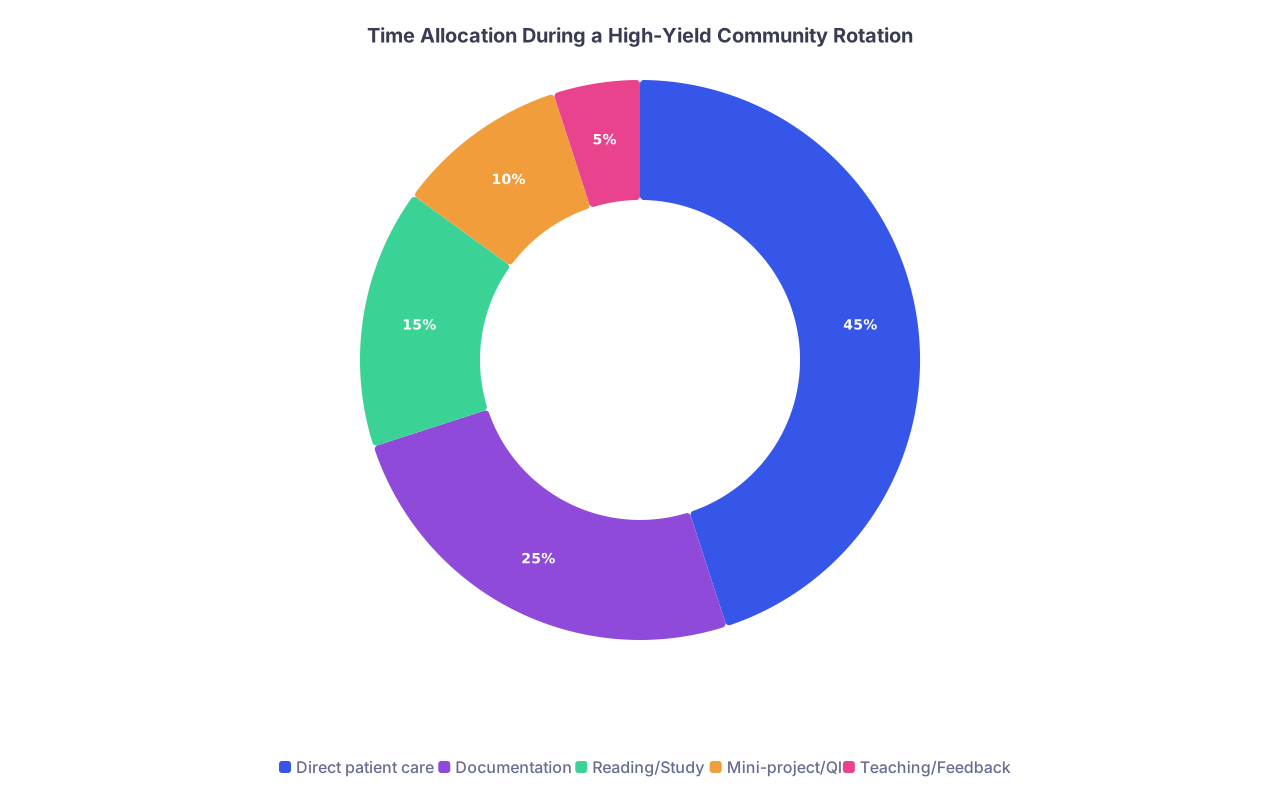
| Category | Value |
|---|---|
| Direct patient care | 45 |
| Documentation | 25 |
| Reading/Study | 15 |
| Mini-project/QI | 10 |
| Teaching/Feedback | 5 |
8. Common Mistakes That Waste a Community Rotation (And How to Fix Them)
I have watched students sabotage what could have been their best rotation. The patterns are very predictable.
Mistake 1: Acting Like an Observer
Behavior:
- Standing at the back of the room
- Never volunteering to see new admits
- Waiting to be told what to do
Fix:
- Every round: “Can I pick up this new patient?”
- Every day: “Is there anything else I can take off your plate?”
- At sign‑out: “Any labs or follow‑ups I can help check this afternoon?”
Mistake 2: Hiding Weakness Instead of Fixing It
You are slow at notes. Your presentations ramble. You do not know the insulin scale. Fine. You are a student.
What is not fine is pretending you are fine.
Fix:
- “Dr. Jones, I am trying to tighten my assessment and plan. Can I present one patient and have you stop me where I lose structure?”
- “I am struggling to finish notes by noon. Could you look at one with me and point out where I am wasting time?”
Faculty at community sites are often more willing to teach if you show that you care and will implement feedback. You will also give them content for a letter: “He actively sought feedback and improved markedly over the rotation.”
Mistake 3: Acting Like the Site Is Second‑Tier
Students sometimes signal—subtly or not—that they care less because this is “just a community hospital.” That attitude leaks.
You will hear things like:
- “Well at [Big Name Hospital] we did X…”
- “This is fine for now, but I really want to go back to [University].”
Faculty hear that as: “You are second best.” Enjoy your lukewarm evaluation.
Fix:
- Do not compare out loud unless you are specifically asked.
- Show actual curiosity: “How do you usually manage X here without endocrinology on site?”
- Respect the staff. Nurses at these places will make or break your rotation.
9. Specialty‑Specific Angles: How to Tailor the Rotation
You can twist almost any community rotation in the direction of your chosen specialty.
Internal Medicine / Family Medicine
- Focus on:
- Bread‑and‑butter chronic disease
- Transitions of care
- Polypharmacy and deprescribing
- Seek:
- Longitudinal follow‑up during the month
- Post‑discharge clinic visits if available
Emergency Medicine
If your community site has an ED:
- Ask to spend:
- A few shifts there if allowed
- Or at least follow patients from ED to floor
- Emphasize:
- Rapid initial assessment
- Communicating with ED staff
- Handling limited resources after hours
Surgery / OB‑GYN
At a community site, you may:
- Get more OR time
- Do more hands‑on tasks (suturing, first assist)
Maximize:
- Pre‑op and post‑op ownership
- Knowing your patients before they hit the OR
- Following them on the floor
Your application story becomes: “I did not just operate. I owned the pre‑op workup and post‑op care in a real‑world hospital where resources were finite.”
10. Post‑Rotation: Lock In the Gains
The rotation is not over when you hand in your evaluation form. You still have to extract the value.
Immediately After the Rotation
Within 72 hours:
- Send a brief thank‑you email to:
- Your letter writer
- Any attending who invested in you
- The key resident who mentored you
Include:
- 1–2 specific things you learned from them
- A line about your plans (“I will be applying in pediatrics this fall.”)
That keeps the relationship alive.
Before ERAS Submission
Revisit:
- Your notes/log from the rotation
- Your mini‑project, if you did one
- Any evaluations
Then:
- Write 3–4 ERAS‑ready bullets for your “Experience” section
- Integrate 1–2 of your best clinical stories into:
- Your personal statement
- Your interview “bank” of anecdotes

| Step | Description |
|---|---|
| Step 1 | Start Rotation |
| Step 2 | Set Match Goals |
| Step 3 | Claim Patients & Responsibilities |
| Step 4 | Own Daily Tasks & Close Loops |
| Step 5 | Mini-Project or Added Value |
| Step 6 | Identify Letter Writer |
| Step 7 | Provide Brag Sheet |
| Step 8 | Strong LOR + ERAS Bullets |
| Step 9 | Interview Stories & Advocacy |
Now that one “small” community rotation is actively working for you on:
- Your CV
- Your letters
- Your interview performance
Instead of sitting on your transcript as one more generic clerkship.
Key Takeaways
- A community hospital rotation can be your highest‑yield asset for the match if you treat it as a responsibility and relationship engine, not a prestige downgrade.
- You need explicit goals: own patients, close loops, build quantifiable accomplishments, and engineer at least one strong letter of recommendation.
- Convert daily work into application power: concrete ERAS bullets, memorable clinical stories, a small QI‑style project, and attendings who can credibly say, “This student already works like an intern.”