
The idea that “SOAP positions are always malignant” is lazy, wrong, and harmful.
You’re not ruined if you go through the SOAP. You’re not doomed to a toxic program. But you are at higher risk of walking into a bad situation if you believe every horror story and ignore the actual signals that matter.
Let’s dismantle the myth and replace fear with a clear playbook.
The SOAP “Malignancy” Myth: What’s Real vs. Internet Drama
Here’s the unsexy truth: most SOAP positions are not malignant. They’re just… less competitive, less well-known, in less desirable locations, or in programs with some real-but-manageable issues.
The word “malignant” gets thrown around for everything:
- Any program outside a big coastal city
- Any program with real workload
- Any program that actually expects you to work
- Any program that doesn’t babysit residents
That’s not malignancy. That’s residency.
True malignant programs usually have some combo of:
- Systemic disrespect and bullying
- Chronic, unsafe understaffing
- Retaliation against residents who speak up
- Habitual violations of duty hours and no interest in fixing it
- A pattern of residents leaving, getting pushed out, or failing boards
That’s real toxicity. And yes, some SOAP-listed programs fit that description.
But many SOAP slots appear for reasons that have nothing to do with malignancy:
- New programs still building reputation
- Geographic undesirability (rural, Rust Belt, etc.)
- Shift in local market (losing a hospital partner, new competing program)
- Overexpansion of spots in a specialty in a given region
- One bad year of recruitment or bad luck with couples matching
I’ve watched students SOAP into “backup” community IM or FM programs they were terrified of… and a year later they were fine. Busy, tired, occasionally annoyed—but fine. Some actually loved it and matched competitive fellowships after.
SOAP ≠ malignant. SOAP = “filled later.” That’s it.
What the Data Actually Shows About SOAP Programs
Let’s walk away from Reddit emotions and look at structure and data.
1. Accreditation status: the first critical filter
Before you panic about “malignant,” check the basics:
- Is the program ACGME-accredited?
- Any recent citations?
- Any “probation” or “warning” status?
You can find this on the ACGME public site. If a program has serious systemic issues, it very often shows up there.
Programs under probation or with multiple concerning citations are a different level of risk. Not automatic no—but you’d be justified in treating them like yellow or red flags.
2. Fill rates and attrition: the patterns that matter
Here’s where people pretend to “know” a program is malignant but never look at numbers.
Ask:
- Do they chronically fail to fill in the main Match year after year?
- Do they routinely drop multiple residents from each class?
- Are they constantly at the SOAP table for many of their positions?
Programs that are in SOAP every single year with large numbers of unfilled spots deserve more scrutiny than a program that landed there once with 1–2 open PGY-1 positions.
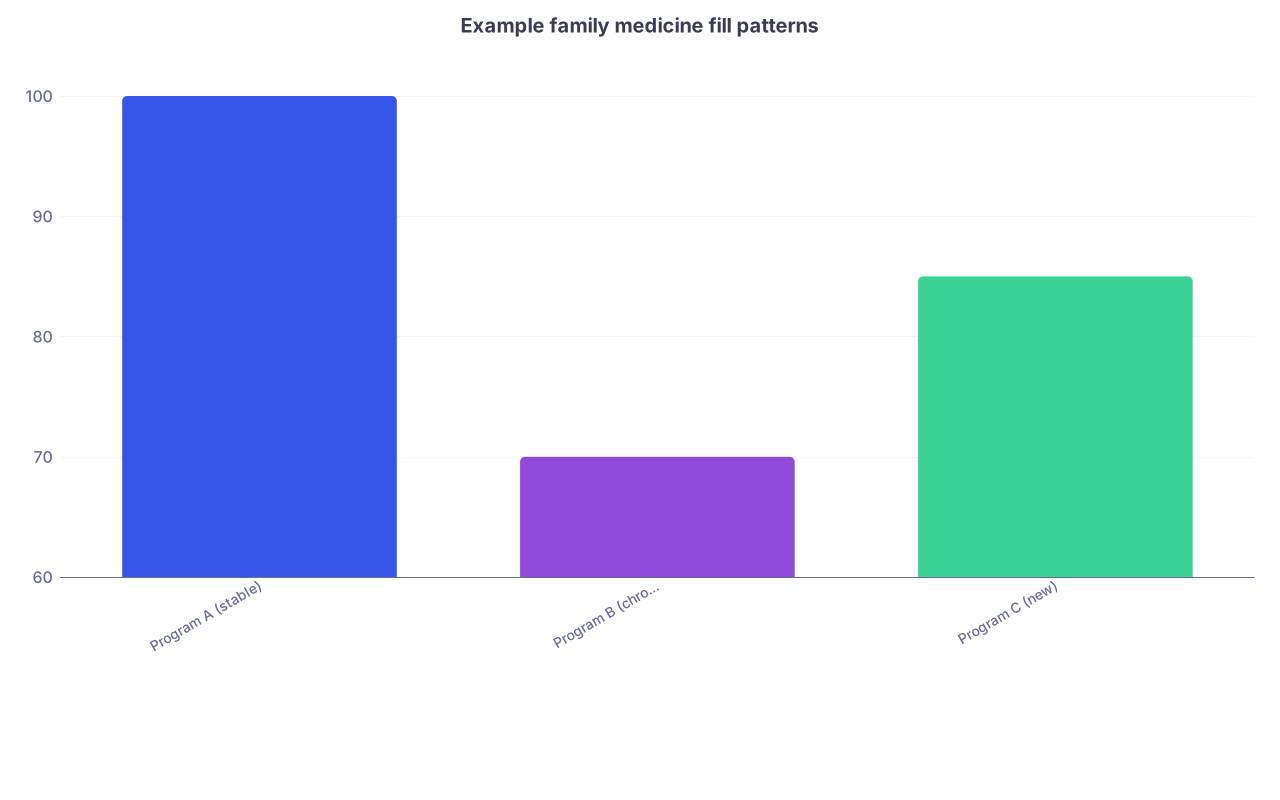
| Category | Value |
|---|---|
| Program A (stable) | 100 |
| Program B (chronic SOAP) | 70 |
| Program C (new) | 85 |
Interpretation:
- Program A: fills all positions consistently → probably fine
- Program B: only fills ~70% in main Match, uses SOAP heavily → why?
- Program C: decent fill rate for a newer program → not necessarily malignant
You won’t always have perfect numbers, but if literally no one is matching there regularly, yet spots are sitting open every year, you should be cautious.
3. Board pass rates and graduation rates
These are far more objective than “vibes”:
- Do most residents graduate on time?
- Are board pass rates near or above national averages?
- Or are they “unable to disclose” or suspiciously vague?
Some community programs in SOAP have excellent board pass rates and solid fellowship placement. They’re just not in sexy locations. Meanwhile, a “mid-tier” big-name program with weak resident support can torpedo your board chances.
Why Programs End Up in SOAP (That Has Nothing To Do With Malignancy)
Let’s demolish the simplistic “if it’s in SOAP, they’re terrible” thinking.
Top reasons programs SOAP:
Branding and geography
Students chase coasts, big cities, and names. A strong clinical program in rural Kansas or small-town Michigan can be better training than a shiny urban program—but it won’t fill as quickly.New or recently expanded programs
New internal medicine or EM program opens? They’re now competing with established giants. Even if leadership is excellent, applicants will hesitate for a few years. That shows up as SOAP positions.Poor recruitment game
Minimal website, outdated resident list, generic “we are committed to excellence” copy. No social media presence. Clunky interview experience. None of this necessarily equals malignancy, but it absolutely affects fill rate.One bad PR year
One loudly unhappy resident, a bad online review, or a local hospital issue can scare people away for a cycle or two.Discipline or visa mix
Some programs are IMG-heavy or traditionally lean on J-1/H-1B, and policy or timing changes can leave open spots—especially in SOAP, when visa logistics get messy.
Are there genuinely malignant programs in SOAP? Yes. Are they the majority? No. Treat SOAP as a risk stratification exercise, not automatic self-sacrifice.
How To Quickly Triage SOAP Programs Under Insane Time Pressure
This is the part nobody trains you for. During SOAP, you don’t have the luxury of a 3-week research process. You have hours.
So you need a ruthless, fast filter.

| Step | Description |
|---|---|
| Step 1 | Get SOAP list |
| Step 2 | Check ACGME status |
| Step 3 | High risk list |
| Step 4 | Next filter |
| Step 5 | Search resident attrition |
| Step 6 | Next filter |
| Step 7 | Scan board pass data and alumni |
| Step 8 | Safer list |
Step 1: ACGME status and hospital context
In 3–5 minutes per program:
- Google:
[Program Name] ACGME - Google:
[Hospital Name] news layoffs closure bankruptcy - Check if the main hospital is stable or in constant crisis
If the primary training hospital is constantly in the news for financial implosion or service shutdowns, that’s more worrisome than “we’re rural and busy.”
Step 2: Rapid online intel
You’re not writing a thesis. You’re pattern-matching.
Look at:
- Program website: updated? leadership listed? residents listed with med schools?
- Google:
[Program Name] residency review,Reddit,Student Doctor Network - LinkedIn: search residents and where they went after
Yes, Reddit is biased. SDN is noisy. But if you see multiple, independent reports of:
- Residents being fired without process
- Violent or humiliating attending behavior
- Systematic duty hour lying/pressure
- PGY-2 class with half the original size
That isn’t smoke. That’s probably fire.
| Signal type | Lower concern example | Higher concern example |
|---|---|---|
| Accreditation | Full, no recent citations | Probation, serious recent citations |
| Fill pattern | Usually fills, 1–2 SOAP spots | Large SOAP involvement every year |
| Attrition | Occasional transfer | Multiple residents gone each PGY class |
| Board outcomes | Near national avg, transparent | Vague, missing, or clearly below average |
| Leadership | Stable PD 5+ years | 3+ PD changes in 5 years |
Step 3: Use the phone (yes, really)
During SOAP, you can still email or call coordinators briefly. You won’t get a full interview, but you can ask sharp questions.
Questions that actually tell you something:
- “How many residents have left the program in the last 3 years, and why?”
- “Have there been any major changes to the program or hospital in the last 2–3 years?”
- “Where have your graduates gone for fellowship or practice recently?”
- “What major challenges is the program working on right now?”
You’re not asking them, “Are you malignant?” You’re watching how they answer.
Red flags:
- Evasive, vague, or defensive answers
- “We prefer not to discuss that” to basic attrition questions
- Coordinator clearly exhausted and bitter on the phone
Green-ish flags:
- Honest acknowledgment of specific issues + concrete steps taken
- Clear knowledge of alumni outcomes
- Stable leadership narrative
How To Think About Risk: SOAP vs. No Spot At All
Here’s where I’m going to be blunt.
Sometimes the choice is not “SOAP vs. dream program.” The choice is “SOAP into a flawed program vs. reapply vs. leave clinical medicine.” That’s different.
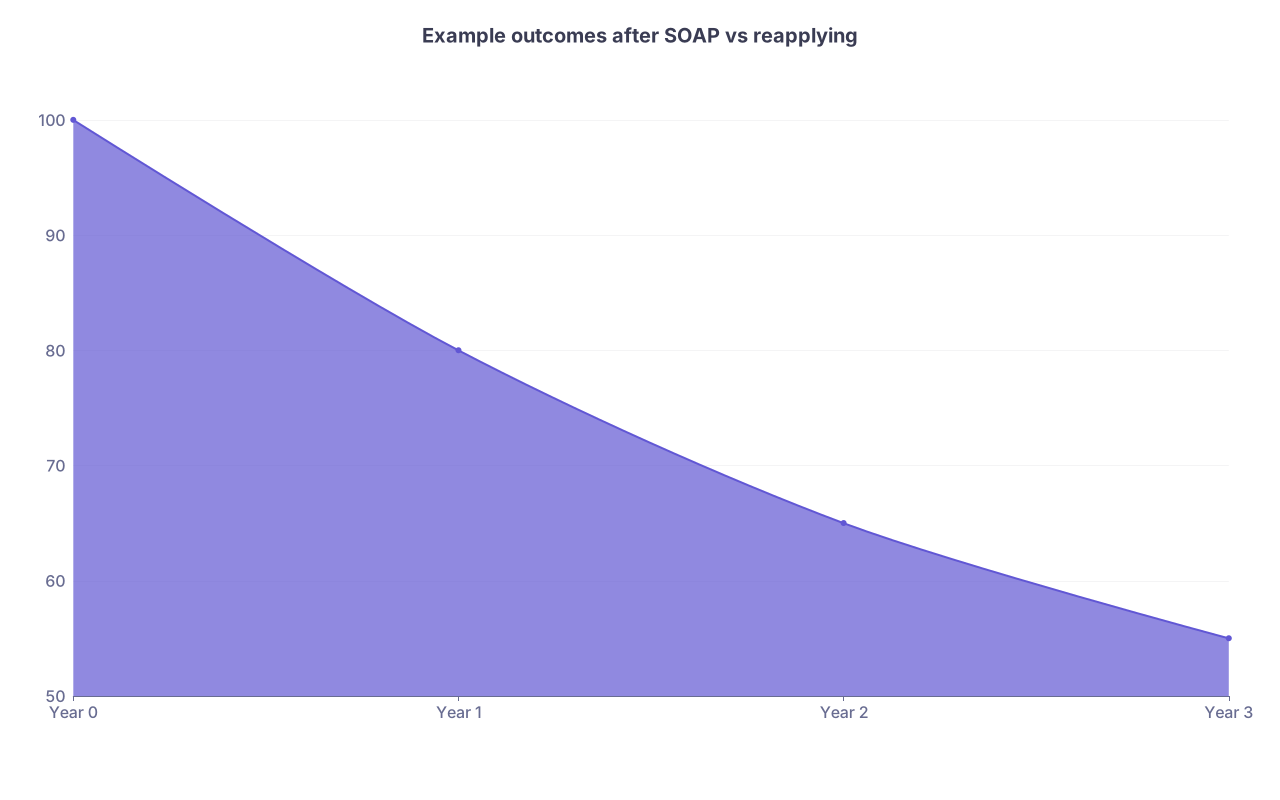
| Category | Value |
|---|---|
| Year 0 | 100 |
| Year 1 | 80 |
| Year 2 | 65 |
| Year 3 | 55 |
Imagine a cohort of unmatched grads:
- Year 0: 100 unmatched
- Year 1: portion SOAP or match
- Year 2–3: some never get a categorical spot
The actual NRMP data shows what you already sense: reapplication odds drop each cycle, especially for IMGs and older grads. Time away from formal training is punished.
So your decision tree during SOAP often looks like:
- Take a SOAP spot at a high-intensity, maybe-rough program with some red flags
- Roll the dice on a reapplication year with lower odds, more debt, more time lost
- Pivot out of clinical medicine entirely
There is no universal “right” answer. But pretending that “no residency is better than a non-ideal SOAP program” is fantasy for most people who genuinely want to practice clinically.
The sane middle-ground approach:
- Hard pass only on programs with severe red flags: unstable hospital, clear abuse, massive attrition, probation + nasty reviews + no improvement narrative
- Otherwise, recognize: you might be signing up for a tougher 3 years in exchange for actually becoming board-eligible and employable
Not romantic. But reality.
How To Survive And Even Leverage A Non-Ideal SOAP Program
Let’s say you do end up in a program that isn’t your dream. Maybe it has sharp edges. Maybe it is a bit toxic.
That’s not the end of the story.
You control three big levers:
Professionalism and reputation
If you’re the reliable, prepared, not-drama resident, attendings will advocate for you—even in chaotic programs. I’ve seen residents escape garbage situations and match great fellowships because people trusted them and vouched hard.Strategic networking outside your program
Away rotations, conferences (yes, even as a resident), virtual collaborations, research with faculty from other institutions. This is how you prevent a single program from defining your whole trajectory.Exit options and contingency planning
Keep a realistic backup:- If the program implodes → are there nearby programs historically open to transfers?
- If you cannot stay → what’s your plan for PGY-2 transfer or prelim-to-categorical maneuver?
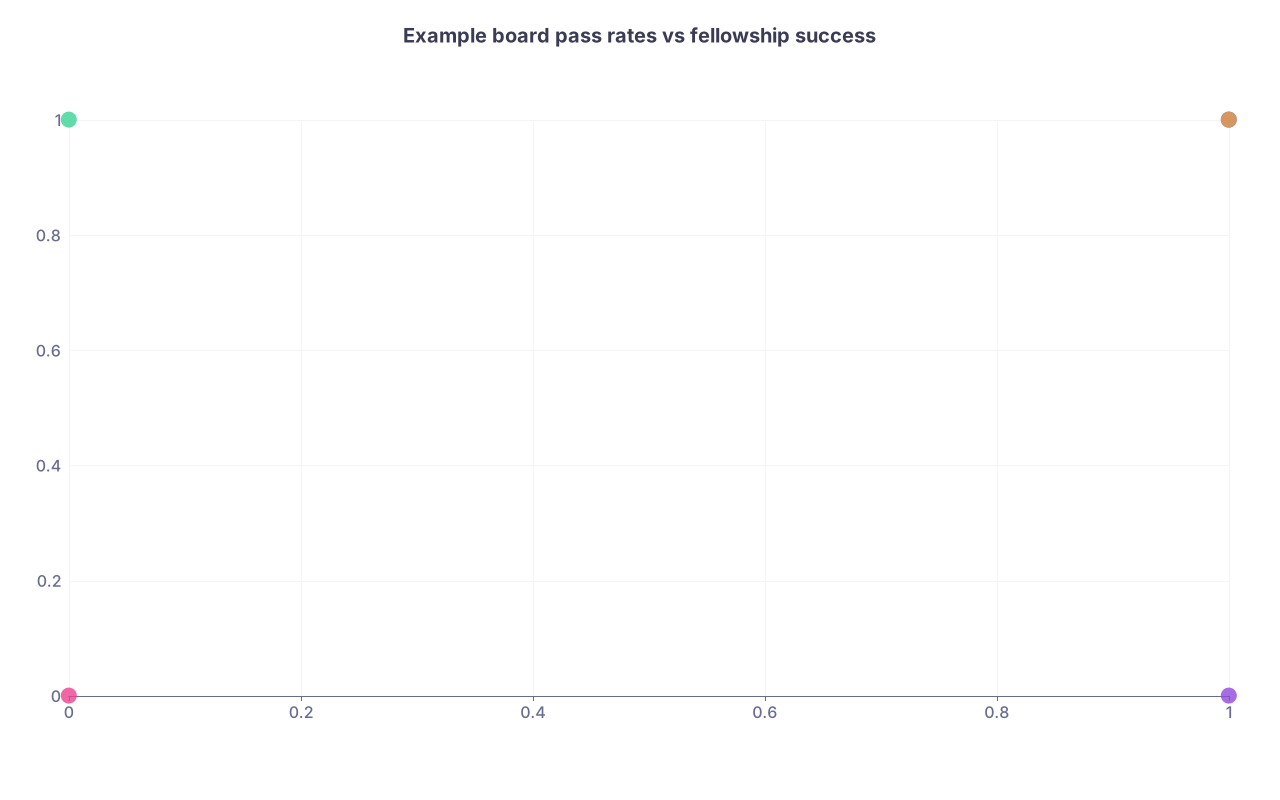
| Category | Value |
|---|---|
| Resident 1 | 1,1 |
| Resident 2 | 1,0 |
| Resident 3 | 0,1 |
| Resident 4 | 1,1 |
| Resident 5 | 0,0 |
(Here, 1 = yes, 0 = no, just to make the point: passing boards + smart networking beats program prestige alone.)
You’re not powerless just because you SOAPed. You just lost the illusion of an autopilot path. That might sting, but it’s manageable.
Quick Reality Checks To Keep Your Head Straight
You will hear a lot of noise during SOAP week. Let’s anchor it.
- “SOAP IM/FM/PSY = malignant” → False. Many are ordinary, medium-intensity community programs with some warts and non-glamorous zip codes.
- “If a program is in SOAP, nobody wants it for a reason” → Oversimplified. Sometimes the “reason” is “it’s in a city no one can spell and the website looks like 2008.”
- “One bad review means avoid” → Weak logic. Recurrent, consistent patterns across multiple sources? Different story.
- “Reapplying is always better than going to a ‘bad’ program” → Not for most grads, especially IMGs or older applicants. Data says odds worsen over time.