
It’s Monday of Match Week. You’re an IMG, you need a visa, and your NRMP email just said the thing you hoped you’d never read: “We are sorry, you did not match to any position.”
You’re in SOAP. You’ve got maybe a few hours before ERAS opens for new applications, and your brain is doing the math: IMG + SOAP + visa requirement = tiny odds.
You’re not wrong. But tiny odds are not zero. The difference between people who scramble intelligently and people who flail? Targeting and outreach. Especially for you, with visa needs.
This is the playbook.
1. Get Real About Your Situation (Fast, Not Emotional)
Start with brutal clarity. You do not have the same SOAP playing field as a US grad with no visa needs. If you act like you do, you will waste your window.
Here’s what you’re up against as an IMG needing a visa in SOAP:
- Many programs won’t sponsor visas at all
- Some that do sponsor will not do it through SOAP (too rushed, too much risk)
- Programs may already have “internal” candidates queued up (prelim to categorical conversions, etc.)
- Your file has already been screened and passed over by many of these places once
So your strategy cannot be: “Apply to everything and pray.”
Your strategy needs to be: “Laser-focus on the small subset where I realistically have a shot, then hit them hard with smart outreach.”
Before you touch ERAS or a phone, you need three things clearly defined:
- Your visa situation
- Your actual competitiveness
- Your specialty flexibility
Let’s break that down.
2. Clarify Your Visa Reality in 5 Minutes
You don’t have an hour for a deep dive on immigration law. You need the basic facts right now.
Ask yourself:
- Do I currently have any valid US visa? (F-1, J-1 research, H-4, etc.)
- Am I applying for sponsorship as:
- J-1 only
- H-1B only
- Either J-1 or H-1B
Here’s the hierarchy of “difficulty” from the program’s eyes in SOAP:
| Visa Situation | Program View in SOAP | Notes |
|---|---|---|
| No visa needed | Easiest | Treated like US citizen/GC |
| J-1 only | Moderate | Common, many IM/FM programs |
| J-1 or H-1B (flex) | Slightly harder | Flexibility helps |
| H-1B only | Hardest | Few programs, lots of rules |
If you’re H-1B only in SOAP, I’ll be blunt: your pool is tiny. Possible? Yes. But you need to be hyper targeted.
If you can honestly accept a J-1, switch your ERAS preference now so it’s clear you’re open to J-1. That one change can double or triple your reachable pool.
3. Rapid Self-Assessment: Where Do You Actually Fit?
No sugarcoating. In SOAP, programs are not sitting there deeply analyzing your narrative. They’re triaging.
You need to know where you land on these axes:
- USMLE performance:
- Step 1: Pass or fail or not taken?
- Step 2 CK: below 220 / 220–239 / 240–249 / 250+
- Gaps: Any >6 months non-clinical gap post-graduation?
- Year of graduation: 0–2 years / 3–5 years / >5 years
- US clinical experience (USCE): none / observerships only / hands-on rotations / prior US residency
- Red flags: prior failures, remediation, professionalism issues?
Here’s how SOAP programs think, especially those that sponsor visas:
- They prefer: recent grads (≤5 years), no big gaps, Step 2 CK ≥ 230, some USCE
- They’ll bend on one axis if others are strong
- They almost never bend on everything for an IMG with visa needs in SOAP
If you’re an older grad (7+ years) with gaps and lower scores, your realistic target shrinks to: community programs, less competitive locations, prelim positions, transitional backups, and sometimes FM or IM in very underserved areas.
That’s not an insult. That’s the lane you have to dominate.
4. Build a Realistic Target List from the SOAP Positions
Now you’re looking at the actual SOAP list.
You have limited applications and almost no time. Random clicking is how people burn their chance.
Step 1: Filter by the obvious deal-breakers
For each program on the SOAP list in your specialty (and maybe one backup specialty):
- Check the program website, NOT just ERAS:
- Do they mention “no visa sponsorship”? If yes, skip.
- Do they explicitly say “J-1 only” or “H-1B sponsorship available”?
- Check their current residents:
- Names / photos obviously IMG-heavy? You see residents from your country or other non-US schools? Good sign.
- All US MD/DO, no visible IMGs? Probably not going to flex in SOAP for visas.
You are trying to quickly separate into three buckets:
- Strong Yes: Historically sponsors visas, has multiple IMGs, in a less-desired location
- Maybe: Sponsors visas but IMG presence unclear or moderate
- No: States no visa sponsorship, or historically no IMGs, or hyper-competitive market
Do not waste applications on “No.” They will not make an exception for you in SOAP.
Step 2: Cross-check with visa type
Now that you have your Yes/Maybe lists, mark:
- J-1 friendly
- H-1B possible
- Unknown
If you’re flexible (J-1 or H-1B), most J-1 friendly IMG-heavy community programs become targets.
If you’re H-1B only, your list shrinks to the few that:
- Explicitly say “H-1B sponsored” and
- Have multiple IMGs and
- Are not in hyper-competitive cities
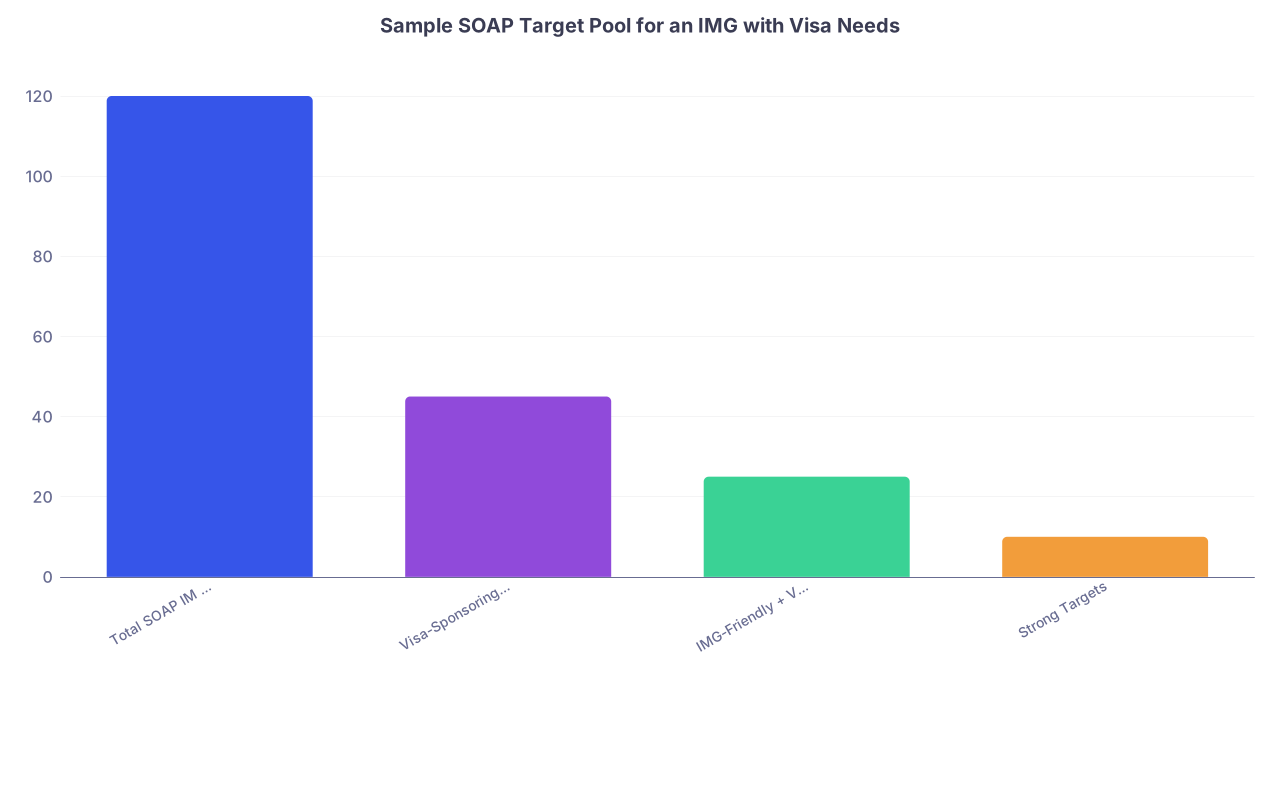
| Category | Value |
|---|---|
| Total SOAP IM Positions | 120 |
| Visa-Sponsoring Programs | 45 |
| IMG-Friendly + Visa | 25 |
| Strong Targets | 10 |
Point is: your “strong target” bucket will usually be 5–20 programs, not 50–60. That’s fine. Quality over volume matters more for you because you need places that can legally hire you.
5. Decide Your Specialty Tiers: Primary + Escape Hatch
You probably entered the Match with a primary specialty in mind. SOAP doesn’t care. SOAP cares if you’ll take a spot and not quit.
You need one of these two structures:
Primary specialty only if:
- You’re reasonably competitive there
- SOAP list still has a decent number of visa-friendly, IMG-accepting positions
- You’re willing to risk going unmatched if nothing hits
Primary + backup specialty if:
- Your primary is drying up or ultra-competitive (e.g., categorical surgery)
- You need anything this cycle (career, visa, personal reasons)
Common IMG SOAP backup options with visa potential:
- Family Medicine (especially rural or Midwest/South)
- Internal Medicine prelim or categorical in underserved areas
- Transitional Year in smaller community programs
- Occasionally Psychiatry in less popular regions (though that’s tightening)
Your job: choose a backup lane now. Not tomorrow. Not after you get rejected from 15 IM programs. Now.
6. Smart Outreach: Who to Contact, When, and How
Here’s where most IMGs with visa needs either shine or shoot themselves in the foot.
You do NOT have time for 100 generic emails. You need targeted, short, high-yield outreach.
Who to contact
Aim in this order:
- Program Coordinator (PC) – they actually move things and screen
- Program Director (PD) – sometimes reads emails, sometimes not
- Associate Program Director / IMG champion – if obvious from website
- GME office – mainly for visa policy clarity, not for selling yourself
You want names and direct emails. They’re usually on the residency program website.
When to contact
- Best window: After SOAP positions are released and before or shortly after you submit your ERAS application to them
- Avoid: Mass emailing before SOAP opens, it just gets lost

| Step | Description |
|---|---|
| Step 1 | SOAP List Released |
| Step 2 | Identify Visa Friendly Programs |
| Step 3 | Submit ERAS Application |
| Step 4 | Email Coordinator and PD |
| Step 5 | Wait for Contact or Rejection |
| Step 6 | One Brief Follow Up |
How to write the email (that doesn’t get deleted instantly)
You need a tight, honest, and specific email. Think 8–12 sentences, max.
Skeleton you can adapt:
- Subject: “SOAP applicant – IMG with USCE and open to J-1 – [Your Name]”
Body:
- Line 1–2: Who you are + exact purpose
- Line 3–4: One-line summary of credentials (Step 2 CK, YOG, USCE)
- Line 5–6: Why their program (real, not fluff)
- Line 7–8: Visa clarity (what you need, that you understand their policy if known)
- Last line: One specific, easy ask
Example (modify to fit you, don’t copy-paste blindly):
Dear Ms. Smith and Dr. Johnson,
My name is [Name], an international medical graduate from [school, year], and a SOAP applicant who has just applied to your Internal Medicine program.
I have Step 2 CK [score], Step 1 [pass/fail or score if applicable], and completed [X months] of US clinical rotations at [hospital names]. I graduated in [year] and am currently on [visa type, or applying from abroad].
I’m particularly drawn to your program because of its strong record of training international graduates and your focus on [community, underserved care, specific track]. I noticed several current residents are IMGs, which gives me hope that I could thrive in your environment.
I am open to J-1 sponsorship and understand this is your usual pathway for international graduates.
If my application appears to be a potential fit, I would be very grateful for any opportunity to interview or speak briefly with your team during SOAP.
Sincerely,
[Name, AAMC ID, phone number]
Key points:
- You mention visa clearly. You don’t make them guess.
- You show you’ve looked at their program (mention IMGs, underserved, something real).
- You ask for something specific and reasonable: “opportunity to interview.”
Do this for your strongest 10–20 targets, not for 100 programs.
7. Visa-Specific Strategy: J-1 vs H-1B in SOAP
Let’s talk bluntly about each.
If you’re J-1 (or J-1 + H-1B flexible)
J-1 is the default IMG visa in many IM/FM programs. In SOAP, that can actually be an advantage vs people insisting on H-1B.
Your strategy:
Prioritize programs that:
- Have multiple IMGs
- Explicitly mention J-1
- Are in mid-tier or less popular locations (think: Midwest, rural South, Rust Belt)
In your outreach:
- Make your openness to J-1 explicit.
- Mention any US ties if you have them (family, previous degrees, long-term plans to serve underserved areas).
Programs in SOAP aren’t usually obsessing over 3-year J-1 waiver logistics right now. They just want someone who will show up, work hard, and not need a miracle to get a visa approved.

If you’re H-1B only
This is where it gets painful. Many programs that sponsor H-1B in the main Match won’t do it in SOAP because:
- The H-1B process is slower and messier
- Timing is tight
- Their legal/HR departments might not be agile
So your realistic target set is:
- Programs that explicitly list H-1B for IMGs
- Programs with a long and visible track record of H-1B (look at resident bios)
- Programs in states and systems known for H-1B friendliness (e.g., some Texas community hospitals, certain Midwest systems)
If your goal is “I must train this year in the US,” you should seriously reconsider H-1B-only in SOAP. Being flexible to J-1 can turn an almost-zero year into a possible one.
Mention in your outreach email:
“I understand that H-1B sponsorship is sometimes more complex during SOAP, but I noticed previous residents in your program on H-1B status, which gives me hope this might be feasible.”
If they say “we cannot do H-1B this year” – believe them. Move on. Do not argue immigration law with a program coordinator in SOAP week.
8. Behavior During SOAP: What Programs Are Watching For
If a program does call you or email back, they’re looking at more than your scores:
They want to see:
- You understand what SOAP is and are not confused or panicky
- You’re clear and honest about visa needs
- You seem stable, reliable, able to start on time
- You’re not planning to jump ship if you get something “better”
Common self-sabotage moves I’ve watched IMGs make:
- Sounding desperate on the phone: “I’ll take anything, please just rank me, I beg you.”
- Being vague or slippery about visa type: “Yeah I think I can do J-1 or H-1 maybe, not sure.”
- Badmouthing prior programs or the Match process
- Over-negotiating: “Will I be able to get moonlighting? Can you promise research time?” during SOAP.
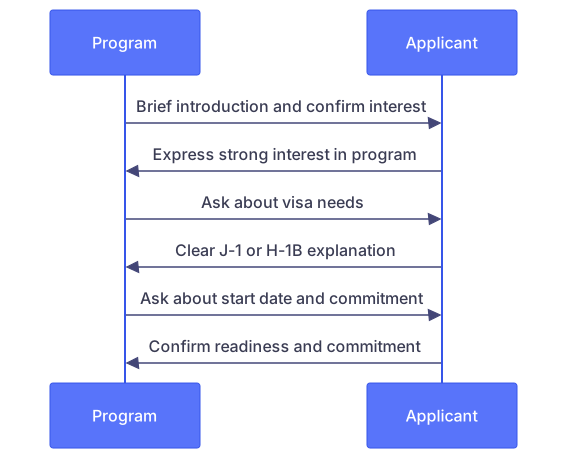
Your script on a call should hit:
- Brief introduction
- Clear interest in their program
- Honest visa type
- Willingness to start on time and commit
- Appreciation, not pleading
Example quick answer when they ask about visa:
“I’m currently on [or applying from] [country]. I’m fully prepared to come on a J-1 visa and I’ve already reviewed the steps with ECFMG, so there shouldn’t be delays from my side.”
That’s what they want to hear: clarity, preparation, no drama.
9. Geographic Realism: Where You Actually Have a Shot
Here’s a hard truth I’ve seen again and again: IMGs who insist on big coastal cities in SOAP usually finish the week unmatched.
You need to be surgically honest about geography.
Best bets for an IMG with visa needs in SOAP:
- Midwest (Ohio, Michigan, Indiana, Kansas, Missouri, etc.)
- Rural South
- Some Rust Belt and smaller Northeastern towns
- Secondary cities with less “brand name” glamour
Tough markets:
- NYC/LA/Boston/Chicago core academic centers
- California in general (visa + IMG unfriendly in many programs)
- Coastal competitive IM/FM markets with a surplus of US grads
If your target map is a list of major airports and famous cities, adjust it now.
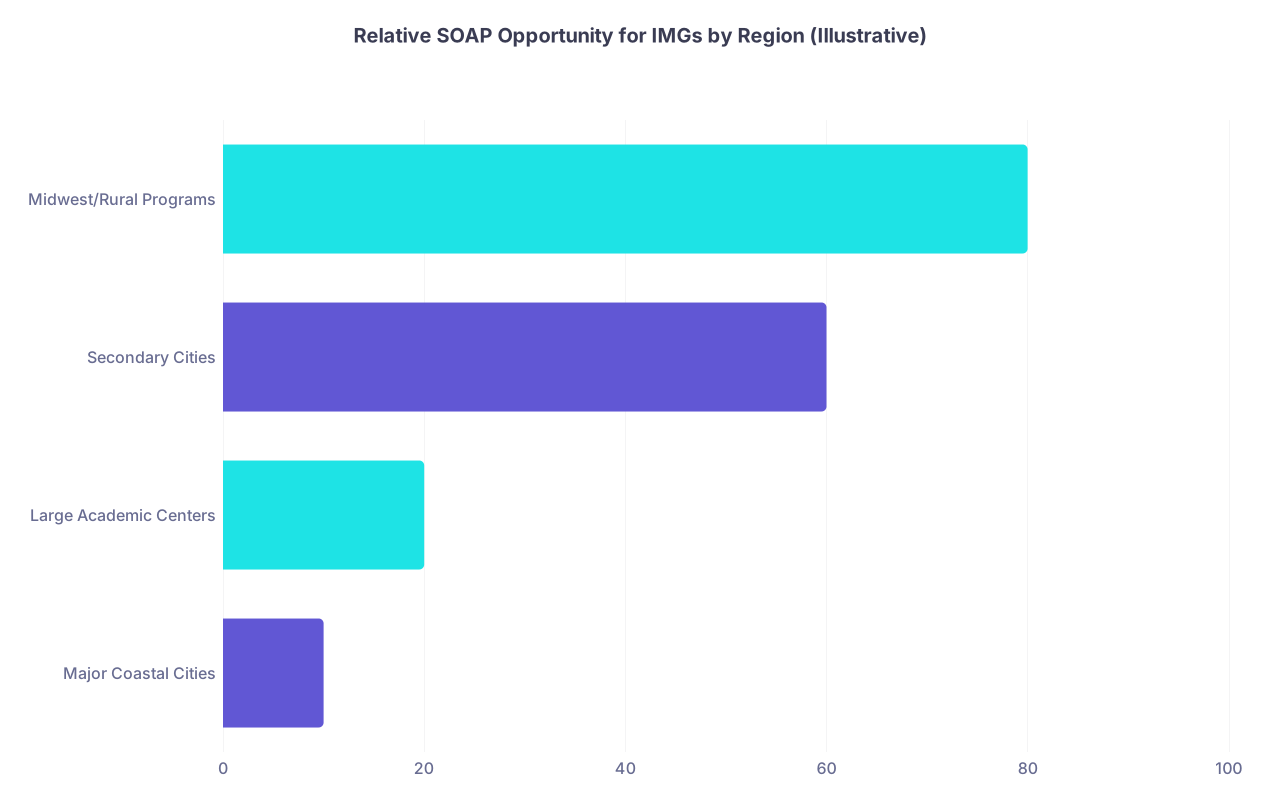
| Category | Value |
|---|---|
| Major Coastal Cities | 10 |
| Large Academic Centers | 20 |
| Secondary Cities | 60 |
| Midwest/Rural Programs | 80 |
10. If You Do Not Land a Spot: Set Up Next Cycle Properly
You might do everything right and still not land a position in SOAP. With visa needs, the math is brutal.
If that happens, your next 4–8 weeks should be structured, not random panic.
Priority moves:
Clarify your long-term visa plan with an actual immigration attorney, not just friends.
Strengthen your profile where it counts:
- US clinical experience in your target specialty
- Observerships or research that lead to concrete US letters
- Address any glaring academic holes (e.g., Step 3 if appropriate for H-1B)
Build a real program list for next cycle:
- Start from programs that actually sponsor your visa type
- Note those that have taken IMGs in last 3 years
- Focus on geography where you saw opportunity in SOAP
And when you approach next year’s season, you won’t be scrambling. You’ll be hitting a list designed for who you are and what visa you need.

FAQ (Exactly 5 Questions)
1. Should I call programs or only email during SOAP as an IMG with visa needs?
If a direct phone number for the program coordinator is listed, a brief, polite call can help, but do not be pushy. A good sequence is: submit ERAS → send a concise email → if no response and the program is a top target, one short, respectful call to the coordinator. Something like: “I applied through SOAP earlier today and sent a brief email. I just wanted to confirm that my application is complete and that my visa status (J-1) would not be a barrier if I am otherwise a good fit.” Then stop. No repeated calling.
2. Do I mention my visa needs in my SOAP personal statement or only in outreach?
You do not need a long visa section in your personal statement. One short line is enough, e.g., “As an international graduate, I am fully prepared to train under a J-1 visa and have reviewed the requirements with ECFMG.” Then handle the detailed clarity in your outreach emails and any calls. Overloading your statement with visa talk makes it look like your primary identity is “visa problem” instead of “qualified physician.”
3. Is it a bad idea to accept a prelim year in SOAP if I need a visa?
Not automatically. A prelim IM or surgery year can get you into the system, help secure a J-1, and let you build US connections and letters. But you must go in with eyes open: prelim does not guarantee a categorical spot. If you accept a prelim on a J-1, you’ll need to find a categorical slot later while managing visa timing. It’s a viable path for some, but not a casual decision. If your alternative is “no US training at all,” a prelim can be a strategic bridge.
4. How many programs should I realistically apply to in SOAP as an IMG with visa needs?
Within the ERAS SOAP limits, you still want breadth, but not blind breadth. For most IMGs with visa needs, a realistic range is 25–45 programs across primary and backup specialties, but only after filtering for: visa sponsorship, clear IMG presence, and geography where you might be competitive. Sending 45 applications to places that all say “no visa sponsorship” is the same as sending zero.
5. Can I negotiate visa type after SOAP if a program only offers J-1 but I wanted H-1B?
In SOAP week? No. Do not try to “negotiate up” to H-1B when a program is clearly set up for J-1. They will simply move on to the next candidate. If you truly cannot or will not do a J-1, focus on H-1B programs only. If you can accept J-1 but would prefer H-1B, keep that preference to yourself during SOAP. Take the J-1 if offered, and revisit long-term visa strategy after you’re in training.
Today’s next step is simple and non-negotiable:
Open the SOAP list, pick one specialty, and create three columns in a blank document: “Strong Yes”, “Maybe”, “No.” For each program, check their website for visa policy and current resident composition, then sort them into those three buckets. Do that for at least 30 programs before you send a single outreach email.