
The feel‑good narrative that “you can always just SOAP into anything and then switch later” is dangerously wrong.
If you took (or are about to take) a SOAP position and are thinking, “I’ll just switch to my real specialty in a year,” you’re not alone. You’re also not hearing the full story. Most people giving you advice on this—including some attendings—are talking from anecdotes, not from what actually happens to most SOAPers.
Let me be blunt: switching specialties after a SOAP position is possible, but it’s not common, it’s not easy, and it’s not something you should casually “plan on” as your strategy. You need to understand what programs actually do, what the data show, and how to play the odds instead of betting your career on wishful thinking.
The First Myth: “SOAP Now, Switch Later” Is a Reliable Strategy
This is the myth I see over and over on Reddit, group chats, and whispered on interview trails:
“Just SOAP into prelim medicine or a transitional year, then reapply to derm/rads/anesthesia/ortho next year.”
I’ve seen this blow up more careers than it’s saved.
Here’s the reality:
- NRMP data show that reapplicants overall have lower match rates than first-timers, especially in competitive specialties.
- SOAP positions are often in programs already struggling with recruitment, accreditation pressure, or workload. They are not always well‑positioned to “launch” you into a shiny new specialty.
- PDs talk. When you reapply, you’re not just “a candidate with clinical experience.” You’re “the applicant who already matched somewhere and left / wants to leave.”
The big structural problem: there is no formal, streamlined path for “SOAP now, switch later.” You are improvising in a system that prefers linear, predictable narratives.
If your entire strategy is “I’ll just switch,” you’re building a career plan on the exception, not the rule.
What Actually Happens to SOAP Residents
Let’s cut through the fantasy and walk through the typical scenarios of what happens after you accept a SOAP slot.
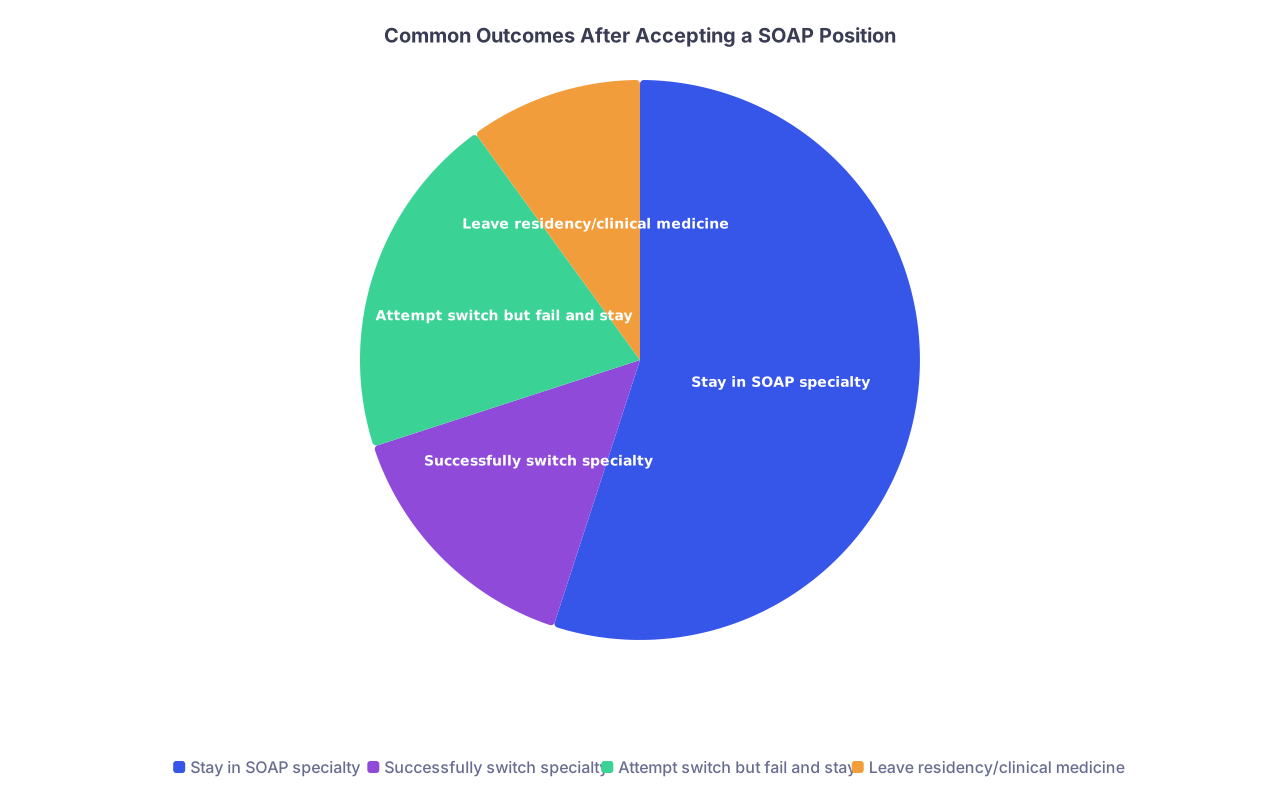
| Category | Value |
|---|---|
| Stay in SOAP specialty | 55 |
| Successfully switch specialty | 15 |
| Attempt switch but fail and stay | 20 |
| Leave residency/clinical medicine | 10 |
No, that’s not NRMP‑published exact data (they don’t break it down that neatly), but it’s a realistic approximation based on what PDs report at conferences, internal tracking in departments, and longitudinal follow‑up of residents I’ve worked with across multiple programs.
The rough pattern:
- A majority stay in the specialty they SOAP’ed into—often begrudgingly at first, then with growing acceptance.
- A minority successfully switch. It happens—but these people usually have strong Step scores, solid clinical performance, and are realistic with their target specialty.
- A sizable chunk try to switch, don’t match into the new specialty, and are stuck with an awkward story and stressed relationships at their home program.
- A small group burns out, can’t continue, or leaves clinical medicine altogether.
The uncomfortable truth: once you SOAP into a categorical position, the default path of least resistance is to simply continue and finish in that specialty.
That’s not failure. That’s just gravity.
The Second Myth: “Program Directors Don’t Mind If You Switch”
If you think PDs are neutral about residents using them as a stepping stone, you haven’t heard how they talk behind closed doors.
Does every PD hate it if you try to switch? No. But most care about:
- Retention and stability in their program
- Their fill rates and ACGME metrics
- Time and effort spent onboarding and training you
- Morale among residents when someone bails after PGY-1
I’ve sat in PD meetings where phrases like “flight risk,” “not invested,” and “using us” are thrown around. Not because they’re evil, but because they’re responsible for a program’s survival.
Here’s what PDs actually care about when you hint at switching:
- Are you going to hang them out to dry if you don’t match into the new specialty?
- Are you still going to do the work and pass boards?
- Does this make their program look like a revolving door?
The best‑case scenario for them is: you talk early and honestly, they help you apply out, and if you don’t match into the new specialty, you stay and complete training—and do it well.
The worst‑case, which they fear: you half‑commit to everything, fail to match into the new specialty, then become disgruntled dead weight in their program.
So yes, many PDs will support a thoughtful, well‑planned switch. But casual “I’m just here for a year” attitudes are not welcome. And some will absolutely block you quietly by giving lukewarm letters or making phone calls that say, “Look, they’re adequate but not invested.”
Reality Check: How Easy Is It to Switch by Specialty?
Not all switches are created equal. Switching from prelim IM to anesthesia is not the same universe as SOAPing categorical family medicine and then dreaming of dermatology.
| Target Specialty | Typical Difficulty From SOAP Spot | Comments |
|---|---|---|
| Family Med | Low | Most flexible, open to non‑linear paths |
| Psychiatry | Low‑Moderate | Often open to switchers with good narrative |
| Internal Med | Moderate | Easier from prelim IM, harder from unrelated categorical |
| Anesthesia | Moderate‑High | Very score and letter sensitive |
| Radiology | High | Research and strong board scores matter |
| Surgery | High | Culture heavy, PD‑to‑PD calls critical |
The more competitive or niche the target specialty, the more these factors matter:
- Step/COMLEX scores (yes, even post‑Step 1 pass/fail, Step 2 still bites)
- Quality of letters (ideally from that specialty)
- Research or demonstrated interest in that field
- How your current PD frames your story to them
Switching into highly competitive specialties from a SOAP position is rare. It happens, but usually in people who were already borderline competitive and simply had a bad application year—not in people who were never in range in the first place.
If you SOAPed into a categorical spot far from your dream specialty and your original application was weak or unfocused, the odds don’t magically improve just because you’re now a PGY‑1.
Experience helps. It doesn’t erase structural competitiveness.
The Third Myth: “SOAPed Residents Are Damaged Goods Forever”
Now let’s flip sides. There’s another toxic narrative: that once you SOAP, you’re “less than,” and every future PD will see you as a failure.
This is also wrong.
I’ve seen SOAPers match:
- Into solid categorical IM after a prelim year
- Into anesthesia after a competitive IM prelim with strong performance
- Into psych after SOAPing a medicine or transitional spot
- Into community EM from IM with smart networking and targeted electives
Programs understand that the match is noisy and sometimes brutal. Especially in recent years with compressed interview windows, virtual formats, and application inflation.
SOAP itself isn’t the scarlet letter. Your story is.
If your narrative becomes: “I misjudged my competitiveness, scrambled into a spot that didn’t fit, then bailed without learning or contributing,” yeah—that sticks.
If instead the story is: “I SOAPed into [X], worked hard, proved myself clinically, and genuinely discovered my interests align better with [Y]. My PD supports this switch and here’s what I’ve done to prepare”—that’s a very different picture.

SOAPers who win long‑term do three things well:
- They stop treating SOAP like a shameful secret and start treating it like a data point.
- They perform at a high level in whatever position they took.
- They build a coherent explanation that shows growth, insight, and responsibility—not victimhood.
The market punishes chaos and excuses. It actually rewards maturity and honest course correction.
The Fourth Myth: “Never Tell Your Program You Want to Switch”
The “keep it secret, apply behind their back” strategy is common. And often dumb.
You think: “If I tell my PD, they’ll hate me and tank my career.”
What actually happens most often when you hide it:
- You apply with generic or weak letters
- Programs in the new specialty email/call your PD anyway
- Your PD is blindsided and annoyed
- Your story becomes, “They tried to leave without including us,” which reads as immature or sneaky
Could you have a vengeful or petty PD? Sure. There are some. But most are busy, pragmatic people who’ve seen residents change their minds before.
The better strategy:
- Prove yourself first. Show up, work hard, get known as reliable.
- Then have an honest, focused conversation: not “I hate it here,” but “I’m realizing my long‑term fit is probably [X]. I still want to be a strong resident for you while I’m here, but I’d like your guidance and support to explore this.”
- Make clear you’re not planning to bail mid‑year with no plan if it doesn’t work out.
Many PDs will actually help you: put you on electives in the new specialty, connect you with faculty, or quietly make calls for you if they believe in you.
The residents who get sabotaged are usually:
- Chronically negative or underperforming
- Clearly treating the current program as disposable
- Careless about how their behavior affects co‑residents and service coverage
When (Rarely) You Might Keep It Quiet
If your program has a track record of punishing folks who leave. If other residents clearly got retaliated against. If your PD has said out loud, “Anyone who tries to leave will never get a good letter from me.”
In that narrow context, you tread carefully. You gather intelligence from senior residents who have actually been through it. But that’s the exception, not the rule.
Strategic Reality: If You Do Want to Switch, Here’s What Actually Helps
Let’s talk strategy grounded in reality, not fantasy.
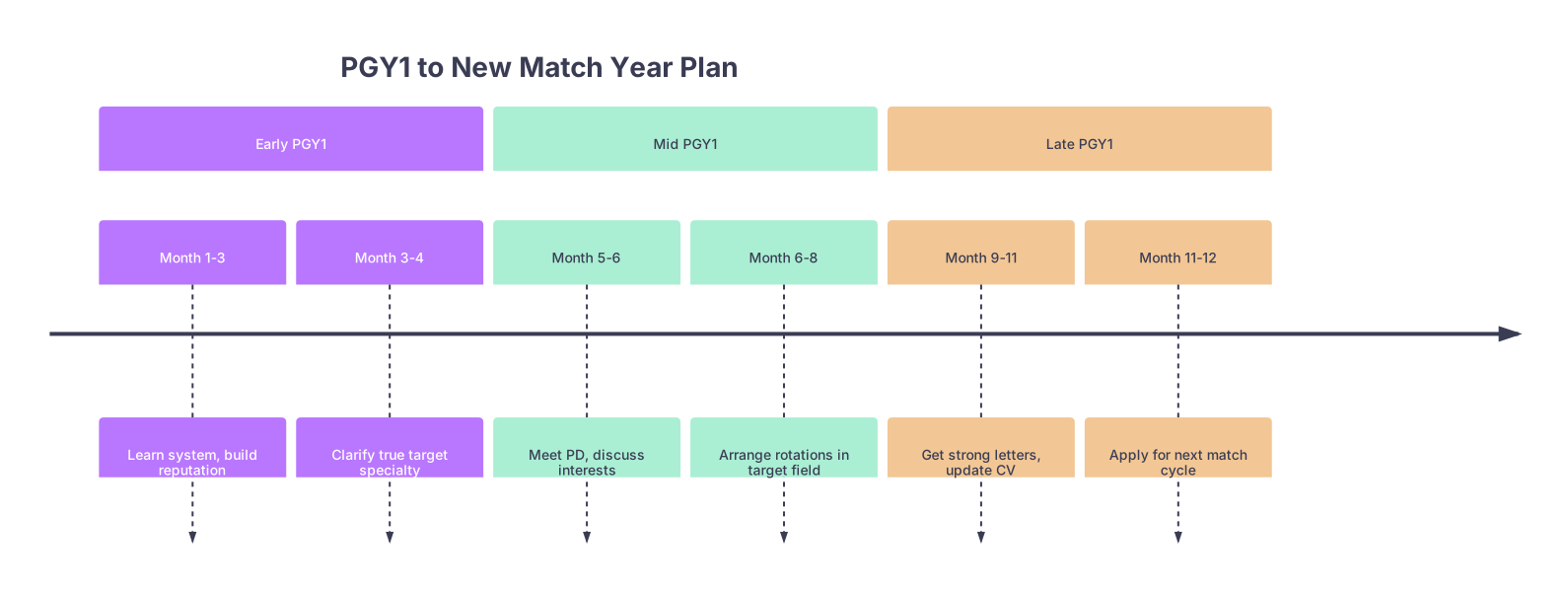
| Period | Event |
|---|---|
| Early PGY1 - Month 1-3 | Learn system, build reputation |
| Early PGY1 - Month 3-4 | Clarify true target specialty |
| Mid PGY1 - Month 5-6 | Meet PD, discuss interests |
| Mid PGY1 - Month 6-8 | Arrange rotations in target field |
| Late PGY1 - Month 9-11 | Get strong letters, update CV |
| Late PGY1 - Month 11-12 | Apply for next match cycle |
Key moves if you’re serious:
- Commit to being excellent where you are—for at least a year. You don’t get to be mediocre in one specialty and expect people in another to fight for you.
- Narrow your target. Vague “I just know I don’t want this” is not a strategy. You need a clear, defensible goal specialty.
- Get meaningful exposure in the target specialty: rotations, clinics, projects, or QI. “I shadowed once as an MS2” doesn’t cut it.
- Hunt for PDs in the target specialty who are open to non‑traditional paths. Community programs, smaller academic centers, or places that regularly take off‑cycle residents are your best bet.
And yes, timing matters. The best shot to switch cleanly is often after PGY‑1, when you can enter as a PGY‑2 in the new specialty (if they give you credit) or restart as PGY‑1 if you’re willing to “lose” a year.
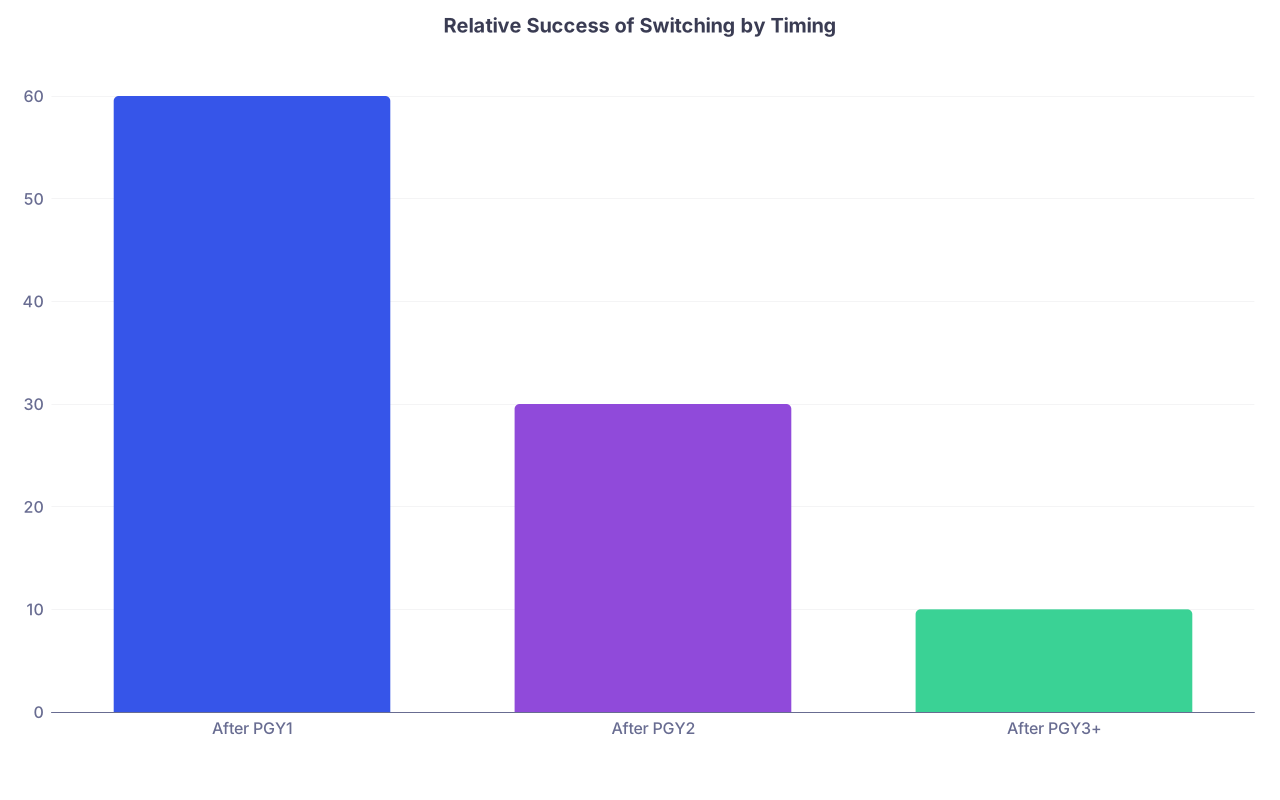
| Category | Value |
|---|---|
| After PGY1 | 60 |
| After PGY2 | 30 |
| After PGY3+ | 10 |
Again, not official NRMP data, but aligned with what many PDs will quietly confirm: the further in you go, the harder it is to justify a full switch, both personally and structurally.

When Staying Put Is Actually the Smart Play
One more uncomfortable truth: sometimes the best move after a SOAP position is to stop chasing the fantasy specialty and build a good life in the one you’re in.
I’ve watched residents go from bitter PGY‑1s convinced they “settled,” to PGY‑3s in IM or FM or psych saying, “Honestly, I’m glad it shook out this way.” They find procedural niches, fellowships, or practice environments that give them the lifestyle, income, and autonomy they wanted—without another multi‑year gamble.
If all of these are true:
- Your current specialty is tolerable, not miserable
- You’re in a reasonably functional program
- Your original “dream” specialty was based on prestige, income, or limited exposure
- Switching would mean serious risk and another full length of training
Then grinding yourself through another match cycle may not be a power move. It may just be sunk‑cost psychology in disguise.
There’s a difference between being trapped and being unwilling to accept a path that’s 90% as good as your original dream, with half the risk.
Final Reality Check
Let’s strip it down to essentials.
- “SOAP now, switch later” is not a strategy. It’s a gamble. Some win, most don’t.
- Switching is possible and absolutely done—but it favors those with strong performance, honest communication, targeted goals, and realistic specialty choices.
- Long‑term success isn’t “escaping” your SOAP specialty at all costs; it’s building a coherent career path—whether that means switching smartly or fully committing to where you landed.