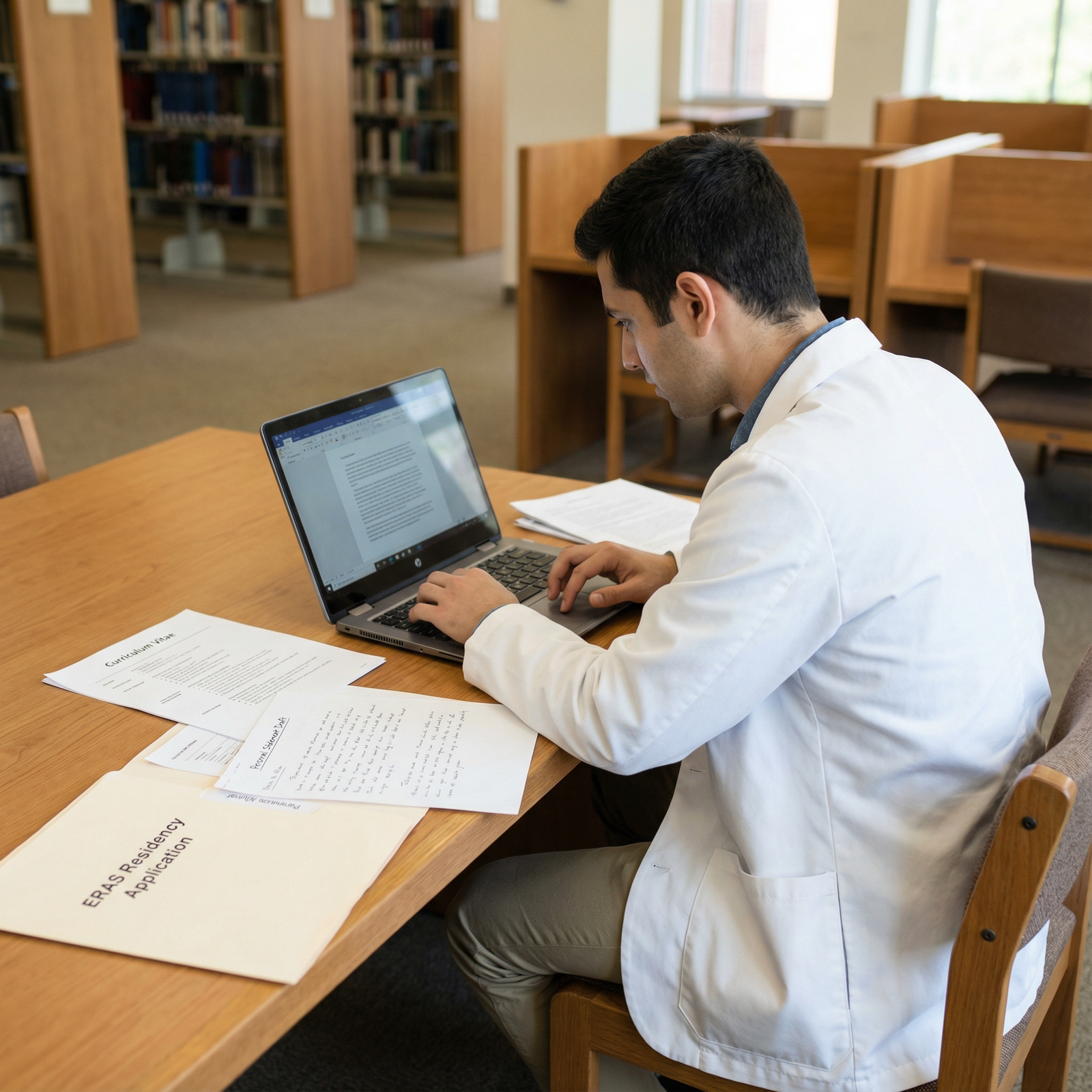
It’s early September. ERAS is open, your peers are talking about “submitted!” in the group chat, and you’re on draft #14 of your personal statement. You keep tweaking adjectives, rewriting the same paragraph about your “aha” moment in medicine, and telling yourself:
“I’ll submit once this is perfect. Programs only see my application once—I can’t blow it.”
Here’s the problem: while you’re polishing sentences, other applicants are getting interview invitations. Your file isn’t even in the stack yet. And residency programs don’t wait for the perfectionists.
Let me be blunt: waiting to submit ERAS just to perfect your personal statement is one of the most common—and most expensive—mistakes I see. It quietly kills interview chances in competitive specialties and even hurts solid applicants in less competitive ones.
You’re not trying to sabotage yourself. But if you’re tying your submission date to personal statement perfection, you are.
Let’s walk through why this backfires, what programs actually care about, and how to avoid tanking your season over a single essay.
The Harsh Reality: ERAS Is Not a “We’ll Get to It Eventually” System
Residency programs do not sit around waiting until some arbitrary deadline to start reviewing files. They move early. Aggressively.
Here’s how it usually goes in real life:
- Programs download applications as soon as ERAS releases them.
- Coordinators and PDs start screening in the first few days.
- Many interviews are sent out in the first 2–3 weeks.
- Some specialties (Derm, Ortho, ENT, Rad Onc) front-load interviews heavily.
So when you hit “submit” two weeks late because you were still massaging your narrative, you’re not “fashionably late.” You’re showing up after the first wave of invites went out.
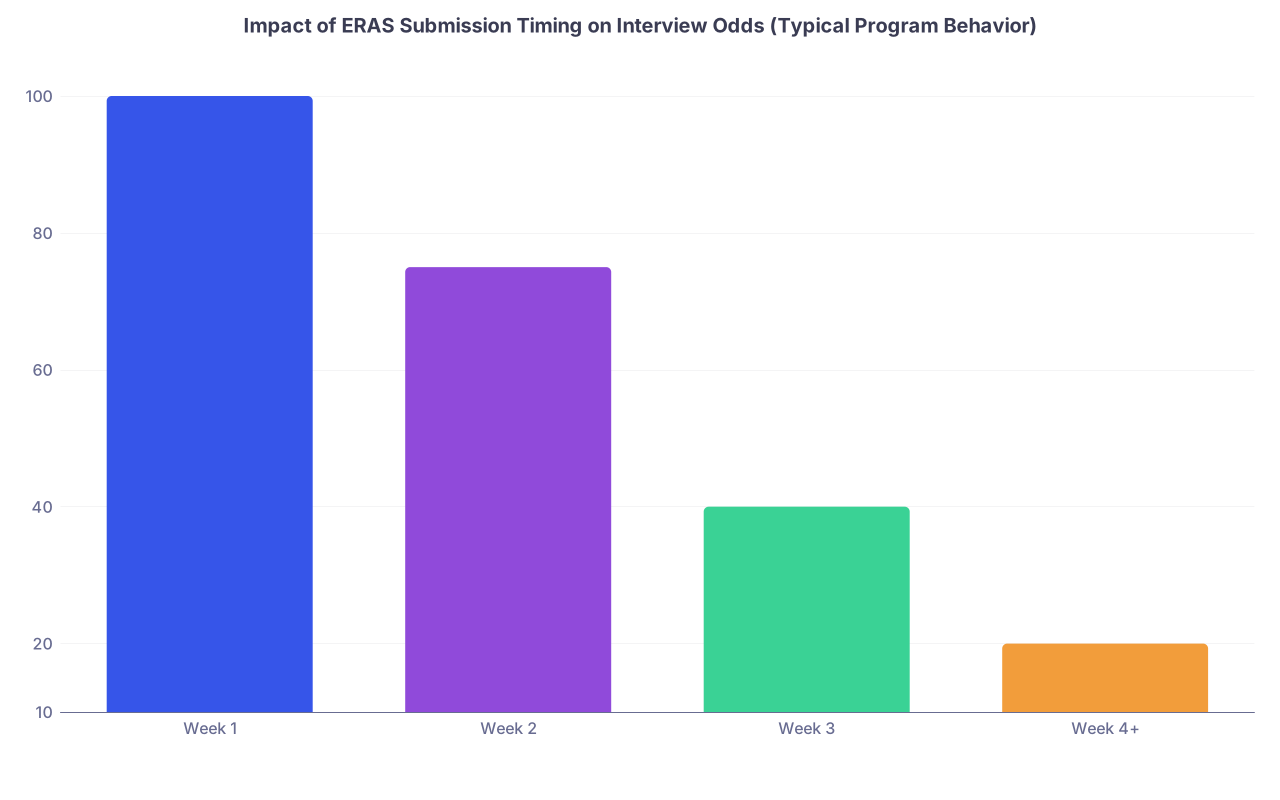
| Category | Value |
|---|---|
| Week 1 | 100 |
| Week 2 | 75 |
| Week 3 | 40 |
| Week 4+ | 20 |
That chart is not an official NRMP stat; it’s what you see functionally at many programs: early files get the longest and fairest look. Late files get squeezed into limited remaining spots.
The mistake: Believing that submitting on “any day before the deadline” is basically equivalent. It is not.
Programs rarely come out and say, “We barely look at late applications,” but behind closed doors? I’ve heard:
- “We already have plenty of strong applicants; we’ll only scan late files for truly exceptional ones.”
- “We’re full on interviews; maybe we’ll use late applicants as backups if we get declines.”
You don’t want to be in that pile.
Myth vs Reality: How Much the Personal Statement Really Matters
You’ve been told the personal statement is “your chance to stand out.” True enough. But here’s how it actually sits in the priority list for most programs:
| Priority Order | Application Component |
|---|---|
| 1 | USMLE/COMLEX scores & attempts |
| 2 | MSPE (Dean’s Letter) |
| 3 | Letters of recommendation |
| 4 | Clinical grades / clerkship performance |
| 5 | Personal statement |
Important? Yes.
Worth sacrificing timeliness of submission over a few more edits? No.
I’ve watched PDs scan apps like this:
- Scores and attempts
- School, year, red flags (gaps, failures)
- LORs (especially from known faculty)
- Education and experiences
- If on the fence, maybe then the personal statement
You’re making a huge error if you believe the personal statement is the gateway to being read. It’s not. It’s more like a tiebreaker or context tool.
What hurts you far more:
- Submitting when half the interview slots are already gone.
- Being missing from the first filtered batch that PDs scrutinize.
Do not trade an early, complete application for a slightly better essay.
A clear, coherent, good-enough personal statement submitted early beats a beautifully written one submitted late.
Why Waiting for “Perfect” Is Actually a Red Flag Behavior
Delaying for perfection usually isn’t about “excellence.” It’s about fear. And residency selection committees can smell fear and indecision in applications too.
Common red-flag thought patterns I see:
- “If I make this perfect, they won’t notice my low Step 1/2 score.”
- “This essay has to make up for my lack of research/volunteering.”
- “I need this to sound unique because my application is average.”
Here’s the truth:
- No personal statement can erase a bad exam history.
- No personal statement can fabricate clinical performance.
- No personal statement can magically turn a mediocre application into a top 1% one.
What it can do:
- Make you look mature or immature.
- Make you look self-aware or delusional.
- Make you look like you understand the specialty—or don’t.
But none of that works if they never even review your file because you showed up late.
The Damage Timeline: How Delaying ERAS Hurts You Week by Week
Let’s get specific. Suppose ERAS opens for program review on September 15. You:
-
- You’re in the first pass.
- Your file gets reviewed when the program has maximal flexibility.
- If you’re borderline, you still might get an interview because slots are wide open.
Submit in week 2:
- Still fine, but you’re no longer “first wave.”
- Some interviews already out; you’re competing for the rest.
Submit in week 3–4:
- You’re late. No sugarcoating it.
- At many programs:
- Interview days are mostly filled.
- PDs have a sense of their applicant pool already.
- You’re fighting for cancellations, waitlist conversions, or scraps.
Submit after that:
- You’re gambling on:
- Programs that under-invited and are scrambling.
- Places that didn’t fill their initial interview allocations.
- You’re gambling on:
Is this survivable if you’re a superstar applicant? Sometimes. But for the vast majority, this is self-sabotage.

| Step | Description |
|---|---|
| Step 1 | Submit ERAS early |
| Step 2 | Included in first review batch |
| Step 3 | Higher interview chance |
| Step 4 | Submit ERAS mid-cycle |
| Step 5 | Reviewed after initial invites |
| Step 6 | Moderate interview chance |
| Step 7 | Submit ERAS late |
| Step 8 | Only reviewed if time permits |
| Step 9 | Low interview chance |
The tragic part? Many late submitters had everything else ready. They just kept fussing with one document.
The Real Risks You’re Not Considering
You tell yourself, “It’s only a week or two delay.” Here’s what you’re not accounting for.
1. Rolling review means shrinking attention
Programs use filters (scores, school, attempts, visa status). Within the filtered pool, early files are read more generously. Late ones get speed-read or skimmed—if at all.
If your Step 2 is 232 and the program historically likes 240+, an early file might get a “Let’s see the whole picture.” A late file with the same score might get, “We already have plenty of 240–250s—pass.”
2. The hidden competition factor
Your competition isn’t “all applicants.” It’s the subset applying around the same time you do.
If you delay two weeks:
- The “pile” you’re competing with is now filled with:
- People who submitted early and already got interviews.
- Late adds who are often stronger or unique (non-trad, dual degrees, etc.).
- You’ve voluntarily moved yourself into a tougher comparison group with fewer open spots.
3. Snowball effect on interview scheduling
Even if you still get invites, late submission means:
- Fewer date options
- Increased risk all reasonable dates are full
- More cluster-scheduled days (4–5 interviews in 1–2 weeks)
- Greater burnout → worse performance → weaker impression → lower rank
So that “perfect” essay you delayed for? It doesn’t help you when you’re exhausted on Zoom interview #4 that week, mumbling through your answers because you overloaded your interview calendar.
What a “Good Enough” Personal Statement Actually Looks Like
Let’s be practical. I’m not telling you to submit garbage. I’m telling you to aim for solid and timely, not perfect and late.
A “good enough” personal statement usually meets these criteria:
- Clear why this specialty, with 1–2 concrete stories
- Shows basic insight into what the field demands
- Demonstrates:
- Reliability
- Work ethic
- Growth or reflection
- Written in straightforward language, free of:
- Grandiosity
- Cliché overload
- Overly traumatic detail with no professional framing
- Zero:
- Grammar disasters
- Typos in program/specialty name
- Obvious copy-paste errors
You know what it doesn’t need?
- A perfect “hook” that sounds like a New Yorker essay
- Twelve metaphors about light, journeys, or “the moment it all came together”
- A dramatic childhood origin story if you don’t have one
If a faculty advisor has read it and said, “This is clear and professional. You’re good,” stop editing. Submit.
How to Avoid This Trap Without Submitting Trash
Here’s the part where you fix this before it wrecks your cycle.
1. Set a hard PS deadline before ERAS opens
You should not be messing with brand-new drafts when ERAS is already open. Your timeline should look something like:
- June–July: First 2–3 drafts
- Early August: Faculty or mentor review
- Late August: Final round of polishing
- One week before ERAS release: Lock it. No more structural changes.
If you’re in September still rewriting the whole thing? That’s the mistake.
2. Cap your revision cycles
Unlimited edits = endless delay.
Give yourself a cap:
- 1–2 solo drafts
- 1–2 rounds after feedback
- Final proofreading pass
That’s it. After that, changes are almost always preference, not improvement. You’re just rearranging furniture while the house burns down.
3. Use targeted feedback, not crowdsourced rewriting
Another trap: sending your personal statement to 7 different people and trying to satisfy all of them. Recipe for paralysis.
Better:
- 1 person in your specialty (resident or attending)
- 1 strong writer/editor (doesn’t have to be medical)
- Optional: your advisor / dean if they offer that service
Listen for themes, not every single comment. If everyone says, “I still don’t know why you chose IM over surgery,” fix that. If one person hates a phrase the others liked, ignore it.
When It Is Worth Delaying (Rare, But Real)
There are a few situations where a brief delay is actually strategic. Notice: they’re about substance, not style.
It may be worth a short delay if:
- You’re waiting on:
- A Step 2 score that you’re confident will be dramatically better than Step 1.
- One critical letter from a well-known faculty in your specialty.
- You discovered a serious content problem:
- A factual error about your experience
- A professionalism issue in the narrative
- Inadvertent violation of patient privacy
- You changed specialties late and your current PS is completely misaligned.
In these cases, a few days to fix a major issue = logical.
But: “I think I could make this flow better” or “This ending isn’t as powerful as I want” is not enough justification to push back submission.
The Silent Killer: Comparison and Social Media
One more thing that quietly fuels this perfectionism: watching other people’s curated success online.
You see:
- Screenshot of someone’s PS being “edited by an Ivy League writing consultant”
- Posts about “I got 12 interview invites in 48 hours—my PS was fire”
- Threads obsessing about the perfect storytelling arc
You don’t see:
- The people who submitted early with an average PS and still got plenty of interviews
- The strong applicants who matched fine with essays they wrote in 3–4 sessions
- Programs that barely skimmed essays because their filters did most of the sorting
If you’re letting Twitter, Reddit, or GroupMe dictate your threshold for “good enough,” you’ll never submit. Because there will always be someone claiming they did more.
Your goal isn’t to win a writing contest. Your goal is to get in the damn review pile while it still matters.
A Simple Rule: Essays Get Better; Timing Doesn’t
You’ll write better personal statements as you move through your career—fellowship apps, jobs, grants. This one doesn’t have to be your masterpiece.
Use this rule:
If my personal statement is clear, honest, and professionally written, and the only thing stopping me from submitting is “maybe it could be better,” I submit.
Because:
- Programs forgive a slightly bland essay.
- They do not forgive an invisible application that arrived after their attention and interview spots were gone.
You can’t retroactively be early. You can always become a better writer later.
FAQ (Exactly 3 Questions)
1. My personal statement is done, but I’m not in love with it. Should I still submit early?
Yes. If it’s coherent, professional, and error-free, submit. “Not in love with it” is normal. Nearly everyone feels that way. Programs are not ranking you on your literary brilliance. They’re using your PS to make sure you’re sane, motivated, and understand the specialty. Early submission helps you far more than squeezing out another 5% improvement in writing quality.
2. What if my advisor told me the personal statement is the most important part of my application?
They’re exaggerating—or you misheard. The personal statement is the most important part of your application that you have full narrative control over, but in many programs it’s still secondary to scores, MSPE, and letters. Strong statement + late ERAS is worse than decent statement + early ERAS. Respect the role of the essay without giving it more power than it actually has.
3. I’m already late this cycle because I chased perfection. Is my season ruined?
Not automatically, but you’ve made it harder. Stop editing today. Submit immediately. Then focus on what you can still control: smart program list, quick responses to emails, flexible interview scheduling, strong interview prep. And learn the lesson for next time: never again delay a major, time-sensitive process for the illusion of “perfect.” Early and solid beats late and polished, every time.
Key points:
- Don’t sacrifice an early ERAS submission so you can endlessly perfect your personal statement. That trade almost always hurts you.
- The personal statement matters, but it’s rarely what gets you into the initial consideration pile; timing, scores, and letters do.
- Aim for clear, professional, and on time—not brilliant, literary, and late.