
The biggest mistake applicants make with ERAS isn’t weak stats. It’s bad timing.
Most people “work on ERAS” in a vague, half-committed way, then panic-build their application in August. That’s how you get generic personal statements, sloppily listed experiences, and letters that show up two weeks after programs start reviewing.
You are not going to do that.
Here’s your month‑by‑month, week‑by‑week ERAS timing blueprint from March through September—what you should have finished, and by when—so that when submission opens, you’re pressing “submit,” not still typing your name.
Big Picture: How Your ERAS Year Should Feel
At this point, you should understand the overall rhythm:
- March–April: Foundation and decisions
Decide specialty, build your program list skeleton, line up letters, draft core materials. - May–June: Heavy writing and documentation
Personal statement(s), experiences, CV, research, Step 2 timing, MSPE input (where possible). - July–August: Precision and polish
Finalize ERAS, lock in letters, tailor program list, prepare for supplemental and interviews. - September: Execution
Submit early, confirm everything is in, pivot to interview prep.
Here’s how the work and stress usually stack across months:
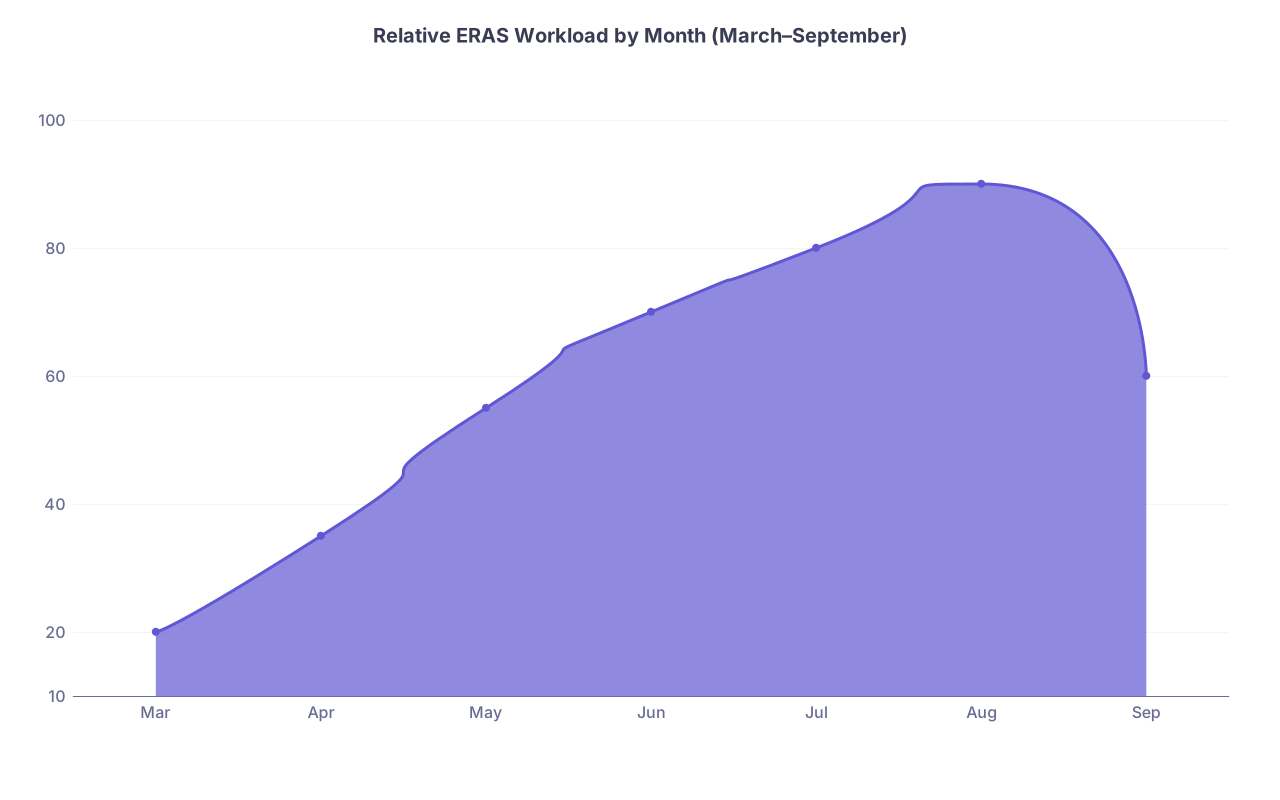
| Category | Value |
|---|---|
| Mar | 20 |
| Apr | 35 |
| May | 55 |
| Jun | 70 |
| Jul | 80 |
| Aug | 90 |
| Sep | 60 |
You’re front-loading thinking and decisions. The frantic typing should be mostly done before August.
March: Decide Your Lane and Build the Skeleton
March is not “too early.” People who match well usually start here.
By the end of March, you should have:
Committed to a primary specialty (or 2 at most).
- If you’re still “maybe EM… or anesthesia… or IM… or surgery,” that’s a red flag.
- Sit down with:
- A trusted advisor (PD, core clerkship director, or specialty mentor).
- Your Step scores, clerkship grades, and honest self-assessment.
- Make a call: Primary specialty, and if needed, a backup.
Identified 2–4 letter writers and asked them in person or via email. At this point, you should:
- List potential letter writers:
- 1–2 from your chosen specialty (non-negotiable).
- 1 from medicine/surgery core (shows broad clinical performance).
- Optional: research PI if you have meaningful research.
- Ask clearly:
“Would you be willing to write a strong letter of recommendation for my [specialty] residency application?” - If they hesitate or sound lukewarm, they are not your letter writer.
- List potential letter writers:
Started a master program list (rough draft). Use an Excel/Sheets file with columns like:
| Column | Purpose |
|---|---|
| Program Name | Obvious but keep consistent |
| City/State | Geography filter |
| Program Type | Academic / Community / Hybrid |
| Minimum Step/COMLEX | Screen for auto-rejects |
| Visa Friendly? | For IMGs / non-citizens |
| Notes (Red/Green Flags) | Culture, call schedule, etc. |
By end of March:
- 15–20 programs roughly listed (you'll expand later).
- You’re just getting a feel: big academic vs community, location, competitiveness.
- Created your ERAS “content dump” document.
A single doc or Notion page where you:
- Brain-dump every:
- Leadership role
- Volunteer experience
- Research project
- Conference / poster / presentation
- Include dates, hours, supervisors, and what you actually did.
- Brain-dump every:
Think of March as the month you stop being vague. No more “I’ll figure it out later.” You choose your lane and set the frame.
April: Lock Letters and Outline Your Story
At this point, you should be turning that vague sense of “I did some stuff in med school” into a clear narrative.
By the end of April, you should have:
Formal letter plans and timelines. For each letter writer:
- Confirm:
- That they said yes.
- Which specialty the letter is for.
- Deadline: Ask for letters to be uploaded by July 15–31 (earlier than you “need” them).
- Send a letter packet:
- CV or ERAS-style resume.
- Draft personal statement (or at least an outline).
- Brief bullet list: what you worked on with them, specific patients/projects.
- Confirm:
A solid first outline of your personal statement. Do not aim for perfection. Aim for structure. Your outline should have:
- A clear opening story or moment (not your whole life story).
- 2–3 themes that match your specialty:
- For IM: longitudinal care, complex problem-solving, teamwork.
- For surgery: ownership, technical focus, resilience.
- A closing that:
- States clearly: “I’m seeking training in X because…”
- Signals your career direction: hospitalist, fellowship, community practice, academic, undecided but leaning X.
Clarified your exam status (Step 2 CK / COMLEX Level 2). At this point:
- You should know:
- Your Step 1/Level 1 outcome (pass? borderline?).
- Whether you need a strong Step 2/Level 2 score to compensate.
- Decide:
- Target exam date.
- How that lines up with ERAS:
- Ideal: Score available before programs start seriously reviewing (usually early–mid October; check the year’s exact dates).
- If you’re behind: build in a dedicated 4–6 week study window.
- You should know:
Met (at least once) with someone who knows your specialty landscape. Quick 20–30 minute focused meeting:
- Show them:
- Your rough stats and CV.
- Target specialty.
- Ask blunt questions:
- “Realistically, how competitive am I for [X]?”
- “What range of programs should I target?”
- “Should I add a backup specialty?”
- Leave with:
- A target application volume:
- Example (US MD, mid-tier IM applicant): 30–40 IM programs.
- Example (US IMG, competitive specialty): 80–100+ programs.
- A target application volume:
- Show them:
May: Drafting Month – Personal Statement and Experiences
May is where serious applicants pull ahead. Others are still “thinking about” starting.
By the end of May, you should have:
A full, rough draft of your personal statement. Not perfect, but complete. Timeline:
- Week 1:
- Turn outline into a 1–1.5 page draft (no editing, just write).
- Week 2:
- Self-edit once for clarity and length.
- Week 3–4:
- Get 2–3 targeted reviews:
- One resident or attending in your chosen specialty.
- One good writer (friend, partner, faculty).
- No more than 3 editors. More than that and your voice disappears.
- Get 2–3 targeted reviews:
- Week 1:
Completed your ERAS experiences outside the portal (in a doc). At this point, you should:
- Pick your top 10–12 experiences to highlight:
- 3–5 clinical.
- 2–4 leadership/teaching.
- 1–3 research (if relevant).
- For each, draft:
- Title, role, dates, approximate hours.
- 3–5 bullet-style sentences:
- What you actually did.
- Skills and impact.
- 1 concrete example or outcome.
- Flag 3 as “most meaningful” with slightly longer descriptions.
- Pick your top 10–12 experiences to highlight:
A working CV that matches your ERAS data. Not optional. Discrepancies look sloppy.
- Make sure:
- Dates line up.
- No mystery gaps.
- Roles are described consistently.
- Make sure:
Started a documents checklist. At this point, build a simple status tracker:
| Component | Status Options |
|---|---|
| Personal Statement | Outline / Draft / Final |
| Experiences | Brain-dump / Draft / Final |
| Letters (LOR 1–4) | Asked / Confirmed / Uploaded |
| USMLE/COMLEX Scores | Taken / Pending / Released |
| Photo | Not done / Scheduled / Final |
Update weekly. It keeps you honest.
June: Convert to ERAS Format and Fix the Gaps
At this point, you should stop pretending you have “plenty of time.” Programs don’t care if your school has you on some delayed schedule. ERAS is ERAS.
By the end of June, you should have:
Logged into ERAS and started entering real data. Do not wait for perfection. Start with:
- Demographics.
- Exam scores (what’s available).
- Med school info.
- Experiences (copy from your drafted doc, adjust for character limits).
Near-final personal statement(s). If you’re applying to:
- One specialty: 1 personal statement is fine. You can tweak later per program if you’re ambitious.
- Primary + backup specialty: You need 2 separate personal statements. At this point:
- Content should be stable.
- Last edits: tightening language, cleaning transitions, fixing clichés.
Real program list version 1.0 (60–80% built). Expand your rough list using:
- FREIDA.
- Program websites.
- Word-of-mouth from residents and recent grads. Include:
- Reach, match-range, and safer options. Target by end of June:
- Competitive specialties: 50–80+ programs.
- Less competitive: 25–40 programs (US MD/DO), more if IMG.
Photo and transcript/MSPE logistics in motion. At this point, you should:
- Schedule a professional-style photo (or a very clean DIY):
- Neutral background, professional attire, no busy patterns.
- Confirm with your school:
- Who handles transcript uploads.
- Who drafts and releases the MSPE.
- What they need from you (CV, awards, comments).
- Schedule a professional-style photo (or a very clean DIY):
Decided firm Step 2/Level 2 date (if still pending). Lock it in:
- Make sure your study block doesn’t destroy your ERAS prep.
- Example:
- Plan: Dedicated study mid-June–mid-July.
- Still keep evenings/weekends for light ERAS work (proofreading, not heavy drafting).
July: Lock Letters, Polish, and Build the Final List
July is where your future self either thanks you or hates you in September.
By the end of July, you should have:
Most or all of your letters uploaded. At this point, you should:
- Check ERAS weekly:
- Who’s uploaded?
- Who hasn’t?
- For missing letters:
- Send one polite reminder email.
- If no response, consider a backup writer. Target:
- 3–4 strong letters available by the time ERAS applications can be submitted.
- Check ERAS weekly:
Final or near-final personal statements.
- Only micro-edits from here on.
- No major structural rewrites in August unless something catastrophic changed.
ERAS experiences fully entered and proofread. You should:
- Read every entry out loud once. Catch the clunky phrasing and typos.
- Confirm:
- No duplicated experiences.
- Dates make sense.
- Descriptions are specific, not buzzword salad.
Program list version 2.0 (almost final). At this point:
- You’ve:
- Added or removed programs based on:
- Location realities.
- Your updated scores.
- Culture red flags/green flags.
- Added or removed programs based on:
- Mark each program:
- Reach / Realistic / Safer.
- Check for:
- Geographic clustering (too many in one region?).
- A few true reaches if your application supports it.
- You’ve:
Started on supplemental application prep (if applicable). AAMC/ERAS keeps changing this landscape, but:
- Look up:
- Whether your specialty/programs use supplemental questions/sections.
- Pre-draft:
- Short answers about:
- Geographic preferences.
- Program characteristics you value.
- Significant experiences you want highlighted.
- Short answers about:
- Look up:
Here’s the typical point when well-prepared vs behind applicants really separate:
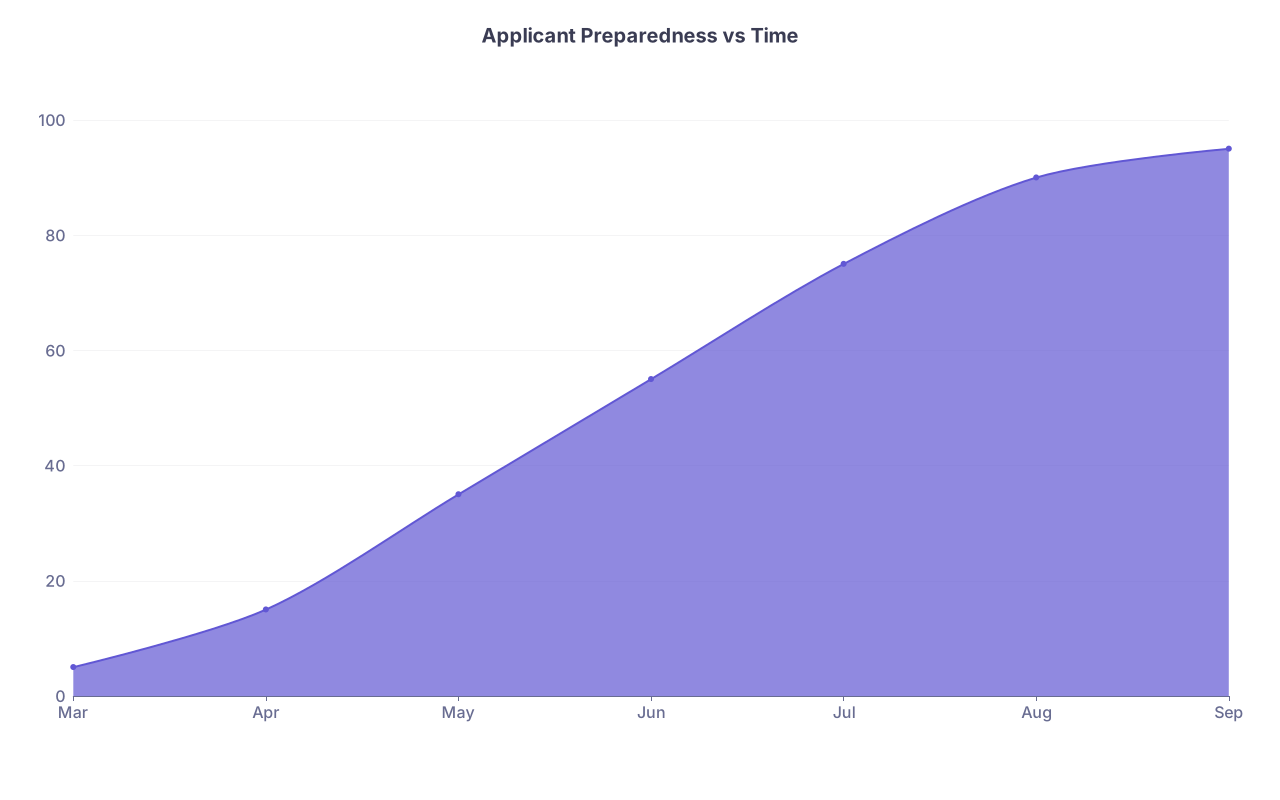
| Category | Value |
|---|---|
| Mar | 5 |
| Apr | 15 |
| May | 35 |
| Jun | 55 |
| Jul | 75 |
| Aug | 90 |
| Sep | 95 |
If you’re under 60% “ready” by the end of July, you’re setting yourself up for painful August nights.
August: Finalize, Tailor, and Rehearse
At this point, you should be out of “drafting mode” and into “refinement + execution mode.”
By mid-August, you should have:
A complete ERAS application draft inside the portal. That means:
- All sections filled.
- All experiences entered and spaced correctly.
- Personal statement(s) uploaded and assigned to specialties (you can still tweak).
Letters confirmed or actively problem-solved.
- If a letter isn’t uploaded:
- Send another reminder.
- If they ghost you:
- Replace them. A missing letter is worse than a solid-but-not-famous writer.
- If a letter isn’t uploaded:
Program list essentially finalized (you might tweak by 5–10 programs later).
By the end of August, you should have:
Your ERAS ready to submit the moment submission opens.
- You do not wait to “keep editing” into September.
- The content is done. You’re checking, not creating.
Interview prep started. Yes, now. You should:
- Write out 5–7 core stories that demonstrate:
- Teamwork.
- Conflict management.
- A mistake you made.
- Resilience.
- A time you advocated for a patient.
- Do 1–2 mock interviews:
- With a resident.
- Or through your school’s career office.
- Write out 5–7 core stories that demonstrate:
A clear communication plan. At this point:
- Set up:
- Professional email signature.
- Voicemail that doesn’t sound like college dorm nonsense.
- Decide:
- Where you’ll track interviews: spreadsheet or calendar.
- Set up:
September: Submit Early, Then Protect Your Attention
Here’s the non-negotiable: You submit as early as allowed once applications can be transmitted to programs. Not days later. Not “when I feel ready.” Ready is August.
Use September as a checklist month.
Early September (Week 1): Final Pre-Submit Audit
At this point, you should:
- Do a line-by-line ERAS review:
- Names spelled right.
- Dates correct.
- No missing experiences you care about.
- Double-check:
- Correct personal statement assigned to each specialty.
- Correct letters assigned by specialty (if you’re customizing).
- Confirm:
- Step/COMLEX scores are released and in the system.
- Transcript and photo are uploaded.
Have one trusted person (mentor, advisor, detail-oriented friend) do a final pass.
ERAS Submission Window: Act, Don’t Overthink
When the system opens for programs to receive applications:
- Submit on day 1–2 of that window.
- Do not:
- Start rewriting your personal statement.
- Panic-add random programs in cities you’d never live in.
- Do:
- Take screenshots or save PDFs of your submitted application.
- Confirm payment and successful submission.
Mid-to-Late September: Post-Submission Clean-Up and Interview Prep
At this point, you should:
Confirm every moving part:
- Check:
- Letters: were they attached to all intended programs?
- Step 2/Level 2 scores (if pending): know the approximate release date.
- Update:
- Any significant new information via programs’ update processes (if appropriate):
- New publication accepted.
- Honors/awards.
- Any significant new information via programs’ update processes (if appropriate):
- Check:
Shift your time to interview prep & clinical performance. Don’t become useless on rotations while refreshing your inbox. Weekly:
- 1–2 hours of:
- Practicing common interview questions.
- Reviewing your own application so you remember what you wrote.
- 1–2 hours of:
Track interview invites cleanly. Use a simple table:
| Program | Date Received | Response Sent | Interview Date |
|---|---|---|---|
| Program A | 9/22 | Same day | 10/15 |
| Program B | 9/25 | +1 day | 11/03 |
| Program C | 9/28 | Same day | 10/28 |
You’d be shocked how many people double-book or forget to reply promptly. Don’t be that person.
Visual Timeline: March to September at a Glance
Here’s the flow laid out clearly:

| Period | Event |
|---|---|
| March - Choose specialty | Decide lane, identify backup |
| March - Ask letter writers | Secure 2-4 strong writers |
| April - Outline PS | Draft structure and themes |
| April - Plan exams | Set Step 2/Level 2 date |
| May - Draft PS | Full draft and first edits |
| May - Draft experiences | Write ERAS-style entries |
| June - Enter ERAS data | Start populating portal |
| June - Build program list | Version 1.0 mostly complete |
| July - Lock letters | Most uploaded |
| July - Polish ERAS | Refine statements and experiences |
| August - Finalize app | ERAS essentially complete |
| August - Start interview prep | Stories and practice |
| September - Submit ERAS | Early in transmission window |
| September - Confirm pieces | Letters, scores, documents |
And a rough sense of what fraction of your application should be “done” by month:
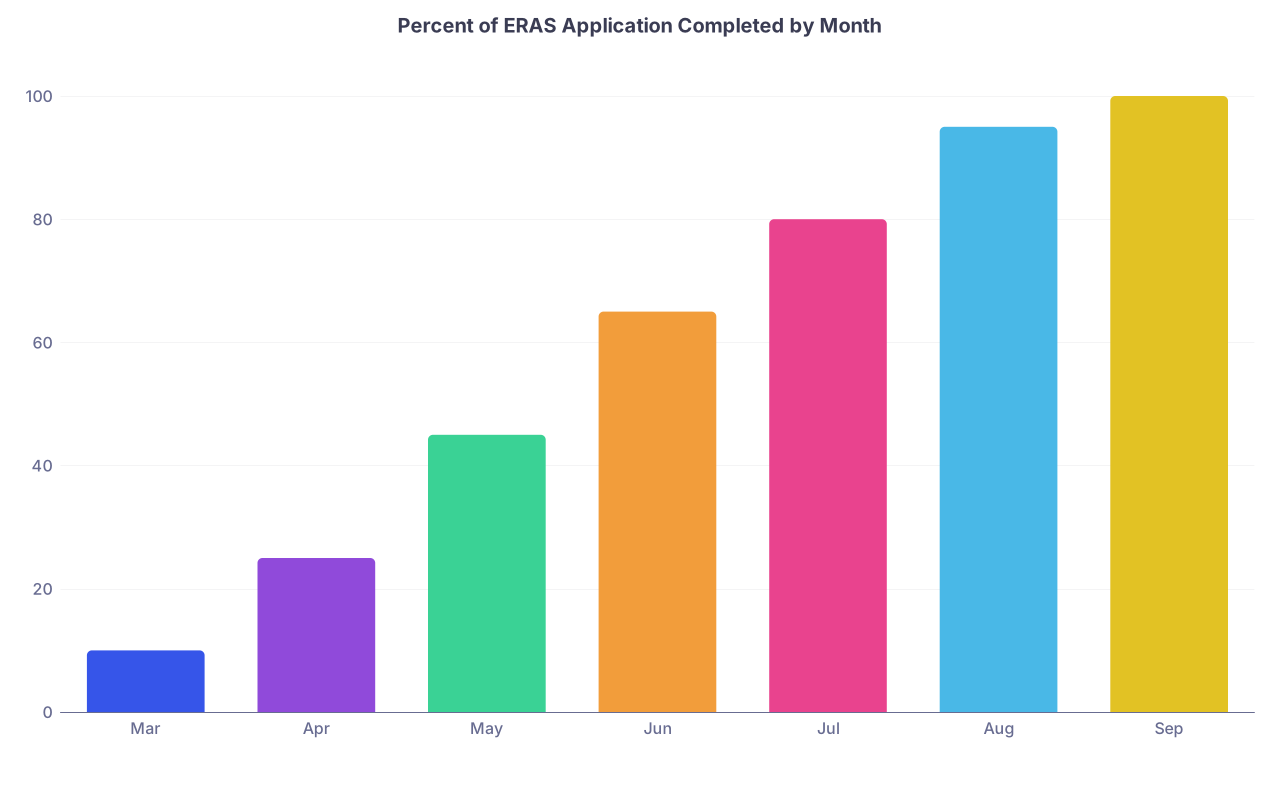
| Category | Value |
|---|---|
| Mar | 10 |
| Apr | 25 |
| May | 45 |
| Jun | 65 |
| Jul | 80 |
| Aug | 95 |
| Sep | 100 |
Final Tight Summary
Keep three things in your head:
- Decide early, draft early, submit early. March–May is for decisions and drafts; August is not.
- Letters and Step 2 timing can quietly make or break you. Push letters to upload by July, and plan your exam so your score is available when programs actually review.
- By the time ERAS transmission opens, you’re done. September is for hitting submit, confirming details, and shifting hard into interview mode—not frantically writing your application.