
The worst ERAS mistake is not a weak personal statement or a mediocre letter. It is submitting late because you never backward-planned the calendar.
You do not control interview offers. You absolutely control your submission date. And that clock starts long before ERAS “opens.”
Below is a concrete, backward-planned guide: starting from your target ERAS submission date and walking you back month by month, then week by week, then day by day in the final stretch.
I will assume a target ERAS submission date of September 1 (for a typical residency cycle where programs start downloading applications around mid‑September). You can shift everything if your target is August 30 or September 5, but the logic is the same.
Step 1: Fix Your Target and Work Backward (Big Picture)
At this point you should stop thinking “I’ll submit early September” and pick an exact date.
Step 0 (Today): Choose your target submission date.
Example: September 1.
From that date, you will backward-plan in three layers:
- Final 2 weeks: Polishing and assembly only. No new major content.
- Prior 2–3 months: Heavy writing, letter logistics, program list, and ERAS build.
- 6–9 months out: Exams, CV-building, and relationship work for strong letters.
To visualize the big blocks:
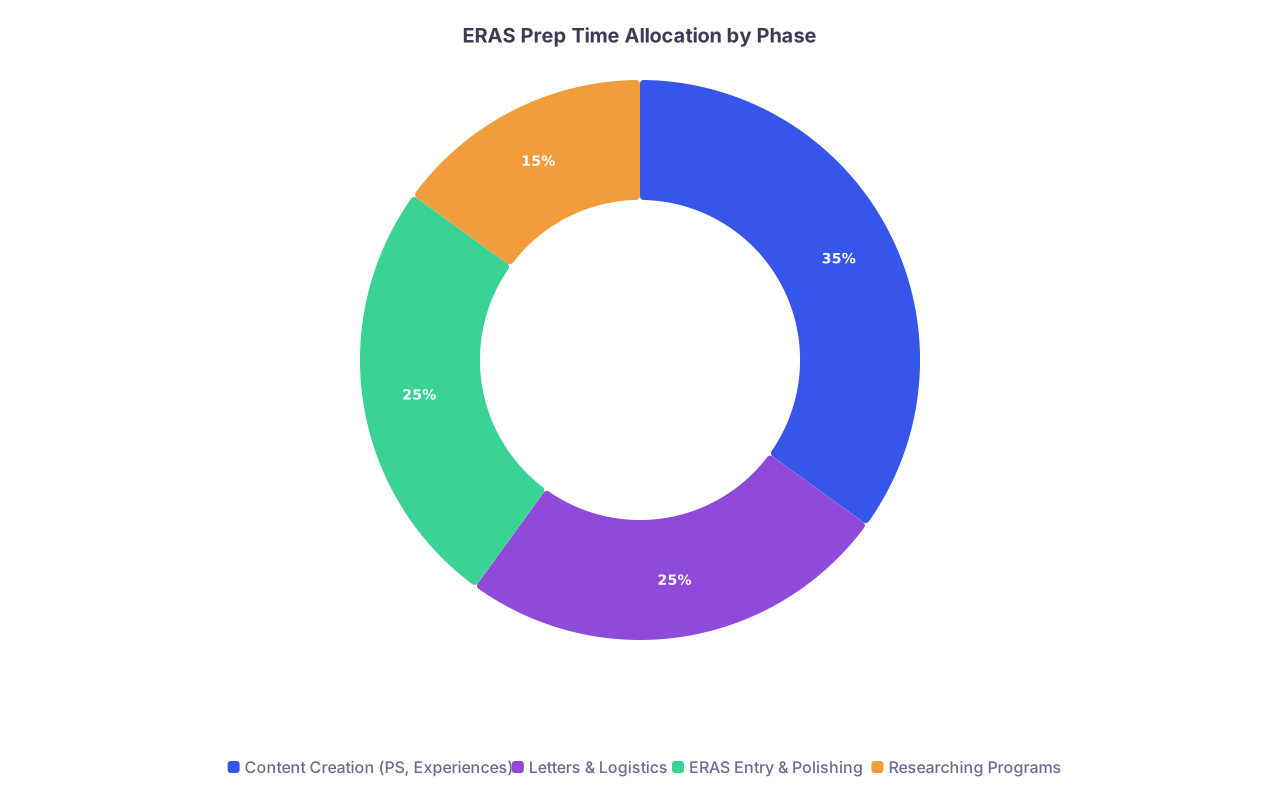
| Category | Value |
|---|---|
| Content Creation (PS, Experiences) | 35 |
| Letters & Logistics | 25 |
| ERAS Entry & Polishing | 25 |
| Researching Programs | 15 |
If you are less than 3 months from your target date, you will compress, not skip. But keep the order.
Step 2: The Final 4 Weeks Before Submission
At this point (T‑4 weeks), you must already have:
- A working personal statement draft
- A mostly complete experiences section
- Letter writers chosen and asked
- A provisional program list
This month is not for starting. It is for sharpening.
T‑4 Weeks to T‑3 Weeks: Structure and Lock Core Content
Goals in this week:
- Personal statement 90% done
- Experiences written and formatted
- CV fully updated
- Program list roughly set
Concrete tasks:
Personal Statement (PS) – Version 2 or 3
- Revise for:
- One clear theme
- Specific clinical anecdotes
- Specialty fit (if you are applying Internal Medicine, it should sound like Internal Medicine, not Ortho)
- Word-for-word check for clichés and fluff. Out: “I have always wanted to help people.” In: “On my MICU rotation, when…”
- Revise for:
Experiences Section
- Finalize which entries you will include.
- Write concise bullets for:
- Role
- Scope (hours, responsibilities)
- Impact (outcomes, skills)
- Identify your 3 “most meaningful” experiences and expand them thoughtfully.
Program List – First Draft
- Use:
- Specialty competitiveness data
- Your Step scores / COMLEX
- Geography limits
- Build a rough tiered list (reach / reasonable / safer).
- Use:
| Tier | Number of Programs | Example Characteristics |
|---|---|---|
| Reach | 10–15 | University, big-name centers |
| Target | 25–30 | Mid-tier university, strong community |
| Safety | 15–20 | Community, newer programs |
If you are still writing from scratch at this point, you are behind. Not doomed. But behind.
T‑3 Weeks to T‑2 Weeks: Outside Feedback and Tightening
Goals in this week:
- Personal statement fully content-stable
- Experiences section reviewed
- Program list refined
Concrete tasks:
Send PS and Experiences for Review
- Who:
- One person in your specialty (resident or faculty)
- One strong writer who knows you (can be outside medicine)
- Give them a 48–72 hour deadline. Be explicit: “I am submitting by September 1; can you review by X date?”
- Who:
Refine Program List
- Cross-check:
- Minimum score cutoffs (some programs list them)
- Visa requirements if applicable
- DO friendliness if relevant
- Remove programs you definitely would not attend. Do not waste money.
- Cross-check:
Letters of Recommendation Check
- Confirm all letter writers:
- Agreed
- Have your CV and PS
- Know your submission target
- If a key letter writer is waffling or slow, line up a backup this week.
- Confirm all letter writers:
Step 3: The Final 2 Weeks – Precision Work Only
Now we move to T‑14 days to submission. You are not generating new material. You are assembling.
T‑14 to T‑8 Days: Build and Proof Your ERAS Application
At this point you should be inside ERAS regularly, not staring at a blank portal.
Tasks for this period:
Populate ERAS Core Sections
- Biographical data
- Education history (check dates; this is where people mess up)
- Licensure / exams (Step/COMLEX scores, attempt info)
Copy Experiences into ERAS
- Transfer content from your own document (do not write in the ERAS text box first; too easy to lose).
- Check formatting after pasting – spacing and line breaks sometimes look different.
Upload Documents
- Personal statement:
- Upload the final version and label clearly (e.g., “IM_Main_2026”).
- CV: If uploading as document for some programs (supplements, etc.).
- Personal statement:
Program Mapping
- Assign the correct personal statement to the correct specialty.
- Verify that you are not accidentally assigning an IM PS to a Neurology program. I have seen this happen.
T‑7 to T‑3 Days: Final Edits, Consistency, and Letter Status
Now the focus is on refinement and risk control.
Your checklist here:
- Run a line-by-line proofread of the entire ERAS application:
- Names, dates, hours, locations
- Capitalization consistency (don’t have “ICU” in one place and “Icu” in another)
- Cross-check:
- Experiences on ERAS vs your CV. They should match.
- PS uploaded vs PS on your computer. Open both and compare the first and last lines.
Letters of Recommendation status:
- Log into ERAS and check:
- Which letters are uploaded.
- Which are still pending.
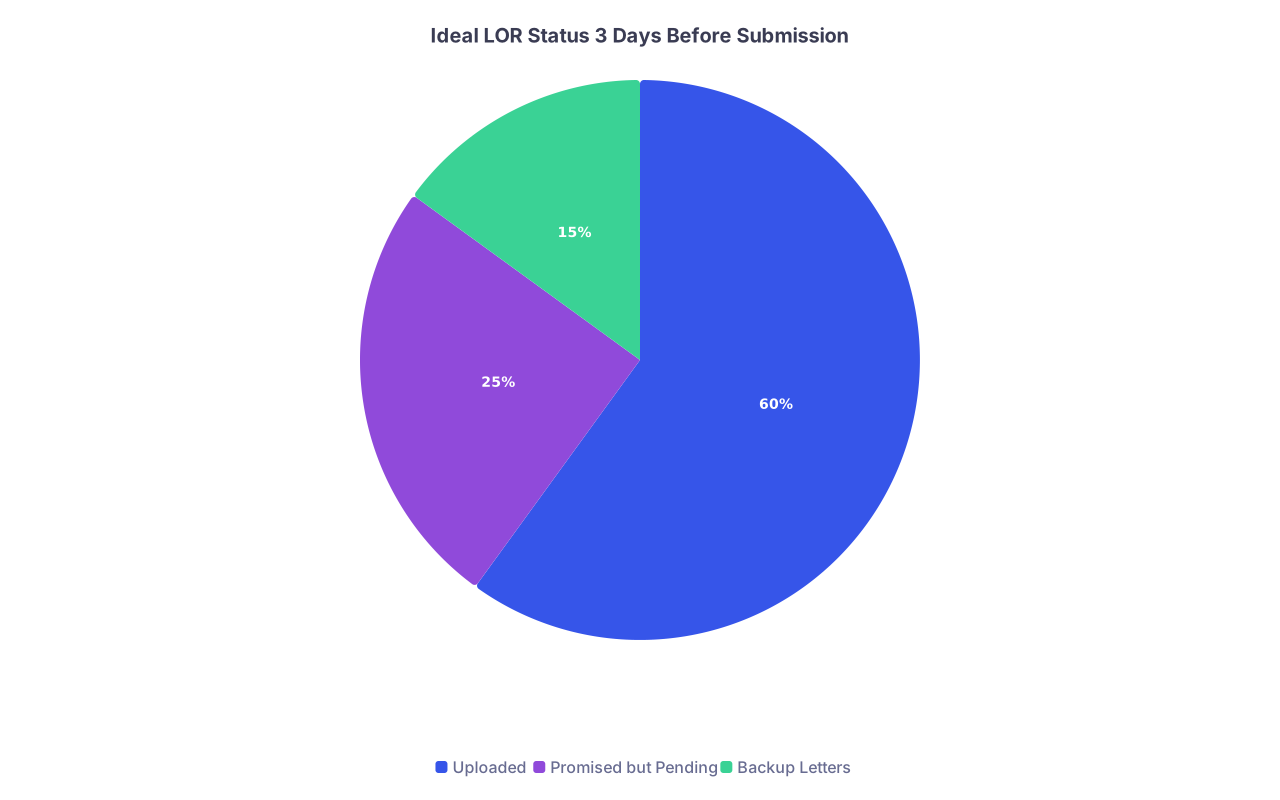
| Category | Value |
|---|---|
| Uploaded | 60 |
| Promised but Pending | 25 |
| Backup Letters | 15 |
If a crucial letter is still missing by T‑3 days:
- Send a polite but direct reminder with your firm submission date.
- Decide whether to:
- Submit with existing letters, or
- Wait a few days if that letter will significantly affect academic programs.
For most applicants, do not delay submission more than a few days for one letter. Early complete applications are that valuable.
Step 4: Submission Week – Day‑by‑Day
Now we zoom into the last 7 days before your chosen submission date.
Let us say Target: September 1 (T‑0).
T‑7: Full Mock Submission
- Sit down and walk through ERAS as if you are submitting:
- Open every tab.
- Read every entry aloud. Errors jump out when spoken.
- Make a short correction list. Do not fix on the fly. That causes new errors.
T‑6 to T‑5: Implement Corrections
- Fix only what is:
- Factually wrong
- Grammatically broken
- Misleading or unclear
- Do not:
- Rewrite your entire PS
- Add new experiences you “just remembered”
Last-minute creativity is how people create contradictions.
T‑4: External Double-Check
- Have one trusted person review:
- Your printed ERAS (use the print preview)
- Your program list
- Ask them to hunt for:
- Typos
- Inconsistencies
- Anything that feels off-brand or confusing
T‑3: Letter and Program Final Lock
- Confirm:
- Letters assigned correctly to programs
- Any specialty-specific PS assigned correctly
- Make your final program list decisions. No more adding or deleting unless there is a major reason.
T‑2: Technical and Backup Prep
- Export or screenshot:
- Key ERAS pages (for your records)
- Your experiences and PS
- Check:
- ERAS login credentials
- Internet access backup (library, hospital, friend’s place)
- Payment method valid (card not expiring or maxed)
T‑1: Do Nothing Drastic Day
- Only micro edits if:
- There is a glaring typo you somehow missed.
- Otherwise:
- Step away from the application.
- Sleep properly. Yes, really.
T‑0 (Submission Day): Execute Early in the Day
- Log in morning, not 11:58 p.m.
- Final quick scan of:
- Personal data
- Program list
- PS assignment
- Submit.
- Confirm:
- Payment processed
- ERAS shows your applications submitted
Then close the browser. If you keep staring, you will only find things to second-guess.
Step 5: Working Backward 3–6 Months – Heavy Build Phase
Now we rewind further. At this point, imagine you are 3–6 months before September 1 (March–June).
This is where most people lose time by drifting.
T‑6 Months: Define Strategy and Inventory
At this point you should:
- Know your specialty (or top two, if dual-applying)
- Have taken or scheduled Step 2 CK / COMLEX Level 2
Concrete steps at T‑6 months:
Score Reality Check
- Compare your Step/COMLEX scores to:
- NRMP Charting Outcomes
- Specialty-specific data
- Decide:
- Is a backup specialty required?
- How many programs will you probably need?
- Compare your Step/COMLEX scores to:
Experience and CV Inventory
- Open your CV and list:
- All clinical rotations completed
- Research, QI, teaching, leadership
- Mark:
- What will go into ERAS experiences
- What is weak and needs shoring up
- Open your CV and list:
Letter Writer Mapping
- Identify 4–6 potential letter writers:
- At least 2 in your chosen specialty
- 1 who supervised you closely on a key rotation
- Plan when you will ask each person (ideally immediately after you work with them).
- Identify 4–6 potential letter writers:
T‑5 to T‑4 Months: Drafting Season
Now you start the actual writing. Not in August. Now.
At T‑5 months you should:
- Open a blank document for:
- Personal statement (even if rough)
- Experiences list (bullets, not prose)
- Sketch:
- 3–4 clinical stories that might anchor your PS
- 6–10 key experiences for ERAS
By T‑4 months, you should have:
- A rough PS draft, complete but ugly
- A long list of experiences with bullet points
- A working CV that is fully accurate
This is the most psychologically uncomfortable part. Drafts look bad. That is normal. Get through it now so August is not a crisis.
Step 6: 6–9 Months Back – Foundation and Exams
If you are smart, you start your backward plan 9–12 months before your ERAS submission date, particularly for exams and letters.
T‑9 to T‑7 Months: Exams and Reputation
This period is dominated by two things:
- Step 2 CK / COMLEX Level 2
- Aim to have this taken and scored by T‑3 to T‑4 months before ERAS submission.
- That means scheduling the exam around April–May for a September 1 target.
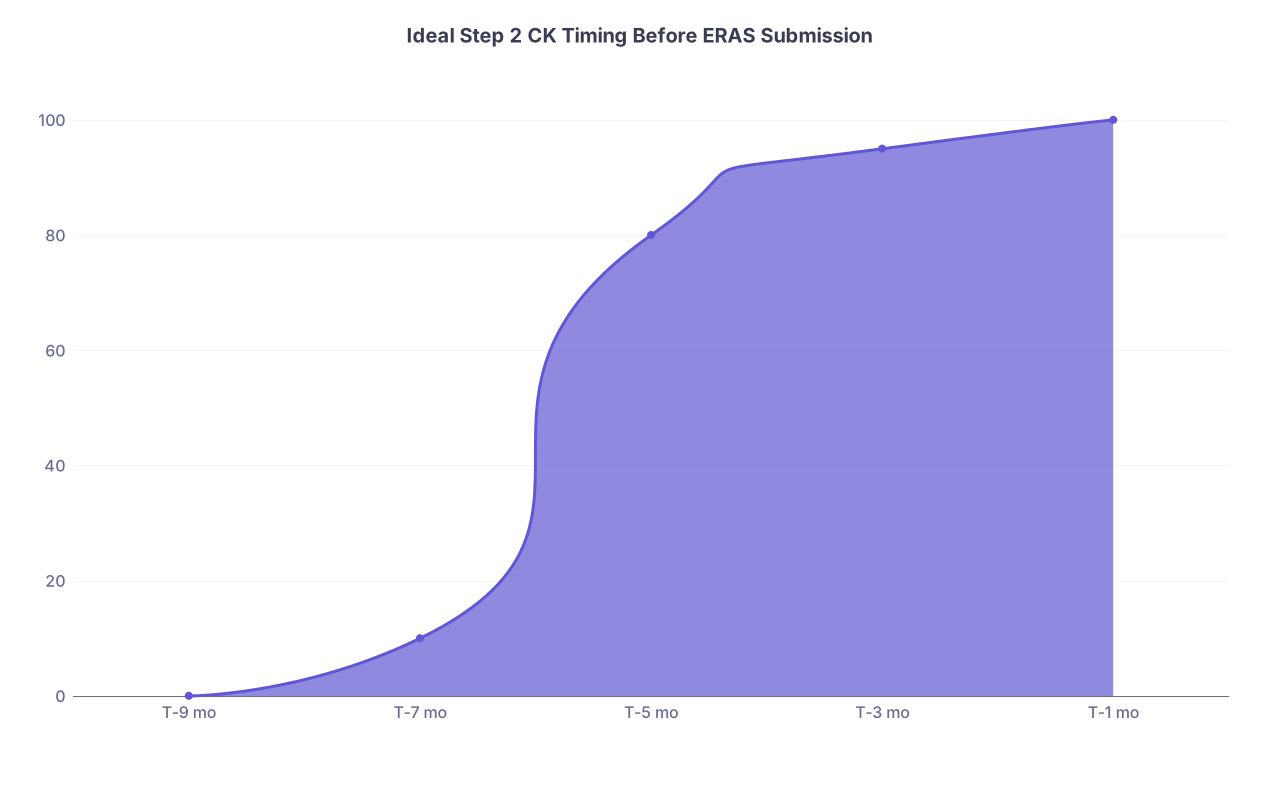
| Category | Value |
|---|---|
| T-9 mo | 0 |
| T-7 mo | 10 |
| T-5 mo | 80 |
| T-3 mo | 95 |
| T-1 mo | 100 |
(Think of this curve as “% of applicants who have their Step 2 score ready.” You want to be with the early majority, not the late laggards.)
- Clinical Performance and Relationships
- On core and elective rotations:
- Show up early, stay a bit late, know your patients cold.
- Ask for feedback halfway through, not on the last day.
- Near the end of strong rotations:
- Ask directly: “Would you feel comfortable writing me a strong letter of recommendation for residency?”
- On core and elective rotations:
You cannot backward-plan a letter the week before ERAS opens. You build those over months.
Step 7: Integrating Everything – A Visual Backward Timeline
Here is how the whole thing looks laid out.
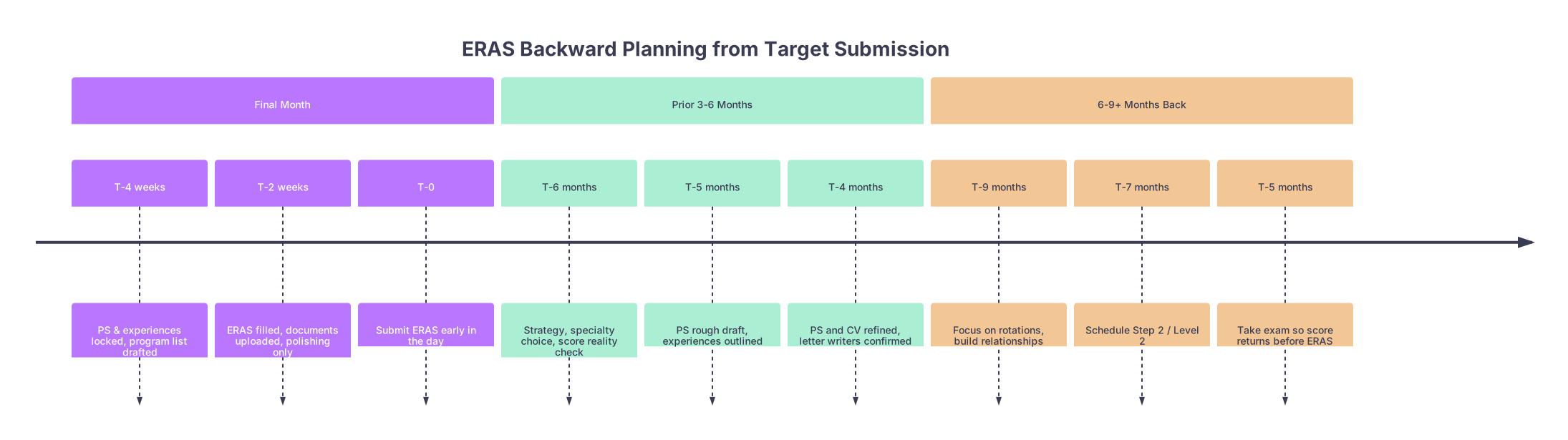
| Period | Event |
|---|---|
| Final Month - T-4 weeks | PS & experiences locked, program list drafted |
| Final Month - T-2 weeks | ERAS filled, documents uploaded, polishing only |
| Final Month - T-0 | Submit ERAS early in the day |
| Prior 3-6 Months - T-6 months | Strategy, specialty choice, score reality check |
| Prior 3-6 Months - T-5 months | PS rough draft, experiences outlined |
| Prior 3-6 Months - T-4 months | PS and CV refined, letter writers confirmed |
| 6-9+ Months Back - T-9 months | Focus on rotations, build relationships |
| 6-9+ Months Back - T-7 months | Schedule Step 2 / Level 2 |
| 6-9+ Months Back - T-5 months | Take exam so score returns before ERAS |
If you are reading this already inside one of these windows, adjust:
- If you are at T‑2 months and have no PS:
- Dedicate 3–4 intense days to get a complete draft done.
- If you are past T‑4 months and Step 2 is not scheduled:
- Schedule it now and understand you will be a bit late on the “score ready” curve.
Common Timing Errors (And When They Show Up)
I have watched the same timing mistakes every year:
- Starting PS in late August
- Result: Generic, rushed, cliché statements. You are editing at 1 a.m. before submission.
- Waiting for a “perfect” letter before submitting
- Result: Application goes in late September. Interview yield drops, especially in competitive specialties.
- Not locking a program list early
- Result: Panic-adding random programs the night before, poor geographic and tier balance.
- Taking Step 2 too late
- Score not available when programs first review. Some will not even look at your file yet.
Backward planning is how you avoid all of the above. You decide the submission date first, then force every upstream decision to fit.
Your Next Step Today
Do this right now:
- Open your calendar.
- Mark your exact ERAS submission date (not “early September”—a real date).
- Count backward:
- 2 weeks: mark “ERAS polishing only – no new writing.”
- 1 month: mark “PS & experiences must be content-final.”
- 3 months: mark “PS rough draft and Step 2 score ready.”
Then open a blank document titled “ERAS Backward Plan – [Your Name]” and write those three dates with one or two bullet points under each.
You can adjust the content later. But if you do not anchor those dates today, the calendar will run you instead of the other way around.