
The biggest lie about ERAS timing is that once you’re “late,” you’re doomed. You’re not. But you also cannot afford another sloppy week.
You’re switching specialties late. Your ERAS timeline just blew up. Here’s how to rebuild it fast without torching your chances.
Step 1: Get Real About Your Actual Deadline
You do not have “months.” You have a few critical decision points that matter way more than calendar dates.
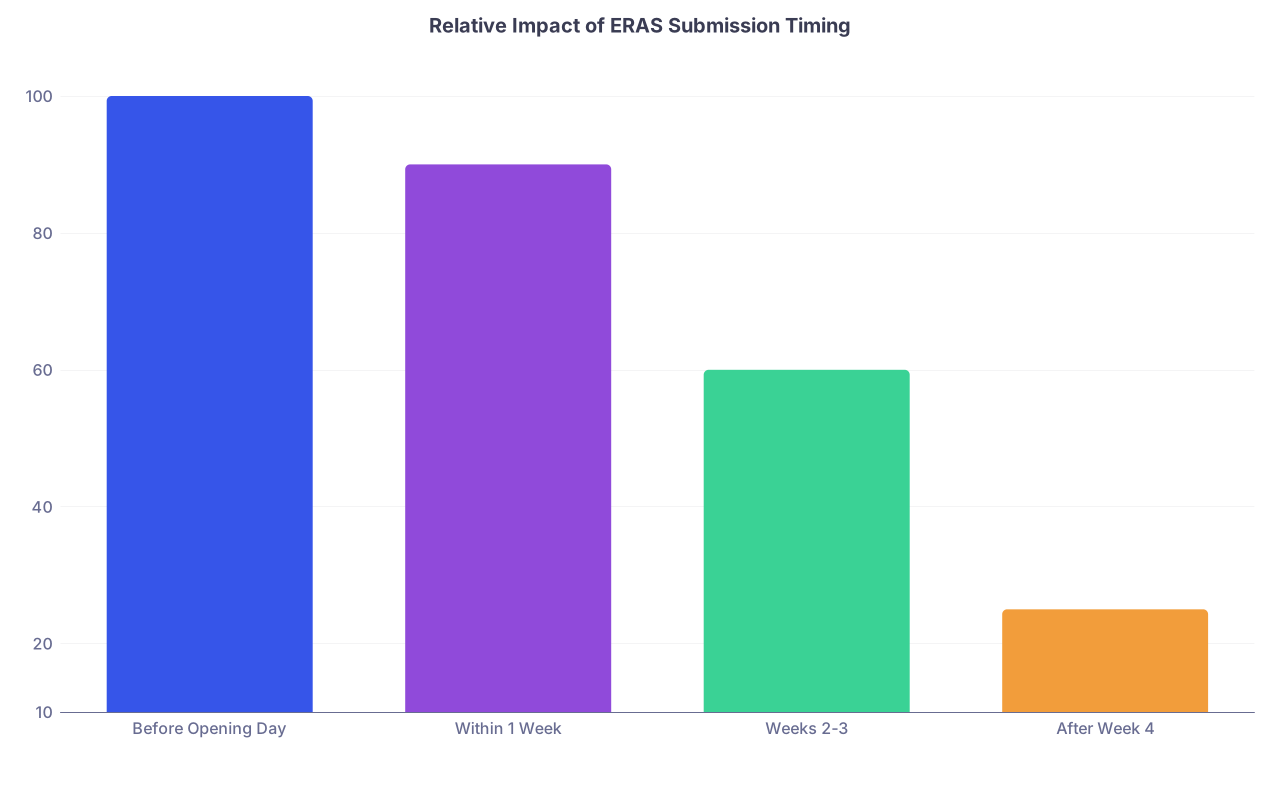
| Category | Value |
|---|---|
| Before Opening Day | 100 |
| Within 1 Week | 90 |
| Weeks 2-3 | 60 |
| After Week 4 | 25 |
Let me translate what program directors actually care about when you’re switching specialties late:
- When your application becomes complete (LORs + scores + MSPE).
- Whether you look rushed and chaotic vs intentional and focused.
- If your new specialty interest looks real or like a panic move.
Forget the generic “submit on day one or perish.” That advice is for straight-path applicants. You’re in a different category now.
There are three realistic timing situations if you’re switching late:
| Scenario | When You Decide | Strategy Priority |
|---|---|---|
| Early-Late | 4–8 weeks before ERAS release/transmission | Optimize & still be early |
| Mid-Late | 0–4 weeks before submission date | Tight build, ruthless focus |
| Very Late | After ERAS opens / after first wave | Damage control & targeting |
Figure out which one you’re in right now. Then act accordingly.
If you’re:
- 6–8 weeks out: You can still build something that looks intentional.
- 2–4 weeks out: You’re in controlled-crisis mode. Quality over perfection.
- After apps already opened: You’re doing triage. You will not be early. You can still be smart.
Write down today’s date. Then write down:
- ERAS opening date
- First date programs can view applications
- Typical interview season for your new specialty (Sept–Jan for most)
Now you’re going to build backwards from those, not forwards.
Step 2: Decide Your New Target Submission Window
Notice I did not say “submission date.” You care about a window.
Most specialties have a “golden” 7–10 day window where being complete matters a ton, and after that it’s a slow bleed in advantage.
If you’re switching late, the question is: what’s the latest date you can submit and still look like a serious applicant rather than an afterthought?
Here’s my rule of thumb:
- If you’re switching before ERAS opens: aim to submit within the first 3–7 days that programs can view applications.
- If you’re switching after ERAS opens but before most invites go out: aim for “complete” (not just submitted) within 2 weeks.
- If you’re switching after invites have started heavily: accept that you’re late, and design a targeted, high-yield list to compensate.
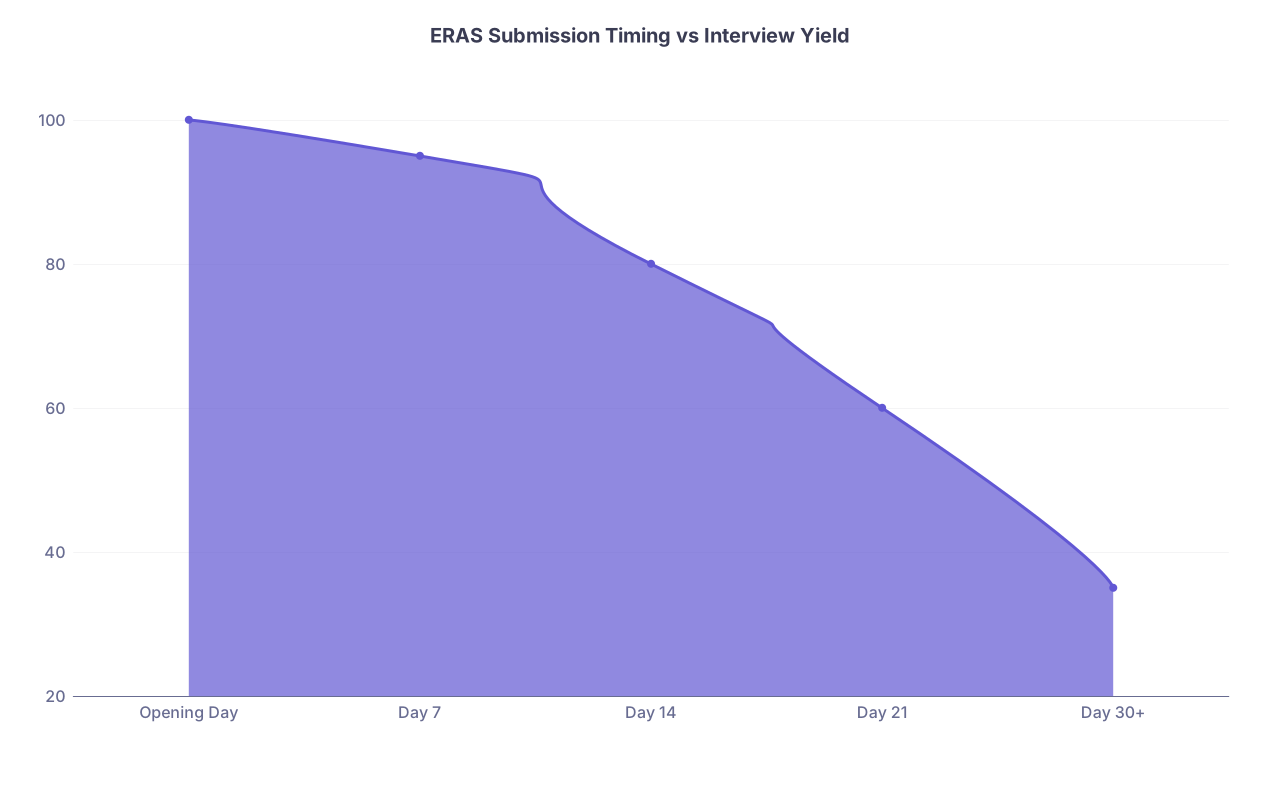
| Category | Value |
|---|---|
| Opening Day | 100 |
| Day 7 | 95 |
| Day 14 | 80 |
| Day 21 | 60 |
| Day 30+ | 35 |
Your timing goal now needs to be:
“I will submit by [date] and have:
- At least 2 specialty-appropriate letters uploaded or pending,
- A personal statement that clearly explains my switch,
- A program list that matches my actual competitiveness.”
If that date is a day or two past “opening day,” fine. A late-but-strong file beats early-but-messy every single time, especially for a switcher.
Step 3: Rebuild Your Whole ERAS Plan in 48 Hours
You can’t drag this decision stage out for a week. You need a hard reset over 1–2 days.
Here’s the order, and yes, the order matters.
Day 1: Commit, Audit, Assign
Morning: Commit specialty + backup structure
Stop flirting with five different specialties in your head.
You need to answer:
- Primary specialty: ___
- Backup plan (if any): ___ (same field different tier vs different field)
- Are you dual-applying? Yes/No (and why)
If you’re dual applying, you must decide which is “real” and which is insurance. Program directors can smell a hedged, generic app a mile away.
Afternoon: Inventory your current ERAS content
You already have:
- Old personal statement(s)
- Experiences section
- CV
- LORs (maybe in another specialty)
- Transcript, MSPE, scores
You need to label each existing piece as:
- “Keep with minimal tweak”
- “Rewrite heavily”
- “Trash and rebuild”
Even more important: mark which things are specialty-specific vs specialty-neutral.
Examples:
- Scribing in an ED: neutral, can be spun almost anywhere.
- Two years of cardiology research: very IM-friendly, also OK for some others.
- A glowing letter from a neurosurgeon when you’re switching to FM: risky unless it speaks to broad clinical skills and work ethic.
Evening: Map tasks to days
You are going to put tasks on a 7–10 day micro-schedule. Not vibes. Actual days.
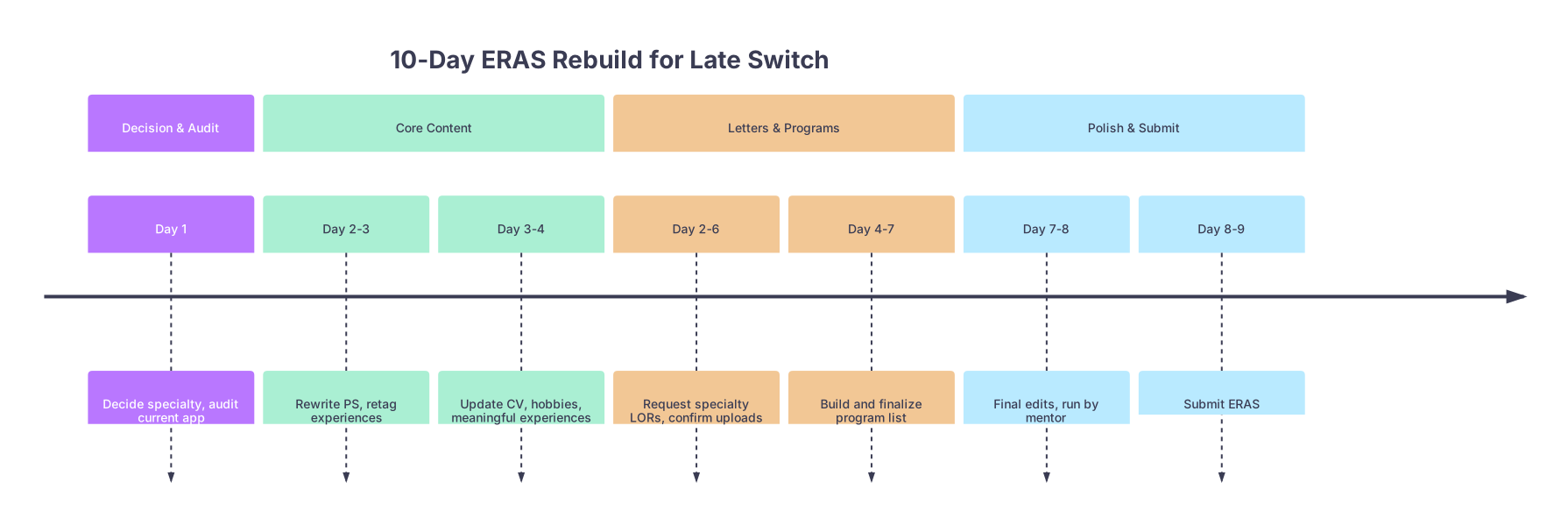
| Period | Event |
|---|---|
| Decision & Audit - Day 1 | Decide specialty, audit current app |
| Core Content - Day 2-3 | Rewrite PS, retag experiences |
| Core Content - Day 3-4 | Update CV, hobbies, meaningful experiences |
| Letters & Programs - Day 2-6 | Request specialty LORs, confirm uploads |
| Letters & Programs - Day 4-7 | Build and finalize program list |
| Polish & Submit - Day 7-8 | Final edits, run by mentor |
| Polish & Submit - Day 8-9 | Submit ERAS |
You’re not allowed to “work on ERAS” in general. Every day has specific output.
Step 4: Fix the Parts of ERAS That Matter More When You Switch
When you change specialties late, certain pieces suddenly become make-or-break.
1. The “Why I’m Switching” Story
Programs are not dumb. They see your old activities. They see your old letters. They will ask.
A bad version of this is:
- Defensive
- Vague
- Blaming your old field or a person
A strong version is:
- Specific about what you learned
- Honest about what didn’t fit
- Clear about what you’re moving toward, not just away from
You need one clean, 2–4 sentence explanation that you can use in:
- Personal statement
- Interviews
- Emails
Something like:
“I entered medical school strongly interested in surgical subspecialties and built early experiences in that direction. During my third-year clerkships, I found myself most energized by the longitudinal relationships, complex medical decision making, and team-based care on internal medicine. After completing a sub-internship and additional mentorship in IM, it became clear that this is where my skills and interests align long term.”
That’s the spine. You then customize details by specialty.
2. The Personal Statement Under Time Pressure
You do not have three weeks for a literary masterpiece. You need a clear, disciplined PS that does three jobs:
- States your interest in the specialty.
- Explains your switch briefly and maturely.
- Shows specific experiences that prove this isn’t a fantasy pivot.
Structure it like this:
- Paragraph 1: Present-day anchor — a single patient, rotation, or moment that reflects who you are now in this specialty.
- Paragraph 2: Your path and the pivot — how your interests evolved, why previous track wasn’t the right fit, when and how you realized it.
- Paragraph 3: Evidence you’ve actually moved — rotations, electives, QI, reading, mentorship in the new field.
- Paragraph 4: What you’re looking for in residency and what you bring.
Do not write 500 words trying to justify the switch. Two solid sentences, then move on to evidence.
Step 5: Letters of Recommendation – The No-Excuses Zone
This is where late switchers either salvage their season or kill it.
You need:
- At least 2 letters from your new specialty, ideally 3.
- Maximum 1 letter that’s clearly from the old specialty (and only if it’s stellar and speaks broadly to your clinical ability).
You’re short on time. So you have to be very direct with letter writers.
Here’s the script I’d actually use by email or in person:
“Dr. X, I’ve made the decision to apply to [new specialty] this cycle. I worked with you on [rotation/elective] and valued your feedback. Because of the compressed timeline, I’m hoping to finalize my ERAS application by [date]. Would you feel comfortable writing a strong letter of recommendation for my application to [specialty], focusing on my clinical skills, teamwork, and readiness for residency? I’m happy to send my CV, draft personal statement, and a short summary of the cases we worked on together.”
Then:
- Give them a specific deadline 7–10 days out.
- Upload ERAS info and waiver immediately.
- Follow up once (professionally) if they’re running late.
If you’re switching very late and have zero specialty letters, you still don’t get to say “oh well.” You:
- Ask for an urgent audition/elective, even a short one.
- Use sub-internship attending/hospitalist from your closest-fitting rotation.
- Get letters from people who saw you actually doctor, not just do research.
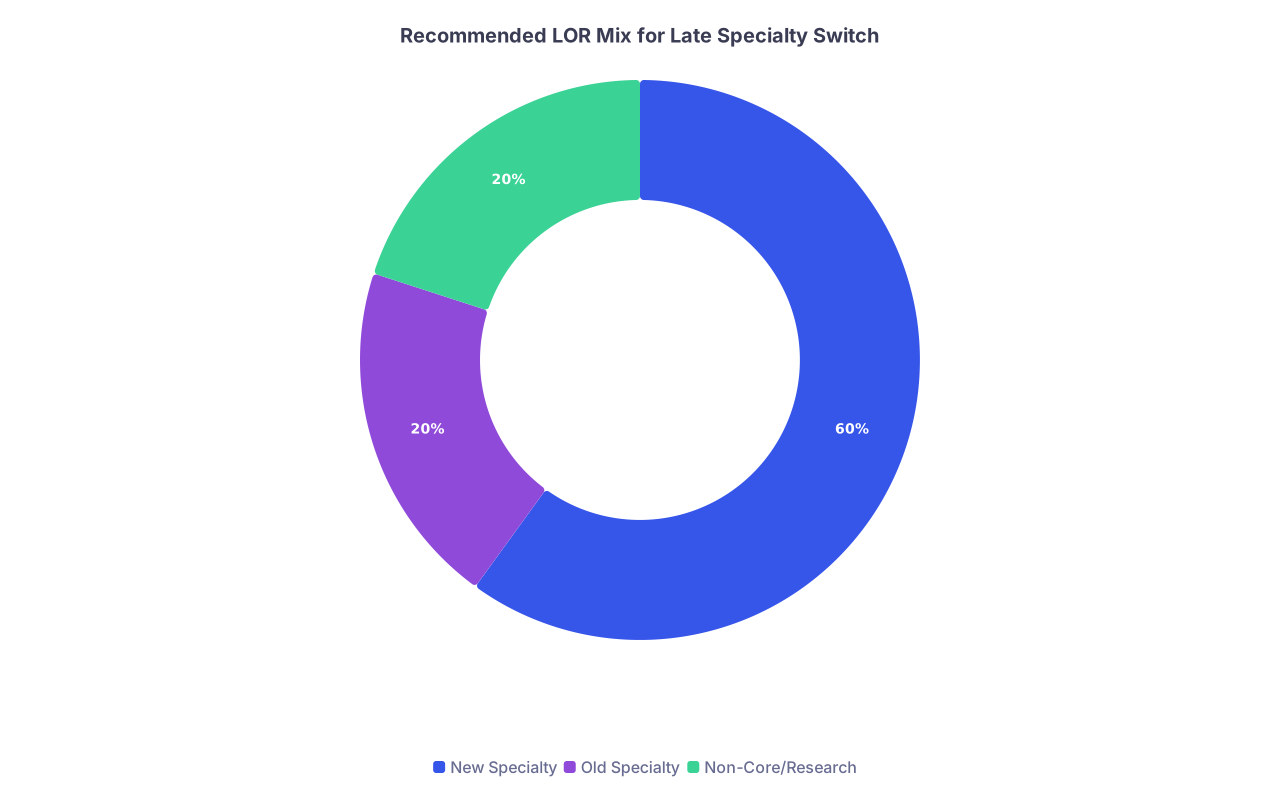
| Category | Value |
|---|---|
| New Specialty | 60 |
| Old Specialty | 20 |
| Non-Core/Research | 20 |
Step 6: Rewrite Your ERAS Content Intelligently, Not From Scratch
You do not have time to reinvent your entire life story. You need to reframe it.
Here’s how you attack the experiences section:
- Keep the same entries, change the emphasis.
- Rewrite bullets to highlight skills valued in your new specialty.
- Pull 2–3 experiences “closer” to the top that best match the new field.
Example: You’re moving from surgery to pediatrics.
Old bullet:
- “Assisted in complex abdominal surgeries and managed post-op patients in the SICU.”
Reframed:
- “Followed pediatric and adolescent surgical patients longitudinally through pre-op counseling, post-operative management, and family education in the ICU and step-down units.”
Same rotation. Different framing.
Do this especially for:
- Any longitudinal care experience
- Any team leadership or teaching
- QI or systems-based work
- Anything outpatient or continuity-clinic related (for primary care fields)
You want a PD to read your app and think, “Okay, this person has actually been doing the kind of work we do, even if their initial intent was different.”
Step 7: Program List Strategy When You’re Not Early
Late switchers do not get to spray 120 programs randomly and pray. You will waste money and attention.
You need a sharp, layered list:
- 20–40 “core target” programs where your stats are in range and your story fits.
- 10–20 “safer” programs (community, newer, less competitive locations).
- Then, only if you have the money and time, a few reach programs with a real connection (home institution, research tie, mentor vouch).
| Tier | Type of Program | Volume Target |
|---|---|---|
| Reach | Big-name, top academic, highly competitive city | 5–10 |
| Target | Solid university/affiliate, mid-competitive | 20–40 |
| Safety | Community, newer, less popular region | 10–20 |
You should bias slightly toward safety and target because your timing and narrative are unusual.
Also: If you’re extremely late (past first big wave of interviews), location snobbery has to go. You want to train, not impress people at Thanksgiving.
Step 8: Managing Dual Applications Without Torching Credibility
If you’re applying to two specialties because you decided late and are scared, fine. But do it deliberately.
You need to:
- Have separate personal statements. No generic “I love procedures and continuity of care and critical care and outpatient and…” nonsense.
- Use specialty-appropriate letters for each. A surgery-heavy letter for pediatrics looks lazy.
- Keep your experiences section neutral enough that it doesn’t scream one field while you apply to another.
The big risk: faculty talk. Within an institution, if you tell one department you’re “100% committed” to them and tell another the same thing, they will sometimes compare notes. I’ve literally sat in a meeting where someone said, “Wait, I thought this person was all-in on anesthesia.”
Your story should be consistent:
- “I’m primarily pursuing [X] because [reasons]. I’m also applying to [Y] programs where I believe I’d be a strong fit and would be happy to train.”
Honest, not performative.
Step 9: Communicating the Switch Without Looking Flaky
You’ll need to explain your change to:
- Your Dean’s office / advisor
- Letter writers
- Programs (via application, sometimes via email)
- Interviewers
You are not required to confess every emotional detail. You are required to look like an adult.
What programs hate:
- “I hated [old specialty], it was toxic.” (Red flag for blame)
- “My scores weren’t good enough for [old specialty].” (Even if true, do not lead with it.)
- “I just kind of realized I like this more.” (Too vague)
What they respect:
- “My clinical experiences clarified where I’m most effective.”
- “I recognized that the day-to-day work of [new specialty] fits my strengths better.”
- “I took [specific actions] once I realized this—additional electives, mentorship, reading, etc.”
You need to show: Decision → Insight → Action → Alignment with new field.
Step 10: When You’re Very Late – Damage Control Mode
If you’re reading this after ERAS opened and you’ve just decided to switch, the playbook changes.
You cannot:
- Compete on timing.
- Fix your entire profile in two days.
You can still:
- Compete on clarity, fit, and targeted interest.
What to do:
Submit as soon as you have:
- One reasonable specialty letter uploaded or promised.
- A non-embarrassing personal statement.
- Experiences retuned to the new field.
Build a smaller but sharper list:
- Focus on institutions where you have some tie: rotated there, nearby med school, similar region, same medical school alumni on faculty.
Use polite, short emails after you’ve applied to:
- Programs where you rotated.
- Programs where your mentors know faculty.
- True top choices where you can state a specific reason.
Something like:
Dear Dr. [PD],
I recently submitted my application to your [specialty] residency. I recognize that my switch from [old specialty] later in the cycle is atypical. After my [rotation/elective] with [mentor/hospital], I became convinced that [specialty] best aligns with my interests and strengths, especially in [specific aspect]. I would be genuinely excited to train at [Program] because of [one concrete, real reason].
Thank you for your consideration,
[Name, AAMC ID]
Do not mass-spam 80 programs. You’ll look desperate.
Step 11: Protect Your Sanity During the Rebuild
You’re trying to do something stressful, on a compressed timeline, with high stakes. People get weird here—freeze, procrastinate, spiral.
A few hard rules to keep you functioning:
- No editing your personal statement more than twice per day. After that, you’re just rearranging words.
- No scrolling SDN/Reddit for “late switch success stories” more than 15 minutes a day. It will wreck your sense of reality.
- One person with actual authority (advisor, PD, faculty in new specialty) must review your overall plan. Not your roommate, not your cousin.
You’re not trying to feel perfectly calm. You’re trying to be operational.
If You Do Nothing Else, Do This
If you’re switching specialties late and freaking out about ERAS timing, anchor on these three things:
- Pick a realistic submission window and rebuild backwards from it with concrete daily tasks instead of vague “work on apps.”
- Fix the three things that matter most for a late switch: a clean explanation for the change, at least two specialty-appropriate letters, and a personal statement that shows actual evidence you belong in the new field.
- Trade breadth for focus: a sharper, well-aligned, slightly-late application to the right programs will beat a rushed, generic, early one sprayed everywhere.
You’re not too late. But you are out of slack. Use what’s left wisely.