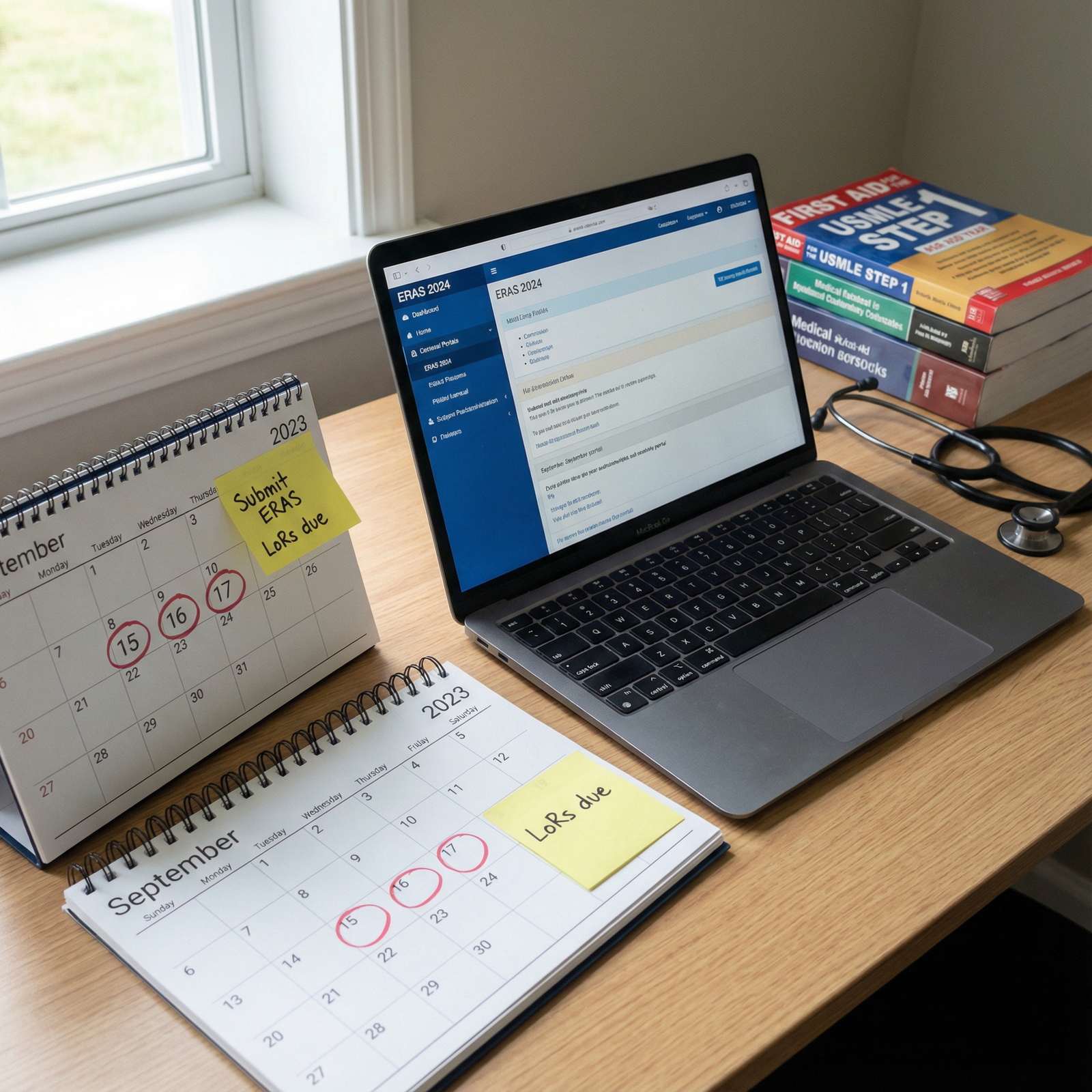
It’s September 27th. ERAS just opened for programs yesterday. You finally hit “submit” after weeks of tweaking your personal statement and begging for that last LOR. You feel relieved. Proud. Then you remember: you still have an unfinished research abstract, maybe a new score coming, maybe a late letter.
You think, “No problem. I’ll just send ERAS updates. Programs will see I improved.”
Let me tell you exactly what happens on the other side of that screen. Why some program directors will never see — or care about — those updates if you submitted too late. And why timing, not just content, is quietly making or breaking your cycle.
You are not playing in a neutral system. You’re playing in a clogged, time-compressed, politically-driven triage process. And late updates land in the part of the process where no one’s really looking anymore.
What PDs Actually Do The First 72 Hours ERAS Drops
I’ve sat in those rooms. I’ve watched PDs at places like a mid-tier university IM program and a competitive academic EM program run their first-pass review. The first 48–72 hours after ERAS files are released are the only time some programs seriously look at the entire pool.
This is how it usually plays out.
On “ERAS release day,” the PD is in early (or late), coffee in hand. They have a number in mind:
We will interview 120.
We will screen 1000.
We will receive 3000+.
They’ve already worked with their coordinator or chief residents to set up filters:
US MD vs DO vs IMG.
Step 2 cutoff.
Fails/attempts.
Home/affiliate students.
Geographic preference.
Visa status.
The first pass is brutal and fast. It’s not the holistic fairytale you hear on Instagram. It’s: who’s clearly in, who’s clearly out, who’s “maybe” for committee review.
They are not “waiting for updates.” They are not planning to re-open 2500 files a month later because you added one more “submitted” manuscript.
Most programs front-load the majority of their “review energy” into that early period. That’s when attention is highest. That’s when PDs and selection committees are actually reading personal statements rather than just glancing at filters and red flags.
If your file is incomplete or weak at that moment — and you’re counting on updates to fix it — you’re already starting from a hole.
The Ugly Math: Why Late Updates Get Ignored
Let’s put some numbers to what you’re up against.
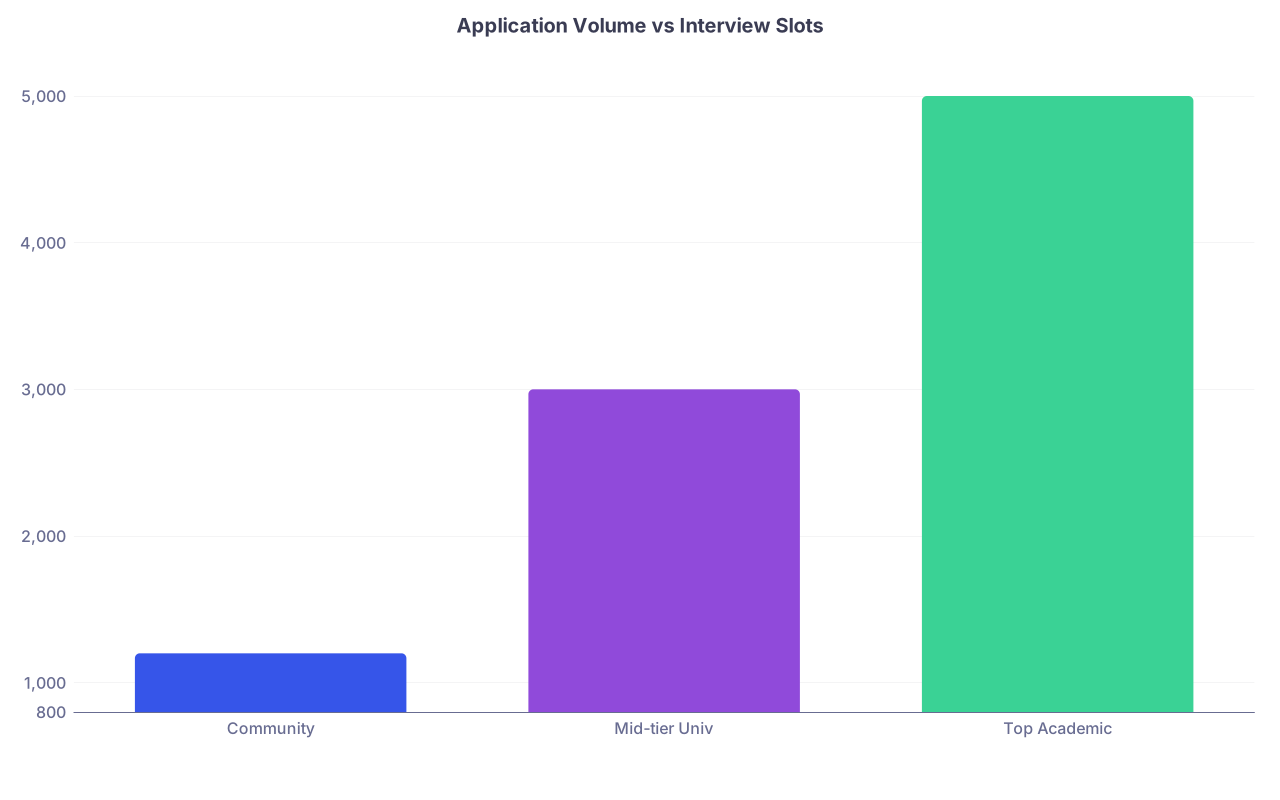
| Category | Value |
|---|---|
| Community | 1200 |
| Mid-tier Univ | 3000 |
| Top Academic | 5000 |
That’s roughly what many PDs are looking at. And here’s the part students underestimate: almost all programs have their interview pool mostly decided long before the season “ends.”
I’ve seen internal dashboards where by:
- October 10–15: 60–70% of interview invites were already sent or at least pre-identified.
- Late October: 80–90% of the interview list is essentially locked.
- November: only minor shuffling or waitlist movement.
Now layer your “update” onto this.
You send an ERAS update on October 25:
- You added one more poster.
- Your Step 2 score finally came out.
- Another letter uploaded.
From your perspective: “This changes everything.”
From the PD’s perspective: “We already have our core list. Unless this person fills a specific need, we’re not reopening the file.”
The decision isn’t personal. It’s capacity.
Your update requires:
- Someone to notice it.
- Someone to actually open your application again.
- Someone to care enough to re-argue your file in a system that is already oversubscribed with “good enough” candidates.
That’s the key problem. By the time your update arrives, the marginal value you add has to compete against the effort of re-processing you. And almost always, effort wins. Meaning: they don’t do it.
How ERAS Updates Actually Show Up To Programs
You’re imagining that your update flashes red on the PD’s screen with a banner:
“THIS APPLICANT JUST GOT STRONGER — RECONSIDER NOW.”
That’s not how it looks.
Here’s the dirty little secret: many faculty reviewers and even some PDs never look directly at ERAS. They look at spreadsheets or parsed exports from their coordinator. Early in the season, coordinators pull data and create a working review file. After that? The working document becomes the truth.
New updates don’t automatically sync with their mental map of you.
In a lot of programs, this is the workflow:
- Coordinator exports key fields (scores, school, AOA, research count, red flags) into Excel or software.
- Reviewers score applicants based on that snapshot.
- Discussion happens off ERAS — in meetings, shared docs, ranking tools.
So your late-breaking “accepted abstract” might technically be in ERAS. But unless the coordinator re-exports updated data, merges it, and people re-score you, that update is essentially buried.
Do some places re-pull data? Yes.
Do many not bother once they’ve done the big screening pass? Also yes.
If you submitted very late, you might be in an even worse category: never even made it into the first exported spreadsheet in time. Meaning you’re not “waiting on an update.” You’re not in the conversation at all.
Why Timing Beats “Improvements” 8 Out Of 10 Times
You’ve probably heard the advice: “Wait until your application is strongest to submit.”
This is how you get burned.
Programs don’t review in one big batch at the end. They front-load. The early submissions get the widest look. That doesn’t mean you need to hit submit at 9:01 AM on opening day, but there is a real drop-off in visibility the later you go.
Let me draw the curve for you.
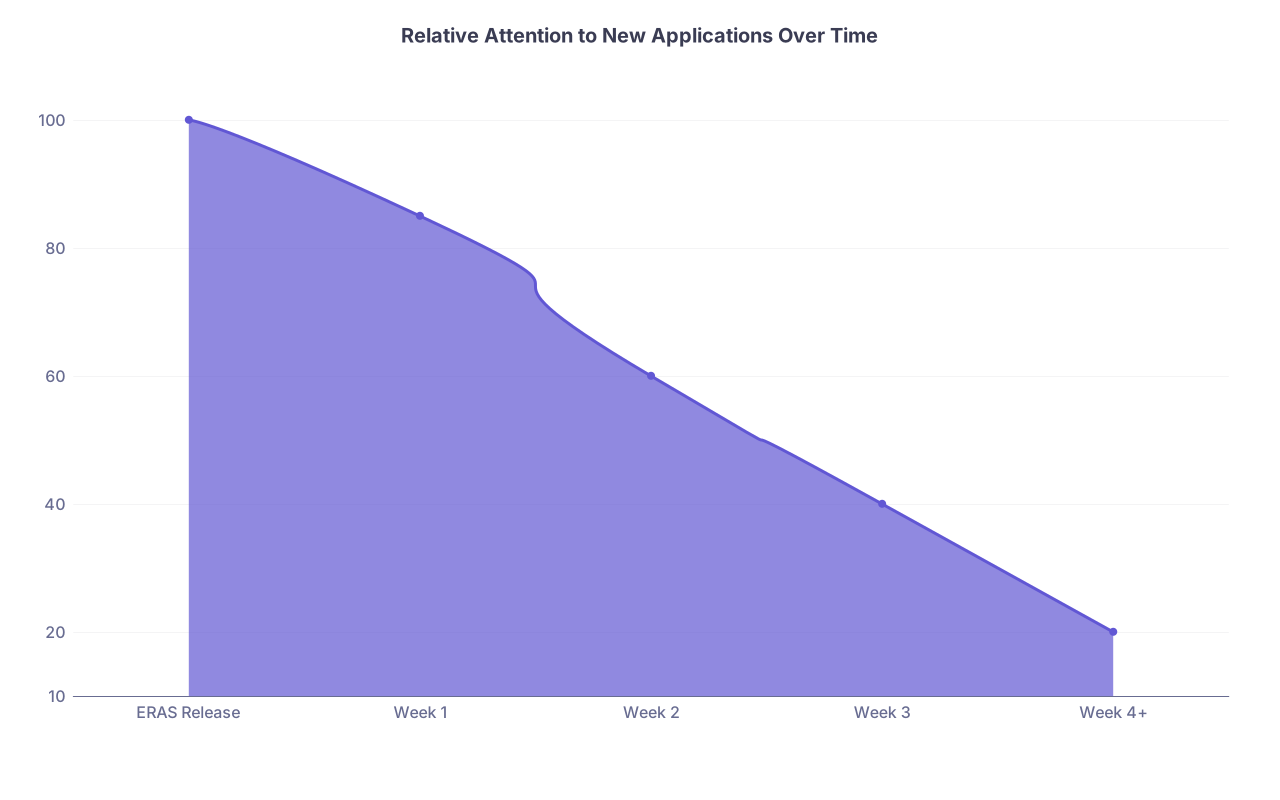
| Category | Value |
|---|---|
| ERAS Release | 100 |
| Week 1 | 85 |
| Week 2 | 60 |
| Week 3 | 40 |
| Week 4+ | 20 |
This isn’t official data. It’s what PDs quietly say out loud in closed meetings.
The earlier your complete file hits the system, the higher the chance you’re looked at during that high-attention window. Once a program feels like they “have enough,” every additional applicant is graded against a mental bar that keeps rising:
“Is this person better than the 300 we already like?”
Your tiny marginal gains from late updates don’t beat being in the room earlier with a solid, 90%-there application.
If you’re asking yourself whether to wait 3–4 weeks for one more poster acceptance vs submitting on time early in the cycle — 90% of the time, submit earlier. The poster won’t save you if no one ever re-opens your file to see it.
The Harsh Truth About Step 2 CK Updates
Let’s talk about the most common late update: Step 2 CK.
You delay your ERAS submission because you’re waiting on Step 2. Or you submit on time but your Step 2 isn’t in yet, and you plan to “update” once it posts.
Here’s how PDs actually view this:
- If your Step 1/COMLEX 1 was strong and Step 2 is pending, some programs will interview you without it. They may rank you “contingent” on an acceptable Step 2, but they’re not waiting in suspense for your update.
- If your early scores were borderline and they were on the fence, the absence of Step 2 at the time of first review often puts you in the “maybe later” bin — which is where applications go to slowly die.
- If your Step 2 later comes back great, only programs that deliberately left room for “late risers” will dig into that bin again. Many will not. They already filled their bandwidth.
I’ve sat in a ranking meeting where someone said, “Yeah, they updated with a good Step 2, but we already maxed out interviews on their profile type.” That was it. End of discussion. That applicant never got revisited.
So yes, Step 2 can rescue you — if it’s in by the time the first real screening pass happens. If it lands after the bulk of invites are mentally, if not officially, allocated, you’re fighting inertia.
Why PDs And Faculty Emotionally Check Out Of Late Updates
There’s a psychological piece almost no one talks about.
Imagine spending three weeks triaging 3000 applications. You’ve debated edge cases, argued about red flags, ranked people you’ll never meet. You’re fried.
Then, in late October or November, a trickle of “updates” comes in:
- More posters.
- Another LOR.
- “Manuscript submitted to X journal.”
You think faculty are eager to go back and say, “Maybe we were wrong about this one”? They are exhausted. They want to move on to the next phase: logistics, interviewing, scheduling, residents complaining about their life, committees, all of it.
You are asking them to re-open their cognitive tab on you. To admit that maybe they under-valued you earlier. That doesn’t happen much unless:
- You’re from their home/affiliate institution.
- You’re a clear diversity or mission-fit candidate they already liked.
- Someone is actively advocating for you (chair, mentor, alumni).
For the average unconnected applicant, late updates land in an emotional dead zone. The team’s already mentally moved to managing the people they did invite, not scavenging for people they missed.
How Different Program Types Treat Late Submissions
Not every program handles this identically. There are patterns.
| Program Type | Tendency Toward Late Updates |
|---|---|
| Big academic, very competitive | Least likely to revisit late updates |
| Mid-tier university | Occasionally re-open for big changes |
| Community with moderate volume | Some flexibility, more ad hoc |
| New/small programs | More likely to look late to fill spots |
| Programs with trouble filling | Actively scan late apps, especially IMGs |
At highly sought-after academic programs, they’re drowning in qualified early applicants. There’s almost zero incentive to re-open late files unless something is extraordinary or there’s institutional pressure.
At struggling or smaller programs, yes, late applications can absolutely get attention — but that’s not the group most late submitters are usually targeting in their fantasies.
You have to be honest with yourself: are you aiming for a program that’s overwhelmed with applicants or one that’s hustling to fill? Because the late-update strategy only “works” reliably in one of those.
The ERAS Update Types PDs Secretly Care About vs Ignore
Not all updates are equally useless. Some can still move the needle — if the timing and context are right.
Here’s how PDs tend to subconsciously rank them:
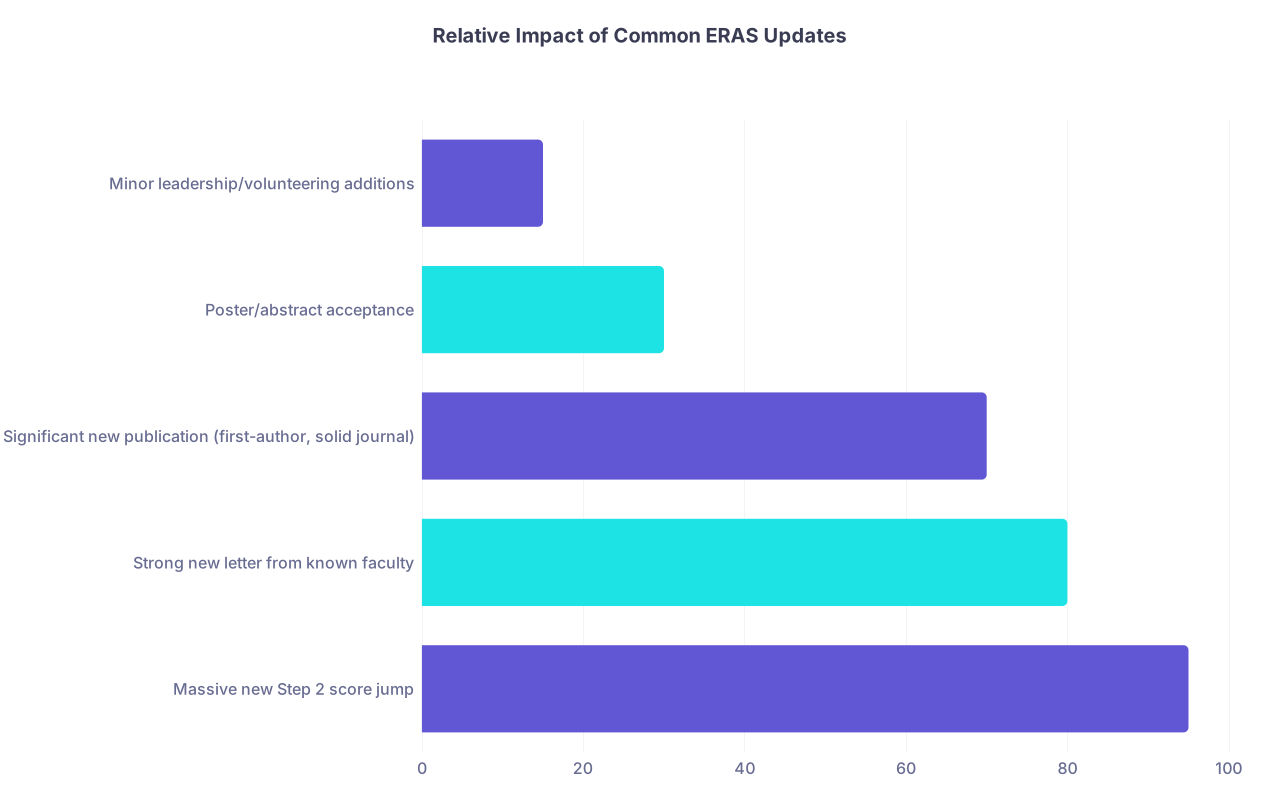
| Category | Value |
|---|---|
| Massive new Step 2 score jump | 95 |
| Strong new letter from known faculty | 80 |
| Significant new publication (first-author, solid journal) | 70 |
| Poster/abstract acceptance | 30 |
| Minor leadership/volunteering additions | 15 |
If a late Step 2 takes you from “borderline” to “objectively strong,” and the program is one that still has room, that can justify a second look.
A strong new letter from a well-known faculty member, especially from that institution or a connected one, can also force reopening your file. That’s how networking and “whispers” work:
“Hey, this person is actually excellent; can you look again?”
But: “Poster accepted at [generic national meeting]” three weeks after ERAS opens? That won’t move the needle at most places. You’re not getting re-sorted for that.
The Best Time To Submit ERAS: The Real Answer
You want one thing from me here: when should you submit?
Here’s the unvarnished version:
- For the vast majority of applicants, you should be fully submitted on or very near the first day ERAS applications are released to programs, with all critical pieces in place (scores, core letters).
- Small delays of a few days rarely kill you, but sliding into “late September” or “October” for initial submission absolutely does, especially in competitive specialties or for IMGs.
- Waiting extra weeks just to add weaker, incremental stuff — more generic volunteering, another low-yield abstract — is usually a bad trade.
The biggest mistake I see: people optimize for perfect instead of visible.
A 90–95% complete application in the first review wave beats a 100% complete application that shows up after the committee has emotionally and practically moved on.
What To Do If You’re Already Late This Cycle
Let me be blunt. If you’re reading this and you already submitted way past the initial wave — mid-to-late October or worse — you’re not competing on a level field.
Here’s how people on the inside actually think about late applicants:
- “We’ll keep them in mind if we need to fill last-minute slots or if someone cancels.”
- “Might be good for SOAP if they apply there.”
- “If they’re local or from our med school, we might squeeze them in.”
So if you’re late, you can still do a few tactical things that actually match how the system works:
- Target programs more likely to still be looking: newer, community, places known to have trouble filling.
- Use connections surgically. A direct email from a known faculty member to a PD about your file will do 100x more than your “update” note.
- Don’t spam weak updates. One meaningful, consolidated update is better than 4 minor “btw I did another poster” messages.
But understand: you’re mostly playing for edge cases now. Cancellations. Overlooked gaps. Programs that misjudged their early pool.
And you should, frankly, be thinking about whether to adjust your expectations or your specialty list for next year if this pattern repeats.
How To Plan Your Next Cycle So PDs Don’t Ignore You
If this cycle is already compromised or you’re planning ahead, build your strategy around one truth: programs care far more about your on-time, cohesive story than your late trickle of incremental accomplishments.
That means:
- Backward-planning Step 2 and major experiences so they’re baked in before ERAS opens, not “coming soon.”
- Prioritizing the quality of your first submission snapshot, instead of hoarding experiences to sprinkle in as updates.
- Accepting that one strategically-timed strong letter is more powerful than three average letters that arrive at random points mid-season.
Stop thinking like, “I’ll fix it once it’s submitted.”
Think like, “What will my entire file look like on the first day a tired PD scans through 200 apps in an afternoon?”
Because that’s the moment that matters.
The Bottom Line
You’ve heard way too many comforting myths about holistic review and “programs love updates.” Some do. Some don’t. Many never even see them.
Here’s what actually matters:
- The first serious look your file gets — usually early and fast — defines your trajectory. If you’re not competitive then, your late tweaks mostly vanish into background noise.
- PDs and committees work off early snapshots, exports, and mental shortlists. They rarely rebuild those lists for small updates unless something truly big changes or someone is advocating for you.
- Submitting a strong, timely ERAS beats waiting weeks to polish microscopic details. Late updates can’t save an application that never got a real look when attention was highest.