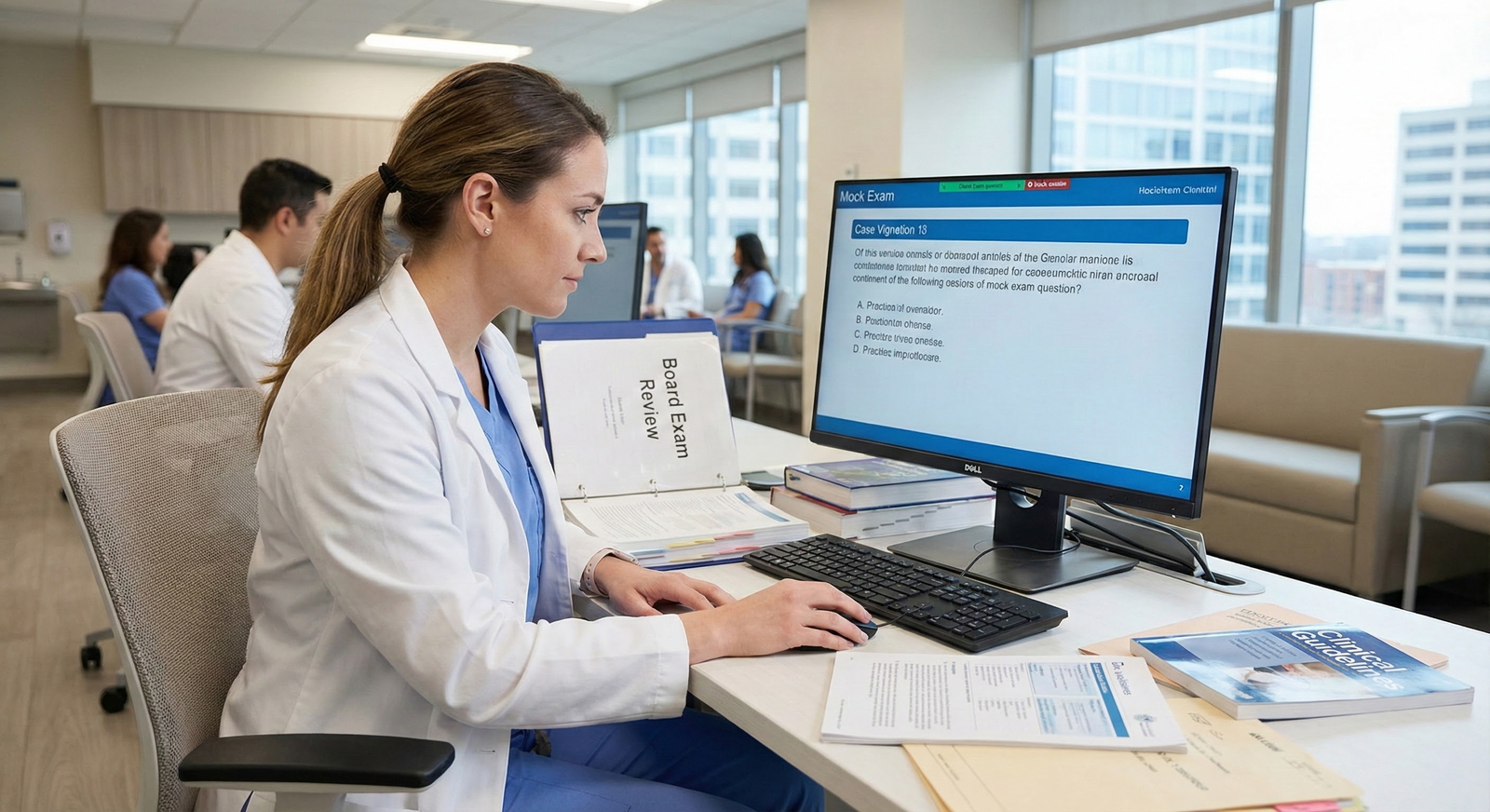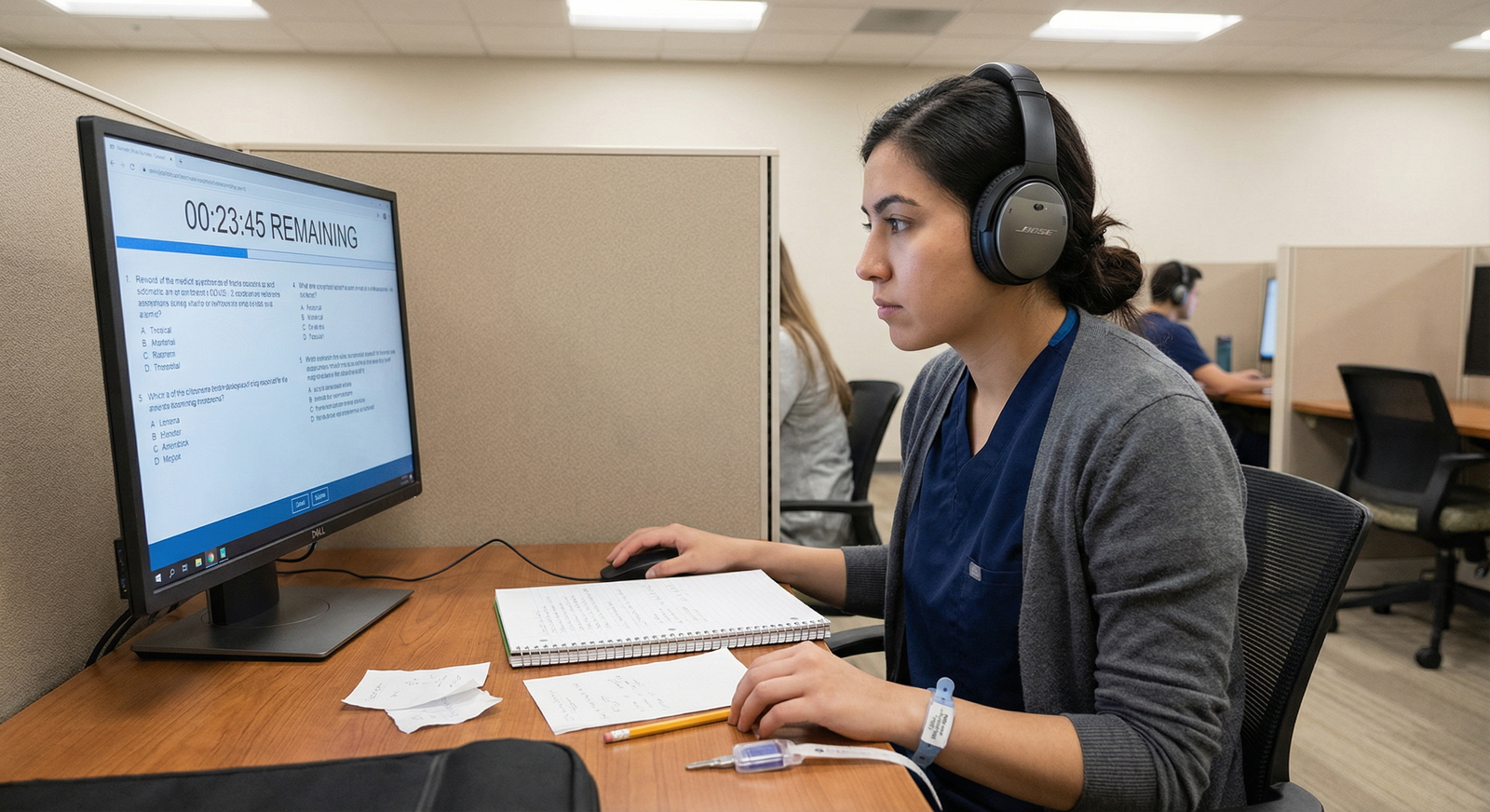
Why Residency Board Exams Matter More Than You Think
Embarking on residency is one of the most demanding phases of your medical education. Between long calls, complex patients, and evolving responsibilities, it can be easy to see the residency board exams (USMLE Step 3, COMLEX Level 3, or in-training and specialty boards) as just another hurdle.
In reality, they are much more:
- They influence fellowship and job opportunities in competitive subspecialties.
- Strong scores can help offset weaker parts of your application.
- Solid board performance reflects how efficiently and effectively you’ve learned to think and act like a clinician.
Top scorers rarely rely on “natural talent.” Instead, they use deliberate exam preparation strategies, smart study techniques, and ruthless time management. This guide unpacks those habits so you can apply them in your own context—even while juggling residency life.
Building a High-Impact Study Plan: From Chaos to Strategy
A major “secret” of top performers is that they never approach boards with a vague intention to “study more.” They use a structured, data-driven plan that fits their schedule, specialty, and baseline performance.
Clarify Your Target and Timeline
Before opening any book or question bank, answer three key questions:
What exam and when?
- USMLE Step 3, COMLEX Level 3, specialty in-training exam, or board certification?
- Do you have a fixed date (e.g., contract or visa constraints), or can you flex?
What is your target outcome?
- Pass on the first try?
- Score in a specific percentile to be competitive for fellowship?
- Improve your weak content domains from prior exams?
How much time do you realistically have per week?
- PGY-1 on q4 call might manage 1–1.5 hours on weekdays, more on weekends.
- Senior residents with better control over schedules might carve out 2–3 focused hours on most days.
Write these answers down. Top scorers treat their study plan like a clinical pathway: explicit, measurable, and realistic.
Design a Structured Study Plan
A well-built plan balances content review, question practice, and systematic review of mistakes.
A typical high-yield weekly structure might look like this:
- 30–40%: High-yield content review
- Reading core resources, watching short videos, or reviewing key charts.
- 40–50%: Question banks
- Timed blocks in exam-like format, with careful review afterward.
- 20–30%: Active review
- Flashcards, spaced repetition, and targeted revision of weak topics.
Break down your preparation into phases:
Phase 1: Baseline and Mapping (1–2 weeks)
- Take a baseline self-assessment (NBME, COMSAE, or specialty-specific practice exam).
- Identify weak systems (e.g., cardiology, GI) and disciplines (e.g., pharmacology, biostats).
- Map out your schedule: Which days are for question blocks, which for deep review, and which are lighter due to call or clinic?
Phase 2: Core Study and Question Integration
- Study 5–6 days/week, leaving 1 day lighter or off to prevent burnout.
- Example daily plan (short weekday day):
- 1 block of 20–40 timed questions.
- 1–1.5 hours reviewing explanations and annotating key points.
- 20–30 minutes of flashcards or brief content review.
Phase 3: Refinement and Simulation (last 3–6 weeks)
- Increase frequency of full-length practice exams under test-like conditions.
- Shift more time into:
- Timed blocks.
- Reviewing errors.
- Revisiting high-yield charts, algorithms, and notes.
Top scorers also build in flexibility. When fatigue is high post-call, they use that day for lighter tasks like flashcards or watching short video summaries, and make up deeper work on off days.
Choosing and Using High-Yield Resources Wisely
Many residents sabotage themselves by using too many resources. Top scorers focus on depth over breadth and are highly intentional with the tools they choose.

Core Resources for Residency Board Exams
While exact resources depend on your exam and specialty, top scorers often use a combination of:
Foundational review books
- For USMLE Step 3 / COMLEX Level 3:
- A concise Step 3–focused review book.
- Specialty-specific outlines for IM, peds, surgery, etc.
- For specialty boards:
- Official board review books (e.g., MKSAP for Internal Medicine, PREP for Pediatrics, SESAP for Surgery, etc.).
- For USMLE Step 3 / COMLEX Level 3:
Question Banks (Qbanks)
- UWorld, Amboss, Rosh Review, TrueLearn, BoardVitals, or specialty-specific banks.
- Prioritize those known to reflect exam style and difficulty.
Digital libraries and clinical references
- Amboss, UpToDate, specialty guidelines (e.g., ACC/AHA, IDSA).
- Use these for clarifying concepts after you miss a question—not as primary sources.
Make Flashcards and Spaced Repetition Work for You
Top scorers use spaced repetition not as an afterthought, but as a pillar of their retention strategy:
- Use Anki or similar tools to:
- Capture key tables, diagnostic criteria, drug mechanisms, and algorithms.
- Convert missed Qbank concepts into cards that you will see multiple times.
- Create brief, focused cards, not walls of text.
- Example: Instead of pasting an entire question explanation, make 2–3 cards:
- One on diagnostic criteria.
- One on management step.
- One on a key exception or dangerous pitfall.
- Example: Instead of pasting an entire question explanation, make 2–3 cards:
A practical rule: If it’s high-yield enough to write down in your notes, it’s high-yield enough to capture in a flashcard for spaced review.
Mastering Question Banks: The Core Engine of Exam Preparation
Top performers treat question banks as learning tools, not just “test yourself” tools. They integrate them daily, dissect every explanation, and let their performance data guide their study plan.
How to Use Qbanks Like a Top Scorer
Start Early, Go Steady
- Begin using a Qbank early in your study period—don’t wait until the end.
- Aim for consistent volume:
- Example: 20–40 questions/day on busy days; 60–80 on lighter days.
Always Use Timed Mode (Most of the Time)
- Simulate exam pressure.
- Force yourself to practice Time Management and decision-making under realistic constraints.
Do Mixed/System Blocks (after an initial focused phase)
- Early in prep, focused blocks (e.g., only cardiology) are fine.
- Closer to the exam, mixed blocks better mimic the true exam pattern and help you mentally “switch gears” between systems.
Reviewing Questions: Where the Real Learning Happens
Top scorers spend at least as much time reviewing a block as completing it. For each question:
- Ask:
- Why is the correct answer correct?
- Why are the other options wrong?
- What concept did this question really test?
Capture key insights:
- Summarize takeaways into:
- Your digital/physical notes.
- Anki cards.
- A “mistake log” spreadsheet/notebook.
Example structure for a mistake log:
- Question ID / Topic: e.g., “Nephrotic vs. nephritic – lab differences”
- Why I missed it: “Rushed, mixed up complement levels”
- Correct learning point: “Nephritic often has low complement, nephrotic usually doesn’t”
- Action item: “Add card; review glomerular diseases table this weekend”
Over time, your mistake log becomes a high-yield personalized syllabus of what you must master before test day.
Simulating the Real Exam: Training Your Brain and Body
Even residents who know the content cold can underperform if they are unprepared for the format, duration, or stress of exam day.
Full-Length Practice Exams: Rehearsal for Game Day
Top scorers schedule multiple full-length simulations:
- 1 initial self-assessment early to set a baseline.
- 1–2 mid-prep to track progress and adjust strategies.
- 1–2 in the final 2–3 weeks to fine-tune timing and stamina.
Guidelines for simulation days:
- Start at the same time as your actual exam.
- Follow the same length of blocks and breaks as closely as possible.
- Use a quiet space with minimal interruptions and no phone.
Afterward:
- Do not fixate only on your score.
- Analyze:
- Which systems you consistently miss.
- Whether you slow down in later blocks.
- Whether errors cluster around fatigue or rushing.
Exam Day Strategy and Time Management
Top scorers don’t just show up and hope. They have a clear tactical plan:
Per-question pacing
- Estimate how many seconds per question you can spend (e.g., ~70–80 seconds for typical USMLE-style exams).
- If you’re stuck after ~40–50 seconds:
- Eliminate obviously wrong options.
- Make your best guess.
- Mark and move on rather than losing 3–4 minutes on one item.
Flagging and revisiting questions
- Use flags for:
- Calculations you want to double-check.
- Questions where you’re between 2 choices.
- Do not flag everything; you usually won’t have time to fully rework entire blocks.
- Use flags for:
Break strategy
- Plan when to eat, hydrate, and briefly walk.
- Avoid checking messages or emails that might emotionally derail you.
- Use 2–3 minutes for light stretches and deep breathing.
Active Learning and Clinical Integration: Studying While You Work
Residency offers one enormous advantage: you are constantly immersed in real clinical medicine. Top scorers leverage this environment as a 24/7 learning lab.

Make Every Patient Encounter a Study Opportunity
Turn the wards and clinic into board-relevant learning:
After seeing a patient, ask:
- “How would this present as a board-style question?”
- “What is the classic vignette description for this diagnosis?”
- “What’s the next best step in management on an exam vs. in real life?”
Look up 1–2 key questions per patient:
- The guideline-recommended first-line treatment.
- Major contraindications and side effects.
- Classic lab or imaging findings.
Tie these patient-based insights back to your notes or Anki cards. Real patients create powerful mental anchors that help you remember exam material.
Use Study Groups and Teaching to Deepen Understanding
Active learning scales when you involve others:
Resident-led teaching
- Volunteer to give short, focused teaching sessions on rounds or in conference.
- Topics like “Hyponatremia on boards,” “Chest pain algorithms,” or “Anticoagulation decisions.”
Small study groups
- Meet weekly with 2–3 colleagues.
- Review:
- Key vignettes.
- High-yield algorithms.
- Tricky pharmacology or ethics scenarios.
Teaching others is one of the most powerful Study Techniques because it forces you to organize knowledge coherently, spot gaps, and think like an examiner.
Protecting Your Health: The Hidden Edge in Exam Performance
Many residents assume success is just about grinding harder. Top scorers know that burnout, sleep debt, and chronic stress will sabotage even the best study plan.
Sleep, Exercise, and Nutrition: Non-Negotiables
Sleep
- Aim for a stable sleep window when not on call (ideally 7 hours).
- Before the exam, protect your sleep for at least 3–4 nights.
Exercise
- Short, consistent sessions are realistic in residency:
- 15–30 minutes of walking, light jogging, or bodyweight exercises.
- Exercise boosts memory, mood, and focus.
- Short, consistent sessions are realistic in residency:
Nutrition
- Favor stable energy foods:
- Protein, healthy fats, complex carbs.
- Minimize heavy, greasy meals that crash your focus.
- On exam day:
- Bring light snacks (nuts, fruit, protein bar).
- Stay hydrated, but not overhydrated to avoid frequent bathroom breaks.
- Favor stable energy foods:
Mental Health and Stress Management
Top scorers acknowledge the psychological toll and plan proactively:
- Incorporate mindfulness, brief meditation, or breathing exercises:
- 3–5 minutes between blocks or after a stressful shift.
- Watch for warning signs:
- Persistent insomnia, irritability, hopelessness, or inability to concentrate.
- Reach out early:
- Talk to your program leadership, mentor, or mental health professional.
- Many institutions provide confidential counseling services.
Smart Time Management in Residency: Studying Without Burning Out
Your biggest constraint is not motivation; it’s time. Effective Time Management is where top scorers separate themselves.
Map Your Energy, Not Just Your Hours
Rather than pretending all hours are equal, identify:
- High-energy times:
- Early morning after sleep, or first few hours post-call nap.
- Low-energy times:
- Immediately after a long shift, late at night.
Use high-energy windows for demanding work:
- Timed question blocks.
- Deep review of complex systems.
Reserve low-energy periods for lighter tasks:
- Reviewing flashcards.
- Skimming notes.
- Watching short topic videos.
Use Micro-Study Sessions Wisely
Your day contains hidden 10–20 minute windows:
- Waiting for sign-out.
- Gaps in clinic.
- Riding public transportation.
Top scorers keep:
- Anki or Qbank apps on their phone or tablet.
- 5–15 “micro-goals” like:
- “Review 30 flashcards.”
- “Do 5 questions from a mixed block.”
- “Skim one guideline summary.”
These micro-sessions compound significantly over weeks.
Plan, Review, and Adjust Weekly
At the start of each week:
- Review:
- Rotations and call schedule.
- Personal commitments.
- Set specific, measurable goals:
- “Complete 160 Qbank questions.”
- “Finish cardiology review chapters.”
- “Take 1 practice exam on Sunday.”
At week’s end, briefly debrief:
- What worked?
- What fell apart?
- What needs adjustment?
This agile mindset keeps you on track even when residency throws curveballs.
Leveraging Mentors and Data: Feedback as Your Competitive Advantage
Top scorers don’t study in isolation. They seek guidance and external input early and often.
Use Mentors Strategically
Identify 1–2 people who:
- Recently took the same exam.
- Did well and are willing to be honest.
- Understand your specialty and schedule constraints.
Ask specific questions, such as:
- “How many questions per day did you find sustainable on wards vs. electives?”
- “Which resources were worth the time for our board exam?”
- “What would you do differently if you could study again?”
Use their input to refine your plan—but avoid trying to copy anyone’s approach exactly. Tailor it to your context.
Let Data Guide Your Study
Don’t rely on intuition about your weaknesses; use objective data:
- Qbank performance by system/discipline.
- Self-assessment subscores.
- In-training exam breakdowns.
Then:
- Prioritize weak but high-yield areas first (e.g., cardiology, infectious diseases, pulmonary).
- Schedule dedicated “weakness blocks” where 70–80% of your time is spent on these domains.
- Re-test those areas with targeted questions after several days of focused review.
The Final Stretch and Day-Before Strategy
The last week is about consolidation, not cramming.
Final Week: Refine, Don’t Redesign
- Focus on:
- High-yield topics and algorithms.
- Missed question patterns from your mistake log.
- Light simulation (shorter timed blocks) to maintain rhythm.
Avoid:
- Starting entirely new big resources.
- Staying up late to cram huge volumes.
- Changing your exam strategy drastically.
The Day Before the Exam
Your goal is to show up with a calm, rested, and primed brain:
Do:
- Light review only (flashcards, summary sheets, high-yield notes).
- A brief walk or light exercise.
- Prepare logistics:
- Testing center address.
- Required documents/ID.
- Snacks, water, and comfortable clothing.
Don’t:
- Attempt a full-length Qbank block or practice exam.
- Stay up late trying to “learn everything.”
- Obsessively check scores or online discussion forums.
Give yourself permission to trust your preparation. At this point, execution matters more than adding new facts.
Frequently Asked Questions About Residency Board Exam Success
1. When should I start preparing for residency board exams?
Ideally, begin planning 6–9 months before your target exam date, especially for major specialty boards. This doesn’t mean intense daily studying from day one. Early on, focus on:
- Choosing resources.
- Setting a realistic schedule around your rotations.
- Doing small amounts of Qbank and light review.
Most residents ramp up intensity in the 3–4 months before the exam, but if your schedule is very busy or you have baseline weaknesses, give yourself a longer runway.
2. How many Qbank questions should I aim to complete?
Volume depends on time and exam type, but many top performers aim to:
- Complete at least one full pass of a high-quality Qbank (often 1,500–3,000 questions).
- For high-stakes boards, some residents do 1.5–2 passes, focusing the second pass on:
- Incorrects.
- Marked questions.
- Weak systems.
Quality of review is as important as quantity. It’s better to deeply review 2,000 questions than rush through 4,000 with superficial understanding.
3. Is it better to study alone or with a group during residency?
Both approaches can work if used intentionally:
Solo study is best for:
- Timed question blocks.
- Deep concentration.
- Tailoring content to your own weaknesses.
Group study is best for:
- Discussing tough concepts.
- Reviewing classic vignettes and algorithms.
- Teaching each other and staying accountable.
Many top scorers combine both: mostly solo work during the week, plus 1 short group session weekly for active discussion and teaching.
4. What if my practice scores are lower than I expected?
Low practice scores can be discouraging, but they are crucial feedback, not a verdict:
Identify patterns:
- Are certain systems (e.g., renal, heme-onc) consistently weak?
- Are you missing questions due to rushing, misreading, or knowledge gaps?
Adjust your plan:
- Dedicate 1–2 weeks to your weakest high-yield systems.
- Slow down slightly on questions and emphasize accuracy before speed.
Reassess:
- After focused remediation, repeat a smaller practice exam or targeted Qbank blocks to confirm improvement.
If scores remain low close to your exam date, consider discussing with a mentor or program leadership whether postponement is feasible and wise.
5. How do I balance residency work, life, and board exam preparation without burning out?
Balancing all three requires intentional boundaries and realistic goals:
- Use micro-sessions and protect a few high-quality hours each week.
- Accept that some days (post-call, heavy admissions) will yield little or no studying, and plan ahead.
- Build in recovery time—time off, sleep, brief social activities—to preserve your mental health.
- Communicate with your support system (family, friends, co-residents) about your exam timeline so they understand your constraints.
Remember: long-term consistency beats short-term intensity. Sustainable habits, smart resource use, and respect for your own limits are what ultimately carry top scorers across the finish line.
Bottom line: Excelling in Residency Board Exams isn’t about perfection or superhuman effort. It’s about strategic planning, evidence-based Study Techniques, disciplined Time Management, and caring for your own well-being. Apply the habits of top scorers in a way that fits your life, and each focused session will bring you one step closer to exam success and the next stage of your medical career.