Introduction: Why Consider a Family Medicine Residency?
Choosing a medical residency is one of the most consequential decisions in your training. Amid competitive subspecialties, procedure-heavy fields, and hospital-focused disciplines, Family Medicine sometimes gets overlooked or misunderstood. Yet for many students, it quietly checks more boxes than any other option: broad clinical exposure, meaningful patient relationships, flexibility in shaping your career, and a sustainable life outside of work.
Family Medicine residency sits at the crossroads of multiple healthcare careers. It prepares you to provide comprehensive patient care across the lifespan, to lead in public health and community medicine, and to adapt to changing healthcare systems. Whether you envision yourself in a small rural clinic, an academic center, a community health center, or a policy role, Family Medicine can be a powerful launching pad.
This guide explores in depth why a Family Medicine residency might be the perfect fit for you, what the training actually looks like, and how it can support a fulfilling long-term career in medicine.
Understanding Family Medicine as a Specialty
What Is Family Medicine?
Family Medicine is a primary care specialty that provides continuous, comprehensive healthcare for individuals and families across all ages, genders, organ systems, and disease categories. It is one of the few specialties intentionally designed around breadth rather than narrow subspecialization.
Family physicians routinely manage:
Preventive care and wellness
- Vaccinations, cancer screenings, cardiovascular risk assessment
- Lifestyle counseling on diet, exercise, sleep, and substance use
Acute care
- Common infections (e.g., URIs, UTIs)
- Musculoskeletal injuries, minor trauma, rashes, abdominal pain
Chronic disease management
- Diabetes, hypertension, COPD, asthma, CKD, heart failure, obesity
Mental and behavioral health
- Depression, anxiety, ADHD, substance use disorders
- Brief counseling and coordination with mental health professionals
Pediatric care
- Well-child checks, developmental screening, school and sports physicals
- Acute pediatric complaints, vaccine counseling
Women’s health
- Contraception, prenatal and postpartum care in some programs
- Pap smears, breast exams, perimenopausal and menopausal care
Geriatric care
- Polypharmacy management, falls, cognitive decline, advance care planning
Office-based procedures
- Skin biopsies, joint injections, IUD insertions, abscess I&D
- Simple fracture management, laceration repair (depending on practice)
This breadth makes Family Medicine central to healthcare systems focused on value-based care, prevention, and population health.
The Core Role of Family Physicians
Family physicians are often the first point of contact for patients and the coordinators of their care. They:
- Serve as longitudinal advocates, following patients over years or decades
- Integrate biological, psychological, and social aspects of illness
- Address social determinants of health such as housing, food security, employment, and access to care
- Coordinate with specialists, therapists, social workers, pharmacists, and community resources
- Work in diverse settings: community clinics, academic centers, hospitals, telemedicine, and home visits
Because they see entire families and multiple generations, family physicians develop a deep understanding of family dynamics and community context. This vantage point uniquely positions them to impact both individual and public health.
Key Benefits of Choosing a Family Medicine Residency

1. Deep Patient Relationships and Continuity of Care
If you value knowing your patients as people rather than “interesting cases,” Family Medicine excels.
Longitudinal care across life stages
You might:
- See a patient for preconception counseling
- Provide prenatal care (if your program includes OB)
- Care for their newborn and follow the child’s development
- Manage the grandparents’ chronic conditions and end-of-life care
This continuity:
- Builds trust, making patients more likely to disclose sensitive issues
- Improves diagnostic insight, as you know baselines, family history, and context
- Facilitates shared decision-making and adherence to treatment plans
Concrete example
Imagine you care for a teenager with intermittent abdominal pain one year, then see her mother for poorly controlled diabetes the next. Over time, you discover food insecurity affecting the entire household. You can then:
- Connect them with nutrition assistance resources
- Adjust treatment plans to realistic food options
- Address stress and mental health concerns affecting both mother and daughter
Your ability to see patterns across family members and time is a hallmark of Family Medicine.
2. Variety and Flexibility of Practice Styles
Many residents are drawn to Family Medicine because no two days are exactly alike.
Clinical diversity
Depending on your training and interests, your clinic panel might include:
- Newborn wellness exams followed by Medicare annual visits
- Musculoskeletal complaints and sports injuries
- Prenatal visits, contraceptive counseling, and IUD insertions
- Diabetes follow-ups, COPD exacerbations, and mood disorders
You can also individualize your practice by emphasizing:
- Procedures: joint injections, skin surgery, women’s health procedures
- Obstetrics: continuity prenatal care and deliveries (in OB-heavy practices)
- Hospitalist or inpatient work: if you enjoy higher acuity settings
- Urgent care: if you like quick decision-making and acute complaints
Geographic and practice flexibility
Family Medicine gives you options to practice in:
- Rural communities where you may be “the doctor” for nearly everything
- Urban academic centers with subspecialty collaboration
- Federally Qualified Health Centers (FQHCs) serving underserved populations
- Concierge or direct primary care models
- Hybrid models combining clinic, inpatient, leadership, or telehealth
This adaptability is valuable in an evolving healthcare landscape and allows you to pivot your career as your interests and life circumstances change.
3. Addressing Social Determinants of Health and Public Health
Family Medicine sits at the interface of clinical medicine and public health. Residents learn to recognize and intervene on factors such as:
- Housing instability
- Food insecurity
- Transportation barriers
- Low health literacy
- Occupational hazards
- Systemic inequities and structural racism
Practical implications during residency
You may:
- Screen for food insecurity and collaborate with local food banks
- Help patients navigate insurance or connect with social services
- Participate in quality improvement projects targeting disparities in preventive care (e.g., colon cancer screening rates)
- Work with community organizations on vaccination drives or chronic disease education
This dual focus on the exam room and the community makes Family Medicine ideal if you are interested in public health, population health management, or health policy.
4. Work-Life Balance and Career Sustainability
No specialty guarantees “perfect balance,” and many family physicians work very hard. However, compared with many procedural or hospital-based fields, Family Medicine often offers:
- More control over schedule
- Outpatient-focused practice with predictable hours
- The ability to choose settings with minimal call or no inpatient duties
- Flexibility over your career
- Option to go part-time or adjust FTE as family or personal needs change
- Opportunities for non-clinical roles (teaching, administration, telehealth)
As burnout and mental health challenges rise in medicine, Family Medicine’s typical structure can support long-term career sustainability. You can align your practice with your lifestyle values—whether that means a four-day clinic week, academic leadership, or a mix of clinical and administrative work.
5. Tangible Community Impact
Family physicians are often the backbone of local healthcare systems, particularly in underserved areas.
How you influence your community
- Leading or participating in community health fairs
- Partnering with schools or faith-based organizations for health education
- Advocating for public health priorities like vaccination, screening, or harm reduction
- Serving on local health boards or policy committees
- Participating in community-based research or quality improvement initiatives
For residents committed to health equity, Family Medicine offers daily opportunities to make measurable differences in individual and population health.
6. Broad Career Pathways and Subspecialty Options
After completing Family Medicine residency, you can stay broad or further specialize while maintaining a primary care foundation.
Common fellowships and focused practice areas include:
- Sports Medicine
- Care of athletes, MSK ultrasound, concussion management
- Geriatrics
- Complex older adults, memory clinics, long-term care
- Palliative Care and Hospice
- Symptom management, goals-of-care discussions
- Maternal-Child Health or Obstetrics
- High-volume OB and neonatal exposure; practicing FM-OB
- Addiction Medicine
- Medication-assisted treatment (MAT), harm reduction, public health approaches
- Behavioral Health / Integrated Care
- Collaborative care models, integration with psychology/psychiatry
Non-clinical or hybrid career directions include:
- Medical education and residency leadership
- Clinical informatics and quality improvement
- Health system leadership and administration
- Public health departments or NGOs
- Global health and humanitarian work
This versatility makes Family Medicine an excellent platform if you are still exploring your long-term niche within healthcare careers.
Inside a Family Medicine Residency: Structure and Training
Program Length and Overall Design
In the United States, Family Medicine residency is typically three years. Training is intentionally broad, offering exposure across multiple disciplines while maintaining a strong outpatient continuity clinic.
You can expect required rotations in:
- Internal Medicine (inpatient and outpatient)
- Pediatrics
- Obstetrics and Gynecology
- Emergency Medicine
- General Surgery and surgical subspecialties
- Geriatrics
- Psychiatry and Behavioral Health
- ICU or critical care (in some programs)
Most programs structure the residency so that each year includes both:
- Block rotations in other specialties or inpatient services
- Longitudinal continuity clinic, where you care for your own panel of patients over time
The Continuity Clinic Experience
Continuity clinic is the cornerstone of Family Medicine residency. From early in PGY-1, you will:
- See patients under supervision in your designated clinic
- Manage preventive care, chronic disease follow-up, acute visits, and procedures
- Learn documentation, billing, care coordination, and team-based care
- Gradually increase responsibility and independence
By PGY-3, you should be functioning almost like a junior attending, managing a broad range of primary care issues and coordinating with specialists.
Emphasis on Outpatient Skills and Procedures
Because most Family Medicine graduates practice at least partly in the outpatient setting, residency programs emphasize:
- Efficient outpatient workflows and time management
- Evidence-based screening and chronic disease guidelines
- Motivational interviewing and patient education
- Office procedures (varies by program), such as:
- Skin biopsies and excisions
- Joint injections and aspirations
- IUD insertions, Nexplanon placements
- Simple fracture management and splinting
When comparing programs, pay attention to the scope and volume of procedures offered, especially if you envision a procedural-heavy practice.
Inpatient and Obstetric Experiences
Depending on the program, you may also:
- Rotate on a Family Medicine inpatient service, managing hospitalized patients
- Serve on internal medicine, pediatrics, and ICU teams
- Participate in labor and delivery, from triage to vaginal deliveries and assisted deliveries (where allowed and appropriate)
Some programs are OB-heavy, training residents to do a substantial number of deliveries and even C-sections (in partnership with OB or FM-OB attendings). Others focus more on outpatient women’s health without intrapartum care. Align your program choice with your future practice goals.
Community Engagement, Public Health, and Leadership
Community Health and Advocacy in Residency
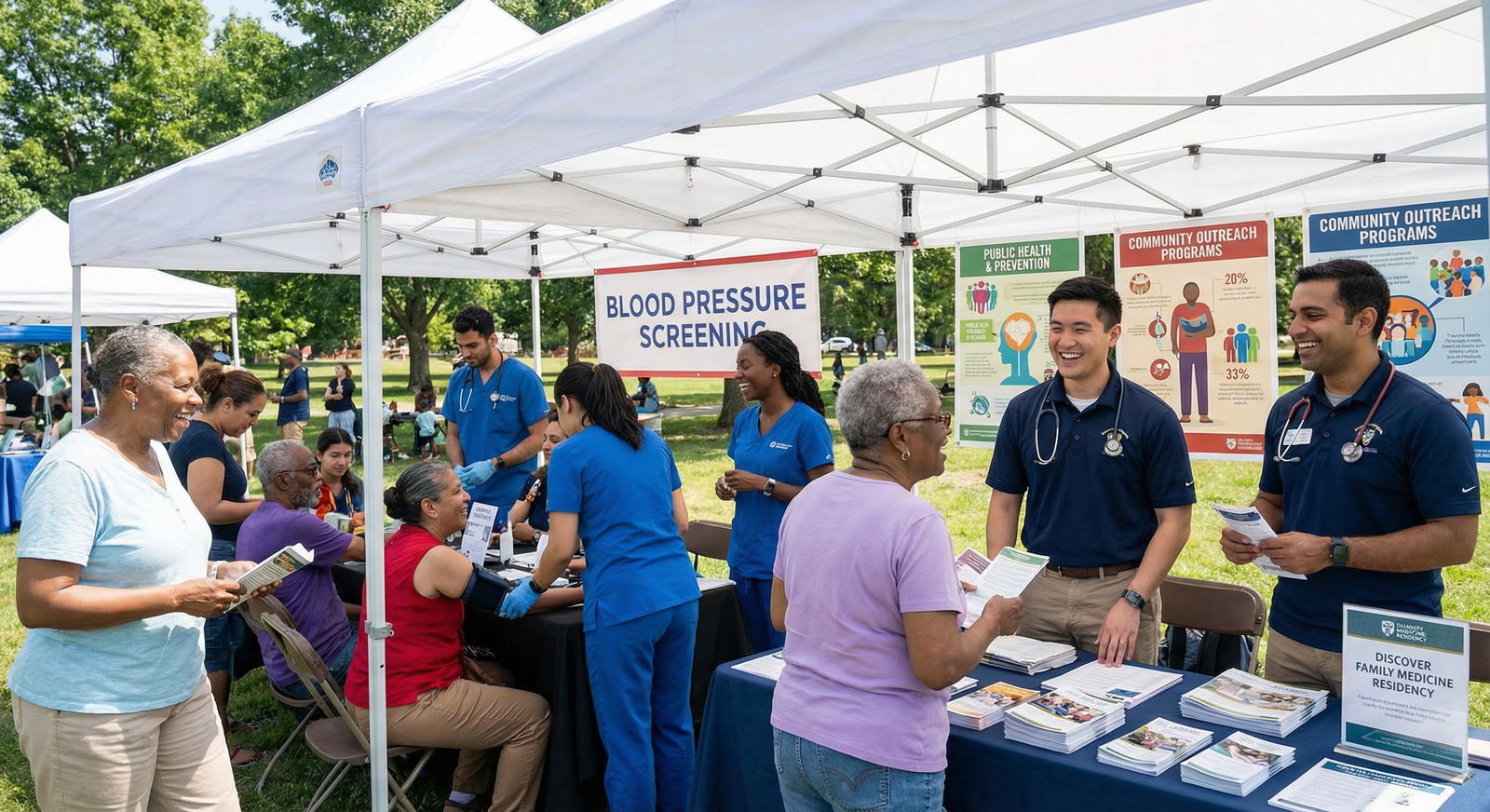
Many Family Medicine residencies have a strong community medicine or public health component. As a resident, you might:
- Conduct community needs assessments
- Design and implement a community health project (e.g., improving vaccination rates, addressing opioid use, or enhancing screening for depression)
- Participate in mobile clinics, school-based clinics, or homeless outreach
- Collaborate with local health departments on targeted initiatives
These experiences not only fulfill curricular requirements but also showcase your ability to think beyond the clinic—an asset whether you pursue academic medicine, leadership roles, or public health-focused healthcare careers.
Interprofessional Collaboration and Team-Based Care
Modern primary care is increasingly team-based. During your residency you will work closely with:
- Nurses and nurse practitioners
- Physician assistants
- Behavioral health specialists
- Pharmacists
- Social workers and case managers
- Community health workers
Learning to lead and function within these teams is a critical skill for delivering comprehensive, patient-centered care and for thriving in contemporary healthcare systems.
Developing as a Leader
Family physicians are often called upon to lead:
- Clinic quality improvement (e.g., reducing hospital readmissions)
- Implementation of electronic health records or new care pathways
- Curriculum development and teaching efforts in academic centers
- Population health initiatives within health systems
Residency is a natural time to build these leadership skills through QI projects, committee work, teaching medical students, and formal leadership tracks if your program offers them.
Preparing for a Family Medicine Residency During Medical School
If you’re leaning toward Family Medicine, you can start positioning yourself early.
Clinical and Extracurricular Experiences
- Prioritize primary care rotations and electives in Family Medicine, community health, geriatrics, and women’s health.
- Seek out experiences in underserved settings, such as free clinics, FQHCs, or global health projects.
- Get involved with Family Medicine interest groups, community service, or public health initiatives.
- Consider research or quality improvement projects related to:
- Primary care outcomes
- Healthcare access
- Chronic disease management
- Social determinants of health
Building a Competitive Application
While Family Medicine is generally less competitive than some subspecialties, strong programs still look for evidence of commitment and capability:
- Solid clinical performance in core clerkships
- Strong letters of recommendation, ideally including at least one from a Family Medicine physician who has supervised you clinically
- A personal statement that articulates:
- Why primary care and continuity matter to you
- Your interest in community or public health
- How your values align with the specialty
- USMLE/COMLEX scores that meet program-specific thresholds (but note that many FM programs take a holistic approach)
Is Family Medicine the Right Fit for You?
You may be well-suited to Family Medicine if you:
- Enjoy variety and prefer being a generalist rather than a narrow specialist
- Derive meaning from long-term relationships and seeing patients over years
- Are drawn to holistic care, integrating physical, mental, and social aspects of health
- Care deeply about health equity, public health, and community engagement
- Want flexibility in where and how you practice over your career
- Value the possibility of a more sustainable work-life balance
On the other hand, if you prefer highly specialized, procedure-heavy environments with predominantly inpatient care, you may be more fulfilled in another specialty. Honest reflection—and early exposure to Family Medicine clinics—can help clarify your path.
FAQs About Family Medicine Residency
1. What personal traits make someone a strong Family Medicine physician?
Successful family physicians tend to be:
- Empathetic and patient-centered, comfortable with diverse cultures and backgrounds
- Excellent communicators, skilled in motivational interviewing and shared decision-making
- Adaptable generalists, willing to manage uncertainty and a wide spectrum of conditions
- Systems-thinkers, interested in how healthcare, public health, and social systems intersect
- Committed lifelong learners, staying current on evidence-based care across multiple domains
If you find yourself curious about “the whole story” behind a patient’s health, Family Medicine may be a strong fit.
2. Can Family Medicine physicians still specialize or do focused work?
Yes. While the core of Family Medicine is broad primary care, many physicians develop focused interests or sub-specialize through fellowships or additional training. Options include:
- Sports Medicine
- Geriatrics
- Palliative Care and Hospice
- Addiction Medicine
- Maternal-Child Health / Obstetrics
- Clinical Informatics
- Academic Medicine and Medical Education
Even without a formal fellowship, family physicians often shape their clinics around particular interests (e.g., women’s health, LGBTQ+ health, adolescent medicine, or geriatrics) while maintaining a general practice.
3. What settings do Family Medicine physicians typically work in?
Family physicians practice in a wide variety of environments, including:
- Outpatient clinics (private practice, group practices, FQHCs, community health centers)
- Academic medical centers and residency teaching clinics
- Rural critical access hospitals and health systems
- Urgent care centers and retail clinics
- Telemedicine platforms and hybrid clinics
- Public health departments and community organizations
This diversity allows you to choose a setting aligned with your clinical interests, lifestyle preferences, and desired patient population.
4. How competitive is Family Medicine, and what do programs look for?
Family Medicine is generally less numerically competitive than many subspecialized fields, but strong programs still attract highly motivated applicants. Programs commonly value:
- Clear commitment to primary care and continuity of care
- Demonstrated interest in community health, public health, or underserved populations
- Strong clinical evaluations and professionalism
- Thoughtful personal statements and authentic interview performance
Your fit with a program’s mission—rural vs. urban focus, OB-heavy vs. outpatient-focused, academic vs. community-centered—often matters as much as your test scores.
5. How can I prepare for and succeed in a Family Medicine residency?
To prepare and thrive:
- Seek mentors in Family Medicine early and meet with them regularly
- Choose electives that broaden your skills: outpatient procedures, women’s health, behavioral health, geriatrics
- Develop strong clinical reasoning and communication skills, which are central to primary care
- Learn the basics of population health and quality improvement
- Practice self-care and boundary setting to build sustainable habits during residency
Entering residency with clear goals—whether it’s advanced OB skills, community health leadership, or academic medicine—can help you choose the right program and tailor your experience.
Family Medicine residency offers a rare combination of breadth, continuity, flexibility, and community impact. For medical students and residents seeking a career grounded in human connection, holistic patient care, and meaningful public health contributions, it may indeed be the perfect fit.