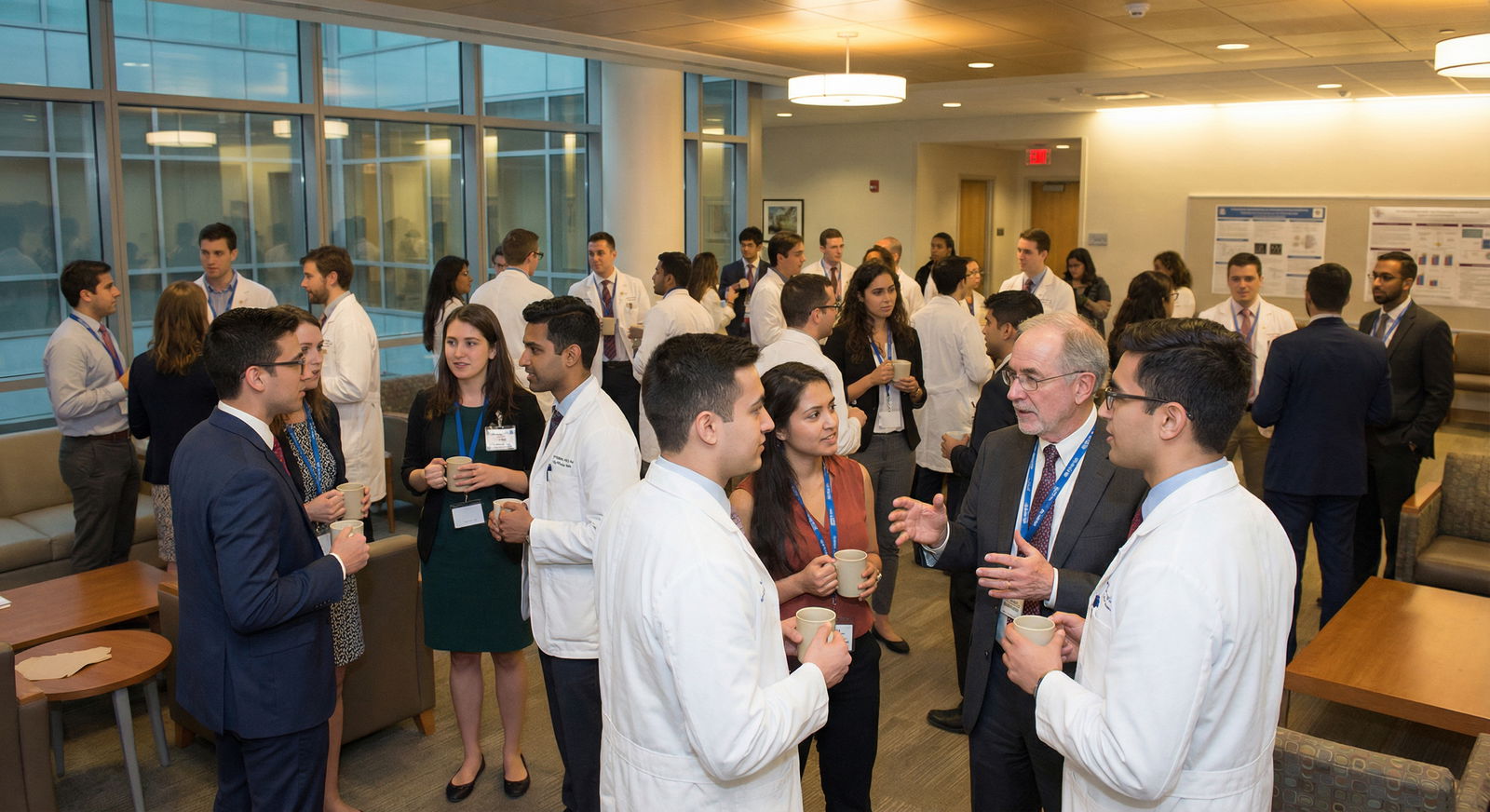
Residency Hacks: Mastering the Art of Networking in Medical Training
Introduction: Why Networking Matters More Than You Think
Medical training is demanding enough when you’re just trying to keep up with coursework, clinical duties, and exams. Adding “Medical Networking” to your to‑do list might feel optional or even uncomfortable. Yet, for residency success and long-term career advancement, networking is not a luxury—it’s a core professional skill.
In medicine, many pivotal opportunities never appear on a website or bulletin board. They pass through conversations: a chief resident recommending you for a rotation, an attending mentioning a research opening, an alum suggesting you to a program director, or a mentor flagging a new fellowship that aligns perfectly with your goals.
Networking in medical training is not about superficial small talk or collecting business cards. It’s about:
- Building authentic relationships
- Finding mentors and sponsors
- Learning the hidden curriculum of residency and beyond
- Creating a support system that makes a demanding career sustainable
This enhanced guide will walk you through:
- Why networking is uniquely important in medicine
- Practical, step-by-step residency tips for networking as a student, sub‑I, or resident
- How to use digital tools for professional branding and connection
- Concrete strategies to find mentors and sponsors
- Real-world examples of networking turning into tangible opportunities
By the end, you’ll have a practical, actionable plan to approach networking confidently—without feeling fake or forced.
Understanding the Role of Networking in Medical Training and Career Advancement
Networking in medicine is different from networking in many other fields. The stakes are higher, the training path is longer, and the culture is deeply relational and hierarchical. Understanding what networking can realistically do for you will help you approach it with intention and integrity.
Key Benefits of Networking in Medicine
1. Hidden Opportunities and Early Insight into Positions
- Some away rotations, research projects, and even preliminary residency or fellowship spots may be filled informally before they’re widely advertised.
- Knowing residents, fellows, or faculty in a department can:
- Alert you to upcoming openings
- Help you tailor your application to what that specific program or PI values
- Provide insight into program culture that you won’t get from a website
2. Mentorship and Sponsorship
- Mentors advise you, share their stories, help you think through choices, and guide your professional development.
- Sponsors go a step further: they use their influence to actively recommend you for positions, awards, or key projects.
- Networking expands the pool of potential mentors and sponsors who can help you:
- Navigate specialty selection
- Strategize your residency application
- Map out fellowship or academic pathways
3. Knowledge Sharing and Skill Building
Your network is a powerful learning tool:
- Peers can share study resources, board prep strategies, and tips for specific rotations.
- Senior residents and attendings can explain:
- What really matters on evaluations
- How to present on rounds efficiently
- How to handle common clinical and interpersonal challenges
You gain access to practical wisdom that’s rarely written in syllabi.
4. Emotional Support and Professional Community
Residency and clinical training can be isolating. A strong network provides:
- Emotional support during stressful rotations and exam seasons
- A safe space to discuss mistakes, ethical dilemmas, or burnout
- A sense of belonging—especially crucial for IMGs, non-traditional students, and underrepresented groups in medicine
5. Long-Term Career Advancement in Medicine
Career advancement in medicine is deeply relational:
- Collaborations on research and quality improvement
- Invitations to join committees or professional societies
- Introductions to fellowship directors or department chairs
- Future job offers in academic centers, private groups, or hospital systems
Relationships you build in medical school and residency often resurface a decade later when you’re looking for a new role, starting a clinic, or launching a research project.
Practical Strategies for Effective Medical Networking During Training
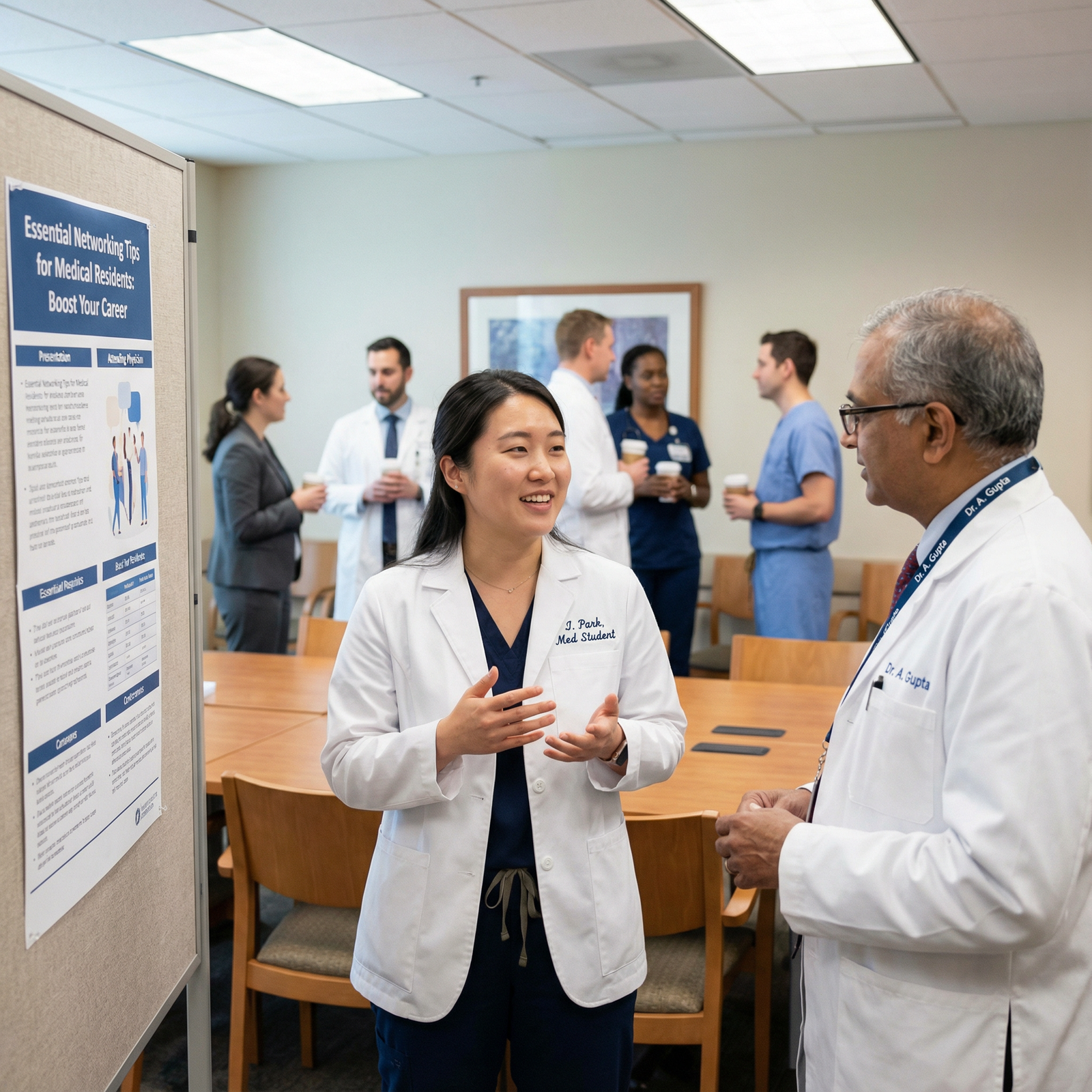
1. Start Early and Integrate Networking into Everyday Training
Networking does not begin on Match Day or during residency interviews; it starts as soon as you enter medical school and continues through all stages of medical training.
Make Networking Part of Your Routine
Instead of treating networking as a separate chore:
- Introduce yourself to attendings and residents on day 1 of every rotation.
- Learn staff names (nurses, techs, coordinators)—they often know “how things really work.”
- Stay a few extra minutes after conferences to ask a follow-up question or thank the speaker.
These small, consistent behaviors accumulate into a reputation.
Use Student Organizations Strategically
Joining organizations is not about padding your CV; it's about:
- Meeting people with similar interests (e.g., EM interest group, surgical society)
- Hearing from visiting speakers and alumni
- Finding out about research or shadowing opportunities
Actionable tip:
- Aim to join 1–3 organizations that align with your specialty interests or values (e.g., global health, health equity, primary care).
- Volunteer for a modest but visible role (e.g., event coordinator, social media lead) to increase your contact with faculty advisors and visiting guests.
2. Leverage Existing Relationships and Warm Connections
You don’t need to start from zero. Many valuable connections are one or two introductions away.
Tap into Friends, Family, and Community
- If a relative, neighbor, or former employer works in healthcare, ask:
- “Would you be open to a quick 15–20 minute call so I can learn about your path?”
- “Is there anyone in [your specialty of interest] you think I should talk to?”
- Even if they’re not in your ideal specialty, they may connect you to someone who is.
Use Alumni Networks and Institutional Resources
Most medical schools and hospitals maintain:
- Alumni directories
- Formal mentorship or “buddy” programs
- Specialty interest group lists
Practical steps:
- Search your school’s alumni database or LinkedIn for graduates in your target specialty.
- Send a brief message:
- Who you are (school, year, interest)
- One specific reason you’re reaching out
- A simple ask (e.g., 15–20 minute Zoom call or coffee chat)
Example message:
“I’m a third-year at [School], very interested in OB/GYN, and I saw you trained at [Program]. I’d love to hear about your experience there and any advice you have for preparing a strong application. Would you be open to a 15–20 minute conversation sometime this month?”
3. Build a Professional Online Presence That Works for You
In modern medical training, your online presence is often your first impression.
Optimize Your LinkedIn and Professional Profiles
Key elements for a strong LinkedIn profile:
- Professional, clear headshot (clinic-ready attire)
- Headline: “MS3 | Interested in Internal Medicine & Cardiology | Research in Heart Failure”
- Concise summary: 3–5 sentences on your training stage, interests, and goals
- Experience sections: research, leadership, community work, with brief bullet points
- Skills/Interests: clinical fields, quality improvement, medical education, global health, etc.
Maintain activity by:
- Sharing brief reflections after conferences (HIPAA-safe)
- Posting links to publications, posters, or talks
- Congratulating peers or mentors on achievements
Join Medical Communities and Specialty-Specific Platforms
Consider:
- Doximity (especially as you get closer to residency)
- Professional society platforms (e.g., ACP, AAFP, ACS)
- Curated online communities (e.g., Slack groups or official society forums)
Use these not just to browse, but to:
- Ask thoughtful questions
- Comment constructively on discussions
- Identify potential mentors or collaborators in your field
4. Make the Most of Conferences, Workshops, and Networking Events
Conferences are dense with potential connections—but only if you arrive with a plan.
Before the Event
- Review the agenda and highlight:
- Speakers in your specialty of interest
- Sessions related to your research or career goals
- Look up speaker bios and pick 3–5 people you’d most like to meet.
- Prepare:
- A 30‑second “about me” (who you are, interests, current stage)
- 2–3 questions you could ask different types of people (residents, attendings, program directors)
During the Event
- Sit near people you don’t know and introduce yourself.
- Ask one or two thoughtful questions during Q&A if appropriate.
- After a talk, approach the speaker with something specific:
- “I appreciated your point about [X]. I’m a [MS4/PGY-1] interested in [Y]. Could I email you about a question I had regarding [topic]?”
After the Event
Within 48 hours:
- Send a brief follow-up message or email:
- Thank them for their time or their talk
- Mention one thing you learned or appreciated
- If appropriate, propose a small next step (e.g., a short call, sending a CV if they asked)
5. Be Authentic, Kind, and Professionally Curious
Networking in medicine works best when it is grounded in authenticity and mutual respect.
Practice Active Listening
When speaking with attendings, residents, or peers:
- Ask open-ended questions:
- “How did you choose your specialty?”
- “What do you wish you’d known at my stage of training?”
- Reflect back what you hear to show engagement:
- “It sounds like mentorship really shaped your decision to go into oncology.”
Share Your Story Without Overselling
You can be memorable without sounding like you’re reciting your CV:
- Focus on your “why”: why you care about a specialty, a population, or a problem in medicine.
- Be honest about uncertainty:
- “I’m torn between EM and IM right now—I’d love to hear what helped you decide.”
People respond to sincerity far more than polish.
6. Follow Up and Maintain Relationships Over Time
Initial contact is only the start. During medical training, relationships deepen through consistent, respectful follow-up.
Build a Simple System
Use a spreadsheet, note app, or CRM-style document to track:
- Who you met (name, role, institution)
- Where/when you met
- Key topics discussed
- Any promised follow-up (sending a CV, sharing an article, etc.)
Set reminders every 3–6 months to:
- Share an update (e.g., “I just started my IM rotations and thought of your advice…”)
- Congratulate them on visible milestones (promotions, new positions, publications)
- Ask 1 focused question when relevant (not every check-in needs an ask)
Respect Boundaries and Time
- Keep emails focused and concise.
- Avoid asking for major favors from someone you’ve just met (e.g., “Can you write me a strong letter?”).
- Let relationships develop organically—mentorship and sponsorship are earned through time, reliability, and demonstrated commitment.
7. Finding, Cultivating, and Benefiting from Mentorship
Mentorship can dramatically change your experience in medical training, particularly during specialty selection and residency applications.
Use Formal Mentorship Programs
Many institutions and specialty societies offer:
- Medical student–faculty matching
- Resident–student “big sibling” programs
- Interest group or diversity-focused mentorship initiatives
When paired with a mentor:
- Clarify expectations early:
- How often to meet (e.g., quarterly)
- Preferred communication method
- What you hope to gain (career advice, research guidance, etc.)
Create Your Own Mentor Network
No single mentor can meet all your needs. Aim for a “mentor board”:
- A clinical mentor in your desired specialty
- A research mentor
- A peer or near-peer mentor (senior resident/fellow)
- A wellness or life mentor (someone you can be honest with about burnout, family, etc.)
Often, these relationships emerge from networking:
- A resident who took extra time teaching you on service
- An attending who consistently asks about your goals
- A research PI who invests in your professional growth
Building a Personal Networking Strategy: A Step-by-Step Action Plan
To move from good intentions to real progress, translate these residency tips into a simple yet structured plan.
Step 1: Set Clear Networking Goals
Decide what you want your networking to achieve in the next 6–12 months. Examples:
- “Identify at least two mentors in internal medicine before ERAS opens.”
- “Present at one conference and meet three people in my target specialty.”
- “Connect with at least five alumni who matched into [specialty] at programs I’m interested in.”
Step 2: Map Out Your Networking Ecosystem
List potential sources of connections:
- Your medical school: faculty, residents, alumni
- Hospital system: attendings, chiefs, program coordinators
- Specialty interest groups and national organizations
- Prior undergrad or work contacts in healthcare
Prioritize 10–20 individuals you’d like to connect with over the next few months.
Step 3: Calendar Your Networking Activities
Treat networking like any other professional responsibility:
- Block time monthly for:
- One coffee or Zoom chat
- Updating your LinkedIn or academic CV
- Reaching out to 1–2 new contacts
- Add conferences, career nights, and interest-group events to your calendar early—and prepare for them.
Step 4: Track Progress and Reflect
Every 2–3 months, review:
- Who you’ve met
- What you’ve learned
- Which interactions led to concrete opportunities (research, letters, rotations, etc.)
Ask:
- Which approaches felt natural and effective?
- Where did I feel uncomfortable or forced—and why?
- How can I adjust my strategy while staying authentic?
Real-World Applications: Networking Success Stories from Training
Case Study 1: Turning a Conference Conversation into Research and Mentorship
Dr. Amy, now an internal medicine resident, attended a national conference on women in medicine as a fourth-year student. Before the event, she:
- Identified three speakers whose work aligned with her interest in health equity.
- Read one recent article from each speaker.
During the conference:
- She asked a thoughtful question during a panel.
- After the session, she introduced herself to one of the panelists, a faculty member at a program she admired, and briefly mentioned her interest in disparities research.
Afterwards:
- She sent a concise follow-up email thanking the faculty member and attaching her CV, as requested.
- Within weeks, she was invited to collaborate on a small project, which grew into a multi-site research collaboration.
- The mentor later wrote a strong letter that helped her match into a competitive internal medicine residency with a robust research track.
Case Study 2: Using Alumni Networks to Clarify Specialty Choice
Tom, a third-year medical student, was leaning toward pediatrics but unsure about community versus academic careers. He:
- Searched his school’s alumni directory and LinkedIn for pediatricians in diverse practice settings.
- Reached out to five alumni with a short, personalized message.
Over several months, he:
- Spoke with alumni in academic centers, community hospitals, and private practice.
- Shadowed a community pediatrician one weekend.
- Learned about pros, cons, and lifestyle differences between settings.
These conversations:
- Clarified that he valued teaching and research, steering him toward academic pediatrics.
- Gave him language to articulate his goals in residency interviews.
- Led directly to an away rotation at an institution where one alum was on faculty.

FAQ: Networking, Mentorship, and Career Advancement in Medical Training
1. Why is networking especially important for medical students and residents?
Networking in medical training:
- Opens doors to research projects, leadership roles, and away rotations
- Helps you find mentors who can guide specialty choice, applications, and career strategy
- Provides insider perspectives on residency programs and fellowships
- Builds a support system to navigate stress, burnout, and career transitions
Because medicine is highly relationship-driven, networking often influences which opportunities you hear about and how strongly others can advocate for you.
2. How can I approach a potential mentor without feeling awkward?
You don’t need a perfect script—just be specific and respectful. For example:
- Start with a brief introduction (who you are, training stage).
- Mention something specific you appreciate about their work (a talk, paper, clinical style).
- Make a small, clear ask:
- “Would you be willing to meet for 20 minutes to discuss your path in cardiology and any advice for someone at my stage?”
Most physicians and residents remember what it was like to be in your position and are surprisingly open to brief, focused conversations—especially if you are prepared and respectful of their time.
3. What are effective ways to network if I’m introverted or shy?
If large events feel overwhelming, try:
- One-on-one coffee chats or short Zoom calls rather than big mixers
- Email or LinkedIn introductions followed by scheduled conversations
- Small-group settings like interest group meetings or journal clubs
- Preparing 2–3 questions or talking points in advance
Remember, introverts often excel at deep, meaningful conversations—one strong connection can be more impactful than 20 superficial ones.
4. Should I use social media and online platforms for professional networking?
Used wisely, yes. Platforms like LinkedIn, Doximity, and professional society forums can help you:
- Discover mentors and role models in your specialty
- Learn about conferences, webinars, and scholarship opportunities
- Showcase your interests (e.g., research, advocacy, education)
Keep content professional: avoid patient details, complaints about colleagues, or unprofessional humor. Think of your online presence as part of your professional “brand.”
5. How do I maintain connections over time without feeling like I’m “bothering” people?
The key is light, purposeful touchpoints:
- Send an occasional update:
- “I started my sub-I in surgery this month and remembered your advice about X—thank you again.”
- Share a relevant article or brief note of congratulations.
- Ask a focused question when you genuinely need guidance.
Most mentors appreciate hearing that their advice made a difference. As long as your messages are concise, respectful, and not overly frequent, you are unlikely to be a bother.
Networking in medical training is not about being the loudest or most extroverted person in the room. It’s about showing up consistently, being genuinely curious, treating people well, and following through. Start small, start early, and let your relationships grow alongside your skills and experience. Over time, your network will become one of your greatest assets in residency and every stage of your medical career.