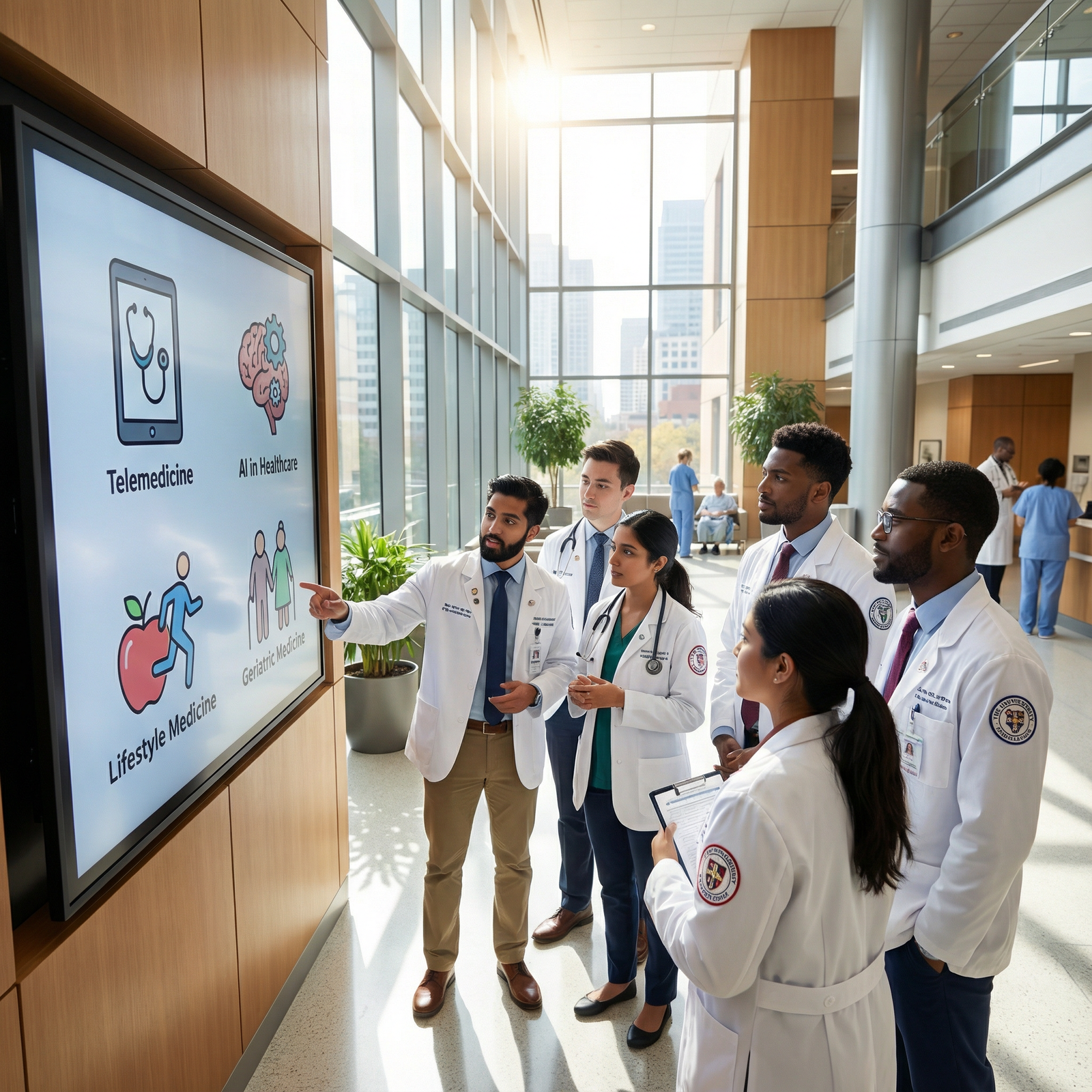
The landscape of medicine is changing faster than at any other time in recent history. For today’s medical students and residents, choosing a specialty no longer means selecting only from the traditional list of internal medicine, surgery, pediatrics, or psychiatry. Emerging specialties—driven by technology, demographic shifts, and a renewed focus on prevention and patient-centered care—are reshaping what a medical career can look like.
This guide explores key Emerging Specialties such as Telemedicine, Lifestyle Medicine, Geriatric Medicine, Genetic and Genomic Medicine, Palliative Care, and the growing role of AI in Healthcare. It is designed to help you understand where the field is heading and how you can strategically prepare during medical school and residency.
Understanding How Medical Specialties Evolve
Medical specialties have never been static. Cardiology, critical care, and emergency medicine were once “new” fields. The same pattern is playing out today as advances in science, technology, and health policy create new niches and subspecialties.
Key Forces Driving New Specialties
Technological Advancements and AI in Healthcare
- AI and Machine Learning: Tools that analyze imaging, EHR data, and genomics are changing diagnostics, risk prediction, and treatment planning.
- Telemedicine Platforms: Video consultations, remote monitoring, and virtual care teams create a need for clinicians skilled in digital care delivery.
- Robotics and Automation: Robotic surgery, automated pharmacy systems, and AI-assisted triage are reshaping procedural and cognitive specialties.
Population and Demographic Shifts
- Aging Population: Longer life expectancy means more multimorbidity, frailty, dementia, and complex medication regimens—fueling demand for Geriatric Medicine and Palliative Care.
- Chronic Disease Burden: Obesity, diabetes, cardiovascular disease, and mental health conditions make prevention-focused fields like Lifestyle Medicine increasingly essential.
Global Health, Environmental, and Societal Trends
- Pandemics and Emerging Infections: COVID-19 highlighted the importance of telehealth, infectious disease, global health, and data-driven surveillance.
- Climate Change: Heat-related illness, vector-borne disease spread, and air pollution–related conditions are creating niche areas like climate medicine and planetary health.
Shift Toward Personalized and Patient-Centered Care
- Genetics and Genomics: Precision oncology, pharmacogenomics, and inherited disease clinics rely on specialists who can interpret and apply genetic information.
- Holistic Health and Wellness: Patient demand for integrative and preventive approaches feeds growth in Lifestyle Medicine and Integrative Medicine, blending evidence-based medicine with complementary therapies when appropriate.
For medical students, understanding these drivers can help you anticipate where opportunities are growing—and which skill sets will be most valued.
Telemedicine: Redefining Where and How Care Happens
Telemedicine has moved from a niche service to a core component of modern healthcare delivery. For many patients and systems, it is no longer optional—it is an expectation.
What Is Telemedicine in Practice?
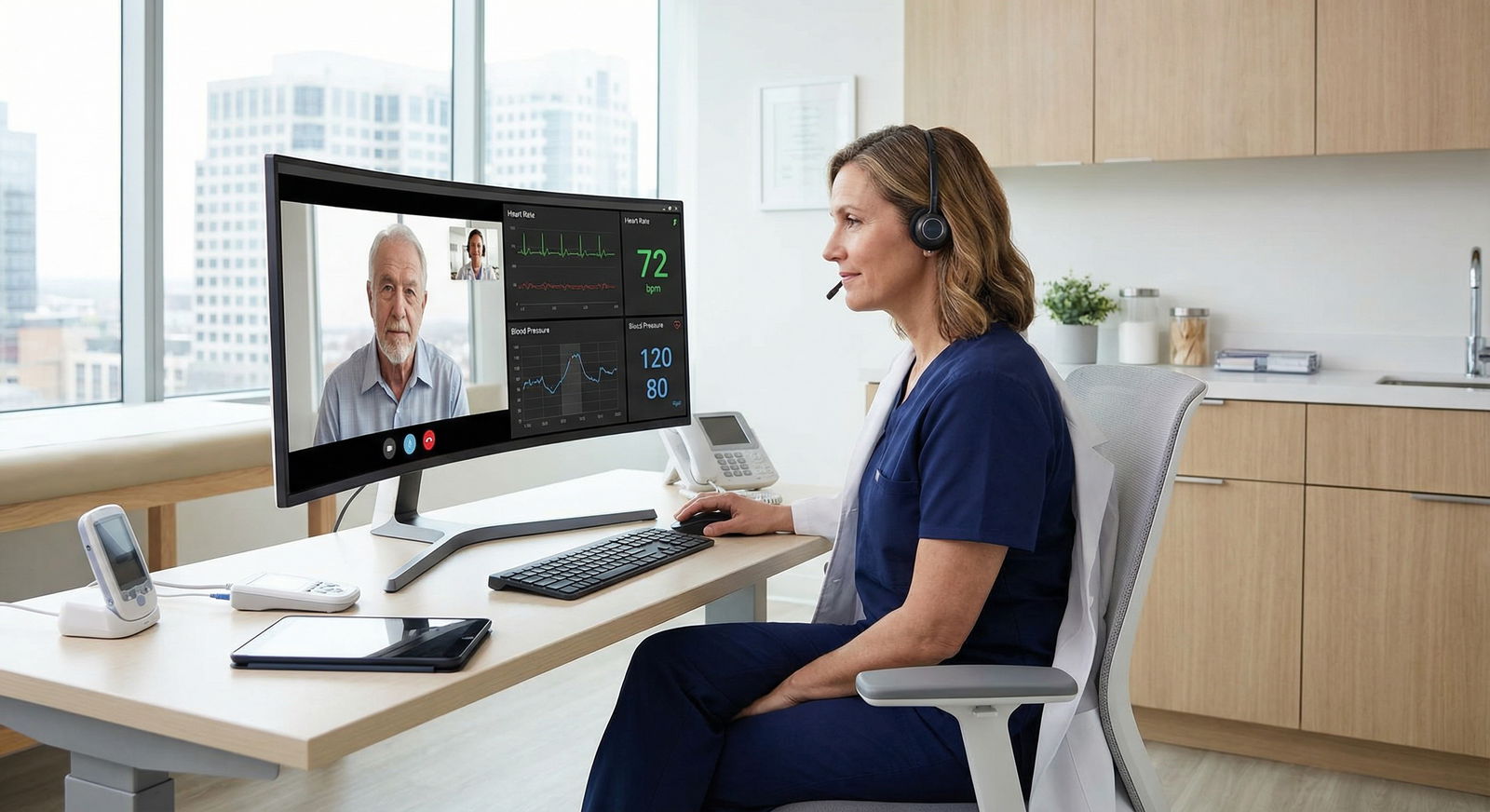
Telemedicine (or telehealth) refers to providing clinical care, education, and health services remotely using digital tools such as:
- Video visits and secure messaging
- Remote patient monitoring (RPM) devices (e.g., BP cuffs, glucometers, wearables)
- “Virtual wards” for hospital-at-home programs
- Asynchronous e-consults between providers
Although not a board-certified specialty on its own, telemedicine has become a cross-cutting competency within nearly every specialty—from psychiatry and primary care to dermatology and cardiology.
Why Telemedicine Matters for Your Career
- Access and Equity: Telehealth helps reach rural communities, home-bound patients, and individuals with limited transportation or mobility.
- Efficiency and Flexibility: Shorter visits, lower no-show rates, and more flexible scheduling can reduce burnout.
- Future-Proof Skill Set: Comfort with digital tools, remote exam techniques, and virtual communication is quickly becoming a baseline expectation for new graduates.
Example Career Roles in Telemedicine
- Telehealth Attending Physician: Provides remote consultations in fields like psychiatry, urgent care, or chronic disease management.
- Virtual-Only or Hybrid Practice Clinician: Splits time between in-person clinics and telehealth sessions.
- Telehealth Program Medical Director: Designs workflows, protocols, and quality metrics for telemedicine services in hospitals or health systems.
- Telemedicine Consultant or Entrepreneur: Helps practices implement telehealth platforms, or builds new digital health solutions.
How Medical Students Can Prepare for Telemedicine
- Seek electives or rotations that incorporate virtual visits.
- Learn practical skills: conducting a focused virtual exam, “webside manner,” patient triage for in-person vs virtual care.
- Familiarize yourself with licensing, reimbursement, and privacy regulations (e.g., cross-state practice, HIPAA-compliant platforms).
- Explore digital health electives, hackathons, or quality improvement (QI) projects involving telehealth integration.
Lifestyle Medicine: Prevention and Behavior Change as Core Therapy
Lifestyle Medicine is emerging as a distinct, evidence-based discipline focused on preventing, treating, and even reversing chronic disease by addressing root causes—nutrition, physical activity, sleep, stress, substance use, and social connections.
What Does Lifestyle Medicine Involve?
Lifestyle Medicine physicians and teams use:
- Nutrition interventions: Emphasis on whole-food, plant-predominant diets tailored to patient needs.
- Exercise prescriptions: Structured activity plans rather than generic “exercise more” advice.
- Sleep optimization strategies: Identifying and addressing sleep disorders or poor sleep hygiene.
- Stress management: Mindfulness, CBT techniques, and coping skills.
- Behavior change science: Motivational interviewing, goal setting, habit formation.
This field can be practiced as a standalone specialty focus or integrated into primary care, cardiology, endocrinology, family medicine, and more.
Why Lifestyle Medicine Is Growing
- Chronic noncommunicable diseases are responsible for a majority of global deaths.
- Many conditions—type 2 diabetes, hypertension, early coronary disease—are strongly influenced by lifestyle factors.
- Patients increasingly seek non-pharmacologic, sustainable approaches that align with their values.
Career Opportunities in Lifestyle Medicine
- Board-Certified Lifestyle Medicine Physician: Practices within primary care, cardiology, or endocrinology with a strong focus on lifestyle intervention.
- Lifestyle Medicine Clinic Director: Leads multidisciplinary programs with dietitians, exercise physiologists, psychologists, and health coaches.
- Corporate or Community Wellness Consultant: Designs population-level health and prevention programs.
- Academic Researcher: Studies outcomes of lifestyle interventions, health economics, or policy impacts.
Steps to Prepare for a Career in Lifestyle Medicine
- Join organizations like the American College of Lifestyle Medicine (ACLM) or similar local bodies.
- Take electives in nutrition, behavioral medicine, or preventive cardiology.
- Get exposure to motivational interviewing and counseling during clinical rotations.
- Participate in community-based health promotion projects or group medical visits.
- Consider future certification in Lifestyle Medicine after residency.
Geriatric Medicine: Caring for a Rapidly Aging Population
Geriatric Medicine is becoming one of the most critical emerging fields as the proportion of adults aged 65 and over continues to rise worldwide. Older adults frequently have multiple chronic conditions, polypharmacy, and unique social needs—requiring nuanced, patient-centered care.
What Geriatricians Do
Geriatricians are typically trained in internal medicine or family medicine with additional fellowship training. They focus on:
- Comprehensive Geriatric Assessment (CGA): Evaluating medical, functional, cognitive, emotional, and social domains.
- Complex Medication Management: Deprescribing and optimizing polypharmacy.
- Functional and Cognitive Health: Addressing frailty, falls, dementia, and delirium.
- Goals of Care and Advance Care Planning: Aligning treatment intensity with patient preferences and quality of life.
- Care Coordination: Working closely with nursing, social work, physical therapy, and family caregivers.
Why Geriatric Medicine Is Essential
- The “oldest old” (80+ years) is the fastest-growing age cohort in many countries.
- Many specialties under-address issues like functional decline, caregiver burden, and multimorbidity.
- Health systems increasingly recognize that investing in Geriatric Medicine can reduce hospitalizations, institutionalization, and healthcare costs.
Career Pathways in Geriatric Medicine
- Geriatrician in Outpatient or Inpatient Settings
- Medical Director of Long-Term Care or Skilled Nursing Facilities
- Geriatric Hospitalist or Consultant in Acute Care
- Academic Geriatrician: Researching aging, frailty, dementia care models.
- Geriatric Case Manager/Physician Leader: Overseeing multidisciplinary teams in home-based primary care or integrated care programs.
How to Build Geriatric Expertise During Training
- Prioritize rotations in geriatrics, palliative care, rehabilitation, and neurology (dementia clinics).
- Learn key skills: cognitive screening, functional assessment, falls risk evaluation, polypharmacy review.
- Engage in QI projects related to delirium prevention, fall reduction, or transitions of care.
- Consider combined pathways or fellowships in Geriatric Medicine if you enjoy longitudinal, relationship-based care.
Genetics, Genomics, and Genetic Counseling: The Era of Precision Medicine
Genetic and Genomic Medicine sits at the heart of personalized care. As sequencing becomes cheaper and more accessible, almost every field—from oncology to psychiatry—is drawing on genetic insights.
Genetic Counseling: Bridging Science and Patient Understanding
Genetic counselors, often with a master’s-level specialized degree, work closely with patients and families to:
- Interpret family histories and assess hereditary risk.
- Explain complex test results in understandable language.
- Support decision-making around genetic testing and reproductive options.
- Coordinate testing, documentation, and follow-up.
They are essential partners for physicians in oncology, maternal-fetal medicine, neurology, and cardiology.
Genetic and Genomic Medicine for Physicians
Physician roles include:
- Clinical Geneticists: Diagnose and manage inherited and rare disorders, often seeing patients with multisystem disease, developmental delay, or congenital anomalies.
- Genomic Medicine Specialists: Apply whole exome/genome sequencing, pharmacogenomics, and risk prediction in clinical practice.
- Precision Oncologists: Use tumor and germline profiling to select targeted therapies.
Why This Field Is Expanding
- Oncology: Targeted therapies based on tumor mutation profiles are now standard in many cancers.
- Cardiology: Identification of inherited cardiomyopathies or arrhythmias can guide personalized management and screening of relatives.
- Pharmacology: Pharmacogenomic panels help tailor drug choices and doses.
Training and Preparation
- Take electives in medical genetics, molecular biology, or cancer genomics.
- Learn to interpret basic genetic tests, such as carrier screening, tumor panels, and pharmacogenomic reports.
- Get involved in research projects involving genomic data, biobanks, or precision medicine initiatives.
- Stay current with evolving guidelines on incidental findings, ethical issues, and data privacy.
Integrative Medicine, Palliative Care, and the Whole-Person Approach
While technology and genetics expand our toolkit, there is also a parallel movement toward care that emphasizes symptom relief, quality of life, and integration of mind, body, and spirit.
Integrative Medicine: Complementing Conventional Care
Integrative Medicine combines conventional treatments with evidence-based complementary therapies, aiming to treat the whole person.
Common modalities include:
- Mind-body practices (mindfulness, meditation, yoga)
- Acupuncture for pain and symptom relief
- Nutrition and herbal counseling (with attention to evidence and safety)
- Stress reduction and resilience-building
Career paths include integrative primary care, hospital-based consult services, and academic roles in research and education. Many physicians complete fellowships or certification programs in Integrative Medicine after residency.
Palliative and Hospice Care: Quality of Life at Every Stage of Illness
Palliative Care focuses on relieving symptoms, supporting decision-making, and improving quality of life for patients with serious illness—at any stage and alongside curative or disease-directed treatment. Hospice care is a specific model for patients nearing the end of life.
Palliative specialists:
- Manage pain, dyspnea, nausea, depression, and anxiety.
- Facilitate complex conversations about prognosis and treatment trade-offs.
- Support family caregivers and interdisciplinary teams.
- Work in hospitals, outpatient clinics, home-based programs, and hospice facilities.
Why it’s a critical emerging area:
- Serious illness is more common as people live longer with chronic disease.
- Patient-centered care models and value-based payment systems emphasize symptom control, satisfaction, and aligned care.
- Communication and shared decision-making skills are increasingly recognized as core competencies.
Training pathways typically involve a primary specialty (e.g., internal medicine, family medicine, pediatrics, anesthesiology) followed by a palliative medicine fellowship.
AI in Healthcare and Clinical Data Science: Medicine Meets Computation
AI in Healthcare is not just for engineers. Clinically fluent physicians with data literacy are crucial for designing, validating, and implementing AI systems that are safe, ethical, and effective.
What AI in Healthcare Looks Like on the Ground
- Clinical Decision Support: Algorithms that flag sepsis risk, suggest antibiotic choices, or estimate readmission risk.
- Imaging and Pathology: Automated interpretation of radiographs, CT scans, and histology slides.
- Operational Efficiency: Predicting patient flow, optimizing staffing, and reducing wait times.
- Population Health: Identifying high-risk patients for proactive outreach.
Emerging Roles for Clinicians
- Clinical Data Scientist or Physician Informaticist: Bridges clinical practice and data analysis, helping design and evaluate AI tools.
- Medical Director for Digital Health or Innovation: Leads institutional strategy around AI and digital tools.
- Entrepreneur in Health Tech: Co-founds startups using AI to address specific clinical problems.
- Industry Roles: Works with AI vendors, EHR companies, or device manufacturers as a clinical advisor.
Skills and Experiences to Pursue in Training
- Basic proficiency in data science concepts: statistics, bias, model validation.
- Familiarity with electronic health record (EHR) systems and clinical data structures.
- Electives or dual training in clinical informatics, health systems science, or public health.
- Participation in research using large datasets, quality dashboards, or predictive modeling.
- Awareness of ethical issues: algorithmic bias, transparency, and patient consent.
Preparing for Emerging Specialties During Medical School and Residency
Regardless of which specialty you ultimately choose, certain strategies can position you well for these evolving areas.
1. Seek Targeted Clinical Experiences
- Choose rotations that expose you to Telemedicine, Geriatric Medicine, Palliative Care, or Lifestyle Medicine.
- Ask to join virtual visits or multidisciplinary team meetings.
- Explore away rotations or electives at institutions with strong innovation or precision medicine programs.
2. Build a Skill Set That Translates Across Fields
- Communication and Counseling: Essential for telehealth, lifestyle counseling, and serious-illness conversations.
- Data Literacy: Understanding statistics, outcomes research, and basic informatics helps you engage with AI in Healthcare and quality improvement.
- Interprofessional Collaboration: Many emerging specialties rely on team-based care (e.g., genetic counselors, social workers, PT/OT, dietitians).
3. Network Strategically
- Attend national or regional conferences related to your area of interest (e.g., digital health, geriatrics, palliative care, genomics).
- Join relevant specialty interest groups at your school or professional societies.
- Seek mentors who are practicing in or adjacent to Emerging Specialties and ask about their career paths and daily work.
4. Engage in Scholarship and Projects
- Quality improvement projects related to telehealth workflows, chronic disease management, or falls/depression screening.
- Research involving genomics, AI in Healthcare, or health services.
- Educational innovations—for example, creating telemedicine OSCEs or lifestyle counseling curricula for your peers.
5. Plan for Additional Training or Certification
Many emerging fields offer formal credentials:
- Lifestyle Medicine: Board certification after residency.
- Clinical Informatics: Fellowships and board certification for several primary specialties.
- Geriatric Medicine or Palliative Care: ACGME-accredited fellowships.
- Integrative Medicine, Medical Genetics, or Genomic Medicine: Dedicated fellowships and certifications.
Being aware of these options early allows you to align your residency choice and research experiences with long-term goals.

FAQs: Emerging Medical Specialties for Medical Students and Residents
1. How can I figure out which emerging specialty is the best fit for me?
Start by reflecting on three areas:
- Type of Clinical Work You Enjoy:
- Do you prefer longitudinal relationships (e.g., Lifestyle or Geriatric Medicine), acute care, or consultative roles (e.g., Palliative Care, Genetics)?
- Your Interests Outside the Clinic:
- Do you enjoy technology and data (AI in Healthcare, telehealth)? Prevention and counseling (Lifestyle Medicine)? Ethics and communication (Palliative Care)?
- Work-Life and Practice Style Preferences:
- Ambulatory vs inpatient, remote vs in-person, procedural vs cognitive.
Then:
- Shadow clinicians in at least 2–3 Emerging Specialties.
- Take electives or do short research projects in those areas.
- Talk with mentors about how these fields might fit your long-term goals.
2. Are emerging specialties as recognized and stable as traditional ones?
Many Emerging Specialties are built on established primary specialties (e.g., internal medicine, family medicine, pediatrics, psychiatry) with additional training. Geriatric Medicine and Palliative Care, for example, are well-established with formal fellowships and board certification. Others, like Telemedicine and AI in Healthcare, may exist more as cross-cutting competencies or subspecialty niches rather than stand-alone boards—but they are increasingly integrated into mainstream healthcare and are likely to grow in recognition and stability.
3. Do I need additional certification or fellowship training to work in these areas?
Often, yes—but it depends on the field:
- Required or Strongly Recommended Fellowships: Geriatric Medicine, Palliative Care, Medical Genetics, Clinical Informatics (for board certification).
- Optional but Valuable Certifications: Lifestyle Medicine, Integrative Medicine, some telehealth or digital health programs.
- Skill-Based Competencies (No Formal Board Required Yet): Telemedicine best practices, basic genomics literacy, introductory data science for clinicians.
Research the specific requirements in your country or region and plan your residency applications accordingly.
4. How can I stay current as these fields evolve so quickly?
- Subscribe to specialty newsletters and journals (e.g., digital health, genomics, geriatrics, palliative care).
- Join professional societies and their student/resident sections.
- Use curated educational resources (podcasts, online CME, webinars) from reputable academic and professional organizations.
- Participate in quality improvement and research projects that expose you to new tools and practices.
- Revisit your learning plan annually and update it based on emerging trends and your evolving interests.
5. Will focusing on an emerging area limit my options if the field changes?
Generally, no—as long as you build a strong foundation in a core specialty (e.g., internal medicine, family medicine, pediatrics, psychiatry, surgery). Emerging Specialties tend to enhance and differentiate your base training rather than replace it. Skills gained in Telemedicine, Lifestyle Medicine, Geriatric Medicine, or AI in Healthcare—such as communication, systems thinking, data literacy, and behavior change counseling—are highly transferable and likely to remain valuable across many future practice environments.
Emerging medical specialties are not just “niche interests”—they are increasingly central to how modern healthcare is delivered. By understanding trends such as Telemedicine, Lifestyle Medicine, Geriatric Medicine, Genomic Medicine, Palliative Care, and AI in Healthcare, you can make more informed decisions about your training and position yourself at the forefront of an evolving, patient-centered, and technology-enabled healthcare system.