

Introduction: Why Work Environment Matters in Specialty Selection
As you move through clinical rotations and approach residency applications, specialty selection becomes one of the most defining decisions of your physician career. You’re likely weighing your interests, lifestyle goals, financial realities, and long-term ambitions. Yet one critical element often gets underappreciated: the day-to-day work environment.
Work environment is more than just where you show up each morning. It shapes your stress levels, your sense of purpose, your relationships with colleagues, and ultimately your long‑term healthcare satisfaction. Two students with similar passions for medicine can end up with very different levels of fulfillment depending on how well their chosen specialty’s work environment matches their values, temperament, and life goals.
This article breaks down how different aspects of the work environment influence specialty selection, compares several specialties through that lens, and offers practical strategies to evaluate your options during medical school and beyond.
Defining “Work Environment” in Medical Education and Practice
Before comparing specialties, it helps to understand what we mean by “work environment” in a structured way. In the context of Medical Education and physician careers, work environment includes several interlocking elements.
Key Components of the Work Environment
Practice Setting
- Inpatient vs outpatient
- Academic vs community vs private practice
- Rural vs urban vs suburban
- Large tertiary centers vs small hospitals or clinics
Work Culture
- Team structure and hierarchy
- Communication style and collegiality
- Teaching and learning environment
- Expectations around availability and “face time”
Schedule and Workload
- Typical hours and shift patterns
- On-call responsibilities and night work
- Predictability vs variability of schedule
- Intensity and emotional demands of the work
Role in Patient Care
- Degree of autonomy vs supervision
- Procedural vs cognitive focus
- Continuity of care vs episodic encounters
- Acute care vs chronic disease management
Organizational and System Factors
- Electronic health record burdens
- Staffing support (nurses, MAs, APPs)
- Administrative expectations (documentation, metrics, RVUs)
- Institutional support for wellness and professional development
Each specialty expresses these dimensions differently. Understanding your preferences in each area can guide you toward specialties whose work environments are more likely to support long-term satisfaction and resilience.
How Work Environment Influences Specialty Selection
1. Practice Setting Preferences: Where Do You See Yourself Working?
Your preferred physical and organizational setting is a powerful filter for Specialty Selection. Many medical students don’t explicitly name this preference at first, but it often shows up in which rotations they look forward to—or dread.
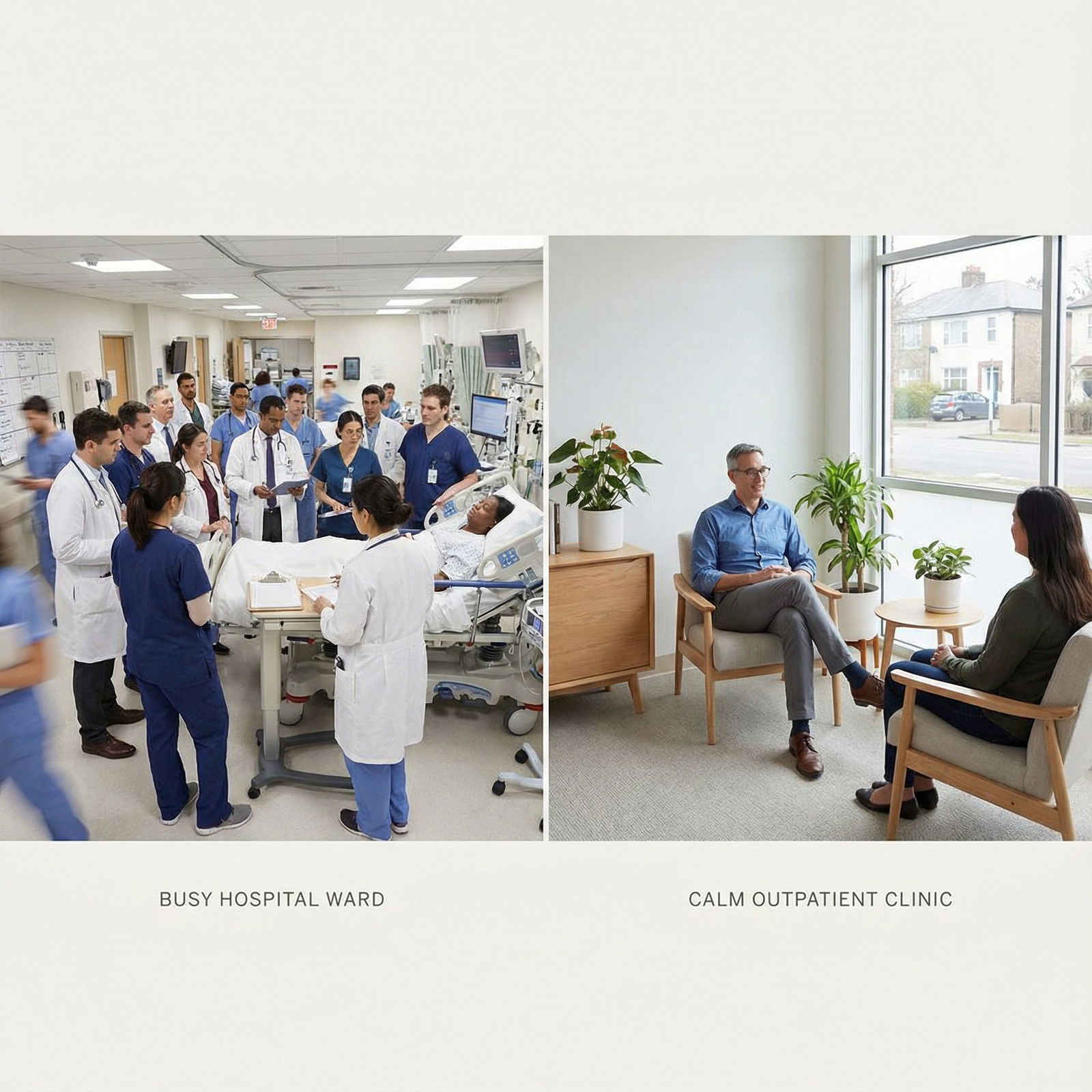
Hospital-Based Specialties
Specialties such as Internal Medicine (inpatient-focused), General Surgery, Orthopedics, Emergency Medicine, Critical Care, and many subspecialties (e.g., Cardiology, Gastroenterology) are largely hospital-based.
Typical features:
- High acuity, fast pace, and frequent urgent decisions
- Interdisciplinary rounds and complex care coordination
- Variable hours and frequent nights/weekends, especially early in your career
- Greater exposure to cutting-edge technology and procedures
Who might thrive here:
- Students energized by complex, acute cases and rapid problem-solving
- Those who enjoy large-team dynamics and the “ecosystem” of the hospital
- Individuals comfortable with unpredictability and high-stakes environments
Outpatient and Clinic-Based Specialties
Specialties such as Family Medicine, General Pediatrics, Outpatient Internal Medicine, and some Psychiatry, Dermatology, and Allergy/Immunology practices are predominantly outpatient.
Typical features:
- Greater continuity of care and long-term relationships with patients
- More predictable hours (often weekdays, limited nights)
- Focus on prevention, chronic disease management, and counseling
- Often strong connections to specific communities
Who might thrive here:
- Students who value long-term relationships and seeing patient progress over time
- Those who prioritize schedule predictability and work-life integration
- Residents drawn to public health, population health, or community medicine
Academic vs Community vs Private Practice
- Academic Medicine: Usually combines clinical work with teaching and/or research. Expect more conferences, learners on the team, and metrics tied to scholarly output.
- Community Practice: Emphasis on service, efficiency, and local population needs. Often fewer formal teaching responsibilities, but may offer tighter community relationships.
- Private Practice: Greater autonomy over practice style but also more exposure to business and administrative responsibilities, productivity metrics, and financial management.
Rural vs Urban Practice
Rural practice often involves:
- Broad scope (you may manage a wide range of conditions)
- Fewer specialists on-site; more independence and responsibility
- Strong community ties and visibility
Urban practice often offers:
- High patient volumes and diversity
- Readily available subspecialty support and advanced technology
- More competition for positions but also more niche opportunities
Reflect on which environments during clinical rotations felt energizing or draining. That emotional data is a vital input into your specialty decision.
2. Work Culture, Team Dynamics, and Professional Identity
Beyond setting, work culture is one of the most powerful and subtle drivers of long-term Healthcare Satisfaction. Two specialties can have similar hours but feel completely different because of how people interact and how work is organized.
Collaborative vs Competitive Environments
Highly collaborative cultures (often seen in Pediatrics, Family Medicine, some Psychiatry and Palliative Care teams):
- Emphasis on team-based care and shared decision-making
- Close collaboration with nurses, social workers, therapists, and other professionals
- Strong attention to communication and family-centered care
More competitive or high-intensity cultures (commonly perceived in some Cardiology, Surgery, or high-powered subspecialties):
- Fast-paced, results-driven environments
- High expectations for performance and precision
- Potentially more formal hierarchy and less tolerance for delay or indecision
Neither is inherently “better,” but one may align more closely with your temperament and stress response.
Hierarchy, Supervision, and Autonomy
Specialties also differ in how hierarchical they feel and how quickly autonomy is granted.
- Surgical fields traditionally have more rigid hierarchy, clearly defined training levels, and formal chains of command. Many students appreciate the clarity of expectations and the strong professional identity that comes with being a surgeon.
- General Practice / Primary Care settings often feel more egalitarian, with physicians, nurse practitioners, physician assistants, and other staff working side by side. Autonomy may come earlier, but support systems may be less formalized.
Think about:
- How comfortable are you in hierarchical systems?
- Do you prefer early independence, or do you value stepwise supervision?
Burnout Risk and Emotional Climate
Evidence consistently shows variable burnout rates across specialties. For example, Emergency Medicine, Critical Care, and some Primary Care fields report high burnout, often related to volume, emotional burden, or systemic pressures. That doesn’t mean you shouldn’t choose them—but you should go in with eyes wide open.
Strategies if you’re drawn to a higher-burnout specialty:
- Seek programs with explicit wellness initiatives and realistic staffing
- Ask residents about case volumes, documentation support, and backup coverage
- Consider your own coping strategies and support networks
The emotional climate—whether colleagues debrief difficult cases, support each other’s growth, and respect boundaries—will shape your daily experience as much as the pathology you see.
3. Schedule, Flexibility, and Work–Life Integration
Work hours and predictability play a pivotal role in Specialty Selection, especially for students who are planning families, value outside interests, or are concerned about long-term sustainability.
Predictable vs Unpredictable Schedules
More predictable specialties (often but not always):
- Dermatology
- Many Radiology practices (especially outpatient)
- Pathology
- Some Allergy/Immunology and Occupational Medicine
These may offer:
- Mostly weekday hours
- Minimal night or weekend work
- Rare true emergencies
More variable or unpredictable specialties:
- General Surgery, OB/GYN, Neurosurgery, Orthopedics
- Emergency Medicine, Trauma, Intensive Care
- Hospitalist-based Internal Medicine
These may involve:
- Night float or 24-hour calls
- Weekend and holiday shifts
- Sudden emergencies interrupting personal time
Shift Work vs Long-Call Models
Emergency Medicine, for example, is often shift-based. While you will work nights, evenings, and weekends, once your shift is over, you typically hand off care. Many physicians appreciate the clear boundaries.
In contrast, some surgical and call-based specialties involve:
- Being on pager call (from home or in-house)
- Carrying long-term responsibility for postoperative or complex patients
- “Never quite off” on call days or weekends
Ask yourself:
- Can you tolerate sleep disruption well?
- Do you prefer defined off-duty time, even if the hours are irregular?
- How important are holidays and weekends off to you?
Life Stage and Evolving Priorities
Your ideal schedule may change over time. Some physicians choose more intensive specialties early on, then transition to less demanding practice settings (e.g., from tertiary hospital call to outpatient-only practice) later. When exploring specialties, consider not only residency years but also what mid-career and late-career practice can look like.
4. Aligning Work Environment with Personal Values and Goals
Your values—what you care about deeply—should intersect meaningfully with your chosen specialty’s work environment.
Community-Oriented and Public Health–Focused Careers
If serving underserved populations, addressing social determinants of health, or working in population health excites you, certain environments are especially compatible:
- Family Medicine, General Internal Medicine, Pediatrics in community clinics or FQHCs
- Preventive Medicine and Public Health roles
- Rural primary care and community-based hospitalist work
In these settings, you may:
- See a wide spectrum of conditions and ages
- Coordinate care with local agencies and public health organizations
- Advocate for health equity and policy changes
Technology-Driven, Procedural, or Innovation-Focused Paths
If you love high technology, imaging, and procedures, you might be drawn toward:
- Radiology, Interventional Radiology, Cardiology, Electrophysiology
- Anesthesiology, Gastroenterology, Interventional Pulmonology
- Tech-forward centers emphasizing AI, robotics, or advanced imaging
These work environments often feature:
- High-tech equipment and rapid innovation
- Close collaboration with industry and research
- Procedural throughput and efficiency driving workflows
Education, Research, and Lifelong Learning
If teaching and scholarship give you energy, Academic Medicine within almost any specialty could be a good fit:
- Consider departments where residents and medical students are integral to care teams.
- Look for institutions with protected research time, mentorship programs, and funded scholarly tracks.
- Be aware that academic roles may involve balancing clinical productivity with teaching and research expectations.
Aligning your work environment with your values increases the likelihood that your career remains energizing even through inevitable stressors.
5. Comparing Common Specialties Through a Work Environment Lens
Below is a more detailed look at several popular specialties, focusing on practical aspects of their typical work environments. Remember that practice patterns can vary significantly by institution and region.
Family Medicine
- Setting: Primarily outpatient; opportunities in community health centers, suburban clinics, academic practices, rural hospitals.
- Work Culture: Generally collaborative and community-focused. Emphasis on continuity, holistic care, and interprofessional collaboration.
- Schedule: Often predictable clinic hours; some inpatient or OB call depending on practice. Rural roles may include broader on-call responsibilities.
- Fit for: Students who value long-term patient relationships, broad scope, community engagement, and preventive care. A strong option for those prioritizing work-life balance and flexibility in practice location.
Emergency Medicine
- Setting: Hospital-based emergency departments, trauma centers, urgent care centers.
- Work Culture: Fast-paced, high acuity, and team-oriented but often intense. Frequent interactions with consultants and rapid decision-making.
- Schedule: Shift work including nights, weekends, and holidays. Time off between shifts can be protected, but circadian disruption is common.
- Fit for: Individuals who enjoy acute care, variety, and making rapid decisions. Good for those who like defined shifts and minimal continuity but must tolerate irregular hours and high emotional stress.
General Surgery
- Setting: Hospitals, operating rooms, surgical ICUs, pre-op and post-op clinics.
- Work Culture: Traditionally hierarchical, with strong emphasis on discipline, precision, and technical proficiency. High expectations for learners.
- Schedule: Long days in the OR and wards; frequent early mornings, late evenings, and on-call duties. Lifestyle can vary by subspecialty (e.g., trauma vs breast surgery).
- Fit for: Students who love hands-on procedures, anatomy, and immediate problem-solving. Requires comfort with long hours, intense feedback, and a steep learning curve.
Pediatrics
- Setting: Outpatient clinics, children’s hospitals, NICUs, PICUs, school-based clinics.
- Work Culture: Often described as supportive and family-centered. Strong interdisciplinary collaboration with child life specialists, therapists, and social workers.
- Schedule: General pediatrics in outpatient settings can offer good predictability. Hospital-based pediatrics and pediatric subspecialties may involve nights and call.
- Fit for: Those drawn to working with children and families, preventive care, and developmental medicine. Good choice if you value teamwork and communication-intensive care.
Radiology
- Setting: Hospital radiology departments, outpatient imaging centers, teleradiology setups.
- Work Culture: Mix of independent interpretive work and collaborative interactions with referring clinicians. Increasing remote work options in some settings.
- Schedule: Often daytime-heavy with some call or evening shifts depending on subspecialty and practice. Many find a favorable balance, though overnight coverage can be demanding.
- Fit for: Students who enjoy imaging, pattern recognition, and diagnostic reasoning. Suitable for those who don’t require continuous direct patient interaction and value predictable schedules in many practice models.

6. Actionable Strategies to Evaluate Work Environments During Medical School
Understanding theory is helpful, but specialty choice decisions are ultimately made in specific programs and institutions. Here’s how to practically assess work environment during your Medical School life and clinical rotations.
Use Clinical Rotations Intentionally
- Notice your energy levels: After a week on a service, do you feel drained or energized?
- Observe team dynamics: How do attendings treat residents? How do residents treat students and nurses?
- Track what you look forward to: Are you more excited about clinic days, OR days, wards, ICU, or ED shifts?
Keep a brief reflection journal after each rotation focusing on:
- What today’s environment did well for your learning and well-being
- What felt misaligned with how you want to practice long-term
Ask Targeted Questions
When speaking with residents, fellows, and attendings, ask specific, environment-focused questions:
- “What does a typical week look like for you in terms of hours and call?”
- “How does your team handle high census or surges in patient volume?”
- “What kind of support do you have for documentation or administrative tasks?”
- “How has this work environment impacted your life outside of medicine?”
You’ll often get more candid and actionable insights than from formal program materials.
Explore Multiple Practice Models Within a Specialty
Don’t assume one rotation represents the entire specialty. Try to:
- Compare academic vs community experiences in the same field
- Shadow in both urban and rural settings when possible
- Seek electives in outpatient vs inpatient versions of a specialty (e.g., outpatient cardiology vs inpatient cardiology consults)
This gives a more nuanced view of how flexible a specialty’s work environment can be.
Reflect on Your Non-Negotiables
List 3–5 non-negotiable needs you have for your future work environment (e.g., “must have some evenings free for family,” “need strong team support,” “prefer limited overnight call,” “want continuity relationships with patients.”)
When you consider specialties and specific residency programs, evaluate them explicitly against this list. If a field consistently conflicts with multiple non-negotiables, that’s important information—even if you find the content interesting.
Frequently Asked Questions About Work Environment and Specialty Selection
1. What is the single most important work environment factor when choosing a specialty?
No single factor dominates for everyone, but for many physicians, the combination of schedule predictability and team culture is crucial. You can enjoy the clinical content of a specialty, but if the hours are incompatible with your life priorities or the culture is consistently toxic, long-term job satisfaction will suffer. When comparing options, ask yourself, “Can I realistically see myself living this lifestyle and working with these kinds of teams for decades?”
2. How can I accurately evaluate the culture of a specialty or residency program as a student?
Use multiple data points:
- Direct observation during rotations: How do people talk to each other on busy days? How are mistakes handled?
- Conversations with residents and recent graduates: Ask open-ended questions about what surprised them about the culture.
- Off-the-record impressions: Talk with students who rotated there before you; they often share candid insights.
- Program behaviors: Look at how programs respond to feedback, handle wellness initiatives, and support residents after adverse events.
Culture is more than slogans—it’s how people actually behave when stressed, busy, or under pressure.
3. Does work-life balance truly vary among specialties, or is it just about personal time management?
Work-life balance is influenced by both specialty-specific norms and individual boundaries. Some specialties inherently involve more emergencies, night work, or call (e.g., Surgery, Emergency Medicine, OB/GYN), while others have structural advantages (e.g., Dermatology, Pathology, many outpatient-focused practices). Individual time management and setting limits absolutely matter, but they operate within the constraints of the specialty’s typical work environment and expectations.
4. How do my interests in community health or public service affect specialty choice?
If you’re passionate about community health, prevention, or health equity, you might find the most alignment in:
- Family Medicine, General Internal Medicine, Pediatrics in community or rural settings
- Preventive Medicine, Public Health, or combined clinical–public health roles
- Academic roles with strong population health or health policy departments
These environments typically emphasize access, social determinants of health, and advocacy. That said, you can integrate community service into many specialties (e.g., free clinics in dermatology, cardiology outreach programs); the key is finding practice settings that value and support these efforts.
5. Can understanding a specialty’s work environment really impact long-term job satisfaction?
Yes. Longitudinal surveys of physicians consistently show that alignment between personal values, preferred work environment, and chosen specialty strongly predicts career satisfaction and lower burnout. When your daily work setting, schedule, team dynamics, and patient population match what you find meaningful and sustainable, you’re far more likely to thrive—both professionally and personally.
Thoughtfully considering work environment alongside clinical interests, competitiveness, and compensation helps you make a more holistic, informed specialty decision. Use your Medical School years to observe, ask questions, and reflect on where you feel most like the physician you want to become.


