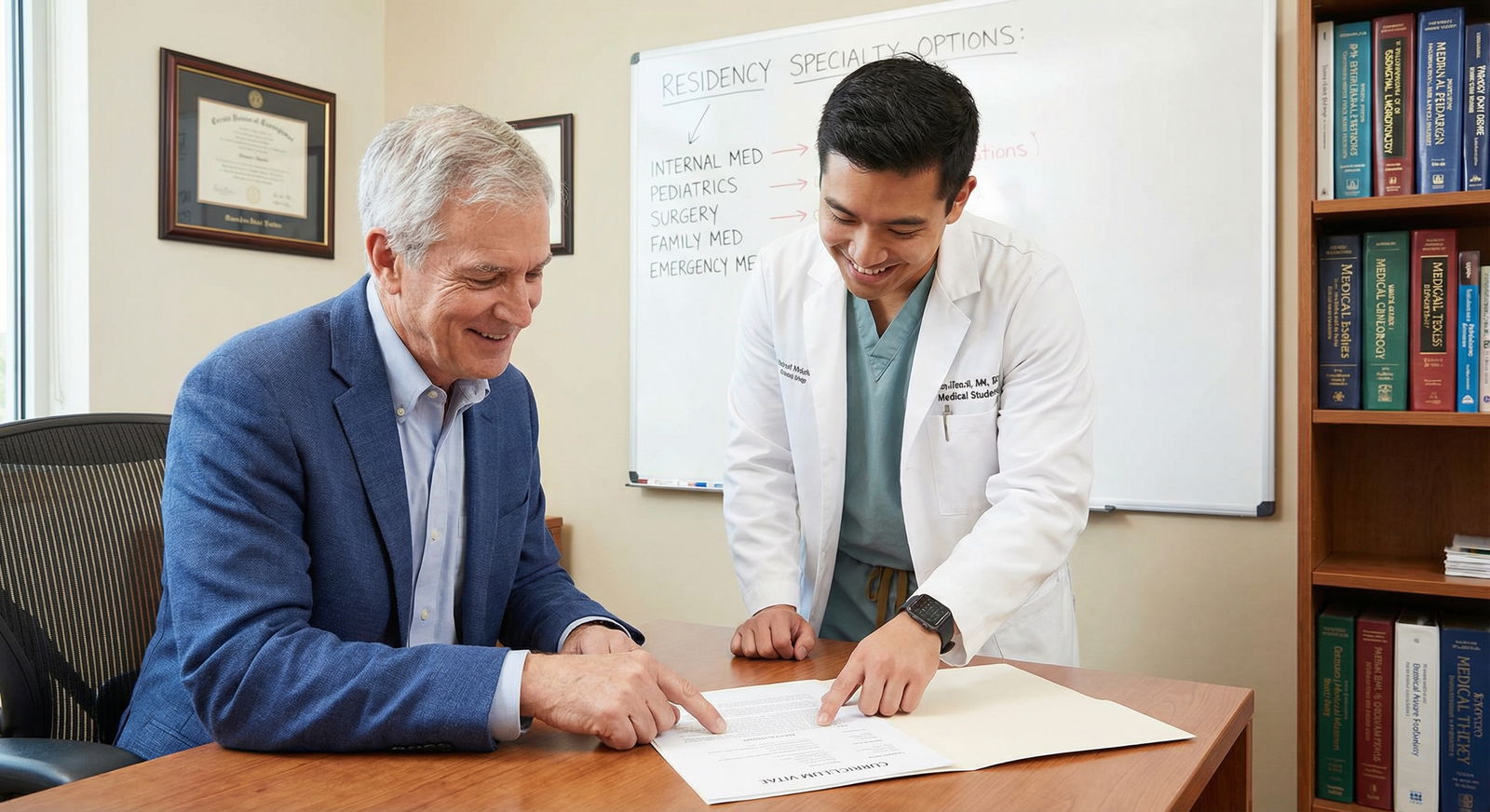
When “Clinical Experience” Backfires: Mislabeling Roles on Your CV
What happens when a program director actually reads the “clinical experience” line you fluffed—and knows instantly you never should’ve called it that?
Let me be blunt: mislabeling roles on your CV is one of the fastest, quietest ways to get yourself mentally blacklisted. No angry email. No feedback. Just… no interview.
You think you’re “framing” your experience. They think you’re either careless or dishonest. Both are bad.
Let’s walk through the mistakes I see every cycle—and how to fix them before your CV becomes a liability instead of an asset.
The Core Problem: You’re Calling Everything “Clinical Experience”
The most common error is simple: if it happened near a hospital, people slap “clinical” on it.
Shadowing a physician?
Hospital volunteer at the front desk?
Answering phones in a clinic?
Summer program that let you “observe” procedures from a distance?
Students cram all of that under:
Clinical Experience
XYZ Hospital, 2021–2023
Program directors are not fooled. They know exactly what is and isn’t clinical.
If you over-label, here’s what they assume:
- You don’t understand what clinical responsibility actually is.
- You’re inflating your CV intentionally.
- You’re going to exaggerate in your notes, your presentations, and maybe your letters.
That last one is deadly. Nobody wants a PGY‑1 who can’t distinguish “I watched” from “I did.”
What counts as real clinical experience?
Let’s keep this sane and simple. Real clinical experience usually includes:
- Direct patient contact with some responsibility (within your role)
- Participation in care delivery, not just watching
- Being part of a team that documents, communicates, or intervenes in patient care
Examples that can be labeled clinical (with proper wording and scope):
- Medical school clerkships and sub‑internships
- Scribe roles (if well-described and not exaggerated)
- Medical assistant roles (vital signs, rooming, basic procedures)
- EMT/paramedic work
- Nursing assistant / PCA roles
- Hospice worker with direct patient duties
Here’s where people get cute and shoot themselves in the foot.

Things that are not primary clinical experience (and should be labeled honestly)
- Shadowing
- Front-desk volunteer roles
- Translating without any care responsibilities
- Remote “telehealth observer” gigs where you just sat in
- Pre-med hospital volunteering that was mostly transport, stocking, or paperwork
Those can still go on your CV. They just do not belong under “Clinical Experience” as if you were functioning like staff or a trainee with clinical responsibilities.
The Red Flags on Your CV That Make PDs Mistrust You
I’ve watched PDs and faculty skim CVs. Their eyes stop on very specific phrases. And you do not want them stopping for the wrong reason.
Here are the recurring landmines.
1. Overblown titles
Calling yourself:
- “Clinical Researcher” when you were a data-entry volunteer
- “Clinical Assistant” when you were a volunteer greeter
- “Research Coordinator” when you were actually a student volunteer on a project
- “Teaching Faculty” when you were a peer tutor
These look dishonest, not ambitious.
Use titles that match what you were actually hired or assigned as. If the official title is vague, you can clarify in the description, not by upgrading yourself to something you weren’t.
| Situation | Bad Title | Better Title |
|---|---|---|
| Shadowing Dr. Smith in clinic | Clinical Assistant | Physician Observer / Shadow |
| Volunteer in ED stocking supplies | Emergency Medicine Intern | Emergency Department Volunteer |
| Data entry for outcomes study | Clinical Researcher | Research Assistant (Outcomes) |
| Peer tutor for MS1s | Teaching Faculty | Peer Tutor / Small Group Leader |
Program directors are used to students trying to stretch titles. They hate it. It’s a trust issue, not a semantics issue.
2. Descriptions that imply responsibility you never had
This one is worse than the title problem.
Here’s the kind of nonsense I’ve seen on CVs:
“Managed diabetic patients in outpatient clinic, adjusting medications and counseling on lifestyle.”
And then you dig in and realize they were a pre‑med scribe.
No, you didn’t manage anything. You watched someone else do it.
Better wording:
“Documented outpatient diabetic visits as a medical scribe, observing medication adjustments and patient counseling.”
You still look engaged. You still learned something. But you’re not claiming to be a junior endocrinologist.
When you imply responsibility outside your scope, PDs start imagining what you’ll do on the wards. Will you “helpfully” adjust oxygen without telling anyone? Will you give advice to patients alone in rooms? It’s not paranoia; they’ve seen it happen.
3. Mixing pre‑med and med‑student work with no clarity
Stacking all of this together under “Clinical Experience”:
- Pre‑med ED volunteer
- Medical school inpatient rotations
- A one-week overseas “medical mission” as a college student
That’s messy and suspicious.
Label your phases. Differentiate clearly:
- Undergraduate or pre‑medical clinical exposure
- Formal medical school clerkships
- Paid or formal clinical employment (scribe, MA, EMT, etc.)
If I have to play detective to figure out when you were actually qualified to do what you’re describing, I assume you don’t respect my time—and maybe you’re hiding something.
The Sneaky Situations That Trip People Up
Some roles are genuinely blurry. You weren’t totally clinical, but you weren’t completely non-clinical either. This is where people over-reach.
Let’s sort out the gray zones.
Shadowing: stop pretending it’s more than it was
Shadowing is observation, not participation. It can be valuable, but it is not the same as working in patient care.
Good way to list it:
Physician Shadowing – Cardiology Clinic
- Observed outpatient cardiology visits and diagnostic discussions
- Learned fundamentals of cardiac risk assessment and patient counseling
Bad way to list it:
Clinical Experience – Cardiology
- Performed cardiac exams and participated in treatment planning
You didn’t. And if you did, that’s even worse.
International “medical missions” as a student
This one is sensitive, but it needs to be said.
If you went abroad as an undergrad or early med student and were allowed (wrongly) to do procedures way beyond your training—suturing, prescribing, deliveries—you should not be bragging about it as “clinical experience.”
Ethically, it’s a mess. Program directors know that. When they see:
“Provided primary care to underserved rural communities, including prescribing medications and performing procedures.”
…as a second-year med student?
They see someone who doesn’t understand safe practice or boundaries.
Better framing:
Global Health Volunteer, Country X
- Assisted local healthcare team with patient flow and logistics
- Observed primary care delivery and community health education
- Participated in supervised health screening activities (BP checks, basic vitals)
Emphasize exposure, observation, collaboration. Not solo doctor cosplay.
Scribing: useful, but easy to oversell
Scribe experience can be a real asset—if described honestly.
Good description:
Emergency Department Scribe
- Documented HPI, ROS, physical exam findings, and ED course in real time
- Observed diagnostic reasoning and management of acute presentations
- Communicated with physicians and nursing staff to clarify documentation
Red flag description:
- Evaluated patients and documented physical exam
- Coordinated patient management between services
You didn’t evaluate. You wrote what someone else evaluated. Again, program directors know exactly what scribes do.
How Program Directors Actually Interpret Your “Clinical Experience” Section
You need to understand what they’re reading for. It’s not volume. It’s judgment.
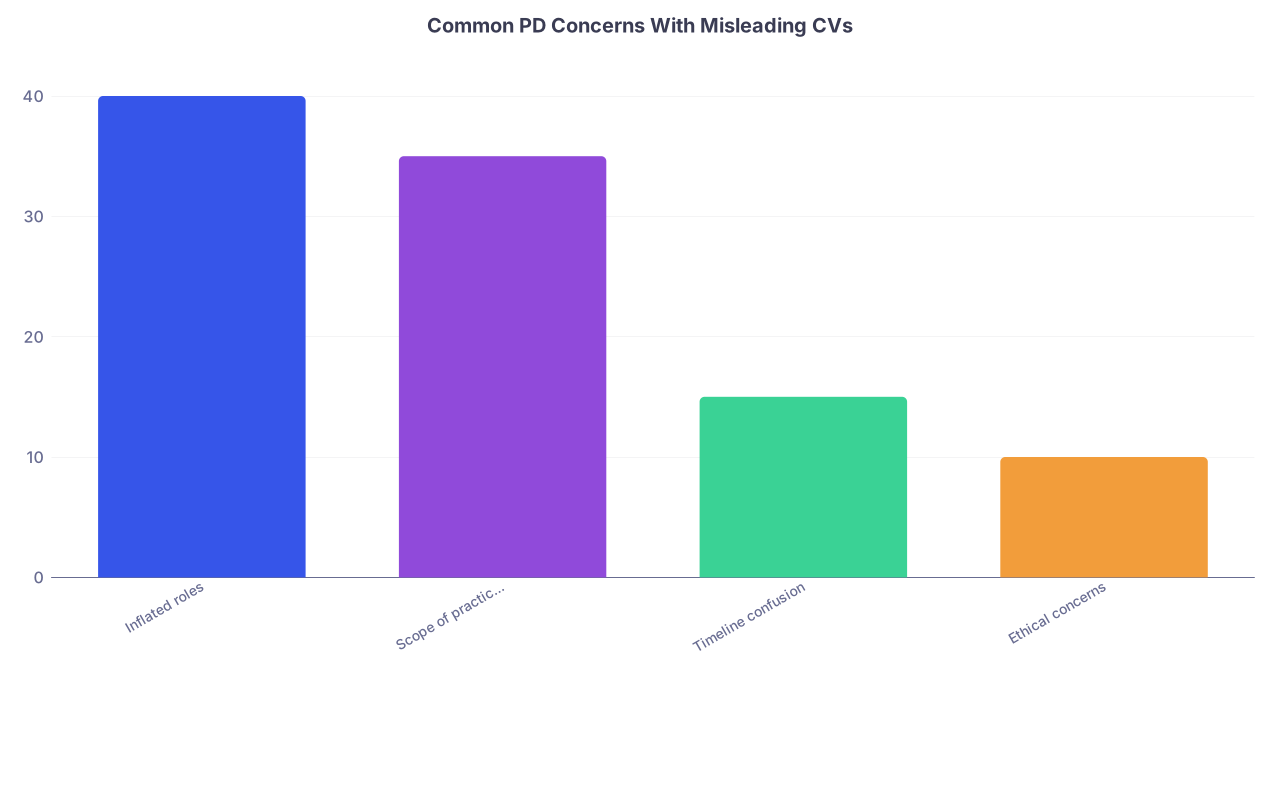
| Category | Value |
|---|---|
| Inflated roles | 40 |
| Scope of practice issues | 35 |
| Timeline confusion | 15 |
| Ethical concerns | 10 |
Those numbers aren’t from a formal paper; they’re roughly what you hear in selection committee rooms. Everyone remembers the “creative” CVs more than the solid, honest ones.
What they’re asking themselves:
- Does this person understand their own level of training?
- Are they likely to practice safely within supervision?
- Are they honest in how they describe their work?
If your CV forces them to question any of those, your file quietly sinks.
Fixing Your CV: How to Label Roles Without Looking Weak
Here’s the part people get wrong: they think honesty will make them look less impressive.
It does the opposite. A precise, grounded CV says you know who you are and where you are in your training.
Separate categories clearly
Don’t mash everything under “Clinical Experience” like a catch-all drawer. Create distinct sections, for example:
- Clinical Rotations (Medical School)
- Clinical Employment
- Clinical Volunteering
- Physician Shadowing
- Research Experience
- Teaching / Leadership
That alone stops a lot of confusion.
Use accurate, humble titles—and let the description carry the weight
If your official title was “Volunteer,” keep it. Upgrade in the description, not the title.
Compare:
Title: Emergency Department Intern
Description: Assisted with patient care in ED
vs.
Title: Emergency Department Volunteer
Description: Supported patient flow through rooming, transport, and non-clinical tasks; observed evaluation and management of acute presentations
The second sounds more mature and believable. They can see what you did.
Use action verbs that match your scope
There are verbs that are safe for your level, and verbs that scream overreach.
Safe verbs: observed, assisted, supported, documented, coordinated (admin), facilitated, prepared, organized.
Overreach verbs (unless you truly had that role and training): managed, treated, diagnosed, prescribed, performed (procedures), supervised (clinical care), led (clinical team).
If you’re an MS3 or MS4, you’re almost never truly “managing” anything independently. You’re participating in management. Say that.

The Ethical Side You Cannot Ignore
This isn’t only about optics. Mislabeling clinical experience touches on ethics and professionalism.
Why PDs are so sensitive to this
Program directors deal with:
- Residents misrepresenting procedures they’ve done
- Notes that imply more exam than was actually performed
- Students “borrowing” phrasing from attendings but writing it as their own observation
So when they see a CV where a pre‑med “performed pelvic exams” on a mission trip, they don’t see “eager learner.” They see a risk.
And they’re right.
What your wording implies about your future behavior
If you’re casual about scope-of-practice on paper, they assume you’ll be casual at 3 a.m. in the ICU. That’s how lawsuits and patient harm happen.
Residents remember the intern who “just went ahead and did it” because they “did that abroad in undergrad.” Everyone else remembers the fallout.
Don’t be that person. Don’t sound like that person.
Concrete Before-and-After CV Fixes
Let’s clean up some typical messes.
Example 1: Pre‑med hospital volunteer
Bad:
Clinical Experience – XYZ Hospital
- Provided care to patients on medical floors
- Assisted with treatment and monitoring of vital signs
You were a volunteer. You delivered blankets and maybe helped transport.
Better:
Hospital Volunteer – XYZ Hospital
- Assisted nursing staff with patient comfort measures and transport
- Observed daily operations on general medical floors and patient–provider interactions
Still solid. No pretending.
Example 2: International trip
Bad:
Clinical Experience – Global Health Mission
- Performed procedures and managed primary care in rural clinic
- Provided medications and medical advice to underserved populations
Better:
Global Health Volunteer – Country X
- Assisted local clinicians with patient registration and logistics in rural clinics
- Observed primary care delivery and community-based health interventions
- Participated in supervised vital sign screening and health education activities
You’re not hiding that you were there. You’re not boasting about inappropriate independence either.
Example 3: Scribe in outpatient clinic
Bad:
Clinical Assistant – Internal Medicine Clinic
- Evaluated patients and documented full encounters
- Coordinated patient management and follow-up
Better:
Medical Scribe – Internal Medicine Clinic
- Documented patient encounters in real time, including HPI, review of systems, and physician exam findings
- Observed clinical decision-making and follow-up planning for complex medical patients
You sound informed, not delusional.

| Step | Description |
|---|---|
| Step 1 | Identify Role |
| Step 2 | Use official title |
| Step 3 | Use clear descriptive title |
| Step 4 | Describe actual tasks |
| Step 5 | Replace with accurate verbs |
| Step 6 | Entry ready |
| Step 7 | Was it paid or formal? |
| Step 8 | Any overreach verbs? |
How to Audit Your CV for Mislabeling in 20 Minutes
Here’s the quick-and-dirty audit I make students do before they send anything.
- Circle every use of the words “clinical,” “managed,” “treated,” “performed,” “diagnosed,” “prescribed.”
- For each one, ask: could I defend this, out loud, to a skeptical PD who knows exactly what that role normally allows?
- If the honest explanation starts with, “Well, I mean, I was watching while…” then your wording is wrong. Fix it.
- Check titles: do they match what HR or the organization called you? If not, why?
- Separate pre‑med and med‑school experiences clearly by dates and headings. No ambiguity.
If you’re even slightly nervous about an entry, assume a PD will spot it in 10 seconds. They do this all day.
](https://cdn.residencyadvisor.com/images/articles_svg/chart-time-allocation-for-a-cv-self-audit-1946.svg "Time Allocation for a CV Self-Audit")
| Category | Value |
|---|---|
| Scanning verbs | 25 |
| Checking titles | 20 |
| Rewriting descriptions | 35 |
| [Reformatting sections](https://residencyadvisor.com/resources/cv-improvement-residency/formatting-mistakes-on-your-cv-that-signal-disorganization-to-pds) | 20 |
When in Doubt, Under-Claim and Over-Deliver
Here’s the part most applicants don’t believe until they see it from the other side:
A modest, precise CV stands out.
Faculty say things like:
- “I like this person; they seem grounded.”
- “They didn’t oversell their volunteer stuff, that’s refreshing.”
- “This scribe experience is described really well—they get how the system works.”
That’s the person who gets the interview. And once you’re in the room, your real stories matter more than the exact header you used.

Key Takeaways
- Do not slap “clinical experience” on every hospital-adjacent activity; label roles honestly and separate observation from responsibility.
- Avoid overblown titles and verbs that imply you managed or treated patients when you only observed or supported.
- A precise, modest CV does more to build trust with program directors than a padded, “impressive”-sounding one ever will.