
It’s September. ERAS is open. You’re staring at your CV and wondering what to do with that clinical Instagram account, the evidence-based TikTok series, or the podcast you’ve been faithfully recording between call shifts. You’ve put in real work. You’ve built an audience. But you have no idea where this stuff goes on a “serious” professional CV… or if it even belongs there.
Here’s the answer: yes, you can put social media, podcasts, and blogs on a residency CV — if they’re done well and clearly professional. And there are right and wrong ways to do it.
Let’s walk through exactly where to put them, how to list them, and when you should leave them off.
1. Should You Even Put Social Media/Podcasts/Blogs on a Residency CV?
Start here. Not everything belongs on a professional CV.
You should include your online work if it meets most of these:
- Content is professional, evidence-based, and non-anonymous
- It teaches, advocates, or contributes to medicine/healthcare
- You can show consistency, commitment, or impact (followers, downloads, invitations, collaborations)
- You wouldn’t be embarrassed if your future PD clicked on it in front of you
You should not include it if:
- Content is personal, ranty, or mixes medicine with controversial hot takes
- It includes patient info, HIPAA issues, or questionable jokes
- You’re anonymous or using a meme persona that doesn’t match your name
- You couldn’t defend it to a program director or hospital lawyer
Blunt version: if a PD opened it during an interview and your heart would stop — don’t list it.
If it passes that test, then it can absolutely strengthen your CV, especially if:
- You’re applying to academic, education-heavy, or advocacy-focused programs
- You’re interested in med ed, health communication, public health, or leadership
- Your online work shows initiative, teaching, and consistency
Now let’s talk about where it goes.
2. Where To Put Social Media, Podcasts, and Blogs on a CV
This is the real question: What section do these belong in?
Short answer: usually under “Scholarly Work,” “Media & Digital Scholarship,” or “Other Professional Activities.” The exact label depends on what the thing actually is.
Here’s a simple mapping:
| Type of Work | Best CV Section Name |
|---|---|
| Educational podcast | Media & Digital Scholarship |
| Professional blog | Publications / Digital Scholarship |
| Professional Instagram | Media & Digital Scholarship |
| TikTok teaching series | Media & Digital Scholarship |
| Guest podcast appearance | Invited Media / Presentations |
| One-off blog post | Publications (Non-peer reviewed) |
Option 1: “Media and Digital Scholarship” (best for most)
If you’ve got any recurring or substantial platform — podcast, YouTube, Instagram, blog, TikTok — this is usually the cleanest, safest label:
Media and Digital Scholarship
Under that heading, you list them like you would other scholarly products, just with digital-specific details: role, topic, audience size, dates, and link.
This works particularly well if:
- You have more than one digital project
- You publish regularly
- You want to signal that this is intentional scholarly work, not “I’m online too much”
Option 2: “Publications” (for blogs with real content)
If your blog looks like:
- Long-form posts
- Referenced content, case discussions, or analysis
- Linked by others or cited occasionally
You can tuck it under Publications with a subcategory like “Online Publications” or “Digital Publications.” For ERAS, this may partly live in the “Publications/Presentations” section and partly in the CV you upload as a PDF.
Use this if you want to emphasize that your blog is writing and content, not just social presence.
Option 3: “Other Professional Activities” (for borderline/early projects)
If your project is smaller, newer, or doesn’t fit cleanly as scholarship — but is still relevant and professional — use something broader like:
- “Other Professional Activities”
- “Leadership and Outreach”
- “Community Engagement”
This is a softer way to include something without overselling it as “scholarship.”
3. Exactly How To Format Social Media, Podcasts, and Blogs on a CV
Let’s get concrete. Here’s how I’d actually write them.
A. Podcast – Example CV Entries
For your own recurring podcast:
Media and Digital Scholarship
- Nguyen A (Host). The Intern Report – Weekly podcast on internal medicine topics for medical students and residents. 60+ episodes, 35,000+ total downloads. 2022–present. Available at: https://theinternreportpodcast.com
For a guest appearance on someone else’s show:
Invited Media
- Guest. “Managing Diabetic Ketoacidosis in the ED.” Core EM Podcast. Episode 148. Released March 2024. Available at: https://coreem.net/podcast/148
Notice what’s there: your role, title/episode, platform, topic, dates, and a link.
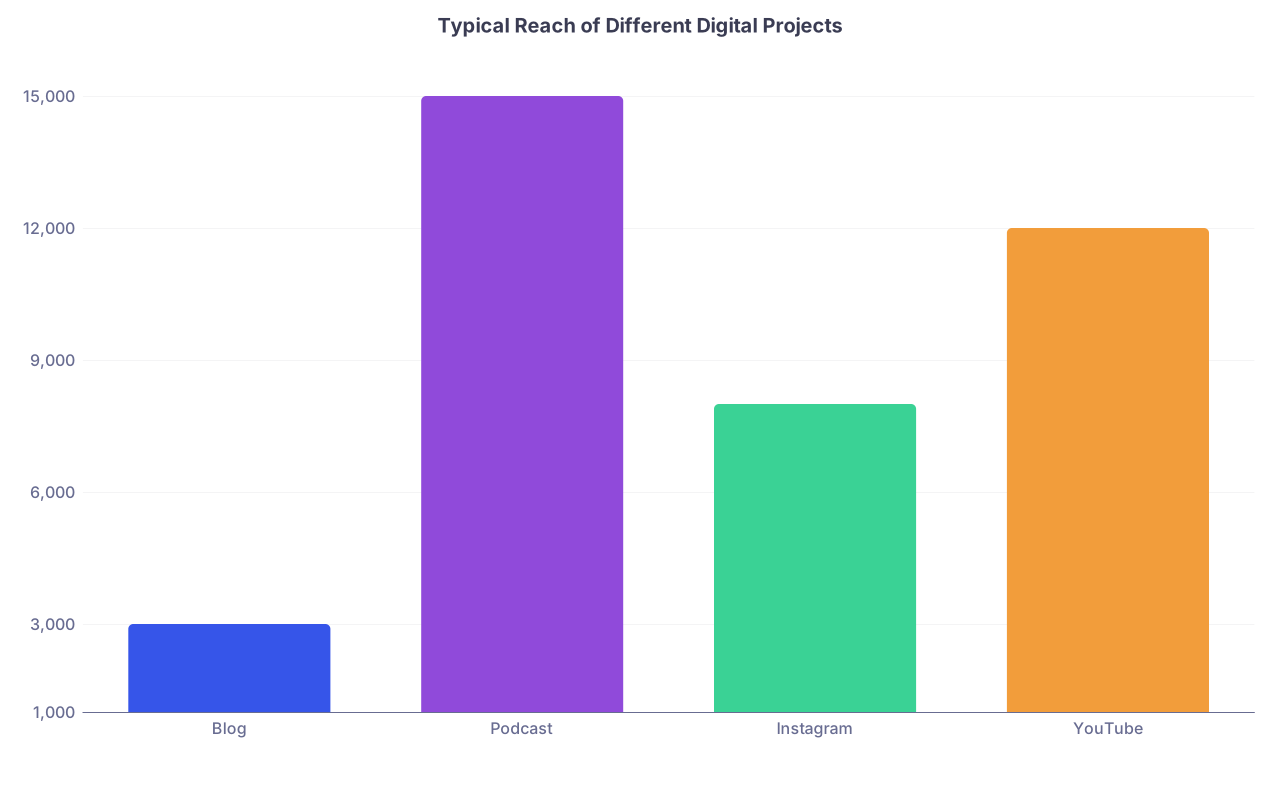
| Category | Value |
|---|---|
| Blog | 3000 |
| Podcast | 15000 |
| 8000 | |
| YouTube | 12000 |
B. Blog – Example CV Entries
If it’s your own blog:
Digital Publications
- Lee J. Resident Notes – Personal blog focused on practical advice for medical students and residents (time management, clinical reasoning, wellness). 40+ posts, >50,000 total views. 2021–present. Available at: https://residentnotes.com
If you published a single guest article:
Publications – Non–peer reviewed
- Patel S. “Why We Need Better Transitions from Med School to Residency.” KevinMD.com. Published July 15, 2023. Available at: https://www.kevinmd.com/...
If it’s more like a newsletter (Substack, etc.), list it like a blog:
Digital Publications
- Davis R. On Call Thoughts – Monthly Substack newsletter on life as a general surgery resident. 1,200+ subscribers. 2023–present. Available at: https://oncallthoughts.substack.com
C. Instagram, TikTok, X (Twitter), YouTube – Example CV Entries
These are the trickiest because they’re often seen as “non-serious” — unless you frame them properly.
Don’t write:
“Instagram: @medstudentlife, 25k followers”
That screams influencer, not educator.
Write it like this instead:
Media and Digital Scholarship
@CardioCaseFiles (Instagram) – Creator of a cardiology teaching account focused on ECG interpretation and case-based learning for trainees. 150+ original posts, 18,000+ followers. 2021–present. Available at: https://instagram.com/cardiocasefiles
TikTok – “Micro Med Pearls” series – Short-form video series on high-yield microbiology for Step 1 and Step 2 preparation. 75+ videos, 12,000+ followers, 400,000+ total views. 2022–present. https://www.tiktok.com/@micromedpearls
YouTube – EM Basics for Students – Educational channel with video tutorials on common ED presentations and procedures (abdominal pain, chest pain, laceration repair). 20+ videos, 5,000+ subscribers. 2023–present. https://youtube.com/@EMBasicsForStudents
Notice the pattern:
- Platform + handle/title
- Who it’s for (students, residents, public)
- What you teach or cover
- Scope (number of posts, episodes, videos)
- Reach (followers, views, downloads)
- Dates and link
That’s how you turn “I’m on social media” into “I create structured medical education content at scale.”
4. How To Handle This in ERAS vs. Your Attached CV
ERAS is rigid. Your PDF CV is flexible. Use both.
ERAS Application
You can work this content into:
- “Publications/Presentations” (for blogs, guest posts, podcast episodes)
- “Work Experiences” (if it’s consistent, time-consuming, and professional)
- “Extracurricular Activities” (if it’s more outreach/community oriented)
For a podcast as Work Experience:
Position: Creator and Host
Organization: The Intern Report Podcast
Location: Remote
Description: Developed and hosted a weekly podcast on internal medicine topics for medical students and residents. Researched and scripted episodes, coordinated guests, and edited audio. Produced 60+ episodes with 35,000+ downloads to date.
For an Instagram account:
Position: Content Creator – Cardiology Education
Organization: CardioCaseFiles (Instagram)
Location: Remote
Description: Created a cardiology teaching account focused on ECG interpretation and case-based learning for trainees. Authored and designed 150+ posts; grew audience to 18,000+ followers. Emphasized guideline-based content and clinical reasoning.
Attached CV (PDF)
Here, you can have a dedicated section like:
Media and Digital Scholarship
Digital Publications
Invited Media
The ERAS application gets the structured highlights. The PDF CV tells the fuller, more polished story.
5. What About QR Codes, Handles, and Personal Websites?
Use structure, not clutter.
- Personal website/portfolio: Put it in your header or “Contact” section and maybe once under “Digital Scholarship” if it hosts your content.
- Handles: They belong in the citation line with the platform, not floating alone.
- QR codes: Leave them off your CV. They look gimmicky on a residency CV and don’t work in most digital review workflows.
If you’ve got multiple platforms, strongly consider one clean personal site where you link everything. Then on your CV:
Media and Digital Scholarship
- Personal website – Curated portfolio of medical education content including blog posts, short videos, and podcast episodes focused on emergency medicine for trainees. 2022–present. https://yourname.com
And then list standout projects beneath.
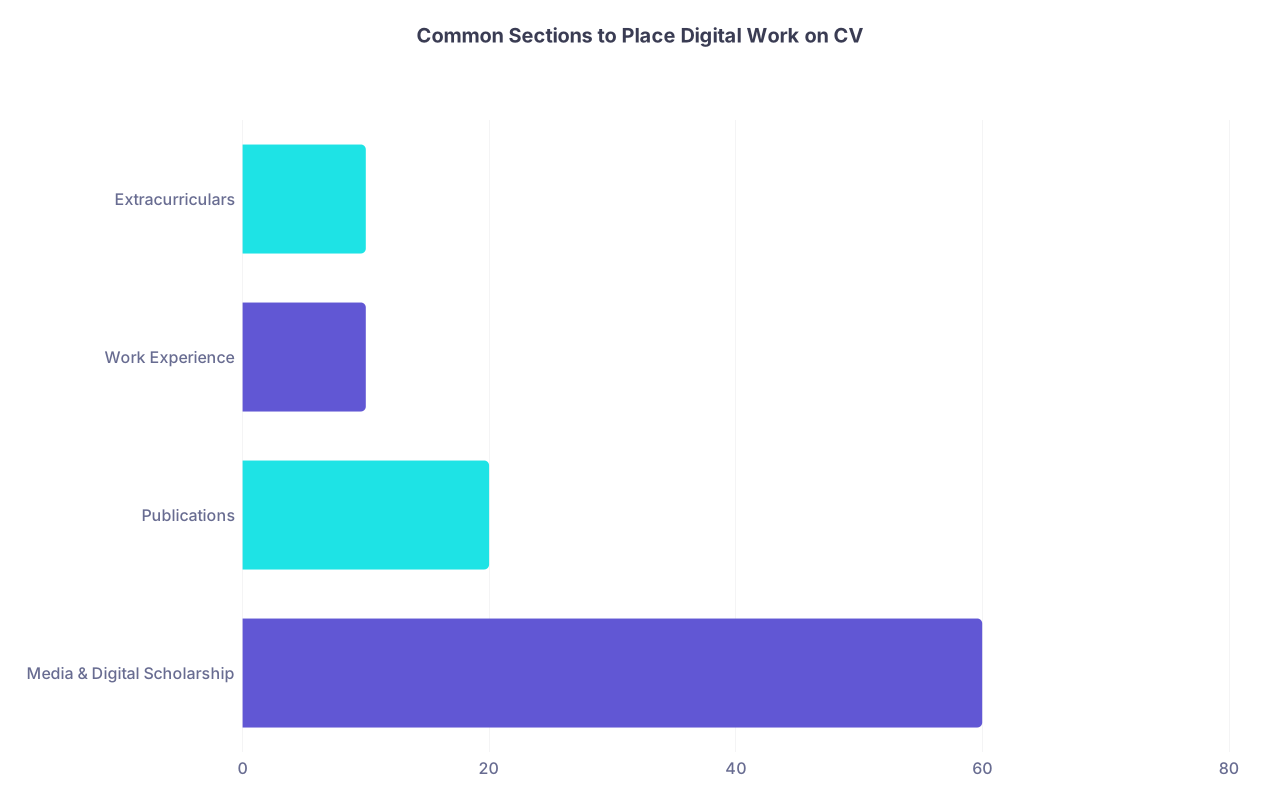
| Category | Value |
|---|---|
| Media & Digital Scholarship | 60 |
| Publications | 20 |
| Work Experience | 10 |
| Extracurriculars | 10 |
6. Red Flags and Mistakes That Actually Hurt You
Here’s where people blow it.
Mixing personal + professional on the same handle
If your account is 50% med content and 50% nightlife, politics, or relationship drama — don’t list it. Either separate into a purely professional account or leave it off.Unprofessional language or memes
Dark humor about patients, screenshots of charts, mocking colleagues, HIPAA-adjacent content — this is the fastest way to turn a “cool project” into a “rank list death sentence.”Overstating your impact
“Global health influencer” with 600 followers. “Educational thought leader” with 5 posts. No. Be accurate and understated. Let the numbers speak.Vague or cringey descriptions
“Inspiring others to live their best life” belongs on Instagram bios, not CVs. Use concrete descriptors: what you teach, to whom, and how often.Listing things you can’t defend
If a PD asks: “How do you handle misinformation?” “How do you ensure what you share is evidence-based?” and you freeze, that’s a problem. Don’t list things you haven’t thought through.

| Step | Description |
|---|---|
| Step 1 | Have social media, podcast, or blog? |
| Step 2 | Do not add anything |
| Step 3 | Add under Media and Digital Scholarship |
| Step 4 | Consider Publications or Other Activities |
| Step 5 | Is content professional and public? |
| Step 6 | Is it educational or medically relevant? |
| Step 7 | Substantial or recurring? |
7. How To Talk About These Projects on Interview Day
If you put it on your CV, assume they’ll ask.
Prepare to answer:
- Why did you start it?
- Who is your target audience?
- How do you decide what content to make?
- How do you ensure accuracy and professionalism?
- What’s one thing you learned that would help you as a resident?
Good answers sound like:
- “I noticed my classmates struggled with X, so I created Y.”
- “I treat each episode like a mini teaching session — I outline, check guidelines, and run content by a senior resident or attending.”
- “It made me better at explaining complicated topics clearly and quickly, which translates directly to patient care and teaching.”
If you can connect your online work to skills programs care about — teaching, communication, professionalism, initiative — then it belongs on your CV.
FAQ (Exactly 6 Questions)
1. What if my social media is anonymous — can I still list it on my CV?
Generally no. If your name isn’t attached and you don’t want to de-anonymize it for programs, it doesn’t belong on your professional CV. The whole point of listing something is to claim it and be accountable for it. If you’re not ready to say, “Yes, that’s mine,” leave it off.
2. My account has only ~1,000 followers. Is that too small to include?
Not necessarily. Followers are just one metric. If you’ve been consistent, the content is clearly educational, and it shows initiative, you can still include it. Focus on what you do (“weekly teaching videos on core peds topics”) rather than pretending it’s a huge platform. If it’s a handful of random posts, skip it.
3. Should I list my personal Instagram or TikTok if I occasionally talk about medicine?
No. If it’s primarily personal — friends, trips, jokes — don’t list it. Programs don’t need to see your personal life curated as a “project.” If you’re serious about digital scholarship, create a dedicated professional account and build that.
4. Where do I put my Substack or email newsletter?
Treat it like a blog. Put it under “Digital Publications” or “Media and Digital Scholarship.” Include: title, focus, frequency (monthly, weekly), approximate subscriber count, years active, and link. If it’s one or two posts only, it probably doesn’t belong yet.
5. Do I need to include follower counts and metrics?
You don’t have to, but it helps programs understand scale. You can round (e.g., “~5,000 followers,” “>20,000 views”). If the numbers are very small and you’re early in the project, you can omit them and describe scope in terms of posts/episodes instead.
6. Can I list social media or podcasts as “teaching experience”?
You can, but I’d be careful. It’s usually cleaner to put them under “Media and Digital Scholarship” and then emphasize the teaching aspect in the description. If you’re formally teaching through a platform (e.g., structured course, live virtual sessions), that can go under “Teaching Experience” with a clear explanation.
Bottom line:
- Only include digital work that’s professional, educational, and clearly yours.
- Use a clean section like “Media and Digital Scholarship” and format entries with role, focus, scope, and link.
- Assume programs will look at anything you list — if you can explain it confidently in an interview, it belongs on your CV.