
UWorld is not magic, and it is not mandatory. The data does not support the cult.
Let me be blunt: UWorld is an excellent resource, maybe the single best commercial question bank on the market for USMLE-style questions. But the way students talk about it—“If you do not finish two passes of UWorld, you will fail Step 1” or “No UWorld = no chance at a 250+”—is superstition, not evidence.
You’re not preparing for the UWorld exam. You’re preparing for USMLE and NBME exams. Those are not the same thing.
Let’s separate mythology from actual outcomes.
The Origin of the “UWorld Is Mandatory” Myth
The UWorld myth didn’t come out of nowhere. It grew out of three overlapping realities.
First: survivorship bias. The loudest people on Reddit, Discord, and SDN are the ones who scored 250+ and used UWorld heavily. They post their “UWorld-only” or “UWorld 3x pass” strategies and everyone copies the visible part: the resource, not the underlying habits, baseline ability, or prior foundation.
Second: correlation vs causation. High scorers use UWorld a lot. High scorers also tend to have stronger preclinical foundations, better test-taking skills, and more time and support. That does not mean UWorld caused their high score. It likely helped, but it’s one part of a bigger ecosystem.
Third: marketing and convenience. Schools recommend it, seniors swear by it, big prep companies build their courses around it. It’s easy for an overwhelmed second-year to think, “Ok, I just need to do what everyone says: UWorld or bust.”
What you rarely see: the quiet but very real group of students who scored just fine—or very well—without leaning heavily on UWorld.
What Data We Actually Have (and What We Don’t)
Here’s the uncomfortable truth: we don’t have randomized controlled trials of “UWorld vs no UWorld” for USMLE outcomes. Nobody is ethically or financially motivated to randomize thousands of students away from the most popular resource to test causality.
What we have instead:
- Survey-based data from NBME, schools, and independent studies
- Correlational data between question bank usage and scores
- Institution-level observations comparing resource access and outcomes
These aren’t perfect, but they’re enough to kill the “mandatory” narrative.
| Category | Value |
|---|---|
| UWorld | 85 |
| AMBOSS | 45 |
| Sketchy | 55 |
| Boards&Beyond | 60 |
| Other Qbanks | 30 |
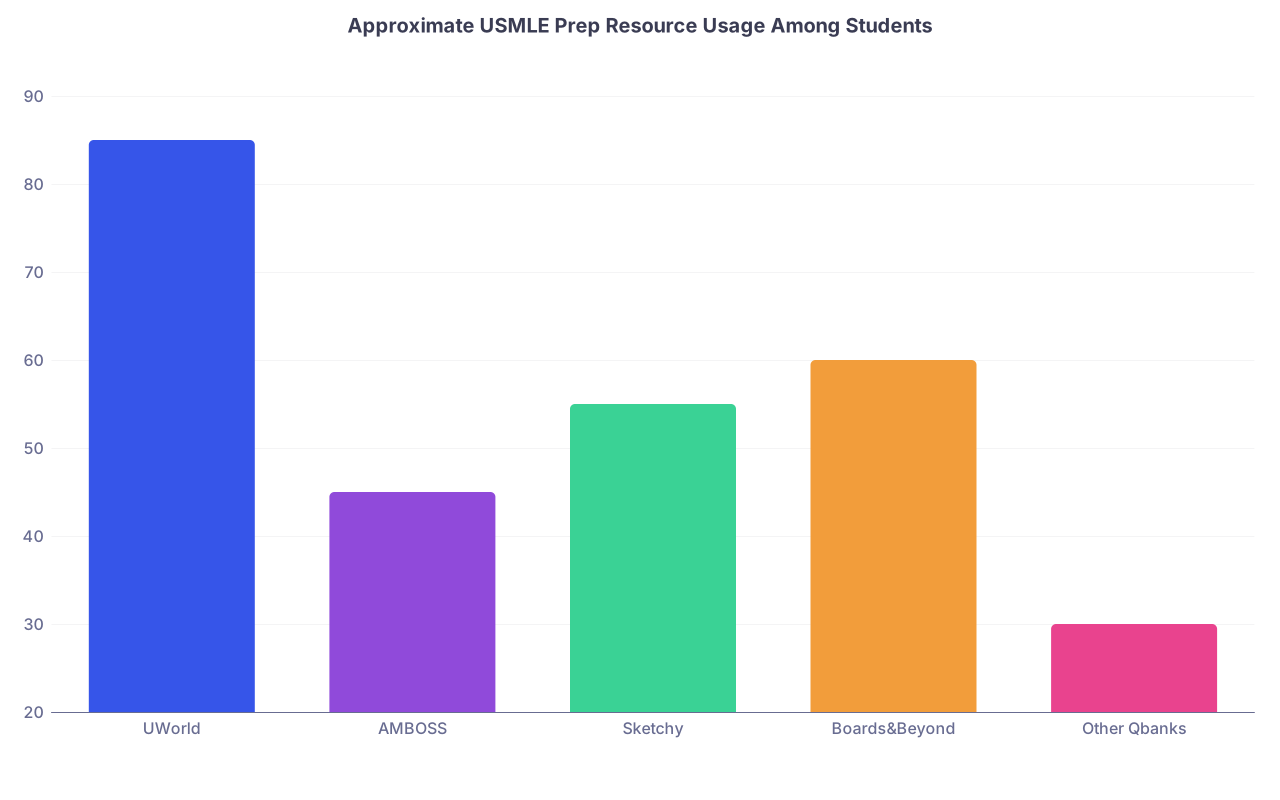
Most surveys show something like this: 80–90% of students report using UWorld for Step 1, a bit less for Step 2. That leads to the lazy conclusion: “Everyone who scores well used UWorld, therefore UWorld is essential.”
But here’s the flaw. If 85–90% of all test takers use UWorld, then of course most high scorers used it. So did most average scorers. So did plenty of people who barely passed or failed. UWorld usage is almost ubiquitous; it doesn’t distinguish success from failure on its own.
Where the data is more nuanced is in how the top scorers use practice questions and how their performance on those questions correlates with outcomes.
Several studies and school reports show:
- Overall qbank performance (percentage correct) correlates with Step scores
- NBME practice exam scores are stronger predictors of Step outcomes than any single qbank
- Students who do some dedicated, high-quality practice questions generally outperform those who do almost none
Notice what’s missing: “UWorld specifically is required.” The pattern is: good practice questions + feedback loops + honest self-assessment = better scores. UWorld is one way to get that done, not the only way.
Do High Scorers All Use UWorld? Mostly. But That’s Not the Right Question.
I’ve seen the same story dozens of times:
- M3 with a 260+ Step 1, 270+ Step 2: “I did 80%+ of UWorld, 60% of AMBOSS, all NBMEs.”
- Another student with similar scores: “I barely touched UWorld, did mostly AMBOSS + school qbank + NBME forms.”
Both exist. The former is more vocal because their story fits the dominant narrative. The latter sounds suspicious, so people assume they’re an outlier or lying.
The better question is: What separates people who score well from those who do not, independent of which specific qbank they used?
A few consistent patterns:
- They use some high-fidelity question bank regularly over weeks to months, not in manic bursts.
- They review explanations thoroughly and connect questions back to core content (First Aid, lecture notes, Boards & Beyond, etc.).
- They pair question banks with NBME-style practice exams and adjust their studying based on these scores.
- They track weak areas and deliberately fix them, instead of blindly grinding through question blocks.
All of that is possible with or without UWorld.
How UWorld Actually Fits Into the Score Equation
Let’s be fair. UWorld does several things exceptionally well:
- Question style is generally close to USMLE/NBME format
- Explanations are detailed, with good wrong-answer breakdowns
- Question difficulty tends toward “slightly harder than the real thing,” which can be useful
- The sheer volume (for Step 1 and 2) covers most high-yield topics multiple times
This combination makes UWorld a very strong tool for refining and testing your knowledge.
Where students get misled is treating it as:
- A primary learning resource when they don’t yet understand basic pathophysiology
- A completion checklist (“two passes = 250+”) instead of a diagnostic and teaching tool
- A replacement for NBME practice exams (which are actually much better predictors of scores)
Let me put it in more concrete, exam-facing terms.
| Factor | Predictive Strength (Practical) |
|---|---|
| NBME practice exam averages | Very high |
| Qbank percent correct (any) | Moderate–high |
| Total number of UWorld questions done | Moderate at best |
| Number of qbanks used | Low |
| “Passes” of UWorld completed | Very low |
If you showed me a student’s data and I had to predict their Step score, I’d want:
- Their NBME practice scores and timing
- Their performance trend on some decent qbank
- Their school exam performance over the past year
“Did you finish UWorld?” would be a curiosity, not a core variable.
Concrete Reality Check: Can You Succeed Without UWorld?
Yes. People do. Regularly. You just don’t hear from them as often because “I used the school-provided qbank and AMBOSS and did fine” doesn’t sound like a flex.
Here are three real patterns I’ve seen more than once:
International grads with limited budgets
- Couldn’t afford multiple subscriptions
- Used a cheaper bank (e.g., USMLE-Rx in earlier years, or school-provided bank) plus free or low-cost materials
- Hammered NBME practice tests and honest review
- Ended up with 230–240+ Step 1, 240–250+ Step 2
Students at schools with strong in-house banks
- School-supplied qbank mapped closely to the curriculum
- Heavy emphasis on NBME subject exams, then self-assessment forms
- Many did not touch UWorld until late—or at all for Step 1—yet Step outcomes matched or exceeded national averages
Time-constrained students (family, health, work issues)
- Couldn’t grind 3,000+ UWorld questions
- Focused on one qbank + NBMEs + tight, targeted review
- Efficient, not maximalist, and still scored fine
The constant: not UWorld. The constant is deliberate practice with feedback.
| Category | Value |
|---|---|
| Student 1 | 20,260 |
| Student 2 | 80,250 |
| Student 3 | 60,240 |
| Student 4 | 100,235 |
| Student 5 | 40,245 |
| Student 6 | 90,228 |
| Student 7 | 30,235 |
| Student 8 | 70,220 |
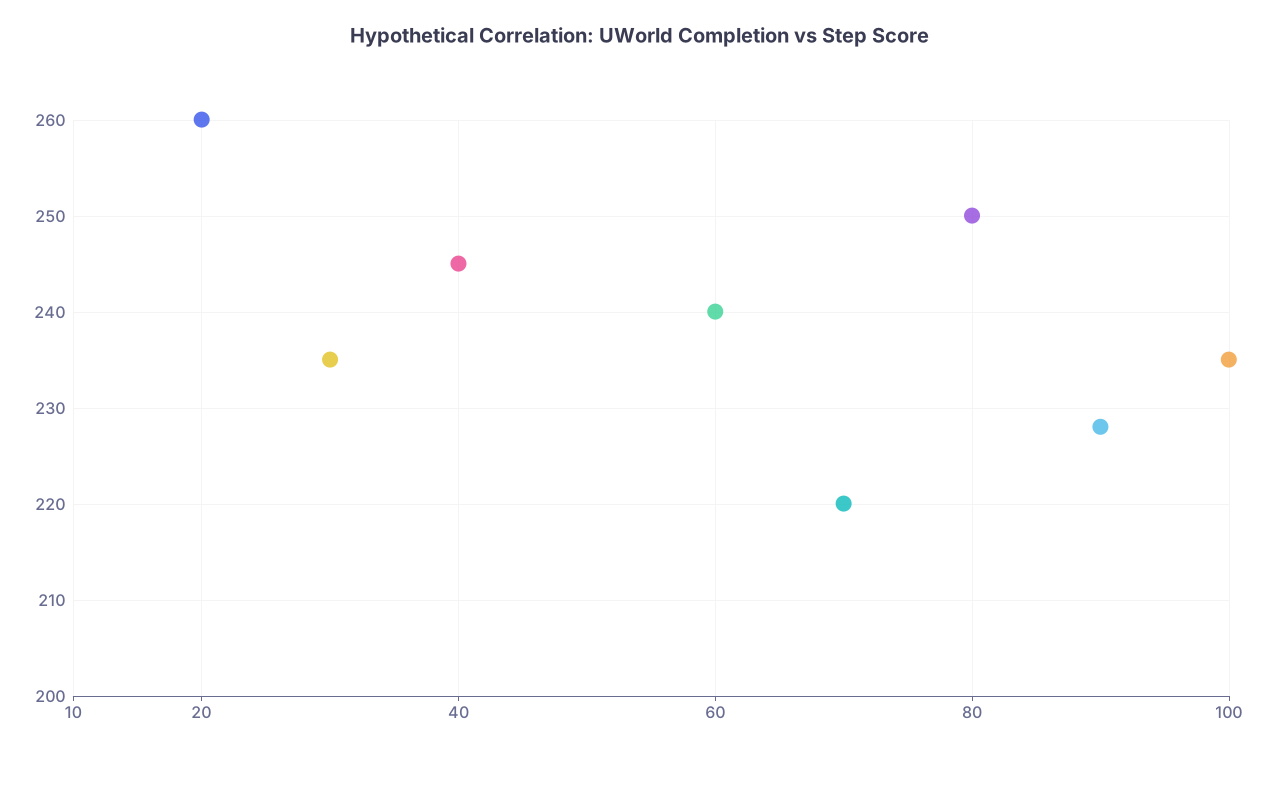
There’s a loose correlation between “more UWorld” and “better scores,” but it’s messy. You can see the outlier: someone who did relatively little UWorld but scored extremely high. That person exists in real life too. They just had strong fundamentals and used other tools well.
Where UWorld Is Often Worth It (And Where It’s Overrated)
Let me be precise. I’m not anti-UWorld. I’m anti-mindless worship.
UWorld is often worth the money and time when:
- You already have a baseline foundation and need to convert that into test-taking skill
- You plan to do at least one qbank thoroughly and don’t want to risk a low-quality one
- You’re targeting high performance and want exposure to the typical style of tricky questions
It’s overrated or misused when:
- You’re failing basic exams and think “grinding more UWorld” will fix a knowledge deficit
- You’re doing 120–160+ questions per day but barely reviewing explanations
- You’re repeating “passes” just to see the same explanations again and feel productive
- You treat finishing UWorld as the main goal instead of improving your NBME trajectory
A smarter strategy: decide what job you want your question bank to do (teach concepts, test you, identify weaknesses, build stamina), then choose and use UWorld—or another bank—accordingly.
UWorld vs Other Qbanks: Is It Really That Unique?
No question bank is perfect. UWorld has brand dominance, not divine origin.
Other major players like AMBOSS, Kaplan, and sometimes school-specific banks each have strengths:
- AMBOSS: strong explanations with integrated library, good Step 2-style reasoning, customizable difficulty
- Kaplan: historically better for some basics, slightly different style that some students find clarifying
- School banks: sometimes aligned exactly with what your faculty expects and how they test
If you’re cash-limited and your school already gives you:
- A decent qbank with USMLE-style items
- Access to NBME self-assessments
- Supplemental teaching resources
Then no, you do not need to magically produce $400–$800 for UWorld because Reddit told you so. You need a coherent plan, not a specific logo.

The Real Non‑Negotiables (That Students Weirdly Ignore)
Let me be very clear on this: UWorld is not a non-negotiable. These are:
Exposure to realistic exam-style questions
Whether from UWorld, AMBOSS, or a good school bank, you must practice thinking the way the exam asks you to think.NBME self‑assessments
These are as close as you’re going to get to the real thing. Your average and trend on NBME forms matter more than your “percent correct” on UWorld.Honest post‑question review
Actually reading explanations, understanding why your answer was wrong, and connecting them back to structured content. Not skimming. Not screenshot-hoarding.Consistency over time
You can’t cram test-taking skill into the last 10 days with a frantic UWorld binge. The best outcomes come from months of reasonably steady practice.
If you nail these four, you can score well with or without UWorld. If you blow these off, UWorld won’t save you.

| Step | Description |
|---|---|
| Step 1 | Baseline Knowledge |
| Step 2 | Choose ONE main qbank |
| Step 3 | Daily question blocks |
| Step 4 | Thorough review & notes |
| Step 5 | NBME self-assessments |
| Step 6 | Maintain strategy |
| Step 7 | Adjust content focus & pace |
| Step 8 | Exam readiness |
| Step 9 | Score trend? |
Notice what’s missing from this flowchart: “Must be UWorld.” Because that part is flexible. The structure and feedback loops are not.
The Psychological Trap: Fear-Based UWorld Worship
A lot of this “mandatory” talk is not about data. It’s about fear.
Med students are terrified of failing, of closing doors, of being that one person in their class who bombs Step while everyone else moves on. In that fear, they look for talismans. UWorld has become one.
I’ve literally heard:
- “If I don’t finish UWorld twice, I won’t match derm.”
- “My friend failed because she used AMBOSS instead of UWorld.”
- “My school doesn’t give us UWorld; we’re doomed.”
No. Your score is not determined by a brand name. It’s determined by how well you understand and apply clinical science under time pressure.
UWorld is one powerful way to train that. Not a mystical requirement.

So, What Should You Actually Do?
Strip the decision down to reality:
- If you can afford UWorld and you want a proven, high-quality qbank: use it, but use it intelligently.
- If you cannot afford it or already have access to another solid bank: do not panic. Build a serious plan around what you do have.
- In all cases, anchor your prep to NBME-style exams and honest analysis, not to how many “UWorld blocks” you can brag about doing on Instagram or Reddit.
If you want a minimalistic but robust structure:
- Pick one primary qbank (UWorld, AMBOSS, or a strong school-provided bank).
- Do timed, random blocks consistently, with full review.
- Schedule NBMEs and let those numbers dictate whether your approach is working.
- Tighten your content review based on patterns of errors—not vibes, not what Reddit says is “high yield this year.”
That’s how people score well. Not by worshipping a logo.
| Category | Value |
|---|---|
| NBME-driven adjustments | 90 |
| Quality of review | 80 |
| Baseline knowledge | 75 |
| Specific qbank brand | 40 |
| Number of qbanks used | 20 |
Key Takeaways
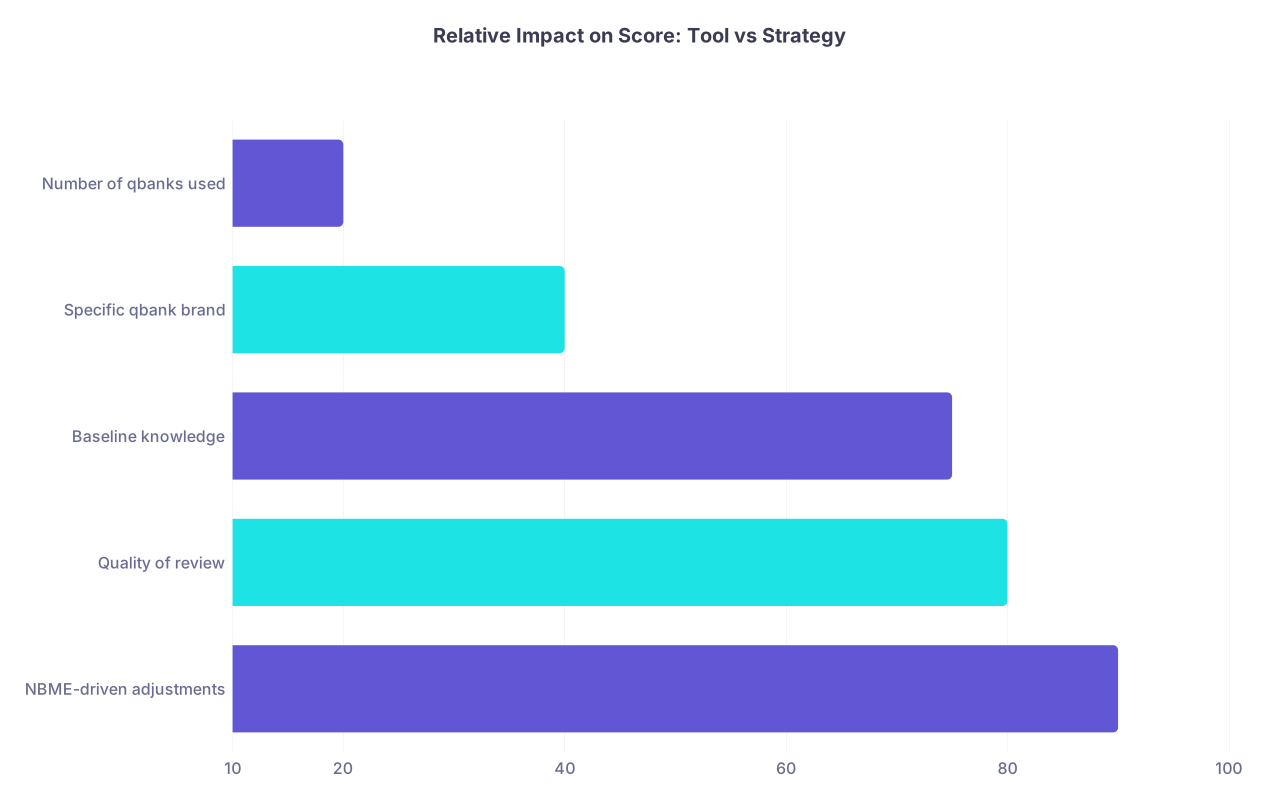
- UWorld is excellent but not mandatory. Practice with some high-quality qbank plus NBME self-assessments is what actually correlates with good outcomes.
- Finishing UWorld (once, twice, thrice) predicts far less than your NBME trajectory and how deeply you review your mistakes.
- Stop chasing brand names. Build a plan around the resources you have, measure your progress with NBMEs, and adjust ruthlessly. The strategy matters more than the logo.