
The Q‑bank percentages that are freaking you out are lying to you—or at least, they’re not telling the whole story.
You’re staring at 48%, 55%, maybe a 60% here and there, a sea of red and orange in UWorld or AMBOSS, and your brain is screaming: “I’m going to fail. I need to postpone. I’m not ready. Everyone else is scoring higher than this.”
I know that feeling way too well. The sinking stomach when you finish a block and your “percent correct” feels like a report card on your worth as a future doctor. The mental math of, “If I’m only at 55% now and my exam is in 3 weeks, I’m doomed.”
Let’s pull that apart. Because the real question isn’t: “Are my percentages bad?”
It’s: “With these percentages, this far out, should I actually postpone?”
First: What Do These Q‑Bank Percentages Really Mean?
Here’s the thing I wish someone had yelled at me early: raw Q‑bank percentages are trash as a single metric for “Am I ready?”
Q‑banks are built to hurt. Especially the big ones.
| Raw % Correct | Approx Percentile Range |
|---|---|
| 50% | ~35th–45th percentile |
| 55% | ~50th–60th percentile |
| 60% | ~65th–75th percentile |
| 65% | ~80th–85th percentile |
| 70%+ | ~90th percentile+ |
That 55% that feels like failure? For a lot of people, that’s dead‑center average.
And average on UWorld does not translate to failing a board exam.
But we don’t see percentile. We see that ugly percent correct number, and med school has trained us that anything below 80% means “you’re behind.”
What really matters about your Q‑bank performance:
- The trend (are you learning and improving, or flat/down?)
- The difficulty and type of questions you’re doing
- How similar they are to your real exam (UWorld/AMBOSS vs random free banks)
- What your NBME / official practice scores look like in comparison
Which leads to the uncomfortable truth: you can’t answer “Should I postpone?” based on Q‑bank percentages alone. Not honestly.
The Only Opinions That Matter: NBME / Official Practice Exams
You can be at 48–55% in your Q‑bank and still be on track.
You can also be at 65+% and very much not safe.
What actually predicts passing/failing? The boring, hated, anxiety-inducing NBME and “official” practice exams.
For Step 1/Level 1–type exams, the most important data points you’ve got:
- NBME Comprehensive Self-Assessments (e.g., NBME 25–31)
- NBME “Free 120” / Free practice questions from the test maker
- COMSAEs for COMLEX
- UWSAs (UWorld self-assessments) – helpful, but secondary to NBME
You’re sitting there like, “Yeah, cool, but my Q‑bank is 52%. What do I do with that?”
You combine it with your practice tests and timing.
Here’s the rough sanity check I use when people ask if they should postpone:
| Situation (2–3 weeks out) | Risk Level | Postpone? Probably... |
|---|---|---|
| Multiple NBMEs ≥ passing by 10–15+ points | Low | No |
| One NBME just above passing, others slightly below | Moderate | Maybe (case-by-case) |
| All NBMEs below or barely at passing | High | Strongly consider |
| No NBMEs taken, just Q‑bank % | Unknown | Take an NBME *now* |
If your NBMEs show you’re safely above passing, low Q‑bank percentages might just mean:
- You’re doing unused/difficult questions
- You’re fatigued and grinding
- You’re not reviewing deeply enough (fixable)
If your NBMEs are below or barely at passing, the Q‑bank numbers are secondary. Your practice exams are already screaming the answer.
But My Percentages Are Low. What’s Actually “Low” Weeks Before?
Let me be very blunt: everyone lies about their percentages.
People will say “I’m scoring in the 70s” and mean “I have some 70s sprinkled between a lot of 50s and 60s.” Or they’re cherry-picking blocks they did in their strongest subjects.
Realistic ranges, 3–5 weeks out, for people who eventually pass:
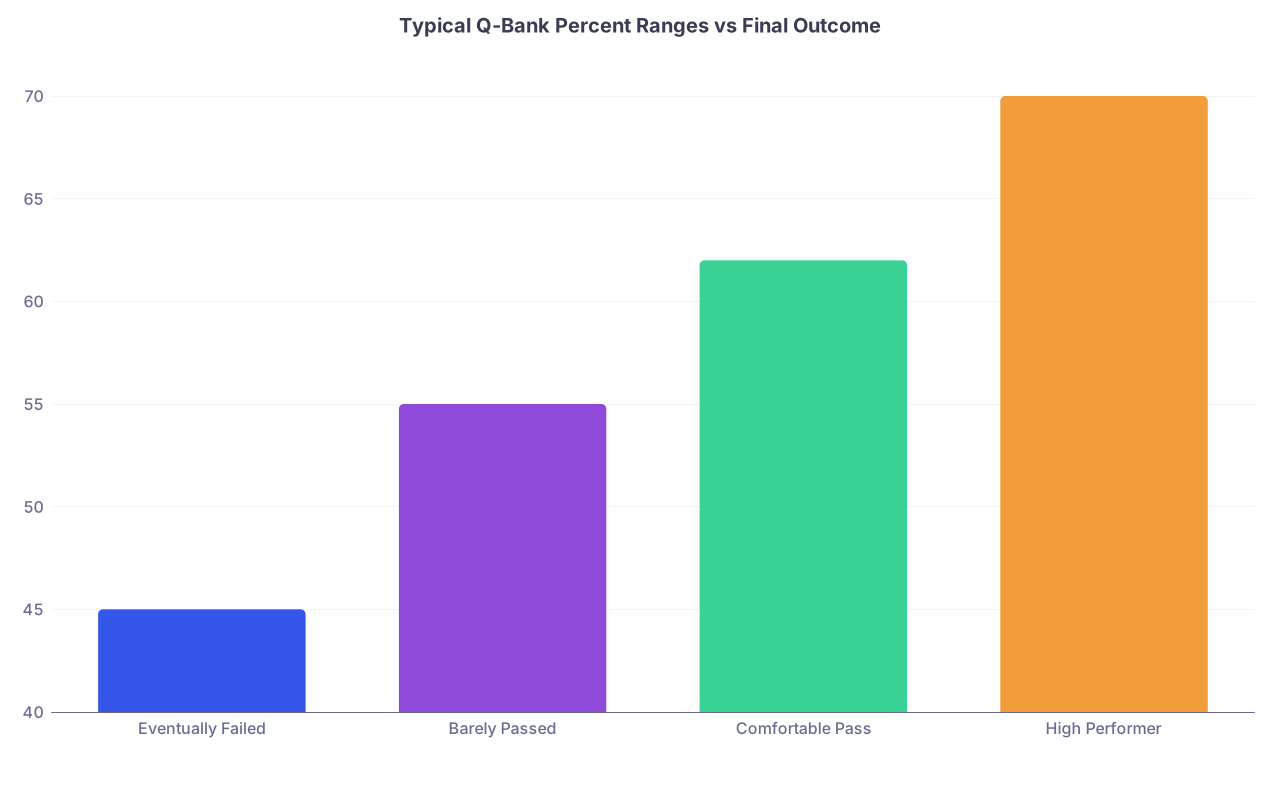
| Category | Value |
|---|---|
| Eventually Failed | 45 |
| Barely Passed | 55 |
| Comfortable Pass | 62 |
| High Performer | 70 |
Those numbers are averages, not their worst block on a post-call day.
So if you’re:
- 3–5 weeks out
- Averaging mid‑50s to low‑60s on **timed, random, new** questions
- And your NBMEs are trending upward near or above passing
You are not the disaster your brain is telling you you are.
Where I start to get nervous (and where postponement becomes a real conversation) is more like:
- Q‑bank averages in low‑50s or below
- And multiple NBMEs below passing
- And exam is <2–3 weeks away
One of those in isolation? Fixable. All three together? That’s where I’d be worried too.
How to Decide: A Simple (Painful) Flow
Here’s the ugly decision-tree you’re probably running in your head anyway—let’s just draw it out.
Notice how Q‑bank percentages aren’t even in that main decision flow. They’re context, not the driver.
Your next step actually isn’t “Should I postpone?”
It’s “Do I have objective data (NBMEs) that justify postponing—or justify not postponing?”
If the answer is no, you’re postponing based on vibes and panic. I get it. But that’s how you end up delaying 3 months, hating your life, and getting basically the same score you would’ve gotten earlier.
When Postponing Might Actually Help You (Not Just Soothe Anxiety)
There are situations where postponing is the right move. Not emotionally comfortable, but strategically smart.
Postponement makes sense when:
Your NBMEs are consistently below passing
Not one bad day. A pattern.Your trend is flat or downward despite honest studying
If NBME 27, 28, 29 are: 192 → 193 → 191 (or the equivalent for your exam), that’s a red flag.You’ve barely touched your Q‑bank
Like, 20–30% done total, and exam is in 2 weeks. You’re not magically absorbing the rest.You’re in full burnout / mental health crisis territory
Not just stressed. I mean: you can’t get through a block, you’re crying daily, you’re non-functional. There’s a line where “push through” becomes unsafe.You have a clear plan for the extra time
Not “I’ll just keep doing questions.” A real, targeted plan: weak systems, missed concepts, spaced assessments.
If that’s you, postponing isn’t weakness. It’s strategy. It will probably help.
If instead your situation is more like:
- NBME just above passing
- Q‑bank in the 55–60% range
- You’re exhausted but still functioning
- You could fix some big weak points in 2–3 weeks
Then postponing can easily turn into: more burnout, more doubt, and no meaningful score bump—just a longer sentence.
When Postponing Is Just Your Anxiety Talking
Here’s the version everyone is too polite to say out loud: a lot of us (me included) don’t want to feel uncomfortable, so we look for a reason to delay.
You might be falling into the postponement trap if:
- You keep saying, “I’ll schedule after one good practice test” and then never feel the score is “good enough”
- You’re secretly chasing some imaginary feeling of “finally ready” that literally no one has
- You’re way above passing but scared of not hitting some prestige score (for a specialty you’re not even 100% sure you want)
- Your biggest argument to postpone is: “My UWorld % is lower than what I see on Reddit”
I’ve watched people postpone 1–2 months with:
- NBMEs already >230 (or strong Level 1 equivalents)
- Q‑bank averages in the low‑60s
- Nothing major changing except more anxiety, more second-guessing, and honestly, more burnout
They end up with… a tiny bump in score. Or the same score.
But they paid for it with months of their life and sanity.
You might not feel “ready” even if you are. That feeling is not a reliable metric.
How to Use Your Next 1–3 Weeks If You Don’t Postpone
Let’s say you look at your data and grudgingly accept:
“I probably shouldn’t postpone. I’m anxious, not actually failing.”
Then the question becomes: how do you stop spiraling about those Q‑bank numbers and actually make them work for you?
Forget the total average for a second. Focus on:
Subject breakdowns
You don’t need 80% everywhere. You need to stop bleeding points in the same 2–3 areas.Error patterns
Are you missing:- Conceptual questions?
- “Gotcha” detail questions?
- Multi-step reasoning questions?
- Time-pressure questions at the end of blocks?
Timed, exam-like practice
If your percentages are low because you’re doing mixed, timed, random blocks that feel brutal… good. That’s the point.
Use a simple, ruthless plan:
2–3 timed blocks per day (or whatever your energy allows)
For each wrong question:
- One sentence: “What did I think was going on?”
- One sentence: “What’s the key concept I missed?”
- One line in a running doc / flashcard if it’s new, not just “I misread”
Short, focused content review only where your questions prove you’re weak
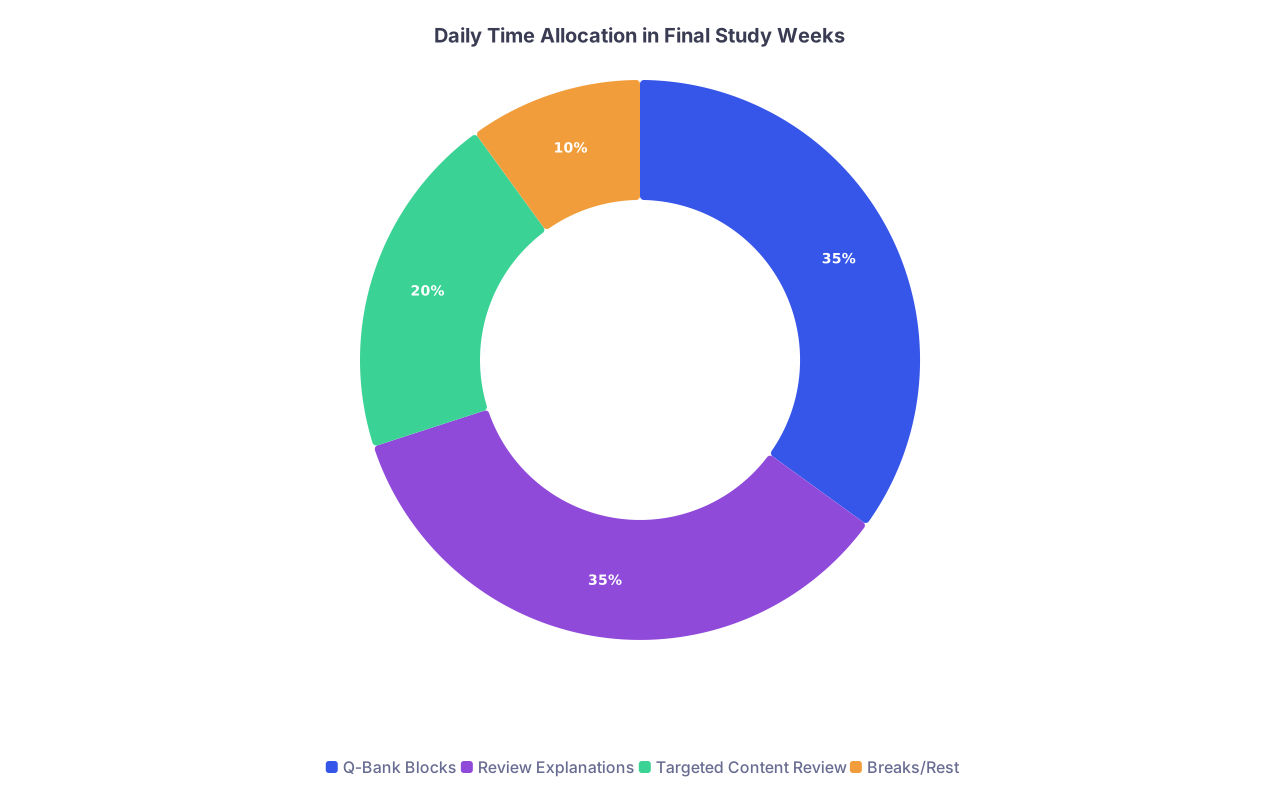
| Category | Value |
|---|---|
| Q-Bank Blocks | 35 |
| Review Explanations | 35 |
| Targeted Content Review | 20 |
| Breaks/Rest | 10 |
Most people waste their final weeks trying to watch every video they skipped or re-read half of First Aid. That’s a security blanket, not a strategy.
How Much Score Movement Is Realistic If You Do Postpone?
The fantasy:
“I’ll postpone 4–6 weeks and jump 40 points.”
Does it happen? Rarely. You hear those stories because they’re dramatic.
What you don’t hear: the hundred people who postponed, gained 5–10 points, and just got more tired.
Realistic gains, in most cases:
- 1–2 weeks extra: maybe 5-ish points
- 3–4 weeks extra: 5–15 points if you fix true gaps
- 8+ weeks extra: can be big… if you were genuinely underprepared and completely overhaul your approach
Postponing from 3 weeks out to 7 weeks out doesn’t magically turn a 190 into a 250.
But it might turn a likely fail into a pass. Or a borderline pass into a comfortable one.
That’s where postponement is powerful: pulling you over the pass line, not turning you into a different person.
The Quiet Reality Almost No One Admits
Here’s the harsh, slightly depressing, but also freeing truth:
You will probably never feel “ready” for boards.
You will probably always remember some number from your Q‑bank that haunts you.
You will probably think, “If I just had 2 more weeks…”
And yet, most people:
- Take the exam while still terrified
- Walk out convinced they failed
- Pass anyway
The ones who crash usually didn’t crash because they had 55% on UWorld. They crashed because:
- They never honestly looked at NBME data
- Or they ignored repeated failing practice scores
- Or they tried to brute-force content instead of learning from questions
- Or they were so burned out they couldn’t think straight on exam day
Which, to be fair, might still be you right now. But that’s a different conversation than “My Q‑bank is low; should I move my exam?”

If You’re Still Spinning: A 24–48 Hour Plan
If your brain is stuck in a loop, do this, mechanically:
Schedule (or take) an NBME / official practice within 1–2 days
No, you’re not “saving it.” You need data more than you need emotional protection.Review it ruthlessly
- What’s your overall score relative to passing?
- Which systems/subjects are tanking you?
- Any obvious test-taking issues (timing, misreads, second-guessing)?
Compare that number to your fear
If you’re:10–15 points above passing: your anxiety is louder than reality
- 0–10 points above passing: maybe okay, but you need targeted work
- Below passing: now you have a rational case to consider postponement
Then, and only then, ask:
“If I had 2–4 more weeks, could I realistically fix the issues this NBME is showing?”
That’s the actual postponement question. Not “Do I feel ready?”
More like: “Will this extra time change my trajectory, or just drag out my misery?”

The 3 Things I’d Want You to Remember
- Q‑bank percentages alone are a terrible reason to postpone. They’re context, not verdict.
- Your NBME/official practice scores and trends are the only real evidence that should drive a postponement decision. Use them, even if they scare you.
- Postponing is helpful when you’re objectively underpassing and have a real plan. Otherwise, it’s usually just trading time and mental health for a tiny (or nonexistent) score bump.
You’re allowed to be scared. You’re allowed to feel underprepared.
But don’t let a 52% block at midnight make a decision your actual data doesn’t support.