The most common exam mistake is not laziness. It is switching to question mode either three weeks too early or three weeks too late.
You want the pivot from content‑heavy books to pure question mode to be deliberate, scheduled, and ruthless. Not based on anxiety the night you see your first bad NBMEs.
Let me walk you through exactly when that switch should happen and how it changes day‑by‑day.
Big Picture: The Three Phases Before a Major Exam
We will stay concrete here and assume a big written exam: Step 1, Step 2 CK, or a major NBME-style shelf. The timing scales, but the phases are the same.
At the highest level, your study arc has three phases:
- Foundation Phase – Content Heavy (Books + Light Qs)
- Transition Phase – Mixed (Still Some Reading, More Qs)
- Execution Phase – Pure Question Mode (Qs + Review Only)
The switch you are asking about is the boundary between 2 and 3.
To make this real, I will frame it as a Step‑style 8‑week dedicated period, then show how to compress it for shelves and in‑course exams.
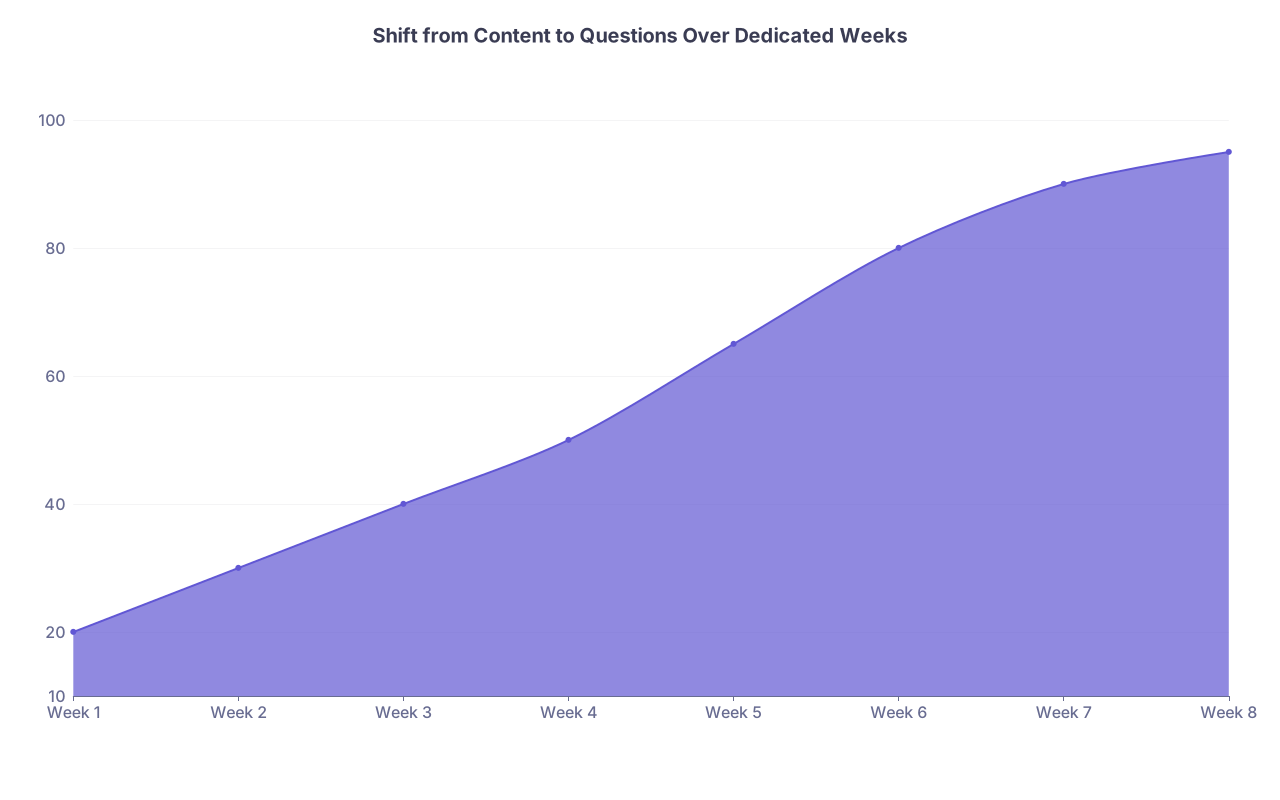
| Category | Value |
|---|---|
| Week 1 | 20 |
| Week 2 | 30 |
| Week 3 | 40 |
| Week 4 | 50 |
| Week 5 | 65 |
| Week 6 | 80 |
| Week 7 | 90 |
| Week 8 | 95 |
Think of the “values” above as the percent of study time on questions + review. By the end, you are basically at 100%.
Month‑By‑Month: When You Are 3–4 Months Out
4 Months Before Exam – Pure Foundation
At this point you should still be in content‑heavy territory.
Typical pattern:
- Step 1 during MS2 spring
OR - Step 2 CK after core rotations
OR - A major cumulative final in systems‑based curriculum
Your focus:
60–80% of your time: primary resources
- Pathoma / Boards and Beyond / OnlineMedEd
- Class notes if they are high yield
- A main text (First Aid, Sketchy, or institution‑specific syllabus)
20–40%: untimed, tutor mode questions
- UWorld, AMBOSS, or Rx, depending on the exam
- Used as teaching tools, not assessment
At this point you should not be in “pure question mode.” That is premature. You do not have enough framework in your head to benefit from maximal question exposure.
Signals you are correctly in content mode now:
- You frequently open a solution and realize you never even heard of the underlying concept.
- Reading a chapter genuinely improves your ability to understand explanations.
- Your question performance is highly volatile (40% one day, 65% the next) and driven by whether you “saw it before.”
Your job in this month is simple:
- Build scaffolding.
- Tag weak systems / subjects.
- Learn how your primary question bank “sounds.”
No panic, no “I need to do 120 questions a day” nonsense yet.
3 Months Before Exam – Content Still Dominant, But Start Testing Reality
At this point you should introduce your first serious self‑assessment if you have not already:
- For Step 1: NBME or UWorld self‑assessment
- For Step 2 CK: NBME / UWSA
- For shelves: NBME subject exam or your school’s practice
Your time split per week should start drifting:
- ~50–60%: content resources
- ~40–50%: questions in tutor mode + some timed blocks on weekends
If your self‑assessment score is:
- Far below your target (e.g., Step 2 CK 205 when you want 250+)
→ stay more content‑heavy for a few more weeks. - In striking distance but weak in specific systems (e.g., Neuro and Renal are disaster zones)
→ begin targeted content + questions in those areas.
You are still not in pure question mode. But you have now set the deadline for your future pivot.
Week‑By‑Week: The 8‑Week Dedicated Timeline
From here on, I will assume an 8‑week dedicated block. Adjust proportionally if you have 6 or 10 weeks; the logic is the same.
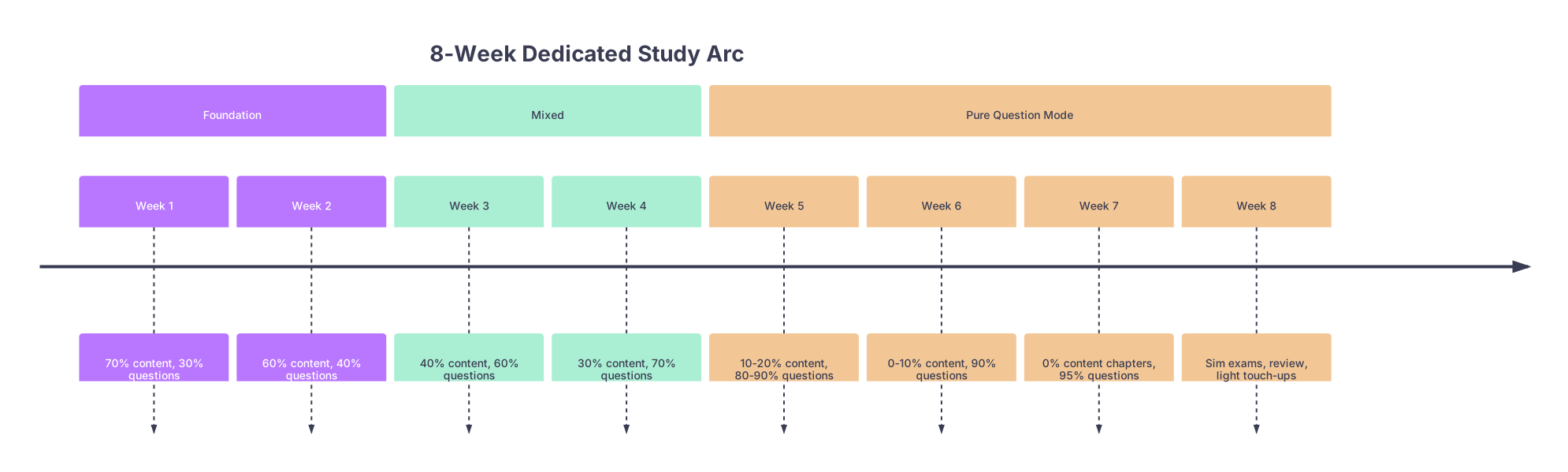
| Period | Event |
|---|---|
| Foundation - Week 1 | 70% content, 30% questions |
| Foundation - Week 2 | 60% content, 40% questions |
| Mixed - Week 3 | 40% content, 60% questions |
| Mixed - Week 4 | 30% content, 70% questions |
| Pure Question Mode - Week 5 | 10-20% content, 80-90% questions |
| Pure Question Mode - Week 6 | 0-10% content, 90% questions |
| Pure Question Mode - Week 7 | 0% content chapters, 95% questions |
| Pure Question Mode - Week 8 | Sim exams, review, light touch-ups |
Weeks 1–2: Heavy Content, Early Questions
At this point you should:
Spend mornings on structured content:
- Watch 2–4 video lectures
- Read 10–20 pages of your main text
- Update or skim Anki if you use it
Do 40–60 questions/day in the afternoon/evening:
- Mostly tutor mode, single‑system blocks
- Use explanations as “mini‑lectures”
Estimate:
- Week 1: ~70% content / 30% questions
- Week 2: ~60% content / 40% questions
You are still in content‑heavy mode, but you are starting to let questions bite.
The mistakes here:
- People wait until Week 3 or 4 to open UWorld. By then they are behind in exposure.
- Or they do 120 questions/day raw but never consolidate content. UWorld becomes glorified flashcards.
Week 3: The First Real Shift
At this point you should feel your reading speed and retention slowing. The marginal gain from another chapter is dropping.
Your schedule now:
- 40–60 questions in the morning, timed, mixed subjects.
- Content blocks in the afternoon that are strictly targeted:
- You missed every question on vasculitides? You review vasculitides only.
- Your last NBME showed weak endocrine? You review that chapter and sketch.
No more “I am going to read First Aid cover to cover again.” That phase is over.
Time split:
- ~40% content / 60% questions
Week 4: Pivot Point – Last Week Before Pure Question Mode
Here is the line in the sand.
For most students, end of Week 4 (or roughly 4 weeks before exam day) is the right time to fully switch to pure question mode.
By now:
- You have:
- Finished ≥ 50–65% of your main question bank
- Touched all major systems at least once
- Your self‑assessments are:
- Within 10–20 points of your goal
- Showing patterned weak areas (e.g., all immunology, not random scatter)
At this point you should:
- Drop all linear reading of big books.
- Keep only:
- Short notes
- Sketchy images / diagrams
- High‑yield tables
- Flashcards
This is where most people panic and cling to content. They say, “I just need to reread cardiology.” They do not. They need 6 blocks of timed cardio questions and brutal post‑block review.
The Switch: What “Pure Question Mode” Really Looks Like
Pure question mode does not mean “I do questions and move on.” It means questions are the spine of your day and any content is pulled in only to explain missed or shaky concepts.
Weeks 5–6: Deep Question Immersion
At this point you should plan your days around two anchors:
- Question Blocks (Timed, Exam‑Style)
- Systematic Review of Every Missed Concept
A sample day in Week 5:
Morning
- 2 blocks of 40 questions each (80 total), timed, mixed, random
- 2 hours total for doing blocks
Midday
- 3–4 hours of reviewing those 80 questions
- For each missed or guessed question:
- Read full explanation
- Add 1–2 targeted notes or cards
- If you feel truly clueless on a topic, skim a focused 5–10 minute video or a short section in your text. Then stop.
Late Afternoon / Evening
- 20–40 light review questions (from a second bank, incorrects, or flashcards)
- Brief scan of weak systems
Your time split:
- 80–90% questions + explanation review
- 10–20% content snippets, never full chapters
At this stage, your instinct to open a 40‑page GI chapter should trigger an alarm. That is procrastination dressed up as “foundation work.”
Week 7: Almost Nothing But Reps and Review
At this point you should behave like an athlete in the last hard week of training.
- 80–120 questions/day, depending on your stamina and remaining bank volume
- Every block timed. No more tutor mode except for:
- Ultra‑weak niche topics
- Rapid, focused learning on a concept that keeps burning you (like complement pathways or obscure drug side effects)
You review:
- Every question you got wrong
- Every question you got right by guessing
- A sample of questions you got right confidently, to make sure your reasoning is aligned with the test’s logic
Your content usage now:
- Single‑page summaries
- Your own micro‑notes
- Quick hits like UpToDate/AMBOSS concept cards when needed
Not full lectures. Not 40‑minute videos.
Week 8 (Final Week): Simulate and Sharpen
At this point you should already be in pure question mode and simply refine it.
Rough framework:
- 2 full‑length simulations this week (NBMEs/UWSAs or school‑provided forms)
- On non‑sim days:
- 1–2 blocks of new questions
- Several hours reviewing:
- Wrong / guessed items from all recent exams
- Your “Core Weak List” (a running doc of concepts you consistently miss)
- Question volume decreases
- Emphasis on:
- Incorrects
- High‑yield quick reviews
- Mental reset
No massive new resources. No cramming 500 new facts.
How to Adjust This Timeline for Shelf Exams and Class Tests
Not every exam has an 8‑week dedicated period. You still need a clear pivot point.
For 4–6 Week Shelf Prep (During a Rotation)
Structure:
Weeks 1–2:
- 60–70% content (OnlineMedEd, annotated class slides)
- 30–40% questions (UWorld / AMBOSS for that shelf, tutor mode okay)
Week 3:
- 50–60% questions, mostly timed
- 40–50% targeted content
Final 10–12 days:
- Switch to pure question mode
- 60–80 questions/day + aggressive post‑block review
- Only use content to patch specific holes exposed by questions
For In‑Course Exams (Blocks During Pre‑Clinicals)
Shorter arc, same logic:
First 60–70% of the block:
- Primary focus on lectures / class notes
- Small daily dose of old exam questions or commercial questions
Last 30–40% of the block (often final week):
- Pivot to past exams and question banks
- No more “from scratch” reading of lecture slides
- Only targeted look‑ups based on missed questions
Objective Signals You Are Ready to Switch
Students always ask, “But how do I know it is time to go pure questions?”
Use simple, brutal criteria.
| Signal Type | Threshold Suggesting Switch |
|---|---|
| Bank Progress | ≥ 50–65% of primary bank completed |
| NBME/UWSA Trend | Within 10–20 points of target score |
| Concept Gaps | Mostly refinements, not ‘never-seen-before’ topics |
| Reading Fatigue | New chapters rarely change your score profile |
| Time to Exam | ≤ 4 weeks for big boards, ≤ 10–12 days for shelves |
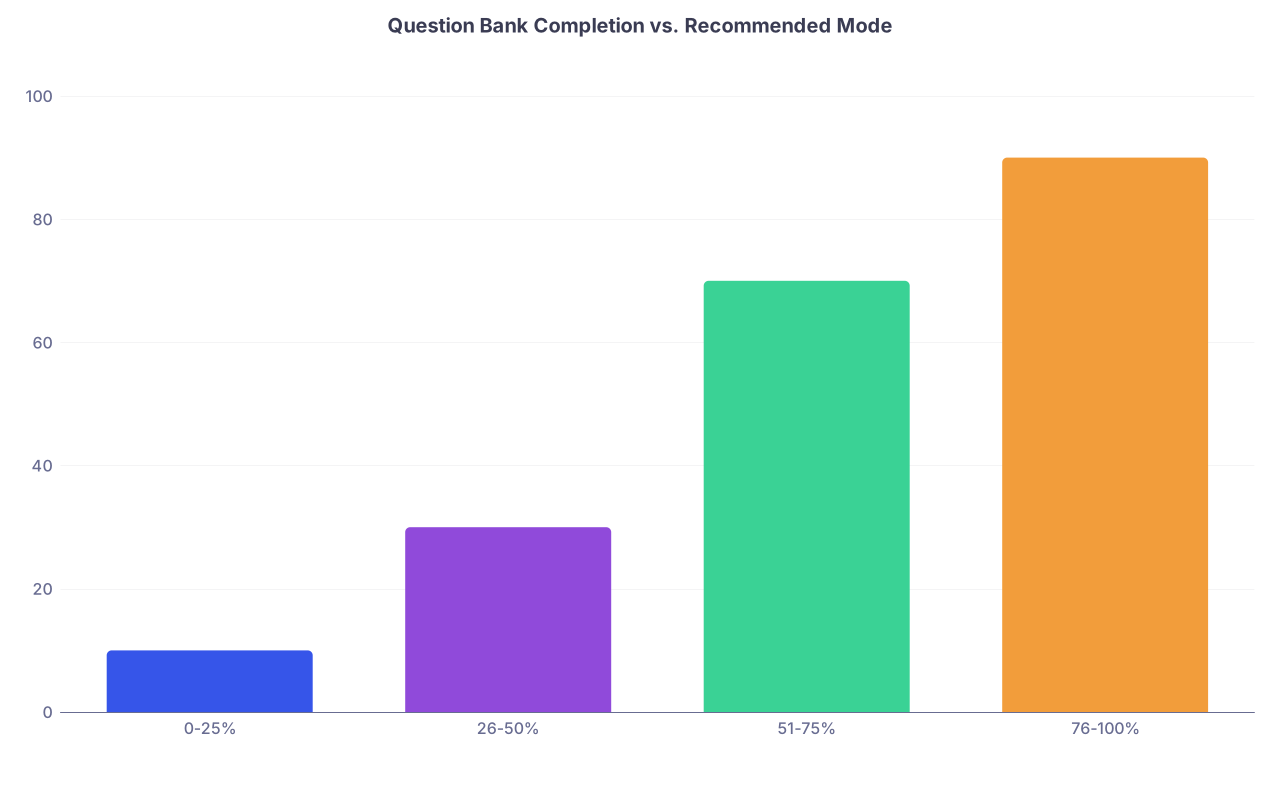
| Category | Value |
|---|---|
| 0-25% | 10 |
| 26-50% | 30 |
| 51-75% | 70 |
| 76-100% | 90 |
Interpretation:
- Below ~50% bank completion: you are still in “content + questions” land.
- Past ~60% with ≤ 4 weeks left: you should be shifting heavily into pure question mode unless your assessments are catastrophic.
Red Flags: Signs You Switched Too Early or Too Late
You Switched to Question Mode Too Early If…
- You are below 40–50% on question blocks for days and have no idea why.
- Every other question explanation introduces a brand‑new concept to you.
- You are spending so long looking up every explanation that you barely finish any blocks.
In this case:
- Pull back for 5–7 days.
- Reinforce 2–3 core resources in your weakest systems.
- Then re‑enter heavy question use, but in tutor mode for a bit.
You Switched Too Late If…
- You are 2–3 weeks from exam day and:
- Less than half your question bank is done.
- You have only taken 0–1 self‑assessments.
- Your stamina for timed blocks is poor.
Here, you must be ruthless:
- Abandon linear content reading today.
- Move into:
- 2–3 timed blocks/day
- Focused review of explanations
- Self‑assessment every 7–10 days
You will feel underprepared. Everyone does. The cost of staying married to content this late is far greater than the discomfort of seeing low scores now.
How Your Daily Checklist Should Change At the Switch
Before the switch (content‑heavy):
- 2–4 video lectures or 1–2 chapters
- 40–60 questions (tutor mode okay)
- 1–2 hours targeted review of wrong questions
- Tagging weak topics for future focused study
After the switch (pure question mode):
- 2–3 blocks of 40 questions, timed, mixed
- 3–5 hours reviewing all wrong/guessed questions
- Brief, focused content dips only when explanations are insufficient
- Running list of recurring weak patterns and high‑yield summaries
If your to‑do list still includes “read chapter X” more than two weeks before the exam, you are probably clinging to content longer than you should.
Final Tight Summary
- The hard pivot to pure question mode usually happens about 4 weeks before a major exam, or 10–12 days before a shelf, once you have completed ~50–65% of your main bank and your self‑assessments are within 10–20 points of your goal.
- Before that point, content and questions must overlap, with questions gradually increasing from 30% to 60–70% of your study time as you move through dedicated.
- Once you switch, commit: your days should revolve around timed blocks and meticulous review, with content pulled in only to clarify missed concepts—not as full chapters or long lectures.