The worst advice you’ll hear about rank lists is “it doesn’t matter if you only have a few interviews.” It absolutely does matter—and your rank strategy can be the difference between matching and scrambling.
You’re asking the right question: How many programs should I rank if I only have a few interviews? Let me answer it directly first, then we’ll unpack the strategy.
If you have 1–3 interviews, you should rank every single program you’d be willing to attend. No exceptions.
You are not in a position to be picky with the number of programs on your list. Your strategy is about maximizing match probability, not optimizing geographic convenience or “vibes.”
Now let’s get specific.
1. The Hard Truth About “Few Interviews”
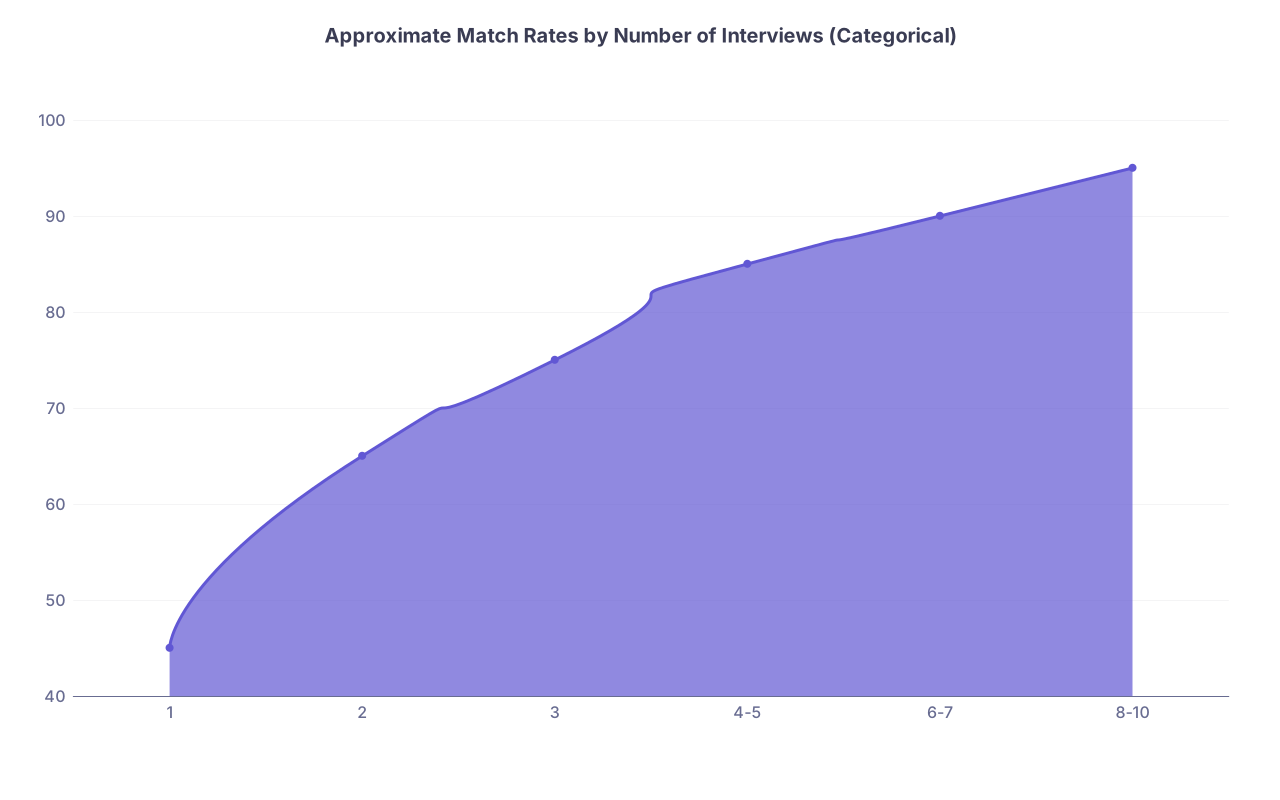
| Category | Value |
|---|---|
| 1 | 45 |
| 2 | 65 |
| 3 | 75 |
| 4-5 | 85 |
| 6-7 | 90 |
| 8-10 | 95 |
I’ve watched this exact scenario play out multiple times every year:
- A student with 3 interviews “ranks conservatively,” leaves off one program because “I really can’t see myself living there.”
- March: they go unmatched by one spot. End up SOAPing into a program dramatically worse than the one they left off.
The NRMP data are clear: your chance of matching is more tightly linked to the number of interviews than anything else once you get to the rank list stage. When you only have a few shots, the game is survival, not perfection.
What “few interviews” usually means in practice:
- For most core specialties (IM, FM, Peds, Psych): 1–4 interviews is “few”
- For competitive specialties (Derm, Ortho, ENT, Plastics): 1–3 may already be game-over level low, but the rule still applies: rank every place that’s even remotely acceptable.
Here’s the mindset shift you need:
With a small number of interviews, your rank list should be maximally inclusive, not curated.
You’re not building a dream list. You’re building a safety net.
2. Exact Guidance: How Many Programs You Should Rank
Let me give you the straight numbers by scenario.
If you have 1 interview
You rank 1 program. That’s it.
But here’s the key decision: Should you rank it at all if you hate it?
In almost every case: yes, you still should.
You only consider not ranking it if:
- You are truly willing to risk going unmatched and SOAP/try again next cycle
- AND the program has serious red flags:
- Systemic abuse or chronic duty hour violations
- Major ACGME issues, recent probation
- Dangerous environment or blatant discrimination you personally experienced
“I didn’t like the city” and “their call schedule looks rough” are not valid reasons to leave it off when it’s your only shot.
If you have 2–3 interviews
Rank all of them. Every single one you’d be willing to attend.
You do not hold programs off your list hoping to “signal” more interest to others. The Match algorithm does not reward that. It already favors you (the applicant) if programs like you at all.
Real example I’ve seen:
- Student: mid-tier US MD, Step 2 = 214, 3 interviews in IM.
- “I just don’t think I could do three years in the Midwest, I’ll only rank the two coasts.”
- Went unmatched, did prelim + research year, reapplied → matched in the Midwest anyway… where? The program they refused to rank the first time.
If you have 4–6 interviews
You’re in better territory but still not safe.
Rule stays the same: rank them all unless you have true deal-breaking concerns.
With 4–6 interviews in a moderately competitive field (IM, Peds, FM, Psych, Neuro), your odds are pretty reasonable, especially if you’re a US MD. But I’ve seen US MDs with 5 interviews go unmatched because they:
- Left one program off due to location
- Ranked a couple of programs unreasonably low because of “fit”
- Overestimated their competitiveness relative to others at those interviews
If you have >6 interviews (but still feel nervous)
You can start to be slightly selective, but here’s the reality: there is almost no downside to ranking more programs. The algorithm doesn’t punish you for having a long list.
3. How the Match Algorithm Actually Treats Your Rank Length

| Step | Description |
|---|---|
| Step 1 | You rank programs |
| Step 2 | Programs rank applicants |
| Step 3 | Algorithm starts with your top choice |
| Step 4 | You tentatively match there |
| Step 5 | Algorithm tries your next program |
| Step 6 | Algorithm may later upgrade you |
| Step 7 | Final match result |
| Step 8 | Program has space and ranks you? |
The Match algorithm:
- Starts from your #1 choice, tries to place you there
- If that doesn’t work, it moves down your list
- It never penalizes you for having more options at the bottom
Meaning: adding a “backup” program can only help you. It cannot lower your chance at higher programs. That’s not an opinion; that’s baked into the algorithm design.
Where people get burned is misunderstanding this and thinking:
- “If I rank that ‘safety’ program, the algorithm might place me there instead of my dream program.”
Wrong. A lower-ranked program can never “steal” you from a higher-ranked program that wanted you.
So with few interviews, the math is brutal:
- 2 interviews = 2 possible homes in the algorithm
- 3 interviews = 3 possible homes
- You do not voluntarily remove homes from your list unless they’re literally unlivable for you.
4. When (If Ever) You Should Leave a Program Off Your List
You shouldn’t be reckless. There are legitimate reasons to leave a place off your rank list, even with few interviews. But the bar should be high.
Valid reasons to exclude a program:
- Major safety or abuse concerns
- Residents openly describe bullying, retaliation, or unsafe patient loads
- You saw or heard blatant racism, sexism, or harassment that leadership brushed off
- Accreditation disaster territory
- Recent or current probation, major ACGME citations, mass resident exodus
- Personal non-negotiables that are truly non-negotiable
- You physically cannot live in that region due to custody arrangements, dependent care, or immigration constraints
- Your health (or a close family member’s health) genuinely requires being near specific resources
Weak reasons that are not enough to leave it off when you only have a handful of interviews:
- “The residents didn’t seem as happy as Program X”
- “They work more nights than I’d like”
- “The city isn’t very exciting”
- “They don’t have as much research as I hoped”
- “Everyone seemed kind of quiet on interview day”
Those might matter if you had 15 interviews. With 2 or 3? They’re luxuries.
5. Strategy If You’re Dual Applying (Categorical + Prelim/TY)
This trips people up constantly.
| Scenario | What To Do |
|---|---|
| Categorical only interviews | Rank all categorical programs you’d attend |
| Categorical + prelim/TY | Create combined lists with all acceptable combos |
| Only prelim/TY | Rank all and prepare SOAP/next cycle plan |
| Weak interest in some prelims | Still rank if you’d do them rather than SOAP |
If you applied to both:
- A categorical specialty (e.g., Neurology, Anesthesiology, Radiology)
- AND prelim/TY years
You need to rank them in combined order, not separate universes.
Example structure:
- Categorical Program A (no linked prelim)
- Categorical Program B + Prelim X
- Categorical Program B + Prelim Y
- Prelim X only
- TY Program Z only
You should still:
- Rank every categorical program you’d legitimately attend
- Rank every prelim/TY that would be acceptable as a bridge year, especially if you’re okay reapplying
Don’t pull prelims off your list because “I really want to go straight categorical.” If your choice is prelim + reapply versus SOAP chaos, you keep them on.
6. Emotional Reality: Regret Is Worse Than a Tough Location

I’ve never heard a resident say:
“I regret matching into a program I was mildly lukewarm about.”
But I’ve absolutely heard:
“I’ll always wonder if I’d matched the first time if I’d just ranked that one extra place.”
Real talk:
- Residency is temporary. Three to seven years, then you have a lot more control.
- Not matching affects everything—finances, confidence, trajectory, sometimes visa status.
If a program is:
- Safe
- Accredited
- Training you decently
- Not morally or physically toxic
Then matching there is almost always better than not matching at all, even if you don’t love the location, the call schedule, or the prestige level.
Will some residents switch programs later? Yes. It happens. Matching gives you that option. Not matching often takes it off the table.
7. Quick Decision Framework You Can Use Today
Here’s the no-nonsense filter you should run each program through when you only have a few interviews:

| Step | Description |
|---|---|
| Step 1 | Did I interview here? |
| Step 2 | Do NOT rank |
| Step 3 | Rank on list in honest preference order |
| Step 4 | Would I rather do this than SOAP or reapply? |
| Step 5 | Serious safety or abuse concerns? |
If the answer to “Would I rather do this than SOAP or reapply?” is yes → it goes on the list.
You can still rank it last. But it stays.
And that’s the line: “I would rather match here than go unmatched.”
Be honest with yourself, not dramatic. Most places will clear that bar.
8. How Many Programs Should You Rank? Final Takeaways
Let me boil this down as clearly as possible:
- If you have 1 interview: rank it unless it’s truly unsafe or untenable.
- If you have 2–3 interviews: rank all of them that you’d prefer over going unmatched.
- If you have 4–6 interviews: still rank all acceptable programs; you’re not so safe you can afford to be choosy.
- Only leave a program off if:
- It’s clearly toxic or unsafe
- Or you are genuinely willing to risk not matching rather than going there
More ranks never hurt you. Fewer ranks can absolutely hurt you.

FAQ: “Few Interviews” and Rank Lists (7 Questions)
If I only have 2 interviews, do I really have to rank both?
If you’d rather train at either than go unmatched, yes. Rank both. Holding one off your list doesn’t make the other more likely. It just removes one possible match outcome and raises your risk of going unmatched.Can ranking a “backup” program lower my chance of matching at my top choice?
No. The Match algorithm always tries to place you at your highest-ranked program that also ranks you high enough. A lower program cannot “steal” you from a higher one. Ranking more programs only protects you; it never harms your chances at the top of your list.Should I rank a program I actively disliked on interview day?
Ask one question: “Would I rather do residency here than go unmatched and SOAP/reapply?” If yes, rank it—just rank it last. Disliking the vibe, the city, or the call schedule is not a strong enough reason to skip ranking if you only have a few interviews and no clear safety issues.What if my partner or family absolutely cannot move to one location?
That’s a legitimate reason to leave a program off, but be honest about “cannot” vs “would strongly prefer not to.” Legal custody issues, dependent care logistics, or health needs can make a location truly impossible. Just remember: every program you cut off your list meaningfully increases your risk of going unmatched when you have few interviews.How should I rank prelim/TY programs if I also have categorical interviews?
Make one combined list. Rank categorical positions first in the order you truly want them, then add prelim/TY options in realistic combinations. After that, list any stand‑alone prelim/TY positions you’d be willing to do if you end up reapplying. Again: rank every prelim/TY you’d rather do than SOAP.Do programs see where I ranked them or how many I ranked?
No. Programs do not see your rank order or how many programs you ranked. They only see their own rank list and final Match outcomes. You lose nothing politically or “optics-wise” by ranking many programs, including ones you were lukewarm about.Is there ever a situation where going unmatched is better than matching at a low-tier or undesirable program?
Rarely—and usually only if the program is genuinely unsafe, on the verge of losing accreditation, or completely incompatible with your life circumstances. Prestige alone is a terrible reason to risk going unmatched. A solid but unglamorous program almost always beats SOAP chaos, a forced gap year, and reapplying from a weaker starting point.
Open your rank list right now and ask, for each program:
“Would I rather match here than go unmatched?”
Any program that passes that test goes on the list—especially if you only have a few interviews.