
What happens when you’re making $400,000 a year and still feel broke?
I’ve watched attendings hit that income level and higher—cards maxed, taxes under-withheld, no real investments, zero asset protection—and still say with a straight face: “It’s fine. I’ll just earn more.”
That line is the financial equivalent of “I’ll start my diet on Monday.” It sounds logical. It buys you temporary comfort. And it’s exactly how high-income physicians end up working until 70 because they “can’t afford” to stop.
Let’s dismantle this.
The “High Income Immunity” Myth
The core fantasy goes like this:
“I’m a doctor. My earning potential is huge. I may be behind on savings, investing, or planning now, but once I’m done with loans / fellowship / kids in daycare / buying the ‘forever house’… then I’ll crank up the investments and it’ll all work out.”
Reality check: physicians are spectacularly good at turning high incomes into fragile finances.
Not because they’re dumb. Because the system quietly punishes late, sloppy planning—especially at high income levels.
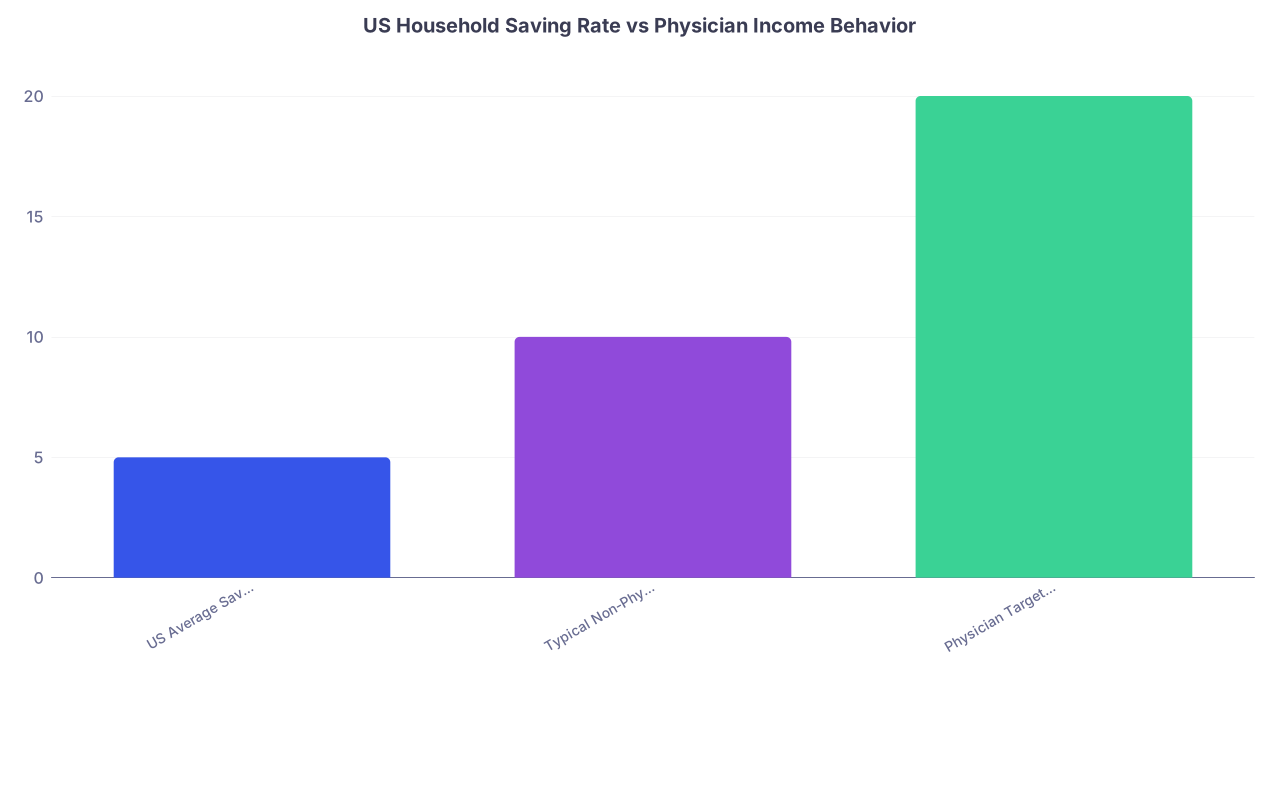
| Category | Value |
|---|---|
| US Average Saving Rate | 5 |
| Typical Non-Phys High Earner | 10 |
| Physician Target to Retire by 60 | 20 |
That bar chart is the uncomfortable truth in numbers: if you actually want to retire before your joints, back, or mind do, you need to behave very differently from the average “high earner.”
You don’t get immunity because your paycheck is bigger. The opposite happens:
The higher your income, the more costly every year of delay, waste, and bad structure becomes.
Why “I’ll Just Earn More” Fails Mathematically
Forget feelings for a moment. Look at the math.
Imagine two physicians, both hitting attending-level income at 32, both eventually saving $60,000 per year into investments, earning a modest 6% annual return.
- Dr. A starts investing at 32
- Dr. B waits “just 10 years” and starts at 42
Both stop at 62.
| Scenario | Start Age | Annual Invest | End Age | Approx Portfolio at 62 (6% return) |
|---|---|---|---|---|
| Dr. A | 32 | $60,000 | 62 | ~$5.0 million |
| Dr. B | 42 | $60,000 | 62 | ~$2.1 million |
Same income. Same savings rate. Same return. The only difference is when they stopped telling themselves, “I’ll start later.”
Dr. B would have to more than double annual investing just to catch up. That’s where “I’ll just earn more” usually enters the chat. Except it rarely works.
Because “earning more” does not happen in a vacuum:
- Higher income → higher marginal tax rate
- Higher income → lifestyle creep expectations from you and everyone around you
- Higher income → more complex legal and tax mess if you don’t structure things right
You’re not playing with simple addition. You’re playing against compounding—for or against you.
You either harness it early, or you spend the rest of your career trying to brute-force your way past it with extra shifts and burnout.
Lifestyle Inflation: The Silent Income Eraser
I’ve lost count of how many times I’ve heard:
“I’ll max out my 401(k) after I pay off the car / renovate the kitchen / upgrade the house / take the big vacation. I mean, I’m going to be making more next year anyway.”
Fast-forward five years. Same line. Different toys.
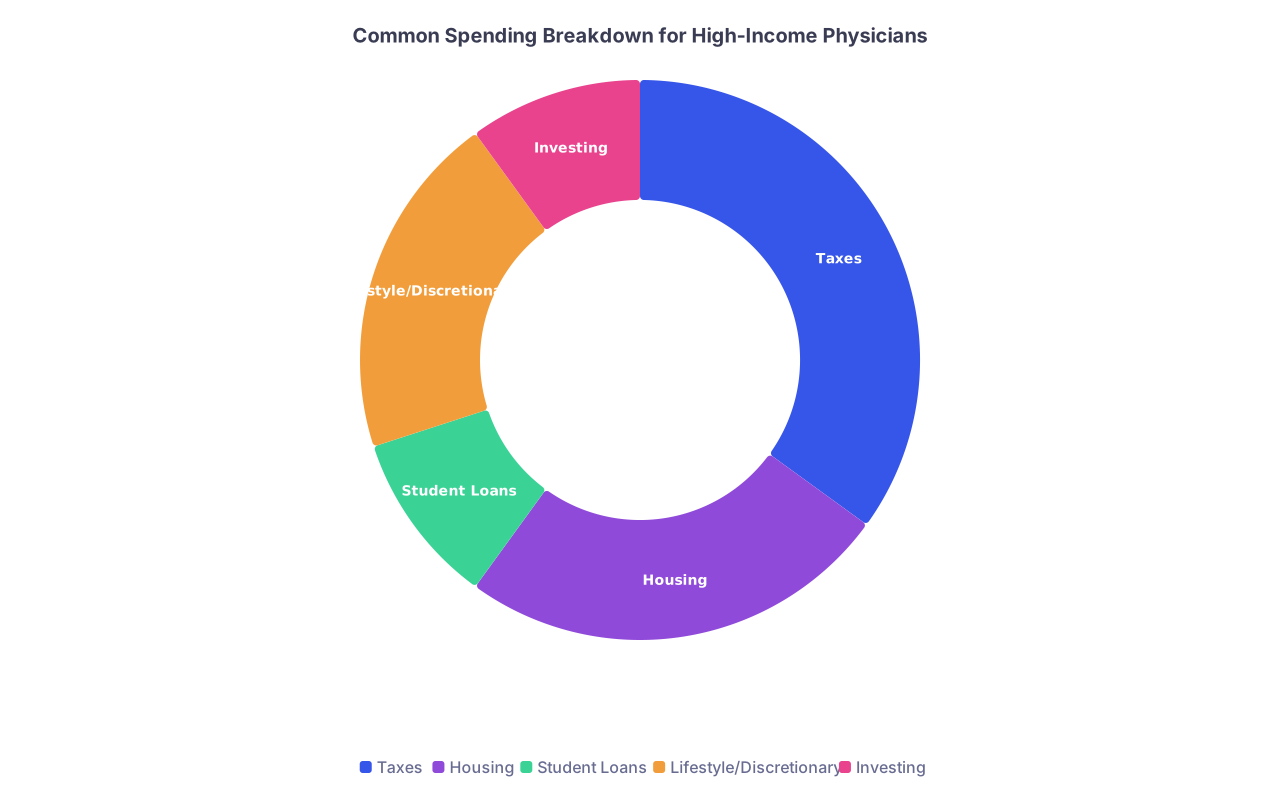
| Category | Value |
|---|---|
| Taxes | 35 |
| Housing | 25 |
| Student Loans | 10 |
| Lifestyle/Discretionary | 20 |
| Investing | 10 |
On paper, that doctor makes $400,000. In practice, only about 10% is making its way into actual investments. The rest is gone to taxes, fixed commitments, and “I deserve it” spending.
Here’s the uncomfortable pattern I’ve seen repeatedly:
- Income jumps.
- Lifestyle instantly adjusts upward—house, cars, schools, vacations, private clubs, “one-time” upgrades.
- Fixed monthly obligations quietly harden into concrete.
- Now saving 20%–25% feels impossible even though income doubled.
That’s the trap. The more you earn, the more sophisticated your excuses for not investing become.
If you think, “Once I hit $500,000, then I’ll really get serious,” you’re already in the trap.
The Tax Problem: High Income Without a Strategy Is Just Fuel for the IRS
Let me be blunt: the government loves high-income W-2 employees who “plan to invest later.”
They get the worst of all worlds:
- Highest marginal tax rates
- Fewest deductions
- Least flexibility
- And usually the most overconfidence
You are not going to out-earn a bad tax structure. I’ve watched people try for decades.
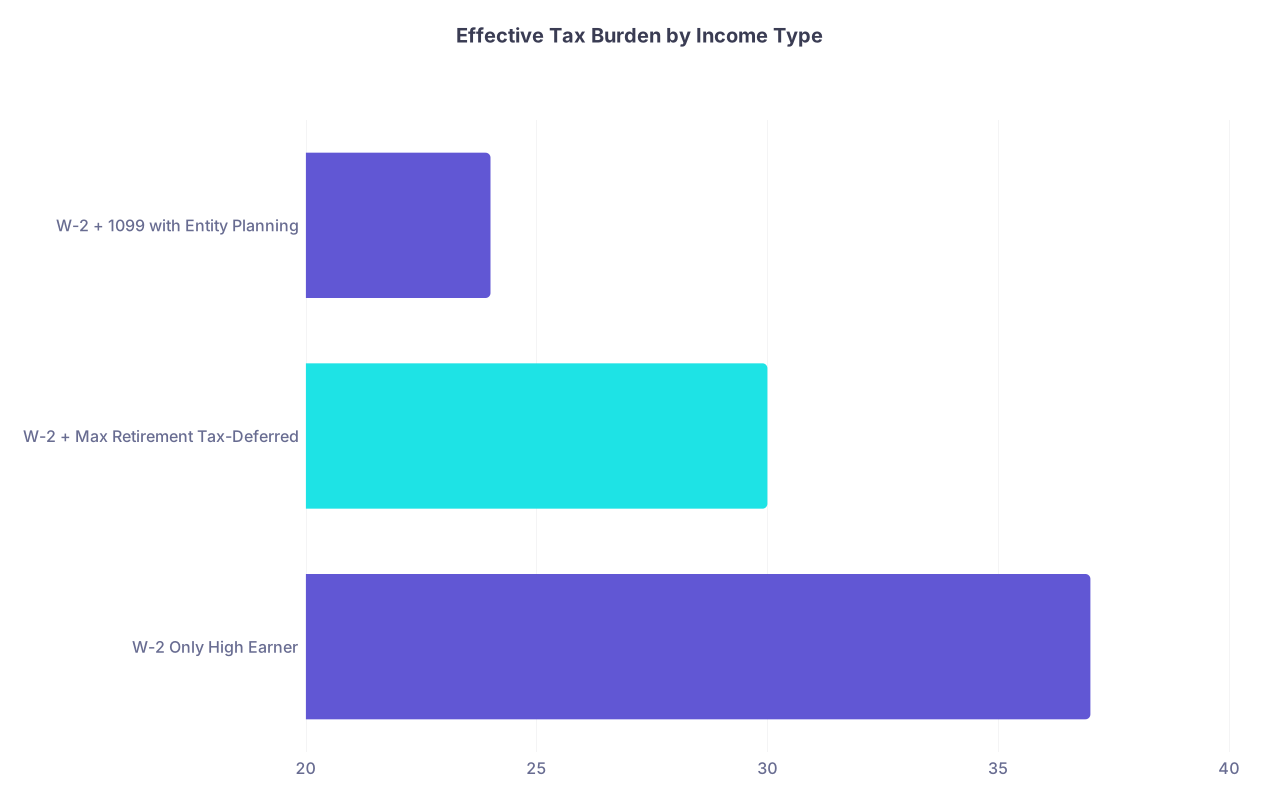
| Category | Value |
|---|---|
| W-2 Only High Earner | 37 |
| W-2 + Max Retirement Tax-Deferred | 30 |
| W-2 + 1099 with Entity Planning | 24 |
Rough illustration, but you get the point: same gross income, very different outcomes once you actually use the tools available.
Here’s where the “I’ll just earn more” crowd gets hammered:
- They delay maxing tax-advantaged accounts because “I’ll do it next year when things calm down”
- They stay pure W-2 when there are legitimate 1099/side structures available that could open deductions and retirement options
- They don’t do basic entity or asset protection planning until there’s already a problem
Translation: every extra dollar they grind out with call, RVUs, or extra clinic days is taxed at the highest possible rate, then consumed by an already-inflated lifestyle.
That is not a strategy. That is a treadmill.
Legal and Liability Reality: Income Is Not Protection
This is the part doctors underestimate the most.
Your income does not protect you from:
- Malpractice claims
- Personal liability from non-medical issues (car accidents, rental property, business ventures)
- Divorce
- Business disputes
- Aggressive creditors
In fact, your high income attracts more of this.
“I’ll just earn more” fails spectacularly the day a lawsuit, partner dispute, or family court judge shows up.
You do not want to be the physician with:
- a $400,000 paycheck
- a $1.5 million house with minimal equity protection
- multiple accounts in your own name only
- no umbrella policy
- sloppy documentation on side businesses
…getting deposed while thinking, “I was going to get to asset protection eventually.”
Let me be direct:
Income is offense.
Law, structure, and disciplined investing are defense.
You need both. Nearly every “I’ll just earn more” person plays offense only—until they get hit. Then they finally discover what a charging order, homestead exemption, or umbrella liability policy even is.
Too late.
The Burnout Cost of “I’ll Just Work More Later”
Money aside, there’s the human cost.
Tell me how realistic this sounds:
“I’ll keep lifestyle high now, and in my 50s I’ll really turn up the income and save aggressively.”
In your 50s. When:
- Call feels heavier
- Sleep is worse
- Recovering from nights or 24s takes longer
- The EMR grinds you down faster
- You’re more senior and therefore held to higher expectations and more admin work
I’ve sat across from cardiologists, anesthesiologists, EM docs in their late 40s and 50s who all say some version of this:
“I thought I’d be able to keep this up longer. I can’t.”
Here’s the part no one tells you when you’re 33 and bulletproof: your ability to trade time and stress for money is not linear. It degrades. Sometimes suddenly.
So banking on your “future self” to bail out your current laziness about investing and planning is not only financially stupid; it’s physiologically naive.
What Actually Works for High-Income Physicians
Let me flip this around. Because yes, high income can be incredibly powerful—if you stop treating it like a magic shield.
The physicians who win long-term tend to do a few unglamorous things early and relentlessly:
They lock in a core savings rate early and protect it.
Not “when the bonus hits.” Not “once the student loans are gone.” Now. A realistic but non-negotiable number: 20% of gross into actual investments (401(k), 403(b), 457(b), backdoor Roth, HSA, taxable brokerage). Higher if you started late.
They use income to buy time, not toys.
Extra income goes first into killing high-interest debt, building a real emergency fund, and filling tax-advantaged buckets. Once that’s in motion, fine—upgrade the car. But they never swap long-term flexibility for short-term status.
They aggressively reduce fragility:
- Adequate term life and disability coverage
- Umbrella liability policy
- Asset titling and basic asset protection strategies with a competent attorney
- Reasonable diversification: not all net worth tied to the practice, the house, or a single investment
They don’t worship home equity or random real estate syndications as salvation. The “I’ll just buy more rentals and cash flow later” crowd is the real estate version of “I’ll just earn more.” It can work, but not as a substitute for basic discipline and due diligence.
And crucially—they understand that investing is a system, not an event.
You don’t become wealthy because you had one big income spike, one lucky investment, or one monster bonus year. You become wealthy (and free) because you built a repeatable, boring, tax-efficient system that captures a meaningful share of your income and converts it into durable assets. Every year. Without being renegotiated every time your wants change.
The Bottom Line for Doctors
If your entire financial plan boils down to, “Don’t worry, I’ll just earn more,” you do not have a plan. You have a fantasy that collapses the moment:
- markets crash
- you burn out
- your specialty changes reimbursement
- your group dissolves
- your health shifts
- your personal life explodes
You can absolutely leverage a high physician income into real freedom—earlier than most people. But not with procrastination dressed up as optimism.
Three things to remember:
- High income is not a substitute for early, consistent investing; compounding does not care what you “intend” to do later.
- Without tax strategy, legal structure, and risk planning, extra income just becomes extra tax and extra exposure.
- You cannot endlessly trade time, stress, and call for money; your future self is not an infinite ATM.
Stop telling yourself you’ll fix it “once things calm down.” They do not calm down on their own. You either build the system now—or you work until you physically cannot, wondering where all that “good money” went.