
Last month I was on a Zoom call with three attendings from the same group: a cardiologist in his 50s, a hospitalist in her 40s, and a brand-new anesthesiologist. Same employer, same 401(k) plan, same income tier. The cardiologist was quietly stuffing over $100k a year into tax-advantaged accounts. The new attending? Thought the $23k 401(k) limit was the whole game. No one at HR had ever mentioned the rest.
Let me tell you what actually happens behind the scenes: the physicians who end up genuinely wealthy are almost never the ones chasing hot stock tips. They’re the ones ruthlessly exploiting “boring” structures like backdoor Roths and mega backdoor Roths while everyone else shrugs and leaves tens of thousands on the table every single year.
Why Doctors Care So Much About Roth Space
Once your income crosses a certain line, the tax code stops being friendly and starts being… adversarial. As an attending, you’re often:
- Phased out of direct Roth IRA contributions
- Phased out of many deductions/credits
- Sitting in a high marginal bracket during peak earnings
So your problem is simple: you’ll earn your highest dollars at your highest marginal tax rate. If you do what most people do—just jam money into pretax 401(k)s and taxable brokerage accounts—you’re agreeing to let the IRS tax both your principal and decades of growth later, with whatever future tax system exists.
The real play is different:
Use every legal trick to stuff as much money as possible into Roth buckets, especially while you’re young or in relatively lower brackets, and lock in tax-free growth forever.
For high-income physicians, that boils down to two core moves:
- Backdoor Roth IRA
- Mega Backdoor Roth (via 401(k) or 403(b))
And yes, attendings and even some residents are quietly doing this every year. The ones who have competent advice, anyway.
Backdoor Roth IRA: The Baseline Move Every High-Earner Should Know
Here’s the part nobody tells you in training: the “income limit” for Roth IRAs is a speed bump, not a wall. The backdoor Roth is simply walking around it.
Mechanically, it’s two steps:
- Contribute to a traditional IRA (non-deductible, because your income is too high / you’re in a retirement plan at work)
- Convert that contribution to a Roth IRA shortly after
On paper, that’s all it is. But here’s where doctors get burned: the pro-rata rule and sloppy execution.
How the pro-rata trap actually bites doctors
The IRS doesn’t let you pretend only the “new” non-deductible IRA money is being converted. It looks at all your pre-tax traditional IRA assets across:
- Traditional IRAs
- SEP IRAs
- SIMPLE IRAs
Balances are aggregated on December 31st of the year you convert.
If you have, say, $95k of old pre-tax IRA money and you add $7k nondeductible this year, then convert $7k:
- Only a tiny fraction of that conversion is “after-tax”
- Most of it is treated as taxable pre-tax money
- You’ve just created a tax bill and a mess
This is the part many white-coat investors learn the hard way. Usually after their first “simple” backdoor Roth and a confused CPA conversation in March.
So the real insider rule is:
No pre-tax IRA balances on December 31 if you want clean backdoor Roths.
That means before you start, you typically:
- Roll old traditional/SEP/SIMPLE IRA balances into a 401(k)/403(b) that accepts roll-ins (your current employer’s plan or a solo 401(k) if you have 1099 income), or
- Accept that your backdoor Roth is going to be messy and partially taxable (not what you want)
Plenty of attendings sit for years with six-figure IRAs and never move them into a 401(k). Why? Because no one has ever connected the dots for them that those IRAs are blocking a lifetime of clean Roth contributions.
What a clean backdoor Roth actually looks like
Here’s the standard, boring, correct flow that high-earning physicians quietly repeat every year:

| Step | Description |
|---|---|
| Step 1 | Check IRA balances |
| Step 2 | Roll IRA into 401k |
| Step 3 | Contribute to traditional IRA |
| Step 4 | Wait 1 3 days |
| Step 5 | Convert full balance to Roth IRA |
| Step 6 | Invest in chosen funds |
| Step 7 | Any pre tax IRA? |
Key points from the people who do this correctly:
- They do it every year, like clockwork
- They convert quickly after contributing (to avoid taxable earnings)
- They keep a simple spreadsheet tracking each year’s non-deductible contribution and conversion
- Their CPA knows what they’re doing and files Form 8606 correctly
If you’re married filing jointly and both of you are high income, this can be $7k–$8k per person per year (depending on current law), all into Roth, forever.
Not life-changing in year one. Absolutely massive after 20–30 years of compounding.
Mega Backdoor Roth: The Move That Separates Casual From Serious
The regular backdoor Roth IRA is a warm-up. The mega backdoor Roth is where the real volume happens.
This is not about the standard $23,000 401(k) employee deferral (2024 figure for under 50). It’s about blowing past that using after-tax 401(k) contributions and immediate conversion to Roth.
How the numbers actually work
Look at the total 401(k)/403(b) limit for 2024 for someone under 50:
- Total annual additions cap: $69,000
That includes:- Employee pre-tax or Roth deferrals (up to $23,000)
- Employer match / profit-sharing
- After-tax employee contributions (non-Roth)
The mega backdoor Roth is simply:
Use that after-tax bucket to fill up the gap between what you and your employer put in and that $69k cap, then convert those after-tax contributions into Roth.
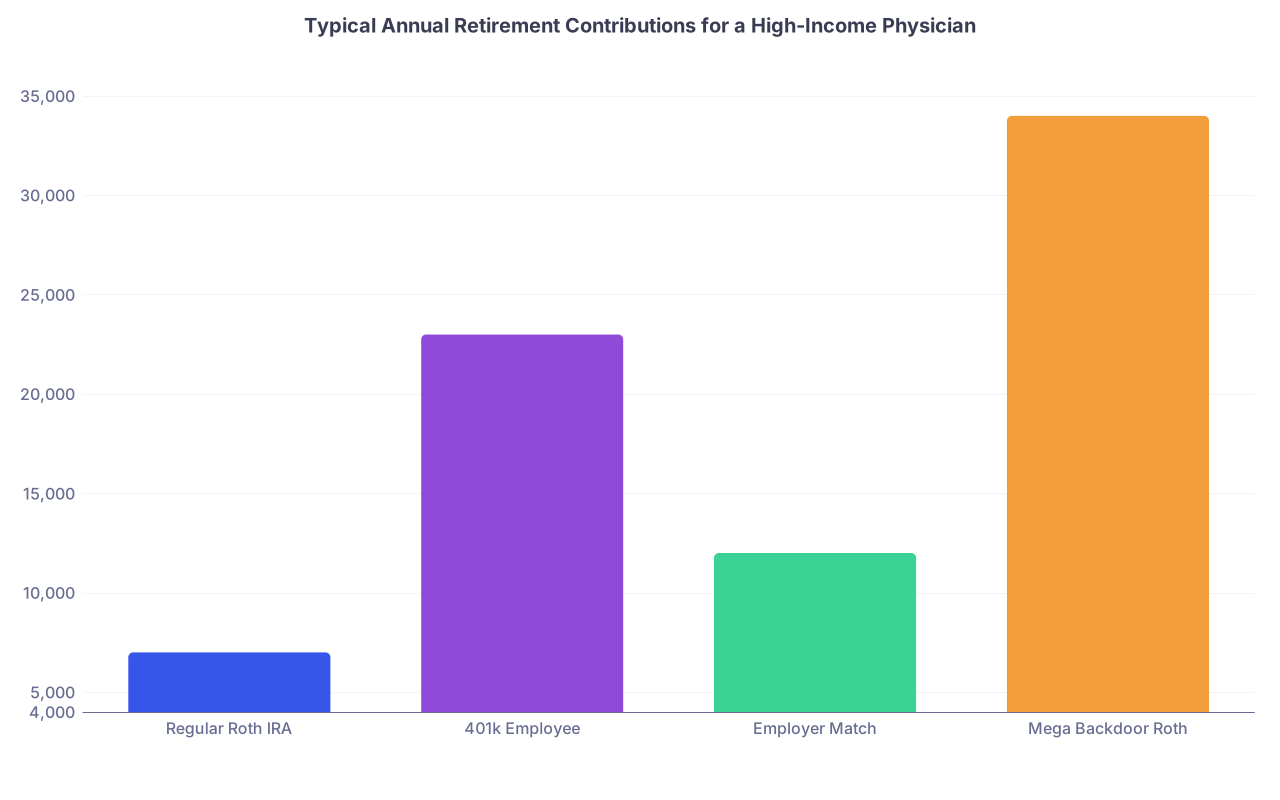
Concrete example (this is what your older partner is actually doing while you’re just funding the match):
- You defer: $23,000 (pre-tax or Roth)
- Employer match/profit share: say $12,000
- That’s $35,000 total so far
- Remaining space up to $69,000: $34,000
If the plan allows, you can put $34,000 of after-tax contributions into the 401(k), and then:
- Immediately convert to the Roth 401(k) component within the plan, or
- Do an in-plan Roth rollover, or
- Do an in-service distribution to a Roth IRA (plan-dependent)
That’s potentially over $50,000 per year in Roth space, once you include both regular and mega backdoor flows. Year after year.
Here’s how the relative sizes often shake out:
| Category | Value |
|---|---|
| Regular Roth IRA | 7000 |
| 401k Employee | 23000 |
| Employer Match | 12000 |
| Mega Backdoor Roth | 34000 |
You see why the people in your group who understand this game walk around strangely calm about their financial future.
The ugly truth: Most hospital plans block this
Here’s the part HR never puts on the glossy brochure: most large hospital 403(b)/401(k) plans do not currently support the full mega backdoor Roth.
To make this work cleanly, your plan needs both:
- After-tax employee contributions allowed beyond the standard deferral
- In-plan Roth rollover or in-service withdrawals to a Roth IRA from the after-tax bucket
If you don’t have both, the “mega” part dies or becomes tax-ugly.
Inside large systems, this usually plays out like this:
- New attending thinks the $23k limit is everything
- Senior colleague quietly knows the plan document allows after-tax contributions and in-plan conversions
- HR reps barely understand the question when you ask
- The partner who’s been using the feature for 5+ years never brings it up in the lounge, because why would they?
I’ve seen groups where 2–3 docs maxed out the mega backdoor for a decade and literally nobody else in a 50+ physician group had any idea the option existed.
So your job is to interrogate the plan, not the glossy summary.
How to Read Your Plan Like an Insider
You’re not going to get this information from a one-page HR flyer. You need the Summary Plan Description and sometimes the full plan document.
Here’s what you’re hunting for:
| Feature | What You Want It To Say |
|---|---|
| After-tax employee contributions | Allowed |
| Roth 401(k)/403(b) option | Allowed |
| In-plan Roth conversions | Allowed |
| In-service distributions of after-tax | Allowed before age 59.5 |
| Rollovers into plan from IRA | Allowed (for cleaning up IRAs) |
If you see:
“After-tax employee contributions: Not allowed”
→ Mega backdoor is dead in that plan.“In-service distributions: Not allowed before 59.5” and no in-plan Roth conversion
→ You can build an after-tax bucket, but you can’t move it to Roth efficiently. Not good.
The power combo is:
- After-tax contributions allowed
- In-plan Roth conversions allowed
- Frequent conversions allowed (monthly or per-pay-period is ideal)
At progressive tech companies, it’s almost standard now. At big hospital systems? It’s a coin flip at best.
Actual Strategies Physicians Use In Different Situations
Let’s walk through the behind-the-scenes reality for different physician setups. This is the part your “generic” financial advisor often glosses over because it requires reading plan documents and thinking.
W-2 employed hospital physician with a mediocre plan
You’re at a big system, 403(b) + 457(b) maybe, but:
- No after-tax contributions beyond the regular deferral
- No in-plan Roth conversion
- IRA roll-ins to the plan maybe not allowed
What seasoned attendings here actually do:
- Max pre-tax or Roth 403(b)
- Max 457(b) if it’s a governmental 457 (non-governmental plans have risk; different discussion)
- Do backdoor Roth IRA every year (clean up old IRAs by rolling them into the 403(b) if allowed)
- If they have any 1099 side work, open a solo 401(k) and sometimes design that to support a mega backdoor Roth even if the main employer plan doesn’t
The sneaky move here is using your side gig (locums, telehealth, consulting, expert witness work) as the chassis for your own custom retirement plan that does allow mega backdoor Roths.
Private practice partner with 401(k)/cash balance combo
In many private groups, the retirement setup is extremely intentional. The partners sat down years ago with a TPA and said: “How do we get as much pretax and Roth money in as humanly possible?”
Common pattern:
- 401(k) with:
- Employee deferral
- Employer profit-sharing
- After-tax contributions allowed
- In-plan Roth conversion allowed
- Plus a cash balance plan on top
I’ve seen surgeons in their 50s putting:
- $23k 401(k) deferral
- $40k–$60k cash balance contribution
- $20k+ employer profit-sharing
- $20k–$30k in mega backdoor Roth
Total tax-advantaged retirement contributions well into six figures annually.
You don’t hear them talking about meme stocks. They’re too busy using the tax code correctly.
Academic attending with 403(b) + 457(b) + 401(a)
Academics usually have a more complex stack:
- 403(b) (you contribute)
- 401(a) (employer contributes mandatory amount)
- 457(b) (you can contribute separately)
These plans can allow after-tax contributions and mega backdoor-type structures, but many don’t.
What the savvy academic does:
- Absolutely maxes 403(b) and 457(b)
- Uses backdoor Roth IRA
- Reads the 403(b) document carefully for after-tax and in-plan Roth conversion language
- Pushes HR and benefits committees to add features like after-tax contributions and Roth conversion windows, often under the radar while colleagues roll their eyes at “boring benefits emails”
Where Doctors Screw This Up
Let me be blunt. The main ways physicians botch backdoor and mega backdoor Roths are remarkably consistent.
1. They ignore the pro-rata rule
They:
- Have $300k sitting in traditional/SEP IRAs from years of deductible contributions
- Hear a podcast about backdoor Roths
- Contribute $7k to a non-deductible IRA and convert
- Get absolutely hammered on taxes because 98% of the conversion is treated as pre-tax
Fix: Roll those IRA balances into an employer plan or solo 401(k) before you start. Or accept that backdoor Roths aren’t for you yet.
2. They assume “my plan doesn’t do that” based on one HR comment
I’ve seen this too many times:
- Doctor emails HR: “Can I do a mega backdoor Roth?”
- HR: “We don’t offer that.”
- End of investigation.
HR isn’t lying; they just don’t know what you’re actually asking. You need to ask:
- “Does our plan allow after-tax employee contributions beyond the normal deferral?”
- “Does our plan allow in-plan Roth rollovers from after-tax subaccounts?”
- “Can I do in-service distributions of the after-tax subaccount to a Roth IRA?”
Different questions. Different answers. Sometimes very different outcomes.
3. They forget the tax reporting
Backdoor and mega backdoor Roths generate paperwork:
- Backdoor Roth: Form 8606 every year you contribute/convert
- Mega backdoor Roth: 1099-Rs for in-plan rollovers or in-service distributions
If your CPA doesn’t know what you’re doing, they’ll misreport it. I’ve seen perfectly executed mega backdoors look “taxable” on the return because the preparer never asked and treated the 1099-R as a distribution.
Every high-income doc using these plays should have an email trail to their CPA spelling out exactly:
- How much was non-deductible traditional IRA contribution
- When it was converted
- What portion (if any) was earnings
- How much after-tax 401(k) money was converted to Roth
CPAs are not mind readers. And many do not deal with mega backdoor Roths often.
Big-Picture Strategy: How These Plays Fit Together
The doctors who are actually methodical about this do not view backdoor and mega backdoor Roths as “cool tricks.” They view them as part of a deliberate channeling of money through the tax system.
Here’s the usual order of operations I see among the well-advised:
- Get employer match in 401(k)/403(b)
- Max HSA if available (used as a stealth retirement account)
- Max 401(k)/403(b) deferral (pre-tax vs Roth based on your bracket and plan)
- If governmental 457(b) is available and safe: max 457(b)
- Do backdoor Roth IRA (for you and spouse) every year
- Investigate and, if available, hammer mega backdoor Roth
- After all that, add taxable investing
Over time, their balance sheet tilts more and more toward tax-free Roth and tax-deferred buckets, with a controlled amount in taxable accounts for flexibility.
And yes, the ones who started in their early 30s and kept at it for 20–25 years end up in their 50s and 60s with:
- Seven-figure Roth accounts
- Seven-figure pretax accounts
- A taxable portfolio they barely need to touch
While their colleagues are still asking, “How much do I need to save to retire?”
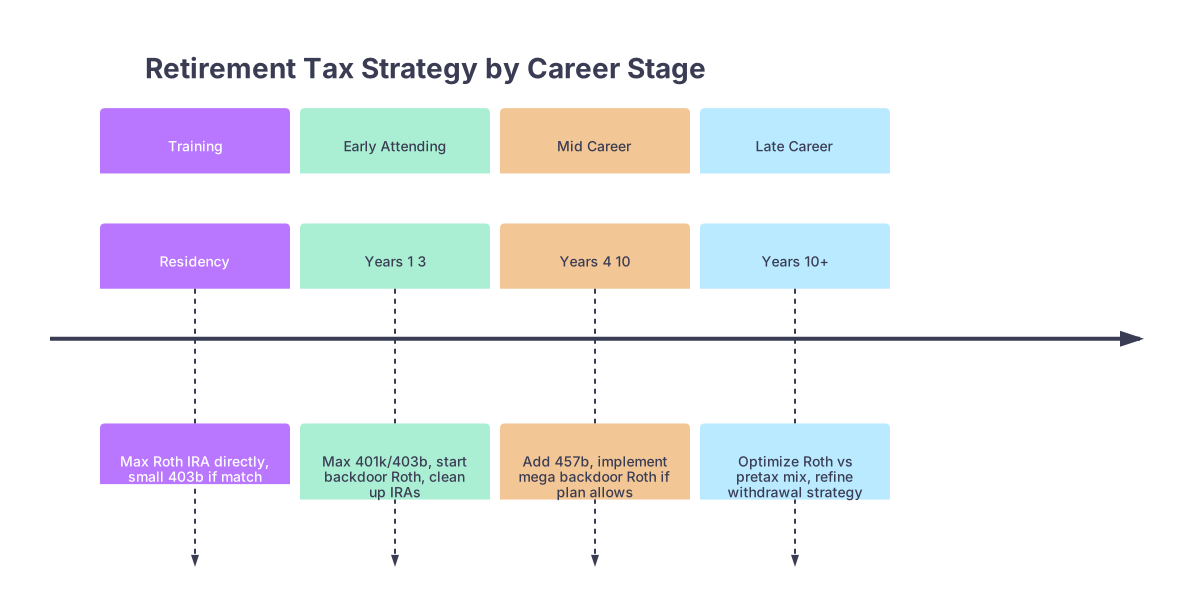
Timeline: When Doctors Typically Implement These
To give you a realistic sense of timing, here’s when physicians who get it usually implement each move:
| Period | Event |
|---|---|
| Training - Residency | Max Roth IRA directly, small 403b if match |
| Early Attending - Years 1 3 | Max 401k/403b, start backdoor Roth, clean up IRAs |
| Mid Career - Years 4 10 | Add 457b, implement mega backdoor Roth if plan allows |
| Late Career - Years 10+ | Optimize Roth vs pretax mix, refine withdrawal strategy |
Residents and fellows usually:
- Contribute to direct Roth IRAs (income low enough)
- Sometimes do Roth 403(b)/401(k) contributions (makes sense in low tax years)
Once that attending salary hits and direct Roth eligibility disappears, the switch flips to:
- Backdoor Roth IRA
- Scouting for mega backdoor Roth potential in the employer plan
- Cleaning up any rogue IRA balances
Visualizing the Long-Term Impact
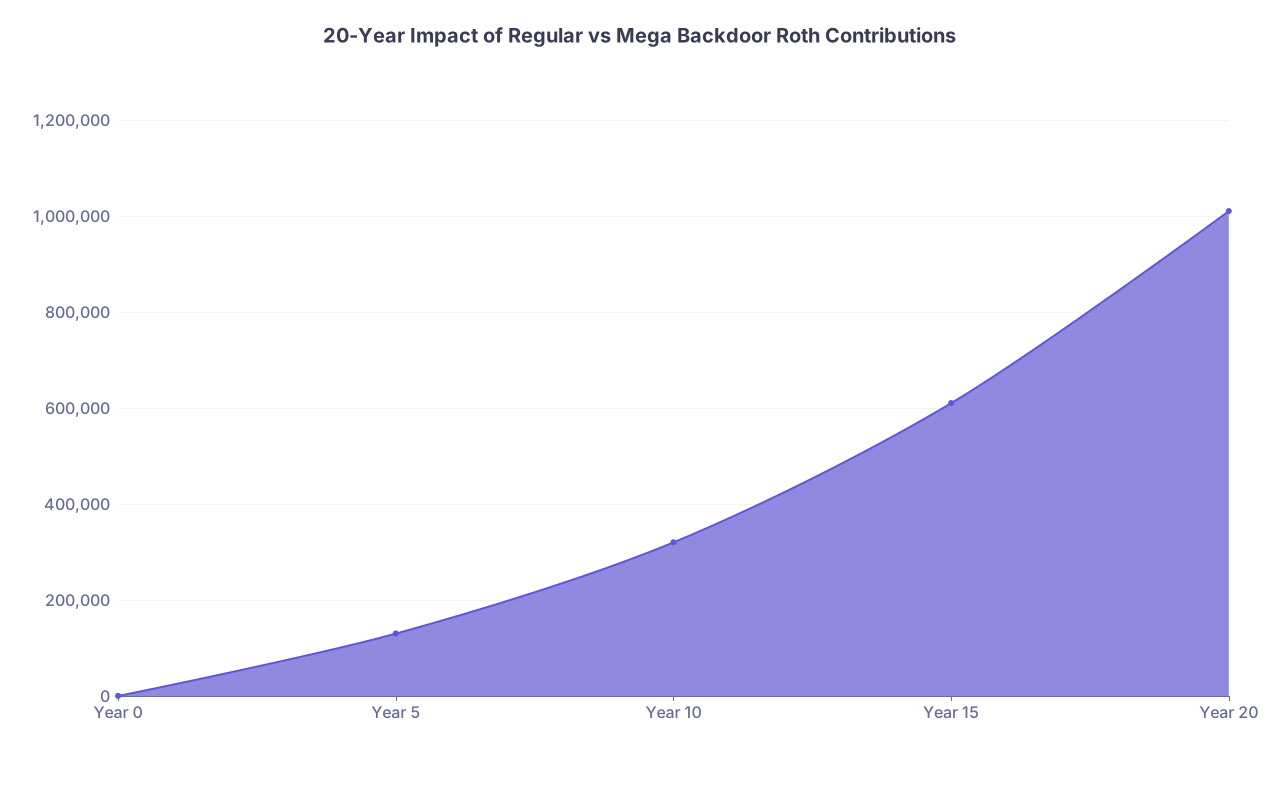
Here’s the part that doesn’t hit you until you see numbers. Suppose a high-income doc executes consistently for 20 years:
- $7k/year regular backdoor Roth
- $30k/year mega backdoor Roth
- 7% annual return
Future value after 20 years:
| Category | Value |
|---|---|
| Year 0 | 0 |
| Year 5 | 130000 |
| Year 10 | 320000 |
| Year 15 | 610000 |
| Year 20 | 1010000 |
You’re staring at over $1 million of tax-free Roth money just from the mega backdoor component. Not counting your 401(k), not counting your taxable account, not counting practice equity.
Most of your colleagues will never get close to this because they never even verify whether their plan allows it.
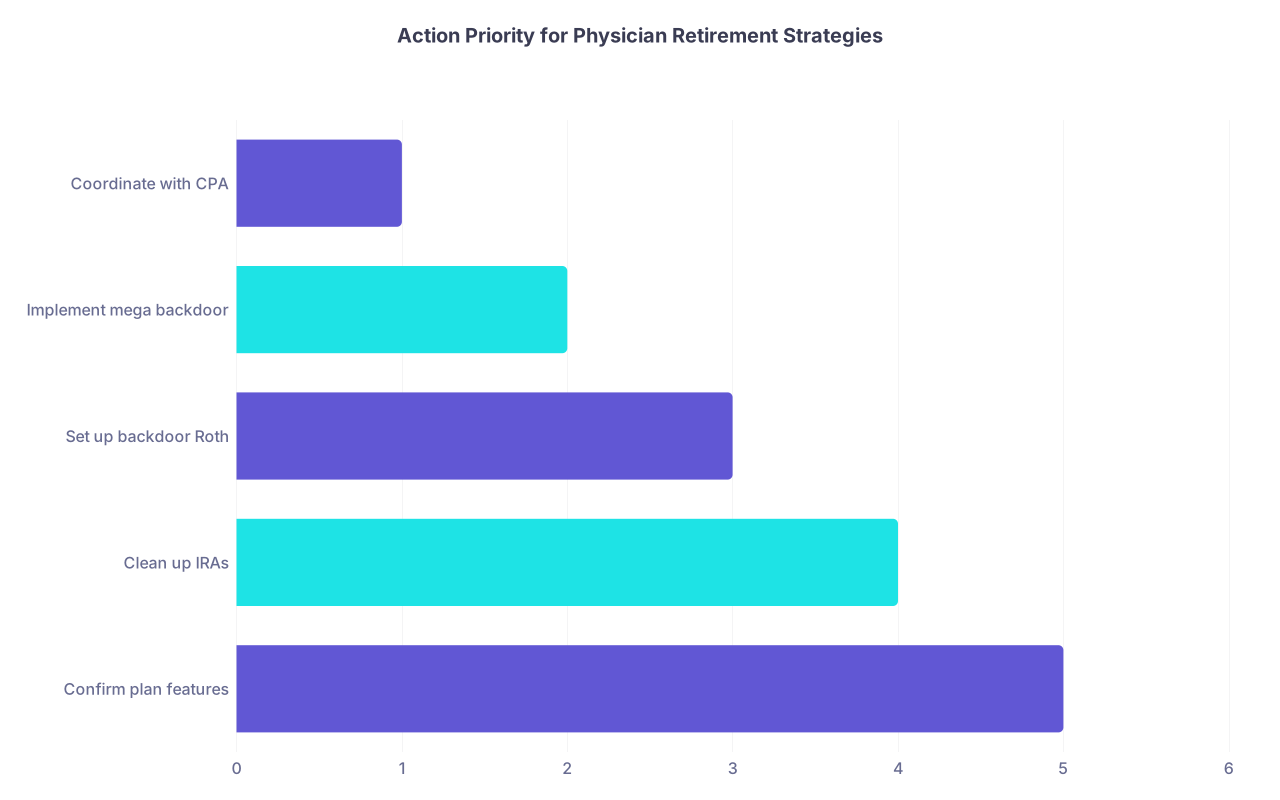
Practical Next Steps If You’re Serious
If you want to stop leaving tax advantages on the table, here’s how I’d approach this over the next 30–60 days.
| Category | Value |
|---|---|
| Confirm plan features | 5 |
| Clean up IRAs | 4 |
| Set up backdoor Roth | 3 |
| Implement mega backdoor | 2 |
| Coordinate with CPA | 1 |
Pull your plan documents
Not the 1-page marketing handout. The Summary Plan Description and, if needed, the full plan document. Read for the features we discussed: after-tax, in-plan Roth, in-service distributions.Audit your IRA landscape
List every traditional, SEP, and SIMPLE IRA balance. If you have pre-tax money there and a decent employer plan, plan a rollover into your 401(k)/403(b) so you can start clean backdoor Roths.Set up the annual backdoor Roth routine
Pick a month, every year, where you:- Contribute non-deductible to traditional IRA
- Convert to Roth within a few days
- Log it in a simple spreadsheet
Clarify mega backdoor feasibility
If your plan allows the right combo of features, design an exact per-paycheck contribution schedule to fill the after-tax bucket and convert regularly.Loop in a CPA who actually understands this
Not someone who says, “I’ve heard of that.” Someone who can explain back to you how 8606 works and how they’ll report your in-plan conversions.
Do that, and you’re officially playing the same game as the quietly wealthy physicians in your group, not the ones “planning to work until 70” because they never figured this out.