
It’s 10:30 p.m. You just finished signing out, grabbed a sad granola bar from the call room, and you walk past your attending’s office. Lights are on. They’re not dictating. They’re not prepping tomorrow’s lecture. They’re on a Zoom call with someone in a suit, talking about cap rates, equity splits, and “reps and warranties.”
This is the part of medicine nobody teaches you.
You get CMEs on new biologics. On updated sepsis protocols. On “physician wellness.” Not on what your department chair is actually doing with the extra $25K a month that’s quietly hitting their accounts. Or how that mild-mannered hospitalist who drives a 7-year-old Camry has more passive income than your program director’s W2 paycheck.
Let me walk you through what’s really going on behind the curtain.
The Three-Tier Reality of Physician Money
Here’s the thing most trainees miss: attendings don’t all live in the same financial universe. There are tiers. And they’re not correlated with who’s the best clinician.
I’ve watched this play out for years:
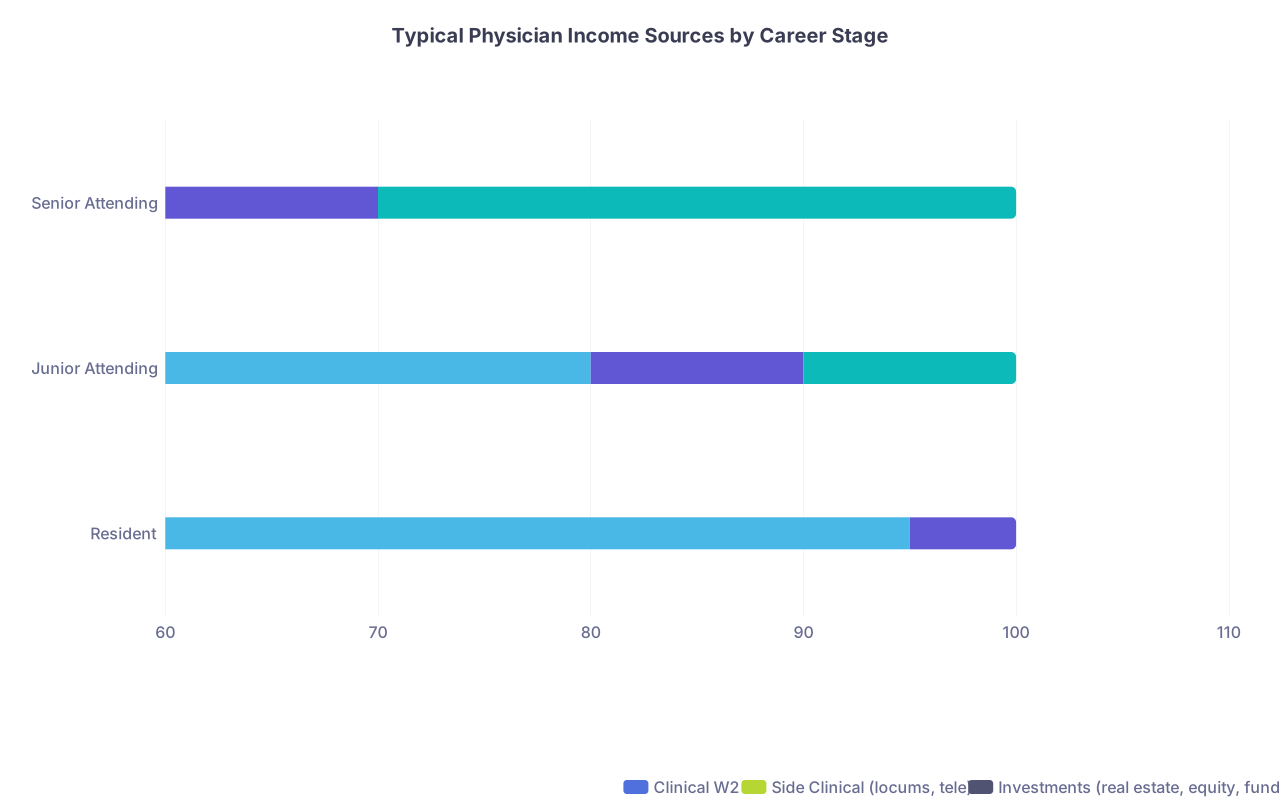
| Category | Clinical W2 | Side Clinical ([locums](https://residencyadvisor.com/resources/investment-strategies-for-doctors/locums-income-chaos-a-system-to-autoinvest-with-irregular-paychecks), tele) | Investments ([real estate](https://residencyadvisor.com/resources/investment-strategies-for-doctors/the-doctor-house-syndrome-real-estate-mistakes-that-kill-wealth), equity, funds) |
|---|---|---|---|
| Resident | 95 | 5 | 0 |
| Junior Attending | 80 | 10 | 10 |
| Senior Attending | 60 | 10 | 30 |
Tier 1: The Earn-and-Burn Attendings.
They make $350–600K. They spend $320–580K. They own a house, maybe a Tesla, maybe a boat. They save something in a 401(k) and feel vaguely guilty in April. This is most of your faculty.
Tier 2: The “Quietly Comfortable” Attendings.
Still working hard. But their investments actually cash flow. They’re not desperate for extra shifts. They can walk away from a toxic admin change. They don’t talk about it much. You just notice they’re never panicking about RVUs.
Tier 3: The Shadow-Retired.
The ones who “cut back to 0.6 FTE” and somehow still out-earn their full-time colleagues. They show up because they like a procedure or a patient population. Not because they need your hospital’s paycheck. They’re the minority. But they exist, in every specialty.
What separates Tier 2 and 3 from Tier 1 is not some secret hedge fund. It’s the portfolio structure they run outside medicine.
And no, nobody’s teaching this at grand rounds.
Portfolios Your Attendings Actually Build (But Don’t Explain)
Let me be blunt: the average physician finances CME like a homeowner watching HGTV. Entertainment, not execution. Meanwhile, the people quietly winning are building a very different set of portfolios:
- Boring, tax-optimized paper assets
- Aggressive but controlled real estate plays
- Asymmetric “shots on goal” in private equity / business
- Legal and asset protection structures that keep it all from blowing up
1. The Boring Core: Paper Assets That Actually Matter
Most attendings will tell you, “Yeah, I have some index funds.” Half of them don’t know what they own. The other half actually do.
The ones who know usually have a core structure like this:
| Stage | Stocks (Index) | Bonds/Cash | Real Estate (paper) | Alternatives |
|---|---|---|---|---|
| 3–5 yrs out | 70–80% | 5–10% | 10–20% | 0–5% |
| 15+ yrs out | 50–60% | 15–25% | 15–25% | 5–10% |
The serious ones:
Max every tax-advantaged account before they touch the sexy stuff. 401(k)/403(b), backdoor Roth, HSA, defined benefit/“cash balance” plan if the group offers it. They treat these like mandatory overhead, not optional savings.
Consolidate, not scatter. Instead of 14 random funds in 6 brokerage accounts, they’ll have 2–4 broad low-cost index funds, maybe a factor tilt if they’re nerdy (small value, etc.). They know their expense ratios. Your average high-spending attending doesn’t.
Use tax location intelligently. Bonds and REITs in tax-deferred accounts. Broad equity in taxable. Harvest losses in down years. This is not rocket science, but it’s absolutely not taught in residency.
The truth? This “boring core” is what quietly grows to $3–5M if you just keep shoveling money in for 10–15 years. But almost no one in the lounge talks about it because it’s not exciting. So you think everyone is chasing Tesla and options. They’re not. The smart ones aren’t.
Where It Gets Real: The Physician Real Estate Playbook
This is where you’re seeing your attendings “on calls” at 10 p.m. Not CME. Not hospital committee work. Real estate.
And no, it’s not just “I bought a rental condo and it’s a nightmare.” That’s amateur hour. Let me walk you through the actual categories I’ve seen over and over.
A. The Physician Office Building Equity Play
You’ll hear something like: “Yeah, I’m one of the partners in this building.”
Translation: they own a share of the medical office building (MOB) where their group or another large group is a long-term tenant. That’s a quiet goldmine when done correctly.
Typical structure:
- A separate LLC owns the building.
- Physicians buy in with a capital contribution (say, $50–250K).
- The practice or hospital signs a long-term NNN lease (pass-through expenses).
- Rent is structured to be fair market, but on the upper range.
What that means:
- The practice pays rent. The LLC receives rent. You, as an owner of the LLC, get your slice. While you also get paid as a clinician in the practice.
- As leases renew and valuations rise, the building can be refinanced or sold, unlocking equity.
I’ve seen partners put in $150K and walk away with $600–900K a decade later, plus steady distributions along the way. Nobody shows that on the “comp package.” It lives off the spreadsheet.
B. Syndications and Private Real Estate Funds
This is where the bigger money quietly moves once an attending stops being terrified of wiring six figures.
They’re not usually buying 24-unit buildings themselves. They’re going into:
- Multifamily syndications
- Industrial properties
- Self-storage
- Medical office funds
- “Value-add” projects in Sunbelt markets
There’s a pattern to the ones who don’t get burned:
They underwrite the operator more than the deal.
They ask questions trainees don’t even know exist:
- “Show me your worst deal. What actually happened?”
- “Who signs on the debt?”
- “What’s your communication cadence and reporting format?”
- “How much of your own money is in this and on what terms?”
The attendings burned in 2008 or by a shady GP in 2014? They either left this game entirely or got very disciplined about due diligence.
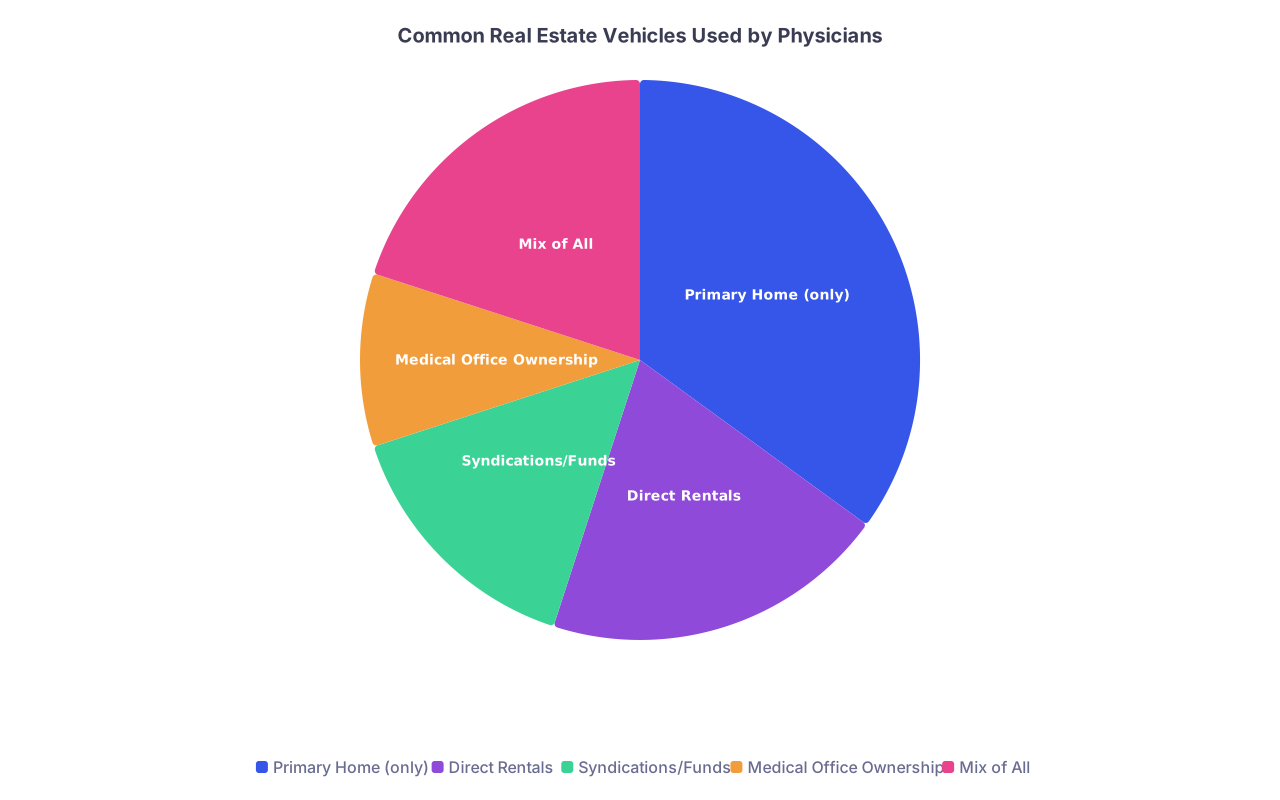
| Category | Value |
|---|---|
| Primary Home (only) | 35 |
| Direct Rentals | 20 |
| Syndications/Funds | 15 |
| Medical Office Ownership | 10 |
| Mix of All | 20 |
The 20% who “mix all of the above” are usually the Tier 2/3 people I mentioned at the start.
C. The Short-Term Rental Fascination (and Reality)
Every resident now wants an Airbnb. Most attendings who’ve been around a while are either:
- Out of that game
- Or treating it like a serious business with systems, not a side hobby
What you don’t see on Instagram: the time cost, guest issues, regulatory risk, and the fact that this is active income when done at scale. The sharp attendings limit this because they know one thing you haven’t internalized yet:
Your most expensive asset is not cash. It’s your attention.
The ones who last in real estate build or buy systems, not side jobs.
The Stuff You Never See on LinkedIn: Private Equity and Business Bets
A minority of attendings graduate from “index funds + real estate” into private business and equity plays. This is where fortunes are made and torched.
Here’s what’s actually happening behind those vague comments like, “Yeah, I’m involved in a startup” or “I have some side ventures.”
1. Equity in Ancillary Services
Typical examples:
- Imaging centers
- Surgery centers
- Lab services
- Infusion centers
- Urgent care chains
Sometimes this is structured above-board, compliant, and genuinely value-add for patients. Sometimes it’s… not. Stark and Anti-Kickback are real. Enforcement is real. Your more senior faculty have stories they won’t tell on record.
But when done correctly, these can be monsters. I’ve seen:
- A radiologist with single-digit equity in multiple imaging centers replacing his entire clinical income by his mid-50s.
- A GI group where procedure center distributions dwarfed their professional fees.
Key pattern: these are not casual dabblers. They are deeply involved in governance, contracts, and compliance. They don’t “just sign” whatever is put in front of them.
2. Physician-Owned Practices with True Equity (Not Just W2)
This is the part residents misunderstand chronically.
A $500K salary as an employed doc is not the same universe as $450K + real equity in the practice + a share of ancillary revenue.
The attendings who actually get rich from private practice:
- Buy into the entity and the building or equipment LLCs.
- Read the operating agreement. Or better, pay a real healthcare attorney to read it.
- Understand non-competes, buyout formulas, drag-along/tag-along rights, and how disputes are resolved.
You know what CME never covers? Stories like:
- The rural ortho group where the young partner didn’t realize the senior partners could vote to dissolve and force a sale at book value, right before a private equity roll-up.
- The outpatient anesthesia group where the buy-in seemed “cheap” until he realized there was a side agreement on ancillary revenue he wasn’t part of.
Your attendings are investing not just their money, but their professional leverage into these entities. When it works, this is how you see someone “retire” clinically at 52 with a huge liquidity event.
3. Angel Investments and Startups
This is where the cocktail party stories live. And where most of the real losses sit.
No one advertises the $50K they lit on fire in a healthtech startup that never cleared FDA hurdles. They only tell you about the one that 8x’d.
Pattern I see:
- 80–90% of physicians should not be angel investors. They do not have deal flow or the time to evaluate properly.
- A tiny subset, especially in academic centers with strong innovation ecosystems, actually do this well because they’re embedded in the world: advisory boards, incubators, industry contacts.
The smartest of these treat Angel investing as entertainment capital. 5–10% of their net worth, max. Money they’ve already emotionally written off.
What Your Attending Is Really Optimizing For (Hint: It’s Not Just Returns)
Here’s the part nobody says out loud: attendings who are winning financially are not optimizing just for “highest return.” They’re optimizing for:
- Control over schedule
- Protection from hospital/insurer abuse
- Tax efficiency
- Liability protection
- The ability to walk away without going broke
Let’s break those down the way they actually think about them.
Schedule and Negotiating Power
The attending who has $8K a month coming from:
- Building distributions
- A couple of real estate funds
- Partnership checks
…walks into contract renewals very differently than the one whose entire family depends on every after-hours call shift.
I’ve watched negotiations where:
- Admin threatened to cut OR block time. The surgeon calmly said, “That’s fine, I’ll shift volume to the center where I have equity.” Suddenly, compromise.
- A hospitalist group tried to cram more nights on the senior doc. He declined, not because he “didn’t want to be a team player,” but because he didn’t financially need to be.
Money is autonomy. The portfolio is the lever arm.
Taxes: The Part CME Treats Like a Footnote
Your average attending shrugs and overpays. Your better attendings structure.
Common patterns among the sharper ones:
- Passive real estate losses offsetting passive income.
- Cost segregation studies on commercial properties driving huge paper losses early.
- Inside their practice: S-corp or partnership distributions vs pure W2.
- Defined benefit plans in small groups letting them defer an extra $50–150K per year.
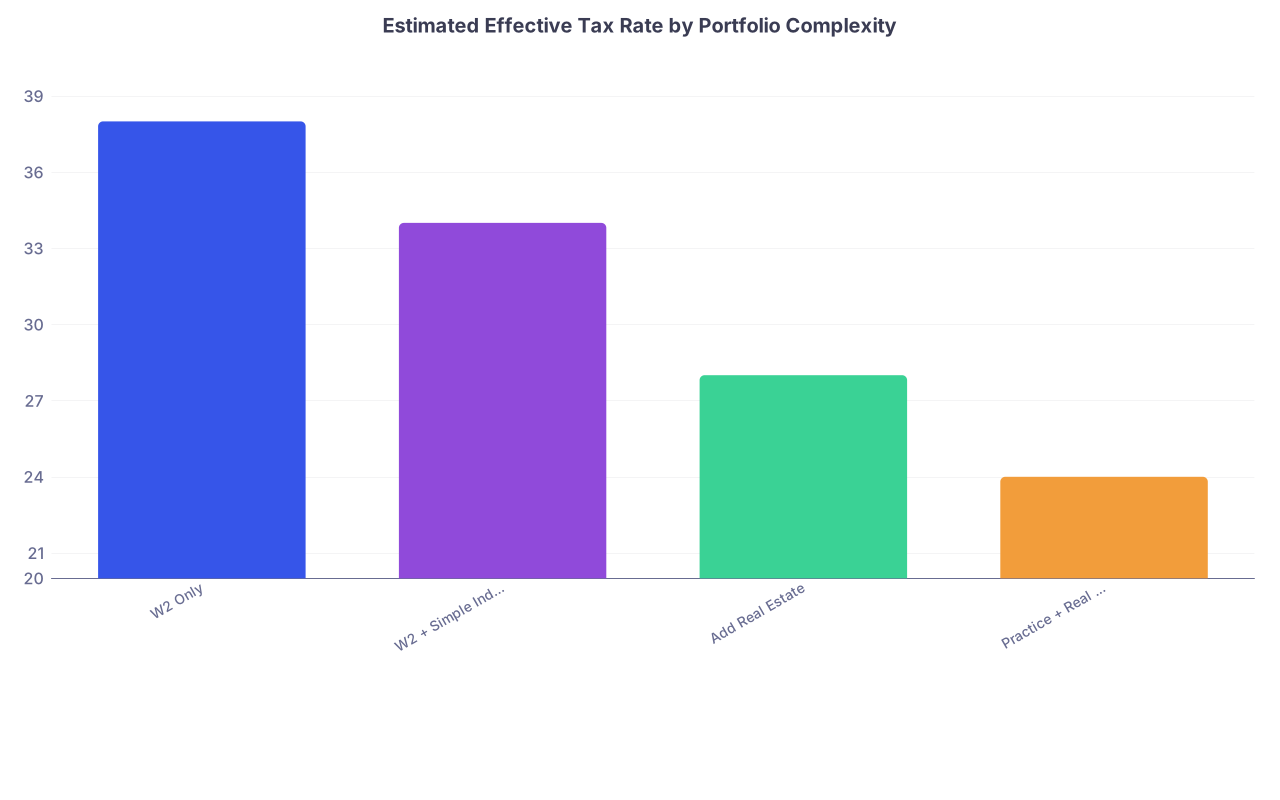
| Category | Value |
|---|---|
| W2 Only | 38 |
| W2 + Simple Index Funds | 34 |
| Add Real Estate | 28 |
| Practice + Real Estate + Funds | 24 |
No, those exact numbers aren’t guaranteed. But the shape is real. The more sophisticated portfolios are legally engineered to lower taxable income.
Your CME on “financial wellness” will mention Roth vs Traditional and stop there.
Asset Protection and Legal Structure
This is where the “financial and legal” actually intersect. Most trainees think LLC = magic shield. Attending-level reality is more nuanced.
Patterns:
- Separate LLCs for physical properties. Often a holding company above.
- Proper formalities: separate bank accounts, minutes, contracts in the right name. Not the “I put ‘LLC’ on my email signature so I’m good” nonsense.
- Umbrella policies, malpractice coverage, and sometimes domestic asset protection trusts if they’re in the seven-figure plus range and in high-risk specialties.
And they use real lawyers. Not generic online forms. Healthcare-specific attorneys for practice equity deals. Real estate attorneys who have seen investors get sued.
Your program director isn’t going to present this at noon conference. But they’re doing it. Quietly.
How to Think About This in Training (Without Losing Your Mind)
You’re probably thinking: “Okay, but I’m a resident with negative net worth. What am I supposed to do with this?”
Let me give you the insider angle, not the Pinterest version.
In training, your job is not to copy your richest attending’s last move. You’re missing 10 years of backstory, capital, and network. You’ll just buy the riskiest thing they own without the ballast underneath.
Your job is to:
- Learn how money, contracts, and ownership actually work.
- Watch who quietly does well vs who just looks rich.
- Ask very specific questions when the door is closed and the recorder is off.
Things like:
- “When you bought into this building, what legal documents did you insist on?”
- “What’s the worst financial decision you made in the first 10 years out?”
- “If you were me, what type of investment would you absolutely avoid until I’m at $500K net worth?”
The answers will be more honest in the workroom than on stage.
FAQ (Exactly 4 Questions)
1. How soon after residency should I start investing beyond index funds?
Once you’ve cleaned up any high-interest debt, have a basic emergency fund, and are consistently maxing your tax-advantaged accounts, then you can consider more complex stuff. For most people that’s 1–3 years out of training. Going into syndications or private equity before you understand a K-1 or read an operating agreement is how attendings get burned.
2. Are real estate syndications actually safe for physicians?
They’re not “safe.” They’re a tool. The safety depends entirely on the operator, the debt structure, and the deal terms. The seasoned attendings I’ve seen do well in them usually: know the sponsor personally or through trusted contacts, have seen that sponsor ride out a bad cycle, and limit any one deal to a small slice of their net worth. If you’re wiring half your savings to your first deal, you’re the mark, not the investor.
3. Is private practice equity really better than a high employed salary?
It can be — or it can be a disaster. Equity is only as good as the buy-sell terms, the governance structure, and the future of reimbursement in that niche. I’ve seen private practice partners make multiples of employed peers when ancillaries and building ownership hit. I’ve also seen young docs get trapped in toxic groups with restrictive non-competes and overvalued buy-ins. The contract (and the people) matter more than the headline number.
4. What kind of lawyer and CPA should I look for as I start building this?
You want specialists. A healthcare attorney for anything involving practice equity, ancillaries, or referral relationships. A real estate attorney if you’re buying properties or going into deals directly. For taxes, a CPA who has a roster of physicians, real estate investors, and small business owners — not just W2 employees. Ask your sharpest attendings who they use. The names that keep repeating are where you start.
Key points to walk away with:
- Your attendings’ real money usually comes from ownership: buildings, practices, ancillaries, and well-chosen funds — not from picking stocks between cases.
- The people who actually win build a boring core portfolio first, then layer on real estate and private equity with legal and tax structures that protect them.
- You’re not behind; you’re just not seeing the full game yet. Learn the rules while the stakes are low, so you’re dangerous by the time you sign your first real contract.