
It’s 7:45 pm on a Tuesday. You’re still in your office finishing clinic notes. The department chair down the hall just walked out—same white coat, same institutional badge, same ‘faculty salary’ you’re supposedly all sharing.
But here’s the part you do not see.
He’s going home to a house that costs 2–3x what yours does. His kids are in private school. He has a vacation house “on the lake” that he calls “our little place.” And he’s not checking his bank app to see if the last student loan payment cleared.
You’ve heard the whispered line: “Yeah, but chairs make more.” True. They do. But here’s the uncomfortable truth most junior faculty never quite grasp:
The real wealth isn’t from the W‑2.
It’s from how chairs quietly leverage their position, access, and information to build assets around that salary—while publicly pretending they’re “just another academic on 0.8 FTE and RVU stress.”
Let me walk you through what actually happens.
The Illusion of the “Faculty Salary”
Start here: institutions need you to believe the story that everyone in academics is “sacrificing” compared to private practice. That narrative keeps people compliant, willing to do extra committees “for the mission,” and not ask too many questions.
Chairs lean into that narrative. Out loud, they complain about “salary compression,” “the dean freezing raises,” and “budget constraints.”
Behind closed doors, they structure their entire financial life on three pillars:
- Use the chair job as a protected cash flow, social capital machine, and information engine
- Channel every extra dollar into scalable, asset-building vehicles
- Hide the serious wealth building behind very boring, very socially acceptable explanations
Let me show you how that actually looks.

How Academic Chairs Really Make Money (That Isn’t Listed on Their CV)
1. The Chair Job Itself: Salary, Stipends, and Side Structures
You think: “Chair = base salary + little admin stipend.”
They think: “Chair = platform to build a financial machine.”
Here’s what gets rolled into that role that you won’t see in HR PDFs:
Base Chair Salary + Hidden Supplements
Chair comp packages often include: “market adjustment,” “recruitment supplement,” “leadership differential,” and “clinical incentive protection.” These get stacked. Nobody announces it.Discretionary Funds That Quietly Become Assets
The dean gives “chair discretionary funds” for academic initiatives. Some chairs use those to sponsor their own travel, build their personal brand, fund pilots that later spin out into lucrative consulting or IP.
Not illegal. But the line between “department good” and “personal leverage” gets blurry.Carve-outs to Reduce Risk
Chairs negotiate things like:- protected salary for 2–3 years if they step down
- written guarantees on base comp even if RVUs tank
That stable, predictable W‑2 is what they then borrow against for real estate, private investments, and business lines of credit.
This is the part junior people miss: they use the security of the role as collateral—not for a nicer car, but for scalable assets.
2. Real Estate: The Default Chair Side Game
If there’s a single repeating pattern I’ve seen across chairs, chiefs, and VPs: it’s real estate. Quiet, boring, methodical.
They don’t brag about this. They just… own things.
Let me break the common playbook:
First: Upgrade Personal Residence – but Intentionally
Chair gets appointed. Suddenly moves “closer to campus” or to “a better school district.”
Reality:- Bigger house → better neighborhood → more appreciating asset
- Large mortgage easily approved with new chair contract
- Property taxes become a rounding error in their total plan
They’re not just buying a nicer house. They’re parking part of their future net worth in an inflation-hedged asset with leverage.
Second: Quietly Acquire a Small Portfolio of Rentals
Common pattern:- 1–2 single-family rentals near the med center (residents, fellows, nurses as tenants)
- Maybe a small multi-family or condo downtown
They use: - Their chair income to qualify for financing
- Department “busy-ness” as cover for why they’re “never around”—PM and contractors do the work
Third: Targeted Commercial/Medical Real Estate
This is where it gets more interesting—and more insider.I’ve seen chairs:
- Buy into physician-owned medical office buildings where their faculty practice leases space
- Quietly join an LLC with other senior docs to purchase an ASC building
- Grab small equity in imaging centers, labs, or specialty clinics (where they’re “advisors”)
They never tell you: “Oh by the way, when we move our outpatient clinic to that new building on X Street, I own 8% of the LLC that owns the building.”
But that happens.
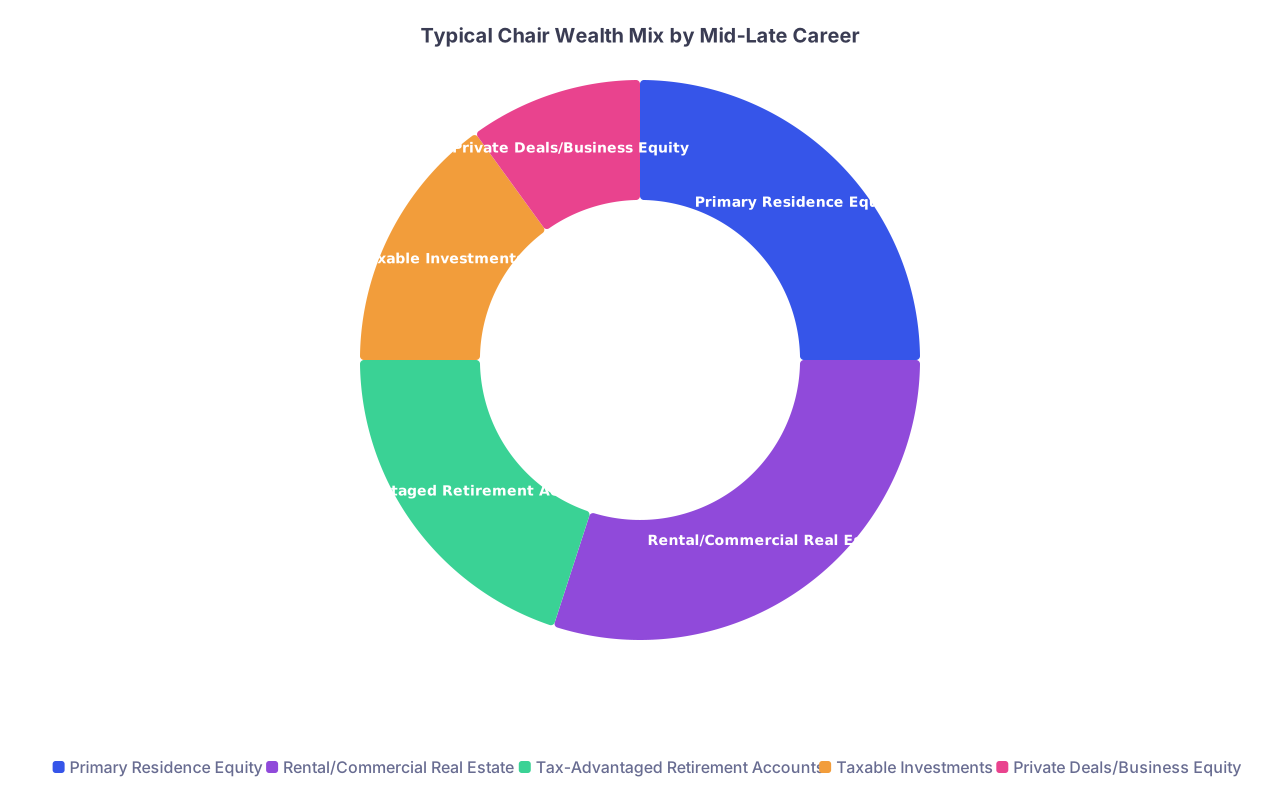
| Category | Value |
|---|---|
| Primary Residence Equity | 25 |
| Rental/Commercial Real Estate | 30 |
| Tax-Advantaged Retirement Accounts | 20 |
| Taxable Investments | 15 |
| Private Deals/Business Equity | 10 |
You see the “professor with sweater vest.”
Their balance sheet looks like a small business owner.
3. Equity, Not Honoraria: The Consulting and Startup Game
You hear that Dr. X “consults for industry” or “advises a startup.”
You imagine a few thousand dollars here and there. Maybe some travel. Maybe dinners.
Here’s what the smart chairs negotiate instead of nickel-and-dime honoraria:
Founding or Early Advisor Equity in Startups
When a chair helps a startup with:- trial design
- access to patient populations
- introductions to key investigators
- academic credibility and KOL status
They don’t just take a one-time fee. They ask for:
- equity stake
- advisory board options
- milestone-based stock grants
One of these hits? That’s more than a decade of academic salary raises.
Licensing University IP Where They’re “Coinventor”
Chairs often sit close to the pipeline:- novel devices
- diagnostic algorithms
- clinical decision tools
- digital health platforms
They steer which ideas get institutional support, which spin out into companies, which get tech transfer deals.
If you think they aren’t selectively attaching their name, experience, and political capital to the ones with real commercial legs, you’re being naive.Quiet Royalty Streams
Some have:- textbooks or reference works with ongoing royalties
- CME content deals
- standardized tools, scoring systems, or templates licensed to EMR vendors or education platforms
The public cover: “Oh, that’s just academic work.”
The reality: those small 5–20k/year royalties compound when they’re invested correctly and consistently.

4. Retirement Accounts: Chairs Use the Full Menu, You Probably Don’t
Most faculty barely max a 403(b). Some don’t even capture the full match.
Chairs? Whole different game.
Here’s the stack I’ve seen repeatedly:
- 403(b) maxed
- 457(b) deferred comp (sometimes governmental and non-governmental)
- Backdoor Roths for themselves and spouse
- Spousal retirement accounts fully funded (even if spouse works part-time)
- HSA used as stealth retirement account, invested aggressively
- Sometimes an additional defined benefit/cash balance plan if they’ve got outside practice income
| Account Type | Annual Contribution Potential (Approx) |
|---|---|
| 403(b) | $23k–$30k+ with catch-up |
| 457(b) | $23k–$30k+ separate from 403(b) |
| Backdoor Roth IRA | $7k per person |
| Cash Balance/DB Plan | $50k–$200k (depends on age/income) |
| HSA | $4k–$8k family, tax triple-advantaged |
Why this matters:
They use the visible “moderate” academic salary to stuff these accounts, often putting away 80–150k/year tax-advantaged. Do that for 15–20 years with competent investing and the compounding is absurd.
They’re not richer because they’re chairs. They’re richer because they use every lever that comes with that role.
5. Information Asymmetry: The Most Valuable “Perk” of Being Chair
Here’s the biggest invisible advantage they have: information flow.
Chairs see things before everyone else:
- hospital expansion plans
- new service lines being negotiated
- where the system is buying land for future clinics
- which subspecialties are going to explode in volume
- which technologies or service models leadership is betting on
One ortho chair I know bought into a small imaging center LLC just before his system signed a “preferred partnership” contract with that group. The center’s volume doubled over three years. His explanation: “We just believed in community-based access.”
Sure.
You will never see a paper trail that proves someone traded on inside institutional info. They’re not idiots. But being “in the room” when the CFO discusses the 5-year plan has a funny way of sharpening one’s sense of “good deals.”
6. The Lifestyle Theater: Why They Always Say They’re “Just Getting By”
There’s a reason chairs downplay money. It’s strategic.
They don’t want:
- faculty thinking they’re “selling out”
- trainees asking intrusive questions
- the dean reevaluating their comp
- ethics committees sniffing around equity deals
So they practice a very specific kind of financial camouflage:
- Driving a nice, but not ostentatious car (think BMW 5-series, not Ferrari)
- “Oh, we just bought a little place by the lake” instead of “We own 3 doors and a share in a surgery center”
- Publicly complaining about tuition, taxes, and cost of living like everyone else
Meanwhile, the serious moves happen quietly:
- new LLCs formed under boring names
- investments made via taxable brokerage and retirement accounts
- deals papered via lawyers, not cocktail talk
You’ll hear: “You know, my wife really handles most of the finances.”
That’s theatre. Nobody who sits through budget meetings with the dean is clueless about their personal numbers.
How You Can Use the Same Playbook Without Becoming Chair
You might never become a chair. Maybe you don’t want the politics, the meetings, the migraines. Fair.
But you can absolutely borrow 80% of the wealth-building playbook—without the title.
Here’s the stripped-down version chairs actually use (once you cut out the institutional drama):
- Treat your academic salary like a floor, not your total opportunity. You need stable W‑2 income to unlock leverage and loans. Protect it.
- Systematically use retirement and tax-advantaged accounts to the legal max. Not “when I have extra,” but as the default.
- Build or buy real estate early in your attending years, even if it starts as just a house hack or one small rental.
- Trade your expertise for equity where possible, not just one-time consulting checks.
- Pay attention to information flow around you. Where is your system growing? Where are referrals being pushed? Where are service lines expanding? That’s your early signal for investments.
Let me say something directly:
Chairs aren’t necessarily “smarter” investors. They’re just more intentional, less sentimental about the “purely academic” identity, and much faster to convert opportunity into structure.
You can do the same.
Legal and Ethical Lines: What’s Allowed, What’s Stupid, What’s Career-Ending
Let’s be very clear. There are guardrails here. I’ve watched people blow up their careers by crossing them.
Here’s how the adults approach this:
They run all outside relationships through the institution’s conflict of interest (COI) process. Yes, it’s annoying. Yes, it covers your backside.
They don’t let industry or private entities influence:
- hiring decisions
- promotion decisions
- guideline writing
- clinical policy
That’s how you end up on the front page of the newspaper.
They separate roles:
- As chair: they advocate for the department and institution
- As private investor or advisor: they stay the hell out of direct decision chains that enrich them
Where people get into real trouble:
- Steering departmental referrals to centers they personally own equity in, without transparent disclosure and guardrails
- Forcing junior faculty into their side ventures as “partners” or “cheap labor”
- Hiding material financial interests in companies that provide clinical services or products to their own hospital
Smart chairs have lawyers. They ask compliance before they sign. They don’t assume “everyone does it so it’s fine.”
You should take the same approach: build aggressively, but on the right side of the line.

| Step | Description |
|---|---|
| Step 1 | Junior Faculty |
| Step 2 | Stabilize W-2 Income |
| Step 3 | Max Retirement Accounts |
| Step 4 | Acquire First Real Estate |
| Step 5 | Develop Niche Expertise |
| Step 6 | Consulting and Advisory Work |
| Step 7 | Equity and Royalties |
| Step 8 | Diversified Portfolio |
| Step 9 | Financial Independence Options |
The Conversation Chairs Will Never Start With You
No chair is going to pull you aside and say:
“Listen, the reason I’m calm about the RVU drop is that my rentals cash-flow 15k/month, my 457(b) is full, and I own a piece of that outpatient center we just opened.”
Instead, you’ll hear:
- “Hang in there, it gets better.”
- “Just focus on your academic niche.”
- “Once you’re promoted, things open up.”
Translation:
“Figure it out on your own like I did. And try not to notice the other game I’m playing.”
So you have two options:
Keep believing the faculty-salary-only story, resentful and confused as you watch people with similar W‑2s live on a completely different economic level.
Start quietly building the same multi-layered financial architecture around your own career—even without their title, their political capital, or their chair stipend.
If you’re smart enough to practice academic medicine, you’re smart enough to do #2.
You just have to stop pretending the white coat is your entire identity and start acting like what you really are: a highly skilled professional with access to stable income, privileged information, and asymmetric opportunities.
Use them.