
The myth that every successful doctor needs a big impressive house is financially poisonous.
You are not immune to real estate mistakes just because your W‑2 has a lot of zeros. In fact, high‑income physicians are more likely to make catastrophic real estate decisions, because lenders, agents, and even colleagues keep telling you “you can afford it.”
You can afford the payment. That does not mean you can afford the risk.
Let me walk you through the “Doctor House Syndrome” and the specific real estate mistakes that quietly strangle physician wealth.
The Doctor House Syndrome: How It Starts
“Congratulations, Doctor. Based on your income, you’re approved up to $1.8 million.”
That sentence has wrecked more balance sheets than malpractice premiums.
The Doctor House Syndrome is simple:
- New or mid‑career attending.
- High income, low financial experience.
- Pressure to “reward yourself” after years of training.
- Banks and agents pushing your “maximum approval.”
- You buy the biggest house the lender will support.
- Ten years later you have a gorgeous kitchen and a mediocre net worth.
The problem is not owning a home. The problem is using your primary residence as your main “investment” and stuffing too much of your net worth into a single, illiquid, leveraged asset that produces zero cash flow.
That is how doctors end up house‑rich, cash‑poor, and trapped in jobs they hate.
Mistake #1: Treating Your Home Like an Investment
Your primary residence is not an investment in the way a rental property or index fund is. It is a consumption item with some partial asset features.
The usual doctor script goes like this:
“I do not want to throw money away on rent. I want to build equity. Real estate always goes up.”
Dangerous thinking. Here is what actually happens.
You buy a $1.5M home with 5% down using a physician loan because “why tie up capital?”
You pay:
- Property taxes: 1–2% per year (or more in high‑tax states)
- Insurance: homeowners + maybe umbrella
- Maintenance: 1–3% of home value per year if you are honest
- Interest: big number, especially early on
- Upgrades and furnishing: always more than you expect
By year five you are shocked to discover that even with appreciation, your real return on this “investment” is barely positive, sometimes negative, once you account for all‑in costs.
Meanwhile, that same down payment + the yearly cash bleed could have been funding:
- Tax‑advantaged accounts (401(k), 403(b), 457, HSA)
- A boring, diversified brokerage account
- Or a real rental property where someone else funds your equity
Here is the key mistake: confusing leverage‑driven appreciation (house looks like it made you rich) with actual wealth creation (liquid, diversified, income‑producing assets).
Mistake #2: Buying Too Much House, Too Soon
The jump from resident paycheck to attending income feels like a lottery win. Lenders and physician‑friendly banks know this. They push you hard.
“Doctor, you qualify for a physician mortgage with 0% down, no PMI, and a $15,000 monthly budget.”
Translation: “We would like you richly indebted and locked in for 30 years.”
If you ignore everything else in this article, do not ignore this:
Total housing costs (mortgage, taxes, insurance, maintenance, HOA) above ~20–25% of net take‑home pay will choke your financial flexibility.
Once you cross 30–35%, you have put on golden handcuffs.
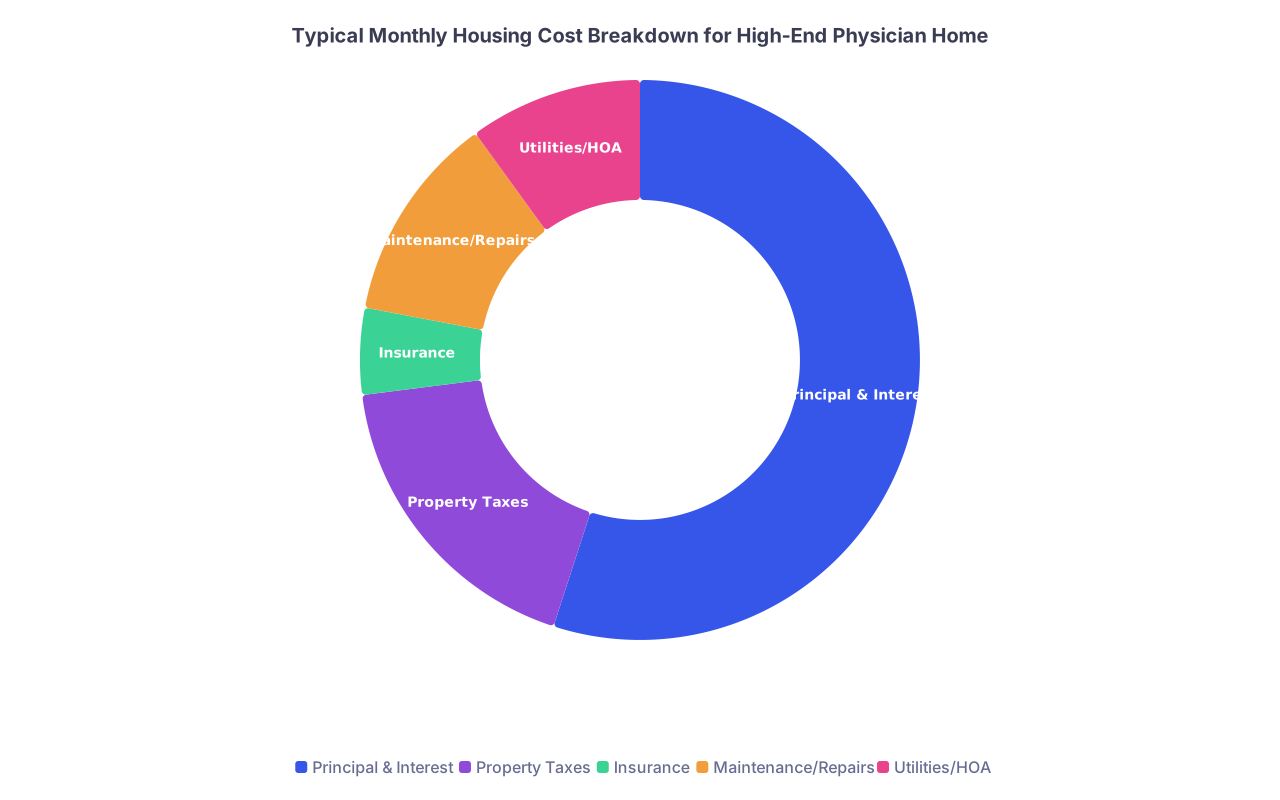
Most doctors buying Dr. House–style homes are at 35–45% of take‑home without realizing it, because they only look at PITI (principal, interest, taxes, insurance) and completely ignore:
- Expected repairs on a large, older, or custom home
- Ongoing maintenance (landscaping, pool, roof, HVAC, pest)
- Utilities on a 4,000+ sq ft property
- Furnishings for extra rooms they did not need to begin with
| Category | Value |
|---|---|
| Principal & Interest | 55 |
| Property Taxes | 18 |
| Insurance | 5 |
| Maintenance/Repairs | 12 |
| Utilities/HOA | 10 |
The rookie doctor move is buying the maximum house the bank approves right after training or after a big promotion.
Better approach:
- Rent 6–12 months in a new city.
- Learn commute patterns, school realities, neighborhood dynamics.
- Let your real, post‑training budget stabilize.
- Then buy a house that fits comfortably at 20–25% of your actual take‑home, not some fantasy spreadsheet.
You do not need a forever home in your first city as an attending. You need financial breathing room.
Mistake #3: Ignoring the “Move Every 5–7 Years” Problem
Doctors move more than they think:
- Fellowship after residency
- Academic → private practice
- Hospital politics implode
- Spouse career change
- Family/aging parents issues
- You hate the city and want out
Yet many physicians buy as if they will live in that first attending home for 20 years. That is not what happens. I have watched cardiologists, surgeons, EM docs all repeat the same pattern: buy big, move in 5 years, lose money, repeat.
The hidden enemy here is transaction cost.
On the buy side: closing costs, inspections, fees.
On the sell side: 5–6% realtor commission, concessions, repairs to make it show‑ready, maybe a price cut in a soft market.
If you buy and sell within 3–5 years, you are essentially rolling dice that appreciation will outrun:
- 6% agent fees
- ~2–3% total transaction costs
- Any price reductions to actually get the house sold
Very often, it does not.

Rule of thumb most physicians ignore:
If you are not reasonably sure you will stay put 7+ years, renting is usually financially safer than buying, especially for an expensive property.
That “wasted rent” is often far less than the real loss you eat on a too‑short holding period for a high‑priced home.
Mistake #4: Blind Faith in Physician Mortgages
Physician loans are not evil. They are just often misused.
They exist for a reason: banks know physicians have high, stable future income but minimal down payment initially. So they give:
- 0–5% down
- No PMI
- Underwriting leniency on student loans
Sounds perfect. Until you realize the trap:
- Rates are often higher than conventional loans.
- You are heavily leveraged with almost no equity cushion.
- You are tempted to buy far more house because “I do not need 20% down.”
- If the market drops or you need to sell quickly, you can end up underwater.
Here is the mental error: using the availability of a special loan product as justification for a larger, earlier, more expensive purchase than you would otherwise make.
| Feature | Physician Loan | Conventional Loan (20% down) |
|---|---|---|
| Down Payment | 0–5% | 20% |
| PMI | None | Usually None at 20% |
| Interest Rate | Slightly higher | Lower |
| Required Reserves | Lower | Higher |
| Risk of Being Underwater | High (low equity) | Lower (more equity) |
Do not make the classic mistake:
“I have no down payment but the bank says I qualify, so I may as well get the $1.6M place instead of the $900k starter.”
Use physician mortgages to bridge a reasonable purchase, not to accelerate a reckless one.
Mistake #5: Confusing Lifestyle Real Estate with “Investment Properties”
A beach condo that you use six weeks a year and rent on Airbnb the rest of the time is not automatically an investment. It is a lifestyle luxury that might partially offset its own cost, if you are lucky and disciplined.
Same for:
- Mountain cabins
- Ski‑in/ski‑out condos
- Golf community homes
- “My buddies and I will each use it a few weeks” arrangements
These so‑called “investments” are often:
- Highly seasonal
- Dependent on local tourism cycles
- Subject to HOA drama and special assessments
- Destroyed by short‑term rental regulation changes
- Poorly managed because you are busy doctoring, not landlording
The mistake is rationalizing. You want the vacation home, so you contort the numbers to make it look like a cash‑flowing investment.
Serious real estate investors do boring math and treat properties like businesses. They underwrite:
- Cap rate
- Cash‑on‑cash return
- Vacancy
- Maintenance
- Reserves
- Financing terms
They do not assume “someone else will pay the mortgage” because last year’s Airbnb calendar looked full.
If you want a vacation home for lifestyle reasons and you can afford it after maxing retirement accounts, building a robust taxable portfolio, and keeping housing at a sane percentage of income? Fine. Own what you are actually buying: a luxury toy, not an investment strategy.
Mistake #6: Overconcentrating Your Net Worth in a Single Property
This is where Doctor House Syndrome really kills wealth.
A common trajectory:
- Age 32: Finish fellowship, buy $1.3M home with 5% down.
- Age 40: Have some equity, upgrade to $2M home “for the schools,” roll equity plus a bit more cash in.
- Age 45: Net worth looks like…
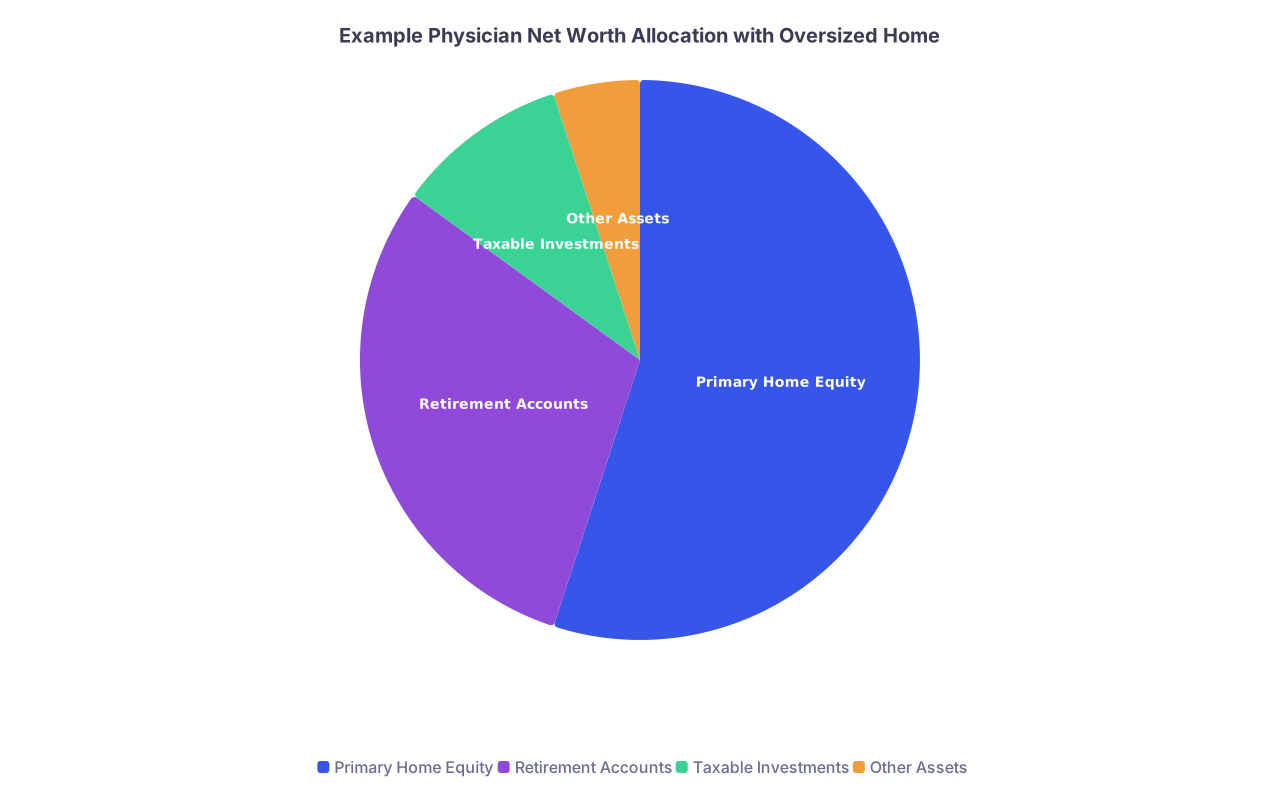
- $1–1.3M in home equity
- $500k–800k in retirement accounts
- $50k–100k taxable investments
- Minimal other assets
In other words, 50–60% of your net worth tied up in the roof over your head. Illiquid. Non‑productive. And not easily tapped without pulling equity or downsizing.
| Category | Value |
|---|---|
| Primary Home Equity | 55 |
| Retirement Accounts | 30 |
| Taxable Investments | 10 |
| Other Assets | 5 |
If the housing market in your area stalls for a decade, or your job goes sideways, or you suddenly want to cut back clinically, your options are ugly:
- Sell your lifestyle and downsize dramatically, or
- Stay trapped in a high‑expense situation with limited savings elsewhere
Real estate is fine as part of a diversified portfolio. It becomes a problem when your home is the dominant asset, especially in your peak earning years when you should be stuffing every possible dollar into liquid, compounding investments.
A more resilient wealth structure by mid‑career looks more like:
- Home equity: 20–30% of net worth
- Retirement accounts: 40–50%
- Taxable/brokerage + cash: 20–30%
- Optional: separate investment real estate slice, if you actually know what you are doing
Mistake #7: Underestimating Legal and Liability Exposure
Doctors already walk around with a target on their backs. Then they go buy:
- Large, high‑visibility homes in wealthy neighborhoods
- Second homes with rental exposure
- Properties in their own name instead of appropriate entities
And they assume a basic homeowners policy and maybe a weak umbrella policy is enough.
That is a mistake.
Key problem areas:
- Short‑term rentals tied to your name personally instead of an LLC with properly structured insurance.
- Tenants in long‑term rentals without screening, solid leases, or understanding of landlord‑tenant law.
- Equity visibility: massive primary home equity in states without strong homestead protections, making you a juicier litigation target.
- Sloppy co‑ownership with family or friends on vacation properties; nobody formalized exit plans, maintenance responsibilities, or buyout terms.

You do not need to live in fear of lawsuits. But you absolutely should:
- Carry a solid personal umbrella policy (often $2–5M for physicians).
- Understand your state’s homestead protections and how much home equity is realistically shielded.
- Keep rental/investment properties in properly structured entities with guidance from a competent attorney who actually works with landlords and high‑net‑worth professionals.
- Avoid mixing business and lifestyle in one messy, legally exposed property.
Do not let your real estate choices undo years of careful asset protection work.
Mistake #8: Believing You Must Own to Be “Financially Responsible”
There is enormous cultural pressure in medicine:
“You are throwing money away on rent.”
“You are a doctor, why are you still in an apartment?”
“My banker says now is the time to stop renting.”
Ignore all of them.
The financially responsible choice is the one that:
- Keeps your total housing cost in a safe percentage of income.
- Preserves your ability to save 20–30%+ of gross income consistently.
- Gives you flexibility to change jobs, cities, or specialties without being crushed by an illiquid asset.
Sometimes, that is renting a nice but modest place close to work and pumping money into:
- 401(k)/403(b)/457
- Backdoor Roth IRA
- HSA
- Taxable index funds
Buying a home can make sense once:
- You are relatively stable geographically and professionally.
- You have a proper emergency fund (6+ months of expenses).
- You are on track with retirement savings (15–20%+ of gross going away).
- The house does not dominate your balance sheet.
The mistake is using real estate to signal success instead of using it to quietly support a sustainable, flexible life.
A Safer Framework for Doctors and Real Estate
To avoid the Doctor House trap, use a simple, boring checklist.

| Step | Description |
|---|---|
| Step 1 | Thinking about buying |
| Step 2 | Strongly consider renting |
| Step 3 | Delay purchase or buy smaller |
| Step 4 | Reduce price range |
| Step 5 | Proceed with cautious offer |
| Step 6 | Stable 7+ years? |
| Step 7 | Saving 20 percent gross? |
| Step 8 | Total housing cost under 25 percent net pay? |
And when evaluating whether a property is an “investment” or a “toy,” ask:
- Does it produce reliable net cash flow after all expenses and reserves?
- Would I still buy it if I could never use it personally?
- Can I afford to lose significant value on this without derailing my retirement or work‑optional plan?
If the honest answers are no, no, and no, it is not an investment. It is consumption. Price it as such in your financial life.
FAQs
1. How much house can a doctor safely afford really?
Ignore what the bank says. As a protective rule of thumb:
- Keep all‑in housing costs (mortgage, taxes, insurance, estimated maintenance, HOA) at or below 20–25% of your net take‑home pay.
- And make sure you can still save at least 20% of gross income, preferably 25–30% in your peak years.
If one of those breaks, you are likely drifting into Doctor House territory.
2. Are physician mortgage loans always a bad idea?
No. They are a tool. The mistake is using them to stretch to a house you would not otherwise buy.
They make sense when:
- You are early in attending life with strong job stability.
- You are buying a reasonably priced home, not your “forever estate.”
- You still hit your savings targets and keep housing at a sane share of your take‑home.
They are a problem when they are the only way you can “afford” the house on paper.
3. Should doctors ever buy a vacation home?
Sometimes, but treat it honestly:
- If it is primarily for personal use, call it a luxury purchase, not an investment. Buy it only after your core savings and protection needs are met.
- If you want it to be a true investment, underwrite it like any other rental: conservative projections, full expense accounting, local regulation risk, and a plan for professional management.
What you must not do is assume, “We will Airbnb it a bit and it will pay for itself.” That is the classic self‑deception.
4. How do I unwind a bad “Doctor House” decision if I already bought too much?
Do not freeze. You have options, none of them painless, but all of them better than staying stuck for 15 years:
- Run the numbers honestly: current value, mortgage, transaction costs, your savings rate, and career plans.
- If the house is choking your savings or trapping you in a job, seriously consider selling and downsizing or even renting for a period.
- If selling would be a modest loss but dramatically improves cash flow and flexibility, it is usually worth it early rather than late.
- Pair that move with aggressive debt payoff (if needed) and automated saving to rebuild a healthier, more diversified balance sheet.
The key is to stop telling yourself “it will all work out if I just wait.” Housing mistakes rarely self‑correct without you taking deliberate action.
Bottom line:
First, your primary home is not your retirement plan.
Second, oversized, highly leveraged houses trap doctors in golden handcuffs and crowd out real wealth building.
Third, you protect yourself by keeping housing modest, savings aggressive, and calling luxury real estate what it is: lifestyle, not strategy.