
You’re post-call, half-awake, staring at your bank account. Resident salary just hit, rent is pending, loans are looming, and someone on Twitter is screaming that you should be investing 50% of your income “for freedom.”
You’re asking the right question: how much of your income should you actually invest as a resident vs as an attending — without wrecking your life or your sanity?
Let’s answer that directly, then back into the details.
The Short Answer: Targets for Residents vs Attendings
Here’s the clean, no-fluff framework:
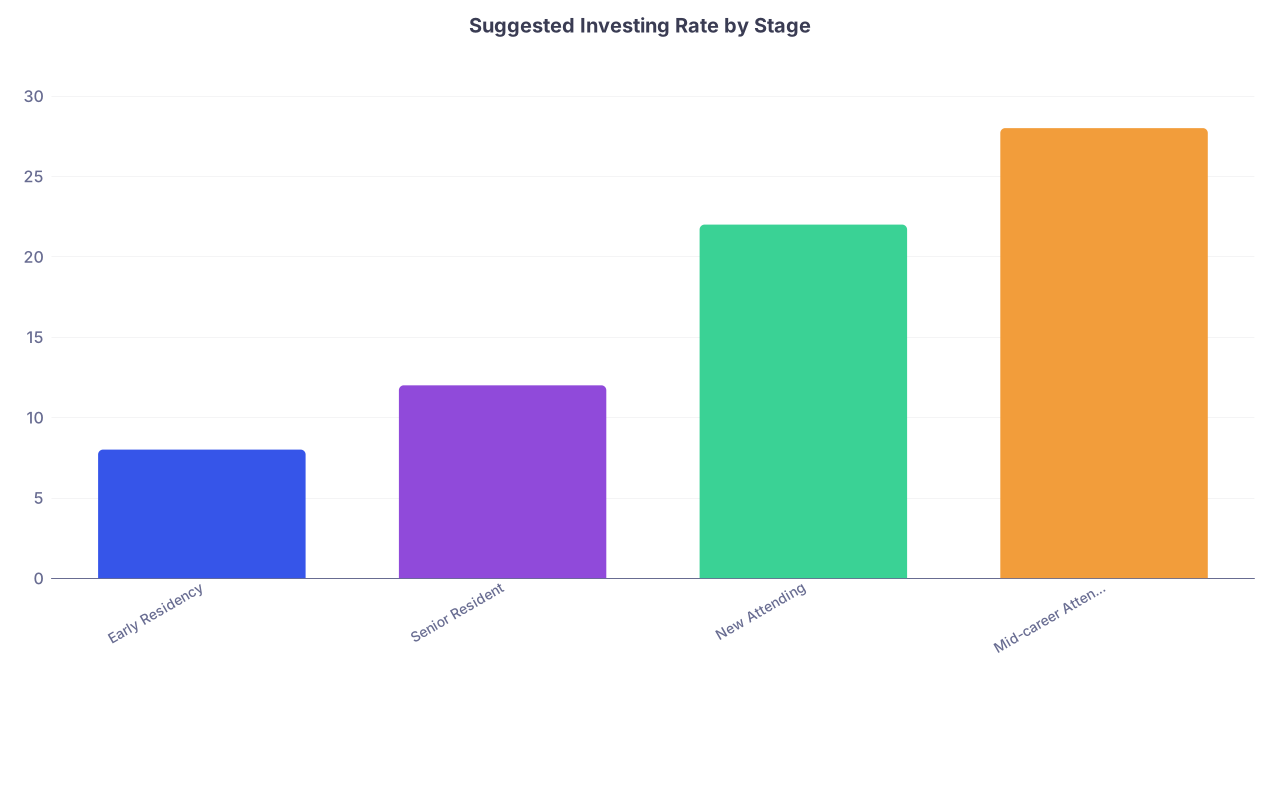
As a resident:
- Solid minimum: 5–10% of gross income
- Strong but realistic: 10–15%
- Aggressive (no kids / low COL / very motivated): 15–20%
As an attending:
- Baseline to not fall behind: 20% of gross income
- Good target for most physicians: 20–30%
- Aggressive / early FI crowd: 30–40%+
And yes, this “investing” number includes:
- Pre-tax retirement (401(k), 403(b), 457(b))
- Roth/Backdoor Roth IRAs
- Taxable brokerage accounts
Not just Robinhood stocks you grab on a whim.
Now let’s make this actually usable.
Step 1: Understand What “Investing %” Really Means
People throw around “I save 30%” all the time. Half the time they’re counting nonsense.
When I say invest 20–30%, I mean:
Money that goes into:
- Retirement accounts (401(k)/403(b), 457, IRA/Roth IRA)
- HSA (when used like a retirement account, not just immediately spent)
- Taxable brokerage invested in diversified funds
Not:
- Cash rotting in a checking account
- Paying down credit cards from brunch
- Buying a second Tesla “because EV credit”
You track your investing rate like this:
Investing % = (Total invested this year ÷ Gross income) × 100
If you make $70k as a PGY-2 and manage:
- $4k into Roth IRA
- $2k into 403(b)
Total invested = $6k
$6k ÷ $70k ≈ 8.6%
So you’re investing about 9% of your income. That’s a strong resident number.
Step 2: Resident Phase – What Actually Makes Sense
As a resident, your main job is to not blow up your future self.
You don’t need to be perfect. You just can’t be reckless.
Resident Priorities (In Order)
If you’re a resident, this is the realistic order of operations:
Don’t drown in high-interest debt
- If you’ve got credit cards at 20–25% interest and you’re debating Roth vs brokerage vs “this growth ETF”… stop.
- Any extra money should go to killing that first. That’s a guaranteed double-digit return.
Get a basic emergency buffer
- Minimum: $1–2k for “car died, phone shattered, surprise flight.”
- Ideal for residents: 1–2 months of expenses, not 6–12 months. You’re not that fragile; your job is pretty secure.
Then start investing something — no matter how small
- Even $100/month into Roth IRA is not a joke. Compound interest and habit formation both matter.
Concrete Resident Targets
Let’s use real numbers.
Say:
- PGY-2 Internal Medicine
- $70k gross income
- Take-home after taxes/benefits: ~ $3,800–4,100/month (varies by state)
Reasonable target floors:
- Minimum: $200–300/month invested (about 6–8% of gross)
- Strong: $400–700/month (10–15%)
- Aggressive: $800–1,100/month (15–20%)
Where to put it?
- First: Roth IRA up to what you can afford (2025 limit is $7,000 if under 50; adjust for current year)
- Then: employer 403(b)/401(k) up to match (if any)
- If you’re PSLF-bound: still contribute, but maxing retirement isn’t mandatory during residency unless your budget allows
| Category | Value |
|---|---|
| Early Residency | 8 |
| Senior Resident | 12 |
| New Attending | 22 |
| Mid-career Attending | 28 |
Where Residents Go Wrong
I see the same mistakes over and over:
All-or-nothing thinking
“I can’t max out my Roth so why bother?”
Wrong. $1,000 in a Roth is infinitely more than $0.Over-saving and under-living
PGY-1 living like a monk, maxing two retirement accounts, but miserable, burnt out, and then explodes with lifestyle creep as an attending. That’s not discipline; that’s a pressure cooker.Ignoring investing entirely because ‘I’ll fix it later as an attending’
I’ve watched this play out. Later never feels as free as you expect. The student loans, kids, house, lifestyle all show up right on schedule.
As a resident, your realistic victory condition:
Hit 5–15% invested consistently, build the habit, and set yourself up to ramp hard as an attending.
Step 3: Attending Phase – Where the Real Leverage Is
You finish fellowship, sign your first attending contract, and your income jumps from $70k to $300k+.
This is the danger zone.
Lifestyle creep will eat every dollar if you don’t pre-commit.
Your Real Goal as an Attending
Most physicians who want optional financial independence by their 50s need to invest:
- At least 20% of gross income
- Preferably 25–30%+ if you started late, have big loans, or want more flexibility
Here’s why: simple math.
Assume:
- You start at $300k income
- You invest 25% = $75k/year
- 30-year career
- Average 5–7% real return (after inflation; not crazy optimistic)
That gets you into multi-million net worth territory, comfortably.
If you only invest 10% as an attending, you’re effectively choosing to work longer or live leaner later. There’s no magic trick around that.
Priority List for Attendings
Here’s how I’d structure it for a new attending:
Lock in your savings rate before lifestyle
- Decide you’re a 25–30% investor
- Then build housing, cars, vacations around what’s left. Not the other way.
Max tax-advantaged accounts Typical stack:
- 401(k)/403(b): max employee contribution
- If available: 457(b) (non-gov 457 can be more complex; read the plan)
- HSA (if you have a high deductible plan)
- Backdoor Roth IRA (for you + spouse)
- Employer match and profit share on top
Then taxable brokerage
- This is your flexibility money: early retirement, big down payment, practice buy-in, etc.
| Account Type | Annual Amount | Notes |
|---|---|---|
| 401(k)/403(b) | $23,000 | Employee deferral |
| Employer match/share | $20,000 | Varies by plan |
| 457(b) | $23,000 | If quality plan |
| Backdoor Roth IRA | $7,000 | You |
| Spouse Backdoor Roth | $7,000 | If eligible |
| HSA | $4,300 | Family HDHP (approx.) |
| Taxable brokerage | $30,000 | Flexible investing |
That setup alone is pushing around $100k+ per year into investments, or ~28–30% of a $350k income. That’s how physicians actually build wealth.
Step 4: How Student Loans Change the Equation
You can’t talk about physicians and investing without mentioning the elephant: student loans.
PSLF / IDR Track
If you’re committed to:
- Non-profit hospital employment AND
- PSLF (Public Service Loan Forgiveness) via an income-driven plan
Then during residency and early attending years:
- Minimize required payments legally
- Give PSLF a serious shot
- That usually means:
- Starting IDR during residency
- Keeping payments low while years count
- Not overpaying loans you plan to have forgiven
In that situation, I lean heavily toward investing more aggressively, because:
- Your loan “return” is capped by forgiveness
- Market returns + tax-advantaged compounding often beat extra loan payments
Private Practice / No PSLF
If you’re definitely not getting forgiveness:
- You want those loans gone within 5–10 years as an attending
- That’s not a suggestion. Dragging $300k at 6–7% for 25 years is financial self-sabotage
So:
- As a resident: still invest something (5–10%), don’t go all-in on loans if it kills your optionality
- As an attending:
- Maintain a floor investing rate (e.g., 15–20%)
- Throw an additional big chunk (10–20%) at loans
- Once they’re gone, roll that loan payment straight into investing
| Category | Value |
|---|---|
| Investing | 22 |
| Loan Paydown | 18 |
| Everything Else | 60 |
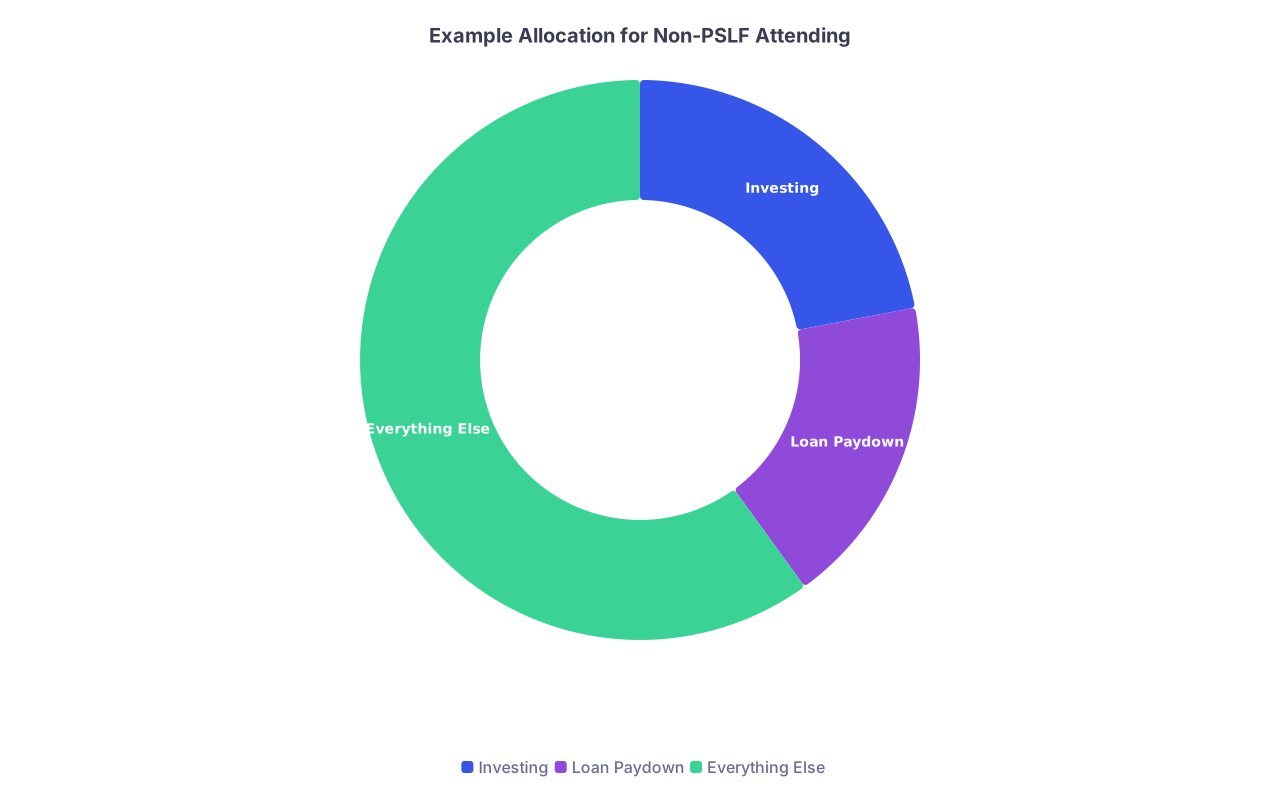
So maybe:
- 22% of income invested
- 18% to loans
- 60% for taxes, housing, life
Within 5–7 years, you’re debt-free and can easily pivot to 30–40% investing rate without changing your lifestyle.
Step 5: Adjusting for Real Life (Kids, COL, Burnout)
Rules of thumb are nice until you move to San Francisco with 2 kids and daycare costs more than your mortgage.
Here’s how to adapt without lying to yourself.
High Cost of Living Area
If you’re in NYC, SF, Boston, etc.:
As a resident:
- Be happy if you can hit 5–10% investing
- Keep fixed costs (rent, car) brutally lean
As an attending:
- You still need to push for 20%+ investing, but you may need:
- Roommates early on
- Renting longer instead of buying “the doctor house” immediately
- One reasonable car, not two luxury ones
- You still need to push for 20%+ investing, but you may need:
The math doesn’t care where you live. The percentages are similar. The lifestyle levers just hurt more in HCOL areas.
Kids / Single Income Household
Kids absolutely strain the budget, but they don’t erase the need to invest.
General approach:
- During heavy childcare years, your investing rate might temporarily drop (say from 30% to 20–22%)
- That’s fine if:
- You were investing aggressively before, and
- You plan to ramp back up once daycare ends
What you don’t do is say, “We’ll invest later when it’s easier” for 15 years straight.
Step 6: Tactical Framework – How to Decide Your Number
Let me give you a simple decision structure you can actually use.

| Step | Description |
|---|---|
| Step 1 | What stage are you? |
| Step 2 | Pay debt aggressively, invest 5 to 10 percent |
| Step 3 | Target 10 to 15 percent invest |
| Step 4 | If low expenses, can push to 20 percent |
| Step 5 | Target 20 to 30 percent invest |
| Step 6 | Can do 15 to 20 percent |
| Step 7 | Split extra cash between loans and investing |
| Step 8 | Lean more into investing |
| Step 9 | Resident or Attending |
| Step 10 | Any high interest debt? |
| Step 11 | Want FI by 50s? |
| Step 12 | Large student loans? |
If you want a rule you can write on a Post-it:
- Resident: 10–15% if at all possible.
- New attending: Start at 20%, grow to 25–30% within 3–5 years.
If you’re below that, you’re choosing lifestyle today over freedom later. That might be fine. Just don’t tell yourself a story that doesn’t match the math.
Step 7: Practical Implementation Moves
Concepts are useless if your bank account doesn’t change.
Here’s how to actually make this real:
Pick your number now
- Resident: 8%, 10%, 12% — write it down
- Attending: 20%, 25%, 30% — pick one
Automate it the moment your contract starts
- Set retirement contributions as a percentage of paycheck, not a dollar amount
- Set up automatic transfers from checking to Roth IRA / brokerage on payday
Build lifestyle around the leftovers
- Whatever hits your checking after investing and taxes is your “real” income
- This one mental trick is the difference between wealthy doctors and paycheck-to-paycheck ones at $400k
| Category | 10 percent invest | 20 percent invest | 30 percent invest |
|---|---|---|---|
| Year 0 | 0 | 0 | 0 |
| Year 10 | 350000 | 700000 | 1050000 |
| Year 20 | 950000 | 1900000 | 2850000 |
| Year 30 | 1900000 | 3800000 | 5700000 |
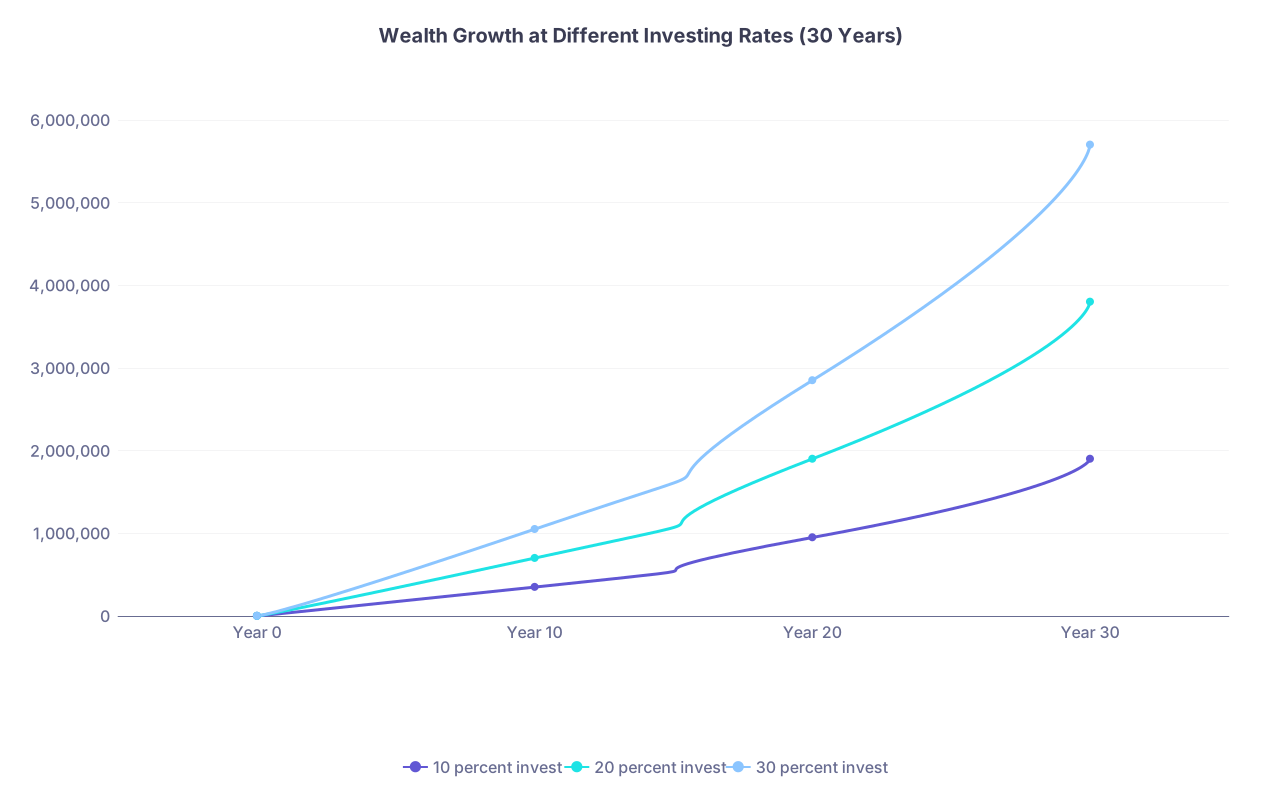
The point isn’t the exact numbers — it’s that doubling your investing rate roughly doubles (or more) your long-term wealth.
Key Takeaways
- As a resident, aim for 5–15% of your income invested. Don’t chase perfection; build the habit and avoid high-interest debt and lifestyle creep.
- As an attending, you should be targeting 20–30% of gross income invested if you want real flexibility in your 50s and beyond. Lock in that rate before expanding your lifestyle.
- Student loans, kids, and high COL change the tactics, not the destination. You can bend the numbers for a few years, but long-term, your investing percentage is the single biggest lever for your financial future.