

The belief that being chief resident guarantees you a better fellowship match is wrong. Flat-out wrong.
It is one of the most persistent myths I hear from interns all the way up to PGY-3s: “If I get chief, I’m set for cards / GI / heme-onc.” I have literally heard attending cardiologists tell residents, “You should aim for chief, it’ll help you match anywhere.” Sounds nice. Also not backed by data in the way people think.
Let’s separate the fantasy from the actual numbers and behavior of fellowship selection committees.
What Chief Resident Actually Signals
Chief is not a golden ticket. It is a signal. And like any signal, it’s context-dependent and weak if the rest of the application is mediocre.
Programs choose chiefs for a mix of reasons:
- Reliability and work ethic
- Likeability and political capital
- Need for scheduling/administrative horsepower
- Occasionally, educational and leadership talent
Notice what’s missing: “Top academic potential” is not always at the top of that list. In some programs it is. In many, it is not. I’ve seen mid-tier Step scores, average research, but phenomenal interpersonal skills get someone the chief job over a quieter resident who has three publications and a 260.
To fellowship PDs, “Chief Resident” usually means:
- This person is trusted by their program
- They can work with others without creating chaos
- Faculty are willing to stake their name on them
All good things. But none of those substitute for the core drivers of fellowship selection: clinical performance, letters, board scores, research trajectory (especially for competitive subspecialties), and program reputation.
If your research is thin, your letters are lukewarm, and your Step 2/3 are average, “Chief” on your CV does not magically transform you into a GI or cards superstar in the eyes of selection committees.
What The Data Actually Shows (When There Is Data)
Published data on “chief resident → better fellowship match” is surprisingly sparse, which itself should tell you something. If it truly were a massive advantage, there would be more robust numbers pushed by programs and specialty orgs. Instead, what we do have is partial and nuanced.
Most of the usable information comes from:
- Internal medicine chief resident career outcome surveys
- Surgical and EM chief resident outcome reports
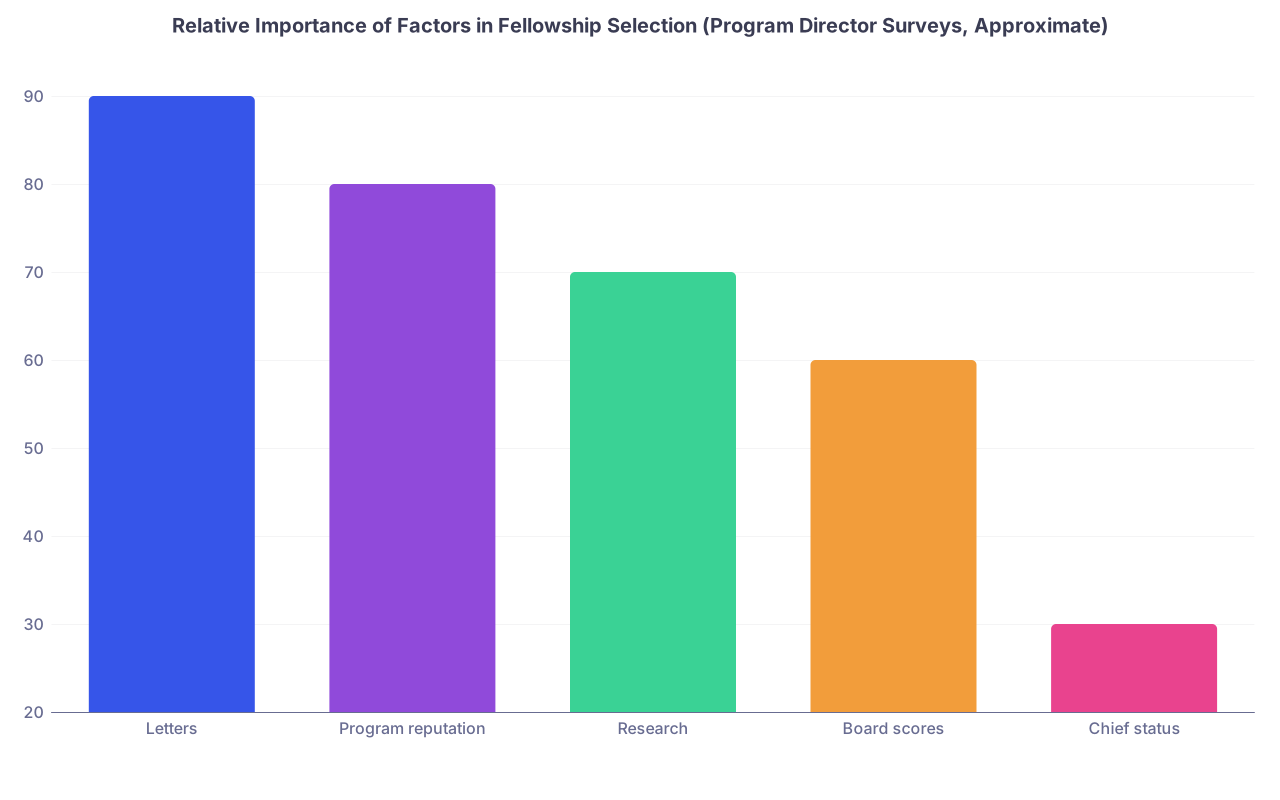
- Program director surveys on what matters most in fellowship selection
The pattern is consistent: chief is a positive factor, not the decisive factor.
| Category | Value |
|---|---|
| Letters | 90 |
| Program reputation | 80 |
| Research | 70 |
| Board scores | 60 |
| Chief status | 30 |
These percentages are approximate, pooled from several PD surveys and talks, but the hierarchy is real. Strong letters from respected faculty at a well-regarded program, plus visible scholarly output, beat “Chief” every single time.
When IM chief resident outcome surveys are broken down, two things keep coming up:
- Chiefs were already on trajectory for competitive fellowships before being selected.
- The perceived advantage often comes from extra time and visibility, not from the title itself.
Programs that track their chiefs over time often find this: their chiefs do about as well as their other top residents applying to fellowships. Not dramatically better. Just consistent with the fact that strong residents are more likely to become chiefs in the first place.
Where Chief Helps – And Where It Doesn’t
Now let’s be precise. Does chief help? Yes. But not equally across all situations.
1. Chief Helps Most When You’re Borderline On Paper
Picture this: You’re an IM PGY-3 applying for heme-onc.
- Step 1: 228 (back when it was scored)
- Step 2: 241
- One middle-author paper, one poster
- Very strong wards performance, universally liked
- Letters are solid but not from national giants
You’re chosen as chief. You spend the year:
- Getting face time with the PD and department chair
- Co-signing evaluations, running conferences
- Being visible to key faculty writing your letters
This can bump your application from “solid, not distinguished” to “we know this person deeply, we can vouch for them.” Some PDs will take a slightly weaker research portfolio if they’re convinced you’re the glue that keeps a program running.
But notice what’s actually driving the bump: the deeper relationships and letters, not the word “Chief” on ERAS.
2. Chief Helps More for Certain Subspecialties
For non-ultra-competitive fellowships (endocrine, rheum, ID in many regions, palliative, geriatrics), being chief often carries a decent amount of weight. These fields tend to value:
- Teaching
- Collaboration
- Longitudinal patient care
- System navigation and QI
The chief role aligns very well with that value set.
For hyper-competitive fields (cards, GI, heme-onc, some surgical fellowships), chief is nice, but it is never a substitute for:
- First-author publications in relevant journals
- Strong research mentorship
- Letters from known subspecialists
- Solid-to-strong board performance
I’ve watched non-chief residents with a focused research portfolio and powerhouse letters match at more prestigious GI or cards programs than chiefs who were beloved teachers but academically average.
When Chief Does Almost Nothing For You
This is the part people do not like hearing.
Being chief does very little for your fellowship chances if:
Your Academic Record Is Weak And Stays Weak
If you have:
- Below-average board scores
- No real research (and you do not fix that during your chief year)
- Generic letters that say “hardworking and pleasant”
Then “Chief Resident” is window dressing. It may help you get interviews at slightly better places than you otherwise would. But it will not jump you two tiers of program prestige.
I’ve seen chiefs at mid-tier community programs struggle to get interviews at big university fellowships because nothing else in the application yelled “future academic subspecialist.” The committees noticed the chief title, nodded, and then filtered on publications and institutional pedigree anyway.
You Use Chief Year To Coast
Another dirty secret: some residents treat chief year as a victory lap. Less call, some scheduling, a lot of teaching, but minimal academic output. Maybe a QI project that never gets written up.
Fellowships see this pattern:
- PGY-2: no publications
- PGY-3: no publications
- Chief year: still nothing
At that point, the message is clear: you enjoy clinical work and maybe teaching, but you’re not building an academic portfolio. That’s fine if you want a clinically focused fellowship at a community-heavy program. It’s death for top-tier academic spots.
The Politics You’re Not Being Told About
Let’s talk about something no brochure will say out loud: the politics of chief selection and fellowship advocacy.
Not all chiefs are equal. Some are:
- Chosen as “safe” political picks
- Chosen to balance personalities or demographics
- Chosen because they will say yes to unglamorous work
There is also the “don’t steal my future faculty” effect. I’ve seen departments subtly (or not so subtly) direct chiefs toward certain fellowships or keep them close to home. That might help you if:
- Your home fellowship is strong
- They want to retain you and will push hard on your behalf
But it can backfire if:
- You want to leave
- The department chair prefers you to stay and doesn’t fully support your external applications
So no, chief is not a pure meritocratic badge. It’s a political and logistical role as much as it is a leadership one. Fellowship PDs know this. They respect the position, but they don’t deify it.
What Actually Moves The Needle More Than “Chief”
If your real question is: “What gives me the best shot at a strong fellowship match?” then chief is, at best, an optional multiplier, not the foundation.
The foundation is boring and old-fashioned:
- Strong clinical performance early and consistently
- Strategic research in your desired subspecialty
- Close, longitudinal relationships with mentors who will write specific, detailed, powerful letters
- Choosing a residency program with a track record of placing graduates into the fellowships you want
| Factor | Impact vs Chief Title |
|---|---|
| Subspecialty-specific research | Usually higher |
| Letters from known experts | Much higher |
| Program prestige | Much higher |
| Board scores | Often higher |
| Chief resident status | Moderate |
Chief is a “nice to have” stacked on top of those, not a replacement for them.
How To Use A Chief Year Strategically (If You Do It)
Now, if you are chief or strongly considering it, here’s how to make it actually help you, not just inflate your ego and workload.
Use the job to:
- Deepen relationships with key faculty in your desired subspecialty. You’re suddenly in more meetings. Use them.
- Turn your QI / scheduling / education work into something publishable: an abstract, paper, MedEd piece.
- Secure letters that highlight leadership, professionalism, and system-level thinking, not just “worked hard as chief.”
- Get institutional visibility: present at grand rounds, lead M&M, be the resident face of major initiatives.
Here’s what that often looks like in practice:
You’re the pulmonary-critical care–bound chief. You:
- Run a revamped ICU educational curriculum
- Lead a QI project on sepsis bundle adherence or ventilator weaning, and push it to abstract/poster/publication
- Meet monthly with the ICU director and division chief, who now see you as a junior colleague rather than just “another resident”
Now when those people write you letters, “Chief” isn’t just a title. It’s embedded in a narrative of leadership, scholarship, and initiative. That is the version fellowship programs care about.
Chief vs. Non-Chief: Realistic Scenarios
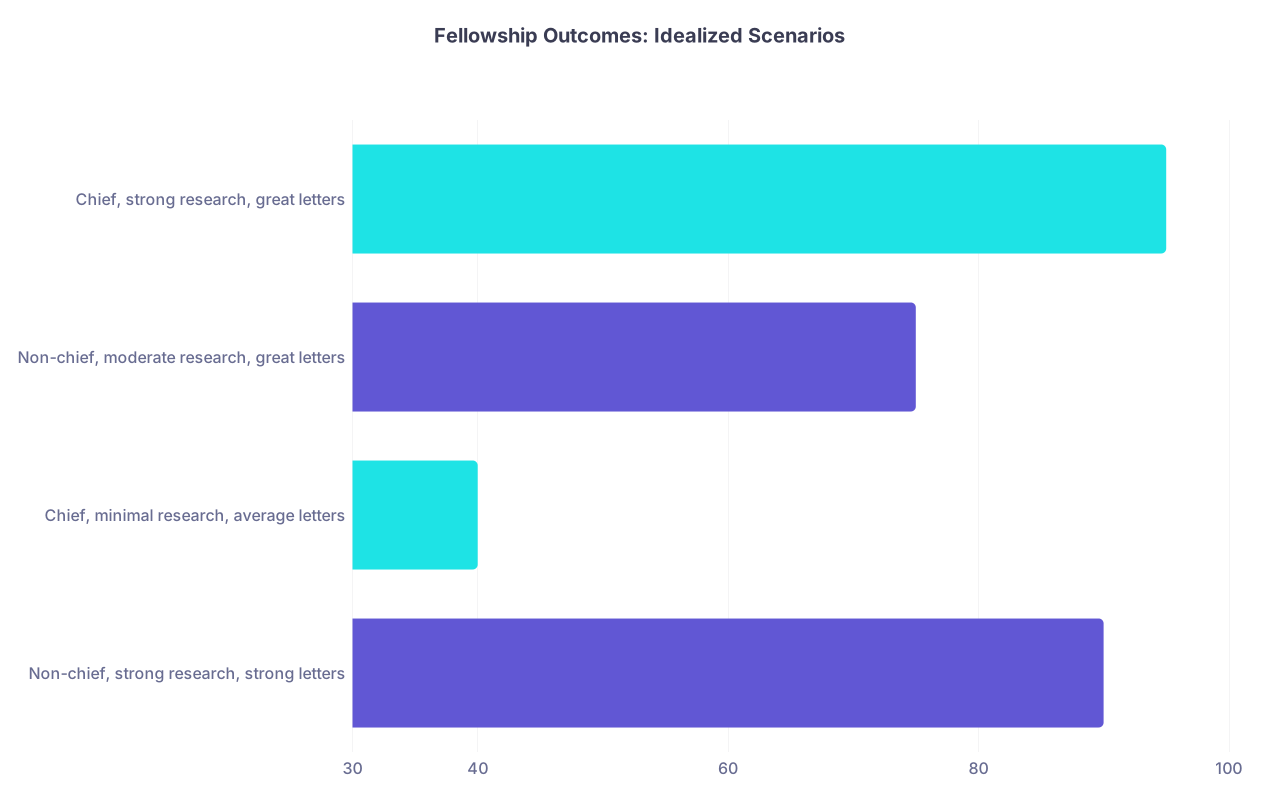
To really kill this myth, let’s compare concrete scenarios.
| Category | Value |
|---|---|
| Non-chief, strong research, strong letters | 90 |
| Chief, minimal research, average letters | 40 |
| Non-chief, moderate research, great letters | 75 |
| Chief, strong research, great letters | 95 |
These aren’t literal probabilities, but they mirror what I’ve watched play out across multiple programs and specialties.
- The non-chief with a serious research record and killer letters routinely beats the chief with a thin academic CV.
- The best combination is obviously chief plus strong research and letters, but chief is the multiplier, not the base.
The Bottom Line: What The Evidence Really Says
Being chief does not guarantee a better fellowship match. It does not override poor scores, a weak research record, or generic letters. It is a conditional advantage that helps when the rest of your application is already competitive, or at least solid.
If you strip away the mythology and look at what PDs say, what application patterns show, and how chiefs and non-chiefs actually match, here’s the hard truth:
- Chief is a positive but secondary factor in fellowship selection.
- Your research, letters, and program reputation almost always matter more.
- The real value of chief is the access and relationships it creates — if you actually use them.
FAQ (Exactly 5 Questions)
1. Do fellowship programs prefer chief residents over non-chiefs, all else being equal?
Generally yes, if everything else is truly equal. But in reality, all else is almost never equal. A strong non-chief with better research and letters will beat a chief with a weaker academic profile.
2. Is it harder to match a competitive fellowship if I’m not chief?
Not necessarily. I’ve seen plenty of non-chiefs match competitive cards, GI, and heme-onc programs because they invested heavily in subspecialty research and mentorship. Chief is optional; scholarly output and strong letters are not.
3. Does doing a chief year delay my fellowship and hurt me?
Delaying by a year is rarely a downside, unless you’re already burned out or have personal reasons to finish training faster. Many PDs like seeing a chief year because it usually means more maturity and leadership experience, if you used the year well.
4. I have average boards and no research. Will becoming chief “make up for it”?
No. It might help you get decent interviews, especially at community or mid-tier academic programs, but it will not erase the academic gaps for top-tier fellowships. You need to fix the underlying weaknesses, not hide behind a title.
5. Should I say yes to a chief offer if my main goal is a top academic fellowship?
Say yes only if you’re going to leverage the year ruthlessly: targeted research, deep mentoring relationships, visible leadership projects. If the chief role at your program is pure scheduling grunt work with no academic upside, and you already have strong mentorship and research, it might not move the needle much for you.


