
The myth of the “born leader” in residency is garbage. Your chief residents weren’t magically charismatic toddlers destined to run sign-out. They were mostly anxious interns who slowly stopped screwing up in public.
Let me spell it out: almost every strong chief I’ve seen built their leadership skills. Brick by brick. Under pressure. While tired. While feeling like they had no idea what they were doing.
The “Born Leader” Story Is Convenient — And Wrong
The idea that some people are “natural leaders” is comforting. It lets everyone off the hook.
Attendings can pretend leadership “just shows up” in PGY-3. Programs can skip real leadership training and just “pick the strongest residents.” Residents can shrug and say, “I’m just not a leader type” and avoid hard conversations, feedback, or owning the room.
The problem is, data does not support this.
Psychology and management research is pretty consistent:
- Personality traits (extroversion, conscientiousness, emotional stability) explain maybe 20–30% of leadership variance.
- Things like practice, feedback, coaching, structured roles, and repetition drive the rest.
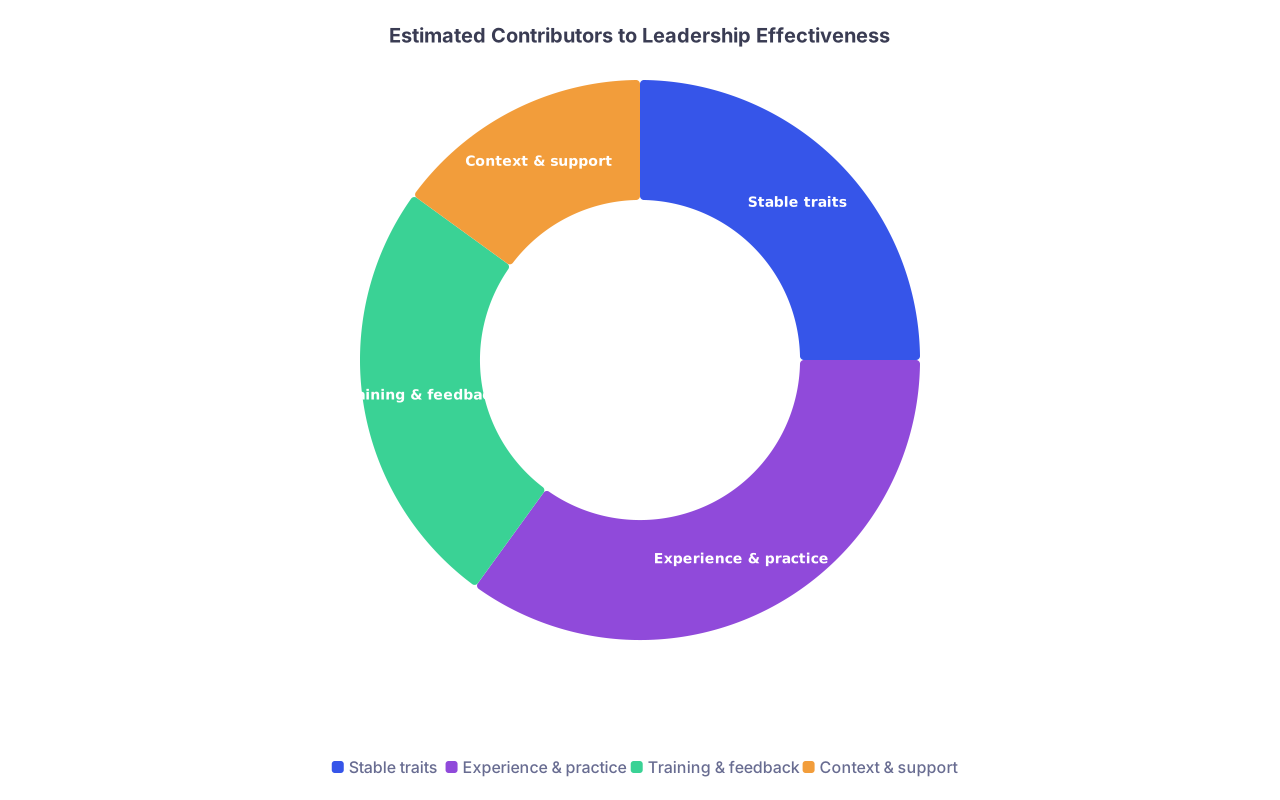
| Category | Value |
|---|---|
| Stable traits | 25 |
| Experience & practice | 35 |
| Training & feedback | 25 |
| Context & support | 15 |
Leadership isn’t eye color. It’s more like procedural skill: some residents pick up central lines fast, some slow, but almost nobody is born knowing how to thread a catheter into the IJ. Same for leading a chaotic code or running a dysfunctional team on nights.
When program directors say, “She’s just a born leader,” what they usually mean is: “She’s more comfortable speaking up, can read a room faster than average, and has gotten a lot of reps doing hard things.”
Which is learnable.
What Chiefs Actually Looked Like As Interns
Strip away the mythology and here’s the pattern I’ve seen over and over in chiefs across IM, EM, surgery, peds, OB, psych:
- They were not always the smartest person in the room.
- They were not always the highest Step score, or the “gunner” on day one.
- They were definitely not universally liked by everyone all the time.
- They were the ones who:
- Showed up reliably.
- Took ownership when things went sideways.
- Cared enough to learn from their own messes.
I’ve read the comments on chief evals for years. The same themes for strong chiefs repeat:
- “She listens and has our back, even when admin is being ridiculous.”
- “He’s calm when the ED is on fire and helps us prioritize.”
- “They’re honest with feedback but don’t humiliate anyone.”
- “You can tell she remembers what it felt like to be an intern.”
None of that is genetic. That’s pattern recognition, controlled emotional response, and practiced communication.
The Awkward Truth: Most Chiefs Were Bad At This Early
I remember one future chief presenting in intern noon conference. Voice shaking. Slides cluttered. Couldn’t answer questions without staring back at the computer. Sixteen months later, that same person was leading M&M, dismantling a complex case in front of 80 people and taking pointed questions from attendings without flinching.
That’s not a “born leader.” That’s exposure therapy plus feedback plus repetition.
You do not see their early reps:
- The first time they had to call a consultant who was clearly annoyed.
- The first disastrous family meeting where they talked more than they listened.
- The QI project pitch that landed with a thud at committee.
You see the polished version at the end of residency and assume it was always like that. It wasn’t.
Skills Chiefs Actually Build (Not Inherited)
Let’s get concrete. What are chiefs doing that feels like “natural leadership” from the outside?
1. Situational Awareness, Not Superhuman IQ
Good chiefs have an almost eerie sense of what’s happening across the hospital. That’s not magic. It’s practiced scanning:
- Who’s drowning on nights?
- Which service is over census and about to break?
- Which intern is about to cry in the bathroom between pages?
They learned to:
- Ask short, targeted check-in questions.
- Watch body language on rounds and in sign-out.
- Track system bottlenecks: bed control, imaging delays, consult black holes.
This is the same skill you develop to run an efficient ward team. Chiefs just apply it at program scale.
2. Conflict Management (The Part Everyone Pretends Is Personality)
Most residents hate conflict. So they call someone “a natural leader” if that person can handle it. But the chief who can calmly tell a toxic senior, “Your tone in sign-out is undermining team trust,” didn’t pop out of the womb doing that.
They practiced:
- Short, direct statements instead of passive-aggressive hints.
- Separating behavior from identity: “That comment was dismissive,” vs. “You’re a jerk.”
- Timing: not calling someone out in front of an attending unless absolutely necessary.
I’ve watched future chiefs wreck a conversation with:
- Too much hedging (“I kind of feel like maybe…”).
- Or too much heat (“You’re always like this…”).
And then slowly adjust. Because they got burned by their own approach and decided not to repeat that mistake forever.
3. Emotional Regulation Under Pressure
A “born leader” in medicine is often just someone whose anxiety is less visible.
Leadership research is blunt: emotional regulation is trainable. Mindfulness, cognitive restructuring, sleep hygiene, deliberate practice under pressure — all of it matters.
In residency language:
- The intern who panics at their first RRT learns to focus on “airway–breathing–circulation” so they have a script instead of spiraling.
- The senior who used to snap at nurses at 3 a.m. on call learns to take three seconds before speaking because last time it blew up their shift.
By PGY-3, the ones who deliberately practiced staying in control look like “naturally calm leaders.” The ones who didn’t are still chaotic.
How Those Skills Actually Get Built During Residency
Let’s walk through the actual pipeline. Here’s how most chiefs quietly trained themselves without a leadership degree.

| Step | Description |
|---|---|
| Step 1 | Early Intern |
| Step 2 | Mid Intern |
| Step 3 | Junior Senior |
| Step 4 | Late Senior |
| Step 5 | Chief |
Phase 1: Clueless Intern, Overloaded Brain
Leadership development here is accidental:
- You copy the style of seniors and attendings around you (good and bad).
- You see what happens when someone leads poorly: chaos, resentment, late discharges, missed labs.
- You see what happens when someone leads well: smoother calls, fewer panicked pages, better teaching.
Future chiefs notice these patterns more than others. Then they start choosing who to emulate.
Phase 2: Early Senior — First Real Reps
This is where the serious learning happens.
You:
- Run the team on wards.
- Teach on the fly.
- Manage up to attending and sideways to nurses, case management, consultants.
You screw up. A lot. Cases run late, intern is crushed under scut, nurse is furious you ignored their warning, attending is unimpressed with your “plan” that was actually vibes.
The residents who become good chiefs:
- Ask for feedback explicitly (“What could I have done better leading that code?”).
- Reflect after bad days instead of just venting and moving on.
- Try small behavioral experiments: different ways of running rounds, delegating, prioritizing tasks.
Phase 3: Late Senior — System Awareness Kicks In
Now you’re not just thinking, “How do I get through my list today?”
You’re thinking:
- Why does this same discharge problem happen every Monday?
- Why are night float notes trash? What’s the upstream issue?
- Why is everyone burning out on this one rotation? Is it fixable?
That’s the mindset that programs look for in chiefs: people who can see the system, not just their own suffering.
Phase 4: Chief Year — Practicum, Not Coronation
By the time someone is chief, the learning accelerates even more. They’re suddenly doing:
- Scheduling (complex, political, and thankless).
- Mediation between residents and faculty.
- Program-level QI and education planning.
- Representing the program to GME, hospital leadership, and sometimes legal.
Most chiefs will tell you:
- They had no idea how much of the job was conflict resolution.
- They learned their scripts on the fly (“I hear that this feels unfair. Here’s what I can actually change, and here’s what I can’t.”).
- They got better by week 10 than they were on day 1 — because they had no choice.
So again: not born. Forced to adapt.
Data From Outside Medicine: Leadership Is Largely Built
Medicine is late to the party here. Business, military, and education have been hammering this point for decades.
Meta-analyses of leadership interventions show:
- Structured leadership training programs improve leadership behaviors with moderate to large effect sizes.
- Feedback plus coaching beats “just experience” almost every time.
- “High potentials” still improve significantly with training — they are not at their genetic ceiling.
| Source Type | What It Shows |
|---|---|
| Personality research | Traits explain ~20–30% of variance |
| Leadership programs | Training improves behaviors meaningfully |
| Military academies | Rely on drills, feedback, not just traits |
| Health systems | Better outcomes after leadership training |
Academic medicine keeps pretending leadership “emerges” spontaneously at PGY-3 based on vibes and ward dominance. That’s lazy.
Why The “Born Leader” Myth Is So Persistent In Residency
There are some ugly reasons this myth keeps surviving.
It protects the status quo.
If leaders are “born,” you never have to ask whether your selection process is biased, political, or arbitrary. You just slap “natural leader” on whoever fits the mold.It excuses lack of training.
Programs can invest almost nothing in leadership development post-match. Why design a curriculum when you can say, “We choose strong leaders”?It gives people an exit ramp.
Residents who feel uncomfortable leading teams can write themselves off instead of pushing the skill: “It’s just not me.”It confuses extroversion with leadership.
Talkative ≠ effective. I’ve seen painfully quiet interns become excellent chiefs. I’ve seen loud, charismatic seniors completely combust as chiefs because they could not handle conflict or admit fault.
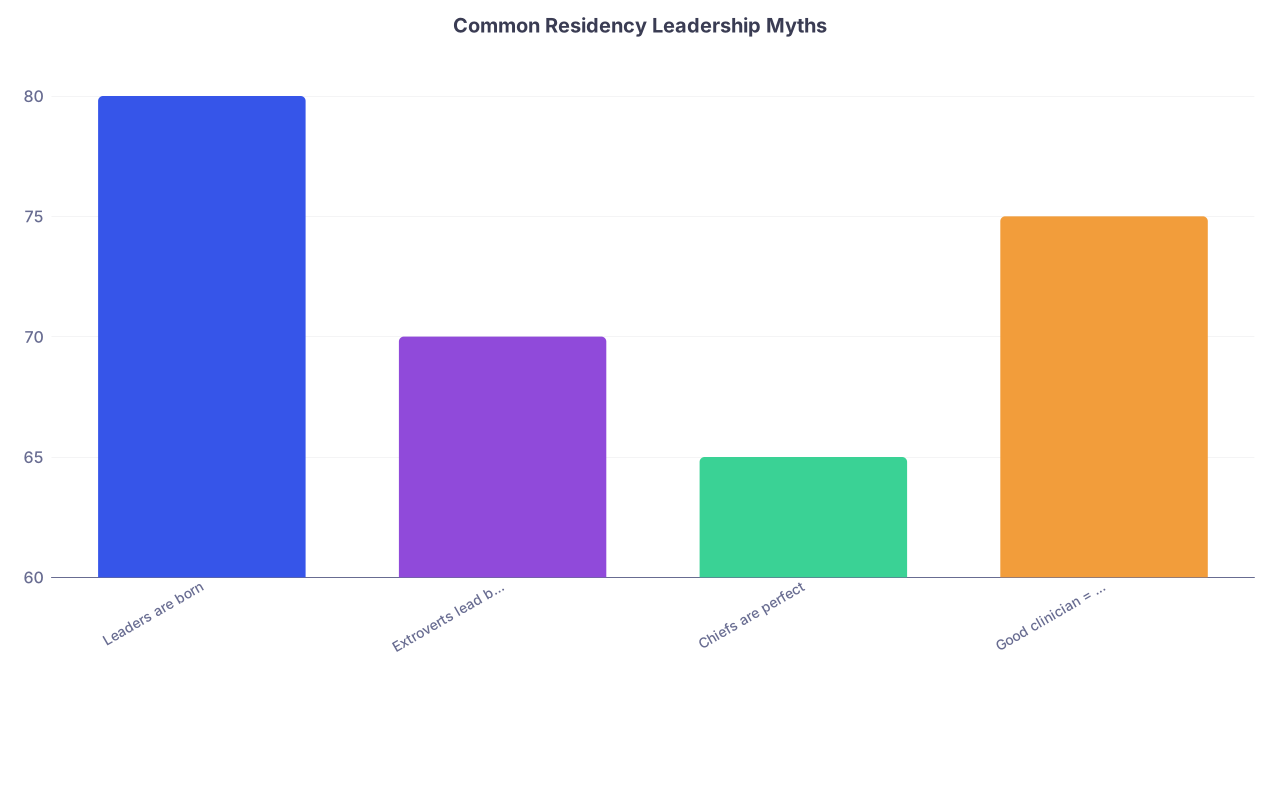
| Category | Value |
|---|---|
| Leaders are born | 80 |
| Extroverts lead better | 70 |
| Chiefs are perfect | 65 |
| Good clinician = good leader | 75 |
(Values here represent rough percent of residents who endorse these myths when surveyed in various programs — not precise across the world, but the pattern is real.)
If You’re “Not a Leader Type” — Here’s The Reality
You may not want to be a chief. That’s fine. But stop telling yourself leadership is out of reach.
You’re already doing leadership work when you:
- Stabilize a panicked intern during a brutal call.
- Push back on an attending’s unsafe discharge plan (respectfully).
- Stand up for a nurse being treated poorly by a consultant.
- Organize a fair note-sharing or sick coverage system for your class.
If you actually want to develop these muscles further, skip the inspirational quotes and do what works:
Pick specific behaviors, not identities.
Not “I will be a better leader.”
Try: “In the next code, I will clearly assign roles out loud and ask for repeat-back.”Ask for targeted feedback.
“What’s one thing I could have done better running rounds today?” is worth 100 generic “how am I doing?” check-ins.Steal scripts.
Chiefs and attendings you respect all have stock phrases. Memorize a few:- “Let’s pause. I want to make sure we’re hearing everyone.”
- “I’m going to own that I dropped the ball on…”
- “Here’s what’s in my control today, and here’s what’s not.”
Get reps where the stakes are lower.
Lead journal club. Organize a resident wellness initiative. Run intern orientation breakout sessions. Same skills, fewer politics.

This is how most chiefs actually got good. Quiet, unglamorous reps.
For Programs: Stop Waiting For “Natural Leaders”
If you’re in a position to influence a residency program and you still buy the “born leader” narrative, you’re part of the problem.
Better options:
- Treat leadership skills like procedures: define competencies, provide supervised practice, give feedback.
- Create small, protected leadership roles for juniors: night team lead, QI pod lead, teaching chief for a block.
- Stop selecting chiefs solely on “clinical strength + faculty likeability.” Factor in:
- Peer feedback.
- Listening skills.
- History of owning mistakes and learning publicly.
You don’t need a 2-year MBA leadership track. You need structure, feedback, and explicit permission to practice.