
The belief that “a physician mentor letter is always a game‑changer” is wrong. The data show it matters a lot in some scenarios, and barely at all in others—and the split between primary care and competitive specialties is real.
Below I will walk you through what actually moves the needle, backed by match data, program director surveys, and typical applicant profiles. You are not guessing here; you can treat this like an optimization problem.
1. What Programs Actually Value: Data, Not Myths
Start with the numbers, not the anecdotes.
The National Resident Matching Program (NRMP) surveys program directors regularly. They ask: which factors matter when deciding whom to interview and how to rank them. Letters of recommendation are consistently near the top. But “a letter from a physician mentor” is not a simple binary. Content, seniority, and specialty alignment change the weight dramatically.
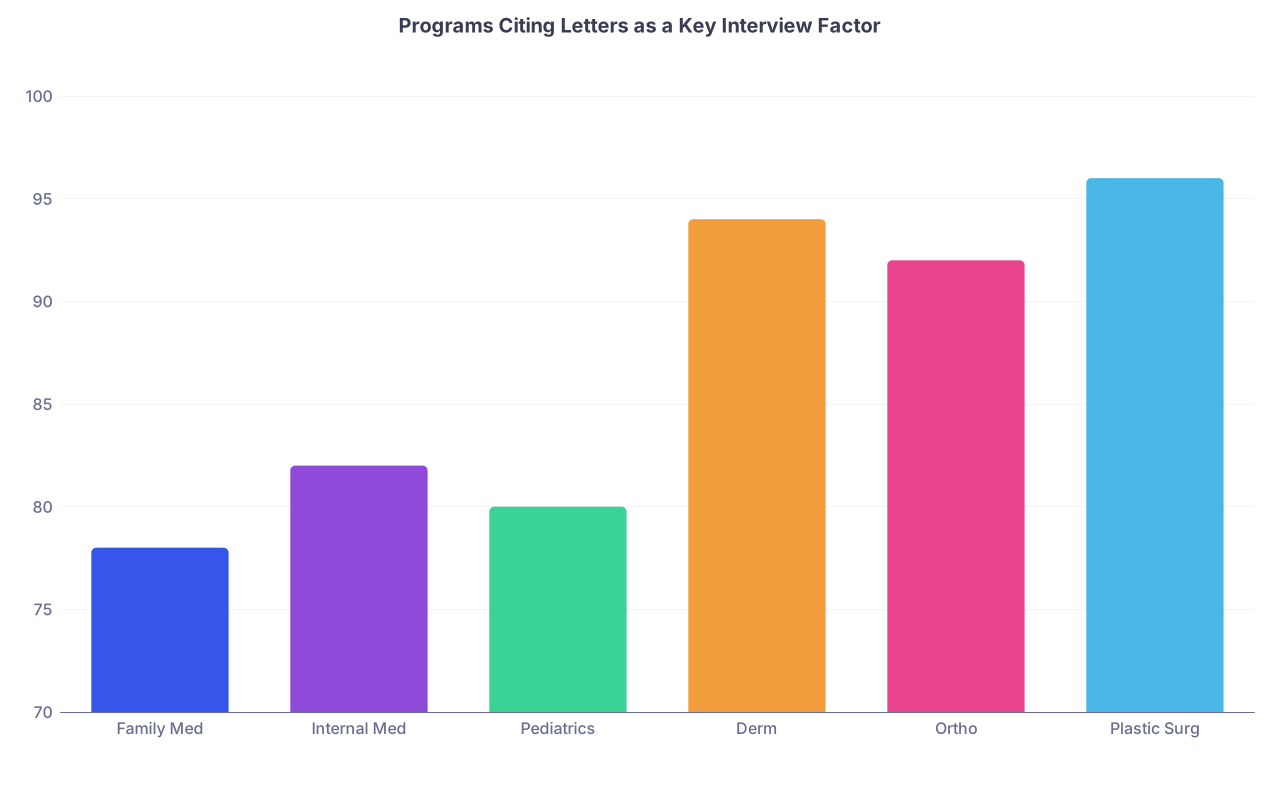
Here is a simplified view of how often program directors cite letters as a factor when selecting applicants for interview (based on NRMP Program Director data plus typical ranges from published summaries and program statements):
| Category | Value |
|---|---|
| Family Med | 78 |
| Internal Med | 82 |
| Pediatrics | 80 |
| Derm | 94 |
| Ortho | 92 |
| Plastic Surg | 96 |
So yes—almost everyone cares about letters. The real question is: what kind of letter?
In practice, letters fall into three rough categories:
- Generic “good student” letters (lowest value).
- Strong clinical letters with concrete performance detail (high value in all fields).
- Highly specialized, field‑specific letters from well‑known people (disproportionately valuable in competitive fields).
A “physician mentor letter” can be any of these three. If your mentor writes a generic character reference, its impact is minimal even in primary care. If your mentor is a subspecialty giant with national name recognition and detailed, specific praise in the field you are applying into, that same letter can be the most valuable document in your file—especially for dermatology, ortho, plastics, neurosurgery, ENT, etc.
The naïve question is “does it matter?”
The better question is: “What type of physician mentor letter, used where, for which specialty, at what stage?”
2. Primary Care vs Competitive Fields: How the Value Curve Shifts
Let us quantify the relative marginal impact of a strong physician mentor letter across specialties. This is not randomized controlled trial data, but you can infer from PD surveys, typical applicant profiles, and match outcomes.
Imagine an “impact score” from 0–10 for a truly strong mentor letter (specific, detailed, credible, clear advocacy), relative to other letters in the same file:
| Specialty Group | Example Fields | Approx. Impact Score (0–10) |
|---|---|---|
| Primary Care | FM, IM, Peds | 6–7 |
| Mid‑Tier Competitiveness | EM, OB/GYN, Anesthesiology | 7–8 |
| Highly Competitive | Derm, Ortho, Plastics, ENT, NSG | 8–10 |
Interpretation:
- In primary care, a strong physician mentor letter is very helpful, but it shares the stage with USMLE/COMLEX scores, clinical performance, and fit for community‑oriented work.
- In highly competitive specialties, a strong letter from a field‑relevant mentor can be the difference between “screen out” and interview. The top 10–20% of applicants are often similar on numbers; letters help break ties.
Where students go wrong:
- Premeds overestimate the importance of “having any physician letter” at the med school application stage, and then underestimate field‑specific letters when applying to competitive residencies.
- For primary care, students often chase niche “big name” letters while neglecting solid, detailed letters from frontline clinical supervisors who actually saw them on the wards.
Let me put numbers on one common scenario.
A typical internal medicine or family medicine residency program might:
- Receive 1,200–3,000 applications.
- Offer 150–400 interviews.
- Rank 400–700 applicants.
In those cohorts, the incremental advantage conferred by a strong mentor letter is meaningful but not singular. Maybe it nudges you from the 60th to the 75th percentile within interview candidates.
Now compare that with a top dermatology or plastics program:
- Receives 400–800 applications.
- Offers 40–80 interviews.
- Ranks 60–120 applicants.
Here, everyone interviewing has high boards and solid transcripts. A letter from a nationally recognized mentor who knows you well can move you from “another qualified applicant” into “must‑interview, likely rank highly.”
3. Premed vs Medical Student: When a Physician Letter Actually Counts
Premeds often ask, “Do I need a physician letter for medical school admissions?” The data and common practice say: usually not required, sometimes helpful, often oversold.
For Medical School Applications (Premed Phase)
Most MD programs list:
- 2 science faculty letters
- 1 additional letter (could be non‑science, PI, supervisor, or physician)
- Optional: committee letter
DO schools may be more open to physician letters, especially DO letters, but even there, they usually complement, not replace, academic letters.
From an admissions lens, the highest ROI letters for premeds are:
- Science faculty who can speak quantitatively about your academic ability.
- Research mentors for research‑intensive schools.
- Longitudinal supervisors who saw your reliability, maturity, and work ethic.
Physician mentor letters at this stage carry variable weight. A strong, specific letter from a physician who supervised you extensively in a clinical service or longitudinal shadowing can be helpful—especially if they comment on how you function in patient care settings.
But a letter from a physician you shadowed for six afternoons? Marginal at best. Many admissions offices treat these as “nice but weak evidence.” The contact hours are too low; the evaluation signal is noisy.
So: for medical school admissions, a physician mentor letter matters mainly if:
- The mentor has supervised you in a meaningful, extended way, and
- The letter supplements, rather than replaces, strong academic letters.
For Residency Applications (Clinical Years / MS3–MS4)
Now the calculus changes.
Residency program directors, almost without exception, read clinical letters with far more attention than premed committees read physician letters. They want to know:
- Can you function as an intern on day one?
- How do you compare to other students they have seen over the years?
- Do you fit this specialty’s culture and demands?
Here, physician mentor letters are central, not peripheral—especially if:
- The mentor is in your chosen specialty.
- The mentor is known to the program (same institution, same region, or national visibility).
- The mentor’s letter is rich in comparative data (“top 5% of 120 students I have supervised over the last five years”).
The field split matters:
- Primary care: A strong letter from a core IM/FM/Peds attending you worked with clinically is usually enough. Name recognition helps, but credible, detailed evaluation is more important.
- Competitive specialties: You are expected to have at least one, often two, specialty‑specific letters from physicians who do real work in that field—preferably at academic centers.
If you aim for dermatology and have no derm letters, just generic IM or surgery letters, your application will look misaligned. Programs will question commitment and exposure, regardless of how “nice” those other letters are.
4. Content vs Signal: What Actually Makes a Physician Letter Powerful
Too many students obsess over “who” and ignore “what.” The data from PD surveys are clear: quality of letters matters more than raw status of the letter writer.
Strong letters share several characteristics. They:
- Provide comparative statements (“top 10% of students I have worked with in the last 7 years”).
- Include specific behaviors and outcomes (“took ownership of follow‑up, independently called family, synthesized overnight data before rounds”).
- Match specialty‑relevant skills (for surgery: operative performance and composure; for primary care: communication, continuity, system navigation).
Weak letters, even from “big names,” often read like this:
“X is a pleasure to work with and shows strong interest in medicine. I am confident they will succeed in residency.”
No numbers. No comparisons. No specifics. Almost no signal.
Here is how I would rank letter components by signal strength using a rough 0–10 scale:
| Component Type | Signal Strength (0–10) |
|---|---|
| Named percentile / clear rank (“top 5%”) | 9–10 |
| Detailed, behavior‑based examples | 8–9 |
| Specialty‑aligned performance comments | 7–9 |
| Generic praise without comparisons | 2–4 |
| Vague personal anecdotes only | 1–3 |
Your goal: maximize high‑signal elements in at least 2–3 letters, aligned to your chosen field.
This is where mentoring relationships can shine. A true mentor has longitudinal data on you. They have watched you handle difficulty. They can credibly state your trajectory. That is gold for program directors.
5. Primary Care: Where a “Normal” Strong Letter Is Enough
Primary care fields (FM, IM, Peds) are not “easy” matches, but they are less score‑cutthroat than dermatology, plastics, ENT, or neurosurgery. That changes how much a mentor’s letter has to “carry” you.
A typical matched applicant in family medicine, internal medicine, or pediatrics will show:
- Solid but not necessarily extreme board scores.
- Consistent clinical grades.
- Some longitudinal service or primary‑care‑relevant experiences.
- 3 letters: 2 core clinical (often from IM/FM/Peds attendings) + 1 additional.
Program directors in these fields often emphasize “fit,” teamwork, communication, and reliability. The physician mentor letter therefore matters in the following ways:
- If the mentor is in that field and supervised you directly, the letter helps confirm you understand and fit the specialty.
- If the mentor is outside that field but knows you longitudinally, the letter strengthens the narrative of professionalism and growth.
However, because the applicant pool is broad and the numeric filter is less brutal, primary care programs can afford to consider broader types of letters. A strong inpatient IM attending’s letter, a strong outpatient preceptor letter, and a solid research or dean’s letter can get you very far.
You do not need a “famous” primary care physician to land a good IM or FM spot. You need:
- At least one letter that says, in effect, “This student can function as an intern in my field right now and is better than most I see.”
- Coherence across letters. They should not contradict each other or feel like they are describing different people.
6. Competitive Specialties: Where Mentor Letters Become Leverage
Competitive specialties operate differently. Think of them as constrained‑capacity systems with extremely high demand. Programs use progressively finer filters.
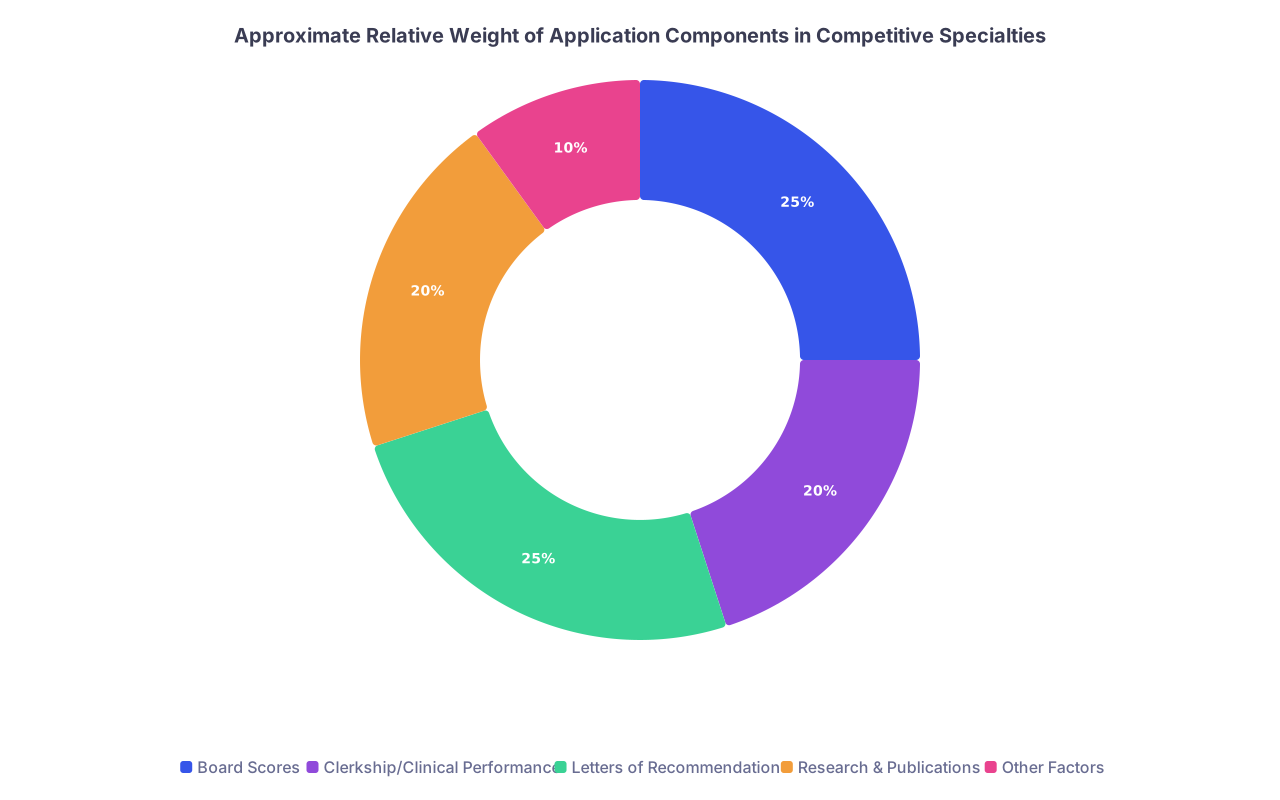
Here is a simplified, stylized breakdown of what often drives interview offers for a top‑tier competitive specialty (e.g., dermatology, plastics, ortho):
| Category | Value |
|---|---|
| Board Scores | 25 |
| Clerkship/Clinical Performance | 20 |
| Letters of Recommendation | 25 |
| Research & Publications | 20 |
| Other Factors | 10 |
Letters and scores are roughly neck and neck at the interview filter stage. Once scores clear the threshold, letters of recommendation and research often dominate.
Here a strong letter from a senior, field‑specific mentor can:
- Compensate partially for a modest step score (within reason).
- Validate that your research is real and not just your name in a long author list.
- Create “network effects” if the letter writer is known to, or collaborating with, the program’s faculty.
In specialties like dermatology, I have seen the following pattern repeatedly:
- Student A: 255 Step 2, solid grades, average derm letters from unknown community preceptors → few interviews at top programs.
- Student B: 245 Step 2, similar grades, 2 powerhouse letters from academic derm faculty with whom they did substantive research and electives → significantly more interviews at top academic programs.
The difference is the network and signal strength in those mentor letters, not raw board points.
Does this mean you must chase celebrity mentors? No. It means:
- Your mentor should be active in the specialty.
- Your mentor must know you well enough to write a specific, comparative, advocacy‑style letter.
- If they are known to programs, that is a bonus, not a requirement. But it does add incremental probability.
7. Strategic Takeaways: How You Should Use Physician Mentor Letters
Let me turn this into concrete decisions, because “it depends” is useless without thresholds.
For Premeds
- Prioritize academic letters first (2 science faculty), then:
- Use a physician mentor letter if:
- You worked extensively with them (clinic, scribing, research, long‑term volunteering).
- They can compare you to other premeds, not just say “shadowed in my office.”
- Do not burn energy chasing letters from physicians who barely know you. The signal is weak.
- Use a physician mentor letter if:
For Medical Students Going into Primary Care (FM/IM/Peds)
Aim for:
- 2–3 strong clinical letters from core rotations, ideally including:
- One inpatient IM (or relevant core) attending.
- One outpatient primary care preceptor or sub‑I attending.
- Add a physician mentor letter if:
- They have longitudinal exposure to you.
- They can testify to reliability, communication, and progress over time.
You do not need a letter from “the most famous internist in the hospital.” You need a letter that reads like: “If I had an intern spot tomorrow, I would hire this person.”
For Medical Students Targeting Competitive Specialties
Your baseline set should include:
- 2 field‑specific letters from physicians in that specialty (ideally at academic centers).
- 1 additional strong letter (could be from IM, surgery, research PI, or cross‑specialty mentor).
Here, field‑specific mentor letters are almost non‑negotiable. The absence of such letters is itself a negative signal.
Where possible, structure your rotations and research so that:
- You spend enough time with mentors (4–8 weeks, often across research + clinical) for them to see you in different contexts.
- You deliver on projects, show up consistently, and make it easy for them to write specific, quantitative praise.
8. Visual Summary: Where a Physician Mentor Letter Moves the Needle Most
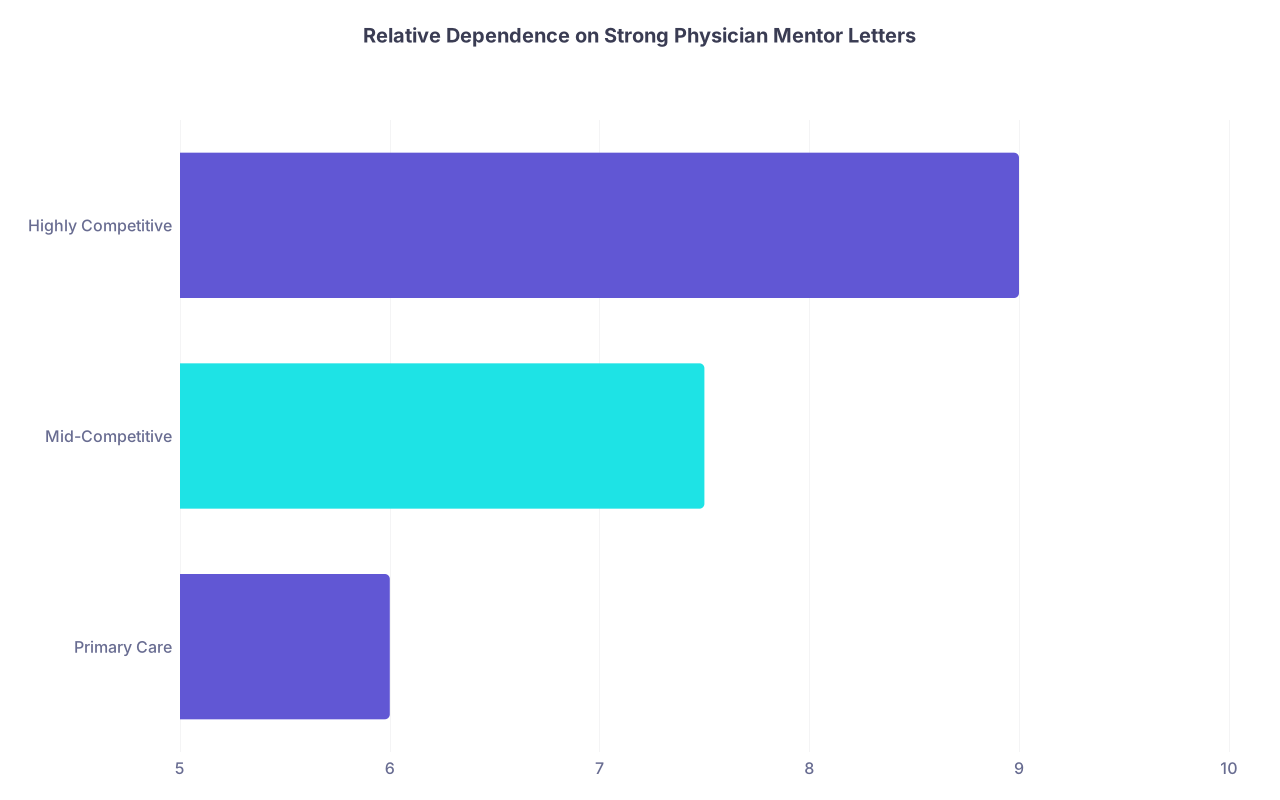
To sum up the relative dependence on a strong physician mentor letter by broad category:
| Category | Value |
|---|---|
| Primary Care | 6 |
| Mid-Competitive | 7.5 |
| Highly Competitive | 9 |
This is not about whether letters “matter” (they do, everywhere). It is about how critical a field‑specific, high‑signal physician mentor letter becomes once you cross into the more competitive end of the spectrum.
FAQ (Exactly 4 Questions)
1. Do I need a physician letter to get into medical school at all?
No. Most MD schools do not require a physician letter. They require academic letters and sometimes a committee letter. A physician mentor letter is optional and only helpful if the physician knows you well and can provide specific, comparative comments. Generic “I supervised this student for a few shadowing sessions” letters add very little.
2. For internal medicine or family medicine, is a letter from a subspecialist (e.g., cardiologist) as good as one from a generalist?
Generally, yes, if the subspecialist supervised you in a core IM or outpatient setting and comments on your overall clinical ability. For community‑oriented primary care programs, a letter from a general internist or family physician in a typical practice may resonate more with their day‑to‑day work, but the key variable is longitudinal supervision and detailed evaluation, not whether the physician sees only primary care patients.
3. If I have average board scores but strong research for a competitive field, can great mentor letters compensate?
Partially, but not infinitely. Strong, field‑specific mentor letters can help you overcome slightly below‑median scores for that specialty, especially at programs that know your mentors personally or value research heavily. They cannot typically rescue you if you are far below typical score ranges. Think of them as a powerful multiplier once you are near the competitive range, not a substitute for baseline metrics.
4. Should I ever choose a “less famous” mentor who knows me well over a big‑name physician who barely worked with me?
Yes. Almost always. Program directors consistently report that detailed, comparative letters from physicians who clearly know the applicant are more persuasive than vague praise from big‑name attendings. A famous name with a generic letter might get a brief second glance; a non‑famous mentor who can say “top 5% of all students I have ever worked with” and back it up with examples will actually shift your probability of interview and a strong rank.
Two things matter most: 1) how specific, comparative, and credible the letter is, and 2) how well it aligns with the specialty you are aiming for. For primary care, a solid, behavior‑rich letter from any core attending does plenty of work. For competitive fields, specialty‑specific mentor letters with real signal are one of the strongest levers you have once your scores clear the cutoff.