
You’re sitting in a hotel room on a Tuesday between shifts at a small community hospital, Wi‑Fi cutting in and out, tweaking your CV before you send it to yet another locums recruiter. You’ve got a few permanent jobs in your past, some contract gigs, a couple of gaps you hope nobody stares at too long. You hit send and picture some faceless “admin” giving it a thirty‑second glance.
Let me tell you who that admin actually is: the CMO with 300 open shifts to cover, a board breathing down their neck about quality metrics, and med staff who are already pissed about “all these locums.” That CMO is the one reading your CV and deciding, in about 15–45 seconds, whether you’re their problem or their solution.
I’ve sat in those meetings. I’ve watched CMOs flip through locum CVs the same way residents flip through an ED track board at 6:55 am: scanning for disasters. If you understand what they really look for — and what instantly raises red flags — you stop being “just another locums doc” and start being the one they fight to get on the schedule.
Let’s walk through what actually happens in their head when your locum CV lands in their inbox.
The First 10 Seconds: “Can This Person Keep My Hospital Out of Trouble?”
The CMO is not starting with your medical school or your hobbies. They’re scanning for one thing: risk. Legal, clinical, reputational. In that order.
They open the PDF, and here’s the mental checklist they run, very fast:
- Board status and training pedigree
- Recent clinical activity
- Gaps and job hopping
- Locums pattern: pro or problem?
- Any obvious quality or professionalism red flags
If anything looks bad in the first pass, your CV effectively dies right there. They might not say “reject,” but they mentally downgrade you to “if we’re desperate.”
Let me break down the order their eyes move, because it is not what people think.
Board certification: the instant filter
First thing they look for on a locum CV: “Board Certified in X.” If they have to dig for it, they’re already irritated. You don’t want an irritated CMO.
A CMO scanning your CV is thinking:
- Are you board certified in the specialty I actually need?
- Is your certification current?
- Do you look like someone I’ll have to justify to my medical executive committee?
If you’re board eligible only, they’re thinking: “Why? What went wrong? Time? Failed? Delayed?” They’ll ask the recruiter, and you want a clean, simple story ready.
If you’re not certified and you’re 8 years out of training, most places will keep you for only the most last‑minute shifts. There are exceptions — rural, critical access, safety‑net hospitals — but in their head, you move from “strategic solution” to “stopgap warm body.”
Training and background: credibility in one glance
The CMO doesn’t care that you were chief resident to flatter your ego. They care because it signals: this person was trusted, reliable, and not a chaos engine.
What they scan:
- Name of residency program
- Any fellowship
- Graduation year (tells them your experience level and recency)
If your training is from a big‑name academic center, they file you in the “probably clinically solid” bucket immediately. If it’s a tiny, unknown program overseas with a weird timeline, they’re not necessarily rejecting you, but now they’re looking closer at everything else for reassurance.
The Story Your Timeline Tells (And What It Screams)
Here’s the part nobody warns you about: CMOs read your timeline like a psych resident reads a genogram. They’re not just seeing jobs. They’re seeing behavior.
The most common internal monologue I’ve heard from CMOs reading locum CVs sounds like this:
- “Is this person stable?”
- “Do they leave when things get hard?”
- “Do they blow up relationships and move on every 6 months?”
- “If I put them on the schedule, will I be getting frantic calls from nursing in 3 weeks?”
They get that locums means movement. That’s not the problem. The pattern is.
The job‑to‑job pattern
A relatively clean pattern looks like:
- 2–4 years at a permanent job
- Then a shift into locums with longer blocks: 6–12 months at the same site, or repeated contracts at the same system
- Overlapping assignments that make sense geographically or by schedule
This says: “I left on purpose, not because I was fired. I’m in demand. People bring me back.”
What freaks them out is this kind of pattern:
- 3–6 months here
- 3 months there
- 2 months somewhere else
- And none of those are repeats
Especially if you’re only 1–3 years out of residency.
The unsaid thought is brutal but real: “Either nobody wants to keep you, or you keep blowing up bridges.” Sometimes that’s not true at all. But if you don’t explain it, they default to suspicion.
Gaps: they always notice
You think a 7‑month gap between jobs doesn’t matter because “I was traveling” or “I was waiting on licensing.”
They notice. Every time.
And because you didn’t explain it, they fill in the blank with:
- Credentialing issues
- Quality problems
- Substance or professionalism issues
- License or malpractice problems
If the CV comes with a cover note from the recruiter that actually preempts this — “Gap from 01/2022–07/2022 was for maternity leave and relocation; continuous work since” — the CMO relaxes. If not, they flag it mentally and ask later. Some never even get to the asking part. They just move on to the next CV.
What Your “Locum” History Tells Them About You
This is the part you probably underestimate. CMOs categorize locum physicians into two buckets very quickly.
Bucket A: Professional Locum Specialist
Bucket B: Burned‑out Drifter / Problem Child
Same number of jobs. Same years out of training. Totally different read depending on the pattern and how it’s framed.
Bucket A: The professional
The CMO loves the following signals:
- You have repeat engagements at the same hospital or system.
- Your assignments are in similar practice environments (e.g., multiple rural EDs, several hospitalist roles with similar census and acuity).
- Your CV shows clear dates, clear FTE or intensity, no vague “consulting” fillers.
- Your board status, licenses, DEA, and procedures are listed cleanly and succinctly.
They read someone like that and think: “This is a specialist in adapting quickly. They know the locums game. Low drama, high utility.”
They’ve been burned enough by chaotic locums that they now crave boring. “Boring” to a CMO is code for: shows up, does the work, doesn’t score us a CMS complaint.
Bucket B: The drifter
Then there’s the other vibe — and you do not want this one.
Here’s what pushes you there:
- Jobs with vague titles: “Independent contractor – various assignments” with no dates or locations.
- “Consultant” roles with no explanation for a physician less than 10 years out.
- A dozen state licenses with almost no sustained work at any of them.
- No mention of EMR systems, procedures, workloads — just generic fluff.
The CMO looks at that and thinks: “This person either doesn’t know what they’re doing, or they’re hiding what actually happened.”
They won’t say that out loud. What they’ll say to the recruiter is: “Do you have someone with a more stable background?”
Translation: “I don’t want to be the next hospital dumping this person.”
The Subtext of Skills, Procedures, and Settings
You care about your CV listing every single thing you can possibly do. CMOs care about whether you can do the core things their hospital needs without creating chaos.
Their internal questions:
- “Can this person practice independently at the level we require?”
- “Can they handle our environment — critical access vs tertiary, high volume vs low?”
- “Will they be calling my staff every 10 minutes because they’re out of their depth?”
If your skills section reads like this:
“Comfortable with procedures.”
They roll their eyes. “Comfortable” means nothing.
If it says:
“Central lines (solo), intubations, LPs, paracentesis, thoracentesis, arterial lines – independent, no supervision.”
Now they can actually picture you on their ICU or stepdown floor.
Same with EMRs. They’re not impressed that you “worked with multiple EMRs.” They’re trying to estimate onboarding friction.
If you list:
“EMRs: Epic (primary), Cerner, Meditech, Athena. Able to see full schedule on Day 1 with minimal orientation.”
You’ve just told them, “I won’t choke your throughput with charting issues.”
What They Think When They See Multiple Licenses and Agencies
You think a long list of state licenses looks impressive. The CMO reads it a bit differently.
If you have 8 licenses and almost no meaningful assignment history tied to them, it screams: “This person has been shopping around and not sticking anywhere.”
On the other hand, if your timeline clearly shows:
- 9 months of recurring blocks in rural Montana
- 6 months in a Midwest community hospital
- Another long‑term role in a coastal critical-access hospital
All using those licenses repeatedly, now your extra state licenses look like flexibility, not indecision.
Sometimes we’d sit in CMO meetings and someone would literally say, “This guy has 12 licenses and no one keeps him for more than a month. Pass.”
That’s the stuff nobody writes in an email, but it absolutely happens.
The Quiet but Huge Issue: Malpractice and Quality Hints
Here’s one of those unspoken secrets: CMOs are always scanning for hints of prior trouble. They’ll rarely come out and ask you bluntly in the first interaction. They rely on indirect signals.
What raises their suspicion:
- Multiple very short stints with no explanation.
- Entire categories of work disappearing. (“Why did this hospitalist stop doing inpatient entirely for 3 years?”)
- Jumps in and out of clinical roles into strange “administrative” or “consulting” roles without clear logic.
- Vague wording around privileges or employment status.
They can’t see your malpractice history yet. But if your CV pattern smells like someone who’s been “encouraged to resign” multiple times, they make a mental note: “Let’s see what the background and references look like.”
If the recruiter preemptively says: “They have one closed malpractice case, resolved in their favor; happy to provide details,” and your assignments around that time are long and stable, the CMO relaxes again. Openness plus stability beats vagueness every time.
What a “Good” Locum CV Looks Like From the CMO Side
Let me pull the curtain back fully. When a CMO gets a locum CV that makes them actually lean forward instead of sighing, it has a few consistent features.

Clean structure and ruthless clarity
First, they notice whether they can read it in under 30 seconds and know three things:
- Who you are (training, board status, specialty)
- Where you’ve been recently and for how long
- What environments and procedures you’re comfortable with
If they have to dig, they get annoyed. They’re busy, your CV is one of 12 in a folder, and they don’t owe you forensic attention.
So the CV that wins is:
- Chronological, without fancy formatting that breaks when they print it.
- Dates in month/year, not just years. “2019–2020” is suspiciously vague.
- Each role with location, type of hospital, setting, and nature of engagement (“locum tenens, recurring blocks; approx 7–10 shifts/month”).
A CMO will literally say: “I like this one, it’s clean.” They’re not talking about font and margins. They’re talking about how fast they can get the story.
The vibe of reliability
There’s a subtle emotional reaction they have after they scan your CV: “Would I feel okay if my own family were on this person’s service at 2 am?”
It’s not rational, but it’s real. Pattern of steady work, advanced responsibilities (like site lead, medical director, lead nocturnist), and repeat engagements create that “okay” feeling.
Two almost identical CVs, but one has:
“Returned for repeat contracts at X Medical Center (Hospitalist, 7 on/7 off) due to strong performance and departmental fit.”
The CMO circles that one. Because that’s what they want from you: someone the staff asks to bring back.
How Recruiters Actually Present You to the CMO
You think your CV speaks for itself. It doesn’t. It goes through the filter of a recruiter who gives the CMO a two‑sentence summary on a call or in an email.
That summary determines whether the CMO opens your CV with interest or with dread.
Here’s the quiet piece of truth: CMOs get to know which agencies and which recruiters send them junk and which send them vetted, quality people. Over time, they begin to trust or ignore certain sources almost automatically.
Your job is to make it insanely easy for a recruiter to advocate for you.
Something like:
“Board‑certified IM hospitalist, trained at [X], 5 years out. Three long‑term locums roles at similar‑acuity hospitals, repeat contracts at two sites. Comfortable with night admissions, cross‑cover, non‑intubating environment. Epic and Cerner fluent. No malpractice or disciplinary issues.”
If your CV is clear, that’s the email the recruiter can write. And that’s the one that gets the CMO to say, “Send me their dates.”
On the flip side, if your CV is vague, full of short gigs and unclear roles, the recruiter hedges. The email turns into:
“IM hospitalist, various locums roles, flexible, will send CV.”
The CMO reads that and thinks: “So… you don’t really know this person either.”
Common Things CMOs Hate (But Rarely Tell You)
Let me be blunt about a few things that quietly kill you.
Overstuffed “Objective” sections.
CMOs skip them. They don’t care about your “passion for delivering high‑quality, patient‑centered care.” It’s background noise. Lead with facts, not fluff.Weird side hustles front and center.
If your first page has “Founder of wellness coaching startup” or “Real estate investor” highlighted, you’ve just told them medicine is your side gig. That might be true. Don’t rub their face in it. Put that later or strip it.Education taking half a page when you’re 5+ years out.
Nobody cares about your undergrad GPA. They care that you haven’t crashed and burned since residency.Sloppy dates or overlapping jobs with no explanation.
If you list two full‑time jobs with overlapping dates and don’t clarify locums vs perm vs PRN, they assume you’re either careless or gaming something.Typos and formatting chaos.
Not because they’re grammar snobs. Because they see it as a proxy for how you’ll write notes, orders, and emails.
How They Decide Between Two Similar Locums
Here’s where it gets interesting. Say a CMO has two hospitalist locum CVs. Both board‑certified, both similar years out, both clean.
What actually tips the scale?
- One has repeat contracts at rural and community hospitals; the other is all short (<3 month) stints.
- One lists specific patient volumes and admits/night; the other uses generic “busy” and “high volume.”
- One mentions being asked to stay on long term but choosing to remain locums; the other says nothing.
Guess who wins.
To a CMO, repeat contracts and specific numbers are like gold. They show concrete reality, not self‑promotion.
They’re thinking: “I don’t have the time or appetite for a wild card. Give me the one multiple hospitals have already pressure‑tested.”
A Quick Reality Check: What You Think vs What They Think
Just to crystallize it, here’s how mismatched your perspective and theirs often are:
| What You Think Matters Most | What the CMO Actually Cares About Most |
|---|---|
| Prestige of your medical school | Board status and recency of clinical work |
| Number of procedures listed | Can you do *their* core procedures safely |
| How many states you’re licensed in | Whether other hospitals kept bringing you back |
| Long paragraph on your “philosophy” | Clear, stable timelines and no weird gaps |
| Every committee you ever sat on | Evidence you show up, adapt, and do not create drama |
The more you align your CV with their side of that table, the easier everything gets — higher pay, better sites, fewer annoying questions.
The Emotional Underbelly: CMOs Are Tired Too
One more layer to understand. CMOs are not sitting in a dark room stroking a cat and trying to reject people. They’re exhausted. They’ve been through COVID, staffing crises, endless board meetings about costs and quality.
By the time your locum CV hits their inbox, they’ve already:
- Dealt with permanent staff threatening to leave over workload
- Fended off board members who hate the hospital’s reliance on locums
- Listened to nurse managers complain about the last few “disaster locums”
So when they read your CV, they’re reading through a lens of, “Will this person reduce or increase my headaches?”
If your CV screams:
- Stable
- Clear
- Pressure‑tested
- Easy to onboard
You’re a solution.
If it looks:
- Chaotic
- Vague
- Over‑marketed but under‑substantiated
You’re one more variable in a world already full of them.
What You Should Do Before You Send the Next CV
You’re post‑residency or early attending, in the job market wasteland, or intentionally in the locums world. The stakes on how you present yourself are higher than you think, because once a hospital labels you mentally as “unstable” or “high risk,” it’s hard to undo.
Before your next CV lands on a CMO’s desk, you should:
- Clean and clarify your timeline: no unexplained gaps, no fuzzy dates.
- Ruthlessly trim fluff and tilt everything toward: “Here’s what I actually do, and where, and how often.”
- Make repeat engagements and longer assignments impossible to miss — they’re your biggest asset.
- Give your recruiter a concise, honest “pitch paragraph” they can drop into emails.
Once that’s done, your profile changes from “one of the many” to “the one we keep bringing back.”
You’re not just selling shifts. You’re building a reputation in a pretty small national ecosystem where CMOs, med directors, and recruiters talk more than you realize.
Get this piece right, and the next steps — better locations, more consistent work, and more leverage in negotiations — get much easier. How you actually use that leverage, and when it makes sense to jump from locums into leadership or a hybrid role, that’s a separate game entirely.
And that’s a conversation for another day.
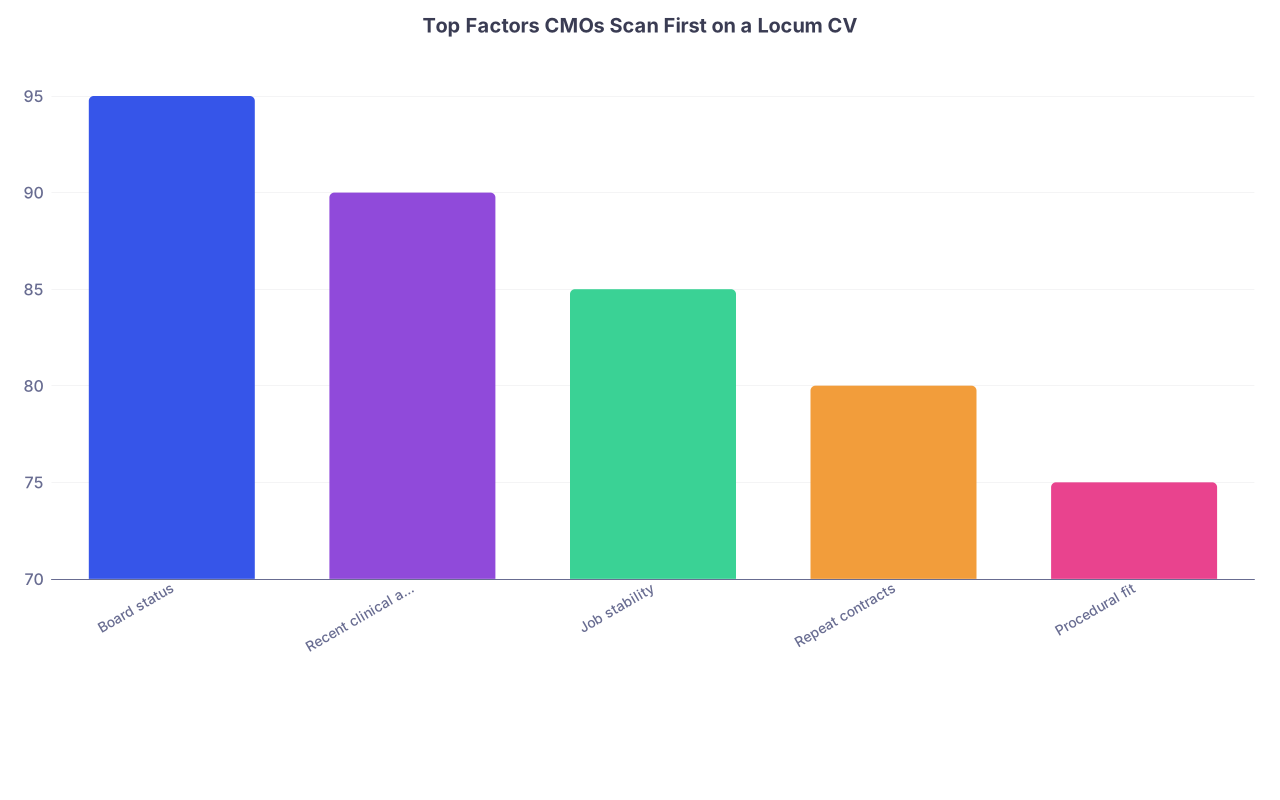
| Category | Value |
|---|---|
| Board status | 95 |
| Recent clinical activity | 90 |
| Job stability | 85 |
| Repeat contracts | 80 |
| Procedural fit | 75 |

| Step | Description |
|---|---|
| Step 1 | CV Arrives from Recruiter |
| Step 2 | Only if desperate |
| Step 3 | Scan Timeline and Gaps |
| Step 4 | Flag for concern |
| Step 5 | Check Skills and Setting Fit |
| Step 6 | High priority candidate |
| Step 7 | Standard consideration |
| Step 8 | Board Certified? |
| Step 9 | Stable Pattern? |
| Step 10 | Repeat Contracts? |