

The belief that “low-paid specialty = low-paid career” is lazy thinking. You can build a six-figure extra income on top of a low-paying specialty if you treat your career like a business instead of a job.
You picked pediatrics, psychiatry, family medicine, internal medicine, PM&R, geriatrics, maybe even academics. Good. You have flexibility, time leverage, and broad demand. That is exactly what high-income specialists envy when they are chained to OR blocks and call schedules.
Let me show you how to turn that flexibility into money. Systematically. Without burning yourself out or selling garbage online.
Step 1: Get Your Financial and Legal Foundation Out of the “Amateur Hour” Stage
Before you add income streams, you need a container to hold them.
If you skip this, you will:
- Overpay taxes
- Mix personal and business finances
- Scare off legit partners who want to contract with a professional entity
1. Set up a basic professional entity
I am not playing lawyer or accountant here. I am telling you what I have seen almost every high-earning, side-gig-heavy physician do.
For most residents/attendings:
- Form a single-member LLC (or PLLC if your state requires) in your home state.
- Name it something boring and professional: “Smith Medical Consulting, LLC”. Not “EpicMed Hustle Co.”
- Get an EIN from the IRS (free, 5 minutes online).
- Open a separate business checking account in that LLC’s name.
Use this LLC to:
- Get paid for:
- Telemedicine
- Locums (if allowed)
- Consulting/advisory work
- Speaking
- Online courses/content
- Pay for:
- CME
- Work-travel associated with those gigs
- Software for scheduling, documentation, course hosting
- Website, branding, design
This alone separates you from 90% of your peers who “do some telehealth on the side” and then whine about their tax bill.
2. Protect your time like it is inventory (because it is)
You are not going to build multiple income streams by “just doing a little extra when I can.” That is how you end up half-assing five things and making almost nothing.
Create a simple, ruthless weekly template:
- 1–2 evenings per week: Active income side work (telehealth, urgent care, moonlighting)
- 1 block (3–4 hours) per week: Build-time (things that can scale: content, course, systems)
- 1 block per month: Admin + strategy (review numbers, cut dead efforts, adjust)
- Start with one block per week, not three. You are not superhuman. Protect your sleep.
- Use most of that block for skill-building and systems, not pure extra call shifts.
You will not “find time” for additional income. You will carve it out.
Step 2: Know Your Specialty’s Advantages and Exploit Them
Different low-paid specialties have different superpowers. If you ignore them and copy some neurosurgeon’s business model, you will lose.
Here is how the common “lower-paid” specialties line up.
| Specialty | Key Advantage | Best Side Income Angles |
|---|---|---|
| Pediatrics | Trust with parents | Telepeds, courses for parents |
| Family Medicine | Breadth + continuity | Direct primary care, telehealth |
| Psychiatry | High remote demand | Telepsych, group programs |
| Internal Med | Complexity management | Hospitalist moonlighting, consults |
| PM&R | Function + rehab focus | MSK clinics, sports, medicolegal |
| Geriatrics | Polypharmacy, frailty | LTC consulting, family education |
Ask yourself three questions
- What can I safely and legally do remotely in my field?
- Where do laypeople in my niche spend money right now?
- What problems do other professionals in my niche complain about constantly?
Your side incomes will usually come from:
- Remote clinical work
- Education (patients or professionals)
- Advisory/consulting in your niche
Step 3: Build Two Parallel Tracks – “Now Money” and “Later Money”
You need both:
- Now money: Direct time-for-money work that boosts your income this year.
- Later money: Work that can scale and pay you while you sleep two years from now.
If you only chase “now”, you will burn out. If you only chase “later”, you will stay broke and frustrated.
“Now Money” options by specialty
These are concrete, not theoretical.
Pediatrics
- Evening/weekend urgent-care shifts
- Telepeds for low-acuity issues (rashes, URIs, sleep)
- Hospital PRN coverage (if your program allows)
Family Medicine / IM
- Telemedicine platforms (primary/urgent care)
- Locums in underserved areas (short blocks of hospitalist work)
- Occupational medicine shifts or corporate clinics
Psychiatry
- Telepsych (adult and child; huge demand, high hourly)
- Collaborative care consults to PCP clinics
- Weekend inpatient coverage
PM&R
- MSK/spine clinic moonlighting
- EMG clinics
- SNF or rehab facility rounding
Geriatrics
- Long-term care consulting / SNF coverage
- Home visit programs (if safe/feasible)
- Polypharmacy review consults for groups or practices
These should be:
- Predictable (same shift times, consistent income)
- Bounded (you know exactly how many hours)
- Clearly compensated (no vague “RVU potential” nonsense)
“Later Money” options by specialty
This is where real leverage lives.
Patient-facing “later money” ideas
- Pediatrics: Practical online course for new parents: “0–12 Months: Realistic Pediatrics from a Real Doctor” (videos, checklists, Q&A)
- Psychiatry: Group coaching programs for anxiety, ADHD education courses (careful: coaching/education, not therapy across state lines)
- Family Med/IM/Geriatrics: Membership-based preventive/complex care education program for caregivers, chronic disease “bootcamps”
Professional-facing “later money” ideas
- Specialty-specific board prep or in-training exam coaching
- High-yield CME workshops or digital mini-courses
- Templates, toolkits, or systematic approaches (e.g., “Polypharmacy Protocol Pack for SNFs”)
Nonclinical but related
- Writing (paid newsletters, Substack, niche blogs)
- Speaking (CME talks, corporate wellness, school talks)
- Advisory roles (digital health startups in your specialty)
The test: Could this make money without you being physically present in real time for every transaction? If yes, you are in “later money” territory.
Step 4: Pick 2–3 Streams, Not 10
Too many residents try to launch a podcast, do telehealth, write a book, build a course, and start a YouTube channel. They make about $40 from everything combined and then decide “side hustles do not work for doctors.”
Here is the disciplined approach.
Choose one “now” and one “later” stream
Example for a pediatrics resident:
- Now: Saturday urgent care shifts (2–3 / month)
- Later: Email newsletter + simple online resource for parents that can later become a course
Example for a psychiatry attending:
- Now: Telepsych two evenings / week
- Later: Group program + curriculum for high-functioning adults with anxiety
Example for a family medicine attending:
- Now: Telemedicine platform shifts 1–2 nights / week
- Later: Slowly building toward Direct Primary Care (DPC) micro-practice or chronic disease education products
You can add a third stream only when:
- It is operationally simple
- The first two are stable and profitable
- You are not drowning
Step 5: Use Location and Time Flexibility Aggressively
Lower-paid specialties are often less geographically constrained for side work. Telehealth and locums are your friends. Let us quantify this.
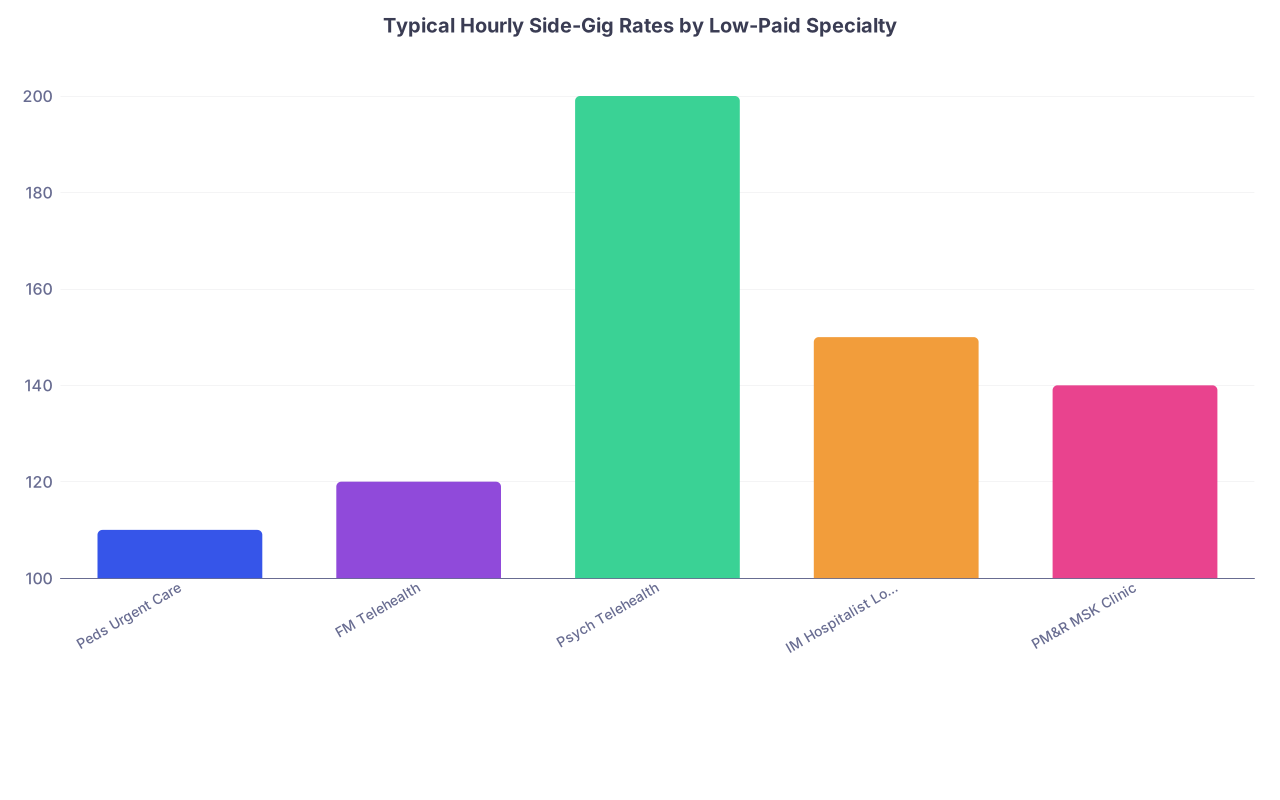
| Category | Value |
|---|---|
| Peds Urgent Care | 110 |
| FM Telehealth | 120 |
| Psych Telehealth | 200 |
| IM Hospitalist Locums | 150 |
| PM&R MSK Clinic | 140 |
Are these exact numbers guaranteed? No. But they are very realistic ballparks that I have seen.
How to systematically find and evaluate gigs
Make a simple comparison spreadsheet with columns:
- Type of work
- Hourly effective rate
- Commute / remote
- Schedule flexibility
- Contract length / terms
- Malpractice coverage
- Noncompete? (watch this like a hawk)
Rate each option from 1–5 on:
- Money
- Flexibility
- Hassle (documentation, EMR pain, admin nonsense)
- Career alignment (does this help where you want to go?)
Only take gigs that:
- Score high on money and flexibility
- Do not drag your primary job down
- Do not box you in with nasty clauses
Do not sign the first contract they dangle. Ask:
- “Can you send the contract for review before I agree?”
- “Is this hourly or RVU-based?”
- “What is the minimum monthly commitment?”
- “How much unpaid admin time is expected?”
If they cannot answer clearly, walk.
Step 6: Turn Your Expertise into Assets, Not Just Hours
This is where low-paid specialties can win big. You deal with common, recurring problems. That is exactly what good products and scalable services are built on.
Map one recurring problem into a “ladder” of offers
Take pediatrics as an example problem: overwhelmed new parents confused by conflicting advice.
You can structure a ladder like this:
- Free: Weekly email newsletter with short, no-BS advice (sign-up via simple landing page).
- Low-cost: $29–$49 mini-workshop: “The First 8 Weeks: Sleep, Feeding, and When to Worry.”
- Core offer: $199–$299 course: “Year One Pediatrician’s Playbook” with videos, checklists, and Q&A.
- Premium: Limited-cohort small group Q&A calls (education, not telemedicine), $399–$599.
Same ladder works in psychiatry:
- Problem: high-functioning adults with anxiety and burnout who are not ready for therapy or meds.
- Free: weekly email or podcast.
- Low-cost: short workshop on sleep and anxious rumination.
- Core offer: structured 4–6 week program on cognitive and behavioral tools (coaching, education).
- Premium: small, time-limited group with live sessions.
The pattern is reusable in every specialty.

| Step | Description |
|---|---|
| Step 1 | Identify Common Problem |
| Step 2 | Create Free Content |
| Step 3 | Offer Low Cost Workshop |
| Step 4 | Build Core Course or Program |
| Step 5 | Add Premium Group or 1 on 1 |
Why this works especially well for “lower-paid” specialties
You see:
- Common conditions (ADHD, anxiety, asthma, obesity, pain, polypharmacy)
- At scale
- Across the whole lifespan or wide populations
High-income proceduralists usually do not have this kind of broad, recurring, education-heavy contact with patients. You do. Use it.
Step 7: Build Simple Systems, Not Complex Tech Toys
You do not need a startup tech stack. You need a few boring tools used well.
Minimum viable setup:
- Scheduling: Calendly or similar (for calls, group sessions).
- Communication: HIPAA-compliant platform for clinical; for nonclinical education, Zoom or equivalent.
- Payment: Stripe, PayPal, or platform-native if using marketplaces.
- Content hosting:
- For courses: Teachable, Kajabi, Podia, Thinkific (pick one, stop overthinking).
- For newsletters: Substack, ConvertKit, Beehiiv.
Keep a one-page SOP (standard operating procedure) for each income stream. Literally a Google Doc outlining:
- How clients/patients find it
- How they schedule/pay
- What you do each week or month
- What you track (revenue, time spent, leads)
This makes it:
- Easier to hand off tasks later (e.g., virtual assistant)
- Less mentally heavy to “switch on” your side work
Step 8: Protect Your License and Sanity
If you wreck your license, all of this collapses. I have to say the boring, adult things now.
Guardrails you do not skip
Compliance
- Know which income streams are nonclinical (education, coaching, content) vs clinical (telehealth, locums).
- For nonclinical: Be crystal clear you are not providing personal medical advice. Disclaimers. Repetition. Clarity.
- For clinical: Verify malpractice coverage, telehealth regulations, and compliance with your state board.
Employer contracts
- Check your main job’s:
- Moonlighting policy
- Noncompete/non-solicit clauses
- IP (intellectual property) clauses
- Worst-case scenario: Your employer claims they own your side project because you built it “in the scope of employment.” Avoid this by:
- Doing side work on your own time, with your own equipment.
- Not using employer materials or logos.
- Getting independent legal review for bigger projects.
- Check your main job’s:
Burnout line
- Simple rule: If your performance or attitude at your main job drops, the side gig is the first thing to cut or dial back.
- You do not wreck your residency evaluations or attending reputation for an extra $1,000 per month in telehealth.
Step 9: Pick a 12-Month Income-Stacking Plan
Let me make this concrete. Here are sample 1-year roadmaps for three specialties.
Pediatric Resident – conservative path
Months 1–3:
- Set up LLC, bank account.
- Clarify program’s moonlighting rules.
- Start a simple email newsletter for parents (1 short email / week).
- Do 1 extra urgent care shift / month.
Months 4–6:
- Increase to 2–3 urgent care shifts / month (if safe).
- Turn your most opened emails into a 1-hour live Zoom workshop ($29, cap at 50 parents).
- Record it. That is the seed of your future course.
Months 7–9:
- Improve the workshop, run it 2–3 more times.
- Raise price slightly if justified.
- Start outlining a short self-paced course (~2 hours of content).
Months 10–12:
- Launch the course to your email list at a modest price ($99–$149).
- Keep urgent care shifts stable.
- Evaluate:
- Extra clinical income per month
- Course revenue
- Time cost
- Burnout signs
You now have:
- A stable “now money” stream
- A small but real “later money” digital asset
Psychiatry Attending – aggressive growth
Months 1–3:
- Sign on with one telepsych platform. Two evenings / week only.
- Track actual hourly rate (including charting time).
- Start a weekly educational email for high-functioning adults with anxiety.
Months 4–6:
- Trim admin and EMR friction on telepsych to maximize hourly.
- Run a small pilot group program (4–6 weeks, 8–10 people, education/coaching) for a low introductory rate to test structure.
- Collect feedback and testimonials.
Months 7–9:
- Refine program and raise price.
- Start limiting telepsych to highest-paying blocks.
- Begin recording standalone modules from your group content.
Months 10–12:
- Launch a hybrid model:
- Self-paced curriculum
- Optional live group add-on
- Decide:
- Keep telepsych steady
- Or replace some hours with group program time if per-hour income is higher
You are no longer just “doing more visits.” You own a scalable program.
Family Medicine Attending – DPC prep
Months 1–3:
- Telehealth shifts 1 evening / week for “now money.”
- Begin content aimed at your future ideal DPC patients (blog, newsletter, local talks).
- Talk to 3–5 current DPC doctors. Ask very specific questions about panel size, pricing, ops.
Months 4–6:
- Cut low-value telehealth platforms and focus on best-paying one.
- Build a waitlist for future DPC through your content.
- Draft logistics:
- Panel size target
- Monthly membership fee
- Location and tech needs
Months 7–9:
- Start a tiny DPC pilot (if allowed by contract) or schedule the transition.
- Use telehealth income as financial cushion.
Months 10–12:
- Open DPC to a limited number of patients.
- Shift telehealth hours down as DPC panel grows.
- Integrate simple educational products (e.g., diabetes bootcamp) into your DPC offering as added value or upsell.
Step 10: Track Results Like a Business, Not a Hobby
If you do not measure, you are guessing.
Basic monthly tracking sheet (one page):
Columns:
- Income Stream
- Hours spent
- Gross income
- Direct expenses
- Net income
- Notes (how it felt, problems)
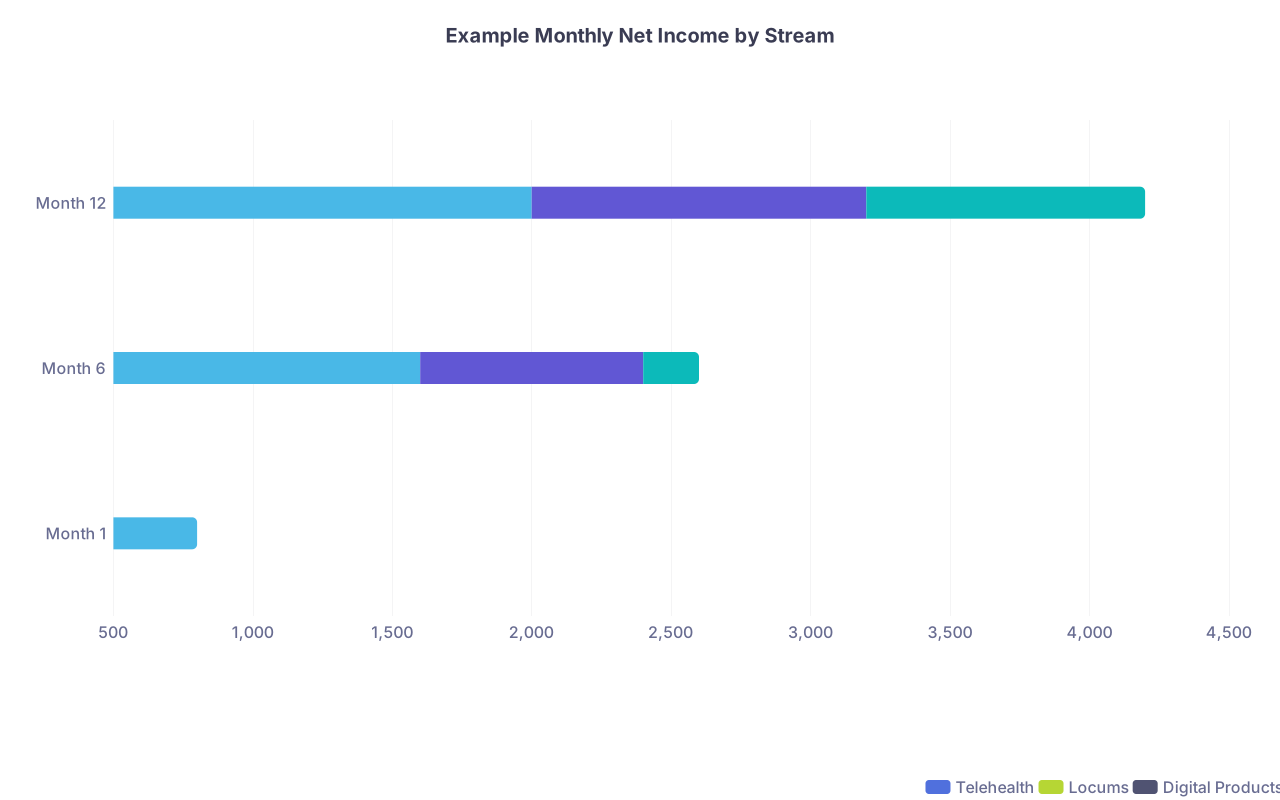
| Category | Telehealth | Locums | Digital Products |
|---|---|---|---|
| Month 1 | 800 | 0 | 0 |
| Month 6 | 1600 | 800 | 200 |
| Month 12 | 2000 | 1200 | 1000 |
Over a year, the pattern you want:
- “Now money” stable or gradually increasing
- “Later money” starting at zero, then growing disproportionately relative to hours
When something consistently:
- Pays poorly
- Drains you
- Or adds legal/administrative risk
You drop it. Without guilt. This is not a marriage. It is a line item.
What to Avoid (Because I Have Seen These Go Bad Repeatedly)
Quick list, no sugarcoating.
- MLM/Network marketing “opportunities” using your MD for credibility. Hard no.
- “Passive income” schemes that require big capital you do not have (fancy real estate syndicates) during residency.
- High-pressure “invest in my course and build a 7-figure coaching business” nonsense.
- Any arrangement where you do all the work and someone else “handles the business side” while capturing the upside and IP.
- Building income streams that depend entirely on social media algorithms you do not control, with no email list or owned audience.
You can use social media. Fine. Just do not build your house on rented land.
Example: A Realistic 5-Stream Portfolio After 3–5 Years
For a generic “lower-paid” specialist (say, pediatrics, FM, or psych), a mature portfolio might look like this:
| Income Stream | Type | Annual Net (Approx) |
|---|---|---|
| Primary clinical job | Base | $180,000 |
| Telehealth / locums | Now money | $30,000 |
| Group programs/courses | Later money | $20,000 |
| Consulting/advisory | Later money | $10,000 |
| Writing/speaking | Later money | $5,000 |
Total: $245,000 on a “low-paid” specialty base. Not fantasy. Just methodical stacking.
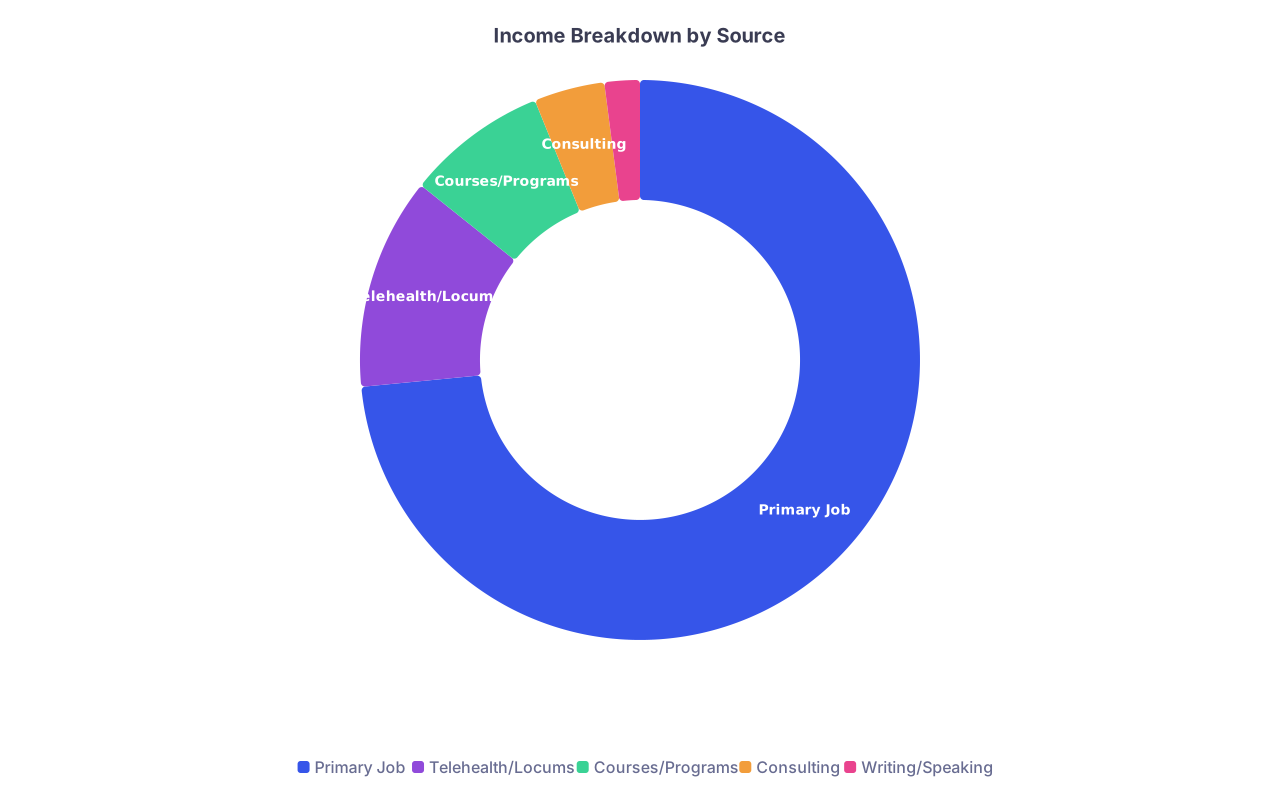
| Category | Value |
|---|---|
| Primary Job | 180000 |
| Telehealth/Locums | 30000 |
| Courses/Programs | 20000 |
| Consulting | 10000 |
| Writing/Speaking | 5000 |
You do not reach this by copying random influencers. You reach it by deliberately adding one solid stream at a time and refusing to chase every shiny idea.
Final Step: Decide Your First Stream and Block Time This Week
Reading this does nothing. The lever is action.
Today:
- Pick one “now money” option that fits your specialty and life.
- Pick one “later money” idea that excites you and aligns with your daily clinical work.
- Open your calendar and:
- Block one 2–3 hour window this week for concrete steps:
- LLC or bank setup
- Telehealth/locums applications
- Drafting a landing page or newsletter sign-up
- Protect that time the same way you protect your call schedule.
- Block one 2–3 hour window this week for concrete steps:
If you cannot point to a specific income stream you are building and a specific time block on your calendar to work on it, you are not “working on multiple income streams.” You are daydreaming.
Fix that today.


