

You are here
It’s late MS1. You just left clinic where a family med doc spent 30 minutes counseling a patient who makes more money than she does. You loved every second of the visit. The continuity. The stories. The trust.
Then you look at Reddit threads comparing specialty salaries and your stomach drops.
Family medicine. Pediatrics. Psychiatry in community practice. Geriatrics. PM&R. Hospitalist tracks. The so‑called “lowest paid specialties.”
You’re leaning that way anyway. But you’re not dumb. You know loans are real and prestige bias is real. You want a plan that lets you:
- Lean into the specialty you actually enjoy
- Keep doors open (fellowships, academic jobs, niche roles)
- Not sabotage your financial life by being careless
Here’s the MS1–MS4 roadmap if you’re gravitating toward a lower‑paid specialty and want to play it smart, step by step.
Big picture: what you’re optimizing for (years 1–4)
At this point, you should stop thinking “low-paying specialty” and start thinking “option-rich specialty with lower base pay.”
Because that’s what most of these are. You’re trading raw RVUs for:
- Location flexibility
- Part‑time and non‑clinical options
- Better lifestyle and fewer late‑night phone calls
- More predictable schedules
But only if you set it up right.
Here’s the 10,000‑foot view of what each year should accomplish.
| Year | Main Goal | Secondary Goal |
|---|---|---|
| MS1 | Explore and sample | Build study & loan habits |
| MS2 | Position for exams | Start targeted specialty exposure |
| MS3 | Crush core rotations | Signal fit for your chosen field |
| MS4 | Seal the deal in residency | Protect lifestyle and geography |
MS1: Curiosity with guardrails
You’re not choosing a specialty yet. But you are laying the foundation that will make any “low paid” field financially and professionally safer.
Months 1–3: Build the engine
At this point, you should:
Lock down study systems
You want exam performance high enough to keep all residency tiers on the table. Not because you’ll chase derm, but because being above average in a low‑paid specialty buys you better programs, better training, and better future jobs.Focus on:
- Active recall from day 1 (Anki, Q‑banks, small group drilling)
- Weekly self‑testing, not just pre‑exam cram
- Realistic schedule that includes sleep and exercise (burnout in MS1 is stupid and avoidable)
Start a boring but critical money checklist
- Figure out exact loan amounts and interest rates
- Build a zero‑based monthly budget, even if you’re “just using loans”
- Set up a basic expense tracker (YNAB, Mint, spreadsheet, whatever you’ll actually use)
If you’re leaning toward primary care, peds, psych, etc., early financial discipline matters more than which shadowing you pick. A $300 grocery habit vs $900 takeout is a larger lifetime lever than you think.
Months 4–6: Taste low-paying fields early
You don’t need commitment. You need data.
At this point, you should:
- Shadow 2–3 “lower paid” specialties on purpose
Aim for:- 1 day in a busy outpatient primary care or peds clinic
- 1 day with a psychiatrist (inpatient vs outpatient if you can)
- 1 day with either geriatrics, PM&R, or hospital medicine
Pay attention to:
How rushed do they look?
How often do they roll their eyes at admin vs light up with patients?
How much continuity do they actually have?
Enter research with an eye on scalability
You do not need high‑impact bench research. You do want:- Something publishable in 1–2 years
- Something that could tie into your eventual specialty (e.g., obesity management, child development, chronic disease outcomes, health disparities)
If your school has a primary care track, population health program, or psych interest group with ongoing QI projects, attach yourself to one.
Summer after MS1: Intentional but not obsessive
You have three reasonable options:
Research summer (best for academic interest or competitive urban programs in “low-paying” fields):
- Aim for 1 concrete output: poster, abstract, whatever
- Get exposure to mentors in FM, peds, psych, geri, etc.
- Ask them blunt questions about pay, burnout, and what they would do differently
Clinical exposure summer (global health, free clinic, rural program):
- Great for narrative strength later (“why primary care,” “why peds”)
- Use it to test your tolerance for chaos, poverty, complex social issues
Hybrid + life maintenance:
- 2–3 days/week research or clinic
- 2–3 days/week just living like a human so you don’t hit MS2 already fried
If you’re clearly loving primary care or peds by now, I’d lean toward #1 or #2, but don’t treat this summer as The Decision.
MS2: Performance now, positioning in the background
MS2 is ugly. You’re drowning in path and pharm, prepping for Step/Level exams, and the specialty question moves into your peripheral vision.
Months 1–4: Exams first, but not only
At this point, you should:
Give yourself permission to prioritize exam performance
Higher Step 2 / Level 2 scores help you:- Land in more desirable cities (where cost of living may be higher but job options explode)
- Match into academic or well‑resourced community programs
- Compete for fellowships later (sports med, palliative, child psych, etc.)
Keep a low‑burn specialty thread running
Every 4–6 weeks, schedule some specialty activity:- Specialty interest group talk for FM, peds, psych, etc.
- 1–2 afternoons of clinic with a mentor you already know
- One small project task (literature review, data cleaning, survey building)
These small investments mean by the time you hit MS3, you’re not starting from zero.
Dedicated Step/Level study period
You will hate this block. That’s normal.
Your priorities:
- Set a realistic score target that positions you well within lower‑pay fields
- You don’t need 260+, but you don’t want to be scraping minimums
- Use practice tests to time your test date. Don’t martyr yourself for an arbitrary calendar date if an extra 2 weeks could bump you a score band.
You’re not studying for radiology. You’re studying for leverage later when you’re a strong applicant in a “less competitive” specialty and can say no to mediocre programs.
Late MS2: Pre-clinical to clinical transition
At this point, you should:
- Lock in at least one mentor in your top 1–2 candidate fields
- Email them your Step/Level date and ask for a meeting afterward to talk about MS3 rotations and electives.
- Start a simple document: “Things I enjoy in medicine” with bullets after each clinical experience.
- Do not make it pretty. Just dump observations:
- “Loved explaining diabetes to that patient who actually listened”
- “Hated long OR days; felt useless”
- Do not make it pretty. Just dump observations:
That document becomes your compass.
MS3: The year your preferences get real
Now you’re on the wards. Suddenly surgery, OB, and IM are not abstract concepts—they’re smells, pagers, and 5 a.m. prerounds.
This is where a lot of students panic and reverse course from low-paying interests because they see the prestige machine in action. You’ll hear it:
“You’re smart, why waste it on primary care?”
“You’ll never pay off your loans in peds.”
Ignore the insecurity masquerading as advice. But don’t ignore actual signals about your fit.
Month 1 of MS3: Start with intentional data collection
At this point, you should:
Decide what you’re testing on each rotation:
- How do I feel about intensity vs continuity?
- Do I like managing uncertainty or fixing discrete problems?
- Can I handle this lifestyle at 45 with kids, aging parents, etc.?
On each rotation, keep a simple weekly log:
- Best moment of the week
- Worst moment of the week
- Would I be okay if this was “standard Tuesday” in my 40s?
Through the core rotations
Here’s how to think specialty‑by‑specialty if you’re leaning low pay:
Internal Medicine
- Use it to decide: hospitalist vs primary care vs subspecialty
- If you love chronic disease management and conversations, note that
- If you only like the ICU or cards consults, maybe you’re not truly “primary care oriented”
Pediatrics
- Pay attention to: parents more than kids. Do they drain or energize you?
- Notice your tolerance for non‑verbal kids, developmental delays, and systems fights (schools, social work, CPS)
Family Medicine
- If your school has a dedicated FM rotation, this is gold. Watch the variety: OB, procedures, geri, sports.
- If not, patch it together: outpatient IM + peds + OB continuity clinics.
Psychiatry
- Test your patience for long visits and slow change
- Differentiate between “this is emotionally heavy” vs “this is emotionally deadening”
OB/GYN and Surgery
- Even if you’re sure you don’t want them, use them as contrast data:
- Do you actually like procedures but not the culture?
- Are you okay with some nights/weekends but not the OR grind?
- Even if you’re sure you don’t want them, use them as contrast data:
Mid‑MS3: Narrow down and start signaling
By the halfway point (roughly 6 months into MS3), you should:
Pick 1–2 specialties you could happily do for 20+ years, not 2.
Common combos if you’re “low-paying leaning”:- FM vs IM (hospitalist vs primary care path)
- Peds vs FM (depending on age group preference)
- Psych vs FM (esp. if you like behavioral health)
- PM&R vs neurology vs psych (brain/body interface people)
Meet with advisors in those fields and ask pointed questions:
- How competitive are good programs in the cities you care about?
- What do top applicants from our school look like in this field?
- If I want X lifestyle (part‑time, academic, rural, etc.), which training paths set that up best?
Start lining up letters
- Identify 2–3 attendings in your likely specialty who know you as a worker, not just a name on the schedule
- Tell them directly: “I’m strongly considering [specialty] and would love to work with you more so you can see my clinical skills. I’ll likely ask for a letter later this year.”
Late MS3: Plan MS4 for a low‑pay specialty done well
At this point, you should lock in:
- Your specialty choice (by ~March–April of MS3 for most schools)
- MS4 schedule skeleton:
- 1–2 home sub‑Is/acting internships in your chosen field
- 0–2 away rotations if geography matters or your home program is weak
- A dedicated Step 2/Level 2 study and test date early (ideally before apps open or soon after)
Here’s the mistake people make in “less competitive” fields: they assume they can be casual. They delay Step 2. They don’t plan aways. Then they scramble for good programs in good cities and wonder why it’s hard.
MS4: Seal the match and protect your future options
MS4 is about alignment: your story, your letters, your scores, your rotations all pointing the same direction.
Early MS4 (April–July): Sub‑Is and Step 2
At this point, you should:
Do a strong sub‑I/acting internship in your chosen field at your home institution
- Show up at intern level: pre‑read charts, call consults, own your patients
- Tell the clerkship director or program director early: “This is my top field. I’d appreciate any feedback that will strengthen my application.”
Schedule Step 2/Level 2 strategically
- For most lower‑pay specialties, a solid Step 2 helps if Step 1 was pass/fail or mediocre
- Aim for scores that are clearly above the program’s typical floor so nobody worries about your hard‑work capacity
If doing aways, choose smartly
- You don’t need 4 aways. For most FM, peds, psych, 0–2 is plenty.
- Do them:
- In cities/regions you’re serious about
- At programs with a reputation for strong training or fellowships
Go in with the mindset: “I’m auditioning them as much as they’re auditioning me.”
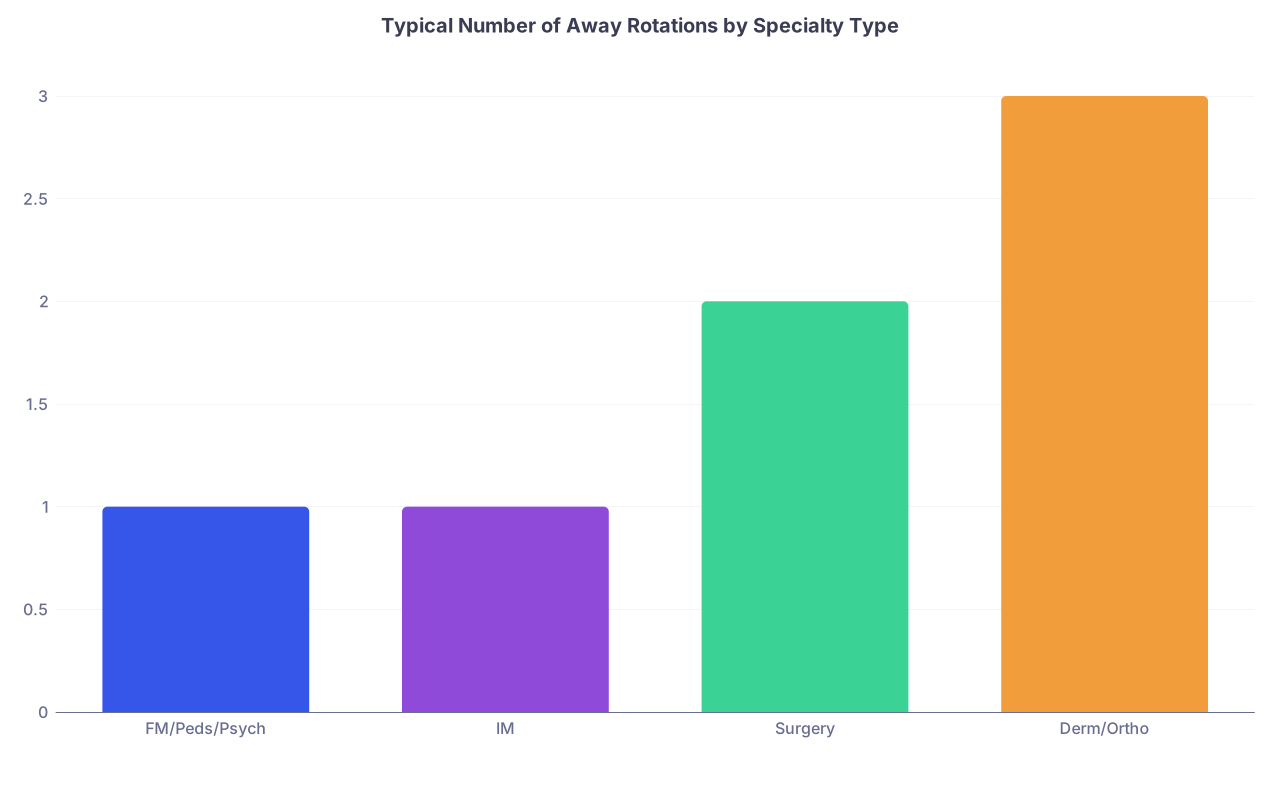
| Category | Value |
|---|---|
| FM/Peds/Psych | 1 |
| IM | 1 |
| Surgery | 2 |
| Derm/Ortho | 3 |
Mid MS4 (Aug–Oct): Applications and interviews
At this point, you should:
Submit a focused but not reckless rank of programs
For lower‑pay specialties, competitiveness depends on:- City desirability (NYC FM vs middle-of-nowhere FM are not the same)
- Academic vs community
- Niche tracks (sports med heavy, med‑peds, child psych, etc.)
Write your personal statement like a grown adult, not a martyr
Avoid:- “I just want to help people” with no evidence
- “I know I won’t make much money, but…” – do not frame it that way
Use: - Concrete stories from your MS3/MS4 experiences
- Clear understanding of the field’s challenges (burnout, admin bloat, undercompensation)
- A realistic but committed tone: “I’m choosing this with eyes open.”
Prepare for interviews with a clear “why this field, why this version of it” answer
Examples:- FM: “I want a broad outpatient practice with a strong behavioral health component and potential for leadership in clinic operations.”
- Peds: “I’m drawn to complex care and see myself in academic general peds with a focus on children with chronic conditions.”
- Psych: “I’m interested in outpatient practice with a mix of therapy and med management, and I want training that exposes me to addiction and community psychiatry.”
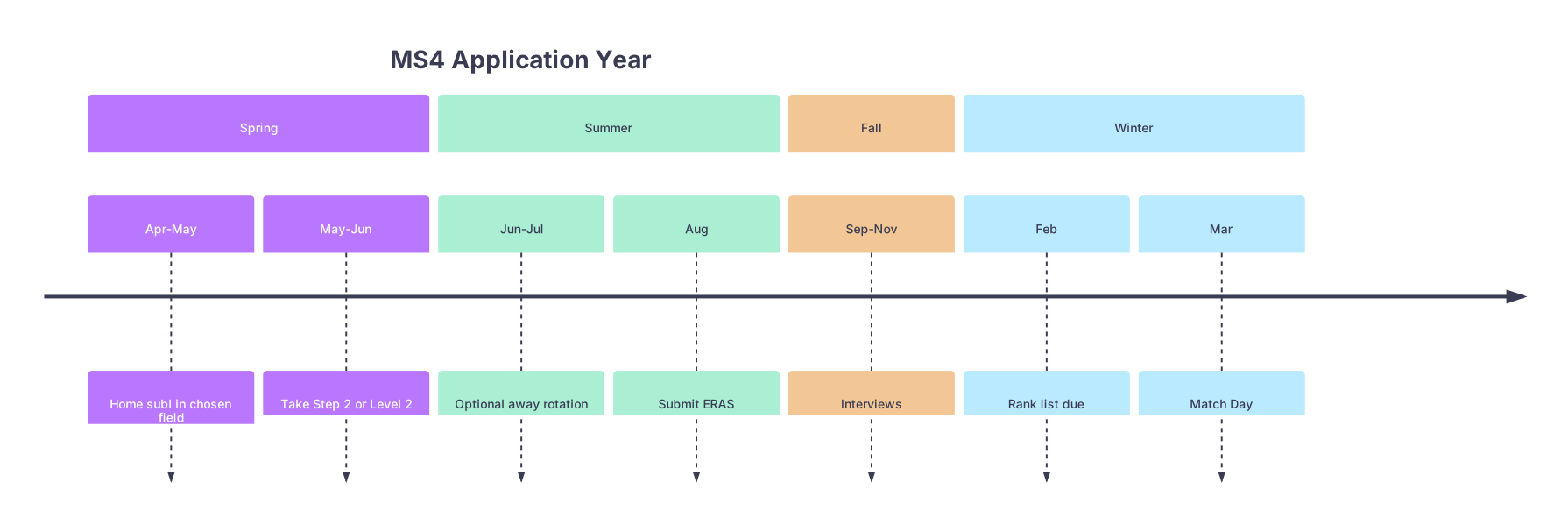
| Period | Event |
|---|---|
| Spring - Apr-May | Home subI in chosen field |
| Spring - May-Jun | Take Step 2 or Level 2 |
| Summer - Jun-Jul | Optional away rotation |
| Summer - Aug | Submit ERAS |
| Fall - Sep-Nov | Interviews |
| Winter - Feb | Rank list due |
| Winter - Mar | Match Day |
Late MS4 (Nov–Match): Think beyond residency
While you wait and interview, you should quietly be thinking 5–10 years out. Not obsessing. Just planning like someone who knows compensation isn’t sky‑high.
At this point, you should:
Ask programs pointed questions about graduate outcomes
- What percentage of your grads go into academic vs community vs hospitalist vs fellowship?
- Any grads in part‑time roles, administrative leadership, telehealth, or niche clinics?
Start a simple plan for financial sanity post‑match:
- Rough housing cost ceiling based on likely PGY‑1 salary
- Quick check of loan repayment options (PAYE/REPAYE/PSLF vs aggressive payoff)
- Mental rule: “No lifestyle inflation until at least PGY‑3 and only if I’m hitting savings goals”
This is how you make primary care, peds, psych, geri, PM&R, etc. feel like a choice, not a sacrifice.
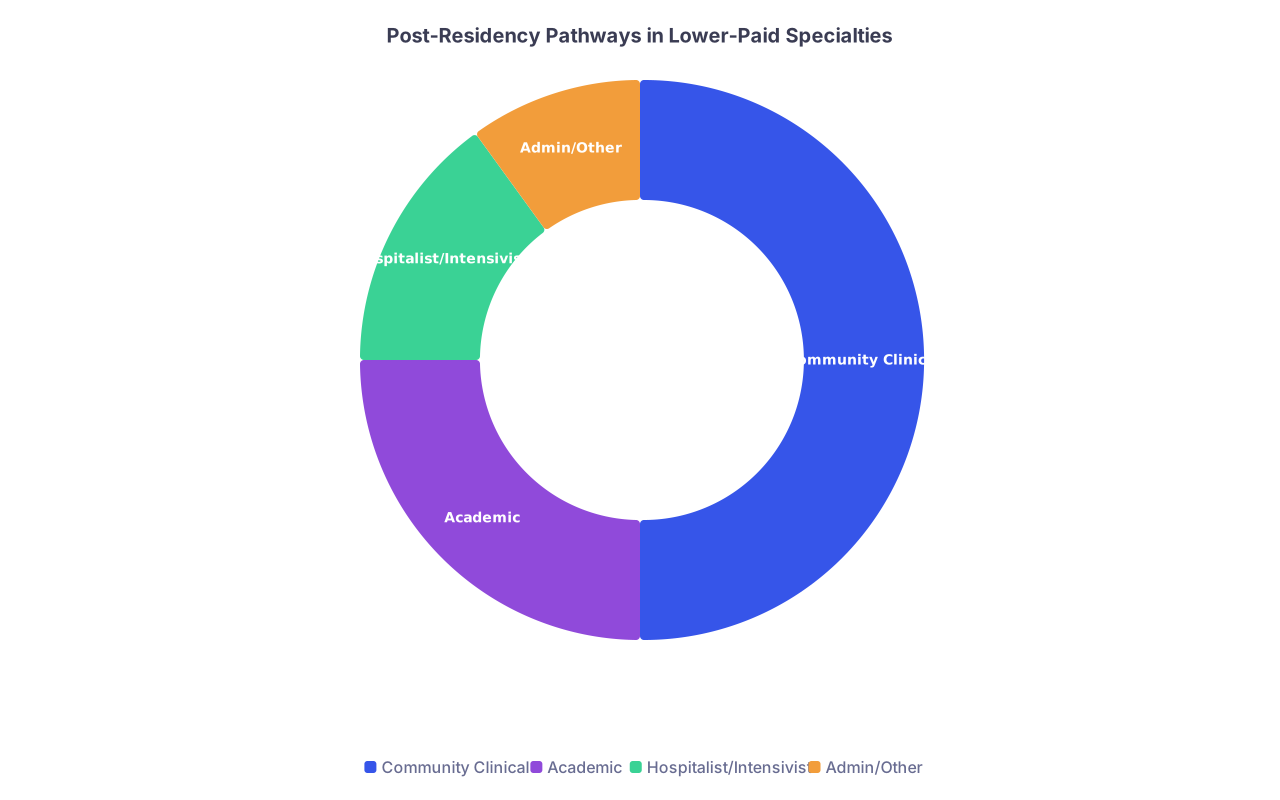
| Category | Value |
|---|---|
| Community Clinical | 50 |
| Academic | 25 |
| Hospitalist/Intensivist | 15 |
| Admin/Other | 10 |
Strategic levers specific to “low-paying” fields
Scattered through the years, there are a few levers you should pull differently because of your specialty choice.
1. Location strategy
You have more flexibility in match competitiveness but less margin for financial mistakes.
At this point, through MS3–MS4, you should:
- Be honest about where you can and cannot afford to live post‑training
- Prioritize programs that either:
- Sit in lower cost‑of‑living areas
- Or open doors to higher‑paying niches (academic centers, subspecialty clinics, sports med, child/adolescent, addiction, etc.)

2. Niche skills that raise your ceiling
Throughout MS2–MS4, track what procedures and skills your “low‑paid” docs are using to boost value:
- FM: vasectomies, joint injections, women’s health procedures, ultrasound, addiction treatment (Suboxone waivers)
- Peds: developmental assessments, complex care clinics, sedation services
- Psych: ECT, TMS, ketamine clinics, integrated care models
- PM&R: interventional pain, EMG, sports medicine
- Geriatrics: SNF medical direction, palliative care integration
You don’t have to subspecialize, but at least know what exists so residency choice aligns with those options.

3. Burnout armor
Lower‑paid does not always mean low‑stress.
From MS1 onward, build a proof‑of‑concept life where you:
- Sleep like a human
- Have at least one hobby not related to medicine
- Can say “no” to things (extra projects, leadership roles) without feeling like a failure
You’re practicing skills you’ll need when your clinic wants to add two more patients per half‑day “just to help with access.”
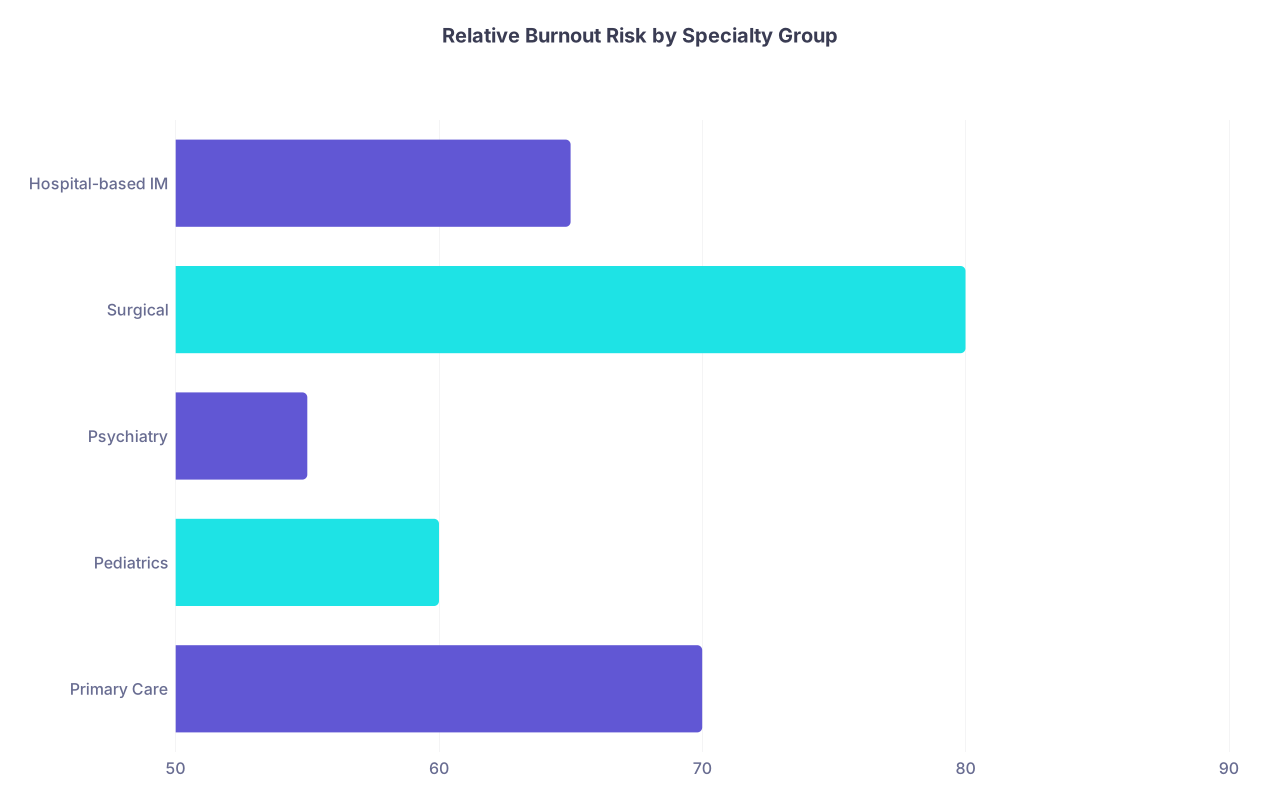
| Category | Value |
|---|---|
| Primary Care | 70 |
| Pediatrics | 60 |
| Psychiatry | 55 |
| Surgical | 80 |
| Hospital-based IM | 65 |
What to do today
You’re somewhere between MS1 and MS4 reading this.
Pick the step that matches your current point:
- If you’re MS1: Email one attending in FM, peds, psych, or another low‑pay field and ask for a half‑day shadowing slot this month. Put it on the calendar.
- If you’re MS2: Open your Step/Level study plan and add one small, recurring 30‑minute block each week labeled “Specialty project” to keep that thread alive.
- If you’re MS3: Tonight, write a one‑page reflection comparing your last two rotations. Which felt more sustainable? Why?
- If you’re MS4: Open your rank list draft and for each program, add two bullets: “Pros for future lifestyle/finances” and “Risks.”
Do one of those right now. Then the next step gets easier.


