

The biggest financial mistake low-paid residents make happens before Match Day, not after it. By the time your contract hits your inbox, most of your leverage and planning runway are gone.
You are about to enter some of the lowest-paid years of your professional life while holding the highest debt you may ever see. If you are heading into pediatrics, family medicine, psychiatry, neurology, preventive medicine, pathology, or another low-paid specialty, you do not have the margin to “figure it out later.”
You need a timeline. Month-by-month, week-by-week. Here it is.
Big Picture: Your Fourth-Year Financial Timeline
Use this as your backbone. Then we drill down.
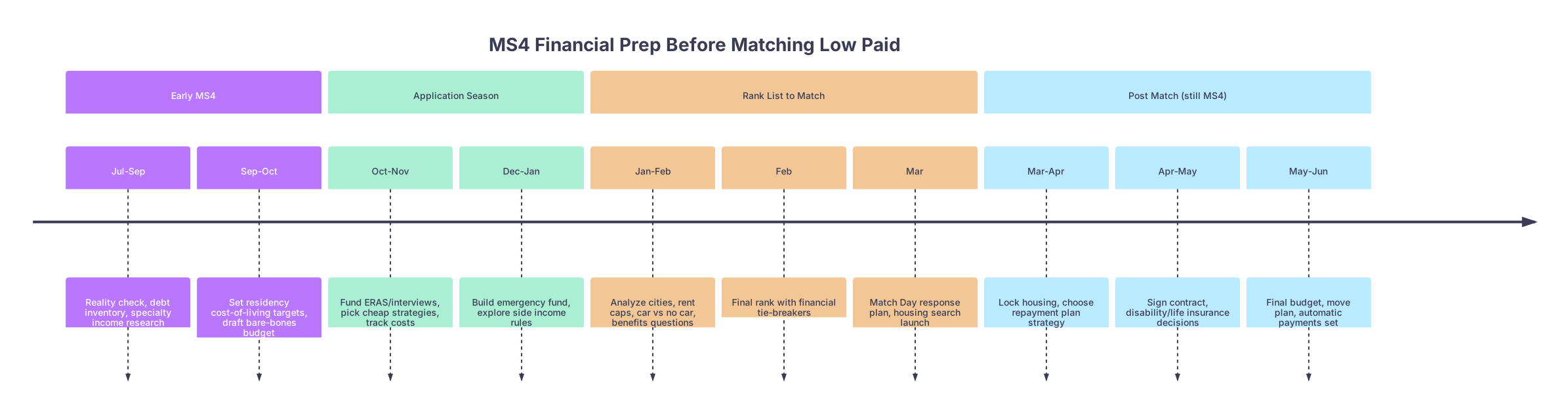
| Period | Event |
|---|---|
| Early MS4 - Jul-Sep | Reality check, debt inventory, specialty income research |
| Early MS4 - Sep-Oct | Set residency cost-of-living targets, draft bare-bones budget |
| Application Season - Oct-Nov | Fund ERAS/interviews, pick cheap strategies, track costs |
| Application Season - Dec-Jan | Build emergency fund, explore side income rules |
| Rank List to Match - Jan-Feb | Analyze cities, rent caps, car vs no car, benefits questions |
| Rank List to Match - Feb | Final rank with financial tie-breakers |
| Rank List to Match - Mar | Match Day response plan, housing search launch |
| Post Match (still MS4) - Mar-Apr | Lock housing, choose repayment plan strategy |
| Post Match (still MS4) - Apr-May | Sign contract, disability/life insurance decisions |
| Post Match (still MS4) - May-Jun | Final budget, move plan, automatic payments set |
Bookmark that. Now, step through it.
Early MS4 (July–October): Reality Check and Baseline
At this point you should stop guessing and put real numbers on paper. Especially if you are going into one of the lowest paid specialties.
July: Know Exactly Where You Stand
By mid-July you should have a complete financial snapshot.
This week you should:
- Pull your full debt list:
- Federal loans (NSLDS / studentaid.gov)
- Private refinance or old undergrad loans
- Credit cards, personal loans
- Write down:
- Principal
- Interest rate
- Type (Direct unsubsidized, Grad PLUS, private, etc.)
| Debt Type | Balance | Interest Rate | Notes |
|---|---|---|---|
| Direct Unsubsidized | $185,000 | 6.0% | Eligible for IDR/PSLF |
| Grad PLUS | $75,000 | 7.0% | Eligible for IDR/PSLF |
| Private Loan | $20,000 | 5.5% | Not PSLF-eligible |
| Credit Card | $3,500 | 22.0% | Must be killed first |
If you do not know these numbers, you are not planning. You are hoping.
Late July–August: Understand Your Specialty’s Pay Ceiling
Low-paid specialties are not bad choices. They just have tighter math. You need reasonable expectations.
This month you should:
- Look at actual PGY-1 salaries in your specialties and locations:
- Program websites
- FREIDA
- Ask current residents: “What is your take-home per month after taxes and insurance?”
- Look at attending income ranges so you know what you are building toward, but do not let that distract from the next 3–7 lean years.
Rough idea (varies by region, not gospel):
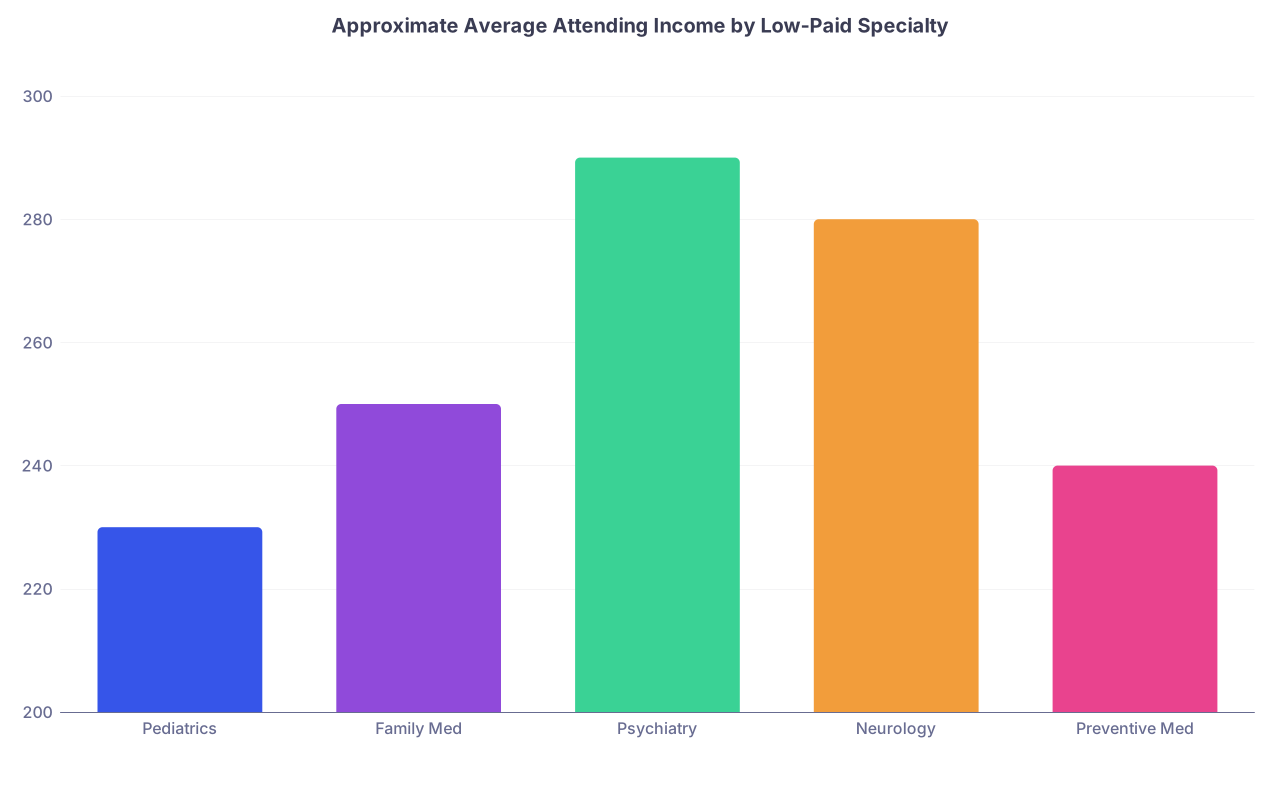
| Category | Value |
|---|---|
| Pediatrics | 230 |
| Family Med | 250 |
| Psychiatry | 290 |
| Neurology | 280 |
| Preventive Med | 240 |
You are not choosing dermatology money. That is fine. It just means you cannot afford sloppy choices around loans, housing, and consumer debt.
September–October: Build Your “Residency Floor Budget”
By October, before interviews ramp up, you should know the minimum lifestyle you can sustain on a low-paid PGY-1 salary.
Take a typical PGY-1 gross of $60,000–$70,000. After taxes, retirement withholding (if any), and basic benefits, your take-home might be:
- $3,300–$3,800 per month in a moderate cost-of-living city
- Less in NYC / SF / Boston; more in some Midwest/South markets
Now build a floor budget (no fluff, just survival) for residency:
- Rent/share target
- Utilities / internet
- Phone
- Food (realistic, not fantasy)
- Transportation (car vs no car, gas, insurance, parking)
- Minimum loan payment (if not in deferment/IDR yet)
- Insurance not covered by employer
- Misc / clothing / emergencies
You should end this month with:
- A one-page spreadsheet: “Residency Bare-Bones Budget – Monthly”
- A hard cap number for rent. Example: “No more than $900 if solo, $700 if sharing.”
That rent cap will matter when you rank programs and shop apartments later.
Application Season (October–January): Control the Bleeding While You Apply
Interviews are where a lot of MS4s quietly torch thousands of dollars. Low-paid specialties do not give you much slack to burn.
October–November: Fund the Application Season Without New High-Interest Debt
At this point you should know how much your ERAS + interviews will cost.
Rough ranges I have seen:
| Category | Value |
|---|---|
| Pediatrics | 230 |
| Family Med | 250 |
| Psychiatry | 290 |
| Neurology | 280 |
| Preventive Med | 240 |
Your job this month:
Cap your application spread.
- For low-paid, less competitive specialties (FM, IM, psych in many regions) you do not need 80 programs.
- Talk to advisors and fourth-years from your school: “How many did you apply to and what was your Step score / grades?”
- Set a realistic number and stick to it.
Pick an interview strategy that matches your bank account.
- Prioritize virtual interviews when offered.
- Cluster interviews by geography to cut travel.
- Share hotel / Airbnb with classmates when possible.
Decide how you will pay:
- Ideal: cash from savings / part-time work / family support.
- Acceptable: 0% promo card you pay off before residency.
- Bad: high-interest card you plan to “deal with later.” Do not.
By Thanksgiving, you should:
- Have a running total of all application-related expenses.
- Adjust travel plans if you are already hemorrhaging more than planned.
December–Early January: Start the Residency Emergency Fund
At this point you should pivot from “pay for interviews” to “prepare for the gap.”
There is a brutal gap every MS4 forgets:
- Last loan disbursement: winter/spring of MS4.
- First real paycheck: July 31 or similar.
- Move costs + deposits: May–July.
You need cash for that.
Target for low-paid specialties:
- Bare minimum: $2,000–$3,000
- Better: $4,000–$6,000
- Ideal: One month of expected PGY-1 take-home
Where does it come from?
- Tighten MS4 lifestyle temporarily. Yes, even then.
- Moonlighting allowed roles:
- Tutoring
- Per-diem CNA/tech/scribe work if you already have experience and license
- Online work that does not violate school policies
- Direct any gift money (holidays, graduation) into this fund, not splurges.
By January 1, you should:
- Have a separate savings account labeled “Residency Start Fund.”
- Decide: “This money is not for vacation. It is for moving, deposits, and emergencies.”
Rank List to Match (January–March): Financial Tie-Breakers and Commitments
This is the phase almost nobody treats as financial planning. That is a mistake, especially when your specialty salary is on the lower end.
January: Analyze Cities and Programs in Dollars, Not Just Vibes
At this point you should overlay cost-of-living directly on your rank list.
For each realistic program on your list, look up:
- Average 1-bedroom and 2-bedroom rents near the hospital.
- Typical parking costs for residents.
- Transit reliability if you want to go car-free.
- State income tax.
- PGY-1 salary and built-in raises.
Use something simple like:
- “Program A – Big coastal city”
- PGY-1: $68k
- Take-home: ~3,600/month
- Rent for studio near hospital: $1,900
- “Program B – Midwestern city”
- PGY-1: $60k
- Take-home: ~3,300/month
- Rent for 1BR near hospital: $900
The Midwestern program wins financially by a mile if training quality is comparable.
Do a quick comparison like this for your top 5–10:
| Program | PGY-1 Salary | Est. Take-Home | Typical 1BR Rent | Est. Net After Rent |
|---|---|---|---|---|
| A | $68,000 | $3,600 | $1,900 | $1,700 |
| B | $60,000 | $3,300 | $900 | $2,400 |
| C | $62,000 | $3,400 | $1,200 | $2,200 |
Your future self in pediatrics or FM will feel these differences far more than a future orthopod would.
Late January–February: Use Money as a Genuine Rank List Tie-Breaker
By the time you are finalizing your rank list, your priorities should look like:
- Training quality and career goals.
- Personal support and sanity.
- Cost of living and financial impact.
For low-paid specialties, #3 is not optional.
Concrete tie-breakers:
- Two programs similar quality? Rank the one in the cheaper city higher.
- Same city, similar reputation? Rank the program with better benefits/meal stipends/parking above.
- Program that clearly abuses residents (no time to moonlight, toxic call schedule)? Down-rank it, because burnout plus low pay is a terrible combination.
By rank list certification, you should:
- Know which of your top 5 will allow you to live within your floor budget with some breathing room.
- Be prepared for any of those financially (you cannot pick after you match; planning window is now).
Late February–Pre-Match Week: Information You Still Need
Now is the time to clarify details that will hit your wallet:
Make a list and email / ask coordinators or current residents:
- Start date and first paycheck date.
- Moving stipend (exists or not, and how much).
- Parking costs for residents.
- Required purchases (white coats, textbooks, software).
- Whether moonlighting is allowed later in residency (useful for higher PGY years).
Document the answers. This will guide your post-Match decisions.
Match Week to Graduation (March–June): Locking in Housing, Loans, and Insurance
Now you know where you are going. At this point, you should shift from “planning scenarios” to “executing a specific plan.”
Match Week (Mid-March): Rapid Financial Triage
Right after you match, within 72 hours, you should:
- Pull up your floor budget and adjust it for your actual city and salary.
- Set your rent target:
- For low-paid specialties, I strongly recommend:
- Solo: Rent ≤ 25–30% of take-home.
- Roommate: Often financially superior.
- For low-paid specialties, I strongly recommend:
- Estimate your moving and setup costs:
- Moving truck / shipping
- Initial furniture / basics
- First month + security deposit + possible parking deposit
If your “Residency Start Fund” looks small compared to your estimates, you still have a few months to adjust work hours or cut MS4 spending further.
Late March–April: Housing Hunt with Hard Rules
Housing is where most new low-paid residents sink themselves.
Your rules for yourself should look something like this:
- Rent cap is non-negotiable.
- No luxury buildings “because I deserve it after med school.”
- 12-month lease maximum; do not get locked into something longer before you know your schedule and commute patterns.
At this point you should:
- Decide: roommate vs solo.
- If you have big loans and low salary, a roommate for at least PGY-1 is often the smartest play.
- Look at commute vs sleep:
- That extra $200 off rent might not be worth a 45-minute commute post-call.
- Confirm:
- Public transit hours vs your call schedule.
- Parking options and costs if you have a car.
Lock in housing by late April or early May if possible. Waiting until June is how you end up overpaying.
Loans and Repayment Strategy (April–June): Set It Up Before Orientation Chaos
For low-paid specialties, loan strategy is not just about compounding math. It is about survival and long-term forgiveness options like PSLF.
April: Decide Your Loan Strategy Path
At this point you should decide which lane you are in:
PSLF + income-driven repayment (IDR) (common for low-paid fields):
- You work at 501(c)(3) / government hospitals.
- You plan to stay in that world at least 10 years.
- You accept that forgiveness > rapid payoff.
Aggressive payoff later:
- You plan to pursue higher-paying roles later (e.g., psych with private practice).
- You want to clear debt in 5–10 years post-residency.
- You might still use IDR during residency, but not long-term PSLF.
Hybrid “keep options open”:
- Use IDR and certify PSLF employment, even if you are not fully committed to forgiveness yet.
- Gives you optionality without much downside.
By the end of April you should:
- Log in to studentaid.gov, confirm all loans, fix any contact issues.
- Decide which IDR plan you will use starting in residency (e.g., SAVE / PAYE / IBR depending on current rules).
May: Do the Paperwork Before You Are an Overwhelmed Intern
You will not have time in July to sit on hold with your loan servicer.
This month you should:
- Consolidate federal loans if that helps with IDR or PSLF counting (check latest rules; they change).
- Submit:
- IDR application with projected residency income (or previous year’s tax return if low).
- PSLF employer certification form once you start, and annually thereafter if you are going the forgiveness route.
- Create a simple loan tracking sheet:
- Servicer, total balance, monthly IDR payment, PSLF-eligible or not.
If you have high-interest private debt or credit cards, you also:
- Make a payoff plan:
- Aggressive payments if you have extra from moonlighting later.
- Or at least automatic minimums and no new charges.
Insurance, Benefits, and Final Setup (May–June): Protect the Downside
You are entering years where a disability or death would financially wreck you or your family. Low-paid specialty or not, this part is non-negotiable.
Late May: Disability and Life Insurance Decisions
At this point you should lock in:
1. Own-occupation disability insurance:
- Residents in low-paid fields still need it; your future income might be multiples of resident pay, even if not surgical-level.
- Buy individual own-occupation coverage if possible, not just group-only coverage.
- The “I will do it later as an attending” excuse is how people get priced out after a new diagnosis.
2. Life insurance:
- Required if:
- You have dependents, or
- Someone co-signed your loans and you want them protected.
- Term life only. 20–30 year level term. No cash-value nonsense.
By June 1, you should:
- Have applications submitted, ideally approved.
- Know whether your program offers any supplemental discounted policies for residents and whether they are portable.
June: Flip the System to Autopilot Before Day 1
Your brain in July belongs to your patients, not to your bank.
At this point you should set every recurring financial action to run without your attention:
- Automatic rent payment.
- Automatic loan payment for your IDR plan.
- Automatic transfer:
- From checking to a small emergency savings account each paycheck (even $50–$100 is fine to start).
- Double-check your withholding so you do not end up with a nasty underpayment surprise.
- Enroll in any retirement plan your program offers if:
- There is a match (free money), even if small.
- You can afford even 1–3% contributions.
Finally:
- Update your budget with real numbers from your signed contract and housing lease.
- Run one last check: “If I live exactly like this, will I need to use credit cards to survive?” If yes, cut now:
- Cheaper phone plan.
- Roommate instead of solo.
- Sell car if city transit makes sense.
Core Takeaways
- The leverage point for low-paid residents is before Match Day. Your city choice, rent cap, and loan strategy matter more than your future attending salary fantasies.
- By graduation you should already have: a floor residency budget, housing locked within that budget, IDR/PSLF paperwork in motion, and a small emergency fund.
- If you are entering a low-paid specialty, you cannot afford to improvise. Decide now where your money goes, or your first year as a resident will decide for you.


