

The real mistake isn’t choosing a low-paying specialty. It’s believing you’re permanently stuck there.
You can pivot from a low-paying to a higher-paying specialty. People do it every single year. But it’s not casual, it’s not clean, and if you go in assuming “worst case I’ll just switch to derm later,” you’re already setting yourself up for pain.
Let me walk you through what’s actually possible, what’s fantasy, and how to protect your options if you’re not sure you want to stay in a lower-paying field.
The Short Answer: Yes, But It’s Harder Than You Think
Here’s the blunt version:
- Switching specialties is absolutely possible.
- Switching from a lower-paid, less competitive specialty to a high-paying, highly competitive one (like derm, ortho, plastics, anesthesia, radiology, some subspecialties) is hard but not impossible.
- The longer you wait, the tougher the pivot and the more sunk cost you’re walking away from (time, training, income).
- The best time to preserve a higher-paying option is before or early in residency, not 5–10 years into practice.
Most people who successfully pivot do one of three things:
- Switch residency entirely (e.g., FM → Anesthesia).
- Do a fellowship that materially changes earning power (e.g., IM → Cards, Endo, GI; Psych → Interventional Psych; PM&R → Pain).
- Move into a hybrid career (admin, informatics, industry, telehealth, side business) to boost income rather than change specialty.
So yes, there are real levers. But you’ve got to understand the terrain.
How Specialty Switching Actually Works (Not the Fantasy Version)
Let’s kill the “I’ll just redo residency whenever I feel like it” myth.

| Step | Description |
|---|---|
| Step 1 | Current Low Paying Specialty |
| Step 2 | Apply to New Residency |
| Step 3 | Fellowship Path |
| Step 4 | Hybrid or Side Path |
| Step 5 | Research, Letters, Networking |
| Step 6 | Negotiation, Extra Roles, Nonclinical Work |
| Step 7 | What do you want? |
Path 1: Full Residency Switch
Example: PGY-2 Family Medicine resident wants to switch to Anesthesiology or Radiology.
What you’re up against:
- You basically become an applicant again.
- Programs will scrutinize:
- Step/COMLEX scores
- Medical school record
- Your story: Why are you switching? Why you? Why now?
- Are you going to quit them too?
What helps:
- Strong evaluations in current residency.
- Concrete exposure to the target field (electives, shadowing, a mentor).
- At least one credible letter from that field.
- Willingness to:
- Move geographically.
- Accept starting over at PGY-1 or PGY-2.
- Take a pay cut during retraining.
Most successful switches to higher-paying specialties happen:
- During PGY-1 or PGY-2.
- When the original specialty isn’t hyper-competitive.
- When the applicant isn’t running from burnout, but moving toward a specialty they’ve clearly explored.
If you think you might want that option later, you need to act early.
Path 2: Fellowship That Changes Your Income
This is the underappreciated route. You can stay in a relatively lower-paid core specialty but move into a much better compensated niche.

Common examples:
- Internal Medicine → Cardiology, GI, Heme/Onc, Pulm/CC
- Pediatrics → PICU, NICU, pediatric cards
- Psychiatry → Interventional psychiatry, addiction, sleep
- PM&R → Pain, spine, sports
- Neurology → Epilepsy, stroke, neurocritical care
These fellowships can move you from a mid or low-paying baseline into a range that competes with or surpasses some procedural specialties.
Key point: This path is way more realistic than jumping from, say, outpatient pediatrics after 10 years into radiology residency.
Path 3: Stay in Your Specialty, Change How You Use It
This is where many smart low-paying specialists quietly increase their income without nuking their careers.
Tactics I see work:
- Take on administrative roles (medical director, service line lead, CMIO/CMO tracks).
- Add procedural skills within your field (OB in FM, scopes in GI, point-of-care ultrasound, joint injections, etc.).
- Expand into high-demand niches:
- Psych: TMS, ketamine, OCD programs.
- FM: occupational medicine, sports, urgent care, addiction.
- Peds: complex care clinics, subspecialty-type practices.
- Build nonclinical income:
- Consulting, expert witness work, industry roles.
- Telemedicine, group practices, coaching, content, health tech.
This isn’t a clean “specialty pivot,” but it is a pay pivot.
How Hard Is It to Jump From Specific Low-Paying Specialties?
Let’s go specialty by specialty and be honest about what’s realistic. These are general patterns, not absolute laws.
| Current Specialty | Common Higher-Pay Paths | Typical Difficulty |
|---|---|---|
| Family Medicine | EM, Anesthesia, Pain, Admin roles | Medium-High |
| Pediatrics | PICU, NICU, Cards, Urgent Care | Medium |
| Psychiatry | Interventional psych, Addiction, Admin | Low-Medium |
| PM&R | Pain, Spine, Sports | Medium |
| General IM (Hospitalist) | Cards, GI, Pulm/CC, Admin | Medium-High |
Family Medicine
Baseline: Among the lowest median physician incomes, especially pure outpatient.
Realistic pivots:
- To EM: Historically common, now tougher with EM job market in some regions, but still done.
- To Anesthesia: More competitive, but I’ve seen FM residents switch PGY-1/2 successfully; later is harder.
- To Pain: Through fellowship (often after PM&R or Anesthesia, but some FM paths exist depending on program).
- To Admin/Leadership: Medical director, CMO for systems valuing broad primary care experience.
If you’re in FM and even thinking about higher-paying switch options, you cannot coast through PGY-1. You need:
- Strong exam performance.
- Excellent evaluations.
- Networking and electives in the target area.
Pediatrics
Baseline: Also consistently low to mid-income, especially pure outpatient general peds.
Better-paying pivots:
- NICU / PICU: Longer training, intense lifestyle, but clear pay bump.
- Pediatric Cardiology, GI, Heme/Onc: Good compensation, more specialized jobs.
- Urgent Care / ED: Often better pay than clinic peds, more shifts, sometimes more burnout.
Peds → Adult high-paying specialties (like radiology, ortho) is rare and usually requires starting over.
Psychiatry
Psych is interesting. Historically mid-range, now spiking in compensation with demand and telepsych.
Higher-paying moves without full specialty switch:
- Interventional psych (TMS, ketamine, ECT) – substantially higher earnings.
- Addiction psych – highly marketable, often well-compensated, especially in private setups.
- Leadership – chair, medical director roles, system behavioral health leadership.
Straight-up psych → derm or ortho? Essentially fantasy unless you’re a unicorn with insane scores and willing to start over fully.
PM&R
Baseline: Middle of the pack; sometimes feels low when compared to what you could be making doing procedural work.
Pivot weapons:
- Pain medicine – huge income jump potential in some markets.
- Spine / interventional work – similar story.
- Sports medicine with procedures and high-volume practices.
These are very realistic, common, and don’t necessarily require jumping into a completely new residency.
Key Factors That Make or Break Your Ability to Pivot
Let’s be clinical about this. Your odds of successfully moving from low-paid to higher-paid depend heavily on:
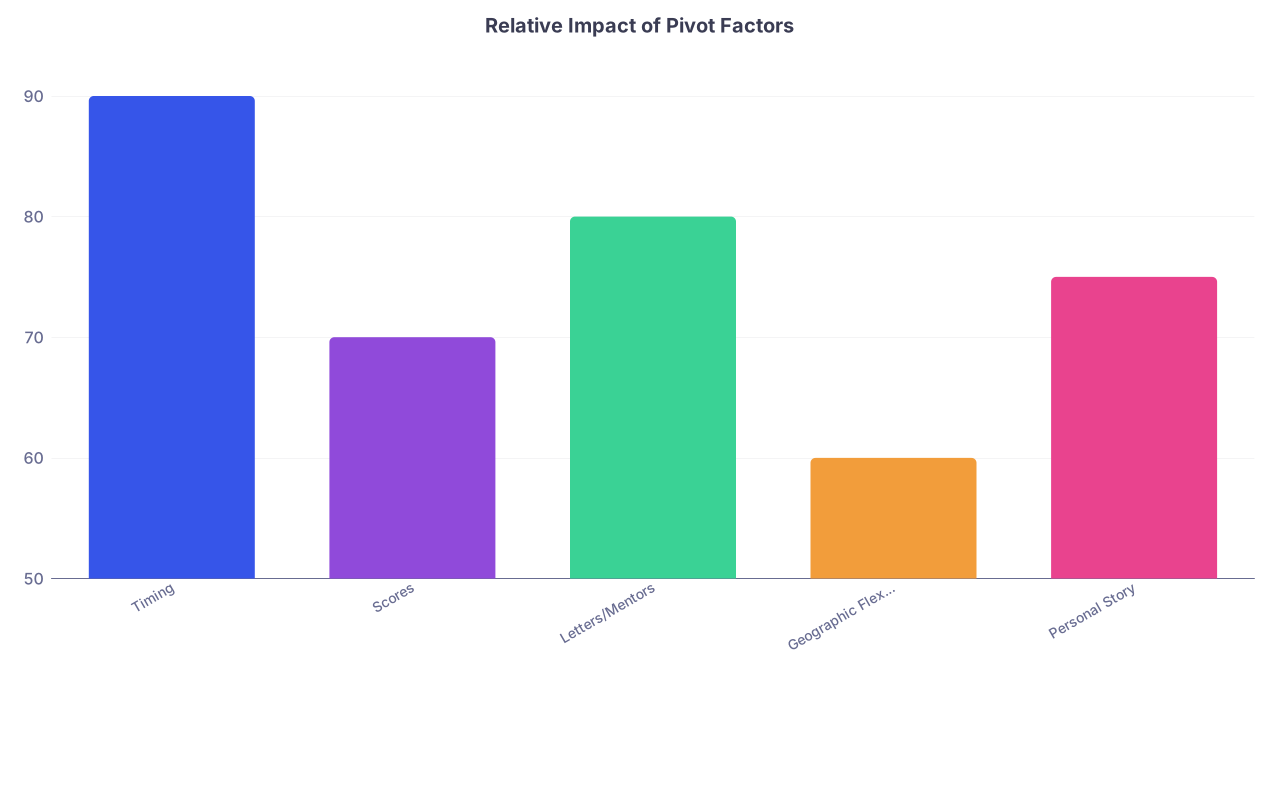
| Category | Value |
|---|---|
| Timing | 90 |
| Scores | 70 |
| Letters/Mentors | 80 |
| Geographic Flexibility | 60 |
| Personal Story | 75 |
1. Timing
The earlier, the better. Rough rule of thumb:
- MS3/MS4: Max flexibility. You can still apply directly into higher-paying specialties.
- PGY-1: Very feasible to reapply.
- PGY-2: Doable but more questions asked.
- PGY-3+ or attending: You’re fighting sunk cost and skepticism. Big specialty jumps are uncommon.
2. Your Exam Scores and Application Strength
Reality check: High-paying specialties often have higher board score expectations. If your Step 1/2 / COMLEX were marginal, your pivot pool shrinks.
Doesn’t mean zero options. But you need to match your ambitions to your record.
3. Relationships and Mentors
People switch when:
- An attending in the target specialty knows them well.
- That attending is willing to say, “Take this person. They’re not a flake; they just figured it out late.”
No mentor = you’re just a PDF in ERAS.
If You’re Currently in a Low-Paying Specialty and Curious About Switching
Here’s the practical framework I’d use with a resident sitting in my office:
Name what’s actually bothering you.
Is it:- Purely money?
- Lifestyle (call, hours, emotional load)?
- Identity/misalignment (you hate clinic, love procedures, etc.)?
Identify your real target.
Not “something higher paying.” Name 1–2 realistic specialties or fellowships.Pressure-test the fantasy.
Shadow, rotate, talk to attendings and fellows in that field. Ask them:- “What sucks about your job?”
- “If you were me in [current specialty], would you switch?”
Audit your competitiveness.
Look at:- Scores
- Class rank
- Residency evals
- Research/interest in the target field
Decide your horizon.
- “I want to apply this cycle.”
- “I want to set myself up for a high-paying fellowship later.”
- “I’ll stay put but modify my career to earn more.”
Then you either:
- Start assembling a new application (CV, personal statement, letters, programs list), or
- Start planning for a fellowship that boosts earning potential, or
- Map out income boosts within your current specialty.
Protecting Your Options While You’re Still in School or Early Residency
If you’re not locked in yet, this is where you can be strategic.
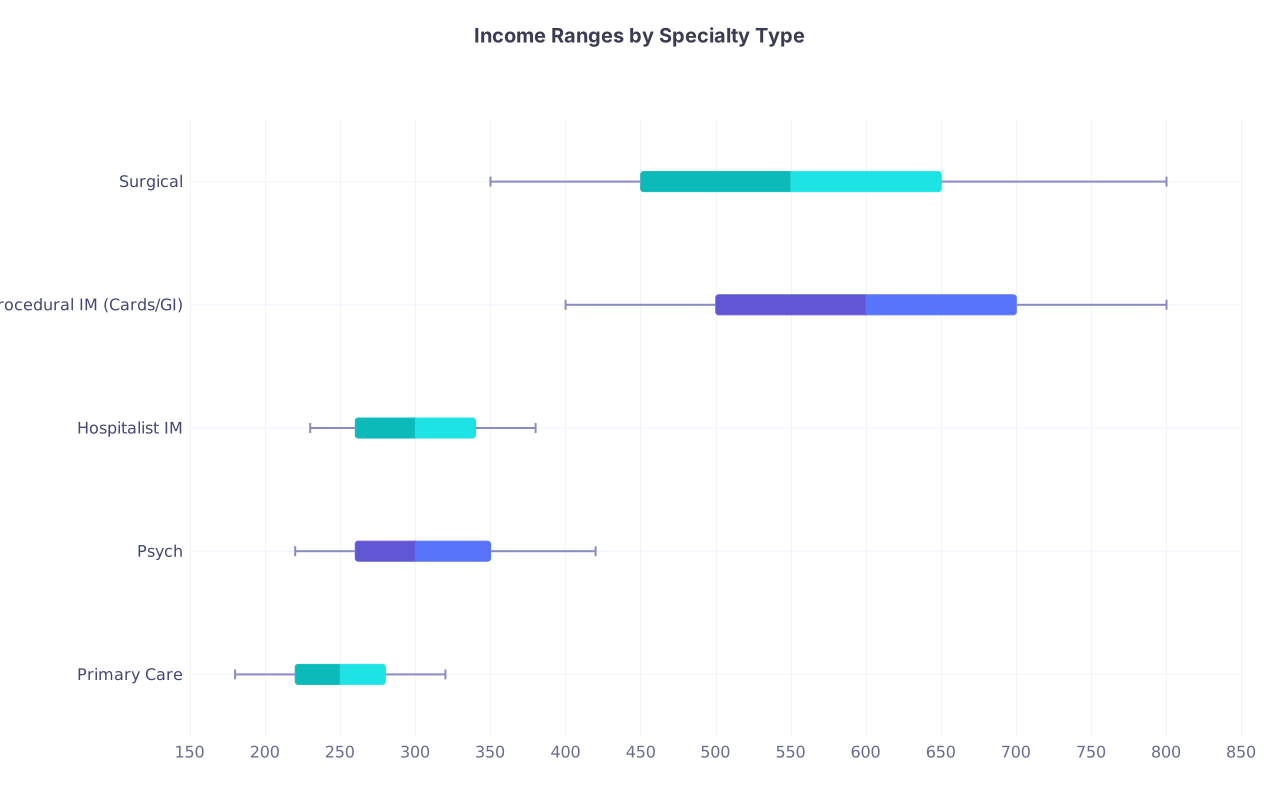
| Category | Min | Q1 | Median | Q3 | Max |
|---|---|---|---|---|---|
| Primary Care | 180 | 220 | 250 | 280 | 320 |
| Psych | 220 | 260 | 300 | 350 | 420 |
| Hospitalist IM | 230 | 260 | 300 | 340 | 380 |
| Procedural IM (Cards/GI) | 400 | 500 | 600 | 700 | 800 |
| Surgical | 350 | 450 | 550 | 650 | 800 |
If you think you might want a higher-paying option but you’re drawn to a lower-paid field, do this:
- Keep your test scores as high as you can. That’s your long-term currency.
- Don’t tank your clinical grades in “non-interesting” rotations like surgery or radiology, even if you think you’ll never do them. Future-you might disagree.
- Build at least light exposure to a couple of higher-paying fields you find intriguing.
- When choosing residency:
- Favor programs that are respected, pass boards well, and have other grads matching into solid fellowships.
- Ask directly: “Do your residents ever switch specialties or get strong fellowships? Can I talk to one?”
That keeps the door open without committing you to a life you might hate.
The Money Question: Is It Even Worth Pivoting?
Hard truth: Sometimes switching isn’t financially rational, even if it’s emotionally tempting.
Consider:
- You lose income during retraining (2–5 years).
- You may move to a less desirable location to match.
- Your loans keep accruing.
- You might end up in a higher-paying field… and still miserable.
On the flip side, if you’re early enough (MS4, PGY-1), the math often does work in your favor over a 20–30 year career.
What I’ve seen:
- As a PGY-1 in a low-paid track with a good shot at a higher-paid one? A switch can make absolute sense.
- As a PGY-3 almost done, with a lined-up job and a family settled? Not always. Sometimes it’s smarter to:
- Negotiate hard.
- Shift practice type.
- Add procedures/niches.
- Layer on nonclinical or side income.
Bottom Line
Yes, you can pivot later from a low-paying specialty to a higher-paying one. But you shouldn’t treat that as your safety net.
Use this instead:
- Early in the game: Keep your options open and apply thoughtfully.
- In residency: If you’re truly misaligned, move early, with a clear story and strong support.
- Later on: Squeeze more out of your current specialty through fellowships, niches, leadership, and nonclinical work before nuking your career path.
Action step for today:
Pull up your current CV or ERAS application. Add a section called “Future Options.” List 2–3 specialties or fellowships you might want in a perfect world. Then, for each one, write down one concrete step you could take in the next 30 days (a rotation, a coffee with an attending, a shadow day, a research project) to keep that door cracked open.
Do that, and you’ll stop feeling trapped—and start playing this game like you have leverage. Because you do.
FAQ (Exactly 7 Questions)
1. Is it realistic to go from family medicine to dermatology later?
Technically possible, practically rare. Derm is brutally competitive. To pull that off, you’d need:
- Top-tier scores
- Strong derm research or connections
- Willingness to start over and likely move For most FM residents, a more realistic “pay upgrade” path is EM, anesthesia, pain, or admin roles, not derm.
2. How late is “too late” to switch specialties for money reasons?
There’s no hard cutoff, but:
- After PGY-2, your odds of a big specialty jump drop.
- After you’ve been an attending a few years, you can still switch, but most people won’t because of family, mortgage, and income disruption. At that point, I’d look first at fellowships, niches, or nonclinical roles.
3. Will programs judge me for wanting to switch to a better-paying specialty?
They’ll judge you for saying that out loud. Your story should be about:
- Clinical fit
- Skills match
- Experiences that shifted your understanding
You and your financial planner can know the money is part of it. Program directors just don’t want someone who looks like they’re chasing cash and might bounce again.
4. Can I use my previous residency years to shorten my new residency?
Sometimes, but don’t count on it. A few programs might grant advanced standing (e.g., IM time toward anesthesia), but many will want you to complete the full training to meet board requirements and ensure competency. Best-case, you might shave off a year. Worst-case, you restart.
5. Will switching specialties hurt me financially in the long run?
Short term: absolutely—it costs you time and income. Long term:
- If you switch early and land in a significantly better-compensated field you enjoy, it can improve your lifetime earnings.
- If you switch late or into a marginally higher-paying field, the math often doesn’t favor it, and you may just reset your burnout clock.
6. I like my low-paying specialty but hate the pay. Am I just stuck?
No. You can:
- Move to a higher-paying practice setting (private vs academic, urban vs rural, employed vs independent).
- Add skills/procedures that justify better compensation.
- Take on leadership or medical director roles.
- Add side or nonclinical income streams.
Plenty of “low-paying” specialists are doing very well by being strategic.
7. What’s the single best thing I can do now if I might want to pivot later?
Get a mentor in a higher-paying specialty you might be interested in. Not just a random attending—someone willing to:
- Be honest about their field
- Let you shadow or work with them
- Potentially write you a strong letter
That relationship opens doors, clarifies reality, and gives you a path instead of a fantasy.


