
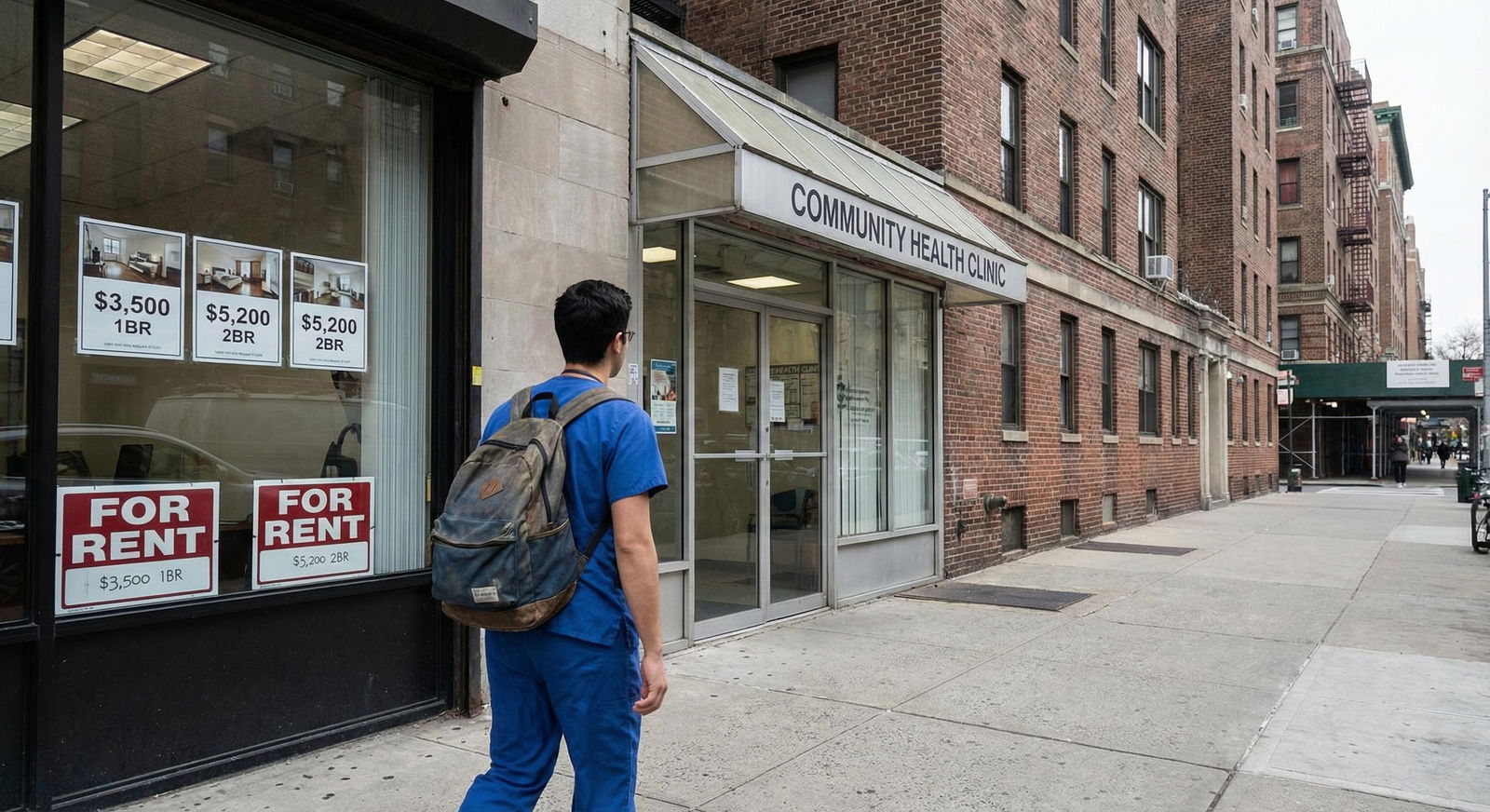
Location matters more for low‑paying specialties than almost anything else you’re obsessing over. In some cities, a pediatrician can feel middle‑class comfortable. In others, the same pediatrician is one bad month away from credit card debt.
Let me give you the blunt version up front:
If you’re going into a lowest‑paid specialty and you ignore geography, you’re volunteering to work harder for less real money.
This applies to both residency and your attending job. But the “trap” looks a little different at each stage.
We’re talking about specialties like:
- Pediatrics
- Family medicine
- General internal medicine (primary care)
- Psychiatry (yes, even psych—outside niche markets)
- Geriatrics, endocrinology, rheumatology, ID, etc.
Not derm. Not ortho. Not gas. You don’t have the income margin to just “figure it out later” if you pick a brutally expensive or saturated market.
Let’s break this down in a way that actually helps you make decisions.
1. The Core Truth: Nominal Salary Is a Lie
You don’t live on your salary. You live on your disposable income after:
- Taxes
- Housing
- Loan payments
- Childcare
- Transportation
Here’s where low‑paying specialties get burned: they take a job in a “prestige” city, look at a $230K pediatrics offer and think, “Nice, solid money.”
Then they realize a basic 2‑bedroom rental is $3,500/month and daycare is $2,200/month per kid.
To make this less abstract:
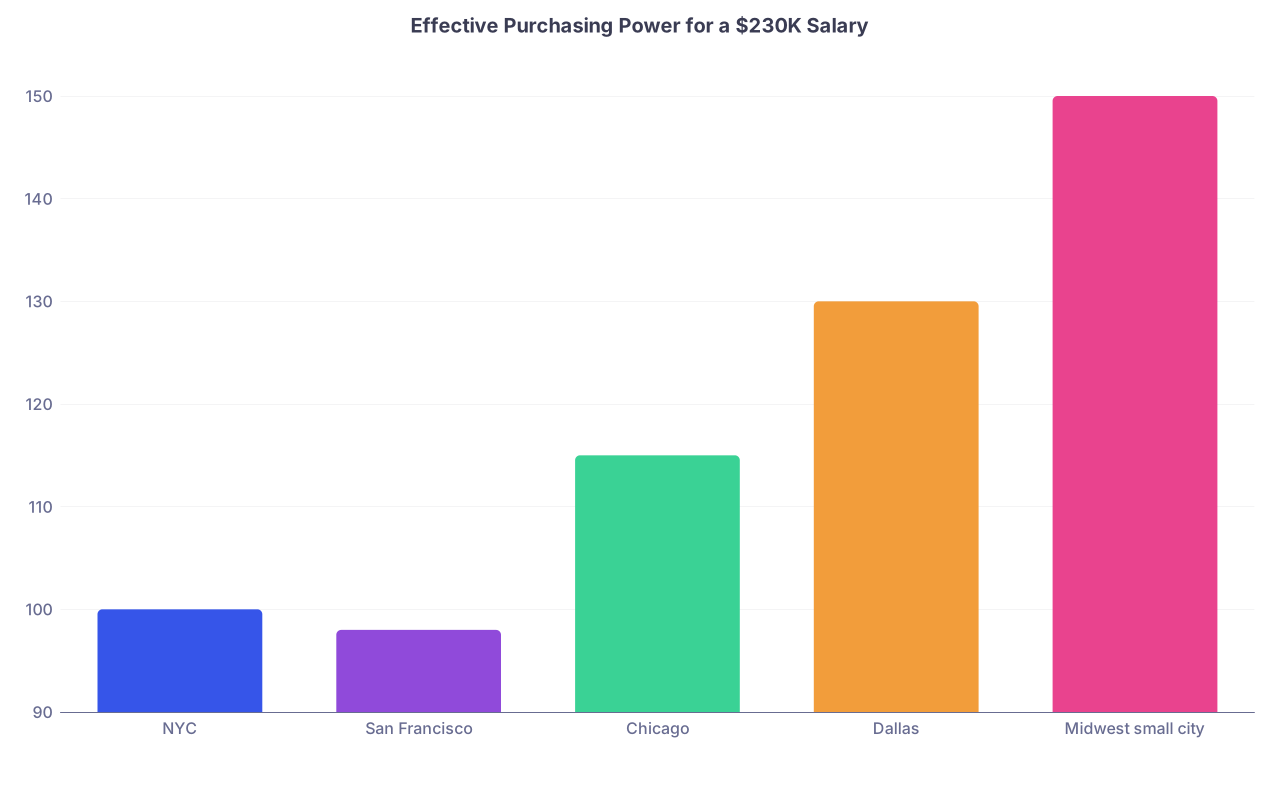
| Category | Value |
|---|---|
| NYC | 100 |
| San Francisco | 98 |
| Chicago | 115 |
| Dallas | 130 |
| Midwest small city | 150 |
Interpretation: $230K in a small Midwestern city might feel like 40–50% more take‑home “freedom” than the same salary in NYC/SF when you factor rent, taxes, and daily living costs.
For low‑paid fields, that gap is everything.
2. Residency vs Attending: Location Matters Differently
You shouldn’t weigh residency location and attending job location the same way.
During Residency (Low Income, Short Time Horizon)
You’re making maybe $60–75K in most programs. You’re not saving much. You’re not paying down loans meaningfully. You are surviving.
Here’s how location realistically affects you in residency:
Cost of living
- High‑COL city: You’re likely sharing an apartment, maybe side‑giging, and you’ll finish with slightly more debt or less savings.
- Low‑COL city: You may actually be able to save a bit, avoid credit card debt, buy a modest used car without panic.
Support system
A supportive partner, nearby family, and short commute in a cheaper region can matter more to your mental health than a “name brand” coastal program.Training quality and match options
I’ve seen outstanding family med and peds training in unglamorous places: University of New Mexico FM, University of Iowa Peds, Wisconsin, Minnesota, etc.
The myth that you must be in Boston/NYC/SF for “good training” in primary care is just that—a myth.
During residency, I’d say:
- Location is moderately important for low‑pay specialties.
- You can tolerate a rough COL for 3 years if you must. You cannot fix a bad program culture or miserable call schedule by choosing a nicer city.
As an Attending (Real Income, Long Time Horizon)
This is where location goes from background factor to kingmaker.
You’re now looking at:
- 20–30 years in a region
- Partnership vs employed models
- Kids’ schools, spouse jobs, commutes, call expectations, home prices
One bad location decision can cost you millions over your career in both direct earnings and cost of living.
3. City Type vs Income: How Much Does It Shift Your Life?
Let’s make this concrete. Assume you’re a new attending in one of the “low‑paid” specialties, realistically looking at $210–260K to start, depending on field and practice.
Here’s a rough framework for how location shifts your real life on that income.
| Region Type | Typical COL Impact | Real Lifestyle on $230K |
|---|---|---|
| Coastal HCOL (NYC, SF) | Very high | Tight, rent heavy, delayed family/house |
| Big City (Chicago, Seattle) | High | Comfortable renting, home is a stretch |
| Sunbelt metro (Dallas, Phoenix) | Moderate | Solid middle class, home achievable |
| Mid‑size Midwest/South | Low | Very comfortable, house + some savings |
| Rural / Small town | Very low | House, savings, maybe spouse at home |
Add loan repayment, and the difference is brutal:
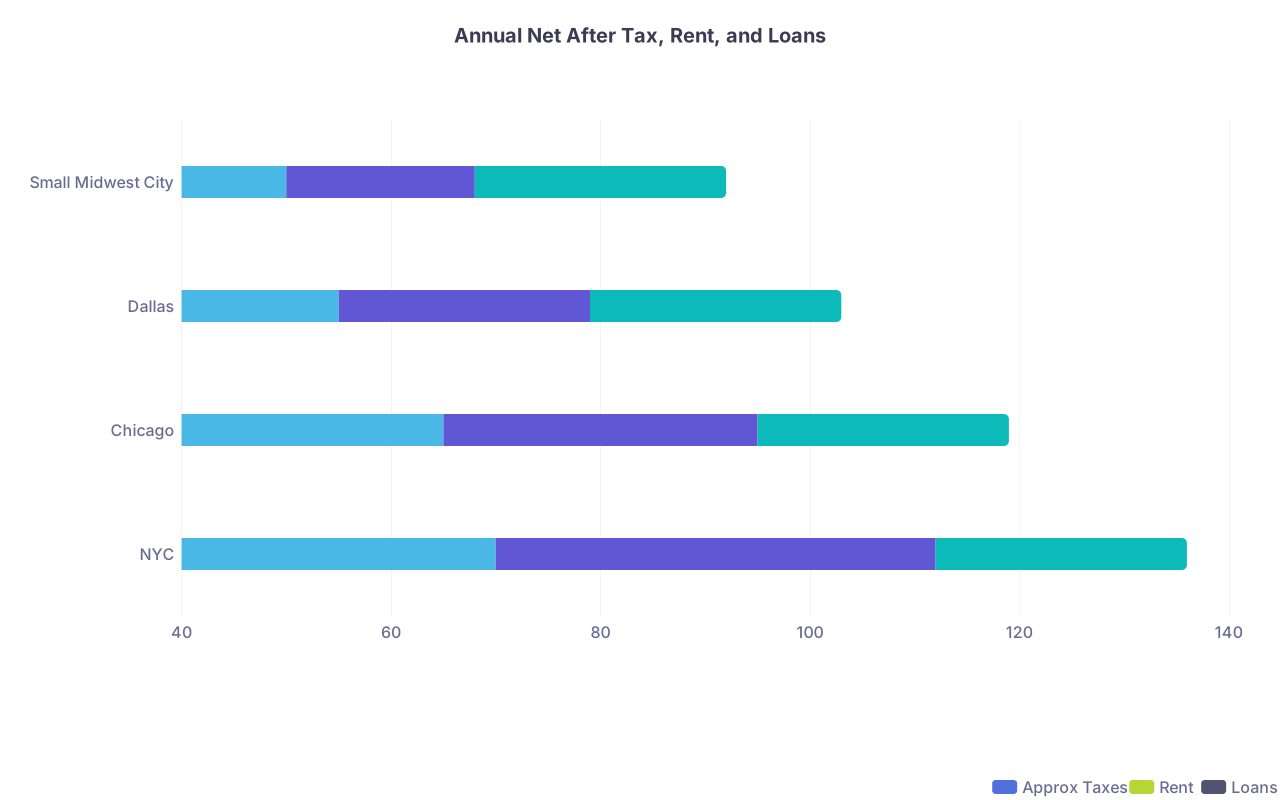
| Category | Approx Taxes | Rent | Loans |
|---|---|---|---|
| NYC | 70 | 42 | 24 |
| Chicago | 65 | 30 | 24 |
| Dallas | 55 | 24 | 24 |
| Small Midwest City | 50 | 18 | 24 |
On $230K, your “free” money after those three in:
- NYC: ~ $94K gone before you eat
- Small Midwest city: closer to $92K total for those categories, but house may replace rent at lower cost, and property builds equity
You feel that every month.
4. Specialty‑Specific Location Realities
Not every low‑pay specialty behaves the same way across geography. Some are more portable. Some are very market‑sensitive.
Pediatrics
- Highly saturated in affluent coastal cities and academic hubs.
- Lower salaries in big academic centers; better compensation in smaller cities and rural areas, especially hospital‑employed positions.
- Private practice peds in wealthy suburbs can do fine, but you need volume and good payer mix.
Key pattern I’ve seen: Peds in Boston or the Bay Area often rent forever, delay having kids, and carry loans much longer than peers in the Midwest or South on the same nominal specialty.
Family Medicine
This is the most location‑sensitive field, period.
- In rural/smaller towns:
- You’re the backbone of care. Everyone wants you.
- Higher salaries, loan repayment offers, maybe bonuses, more autonomy.
- In major academic coastal centers:
- Lower pay, higher burnout risk, you’re competing with big health systems trying to hold down primary care costs.
If you pick FM and insist on only LA, SF, NYC, Boston, DC, Seattle—expect to feel underpaid and overworked unless you land in a very specific, well‑run group.
General Internal Medicine (Outpatient)
Hospitalists are a different story; I’m talking outpatient primary care IM.
- Urban academic practices: good colleagues, good medicine, mediocre pay, high panel pressure.
- Suburban or smaller city health systems: better pay, more leverage, often better work‑life balance.
IM is a bit less sensitive than FM, but the pattern holds: the coasts pay less relative to cost of living.
Psychiatry
Psych is weird because it has two parallel markets:
- Employed positions (hospitals, CMHCs, health systems)
- Private practice / cash pay / telepsych
Psychs can sometimes “cheat” location:
- Live in a lower‑cost area
- Run telepsych for higher‑paying markets or cash services
Still, in heavily desirable cities, employed psych jobs will usually underpay relative to your leverage. There are exceptions, but they’re not the norm.
5. How Much Should You Let Location Drive Your Choice?
You’re probably thinking: “So should I just chase money and move to a random rural town?”
No. Here’s the balanced version.
During Residency
I’d rank factors this way for low‑pay specialties:
- Program culture and training quality
- Reasonable cost of living (not necessarily rock‑bottom, but not catastrophic)
- Proximity to support system or partner needs
- Name/brand of city or institution
If you have to choose between:
- Fancy coastal program where you’ll be broke, miserable, and unsupported
- Solid regional program in a smaller city where you can breathe
For primary care, peds, psych, etc., I’d pick the smaller‑city program almost every time.
As an Attending
Now the ranking shifts:
- Total package: salary + COL + support + call + long‑term fit
- Spouse/partner career and family situation
- School systems / community fit if you have or want kids
- Glamour of the city
You do not need to chase maximum income. But you do need to avoid the “prestige city trap” where you accept being functionally poor on a physician salary just to say you live there.
6. A Simple Framework to Compare Offers
Here’s how I’d actually compare attending jobs if you’re in a low‑paid specialty.
Step 1: Normalize to After‑Tax, After‑Housing
Do this roughly. Don’t build a spreadsheet with 40 tabs. Back‑of‑the‑envelope is enough.
- Take base salary.
- Subtract approximate taxes (fed + state; there are plenty of quick online calculators).
- Estimate rent or mortgage + property tax.
Result: “What’s left after roof + Uncle Sam?”
Step 2: Overlay Loans and Childcare
- Monthly loan payment based on your plan (IDR vs aggressive payoff).
- Daycare or private school if relevant.
Now you know: “How much true monthly free cash do I have?”

| Step | Description |
|---|---|
| Step 1 | Job Offer |
| Step 2 | Calculate After Tax Income |
| Step 3 | Subtract Housing Cost |
| Step 4 | Subtract Loans and Childcare |
| Step 5 | Reconsider Offer or Location |
| Step 6 | Evaluate Non Financial Factors |
| Step 7 | Enough Free Cash? |
You’ll often find this punchline:
$230K in a low‑COL region can give you the same or better free cash than $280K in a high‑COL city.
Step 3: Ask the Right Non‑Financial Questions
Once offers clear the “not stupid financially” bar, then ask:
- Do I like the people I met?
- Is call sustainable?
- Can my partner work here?
- Can I see myself here 5–10 years?
That’s the order that keeps you out of trouble.
7. Where Location Matters Less (And Where It Matters a Lot)
There are some scenarios where location isn’t as critical, even for low‑paid specialties.
Location matters less when:
- You have minimal loans, strong family wealth, or a spouse with high earnings.
- You’re willing to dramatically change lifestyle expectations (no kids, no car, small apartment, etc.).
- You’re in psych or a field where you can do high‑value telehealth or niche work with geographic arbitrage.
Location matters more when:
- You have $250K+ in loans and no financial safety net.
- You want kids, a house, and a reasonable work schedule.
- Your spouse or partner has limited geographic mobility.
I’ve seen two peds attendings with identical debt loads have drastically different lives:
- One in Manhattan: renting forever, tiny apartment, two working parents, daycare bills that hurt, loans lingering.
- One in a mid‑size Southern city: bought a house, spouse part‑time by choice, loans attacked aggressively, vacations actually happen.
Same specialty. Different map. Very different life.
8. So… How Much Does Location Really Matter?
If I have to put numbers on it for low‑pay specialties:
- During residency: location is maybe 30–40% of the happiness equation. Program fit and culture still dominate.
- As an attending: location (COL + market + support system) is easily 60–70% of your long‑term financial comfort.
You can survive three years in a painful city for a good program. You cannot comfortably do 25 years in a financially suffocating scenario without it bleeding into every part of your life.

9. Practical Takeaways If You’re Aiming for a Low‑Paid Specialty
Here’s what I’d actually do in your position:
- Stop treating New York, San Francisco, Boston, DC, and LA as the default “success” locations. They’re often financial traps for primary care and peds.
- For residency, target solid, balanced programs in cities where you won’t be destitute. Training quality > zip code.
- For attending jobs, always adjust salary by cost of living before you get excited.
- Consider at least one smaller city or regional health system job in your search, even if you think you’re a big‑city person. See the numbers on paper.
- If you absolutely must be in a prestige city, accept that you’re trading away financial comfort for lifestyle/identity reasons. That’s fine—but do it consciously, not by accident.

FAQ: Location and Low‑Paying Specialties

Should I avoid high cost‑of‑living cities entirely if I’m going into pediatrics or family medicine?
Not necessarily, but you should go in with eyes wide open. If you have heavy loans and no outside financial support, I’d be very cautious about long‑term plans in ultra‑expensive markets unless the job is unusually well‑compensated or offers strong loan repayment. Do residency there if you love the program, then be willing to leave for a more sustainable attending job.Is it worth choosing a “weaker” residency program in a cheaper city to save money?
If the program is truly weaker—poor teaching, bad board pass rates, no support—no, that’s a bad trade. You want a solid program first. But between two good programs, I’d absolutely factor cost of living and support system. Being less financially stressed during residency compounds into better learning and fewer burnout risks.Can loan repayment or PSLF compensate for a high cost‑of‑living city?
Sometimes. If you’re working for a 501(c)(3) in a high‑COL city and committed to PSLF for 10 years, that can heavily tilt the math. Same with state or federal loan repayment in underserved areas. But even then, rent and childcare do not magically become cheap. You still want to run real numbers, not just assume “PSLF will fix it.”Are rural or small‑town jobs always better for low‑paid specialties?
They’re often better financially—higher salaries, lower housing costs, loan repayment. But “better” depends on your priorities. If you or your partner will be miserable in a small town, that’s not sustainable. The right move is to at least interview at a couple of well‑run small or mid‑size places to see what’s possible.How do I compare offers from different cities without overcomplicating it?
Do a quick three‑step check: estimate take‑home pay, subtract realistic housing, subtract loans and childcare. Whatever’s left is your “life money.” Then compare that across offers. You’ll quickly see that a smaller nominal salary in a cheaper city can beat a higher one in a prestige market by thousands per month.Does location affect fellowship chances for low‑pay specialties like ID, rheum, or endo?
To some extent, yes—big academic centers in major cities often have more fellowship programs and more research. But plenty of residents match into these fellowships from strong regional programs. You don’t need to chain yourself to SF or Boston solely for fellowship prospects, especially if your program elsewhere has good mentorship and letters.If I love a high‑COL city, is there any smart way to make it work long‑term in a low‑paid specialty?
There are a few strategies: live smaller than your peers (rent instead of buy, no luxury building), use PSLF or aggressive loan repayment, take on some higher‑pay side work (urgent care, telemed, niche clinics), and be extremely intentional with spending. Also consider compromise markets: not Manhattan, but nearby New Jersey or Westchester; not SF proper, but a lower‑cost Bay Area suburb. The fantasy is “I’ll live like a high‑income doctor in NYC on a low‑paid specialty salary.” The reality is “I can make this work if I accept living below the lifestyle stereotype.”
Key points to leave with:
- For low‑paying specialties, location can easily swing your real financial life by 30–50% on the same salary. Ignore that and you will feel it.
- Residency: choose program quality and culture first, but don’t be blind to cost of living.
- Attending life: compare jobs by after‑tax, after‑housing, after‑loans money—not just salary—and be brutally honest about whether the location supports the life you actually want.


