

The mistake most low-paid specialists make is obsessing over salary and ignoring the contract terms that will quietly trap them for years.
If you’re in one of the lowest paid specialties—pediatrics, family med, psych (in certain regions), geriatrics, PM&R, ID, hospitalist work in saturated markets—your leverage is already limited. The wrong contract can turn “lower income” into “financial handcuffs plus burnout.”
Here’s what actually matters most in those low-paying specialist jobs—and how to read an offer like someone who’s been burned once and won’t be burned again.
1. Start Here: The Four Contract Terms That Matter More Than Salary
If you remember nothing else, remember this: for low-paying specialties, these four clauses usually matter more than the base pay number.
- Termination clause (without cause)
- Non-compete / restrictive covenant
- Call, hours, and RVU/bonus structure
- Tail coverage and malpractice structure
Salary is loud. These are quiet. But these are the things that determine whether you can leave, move, breathe, or rebuild if the job is bad.
Let’s break them down.
2. Termination: Your Exit Plan Is More Important Than Your Signing Bonus
You do not need a perfect job. You need an exit if it’s terrible. That’s what the termination clause is.
What you want (non-negotiable baseline)
You need a “without cause” termination clause that lets either party end the agreement with notice. Typical ranges:
| Notice Period | How It Feels | My Take |
|---|---|---|
| 30 days | Flexible | Great for you, less for employer |
| 60 days | Normal | Reasonable compromise |
| 90 days | Common | Acceptable but not ideal |
| 180+ days | Restrictive | Bad for you, avoid if possible |
Here’s why this matters: if you’re a pediatrician making $190K in an overstaffed hospital group, and administration changes, they can make your life miserable without technically breaching the contract. Your protection is the ability to say “I’m out in 60–90 days.”
Red flags:
- No without-cause termination at all
- Asymmetric notice (you need 180 days, they need 30)
- Financial penalties or repayment of entire signing bonus if you use without-cause termination
A fair structure:
- Either side can terminate without cause
- 60–90 days written notice
- Pro-rated signing bonus repayment only if you leave within a specific early period (e.g., first 12–24 months), not forever
If they refuse any without-cause termination clause? That’s a walk-away moment. Especially in low-paying fields where jobs are more interchangeable.
3. Non-Compete: The Clause That Can Cost You Six Figures Quietly
Low-paid specialists often sign the most aggressive non-competes because they’re told, “Everyone signs this.” No. Everyone suffers from this.
You care about three numbers:
- Radius (miles)
- Duration (months/years)
- Scope (what type of work is restricted)
Reasonable vs insane
For primary care, psych, peds, geriatrics, PM&R, hospitalist work:
- Radius: 5–15 miles in dense metro, up to 25 miles in rural areas may still be reasonable
- Duration: 6–12 months. More than 2 years is overkill and predatory.
- Scope: Only your specific specialty, not “any clinical practice” or “any work for any competitor.”
A classic nightmare I’ve seen:
Pediatrician in a midsized city. Non-compete: 25 miles, 2 years, ANY outpatient pediatric care. That essentially meant uprooting her entire family or switching careers for two years when things got toxic. That 30K signing bonus wasn’t worth the two years of lost income or relocation drama.
For low-paying specialties, non-competes hurt more because you don’t have high margins to absorb gaps in work.
What to push for:
- Narrow scope (“outpatient child neurology” vs “any neurology” or “any patient care”)
- Shorter duration (12 months max)
- Reasonable geography defined by actual clinic locations, not vague “market area”
If you’re in a small city with only two major employers and one has a brutal non-compete, that should impact your decision more than a 10–20K salary swing.
4. Compensation Structure: It’s Not Just the Number, It’s the Rules
In low-paying specialties, the structure of pay often matters more than the exact total. Because you have less wiggle room if things underperform.
Common structures
- Straight salary
- Salary + RVU bonus
- RVU-only (avoid this early in your career)
- Hourly (common for psych, hospitalist, urgent care)
- Day-rate with incentives
Where people get burned: RVU and “productivity” clauses that look fine on paper but are not realistic on the ground.
Key questions to ask and get in writing:
- What RVU or revenue target corresponds to “expected” performance?
- What are the actual average RVUs of current physicians in that role?
- Is there a cap on bonus? (some practices cap upside)
- How many sessions/clinic slots per week? How many slots per half-day?
- Who controls scheduling and template? Admin or you?
I’ve seen outpatient psychiatrists promised “you can easily hit 9,000 RVUs for a big bonus” while the clinic double-booked new patients, had no-shows, and used 60-minute intake templates. Totally incompatible with the numbers.
You want:
- Transparent RVU targets
- Historical data from your specific clinic or team
- Clarity on “ramp-up” expectations in the first year (guaranteed base before productivity kicks in is ideal)
If they pay significantly below MGMA median for your specialty and have an aggressive bonus structure depending on RVUs or patient volume, that’s a red flag. They’re offloading risk onto you without sharing much upside.
5. Call, Workload, and “Other Duties”: The Hidden Pay Cut
In low-paying specialties, the main way you get exploited isn’t the salary. It’s the invisible unpaid work.
You’re looking for these in the contract:
- Call responsibilities
- Weekend/holiday coverage
- Inpatient vs outpatient split
- Admin time
- Teaching/committee obligations
- Telehealth expectations
Some contracts bury this under “other duties as assigned.” That phrase is how people end up:
- Doing extra nursing home rounds
- Covering an extra hospital 30 minutes away
- Leading committees, QI, or “service line” work with no compensation
- Becoming the “behavioral health lead” or “EMR physician champion” unpaid
You want specifics in writing:
- Number of clinic sessions per week (e.g., 8 half-days)
- How many patient-facing hours vs admin hours
- Call frequency and whether it’s paid
- Is call in-house, from home, or tele only?
- Maximum number of weekends/holidays per year
For hospitalist, psych, and palliative especially, clarify:
- Average census
- APP support
- Night coverage model
- How often you’re asked to cross-cover other services or sites
Low paying plus high call plus high census = burnout special.
6. Malpractice & Tail Coverage: The Expense That Can Ambush You When You Leave
Most trainees don’t even know what tail coverage is. Then they leave a job and get hit with a $50,000 bill.
Here’s the short version:
- Claims-made coverage: Usually needs tail coverage when you leave.
- Occurrence coverage: No tail needed.
Tail coverage pays for claims filed after you leave for work done while you were there. It’s especially relevant in peds, psych, OB, and any long-tail risk specialty.
You need the contract to say who pays for tail.
In low-paying specialties, paying your own tail on a short, bad job can wipe out most of what you earned.
Better structures:
- Employer fully pays tail after a certain tenure (e.g., 2–3 years)
- Employer and physician share cost based on length of service
- Tail waived if terminated without cause by employer
What’s not acceptable in many low-paying roles:
- You pay 100% of tail no matter what, even if they fire you without cause after 10 months
If they insist on that, and salary is mediocre? That’s a strong negative.
7. Loan Repayment, Bonuses, and “Golden Handcuffs”
For some of the lowest paid specialties—peds, family med, psych, ID, geriatrics—loan repayment and bonuses are the bait. The hook is the payback obligation and timeframe.
Common traps:
- Large signing bonus (25–75K) with full repayment owed if you leave before the end of a 3–5 year term, even if you leave at year 4.9.
- “Student loan repayment” that is really just taxable bonus money trickled out annually with strict clawback language.
- Multiple overlapping commitments (signing bonus, relocation, loan repayment) that stack obligations.
You want:
- Repayment obligations pro-rated over time
- Clear conditions for when repayment is not owed (e.g., employer breach, relocation due to spouse job, medical reasons)
- Loan repayment spelled out: who gets paid (you or lender), schedule, and tax treatment
Remember: the more of your compensation is tied up in retention gimmicks, the more trapped you are if the job is toxic.
8. Academic vs Private vs Hospital Employed: How “Low-Paying” Plays Out
Some low-paying specialties accept lower salary in exchange for lifestyle, prestige, or stability. That’s fine—if the contract aligns with reality.
Here’s a quick comparison:
| Job Type | Pros | Key Contract Risks |
|---|---|---|
| Academic | Prestige, teaching, stability | Heavy unpaid admin/teaching |
| Hospital-employed | Benefits, resources | RVU pressure, non-compete |
| Private practice | Some upside, autonomy | Buy-in terms, opaque money |
| FQHC/Clinic | Loan repayment, mission | Low salary, high workload |
Academic contracts:
- Watch for vague language about “scholarly activity” and “service” that can eat nights and weekends for no extra pay.
- Promotion criteria often not in the contract; get expectations directly from someone already promoted.
Hospital-employed:
- Typically better benefits and malpractice coverage.
- Often stronger non-competes and RVU targets.
Private practice:
- Beware of buy-in promises that aren’t in writing.
- Get clear accounting on how ancillaries, ancillaries, and partnership tracks actually pay out.
FQHC / community clinics:
- Great for loan repayment, often poor on salary.
- Clarify patient load, admin support, and expectations around after-hours care and call.
9. Practical Contract Review Checklist (Use This Before You Sign)
You want to be methodical. Here’s a streamlined checklist for low-paying specialties:
- Exit
- Do I have a without-cause termination clause?
- Is notice period reasonable (60–90 days)?
- Non-compete
- Radius, duration, scope all clearly defined and reasonable?
- If I had to leave, could I realistically work nearby?
- Compensation
- Is base salary at least in the ballpark of MGMA median for my specialty & region?
- Are RVU or productivity targets realistic based on actual clinic data?
- Any caps on incentive pay?
- Workload
- Hours, call, weekends, admin time all defined in writing?
- Any “other duties as assigned” that scare me?
- Malpractice
- Claims-made or occurrence?
- Who pays for tail? Under what conditions?
- Retention money
- Are signing bonuses and loan repayment pro-rated?
- How long am I effectively locked in?
- Legal review
- Has a physician-side attorney reviewed this? (Particularly non-compete and tail clauses.)
This is not overkill. This is what keeps you from waking up three years in, broke, resentful, and boxed into a city you never liked.
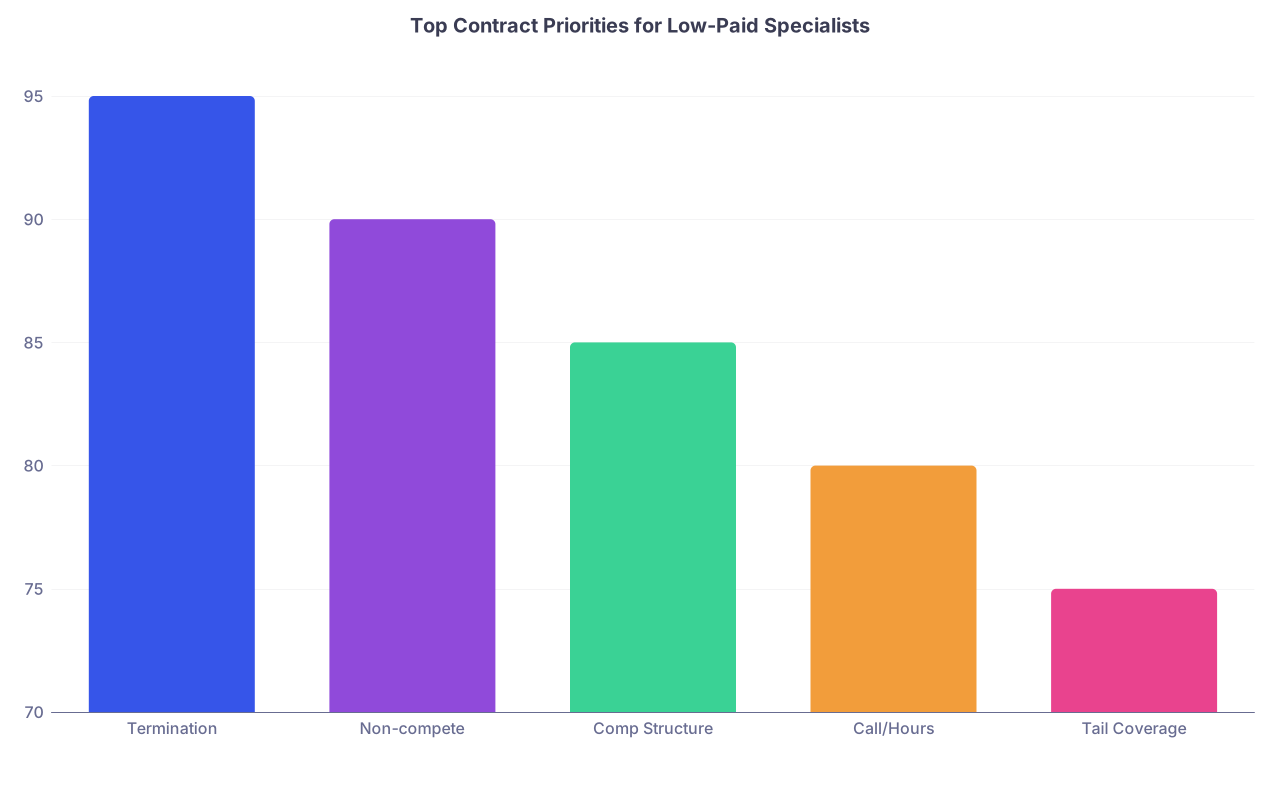
| Category | Value |
|---|---|
| Termination | 95 |
| Non-compete | 90 |
| Comp Structure | 85 |
| Call/Hours | 80 |
| Tail Coverage | 75 |

| Step | Description |
|---|---|
| Step 1 | Receive Offer |
| Step 2 | Check Exit Terms |
| Step 3 | Review Non-compete |
| Step 4 | Analyze Compensation Rules |
| Step 5 | Assess Workload and Call |
| Step 6 | Confirm Malpractice and Tail |
| Step 7 | Negotiate Details |
| Step 8 | Decline or Seek Changes |
| Step 9 | Attorney Review |
| Step 10 | Sign Contract |
| Step 11 | Still Comfortable? |
FAQ: Contract Terms in Low-Paying Specialist Jobs
1. I’m getting a below-median salary but great loan repayment. Is that ever worth it?
Sometimes yes. If the loan repayment is real (paid directly to loans or clearly to you), pro-rated, and not paired with a predatory non-compete or crazy workload, it can offset a lower base. But if you’re trading 30K less in salary for 15K/year in loan repayment with a brutal 3–5 year clawback, the math often does not work in your favor.
2. How bad is a 2-year, 25-mile non-compete for outpatient primary care?
In a major metro, that can be a career-killer. In a tiny rural town with no other employer within 50 miles, it may be less relevant. The question is: if the job goes sour, could you reasonably stay in the area and work? If not, that non-compete is extremely costly, especially for lower-paid fields.
3. Should I ever accept RVU-only compensation as a new grad in a low-paying specialty?
Almost never. You don’t control referrals, scheduling, or patient flow as a new doc. RVU-only is gambling with your ability to pay rent and loans, and it stacks the risk entirely on you. At minimum, you want a guaranteed base for the first 1–2 years while your panel grows.
4. My contract is vague about call. Is that normal?
Vague means they can expand your call without changing your pay. That’s not normal; it’s convenient for them. For hospitalist, psych, peds, and IM especially, you want call to be specified: frequency, type, and whether it’s compensated separately. If they resist clarity, assume worst-case.
5. How do I know if my tail coverage cost is reasonable if I’m expected to pay it?
Ask for a written estimate from their malpractice carrier for your specialty, limits, and region. For many outpatient low-risk specialties, tail might be low-five figures. For others, it’s painful. If they refuse to provide estimates, that’s suspicious. Factor that cost into your “real” compensation calculation.
6. Is it worth paying a lawyer to review my contract if I’m only making, say, $200K?
Yes. This is a rounding error compared to the cost of a bad non-compete or tail clause. A physician contract attorney usually costs a fraction of one paycheck and can save you tens of thousands long-term. Especially in low-paying specialties where you can’t afford big mistakes, it’s not optional.
7. What should I walk away from immediately, no matter the signing bonus?
Three big ones:
- No without-cause termination clause.
- You pay 100% of tail coverage even if they fire you without cause early.
- Long, broad non-compete that effectively blocks you from working in your specialty anywhere near the city.
If all three are present and the salary is also mediocre? That’s not a job. That’s a trap.
Key points: In low-paying specialties, your contract’s exit terms, non-compete, and malpractice details will matter more to your long-term freedom than a slightly higher base salary. Get specifics in writing, assume vague language will be used against you, and always buy an hour of an experienced physician contract lawyer before you sign anything.


