

The highest paying specialties are often lifestyle disasters. The smart money is in the “boring,” lower-paid fields where your life actually belongs to you.
Here’s the answer you actually want: if you care about sanity, family, hobbies, and not waking up at 3 a.m. to admit a crashing GI bleed for the rest of your career, you should be looking hard at a few specific “low-paying” specialties that punch way above their weight in lifestyle.
This is not a generic “follow your passion” speech. This is a tradeoff analysis.
The Core Tradeoff: Money vs. Control
You are trading:
- A few hundred thousand dollars per year in potential income
for - Your time, your sleep, your relationships, and your long‑term health
If that sounds dramatic, talk to a 52‑year‑old surgeon who has been on call every 3rd night for 20 years.
Here’s the pattern I’ve seen:
- Ultra‑high pay: neurosurgery, ortho, IR, GI, cards
Great money, brutal call, high burnout, constant pager anxiety. - Mid‑pay: hospital‑based cognitive fields (IM, EM, anesthesia)
Pay is decent, lifestyle varies wildly by practice setting. - Lower‑pay: primary care, pediatrics, psychiatry, PM&R, pathology, some outpatient subspecialties
“Worst” pay on paper, but enormous ability to design a life.
You’re reading this because you’re smart enough to realize that top‑line compensation doesn’t equal happiness.
Let’s rank specialties by best lifestyle return per dollar sacrificed.
Quick Comparison: Lifestyle vs Pay Tradeoff
| Specialty | Typical Pay Tier* | Lifestyle Control | Call Burden | Patient Acuity |
|---|---|---|---|---|
| Psychiatry | Low–Mid | Excellent | Low | Low–Moderate |
| PM&R | Low–Mid | Excellent | Low | Low–Moderate |
| Outpatient Peds | Low | Very Good | Low–Moderate | Low |
| Outpatient FM | Low | Good–Very Good | Practice-dependent | Low–Moderate |
| Pathology | Mid | Very Good | Low | Low |
| Outpatient Neurology | Mid | Good–Very Good | Moderate | Moderate |
*Relative to other specialties, not including ultra‑high outliers or extreme productivity models.
1. Psychiatry: The Lifestyle King (if you set it up right)
Psychiatry is the obvious answer that many students still underestimate.
Why it wins on lifestyle:
- Call is minimal or nonexistent in many outpatient jobs.
- You can do 100% outpatient, no nights, no weekends.
- Telepsychiatry is real and scalable: you can literally see patients from home.
- Flexible FTE: 0.6–0.8 FTE roles are common without career suicide.
Typical tradeoff:
- Pay is often in the $250k–$350k range in many markets as an attending, with higher potential in underserved or rural areas, or in high-volume private practice.
- You are dealing with chronic conditions, difficult social situations, and sometimes emotionally heavy cases. Burnout here is emotional, not “I did 28 hours in the OR.”
Best setups:
- Outpatient group practice or private practice with:
- 30–60 minute follow‑ups, not 15 minutes
- Clear boundaries: no panel of 50 patients texting you at midnight
- Limited or no inpatient call if you hate that environment
Red flags:
- Community jobs promising “great pay” with:
- High no‑show rates
- Unrealistic productivity targets (20+ patients/day, mostly med checks)
- Heavy mandatory inpatient call without backup
If you want the purest work–life balance and can tolerate the psych patient population, psychiatry is probably the best lifestyle tradeoff in modern medicine.
2. PM&R: Underrated Blend of Medicine, Procedures, and Sanity
Physical Medicine & Rehabilitation (PM&R) is the quiet winner in a lot of “best lifestyle” conversations among people who actually know what it is.
Why it’s strong:
- Many practice models are daytime clinic + scheduled procedures.
- Call is often light and from home, or nonexistent in outpatient‑only practices.
- You work with chronic conditions more than crashing emergencies.
- You can carve out procedure-heavy niches: EMGs, spasticity injections, pain procedures (depending on training and market).
Lifestyle pros:
- Clinic hours are usually predictable.
- Multidisciplinary team environment: PT, OT, speech, etc.
- Good for people who like function, long‑term patient relationships, and team‑based care.
Tradeoffs:
- Lower pay than ortho, pain, or procedural cardiology, but often competitive with general IM or psych depending on region.
- Some tracks (e.g., interventional spine/pain) can drift into higher-hours, higher-stress territory if you chase RVUs aggressively.
Best lifestyle setups:
- Outpatient neurorehab, MSK rehab, or general PM&R clinics
- Academic PM&R with predictable daytime consults and minimal nights
- VA PM&R roles (very popular for stable hours and benefits)
If you like MSK, neuro, and procedures but don’t want the ortho or neurosurgery lifestyle, PM&R is a very rational tradeoff.
3. Outpatient Pediatrics: Low Pay, High Life Satisfaction
Pediatrics is near the bottom of the pay scale. No point sugar‑coating that.
But. Many pediatricians are surprisingly happy.
Why:
- Kids are generally resilient and fun to work with.
- Outpatient-only peds can have:
- Minimal inpatient responsibilities
- Predictable daytime schedule
- Limited call (mostly phone, triage nurse-buffered)
The tradeoff is clear:
- Compensation in many markets is $180k–$250k for general outpatient peds. You will not be the highest earner in your friend group.
- But:
- Low acuity most days (well-child checks, vaccines, ADHD, common infections).
- Strong sense of meaning and continuity with families.
- Good compatibility with part‑time work, especially for physicians balancing family responsibilities.
Watch out for:
- Practices with:
- Heavy call burden for low pay
- Tons of weekend and evening urgent care coverage
- Overloaded schedules: 25–30+ patients/day with no catch-up time
The pediatrics lifestyle is only “good” if your practice is civilized. That’s the key.
4. Outpatient Family Medicine: The Most Flexible, If You’re Picky
Family medicine is brutally variable. I’ve seen:
- FM doctors working 50–60 hours/week, drowning in inbox messages, earning less than hospitalists.
- FM doctors working 3–4 days/week, outpatient only, zero nights or weekends, with more free time than almost any specialist.
Why FM is powerful:
- Breadth gives you options:
- Pure outpatient adult + peds
- Women’s health focus
- Urgent care
- Sports medicine
- Geriatrics
- You can pivot: from full‑scope inpatient/outpatient to cushy outpatient-only clinic over your career.
Lifestyle positives:
- Outpatient FM with:
- 4‑day workweeks
- Limited or no inpatient rounding
- Shared call, often phone only is one of the best lifestyle-per-dollar deals in medicine.
Tradeoffs:
- Average pay is modest. Think $200k–$260k in many settings, higher with rural incentives or high-RVU models.
- Cognitive load is high. You’re the dumping ground for “no one knows what to do with this”.
The trick in FM:
- Avoid:
- Toxic RVU mills with 22–26 patients/day every day
- Systems that treat you like an urgent care factory
- Target:
- Integrated health systems that cap panel sizes
- Direct primary care (DPC) models where you control your hours and panel
- 0.8–0.9 FTE or 4‑day schedule arrangements
Done correctly, FM can give you nearly psych-tier control with slightly more variety and slightly more chaos.
5. Pathology: High Control, Little Glamour
Pathology is nature’s filter for people who truly don’t need patient-facing work.
Lifestyle upside:
- Highly controllable hours in many practice settings.
- Hospital-based but usually not crashing to codes.
- Work is intellectually interesting if you like pattern recognition, diagnostics, and microscopic detail.
- Very little patient drama. Your interactions are mostly with clinicians.
Tradeoffs:
- Pay is mid-range. Often similar to or better than IM/outpatient subspecialties but less than procedural subs.
- Your job market can be more geographically constrained in some regions.
- You need to be comfortable with a role that’s “invisible” to most patients and even to some colleagues.
Best setups:
- Large group pathology practices with shared call and decent staffing.
- Academic centers where you can mix sign‑out, teaching, and some niche focus (heme path, derm path, etc.)
Pathology is a fantastic lifestyle tradeoff if you’re honest with yourself that you do not need the classic “doctor–patient” interaction to feel fulfilled.
6. Outpatient Neurology: Decent Pay, Manageable Life
Neurology is not low pay compared to peds or FM, but it’s lower than procedural heavy hitters and still offers a reasonable lifestyle in the right setting.
Upsides:
- Mostly outpatient clinics with scheduled patients.
- Interesting cognitive work: stroke prevention, epilepsy, movement disorders, MS.
- Subspecialty options with predictable schedules (headache, movement, neuromuscular, MS clinics).
Tradeoffs:
- Call can be rough in some places (stroke codes, consults), but pure outpatient or subspecialty clinic roles can dodge most of that.
- Patients can be complex, chronic, and frustrating — lots of disability, limited “cures”.
Best lifestyle niches:
- Headache medicine clinics
- Movement disorders in academic centers
- MS clinics with set templates and support staff
If you want higher pay than classic “low-paid” fields but not a surgically brutal life, outpatient neurology is a solid compromise.
How These Specialties Actually Compare on Lifestyle Drivers
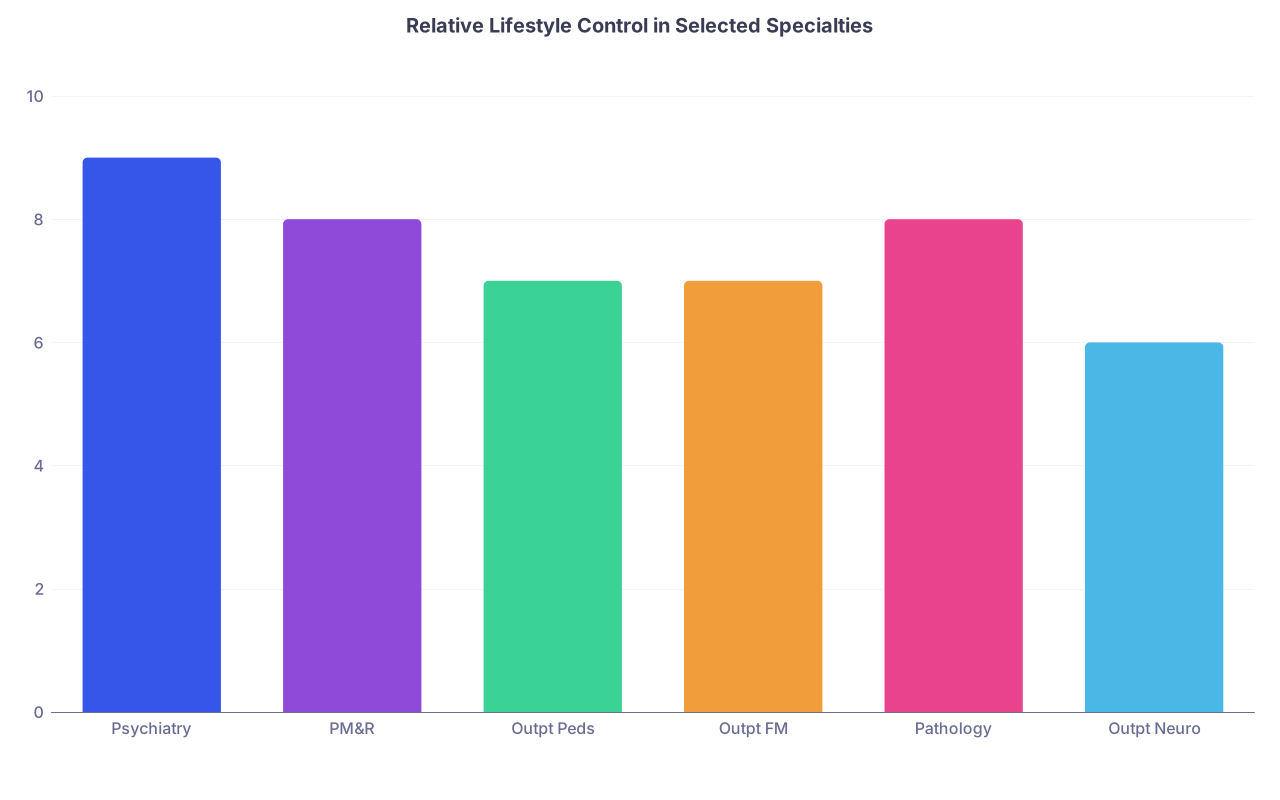
Let’s visualize what usually matters to people asking this question: time control.
| Category | Value |
|---|---|
| Psychiatry | 9 |
| PM&R | 8 |
| Outpt Peds | 7 |
| Outpt FM | 7 |
| Pathology | 8 |
| Outpt Neuro | 6 |
Scale 1–10, where 10 = maximal control over schedule, call, and location in good practice setups. These are relative impressions from common job structures, not hard data.
Big Picture: Who Should Pick These “Low-Paying” Lifestyles?
You should strongly consider these specialties if:
- You value predictability more than prestige.
- You want real evenings and weekends, not theoretical ones.
- You’re okay not being the top earner among your peers.
- You get more satisfaction from relationships and long-term care than from high‑intensity procedures.
You should probably avoid them if:
- You already know you crave high-stakes, OR-based work.
- You’re going to resent making “only” $250k–$300k while your classmates clear double that.
- You’d be bored by clinic‑based, non-acute medicine.
Concrete Next Steps
Do this now — not 3 weeks from now when you’re doom-scrolling Reddit again.
- Pick 2–3 specialties from this list that genuinely interest you: psychiatry, PM&R, outpatient peds, FM, pathology, neurology.
- Email or message one resident and one attending in each field with a simple note:
- “Can I shadow you for half a day or grab 15 minutes to ask about your actual weekly schedule and what you’d change if you could?”
- When you talk to them, ask only these four lifestyle questions:
- What time did you finish work yesterday?
- How many nights were you called in last month?
- How many weekends did you actually work last month?
- If you had to do it over, would you pick this specialty again?
Listen carefully to the pause before they answer that last one.

| Step | Description |
|---|---|
| Step 1 | Start |
| Step 2 | Consider procedural high pay fields |
| Step 3 | Psychiatry |
| Step 4 | PM&R |
| Step 5 | Outpatient Pediatrics |
| Step 6 | Outpatient Family Medicine |
| Step 7 | Pathology |
| Step 8 | Outpatient Neurology or similar |
| Step 9 | High income top priority |
| Step 10 | Comfort with mental health focus |
| Step 11 | Enjoy MSK and neuro function |
| Step 12 | Want peds and families |
| Step 13 | OK with broad primary care |
| Step 14 | Prefer lab and diagnostics |
FAQ (Exactly 6 Questions)
1. Which low-paying specialty has the best overall lifestyle?
Psychiatry usually wins that contest. Outpatient-focused psych with minimal call gives you huge control over your schedule, the ability to work remotely in some cases, and decent compensation relative to hours. PM&R and outpatient FM in carefully chosen jobs are close behind.
2. Is it a mistake to choose a lower-paid specialty because of lifestyle?
It’s a mistake only if you lie to yourself about what you value. If you know you’d be miserable missing your kids’ events or having no time for hobbies, choosing neurosurgery “for the money” is insanity. On the other hand, if you’ll resent earning significantly less than procedural colleagues, then picking low-paying fields just for lifestyle will backfire. Be honest about your tolerance for both stress and relative income.
3. Can I still make “good money” in these low-paying specialties?
Yes, within reason. Many psychiatrists, PM&R docs, and FM physicians in efficient, well-run practices comfortably clear $300k+ in the right markets. You’re generally not hitting the $700k–$1M range typical of some surgical or interventional fields without extreme volume or side businesses. But you can absolutely have a financially stable, upper-middle-class life.
4. Which of these specialties is best for part-time or 0.6–0.8 FTE work?
Psychiatry is excellent for this. So is outpatient FM and peds in the right group. PM&R and pathology can also offer part-time roles, especially in larger systems. The key is outpatient, non-procedural work; it’s much easier to scale down your hours when you’re not tied to OR block time or cath lab schedules.
5. How much does practice setting matter for lifestyle in these fields?
It matters more than the specialty label. Outpatient-only psych in a stable group vs inpatient psych with heavy call are essentially two different jobs. Same with FM: a 4‑day clinic without inpatient or nursing home rounds is a different life from full-scope FM in a rural town with 1:3 call. Always ask attendings about their actual schedule, call rotation, and inbox workload before you generalize from the specialty name.
6. What’s one red flag that a “good lifestyle” job actually is not?
When the recruiter or job posting emphasizes “high earning potential” and “flexible schedule” but cannot give you clear, specific answers to: average clinic volume, exact call schedule, weekend expectations, and how many hours the current docs are actually in the building. If all you hear is “we’re very busy, but we support work–life balance,” assume the lifestyle will not be what you’re hoping for.
Open a blank note right now and write down three specialties: one that excites you, one that scares you but intrigues you, and one “safe” option. Then schedule a conversation with a resident or attending in the one that scares you but intrigues you — and ask them exactly how many nights they were called in last month.


