

What happens when you match into your “dream” low-paying specialty… and five years later you are quietly Googling “how to switch specialties” at 2 a.m. between call shifts?
Let me be blunt: choosing a lower-paid specialty is not a mistake. Romanticizing it, under-analyzing it, and tying your financial future to vibes and Instagram infographics absolutely is.
You can love pediatrics, family medicine, psych, PM&R, or geriatrics and still wreck your long-term life by how you choose and plan for that path. I have watched it happen. More times than I like.
This is for you if you are leaning toward:
- Family medicine
- Pediatrics
- Psychiatry
- Internal medicine (without plans for a better-paying fellowship)
- PM&R, geriatrics, hospice/palliative, addiction, etc.
And you are hearing some version of:
“Do what you love, the money will work itself out.”
That phrase has ruined more physician finances than student loan interest.
Let’s walk through the real mistakes students make when picking low-paying specialties and how to avoid getting trapped.
1. Confusing “Low-Paying” With “Low-Planning”
The worst assumption I see:
“If I choose a ‘lifestyle’ / ‘primary care’ specialty, everything else will be easier.”
You are not choosing “easy.” You are choosing “lower margin for error.”
When your income is closer to the bottom of the physician pay scale, a few bad decisions do not hurt a little. They compound. Hard.
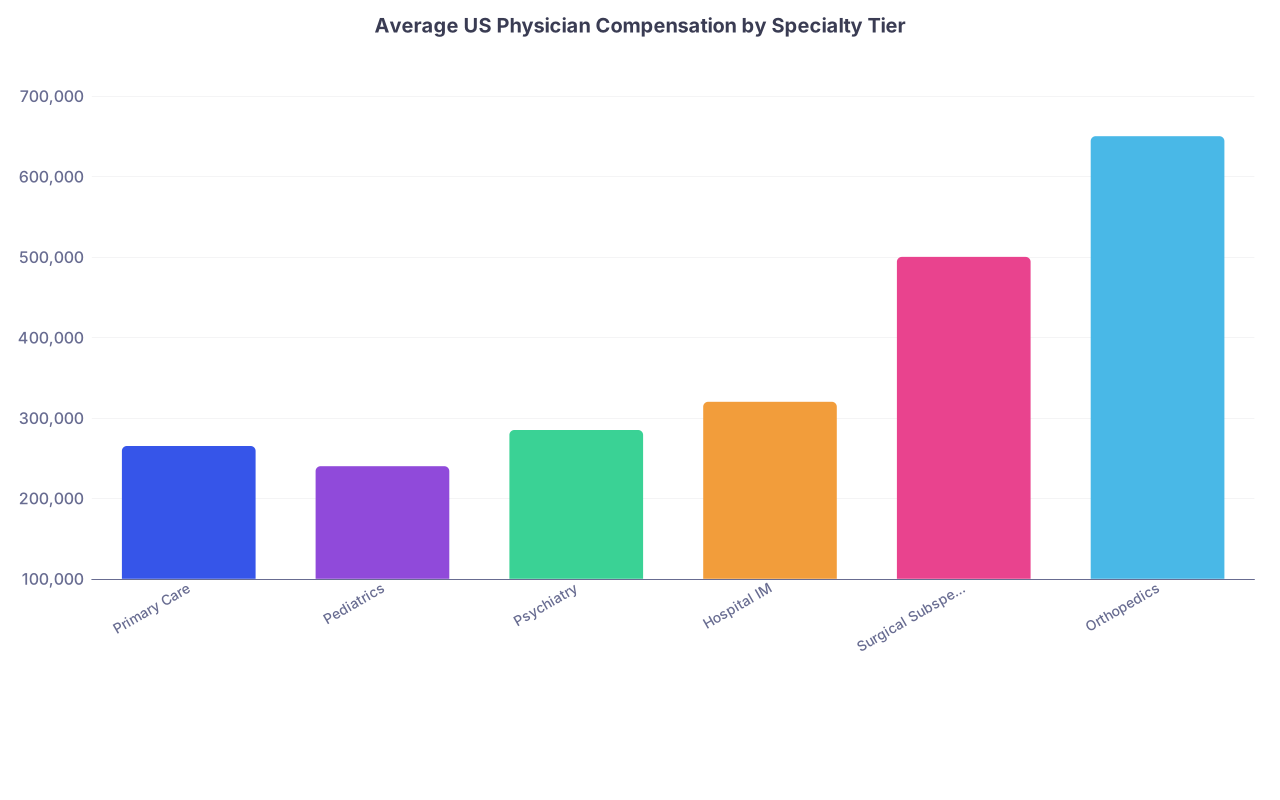
| Category | Value |
|---|---|
| Primary Care | 265000 |
| Pediatrics | 240000 |
| Psychiatry | 285000 |
| Hospital IM | 320000 |
| Surgical Subspecialties | 500000 |
| Orthopedics | 650000 |
The mistake is not going into these fields. The mistake is:
- Doing it without a basic 10–15 year financial sketch
- Assuming “I am a doctor, I will be fine”
- Ignoring how geography, loans, and family plans will interact with a $230–280k income
I have seen:
- A pediatrics attending in a high-cost coastal city paying $4k/month in rent, $3k in loans, daycare costs… and saving basically nothing at 38.
- A family medicine doc doing 5 part-time jobs (urgent care, telehealth, clinic, nursing home, locums) because the single employed job would not cover student loans and kids’ expenses.
You cannot treat a $240k compensation the way a dermatologist treats $600k.
Avoid this mistake:
- Before you commit, run real numbers:
- Current debt
- Target city cost of living
- Reasonable starting salary range for that specialty in that region
- Ask 2–3 attendings in that specialty:
- “What would you have done differently financially before entering this field?”
- “If you had my debt load, would you still pick this?”
If their face changes when you mention your loan balance, pay attention.
2. Picking a Low-Paying Specialty for the Wrong Emotional Reason
Common bad reasons I keep hearing:
- “I do not like blood / procedures / nights, so I will just do psych or outpatient peds.”
- “Surgery is toxic. I want something chill.”
- “I want more time with family so I will do family med or PM&R.”
You are allowed to want those things. But you cannot use them as lazy shortcuts.
Every specialty has:
- Toxic cultures in some programs
- Crummy jobs with bad call
- Administrators who will squeeze RVUs out of your soul
I have seen:
- A psychiatry resident who thought days would be 9–4 and ended up on brutal inpatient, crisis consults, and night call more than some medicine residents.
- A family medicine attending who spends 2 hours a night on charting after getting home because of 20–24 patients/day and metrics insanity.
The trap is assuming “low paid” means “low stress and high lifestyle” by default. It does not.
Red-flag thought pattern:
- “I hate wards, so I will just do outpatient low-paying specialty X and my life will be fine.”
That “just” is how you get stuck.
Avoid this mistake:
- Shadow attendings in:
- Community clinics
- Academic centers
- Private practice
- Ask each of them:
- “What does a bad week look like in your job?”
- “What are the most soul-sucking parts of your work?”
- If you are choosing this because you are running away from something rather than pulled toward something, stop and reassess.
Low-paying + wrong emotional reasons = fast burnout and slow financial damage.
3. Ignoring Debt-to-Income Reality
The dumbest flex I see:
“Debt does not matter, I will do PSLF.”
Really? You are going to:
- Stay in qualifying employment for 10 PSLF years
- Trust that legislation and employer structure will not change
- Choose jobs based on PSLF eligibility instead of quality or fit
That is not a plan. That is hope, dressed up as policy.
Let me show you the mismatch most students ignore:
| Scenario | Debt | Starting Salary | Risk Level |
|---|---|---|---|
| Peds, big city | $400k | $220k | Very High |
| FM, rural | $300k | $260k | Moderate |
| Psych, urban | $350k | $260k | High |
| Derm, urban | $350k | $550k | Low |
| Ortho, mixed | $450k | $600k | Lower |
Same $350–400k in loans. Totally different pressure depending on your specialty.
In a lower-paid field:
- You have less room for:
- Divorce
- Major health issues
- Supporting extended family
- Caring for aging parents
- One bad financial move (buying a house too early, luxury car, expensive private school) can delay retirement by a decade.
Avoid this mistake:
- If your debt / projected early attending income ratio is:
1.5:1 in a low-paying specialty – that is a bright yellow warning
2:1 – you need a concrete forgiveness or aggressive payoff plan
- Talk to:
- A fee-only financial planner who understands physician compensation
- Or at least a graduating resident in that specialty with big loans who actually ran the math
If you are going into pediatrics with $450k in loans and no PSLF-eligible plan, you are signing up for stress you do not understand yet.
4. Romanticizing “Primary Care Hero” While Ignoring Systemic Grind
This one hurts to watch. Because the idealism is real.
Students say things like:
- “I want to be the doctor who knows the whole family.”
- “Primary care is the backbone of the system. That is what I want to do.”
- “I want to fix health disparities.”
All good. Beautiful even. But then you ignore:
- 15-minute visits
- Productivity targets
- Prior authorizations
- Press-Ganey scores
- Panel sizes that are unmanageable
Low-paying specialties, especially primary care, are often the most exposed to:
- Burnout
- Administrative sludge
- Devaluation by systems that pay more for procedures than thinking
You might love the idea of continuity clinic. You might hate:
- 18 patients a day
- In-basket messages
- Endless refills
- Insurance games
Avoid this mistake:
- Spend a full week in a busy community clinic. Not just one “nice” half-day in a med school continuity clinic.
- Pay attention to:
- How many “extra” things the doc is doing outside visits
- How much of their time is medicine vs admin
- Ask the attendings privately:
- “If you could go back, would you choose this specialty again in the current healthcare system?”
- “What percent of your job feels like what you imagined in med school?”
If the answer is a sad laugh followed by a long pause, think very carefully.
5. Underestimating Geographic Handcuffs
Here is a subtle trap.
Lower-paying specialties often:
- Have more jobs available in rural or underserved regions
- Pay relatively more (on paper) in those markets
- Struggle to match big-city cost of living
Many students say:
“I will just live somewhere cheaper.”
Then they get engaged. Or their partner gets a job. Or their parents get older and need them nearby.
I have watched:
- A family med doc stuck in a major coastal city because of spouse’s job, making <$230k, with daycare for two kids and $3,500/month rent.
- A pediatrician trying to support extended family in a high-cost area and slowly drowning despite working full time plus moonlighting.
In surgery or ortho, those constraints are painful but survivable. In pediatrics or outpatient psych with heavy loans, they are brutal.
Avoid this mistake:
- Be honest about:
- How geographically flexible you truly are
- Whether you are willing to move for 5–10 years to hit loans hard
- When you talk to attendings, ask:
- “What pay differences do you see between rural vs urban in your field?”
- “If you had to stay in a major city, would this job still feel sustainable?”
If you know you are anchored to a very expensive metro long term, you must weigh that more heavily if you are choosing a bottom-tier income specialty.
6. Assuming You Can “Always Just Moonlight More”
Another fantasy I see constantly:
“If money gets tight, I will just moonlight / pick up telemedicine / urgent care shifts.”
Maybe. Or maybe:
- You are exhausted from clinic and documentation
- You have kids and a partner who have not seen you all week
- Your mental health is fraying and the last thing you need is more work
- The market changes and those easy telehealth gigs vanish or pay half as much
This “I will just work more” strategy is dangerous when:
- Your base specialty pay is low
- Burnout risk is high
- Family responsibilities grow
I watched a psychiatry attending go from:
- One extra telehealth day per month to cover loans
to - Every weekend half-day “just for a year”
to - Full burnout and a near-miss medical error that scared them into cutting back
The whole plan was: “Future me will be less tired and more willing to work more.” That is delusional.
Avoid this mistake:
- Build a plan where your base W2 job, at a sustainable workload, can:
- Cover basic living expenses
- Cover a realistic loan payment or forgiveness strategy
- Leave extra hours only for optional moonlighting, not required survival
If the only way your numbers work is you grinding every weekend, walk away or radically rethink.
7. Not Exploring Within the Specialty for Better-Paying Niches
Another mistake: thinking every job in a low-paying field pays the same.
They do not.
Within low-paid specialties, there are big variations:
- Psychiatry:
- Inpatient vs outpatient
- Academic vs private/concierge
- Locums vs employed
- Family medicine:
- RVU-heavy employed primary care vs direct primary care
- Rural hospitalist tracks
- Sports med or procedures focus
- Pediatrics:
- General outpatient vs hospitalist vs urgent care
- Academic vs private group
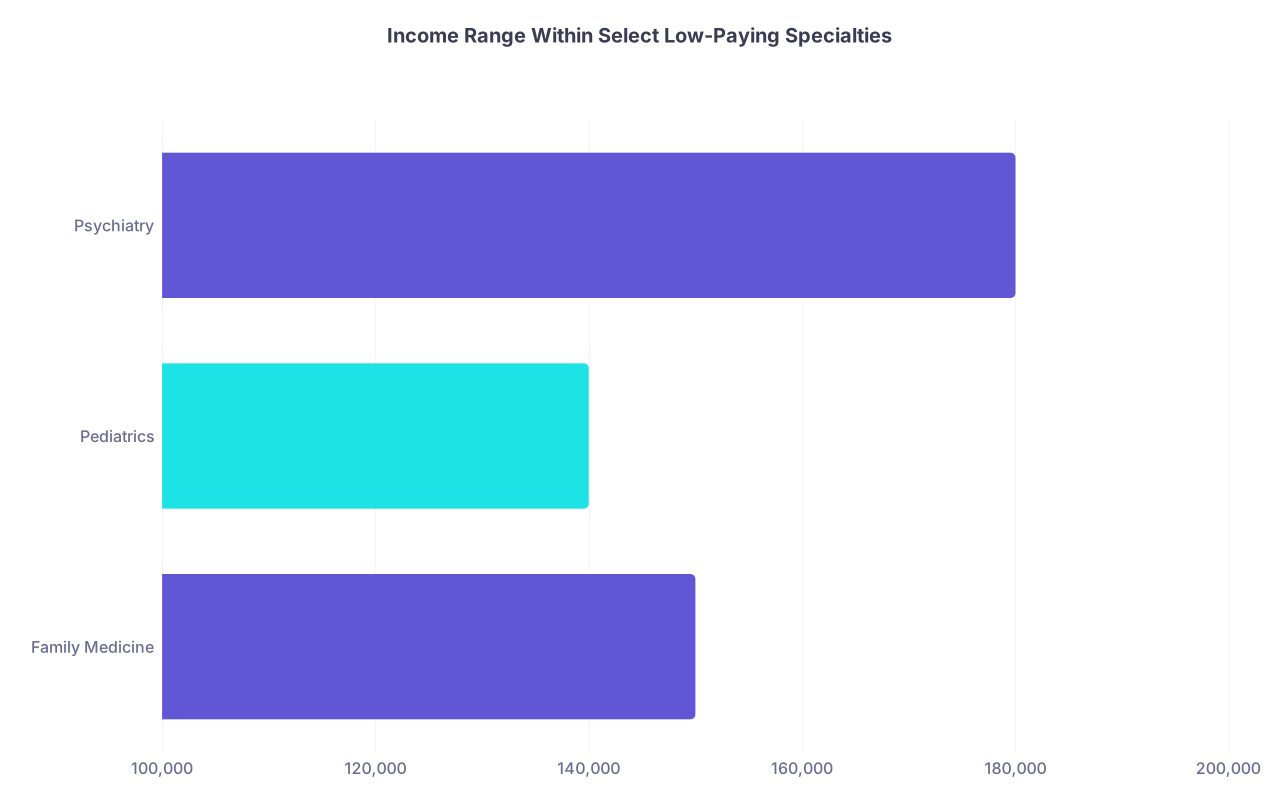
| Category | Value |
|---|---|
| Family Medicine | 150000 |
| Pediatrics | 140000 |
| Psychiatry | 180000 |
(Think of those numbers as an approximate spread from lowest common to highest typical range above baseline – not absolute salaries.)
The mistake is:
- Only seeing the worst-compensated, highest-burnout version of the field
- Or only seeing the cushy academic version and not realizing you might not get that job
Avoid this mistake:
- For any specialty you are serious about, map:
- 3–4 types of jobs in that field
- Approximate compensation ranges
- Lifestyle and admin burden differences
- Ask attendings:
- “What are the best compensated roles in your specialty that are still tolerable?”
- “What paths would you recommend if I wanted to balance meaning and income?”
You do not have to choose a different specialty to improve your finances. Sometimes you just need to avoid the worst-compensated corners of it.
8. Believing “I Can Always Switch Later”
This one is quietly destructive.
Students tell themselves:
“If money becomes an issue, I can always go back and do another residency or fellowship later.”
In theory, maybe. In reality:
- You will be older, possibly with kids
- Your salary will drop back to resident level for years
- Your spouse may not tolerate another training move
- Programs are not lining up to take 40-year-old career-switchers
I have seen exactly one successful switch from low-paid to high-paid specialty after full training. It was brutal for the family and took a massive toll.
Yes, there are internal medicine → cards or GI transitions. That is not what I mean.
I mean: pediatrics → anesthesiology, family medicine → radiology, psychiatry → derm. Very rare. Very hard.
Avoid this mistake:
- Do not use “I will just switch later if needed” as a safety net. Treat your initial specialty choice as if you are stuck with it.
- If you are even moderately drawn to:
- Anesthesia
- EM
- Radiology
- Certain surgical subspecialties
and you also have huge loans and want expensive-city life… you owe it to yourself to explore those seriously before locking into a low-paying field.
If your only exit plan is fantasy-switching at 40, you do not have an exit plan.
9. Letting Identity and Social Pressure Box You In
This one is touchy.
Medical culture loves to slot people:
- “You are so empathetic, you would make a great pediatrician.”
- “You are not like those gunners, you are definitely primary care.”
- “You are too nice for surgery.”
I have watched caring, thoughtful, high-performing students get funneled into the lowest-paid specialties because everyone around them put them there.
Then years later:
- They discover they actually like procedures
- Or they would have loved a cognitive but better-compensated field like radiology or anesthesia
- Or they resent the invisible expectation that “good people do primary care”
Choosing a low-paying specialty because it aligns with your values and strengths is a win. Choosing it because you absorbed everyone else’s story about what “good” doctors do is not.
Avoid this mistake:
- Notice if your “fit” explanation sounds like how other people describe you, not how you describe yourself.
- Ask yourself privately:
- “If all specialties paid the same, what 2–3 would I consider?”
- “If I had zero debt and could live anywhere, would I still pick this?”
- Talk to at least one attending in a higher-paid specialty you respect and ask:
- “What misconceptions do med students have about your field and lifestyle?”
Do not let guilt, image, or social expectations be the main reason you accept a 40-year lower-income career.
FAQ: Common Questions About Low-Paying Specialties and Career Mistakes
1. Is it a mistake to choose a low-paying specialty if I truly love it?
No. The mistake is choosing it blind. If you:
- Understand the typical income range
- Have a concrete plan for your loans
- Accept potential geographic limitations
- Have seen the real day-to-day (not just shadowing a “nice” clinic once)
then you are making an informed trade-off, not a naive one. Loving the work and planning aggressively can absolutely make low-paying specialties a good life.
2. How much debt is “too much” for pediatrics or family medicine?
There is no absolute line, but I start to get concerned when:
- Your debt exceeds 1.5 times your realistic starting salary in that specialty
- You refuse to consider PSLF-eligible employment or lower cost-of-living areas
- You also want expensive life choices early (big house, private school, etc.)
At ~$400–450k+ debt with pediatrics or family med, you need either:
- A serious PSLF/public service plan or
- A willingness to live cheaply and hit loans very hard for 5–10 years
If you are not willing to do either, that is a problem.
3. Can good financial habits fully “fix” the low pay of primary care?
They can massively reduce the pain, but they do not change basic math. Good habits can:
- Prevent lifestyle creep
- Speed up loan payoff or make PSLF work for you
- Build savings and investments much earlier
But you will still have less financial margin than your peers in derm, ortho, or GI. The point is not to “fix” the gap. It is to make sure the gap does not ruin your sleep, your marriage, or your retirement.
4. Is pursuing a well-paying fellowship the answer if I start in a lower-paying core specialty?
Sometimes. Internal medicine → cards or GI is a common example. But treating “fellowship later” as a default escape hatch is risky because:
- Fellowships are competitive
- Your interests may change during residency
- Life factors (kids, partner, illness) may make more training unattractive
If your only plan to make IM or peds work is “I will just match one of the highest-paid fellowships,” that is wishful thinking, not strategy. You should be okay with the base specialty income even if fellowship does not happen.
5. If I am already deep in residency in a low-paying specialty, what can I do to avoid these mistakes now?
You are not doomed, but you must be ruthless and proactive:
- Get a clear picture of attending salaries in your region and specialty types
- Run honest loan payoff vs forgiveness projections
- Identify better-paying, sustainable niches within your field (hospitalist, procedural focus, rural, etc.)
- Learn enough about personal finance that you can avoid dumb high-cost-of-living and lifestyle decisions in your first 5 attending years
You cannot change your specialty easily. You can absolutely change how punishing or manageable that specialty feels financially and emotionally.
Key takeaways:
- Low-paying specialties are not the mistake. Choosing them for vague emotional reasons without hard financial and lifestyle scrutiny is.
- Debt, geography, and job type matter more when you are at the bottom of the physician pay scale. You have less room for naive optimism.
- Treat your specialty choice like a 40-year contract, not a one-year rotation preference. If you still pick a lower-paid field after that level of honesty, you are probably making the right call.


