

The idea that “lower-paying specialties have better lifestyle” is lazy, outdated, and mostly wrong when you actually look at the data.
Yes, dermatology and radiology tend to have good hours. No, that is not because they are low-paying. In fact, most of the so-called “lifestyle specialties” are very well paid. And some of the lowest paid specialties are among the most overworked and burned out in all of medicine.
Let’s dismantle the myth properly.
The Core Myth: Pay Down, Lifestyle Up
You’ve probably heard some version of this:
- “If you care about lifestyle, go into primary care.”
- “Hospitalists make less than proceduralists but have better hours.”
- “If you’re willing to give up money, you’ll get your time back.”
This sounds tidy. Trade money for time. The problem is that it is not how actual practice patterns, compensation structures, and burnout numbers line up.
Three big problems with the “low pay = good lifestyle” idea:
- It ignores work intensity and emotional load.
- It pretends RVU-based pay does not push low-paid specialties to work harder to hit income targets.
- It’s based on stories from 20–30 years ago, not on current survey data.
Let’s look at what the numbers say instead of what attendings told you on that one rotation.
What the Surveys Actually Show
Multiple large surveys paint the same picture: lifestyle is not simply inversely related to pay.
Use Medscape, AAMC, and burnout studies and some patterns are obvious:
- Some of the highest paid specialties (derm, ophtho, rads, anesthesia) report good lifestyle metrics and relatively lower burnout.
- Some of the lowest paid (pediatrics, family medicine, internal medicine primary care) are near the top of burnout rankings with high hours and admin load.
- Emergency medicine used to be the poster child for “high pay, controllable schedule.” Now? High burnout, hostile workplace dynamics in many EDs, consolidation by CMGs, and rising dissatisfaction.
Here’s a rough comparison using typical patterns reported across national surveys. Numbers are approximate, directionally accurate, and vary by region and practice model.
| Specialty | Relative Pay Tier | Typical Hours/Week | Burnout Risk (Relative) | Lifestyle Perception |
|---|---|---|---|---|
| Dermatology | High | 35–45 | Lower | Excellent |
| Radiology | High | 40–50 | Moderate | Good |
| Anesthesiology | High | 45–55 | Moderate | Good (variable) |
| Family Medicine | Low | 45–60 | High | “Good” but overrated |
| Pediatrics | Low | 45–60 | High | Mixed |
| Hospital Medicine | Mid | 40–60 (intense) | High | Variable |
If “low pay = lifestyle” were true, pediatrics and family medicine should be oases of contentment. They’re not. Ask any outpatient pediatrician drowning in 20+ patients a day, vaccine counseling, portal messages, and prior auths, while fighting for every RVU.
Low-Paying Specialties: What Lifestyle Actually Looks Like
Let’s go specialty by specialty. Because the devil is in the details, not the clichés.
Family Medicine: The Perpetual Myth
Residents love to say: “I’ll do FM, 4 days a week, lots of time with family.”
Can it be done? Yes. Is it the default? No.
Reality in many FM jobs:
- High panel sizes: 2,000–3,000+ patients is not rare.
- Visit volume: 18–25+ patients per day if employed by big systems, often more in RVU-heavy models.
- After-hours burden: Refill requests, patient portal messages, lab follow-up, care coordination, often not adequately compensated.
- Compensation: Among the lowest in medicine while still requiring heavy cognitive work, broad scope, and responsibility.
You can carve out a nice FM lifestyle with:
- Concierge / direct primary care
- Academic roles with protected time
- Niche practices (sports medicine, addiction, geriatrics with good support)
But those are deliberate design choices, not automatic perks of “low-paying specialty.”
Pediatrics: High Meaning, High Emotional Drain
Peds is often sold as “happy patients, happy days.” Except:
- You deal with anxious parents, not just kids.
- Complex social situations, CPS involvement, chronic conditions.
- High rates of moral distress: working with underinsured families, systemic barriers, repeated preventable illness.
- Still low compensation, especially for outpatient general pediatrics.
Is there deep meaning? Yes.
Is it automatically “better lifestyle” because the pay is lower? Absolutely not.
Outpatient Psychiatry: The Nuanced Exception
Psych is often lower paid than procedure-heavy fields, though outpatient and telepsych compensation has been climbing.
Lifestyle can be strong here:
- More control over scheduling.
- Predictable clinics, less night call in many setups.
- Telehealth options that genuinely improve flexibility.
But the tradeoff is not “money for lifestyle” so much as emotional load for cognitive, relationship-based work. You’re dealing with:
- Suicidality
- Self-harm
- Traumatic histories
- Chronic, relapsing conditions
Many psychiatrists I’ve spoken with are very satisfied with their lifestyle, but they’re also emotionally tired in a way that does not show up on simplistic “hours per week” charts.
Hospital Medicine: “Seven-On, Seven-Off” Isn’t Magic
Hospitalist medicine is often mid-tier in pay, and residents are told it’s a lifestyle specialty because: “You’re off half the year.”
Reality check:
- Seven 12+ hour days in a row is brutal.
- Nights, weekends, holidays.
- Intense cognitive and logistical work, sick patients, constant interruptions.
Your hours per year may be lower than some surgeons, but the compression into long runs of exhausting shifts changes how your life feels. Many hospitalists hit a wall in their 40s and pivot to:
- Admin roles
- Utilization review
- Part-time locums
- Transitioning to outpatient jobs
Calling it a “low-paying lifestyle specialty” is selective amnesia. It’s better described as high-intensity, block-structured work with some real upsides for time off—if your body and mind tolerate the runs.
Why Low Pay Does NOT Automatically Buy You Time
You have to understand how medicine actually pays physicians now. The RVU system and productivity pressures distort the whole “trade money for lifestyle” fantasy.
Three structural forces:
RVU-Based Compensation
Lower reimbursement per visit (primary care, pediatrics) means you often must see more patients to hit a target income. That translates into less time per patient and more hours to keep your pay reasonable.Administrative Bloat
Prior auths, quality metrics, portal messaging, chronic care management—all piled most heavily onto outpatient, cognitive fields. That “just 8–5 clinic” schedule usually has invisible hours before and after.Shortage Exploitation
During staffing shortages, low-paid specialties often get hammered with more work rather than better conditions. Shortage of primary care physicians is not leading to a golden era of relaxed clinic days; it’s leading to overbooked schedules and burnout.
If you want actual time, you’re better off thinking in terms of:
- Practice model (employed vs independent vs concierge vs telehealth)
- How many patients per day you’re willing to tolerate
- Call frequency and intensity
- Group culture and coverage models
Not just “I’ll pick the specialty that pays less.”
The Quiet Truth: Many High-Paying Fields Have Better Lifestyle
Let’s irritate some people and talk about the uncomfortable reality: several high-paying specialties have better lifestyle control than many low-paying ones.
Dermatology
The meme exists for a reason.
- High compensation.
- Mostly outpatient.
- Limited true emergencies.
- Procedural work with good margins.
- Often 4-day weeks are achievable in many practices.
Yes, residency is competitive. That does not magically invalidate the reality that derm is high pay + high lifestyle in many settings.
Radiology
Variable, but:
- Good remote work possibilities (teleradiology).
- No clinic chaos, limited direct patient drama.
- Nighthawk coverage and shift-based work allow structured time off.
The pay is very solid. Lifestyle isn’t automatically perfect, but it’s definitely not the “work to death for money” caricature.
Anesthesiology
Big range here, depending on:
- Call schedule
- Trauma / transplant vs community elective cases
- Group structure (private vs employed)
But anesthesiology, in many community settings, combines:
- Strong income.
- Defined shifts.
- Potential for early finishes on light days.
- Predictable blocks and vacation.
Again: high pay does not preclude decent lifestyle. It can enhance it, because more money lets you buy back time—paying for child care, help at home, or taking fewer shifts later in your career.
Burnout: It’s Not About Pay, It’s About Control
Let’s pull lifestyle away from the vague “hours” metric and talk about what actually drives satisfaction:
- Control over your schedule
- Predictability of your days
- Workplace support and staffing
- Alignment with your personality and values
- Intensity of emotional and cognitive load
Burnout studies repeatedly show:
- Loss of autonomy is a bigger predictor of burnout than pay level.
- Administrative overload and moral injury (feeling forced to give substandard care by systems) crush satisfaction.
- Being in a specialty that does not fit your temperament is a slow-acting poison.
You can be a pediatrician in a well-run academic clinic with 16–18 patients/day, good team support, and no overnight calls and have an excellent lifestyle.
You can be a dermatologist in a toxic private practice, double-booked with cosmetic procedures plus general derm, fighting with partners about revenue shares, and be miserable.
You cannot predict either by looking at average salary.
A More Honest Framework: Lifestyle Is Built, Not Baked In
If you’re choosing a specialty, stop asking, “Which field has the best lifestyle?” and ask more precise questions:
- What practice models are common in this specialty, and which align with how I want to live?
- How do hours and call realistically look 5–10 years out, not just in residency?
- What are the burnout drivers in this field—admin load, emotional burden, nights, high acuity—and do those fit my tolerance?
- What levers exist in this specialty to change my workload later?
(Part-time options, telehealth, niche clinics, locums flexibility.)
Here’s a simple comparison of what actually shapes lifestyle more than pay itself:
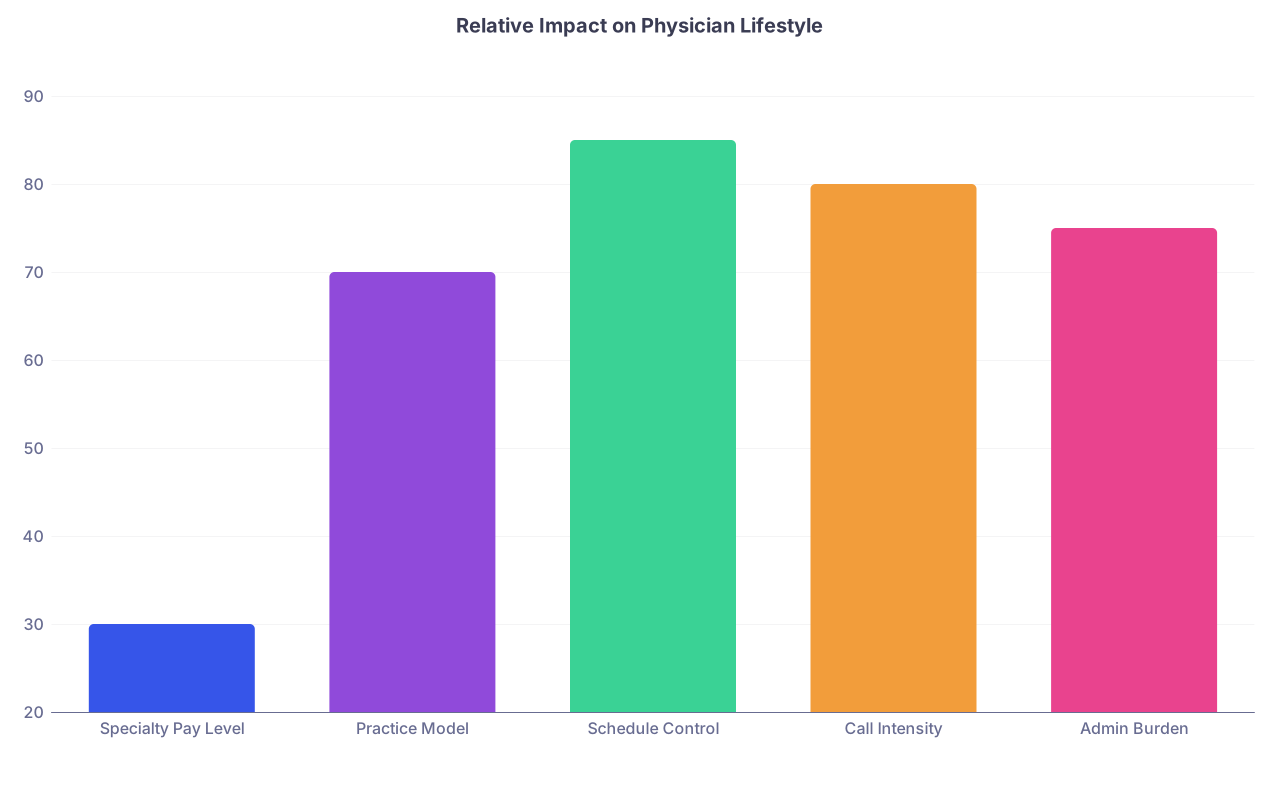
| Category | Value |
|---|---|
| Specialty Pay Level | 30 |
| Practice Model | 70 |
| Schedule Control | 85 |
| Call Intensity | 80 |
| Admin Burden | 75 |
Pay level helps—no question. But if you ignore practice model, schedule control, and call, you will absolutely get burned.
How Residents Get Misled
I’ve watched this conversation play out on wards and in resident lounges more times than I can count.
The script goes like this:
- M3: “I just want a good lifestyle so I’m thinking of pediatrics or family.”
- Senior: “Yeah, they don’t make much money but at least they’re home for dinner.”
- Attending (who hasn’t worked full-clinic weeks in 10 years): nods vaguely, confirms.
Meanwhile, actual full-time outpatient docs down the hall are finishing notes at 7 pm and taking portal messages home.
The problem is that most trainees see attendings in academic centers with:
- Residents and students doing part of the work
- Protected admin or academic time
- Smaller clinical loads
Then they extrapolate that to community practice. Huge mistake.
Academic vs community, employed vs private, urban vs rural—all of that can matter more for lifestyle than whether your field pays in the 25th vs 75th percentile.
So, Is Lifestyle Truly Better in Low-Paying Specialties?
No. Not by default. Not in any reliable, data-supported way.
What’s true instead:
- Some lower-paying specialties are overworked and under-resourced with high burnout.
- Some higher-paying specialties have leveraged their value into decent schedules and flexibility.
- Lifestyle comes from how you practice, not just what you practice.
If you want a survivable, even enjoyable career, stop treating “low pay” as some kind of moral trade that guarantees you more time with your family. The healthcare system is very happy to pay you less and still work you to the bone.
You have to be more strategic than that.


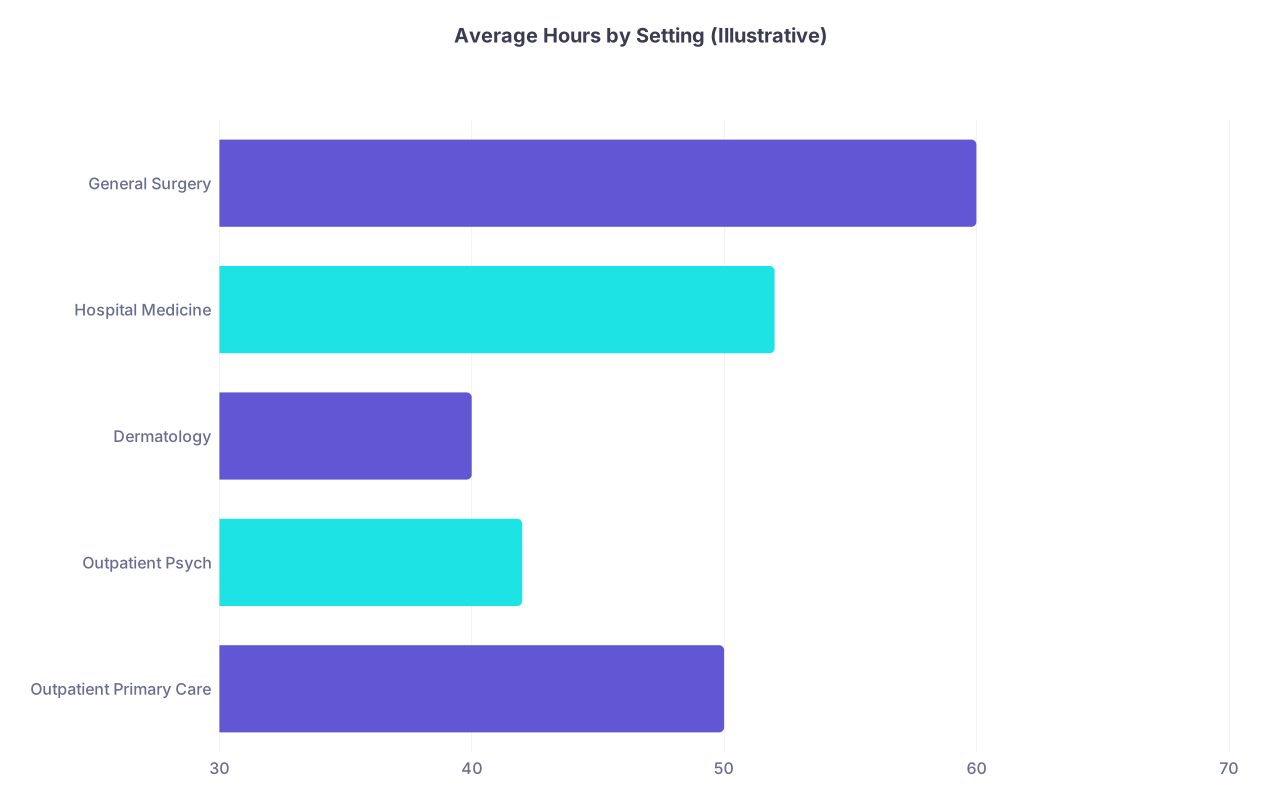
| Category | Value |
|---|---|
| Outpatient Primary Care | 50 |
| Outpatient Psych | 42 |
| Dermatology | 40 |
| Hospital Medicine | 52 |
| General Surgery | 60 |

The Take-Home Points
- Low-paying specialties do not automatically offer better lifestyle; many are high-burnout, high-admin fields with heavy workloads.
- Lifestyle is driven more by practice model, schedule control, call, and system factors than by salary alone.
- Choose a specialty for fit, then deliberately design your practice for lifestyle—do not assume that sacrificing income will buy you time.


