

The dogma that “procedural specialties are always better paid” is lazy, outdated, and in several situations just wrong.
Procedures generally pay more per unit of time than cognitive work. That part is real. But the leap people make from that fact to “all procedural specialties are rich and all non‑procedural ones are poor”... that’s mythology. Once you look at actual income surveys, payer mix, call burden, and how people structure their practices, you start seeing cracks everywhere.
Let’s walk straight into the nuance most people glide past when they repeat that mantra in the call room.
What the Data Actually Shows About Pay
Strip away the rumors and you’re left with compensation surveys. Imperfect, but better than vibes.
Two consistent realities:
- Proceduralists, on average, earn more than cognitive specialties.
- Individual exceptions are everywhere once you add geography, practice type, and subspecialization.
Multiple large surveys (think Medscape, MGMA, Doximity) show the same pattern: orthopedics, neurosurgery, cardiology, GI, radiology, anesthesia, ophtho tend to cluster at the top. Primary care, pediatrics, psych, ID, endo drift toward the bottom.
But here’s where people oversimplify:
– “Procedural = rich”
– “Non-procedural = poor”
Both are garbage as absolutes. Here’s a reality check using rough relationships you see year after year:
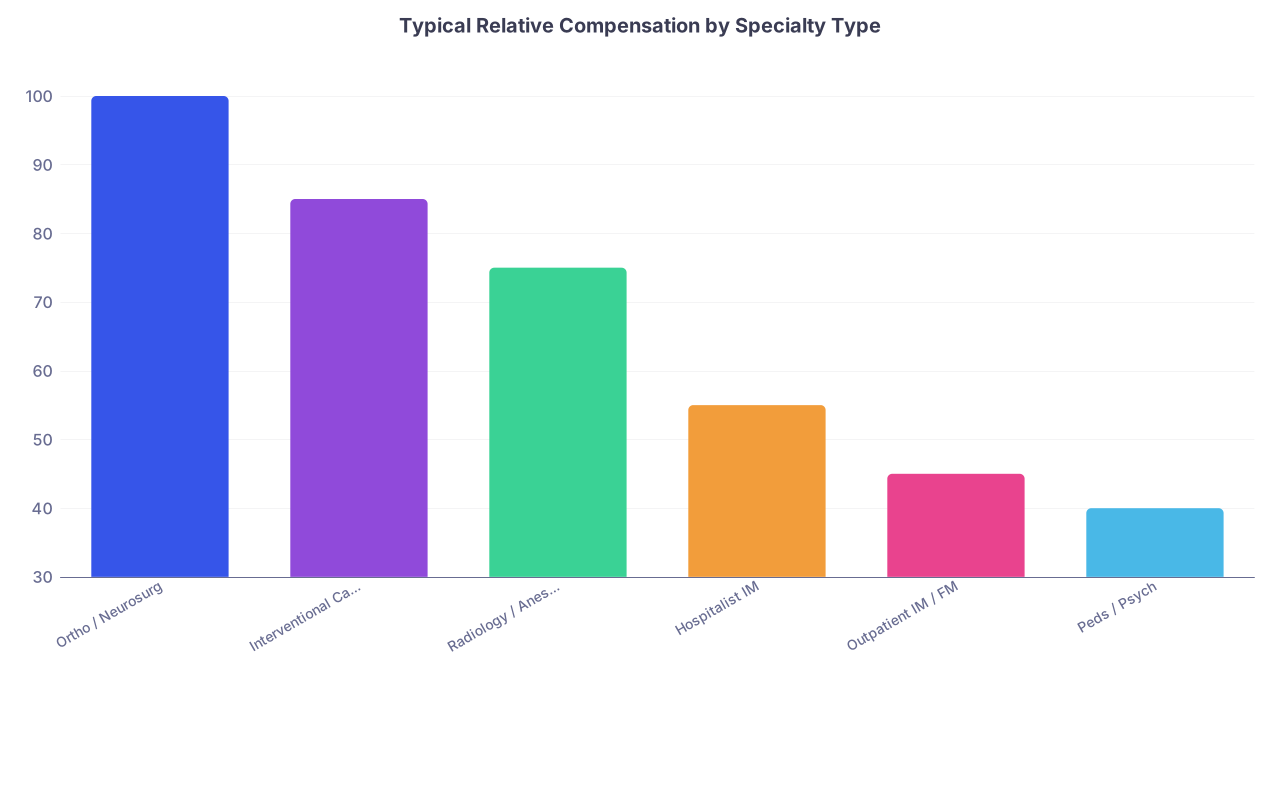
| Category | Value |
|---|---|
| Ortho / Neurosurg | 100 |
| Interventional Cards / GI | 85 |
| Radiology / Anesthesia | 75 |
| Hospitalist IM | 55 |
| Outpatient IM / FM | 45 |
| Peds / Psych | 40 |
Those aren’t dollar amounts, they’re relative indices. The problem is residents memorize the left side of that chart and completely ignore the tails, outliers, and negative space.
Because yes, orthopedics beats outpatient family medicine 99 times out of 100. But does orthopedic oncology in an academic center beat a high‑RVU, high‑acuity hospitalist in a rural system? Not always. Does interventional cardiology in a saturated coastal city always beat a lean, high‑volume outpatient psychiatrist in the Midwest? Often no.
The devil’s not just in the procedure. It’s in the structure.
Where Procedural Specialties Quietly Lose the “Money Game”
Let me start by blowing up the clean story: within procedural fields themselves, income varies wildly based on things med students rarely factor in.
1. Academic vs private: the silent pay cut
Everyone’s heard “academics pays less,” but very few actually internalize how much less. You can absolutely find:
- An academic interventional cardiologist in a major coastal center making less than a private hospitalist running 7‑on/7‑off plus moonlighting.
- A peds surgeon at a children’s hospital making similar or even less than a community OB/GYN with a robust practice and decent payer mix.
Academic comp can be 30–50% below private practice for the same “procedural” skillset. Add in NIH chasing, meetings, admin, teaching… the procedures stop being the dominant income driver.
2. Saturated markets vs “no one wants to live here”
I have literally seen:
- Outpatient GI partners in major coastal metros earning less than rural general surgeons because the GI group is overstaffed and fighting for cases, while the rural surgeon owns the OR schedule and does everything from scopes to bread‑and‑butter open procedures.
- Interventional radiologists in dense cities splitting work with NPs/PAs, rads extenders, and other IRs, while a single diagnostic radiologist in a remote area runs telerads plus a local hospital contract and out‑earns them.
Procedures do not magically print money in saturated markets. Reimbursement is flat; supply of physicians is not.
3. Lifestyle-driven underproduction
This is the one people outright ignore: within a given specialty, your personal volume choices matter more than whether you have a scalpel or a stethoscope.
A proceduralist who:
- Works 0.6–0.8 FTE to avoid burnout
- Avoids call
- Stays in a high‑cost coastal city for family reasons
- Shuns ownership opportunities
can and does earn less than a cognitive doc who runs full‑time plus some extra shifts in a lower‑cost region and leans into hospital-employed or productivity-heavy models.
I’ve seen non‑invasive cardiologists making more than EP colleagues in the same system simply because the “non‑procedural” doc works more hours and packs clinic, while the proceduralist backs off call and picks a gentle lifestyle.
Procedures are leverage. Not destiny.
Hidden Exceptions: When “Non-Procedural” Beats “Procedural”
Now to the part no one wants to admit on Reddit: several non‑procedural pathways can rival or beat many procedural salaries under pretty common conditions.
Hospitalist medicine vs low‑RVU procedural fields
Hospitalists are often dismissed as the default, “not as good” option. Yet the numbers consistently surprise med students when they see real contracts.
A full‑time hospitalist in:
- A rural or semi‑rural health system
- With 7‑on/7‑off schedule
- Moderate to high RVU expectations
- Occasional moonlighting or nocturnist shifts
can easily land in total comp territory that beats:
- Academic general surgery in big coastal academic centers
- Academic interventional radiology or cardiology roles with heavy non‑clinical demands
- Lower‑volume ENT, uro, or ophtho positions in saturated markets
You give up procedural identity. You do not automatically give up money.
Outpatient psychiatry: the under‑appreciated income machine
Psych is still mislabeled as “low‑paid.” That’s old data plus people thinking only in terms of big academic departments.
Look at a lean, largely cash‑pay outpatient psychiatrist practice in a decently affluent area:
- 60‑minute new evals
- 25–30 minute med management follow‑ups
- Limited staff overhead
- Out‑of‑network or cash
They can set rates north of $300+ for intakes and $150+ for follow‑ups. Run the math on 4.5 days per week, even with no nights, no weekends, hardly any call. The annual take‑home can run neck‑and‑neck with many procedural fields, especially academic ones, with dramatically lower stress and operating risk.
Compare that with an ENT in an HMO‑style practice, slotted 15‑minute visits, limited OR time, salaried comp. “Procedural” stops being a guaranteed trump card.
Outpatient internal medicine done right
Let me be clear: garden‑variety outpatient IM or FM in a big coastal city, high overhead, heavy Medicaid/uninsured mix, and bloated admin is exactly as underpaid as you’ve heard.
But a lean, high‑efficiency, lower‑overhead IM practice in a good commercial payer market can change the math:
- Smaller staff, tech‑heavy workflows
- More complex, higher‑acuity patients (more RVUs per visit)
- Ancillary income streams (infusions, stress testing, concierge tiers, etc.)
Suddenly that “non‑procedural” doc can out‑earn a proceduralist locked into a mediocre employed contract with no ownership or upside.
Here’s a side‑by‑side look at some realistic cross‑overs:
| Role | Typical Setting | Relative Income vs Many Procedural Peers |
|---|---|---|
| Rural hospitalist (7-on/7-off + extra) | Community hospital system | Equal or higher |
| Cash-pay outpatient psychiatrist | Suburban private practice | Equal or higher |
| High-RVU nocturnist | Community hospital | Equal or higher |
| Lean concierge IM | Affluent metro/suburban area | Equal or higher |
| Academic general surgeon (coastal) | Tertiary academic center | Often lower |
This is not cherry‑picking fantasy scenarios. These are patterns that show up repeatedly once you talk to attendings outside the social media echo chamber.
The Cost Side: Time, Training, and Risk Get Ignored
Everyone loves to compare gross top‑line salaries. Few talk about the denominator: years of training, call intensity, malpractice risk, and lifestyle tax.
Years of your life vs dollar differential
If you spend extra years in fellowship to chase a “big” procedural field, you’re giving up attending income during that time. Sometimes that trade makes sense. Sometimes it doesn’t.
A quick, simplified sense of the time trade:
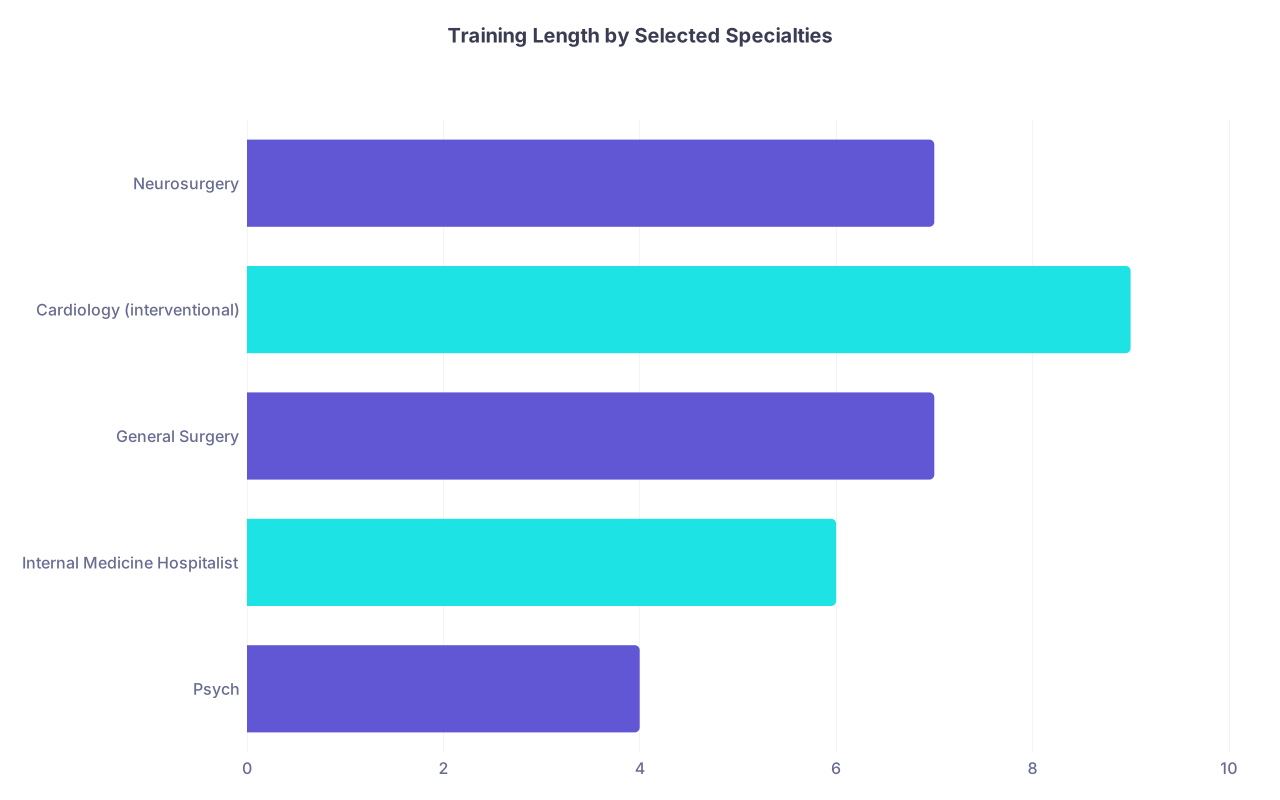
| Category | Value |
|---|---|
| Psych | 4 |
| Internal Medicine Hospitalist | 6 |
| General Surgery | 7 |
| Cardiology (interventional) | 9 |
| Neurosurgery | 7 |
Those values are approximate total years post‑MD/DO (residency + common fellowships). Every extra year is one more year you’re not earning attending pay, not investing, not paying off loans.
Is the incremental income of, say, interventional cardiology vs hospitalist medicine worth three extra years of modest trainee pay plus the burnout risk of interventional call? For some people, absolutely. For others, that differential shrinks quickly when you factor in:
- Time value of money
- Geographic flexibility
- Stress and long‑term health
But almost no one does that math honestly in residency. They just chant “procedures pay more.”
Call, liability, and cognitive load
Cut the romanticism: a pediatric hospitalist with predictable shifts and low‑acuity nights but decent pay might be “underpaid” on a pure RVU basis, but from a life‑per‑dollar metric? They can win.
Contrast:
- Trauma surgeon with brutal 24‑hour calls, OR at 2 a.m., constant litigation risk, high emotional load
vs - Senior hospitalist or outpatient psych with extremely controllable hours and low on‑call frequency
If their income difference is, say, 1.2–1.4x, but lifestyle difference is 3–5x, you can argue the “lower paid” doctor is actually making the smarter economic trade when you weigh time, health, and mental bandwidth.
Money is not just a raw number. It’s what you exchange for it.
The Real Variables That Matter More Than “Procedural vs Not”
The myth that procedural always beats non‑procedural survives because it’s simple. Reality is not. When you talk to attendings actually living in the system, four variables consistently override the procedure/cognitive binary.
1. Geography and payer mix
A high‑paying specialty in a low‑paying environment loses its edge. Conversely, a “weak” specialty in a favorable ecosystem can punch way above its perceived weight.
Commercial insurance density, presence of Medicaid expansion, local competition, and malpractice climate all dramatically change the dollar value of the exact same CPT code.
2. Practice structure and ownership
Employed vs independent vs hybrid is massive. A proceduralist who never touches ownership of ASC shares, imaging centers, or practice equity leaves a lot on the table. Meanwhile, a cognitive doc who embraces ownership and lean operations can outperform a passive employed proceduralist.
You’re not just picking a specialty; you’re picking a business model.
3. Your volume tolerance
Some people will happily see 24 complex patients per day or run two procedure rooms nonstop. Others cap at 12–14 and need the mental space.
At equal intensity, procedures win on revenue. But intensity is not fixed. The psych who runs an efficient, high‑volume med management clinic can out‑earn the cardiologist who deliberately slows down and avoids heavy call.
4. Academic ambitions vs financial ones
If your goal is to be “the” national expert, run trials, and live in the tertiary/quaternary referral world, you’re accepting a pay cut, procedurist or not. An academic procedural specialist is often out‑earned by a community cognitive doc with no interest in research, teaching, or committee work.
So when someone says “I want to do procedures because they pay better,” what they often really mean is “I want to do private practice in a reasonably favorable market, work hard, and focus on billable clinical care.” That’s the driver. The scalpel is just a symbol.
What You Should Actually Be Optimizing For
Let me be blunt: if you choose a specialty primarily because you believe “procedural = rich, non‑procedural = poor,” you’re building your life on half‑truths.
Here’s a better mental model:
- First, pick a field you can see yourself doing at 2 a.m. on your worst day.
- Second, within that field, understand the range: academic vs private, rural vs urban, employed vs independent, part‑time vs full‑tilt.
- Third, run numbers on likely income in the practice style you want, not the absolute top of the specialty.
To make it concrete, here’s how the same broad “type” of specialty can play out financially:
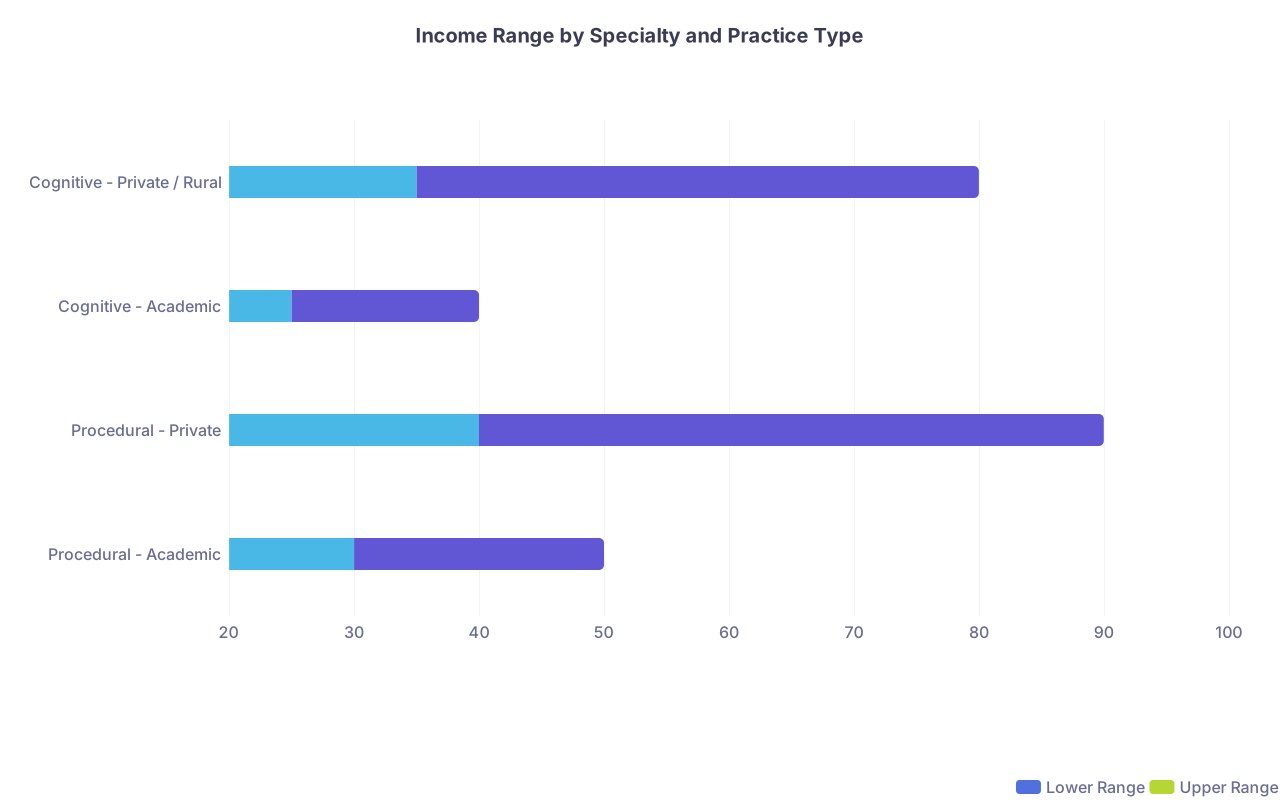
| Category | Lower Range | Upper Range |
|---|---|---|
| Procedural - Academic | 30 | 20 |
| Procedural - Private | 40 | 50 |
| Cognitive - Academic | 25 | 15 |
| Cognitive - Private / Rural | 35 | 45 |
Think of those as bands, not exact numbers. The overlap between “procedural academic” and “cognitive private/rural” is the myth‑killer. That’s where hospitalists, outpatient psych, and entrepreneurial IM/FM live—and where some proceduralists quietly earn less than the stereotype.
Years from now, you won’t care whether your badge says “proceduralist” or “cognitive” nearly as much as you care how your days feel and whether your work funds the life you actually want. The trick is realizing that choosing a specialty is only the first move. How you practice it is where the real money—and sanity—gets made.


